
TCM Lab · Health reading
Knee Pain Physiotherapy and Acupuncture for Knee Osteoarthritis: An Evidence-Aware Guide
Published Updated
Knee pain physiotherapy is often a practical starting point when pain, stiffness, or reduced confidence on stairs is affecting daily life: it can help a person work on movement, strength, and a gradual return to valued activities after the cause has been assessed. Acupuncture for knee osteoarthritis is a different question. It may be discussed as complementary care, but it is not a diagnosis, a substitute for rehabilitation, or a promised cure.
Appointments are confirmed through WhatsApp. If you have language requirements, please mention them in your enquiry.
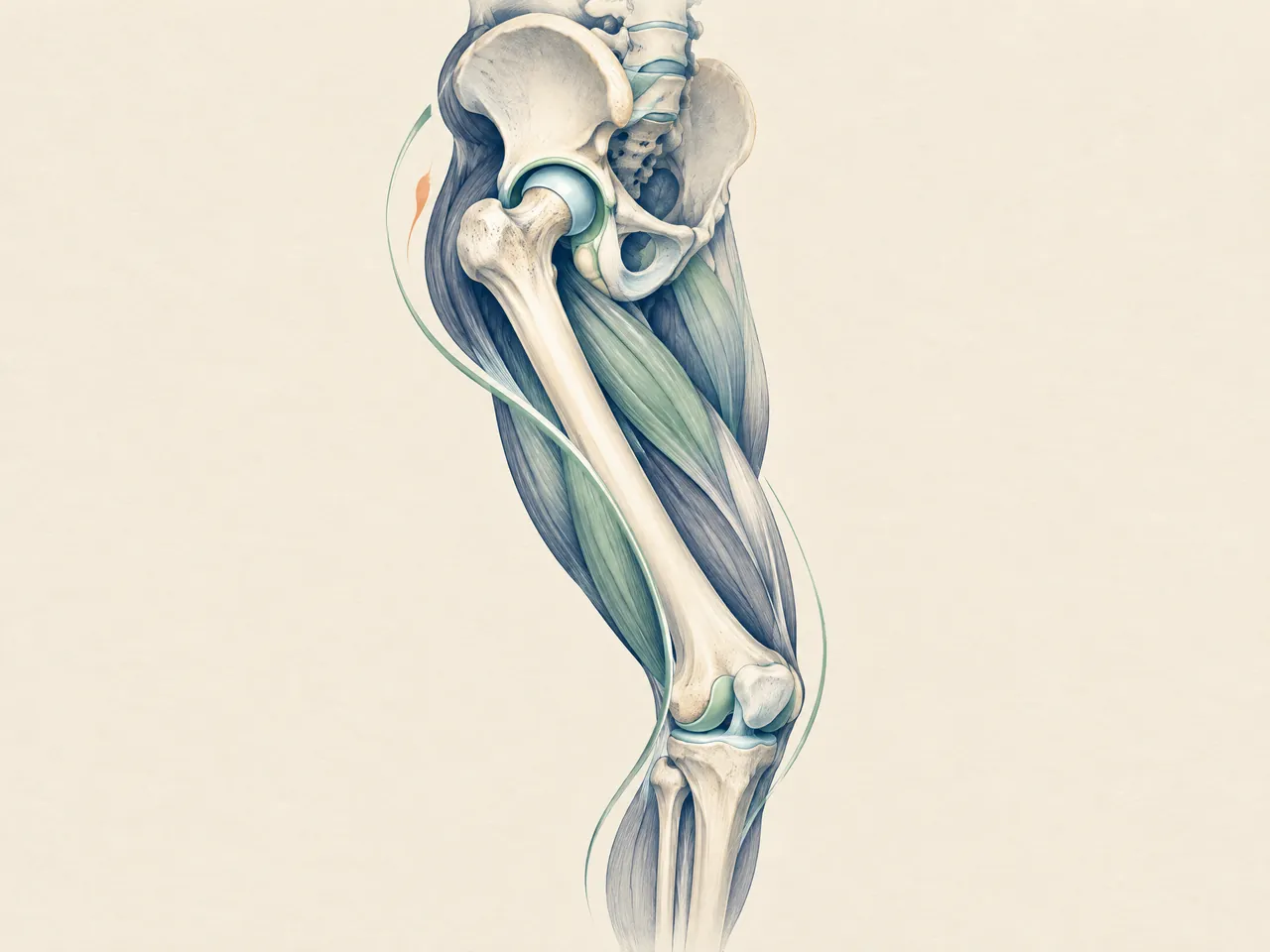
The short answer
Knee pain physiotherapy can support tailored exercise, movement, and function after an assessment identifies the likely problem. If you are considering acupuncture for knee osteoarthritis, discuss it as a possible complementary option rather than a replacement for exercise-based care or medical evaluation. Major swelling, inability to bear weight, a locked or deformed knee, or a hot red knee with fever needs prompt medical assessment, not self-treatment or acupuncture alone. [1]
Transparent pricing
See the fees.
Choose your care.
Explore our complete official price list, including first-trial prices, regular prices, packages and branch-specific options.
Opening WhatsApp prepares an enquiry; it does not send a message, take payment or confirm an appointment. Suitability and individual arrangements are confirmed during consultation.
Pain care
All prices in HKDExtracorporeal shockwave treatment
Shockwave treatment for deep-tissue and fascial care. The Kwun Tong clinic offers the multi-area options shown below.
Priced by branch
Branch-specific pricing
Prince Edward: HK$250 per area
Kwun Tong: HK$250 for 1 area / HK$450 for 2 areas / HK$600 for 3 areas
Pain care (manual therapy)
Includes Chinese medicine musculoskeletal assessment, manual joint techniques and tui na.
HK$580 (single session)
Chinese medicine musculoskeletal assessment
Pain care (acupuncture and manual therapy)
Combines acupuncture and manual therapy.
HK$680 (single session)
Combined care
Hair and scalp
All prices in HKDScalp health and hair-loss management
Includes AI scalp analysis, deep scalp and follicle cleansing, and scalp oil-control care.
HK$380 (first trial)
Regular price: HK$680
- 6 sessions: HK$3,480 (HK$580 per session)
- 12 sessions: HK$5,760 (HK$480 per session)
- 20 sessions: HK$8,600 (HK$430 per session)
- 30 sessions: HK$11,400 (HK$380 per session)
Hair acupuncture and Chinese herbal medicine package
Includes scalp acupuncture and 3 days of Chinese herbal medicine that does not require decoction.
HK$580 (single session)
Registered Chinese Medicine Practitioner consultation
- 6 sessions: HK$3,180 (HK$530 per session)
- 12 sessions: HK$5,760 (HK$480 per session)
- 20 sessions: HK$8,600 (HK$430 per session)
- 30 sessions: HK$11,400 (HK$380 per session)
Combined hair and scalp treatment
Combines acupuncture and Chinese herbal medicine with salon-level scalp and follicle care. Packages include complimentary hair-care shampoo and serum.
HK$1,260 (single session)
Combined treatment
- 8 sessions: HK$8,640 (HK$1,080 per session)
- 16 sessions: HK$15,680 (HK$980 per session)
- 20 sessions: HK$18,600 (HK$930 per session)
- 30 sessions: HK$26,400 (HK$880 per session)
Weight management
All prices in HKDFull-body acupoint embedding for weight management
Includes full-body acupoint embedding. Packages include complimentary Chinese herbal medicine for weight management, with the number of included days scaled to the package. Embedding material and the individual treatment arrangement are confirmed during consultation; this is not a cosmetic thread lift.
HK$980 (single session)
No trial session
- 10 sessions: HK$7,800 (HK$780 per session)
- 20 sessions: HK$14,600 (HK$730 per session)
- 30 sessions: HK$20,400 (HK$680 per session)
Facial acupuncture
All prices in HKDFacial acupuncture (basic)
Includes facial acupuncture and meridian-based facial care, including care for facial puffiness.
HK$480 (first trial)
Regular price: HK$680
- 10 sessions: HK$5,200 (HK$520 per session)
- 20 sessions: HK$9,600 (HK$480 per session)
- 30 sessions: HK$13,500 (HK$450 per session)
Facial acupuncture (advanced)
Includes enhanced facial acupuncture with a specially formulated moisturising mask and serum.
HK$780 (first trial)
Regular price: HK$1,180
- 10 sessions: HK$9,000 (HK$900 per session)
- 20 sessions: HK$16,600 (HK$830 per session)
- 30 sessions: HK$23,400 (HK$780 per session)
Chinese medicine
All prices in HKDAcupuncture and Chinese herbal medicine package
Includes a Chinese medicine consultation with pulse assessment, body acupuncture and 3 days of Chinese herbal granules that do not require decoction.
HK$580 (single session)
Chinese medicine consultation with pulse assessment
Knee Pain Physiotherapy and Acupuncture for Knee Osteoarthritis: Start with the Cause
Knee pain is a symptom, not a diagnosis. A sudden twist during football, a long period of kneeling at work, a gradual ache after climbing stairs, and a swollen hot joint can all feel like ‘knee pain’ but call for different thinking. Possible causes include sprains and strains, tendon problems, cartilage or meniscus injury, bursitis, gout, infection, and osteoarthritis. [1] Before choosing knee pain physiotherapy, acupuncture, a brace, or a home remedy, notice when the problem began, where it is felt, what movement triggers it, and whether swelling, warmth, giving way, or loss of movement is present.
This history helps make a consultation more useful without asking you to diagnose yourself. Describe whether you heard a pop, fell, changed training volume, sat for long periods, or woke with symptoms; say whether walking, bending, stairs, squatting, or getting up from a chair is most difficult. Note what has been tried and what happened afterward. A pain score by itself can miss the practical issue: someone may tolerate a short flat walk but avoid an MTR staircase, while another can walk but cannot kneel to care for a child. Those differences shape sensible next steps and the kind of rehabilitation questions to ask.

Knee Pain Physiotherapy and Acupuncture for Knee Osteoarthritis: Common Symptoms and Causes
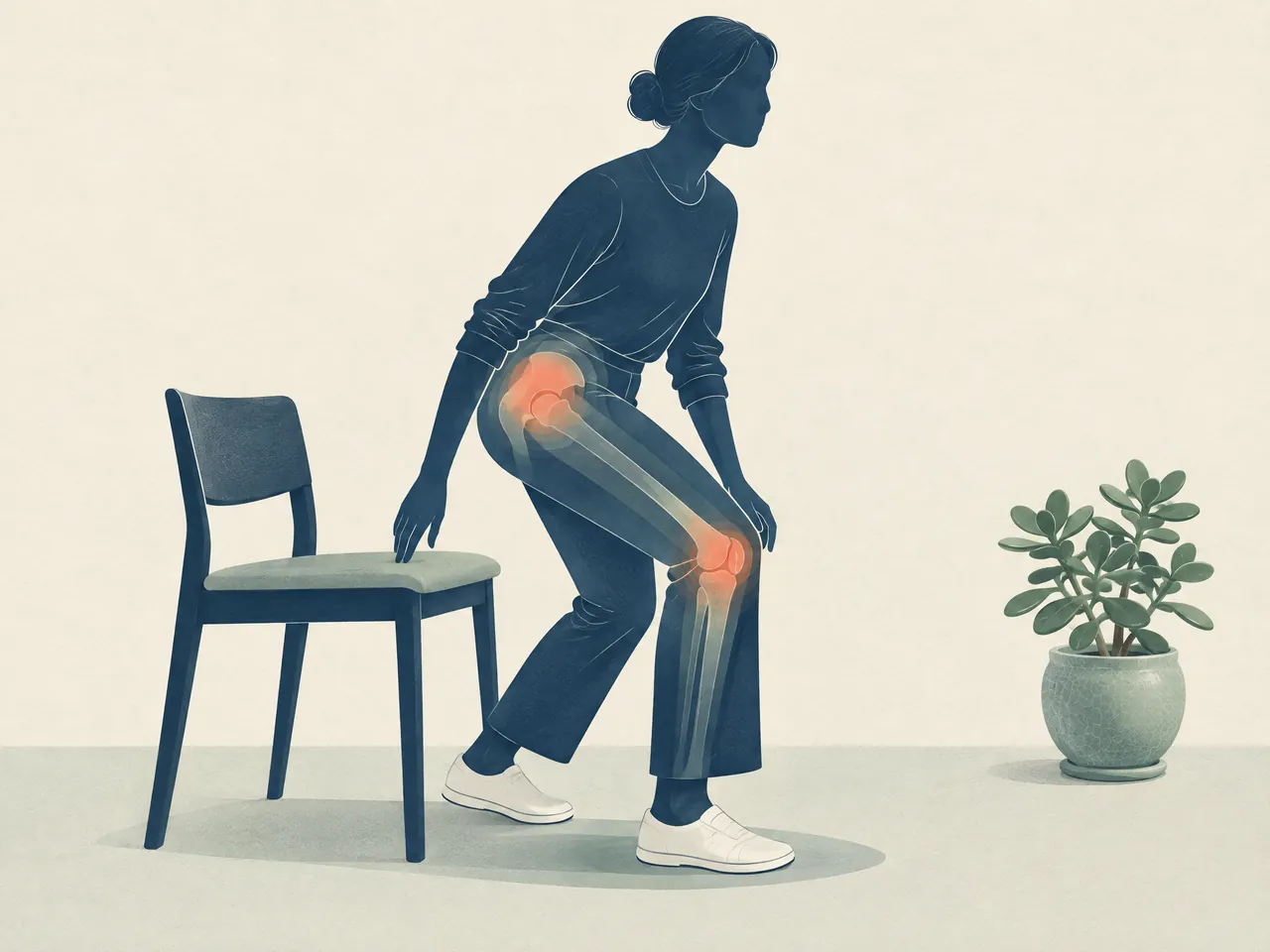
Patterns can offer clues, but they are not a home diagnosis. A knee that becomes painful after overstretching, twisting, or overuse may have a different issue from one that feels stiff in both knees with mild swelling. NHS information lists instability, inability to straighten the knee, or a pop at the time of injury among features that can occur with ligament, tendon, or meniscus damage. [1] Pain with repeated running or jumping may be associated with a tendon problem, whereas a sudden episode of intense pain with a hot red joint raises a different concern.
Knee osteoarthritis commonly involves activity-related joint pain, stiffness, and change in function, but these features overlap with other conditions. NICE advises that, in adults meeting particular clinical criteria, osteoarthritis can usually be diagnosed clinically rather than by routine imaging; atypical features such as recent trauma, rapid worsening, deformity, prolonged morning stiffness, or a hot swollen joint merit particular attention. [2] That does not mean every older adult with a sore knee has osteoarthritis, and it does not mean an X-ray result alone should dictate what activities a person can do. A clinician can combine the story, examination, function, and any necessary investigation before a plan is chosen.
Knee Pain Physiotherapy and Acupuncture for Knee Osteoarthritis: Why Assessment Comes First
An assessment puts treatment options in the right order. A doctor or appropriately qualified clinician may first decide whether the knee needs urgent care, an examination, imaging, medication review, referral, or a rehabilitation plan. A useful plan can consider range of movement, leg strength, walking pattern, balance, confidence, work demands, sport, and which daily task matters most. For someone with osteoarthritis, NICE recommends therapeutic exercise tailored to need, including local muscle strengthening or general aerobic fitness, and says supervised sessions may be considered. [2]
Assessment also prevents a false choice between ‘Western’ and ‘Chinese’ care. A person may be following a physiotherapist’s graded exercise plan and still wish to ask does acupuncture help knee pain. That is a reasonable discussion once the likely cause and safety issues are clear. If knee symptoms change during a programme—for example, new locking, major swelling, or inability to bear weight—contact the clinician rather than increasing exercises or arranging complementary care as the only response.
Compare your options
| What you notice | Most useful immediate focus | What to discuss or do next |
|---|---|---|
| Gradual activity-related pain or stiffness without urgent features | Assessment of function and a tailored movement plan | Ask whether knee pain physiotherapy, therapeutic exercise, and other osteoarthritis support are appropriate. [2] |
| Recent minor twist or overuse with soreness or swelling | Protect the knee and use a wrapped cold pack only if comfortable | Monitor function and seek assessment if weight bearing, movement, or swelling is a concern. [1] |
| Known knee osteoarthritis and interest in acupuncture | Keep exercise-based and medical care visible in the plan | Discuss the intended supportive role, safety, and evidence limits with qualified professionals; do not expect a guaranteed outcome. [2] [3] |
| Cannot bear weight, marked swelling or deformity, locking, or a hot red knee with fever | Urgent medical assessment | Do not rely on self-treatment or complementary care as the main response. [1] |
On smaller screens, scroll the table sideways to compare all columns.
Knee Pain Physiotherapy and Acupuncture for Knee Osteoarthritis: Understanding Supportive Care
Supportive care works best when it has a clear job. Physiotherapy may help translate a medical assessment into manageable movement: pacing a return to walking, practising a safer stair strategy, strengthening around the knee and hip, or finding an activity level that is challenging but tolerable. With osteoarthritis, exercise can initially make a sore joint feel more noticeable; NICE advises explaining this possibility while encouraging regular, consistent exercise because adherence is linked with better pain, function, and quality-of-life outcomes over time. [2] This is not a reason to push through sharp pain, a swollen flare, or a new mechanical symptom.
The wider plan may include information, sleep and activity pacing, weight-management support where appropriate, pain-relief decisions with a doctor or pharmacist, and modifications that make work or home tasks less aggravating. NICE identifies therapeutic exercise and weight management, when appropriate, as core treatments alongside information and support for osteoarthritis. [2] A complementary option should fit around those foundations, not quietly replace them. If you are comparing approaches, our article on knee pain acupuncture explores the questions to take to a qualified practitioner without assuming that all knee pain has the same cause.
Knee Pain Physiotherapy and Acupuncture for Knee Osteoarthritis: Traditional Chinese Medicine Assessment
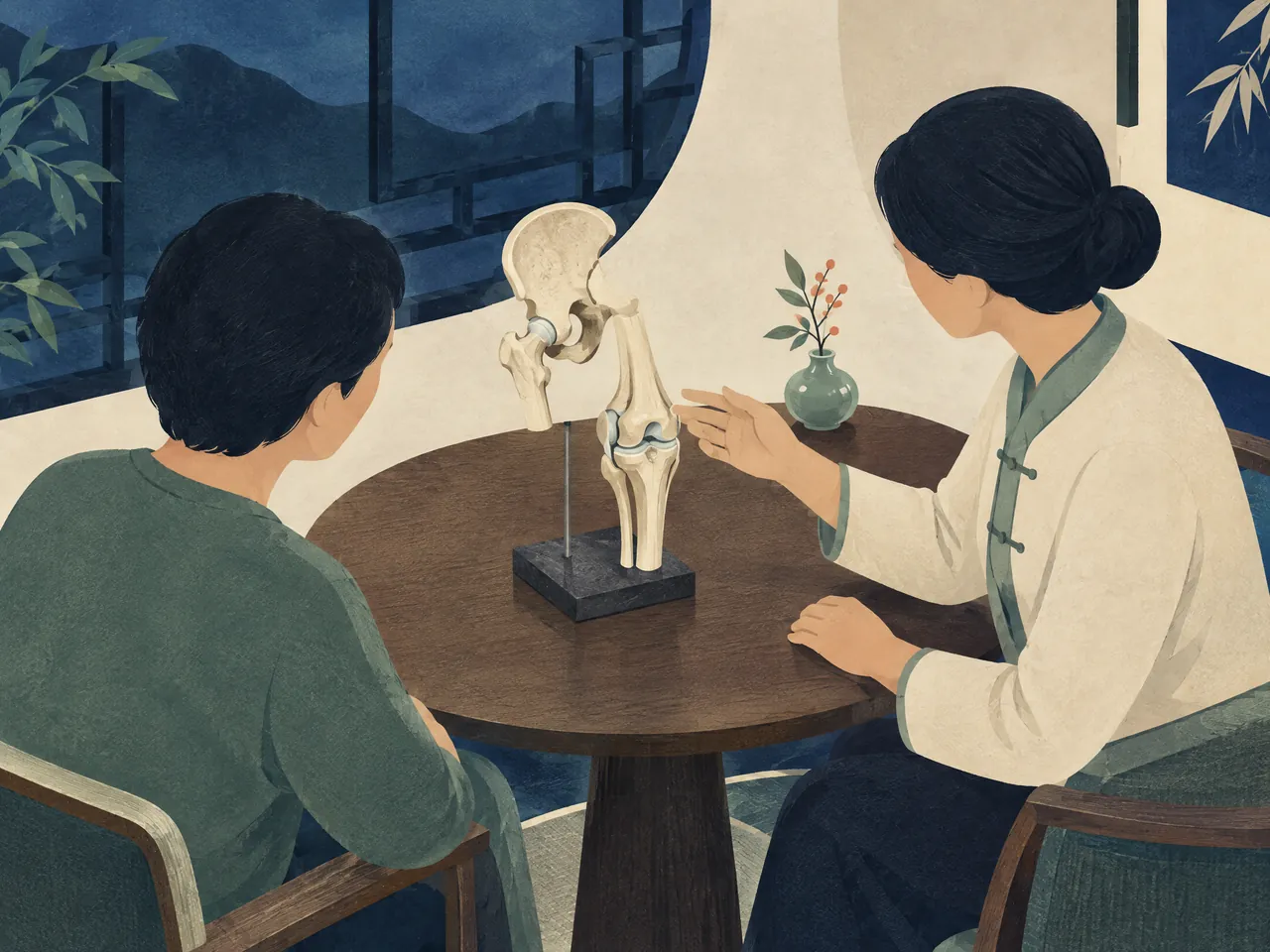
A traditional Chinese medicine consultation should begin with a detailed account of the knee problem and the person, not with an automatic promise of a particular treatment. The practitioner may ask when pain started, whether it is fixed or moves, what makes it worse or easier, whether cold or damp conditions seem relevant to comfort, and how sleep, energy, appetite, bowel habits, past health, and medicines have been affected. In this tradition, descriptions such as wind, cold, dampness, blood stasis, or constitutional deficiency are pattern-based concepts; they are not modern medical diagnoses of a torn ligament, infection, gout, or osteoarthritis.
That distinction matters when considering acupuncture for knee osteoarthritis. Share the medical diagnosis if one has been made, as well as any planned surgery, injections, physiotherapy, or medicines. Tell the practitioner about a recent injury, unusual bruising or bleeding, skin infection near the knee, pregnancy, implanted devices, or symptoms that are changing quickly. These details allow a more careful conversation about whether acupuncture is appropriate to discuss and whether another professional should assess the knee first. Acupuncture should be provided by a qualified practitioner using appropriate infection-control practice; serious complications can occur when it is delivered improperly or with nonsterile needles. [3]
Knee Pain Physiotherapy and Acupuncture for Knee Osteoarthritis: What the Evidence Can and Cannot Say
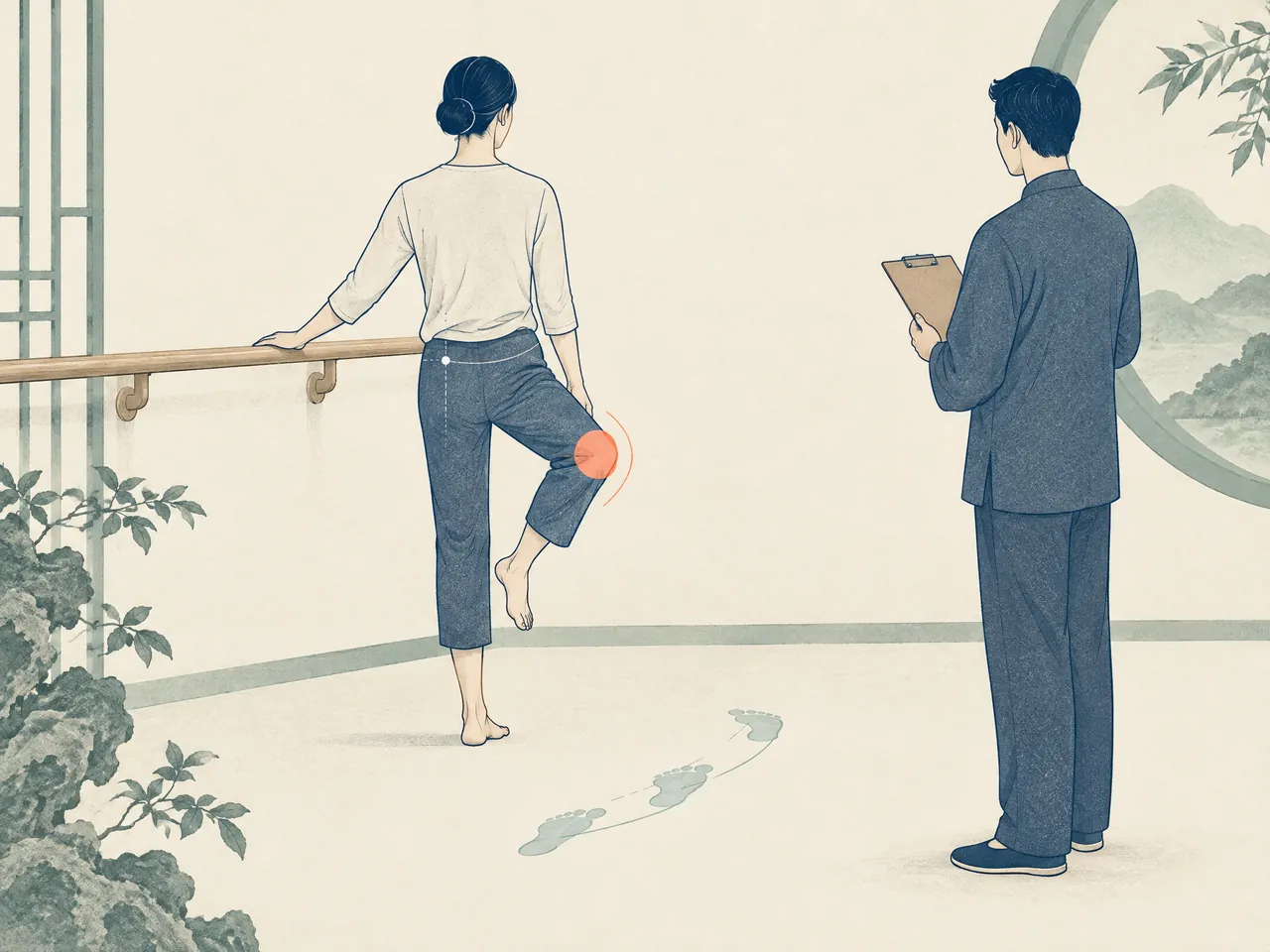
The evidence on acupuncture for knee osteoarthritis does not support a simple yes-or-no sales answer. NCCIH summarises reviews in which many participants had knee osteoarthritis and notes that an American College of Rheumatology and Arthritis Foundation guideline conditionally recommends acupuncture for osteoarthritis of the knee, hip, or hand. [3] A conditional recommendation is not a guarantee that it will suit an individual, and study findings do not tell a person with a fresh injury, suspected infection, or mechanical locking to skip assessment.
Guidance can differ. NICE specifically says not to offer acupuncture or dry needling to manage osteoarthritis, while its recommendations place tailored therapeutic exercise and, where appropriate, weight management at the centre of care. [2] The practical takeaway is not that a reader must settle the disagreement alone. It is to ask what the intended role is, what the main diagnosis and functional goal are, what established care is continuing, and how progress or lack of progress will be reviewed. No responsible discussion should claim that acupuncture regrows cartilage, cures every knee problem, or guarantees that a fixed number of sessions will work.
Knee Pain Physiotherapy and Acupuncture for Knee Osteoarthritis: Practical Next Steps
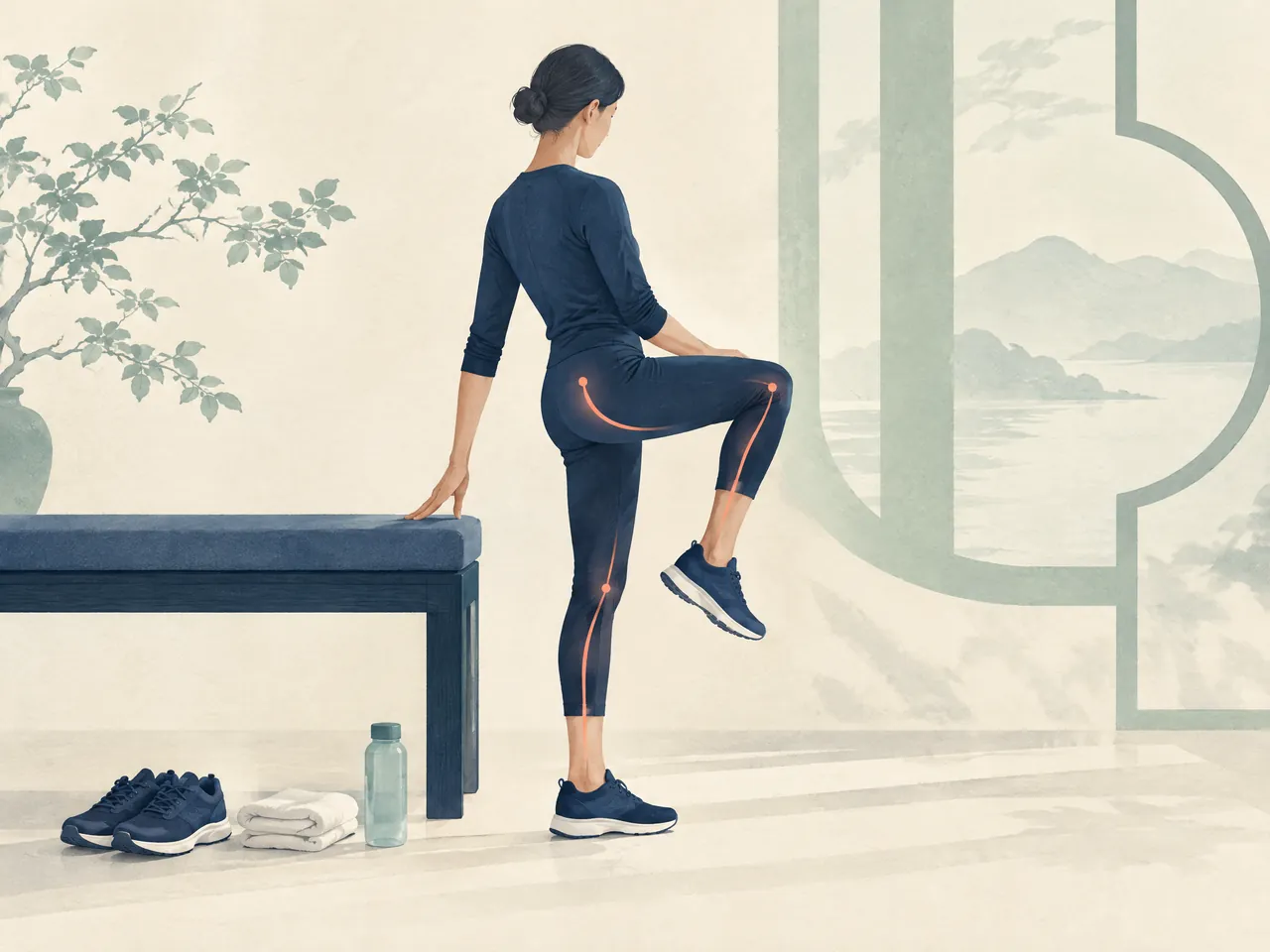
Start with a small, observable plan rather than changing everything at once. If a clinician has excluded an urgent problem, write down the activity that is currently limited, such as walking to the bus, standing to cook, using stairs, or returning to exercise. Then agree a tolerable starting point and a review point with the relevant clinician. In knee pain physiotherapy, a programme may use controlled strengthening, range-of-motion work, balance, walking, or other activity selected for the person’s needs. The key is progression that is specific enough to follow and flexible enough to adjust if swelling, pain, sleep, or function changes.
Good self-management also means preserving the information that helps a clinician. Keep a brief note of the onset, triggers, swelling, morning stiffness, episodes of giving way or locking, and the effect of rest, movement, heat, cold, and exercises. If you are considering more than one kind of care, tell each provider what the others have advised. That reduces the risk of conflicting activity instructions and keeps rehabilitation visible in the overall plan. For an at-a-glance reminder of symptoms that deserve escalation, see knee pain red flags.
Knee Pain Physiotherapy and Acupuncture for Knee Osteoarthritis: Heat, Cold and Everyday Activity
Heat and cold are comfort measures, not diagnostic tests or treatments that repair a structural problem. A wrapped cold pack may feel helpful after a recent minor injury or when swelling is prominent. NHS advises using an ice pack or a bag of frozen peas wrapped in a tea towel for up to 20 minutes every 2 to 3 hours for knee pain and swelling. [1] Avoid putting ice directly on skin and stop if the area becomes painfully numb, unusually pale, or more uncomfortable. More detail on practical setup is available in our guide, ice pack for knee pain.
Gentle warmth may be more comfortable for a knee that mainly feels stiff or for surrounding muscle tightness, provided there is no unexplained heat, marked swelling, or other warning sign. Use a cloth barrier, a comfortable temperature, and a session you can supervise; do not sleep on a heat source. If either option aggravates symptoms, stop rather than persisting because a general rule said it ‘should’ help. For a closer comparison of timing and skin safety, read should I use heat or ice for knee pain.

Knee Pain Physiotherapy and Acupuncture for Knee Osteoarthritis: When to Seek Medical Care
Get urgent medical advice rather than relying on heat, cold, exercise, or acupuncture if you cannot move the knee or put weight on it, the knee is badly swollen or has changed shape, or it locks, gives way, or painfully clicks. A very painful knee also needs prompt attention. Fever or feeling hot, cold, or shivery together with redness or heat around the knee can signal infection and needs urgent assessment. [1] These symptoms need a clinician to decide whether examination, imaging, or other treatment is required.
Arrange a non-urgent medical review when knee pain is persistent, worsening, substantially changes usual activity, or does not improve with sensible self-care. If you want to enquire about a Chinese medicine assessment after urgent causes have been addressed, message TCM Lab on WhatsApp at +852 6940 5663 and state the onset, diagnosis if known, current treatment, and any relevant medicines. You may ask about appointment availability at the Kwun Tong Chinese medicine clinic or Chinese medicine clinic Prince Edward. This is an enquiry, not automatic booking; appointment arrangements depend on practitioner availability. Continue to involve your doctor or physiotherapist where their assessment or rehabilitation plan is part of your care.
Care and health guide
Knee discomfort: care information
This directory brings together services, reading, and visit information related to knee discomfort, to help you prepare questions for a consultation.
When knee discomfort affects your day, noting when it occurs, its relation to activity, and what you have already tried can help prepare a consultation; Chinese medicine pain management Hong Kong is a relevant service or reading entry point.
Individual circumstances differ, and acupuncture Hong Kong offers related information to help you understand options and prepare questions.


Your questions, answered
Frequently asked questions
Can physiotherapy help knee osteoarthritis?
A physiotherapist or other qualified clinician can assess your movement, strength, function, and goals, then tailor therapeutic exercise. NICE recommends therapeutic exercise for all people with osteoarthritis and says supervised sessions may be considered. [2] The right programme depends on the person and should be reviewed if symptoms change.
Does acupuncture work for knee osteoarthritis?
The answer is not the same in every guideline. NCCIH notes a conditional recommendation in one rheumatology guideline, but NICE says not to offer acupuncture or dry needling to manage osteoarthritis. [2] [3] Consider it only as a discussion about complementary care after the cause of knee pain and any medical needs have been assessed; no cure or outcome can be guaranteed.
Should I use ice or heat for knee pain?
A wrapped cold pack may be a comfort option after a recent minor injury or with swelling; NHS advises up to 20 minutes every 2 to 3 hours for knee pain and swelling. [1] Gentle warmth may feel better for stiffness, but stop either method if symptoms worsen. Do not use a temperature treatment to delay assessment of a hot, red, very swollen, or unstable knee.
When does knee pain need urgent medical attention?
Seek urgent advice if you cannot move the knee or bear weight, it is badly swollen or changed shape, it locks, gives way, or painfully clicks, or you have fever or shivering with redness or heat around the knee. [1] Significant trauma or rapidly worsening symptoms also need assessment rather than self-care alone.
Sources and further information
- [1] NHS — Knee pain
Referenced for: Supports possible causes of knee pain, use of a wrapped ice pack for knee pain and swelling, physiotherapy as a possible treatment, and urgent referral features.
- [2] NICE NG226 — Osteoarthritis in over 16s: diagnosis and management
Referenced for: Supports clinical diagnosis criteria, therapeutic exercise and weight management as core osteoarthritis care, and the NICE recommendation not to offer acupuncture or dry needling for osteoarthritis.
- [3] NCCIH — Acupuncture: What You Need To Know
Referenced for: Supports the description of osteoarthritis evidence context, a conditional rheumatology recommendation, safety concerns with improper or nonsterile acupuncture, and the advice not to postpone medical care.