
TCM Lab · Health reading
Sudden Patchy Hair Loss, Sudden Bald Spot, Round Bald Patch on Scalp: What to Do
Published Updated
A new bare area can be alarming, particularly when it looks like a sudden bald spot rather than the gradual thinning you expected. The useful first step is not to count every hair, but to notice the pattern: when the change began, whether the patch is spreading, and what the skin feels and looks like. A round bald patch on scalp may have more than one explanation. Prompt assessment is sensible when the change is rapid, the scalp is inflamed or damaged-looking, or hair loss affects other areas as well.
Appointments are confirmed through WhatsApp. If you have language requirements, please mention them in your enquiry.
The short answer
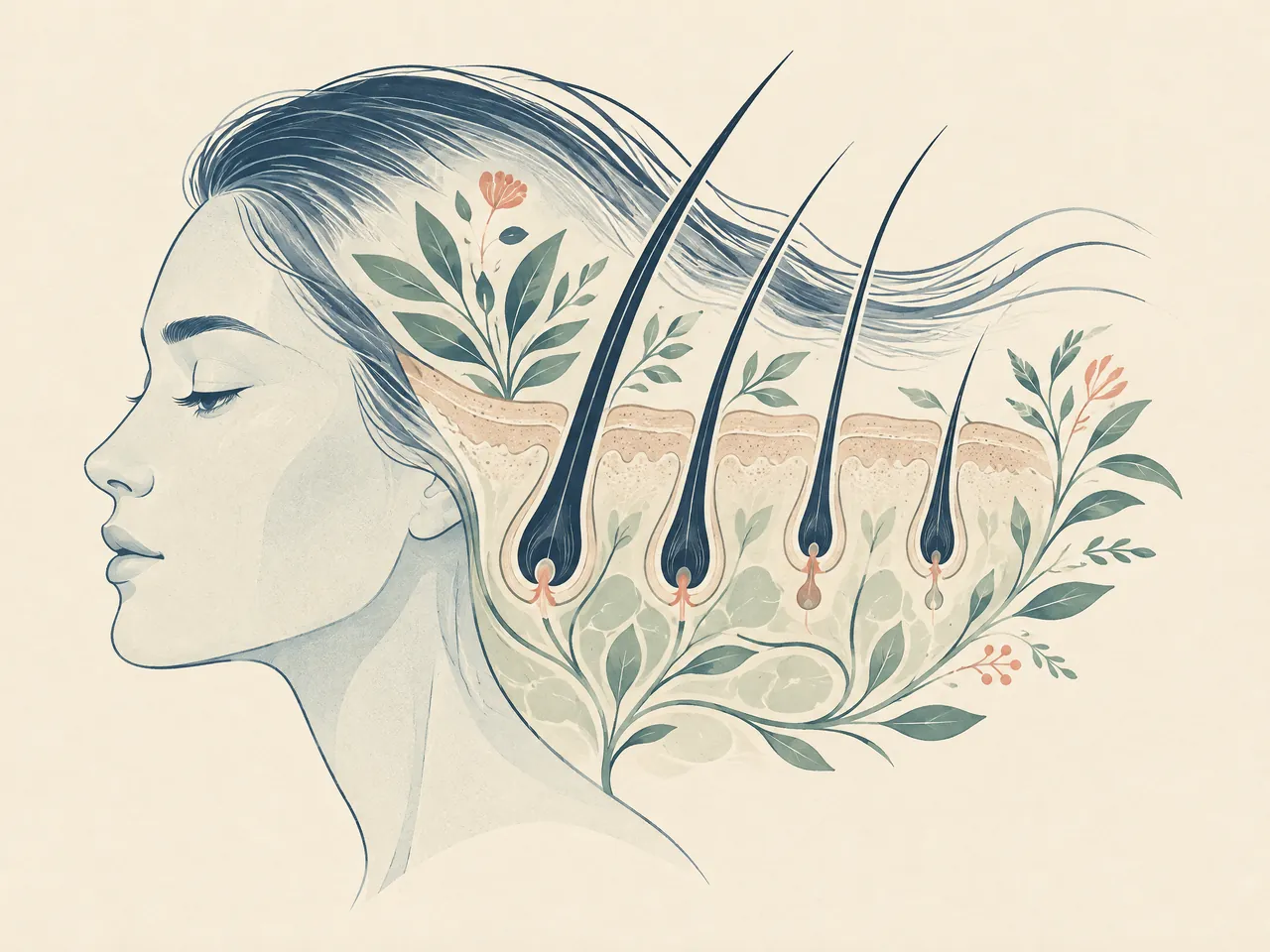
Sudden patchy hair loss deserves a medical assessment when a new smooth round or oval area appears, expands, or is joined by further patches. Arrange advice sooner if the scalp is painful, red, hot, scaly, crusted, oozing, shiny or scar-like, or if eyebrows, eyelashes or beard hair are changing. Bring a brief timeline, comparable photographs and a list of recent illnesses, medicines and other changes. A clinician can examine the pattern and decide whether any tests are useful.
Transparent pricing
See the fees.
Choose your care.
Explore our complete official price list, including first-trial prices, regular prices, packages and branch-specific options.
Opening WhatsApp prepares an enquiry; it does not send a message, take payment or confirm an appointment. Suitability and individual arrangements are confirmed during consultation.
Hair and scalp
All prices in HKDScalp health and hair-loss management
Includes AI scalp analysis, deep scalp and follicle cleansing, and scalp oil-control care.
HK$380 (first trial)
Regular price: HK$680
- 6 sessions: HK$3,480 (HK$580 per session)
- 12 sessions: HK$5,760 (HK$480 per session)
- 20 sessions: HK$8,600 (HK$430 per session)
- 30 sessions: HK$11,400 (HK$380 per session)
Hair acupuncture and Chinese herbal medicine package
Includes scalp acupuncture and 3 days of Chinese herbal medicine that does not require decoction.
HK$580 (single session)
Registered Chinese Medicine Practitioner consultation
- 6 sessions: HK$3,180 (HK$530 per session)
- 12 sessions: HK$5,760 (HK$480 per session)
- 20 sessions: HK$8,600 (HK$430 per session)
- 30 sessions: HK$11,400 (HK$380 per session)
Combined hair and scalp treatment
Combines acupuncture and Chinese herbal medicine with salon-level scalp and follicle care. Packages include complimentary hair-care shampoo and serum.
HK$1,260 (single session)
Combined treatment
- 8 sessions: HK$8,640 (HK$1,080 per session)
- 16 sessions: HK$15,680 (HK$980 per session)
- 20 sessions: HK$18,600 (HK$930 per session)
- 30 sessions: HK$26,400 (HK$880 per session)
Weight management
All prices in HKDFull-body acupoint embedding for weight management
Includes full-body acupoint embedding. Packages include complimentary Chinese herbal medicine for weight management, with the number of included days scaled to the package. Embedding material and the individual treatment arrangement are confirmed during consultation; this is not a cosmetic thread lift.
HK$980 (single session)
No trial session
- 10 sessions: HK$7,800 (HK$780 per session)
- 20 sessions: HK$14,600 (HK$730 per session)
- 30 sessions: HK$20,400 (HK$680 per session)
Facial acupuncture
All prices in HKDFacial acupuncture (basic)
Includes facial acupuncture and meridian-based facial care, including care for facial puffiness.
HK$480 (first trial)
Regular price: HK$680
- 10 sessions: HK$5,200 (HK$520 per session)
- 20 sessions: HK$9,600 (HK$480 per session)
- 30 sessions: HK$13,500 (HK$450 per session)
Facial acupuncture (advanced)
Includes enhanced facial acupuncture with a specially formulated moisturising mask and serum.
HK$780 (first trial)
Regular price: HK$1,180
- 10 sessions: HK$9,000 (HK$900 per session)
- 20 sessions: HK$16,600 (HK$830 per session)
- 30 sessions: HK$23,400 (HK$780 per session)
Pain care
All prices in HKDExtracorporeal shockwave treatment
Shockwave treatment for deep-tissue and fascial care. The Kwun Tong clinic offers the multi-area options shown below.
Priced by branch
Branch-specific pricing
Prince Edward: HK$250 per area
Kwun Tong: HK$250 for 1 area / HK$450 for 2 areas / HK$600 for 3 areas
Pain care (manual therapy)
Includes Chinese medicine musculoskeletal assessment, manual joint techniques and tui na.
HK$580 (single session)
Chinese medicine musculoskeletal assessment
Pain care (acupuncture and manual therapy)
Combines acupuncture and manual therapy.
HK$680 (single session)
Combined care
Chinese medicine
All prices in HKDAcupuncture and Chinese herbal medicine package
Includes a Chinese medicine consultation with pulse assessment, body acupuncture and 3 days of Chinese herbal granules that do not require decoction.
HK$580 (single session)
Chinese medicine consultation with pulse assessment
Sudden Patchy Hair Loss, Sudden Bald Spot, Round Bald Patch on Scalp: Recognising the Pattern
Hair loss is a description, not a diagnosis. Everyday shedding can be noticeable in the shower or on a brush, yet a localised patch is a different observation from a broader reduction in density along a parting, at the temples, or over the crown. The Centre for Health Protection notes that hair loss can follow several pathways, including scalp infection or skin damage, medical conditions, medicines, nutrition issues and stress; it also describes small, round patchy scalp loss with alopecia areata. [1] The aim is not to assign yourself to one cause at home. It is to describe what changed accurately enough that a clinician can compare the pattern with the scalp, hair and your history. A date, a location and a photograph are generally more useful than an estimate of how many hairs came out on one wash day.
Look at the patch in ordinary daylight without scratching or repeatedly testing it. Is hair absent from a defined area, thinner throughout an area, or breaking at different lengths? Is the skin the same colour and texture as nearby scalp? Have you noticed a second area, a widening edge, altered eyebrows, eyelashes or beard hair? The answers do not diagnose sudden patchy hair loss, but they make an assessment more efficient. They also help distinguish a sudden discovery from a sudden biological change: a small patch beneath longer hair may have been present before it was first seen. If the patch is new, use the same parting, distance and lighting for weekly photographs so apparent size is not distorted by wet hair, concealer fibres or a changed camera angle.

Sudden Patchy Hair Loss, Sudden Bald Spot, Round Bald Patch on Scalp: Gradual Thinning or Sudden Change
Gradual thinning usually reads as a change in coverage. A ponytail may feel less full, a centre part may appear broader, or scalp may show through more readily under overhead light. A sudden bald spot, by contrast, is a focal area that seems to have changed over days or weeks, sometimes noticed during washing, styling or a haircut. The distinction matters because the discussion in a consultation starts in different places. The American Academy of Dermatology advises clinicians to ask how long hair loss has been present and whether it came on quickly, then to examine the scalp, nails and other hair-bearing areas. [3] Tell the story in your own terms: “I first saw it on Tuesday,” “it was the size of a coin then,” or “there are now two areas” is clearer than trying to label it.
Sudden Patchy Hair Loss, Sudden Bald Spot, Round Bald Patch on Scalp: Smooth, Round and Oval Areas
A smooth, round or oval bare area is a familiar reason people search for a round bald patch on scalp. Alopecia areata is one possibility. NIH’s National Institute of Arthritis and Musculoskeletal and Skin Diseases describes it as an immune-system disease that can cause sudden round or oval patches, typically on the scalp, and may also affect the beard, eyebrows or eyelashes. It says there is usually no rash, redness or scarring on the bare patch, although some people notice tingling, burning or itching before hair falls out. [2] That description can be helpful when preparing questions, but it is not a self-test. Other conditions may resemble the pattern, and a clinician needs to look at the affected skin and hair openings.
Compare your options
| What you notice | Why it is useful to report | Sensible next step |
|---|---|---|
| One smooth round or oval patch, with no obvious redness | Describes the shape, surface and onset; several conditions can still look similar | Book a non-emergency medical assessment and take comparable photographs |
| A patch enlarging or new patches appearing over days or weeks | Shows the pace and distribution of change | Arrange assessment promptly; note dates and any eyebrow, eyelash or beard changes |
| Redness, pain, warmth, swelling, scaling, crusting, blisters or discharge | Points to scalp symptoms that need direct review | Seek medical advice promptly; avoid irritating products and do not pick at the area |
| Shiny, scar-like or depressed-looking skin, or loss after a scalp injury | Surface changes may alter the assessment priority | Arrange timely medical review rather than waiting to see whether hair returns |
| Diffuse shedding after illness, surgery, a medicine change or major weight change | Gives context that may guide the history and examination | Record the timing and discuss it with a clinician; do not stop prescribed medicines without advice |
On smaller screens, scroll the table sideways to compare all columns.
Sudden Patchy Hair Loss, Sudden Bald Spot, Round Bald Patch on Scalp: Signs That Need Assessment
Seek timely medical advice when a patch is growing quickly, multiple areas appear, or the scalp itself is changing. Pain, marked tenderness, warmth, swelling, redness, scaling, thick crust, blisters, fluid, pustules or a bleeding area are not details to mask with styling products. They can point to inflammation, infection or another skin problem that needs a direct examination. The Centre for Health Protection specifically advises consulting a doctor when continual hair loss is suspected or skin under the involved area is abnormal. [1] This is especially important when the surface looks shiny, depressed or unlike surrounding scalp, because the priority is to clarify what is happening to the follicles and skin rather than to keep changing shampoos, oils or supplements.

Sudden Patchy Hair Loss, Sudden Bald Spot, Round Bald Patch on Scalp: Redness, Pain and Scaling
Redness, pain and scaling deserve their own description because they are not interchangeable. Redness can be faint or widespread; scaling may be fine and dry, greasy, adherent or associated with crust; pain may be soreness to touch, burning or a deep tender sensation. State whether itching came before hair loss or after you began using a product, whether there is oozing or an odour, and whether someone close to you has a similar scalp problem. Clear wording helps the clinician decide how quickly you should be seen and which examinations matter. It also reduces the risk that a symptom-heavy patch is mistaken for a purely cosmetic issue. A scalp that hurts, leaks fluid or develops worsening crust should not be repeatedly scrubbed, exfoliated or needled at home.

Sudden Patchy Hair Loss, Sudden Bald Spot, Round Bald Patch on Scalp: Inflammation, Infection or Scarring Clues
Some clues are best treated as prompts for assessment, not as labels. Broken hairs, black dots, scaling and swollen areas can occur in scalp conditions that require different care from smooth non-inflamed patches. Likewise, a glossy surface, altered texture, loss of visible follicle openings or a scar-like appearance is worth showing a clinician promptly. The American Academy of Dermatology explains that close examination of the scalp, nails and other hair-loss areas provides important clues, and that testing may be selected when a disease, nutritional issue, hormone imbalance or infection is suspected. [3] Photographs are useful for showing change over time, but they cannot show every feature an in-person scalp examination can assess.
Avoid assuming that “natural” means suitable for inflamed skin. Essential oils, strong topical mixtures, hair dyes, friction tools and unverified supplements can irritate the scalp, obscure the original picture or complicate a medication history. Bring containers or a phone list of everything applied or taken, including supplements. If a clinician has already identified alopecia areata and you are learning the vocabulary, the overview of alopecia areata symptoms can help you frame follow-up questions. For any planned acupuncture related to hair concerns, review hair loss acupuncture risks and disclose scalp symptoms first. Neither page substitutes for assessment of a painful, infected-looking or scar-like patch.
Sudden Patchy Hair Loss, Sudden Bald Spot, Round Bald Patch on Scalp: Preparing for a Consultation
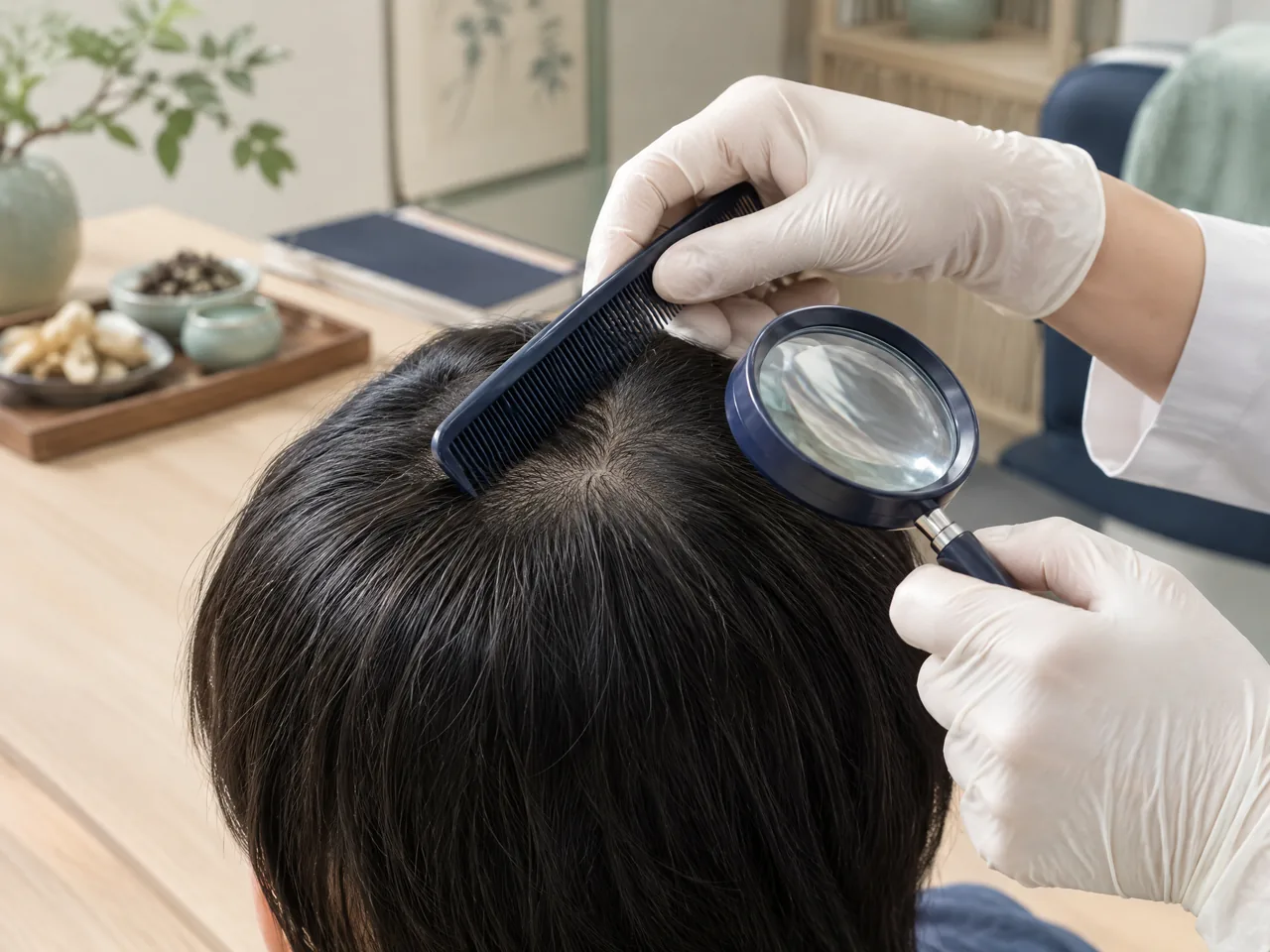
Preparation need not be elaborate. The useful goal is a one-page account of what changed, not a perfect diagnosis. Start with the first date you noticed the patch, where it appeared and how its edge or size has changed. Add associated scalp sensations, other areas of hair loss, nail changes and whether hair seems to be shedding, breaking or absent from a defined area. Then add context: fever or other illness, surgery, childbirth, sleep disruption, major stress, a substantial change in diet or weight, new or stopped medicines, supplements and hair practices. Family patterns may be relevant too. The clinician can decide which details matter after examining you; giving the timeline prevents important clues from being lost in the pressure of a short visit.

It is reasonable to ask what pattern is being considered, what scalp findings were seen, whether there is evidence of inflammation or infection, and what signs should prompt earlier review. Ask whether any tests are indicated in your own case and what each test is intended to clarify. This keeps the conversation focused without asking for a predetermined blood panel or biopsy. NIAMS says that alopecia areata is commonly diagnosed through examination of the affected areas and nails, magnified inspection of the hair and follicle openings, and medical and family history; tests may be used when another condition is possible. [4] If you seek a complementary consultation later, share any clinician’s diagnosis and current treatment so advice is not based only on a photograph. The overview of Chinese medicine for hair loss can help you decide what to ask when making that separate enquiry.

Sudden Patchy Hair Loss, Sudden Bald Spot, Round Bald Patch on Scalp: Health History and Recent Changes
Separate the timeline into before, during and after the patch appeared. Before: note a recent fever, COVID-19 or other illness, operation, childbirth, medication change, restrictive diet, intense training period, major stressor or new hair practice. During: record the first location, whether it was itchy, sore, flaky or smooth, and whether the bare area enlarged or new areas appeared. After: note what you applied, whether there was a change in shedding, and whether any eyebrow, eyelash, beard or nail changes developed. These notes do not prove that one event caused the sudden bald spot. They give a clinician a more complete context and avoid the common mistake of treating the nearest event in time as the only explanation.
Include the ordinary details people often forget: prescription and non-prescription medicines, vitamins, traditional products, protein or weight-loss products, recent colouring, bleaching, perming, extensions and tight styling. Do not stop prescribed medication because hair changed without discussing it with the prescriber. A clinician may look for more than one contributor; the AAD notes that a person can have more than one cause of hair loss at the same time. [3] If there is a family history, say what you know without assuming it explains the new patch. The assessment begins with the present pattern on your scalp, then puts the history beside it.

Sudden Patchy Hair Loss, Sudden Bald Spot, Round Bald Patch on Scalp: Photos and Questions to Bring
Photographs work best when they are consistent and modest. Take one clear image of the overall area and one closer image, with dry hair if possible, in the same lighting and from the same distance each time. Keep the original dates. Avoid filters, dramatic flash and scalp concealers immediately before the image because they can alter colour and coverage. If privacy is a concern, crop out your face and identify the location on the scalp in a private note. Bring images even if the patch has changed or partly filled in; progression, fluctuation and regrowth can all be useful context. An image is a record of appearance, not a substitute for looking at the scalp directly.
Write three to five questions in advance. Examples include: “What features on my scalp are relevant?” “Does this look like localised loss, breakage or diffuse shedding?” “Are there signs of inflammation, infection or scarring?” “Should I have follow-up, and what change should make me return sooner?” and “Do any of my medicines or recent health changes matter?” If you are considering any scalp procedure, add a direct safety question. This approach keeps the discussion centred on evidence from your examination and history. It also leaves room to discuss the practical impact of sudden patchy hair loss, such as coverage at work, sun protection for bare skin, or the anxiety of watching for a new patch, without having to minimise the concern.
Care and health guide
Hair and scalp care information
This directory brings together services, reading, and visit information related to hair and scalp care, to help you prepare questions for a consultation.
For questions about hair or scalp care, noting the everyday concerns and service questions you want to discuss can help prepare a consultation; Chinese medicine for hair loss is a relevant service or reading entry point.
People may have different priorities, and acupuncture Hong Kong offers related information to help you understand options and prepare questions.

Your questions, answered
Frequently asked questions
Is a sudden bald spot always alopecia areata?
No. Alopecia areata often causes sudden round or oval patches, but a bald-looking area can also reflect breakage, inflammation, infection, scarring processes or other hair-loss patterns. A clinician needs to examine the scalp and consider the history before identifying the cause.
When should I seek medical advice for sudden patchy hair loss?
Arrange advice when the patch is new, growing or joined by more patches, and seek it promptly for redness, pain, warmth, swelling, scaling, crusting, discharge, blisters or a shiny scar-like surface. Also mention loss of eyebrow, eyelash or beard hair.
Will I automatically need blood tests or a scalp biopsy?
No. The examination and your history guide the next step. NIAMS notes that clinicians may order blood tests or a skin biopsy when another condition could be causing a similar pattern, rather than using the same tests for every person with a patch. [4]
Can I use photographs to monitor a round bald patch on scalp?
Yes. Photographs taken in similar lighting, from the same angle and with dates can help show progression or regrowth. They are useful to bring to a consultation, but cannot replace examination of the scalp, hair and follicle openings.
Sources and further information
- [1] [1] Hong Kong Centre for Health Protection: Men's Health Line - Alopecia
Referenced for: Official Hong Kong guidance on alopecia patterns, possible causes, abnormal scalp skin, seeking medical advice and clinician-selected investigations.
- [2] [2] NIH NIAMS: Alopecia Areata
Referenced for: NIH overview of alopecia areata, including typical patch appearance, body areas affected and associated scalp sensations.
- [3] [3] American Academy of Dermatology: Hair loss diagnosis and treatment
Referenced for: Dermatology guidance on hair-loss history, examination, possible contributors and selection of tests.
- [4] [4] NIH NIAMS: Alopecia Areata Diagnosis, Treatment, and Steps to Take
Referenced for: NIH guidance on examination, medical and family history, and when blood tests or a skin biopsy may be used to distinguish a similar condition.