
TCM Lab · Health reading
Wrist Sprain Symptoms, Wrist Tendonitis Symptoms and Ganglion Cyst Wrist Symptoms Explained
Published Updated
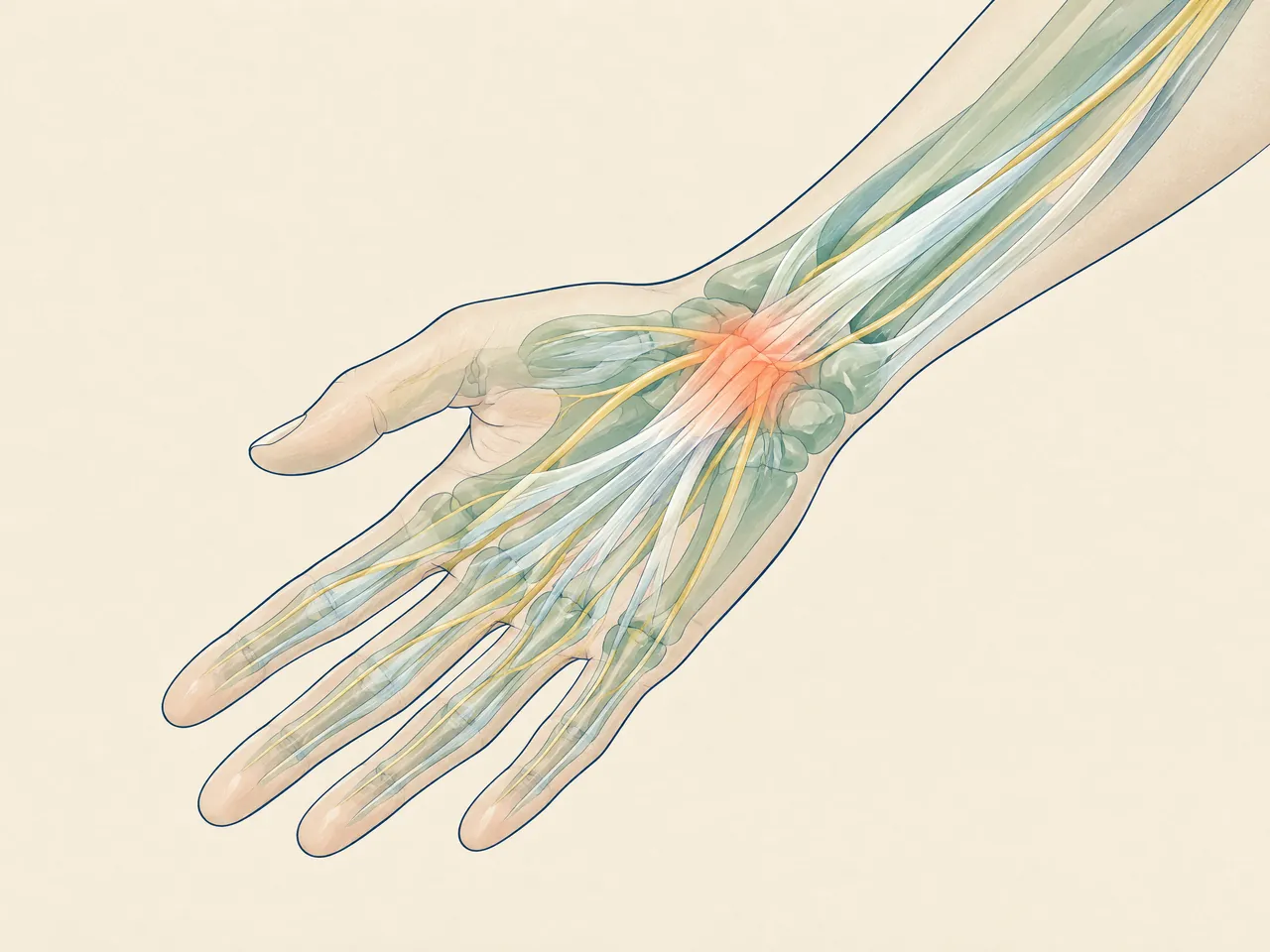
A painful wrist after a fall, a gradually sore thumb-side wrist after computer work, and a new bump near the joint can feel similar at first. They point to different questions, however. Wrist sprain symptoms commonly follow a sudden force and may include swelling, bruising and difficulty using the hand. Wrist tendonitis symptoms often become more noticeable with repeated movement. Ganglion cyst wrist symptoms may centre on a smooth lump, sometimes with pressure or pain. The pattern is useful information, not a diagnosis: recording the event, exact site, hand sensation and grip changes helps a clinician decide what needs attention.
Appointments are confirmed through WhatsApp. If you have language requirements, please mention them in your enquiry.
The short answer
Wrist sprain symptoms often begin soon after a twist, fall or impact, with pain, swelling, bruising and reduced movement. Wrist tendonitis symptoms more often build with repeated loading and may be felt near the thumb base or along a tendon during specific motions. Ganglion cyst wrist symptoms commonly include a smooth wrist lump that may change in size, ache or press on nearby structures. Severe pain, deformity, loss of feeling, marked weakness, or a hot red swelling needs prompt medical assessment.
Transparent pricing
See the fees.
Choose your care.
Explore our complete official price list, including first-trial prices, regular prices, packages and branch-specific options.
Opening WhatsApp prepares an enquiry; it does not send a message, take payment or confirm an appointment. Suitability and individual arrangements are confirmed during consultation.
Pain care
All prices in HKDExtracorporeal shockwave treatment
Shockwave treatment for deep-tissue and fascial care. The Kwun Tong clinic offers the multi-area options shown below.
Priced by branch
Branch-specific pricing
Prince Edward: HK$250 per area
Kwun Tong: HK$250 for 1 area / HK$450 for 2 areas / HK$600 for 3 areas
Pain care (manual therapy)
Includes Chinese medicine musculoskeletal assessment, manual joint techniques and tui na.
HK$580 (single session)
Chinese medicine musculoskeletal assessment
Pain care (acupuncture and manual therapy)
Combines acupuncture and manual therapy.
HK$680 (single session)
Combined care
Hair and scalp
All prices in HKDScalp health and hair-loss management
Includes AI scalp analysis, deep scalp and follicle cleansing, and scalp oil-control care.
HK$380 (first trial)
Regular price: HK$680
- 6 sessions: HK$3,480 (HK$580 per session)
- 12 sessions: HK$5,760 (HK$480 per session)
- 20 sessions: HK$8,600 (HK$430 per session)
- 30 sessions: HK$11,400 (HK$380 per session)
Hair acupuncture and Chinese herbal medicine package
Includes scalp acupuncture and 3 days of Chinese herbal medicine that does not require decoction.
HK$580 (single session)
Registered Chinese Medicine Practitioner consultation
- 6 sessions: HK$3,180 (HK$530 per session)
- 12 sessions: HK$5,760 (HK$480 per session)
- 20 sessions: HK$8,600 (HK$430 per session)
- 30 sessions: HK$11,400 (HK$380 per session)
Combined hair and scalp treatment
Combines acupuncture and Chinese herbal medicine with salon-level scalp and follicle care. Packages include complimentary hair-care shampoo and serum.
HK$1,260 (single session)
Combined treatment
- 8 sessions: HK$8,640 (HK$1,080 per session)
- 16 sessions: HK$15,680 (HK$980 per session)
- 20 sessions: HK$18,600 (HK$930 per session)
- 30 sessions: HK$26,400 (HK$880 per session)
Weight management
All prices in HKDFull-body acupoint embedding for weight management
Includes full-body acupoint embedding. Packages include complimentary Chinese herbal medicine for weight management, with the number of included days scaled to the package. Embedding material and the individual treatment arrangement are confirmed during consultation; this is not a cosmetic thread lift.
HK$980 (single session)
No trial session
- 10 sessions: HK$7,800 (HK$780 per session)
- 20 sessions: HK$14,600 (HK$730 per session)
- 30 sessions: HK$20,400 (HK$680 per session)
Facial acupuncture
All prices in HKDFacial acupuncture (basic)
Includes facial acupuncture and meridian-based facial care, including care for facial puffiness.
HK$480 (first trial)
Regular price: HK$680
- 10 sessions: HK$5,200 (HK$520 per session)
- 20 sessions: HK$9,600 (HK$480 per session)
- 30 sessions: HK$13,500 (HK$450 per session)
Facial acupuncture (advanced)
Includes enhanced facial acupuncture with a specially formulated moisturising mask and serum.
HK$780 (first trial)
Regular price: HK$1,180
- 10 sessions: HK$9,000 (HK$900 per session)
- 20 sessions: HK$16,600 (HK$830 per session)
- 30 sessions: HK$23,400 (HK$780 per session)
Chinese medicine
All prices in HKDAcupuncture and Chinese herbal medicine package
Includes a Chinese medicine consultation with pulse assessment, body acupuncture and 3 days of Chinese herbal granules that do not require decoction.
HK$580 (single session)
Chinese medicine consultation with pulse assessment
Wrist Sprain Symptoms, Wrist Tendonitis Symptoms and Ganglion Cyst Wrist Symptoms: Start with the Pattern
The first useful distinction is not a label but the story of how the problem started. A sprain is a ligament injury, so wrist sprain symptoms often follow a recognisable incident: catching yourself with an outstretched hand, twisting the wrist while lifting, or taking an impact in sport. Pain, swelling, bruising and trouble moving the wrist or gripping are features the NHS lists for a sprained wrist [1]. A fracture can feel similar, and a fall can cause either, so a symptom checklist cannot safely rule out a bone injury. By contrast, wrist tendonitis symptoms may creep in after the same hand movement is repeated over days or longer, while ganglion cyst wrist symptoms may first be noticed as a bump. Start a short record of onset, activity, side, exact location, swelling, and what you could not do. For a wider overview of overlapping possibilities, see wrist pain causes.

Wrist Sprain Symptoms, Wrist Tendonitis Symptoms and Ganglion Cyst Wrist Symptoms by Pain Location
Location can make the account more precise without proving the cause. After an injury, a sprain may feel tender around the wrist and hurt when the joint is moved, loaded or squeezed. Pain and stiffness at the base of the thumb near the wrist can occur in tendon problems such as de Quervain's disease, although other conditions can affect that area too [1]. A ganglion is often found on the back of the wrist, but it can occur on either side; it may be visible, felt only in a certain wrist position, or associated with local pressure. The American Academy of Orthopaedic Surgeons notes that smaller, hidden ganglions can occur and that a cyst may cause pain, tingling or weakness if it presses on nerves [3]. Describe the spot with one fingertip rather than saying only that the whole hand hurts. Also note whether the painful side is palm-facing, back-of-wrist, thumb-side or little-finger-side, and whether there is a discrete lump.
Pain that travels into the fingers or forearm is another detail to report, but it is not enough to name the source. Wrist structures, tendons, joints and nerves sit close together. A person can also have a pre-existing ache and then sustain a new injury. If the main concern is pain following a specific accident, the page on wrist pain after injury can help organise what to tell a clinician.
Wrist Sprain Symptoms, Wrist Tendonitis Symptoms and Ganglion Cyst Wrist Symptoms after Repeated Use
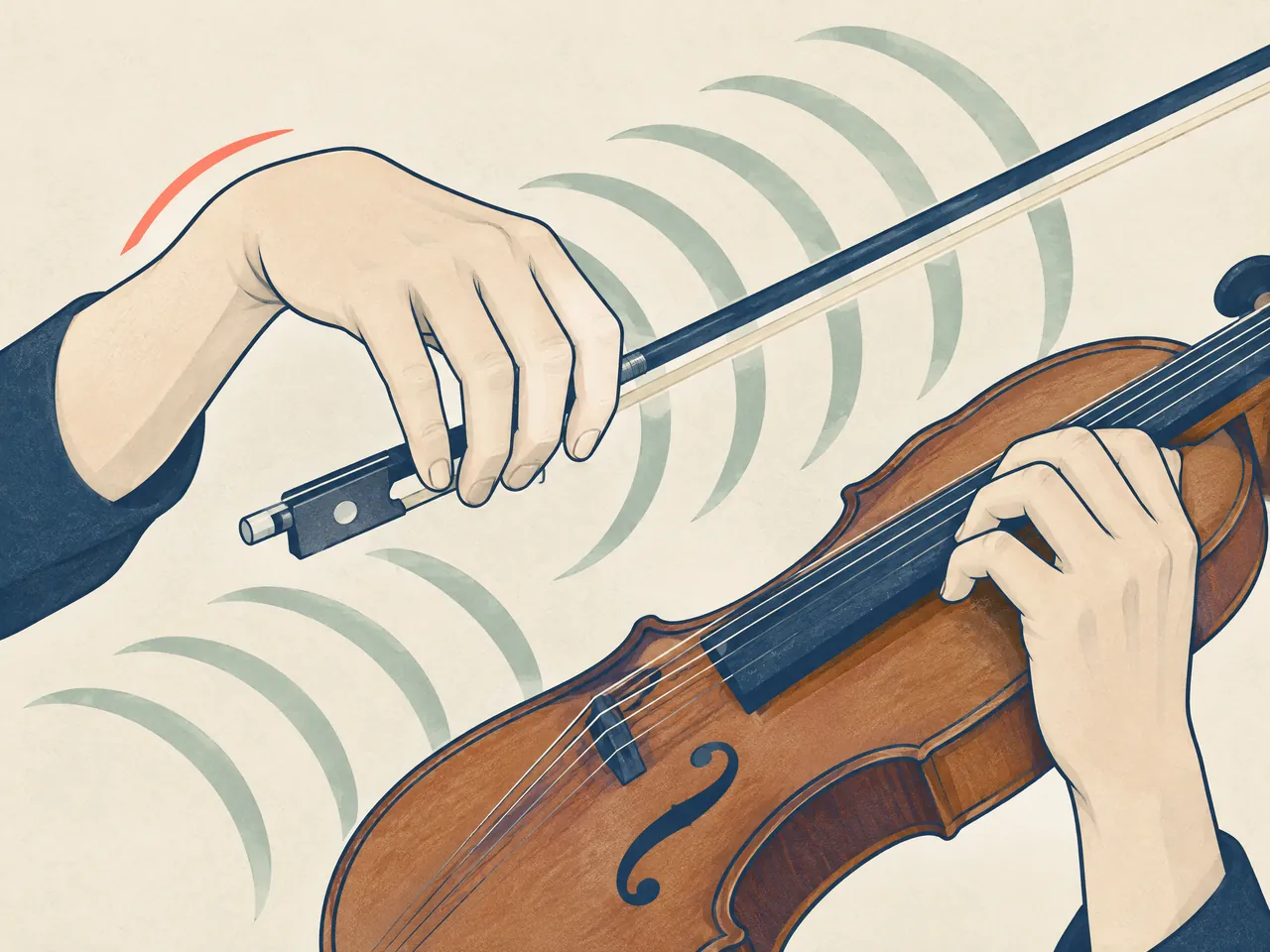
Repeated use does not automatically mean tendonitis, yet the way symptoms respond to load is informative. A person may notice pain when lifting a kettle, using a mouse, scrolling on a phone, cutting food, playing an instrument or doing a gym movement that bends or grips through the wrist. Repetitive wrist motion can inflame tissue around joints or contribute to stress injury, and thumb-base pain can be associated with a repetitive stress condition [2]. Note the action itself, not just the occupation: whether the wrist is bent, whether the thumb pinches, how hard the grip is, and whether symptoms settle after stopping. This gives a clinician something practical to examine. It is more useful than assuming that any computer-related wrist pain is a tendon problem. A ganglion may also feel more prominent or uncomfortable with activity; AAOS says these cysts can change size, sometimes becoming larger with activity and smaller with rest [3].
Compare your options
| Pattern to record | Features that may be noticed | Useful details to write down | When to escalate |
|---|---|---|---|
| Possible injury or sprain pattern | Pain, swelling, bruising, painful movement or grip after a fall, twist or impact | Exact event, time, sound at injury, swelling, ability to use the hand | Urgent if deformity, colour change, severe pain, loss of feeling or inability to move or hold things |
| Possible repeated-use tendon pattern | Pain or stiffness linked to a particular thumb, wrist or gripping motion | Task, wrist position, duration, thumb involvement, what eases it | Book assessment if it keeps returning, worsens or limits normal activity |
| Possible ganglion cyst pattern | Smooth lump, local pressure, aching, or symptoms that vary with activity | Where the lump is, when first noticed, whether it changes size, tenderness | Prompt assessment if very painful, hot, red, or associated with worsening numbness or weakness |
| Possible nerve-related pattern | Tingling, numbness, pins and needles, night symptoms, clumsiness or weak thumb | Which fingers, timing, sleep disruption, dropped objects and neck or arm symptoms | Seek timely care for persistent or worsening symptoms; urgent help for loss of feeling or marked new weakness |
On smaller screens, scroll the table sideways to compare all columns.
Wrist Sprain Symptoms, Wrist Tendonitis Symptoms and Ganglion Cyst Wrist Symptoms: Numbness and Function
Pain intensity matters, but function often tells the clearer story. Ask whether you can turn a key, fasten buttons, type, carry a bag, twist a jar lid, lift a child safely or push yourself up from a chair. Compare the affected side with the other side without forcefully testing through sharp pain. A wrist sprain can temporarily make gripping difficult because movement is painful and the area is swollen. A tendon-related problem can make a particular pinch, thumb movement or wrist angle uncomfortable. A cyst may not interfere at all, or it may become troublesome because of its position or pressure. Persistent loss of function should not be dismissed as ordinary overuse. The NHS advises seeking medical advice when wrist pain prevents normal activities, keeps returning, worsens, or comes with tingling or loss of sensation [1].

Wrist Sprain Symptoms, Wrist Tendonitis Symptoms and Ganglion Cyst Wrist Symptoms with Tingling
Tingling, numbness and pins and needles call for a separate description. Record the fingers involved, whether the sensation is on the palm or back of the hand, whether it wakes you, and whether changing wrist position alters it. The NHS associates aching pain that is worse at night, tingling or numbness in the fingers, hand or arm, weak thumb and difficulty gripping with carpal tunnel syndrome [1]. That is a reason to consider an assessment, not a reason to self-diagnose carpal tunnel from one symptom. A ganglion can occasionally cause tingling if it presses on a nerve [3], while swelling after an injury can make symptoms harder to interpret. For a focused explanation of one nerve-related pattern, read carpal tunnel syndrome symptoms. Sudden complete loss of feeling or new progressive weakness is more urgent than mild intermittent tingling.
Wrist Sprain Symptoms, Wrist Tendonitis Symptoms and Ganglion Cyst Wrist Symptoms that Affect Grip
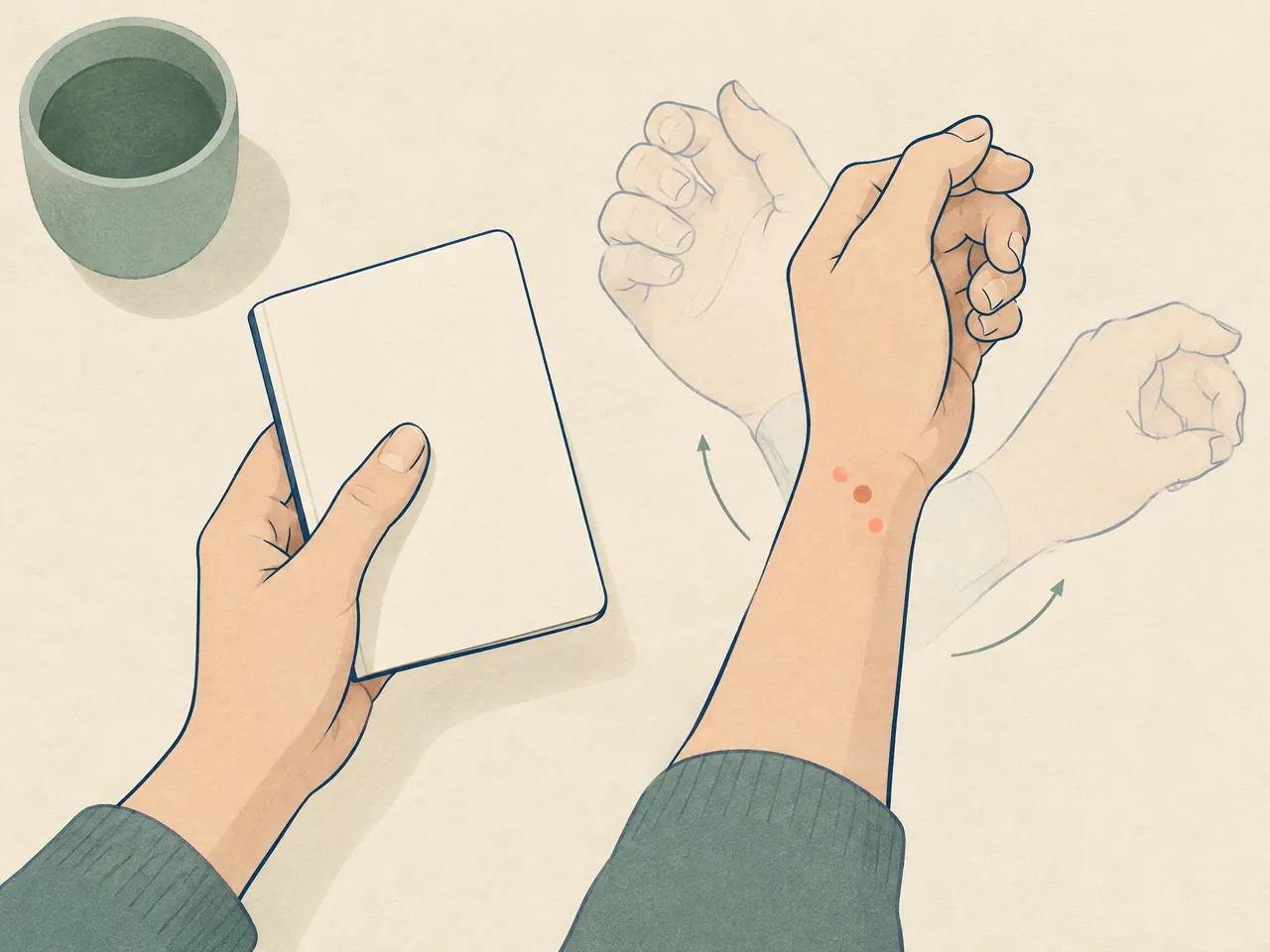
Reduced grip can mean different things. It may be pain inhibition: you can close the hand but stop because the wrist hurts. It may be stiffness that limits the position needed to hold something. Or it may be true weakness, clumsiness or altered sensation, which deserves clearer medical assessment. Describe real examples, such as a mug slipping, difficulty opening a bottle, discomfort on lifting a pan, or needing two hands for an object you usually manage with one. Do not keep testing strength by repeatedly squeezing a ball or carrying heavy bags when that reliably aggravates symptoms. Severe pain with inability to move the wrist or hold things, especially after injury, is an urgent warning sign in NHS guidance [1]. If grip difficulty is present without a clear injury, its timing and accompanying numbness remain important clues rather than proof of a single condition.
Wrist Sprain Symptoms, Wrist Tendonitis Symptoms and Ganglion Cyst Wrist Symptoms: Assessment and Care
Assessment is most useful when it connects the symptom pattern to a safe next decision. A clinician may ask how the problem began, inspect swelling or a lump, check tenderness and movement, and assess hand sensation and function. Imaging or other tests are sometimes considered when an injury, a hidden cyst or another structural problem is suspected; the choice depends on the examination and history. AAOS notes that ultrasound can show a fluid-filled cyst and that MRI may identify an occult ganglion when the diagnosis is unclear [3]. That does not mean every bump or ache needs a scan. It means persistent symptoms, uncertain diagnosis, or an abnormal finding should be evaluated rather than managed by guessing. Bring a list of previous injuries, relevant conditions, medicines, and any reports or images you already have. This can help avoid treating separate symptoms as though they were the same problem.
Before an appointment, take a clear note or photo only if it can be done comfortably and without repeatedly provoking the wrist. For a lump, record whether it seems to fluctuate, where it sits, and whether it is tender; a photo may be useful if it is not obvious on the day. For movement-related pain, write down the first task that brings it on and the change after rest. Include previous falls, a recent increase in training or manual work, and any night-time hand symptoms. This information can make the history more reliable than trying to recreate a painful movement during the consultation.
Wrist Sprain Symptoms, Wrist Tendonitis Symptoms and Ganglion Cyst Wrist Symptoms and Red Flags
Seek urgent medical help after an injury if the wrist has changed shape or colour, pain is severe, you heard a snap, grinding or popping noise, you cannot move the wrist or hold things, or you have lost feeling in part or all of the hand [1]. A very painful, hot or red lump, or a painful warm swollen wrist with feeling unwell, also needs prompt assessment because infection or another serious issue must be considered [1]. Remove rings or watches if the hand is swelling, but do not try to push a deformity back into place. Do not hit, puncture or try to burst a presumed ganglion at home: AAOS warns that striking it can injure the hand and is unlikely to resolve it [3]. For a concise list to keep with an injury record, visit wrist pain red flags.

Wrist Sprain Symptoms, Wrist Tendonitis Symptoms and Ganglion Cyst Wrist Symptoms: Practical Next Steps
For mild pain without red flags, reduce the particular activity that clearly brings it on and keep gentle movement within comfort rather than repeatedly forcing a painful range. After a fresh injury, NHS advice includes a cold pack wrapped in a towel for up to 20 minutes every 2 to 3 hours, avoiding heat packs or hot baths for the first 2 to 3 days, and avoiding heavy lifting or tight gripping [1]. Those measures are for symptom comfort and do not diagnose a sprain or exclude a fracture. Arrange assessment if symptoms are worsening, returning, limiting daily tasks, or not improving with home care; NHS advises review if home treatment has not helped after 2 weeks [1]. Keep the comparison table below with your notes and use the broader wrist pain symptoms guide if you are unsure which features to record. A Registered Chinese Medicine Practitioner can discuss an individual complementary-care enquiry after appropriate assessment, but urgent injury, infection and nerve-warning symptoms should first be directed to conventional medical care.
Care and health guide
Health service information
This directory brings together services, reading, and visit information related to health services, to help you prepare questions for a consultation.
If you are organising health questions, Chinese medicine clinic Hong Kong is a starting point for learning about related services and preparing for a consultation.
People have different needs; acupuncture Hong Kong provides further reading to help you understand options in your own context.


Your questions, answered
Frequently asked questions
How long can wrist sprain symptoms last?
Recovery depends on the injury and whether a fracture or more significant ligament injury is present, so an online time estimate can be misleading. Seek assessment sooner if pain or swelling worsens, function is poor, or the wrist does not begin to improve. NHS guidance advises medical review when home care has not helped after 2 weeks or when symptoms are limiting normal activities.
Can wrist tendonitis symptoms start without obvious swelling?
Yes. A repeated-use tendon pattern can be noticed as pain, stiffness or discomfort during a specific thumb, wrist or grip movement without dramatic swelling. The same pattern can overlap with joint, nerve or other problems, so persistent symptoms should be assessed rather than labelled from a webpage.
Are ganglion cyst wrist symptoms always painful?
No. Many ganglion cysts cause no symptom beyond a visible lump. Some can ache, limit movement, or produce tingling or weakness when pressure affects nearby structures. A clinician can assess a new or uncertain lump and decide whether observation or further evaluation is appropriate.
Is it safe to pop or hit a wrist ganglion cyst?
No. Do not puncture, squeeze aggressively or hit a wrist lump in an attempt to burst it. AAOS specifically advises against striking a ganglion with a heavy object because this can injure the hand and is unlikely to solve the problem.
Sources and further information
- [1] [1] NHS — Wrist pain
Referenced for: Official symptom guidance for possible wrist-pain patterns, self-care limits and urgent or non-urgent assessment signs.
- [2] [2] Mayo Clinic — Wrist pain: Symptoms and causes
Referenced for: Clinical overview of injury, repetitive stress, nerve-related and other causes of wrist pain.
- [3] [3] American Academy of Orthopaedic Surgeons — Ganglion Cyst of the Wrist and Hand
Referenced for: Orthopaedic guidance on ganglion cyst symptoms, assessment, imaging and safe avoidance of home bursting methods.