
TCM Lab · Health reading
Why Does My Ankle Keep Spraining? Ankle Sprain Prevention Exercises for Stability
Published Updated
An ankle that repeatedly rolls is not simply a clumsy ankle. A previous ligament injury may have left the joint less steady, or pain, stiffness, weakness and balance control may not meet daily demands. Note how the incident happened and whether the ankle feels as if it may give way. Those details help separate a rebuilding plan from a situation that needs assessment before exercise. Repeated sprains call for staged work on movement, strength and balance, not repeated tests with the activity that caused the problem.
Appointments are confirmed through WhatsApp. If you have language requirements, please mention them in your enquiry.
The short answer
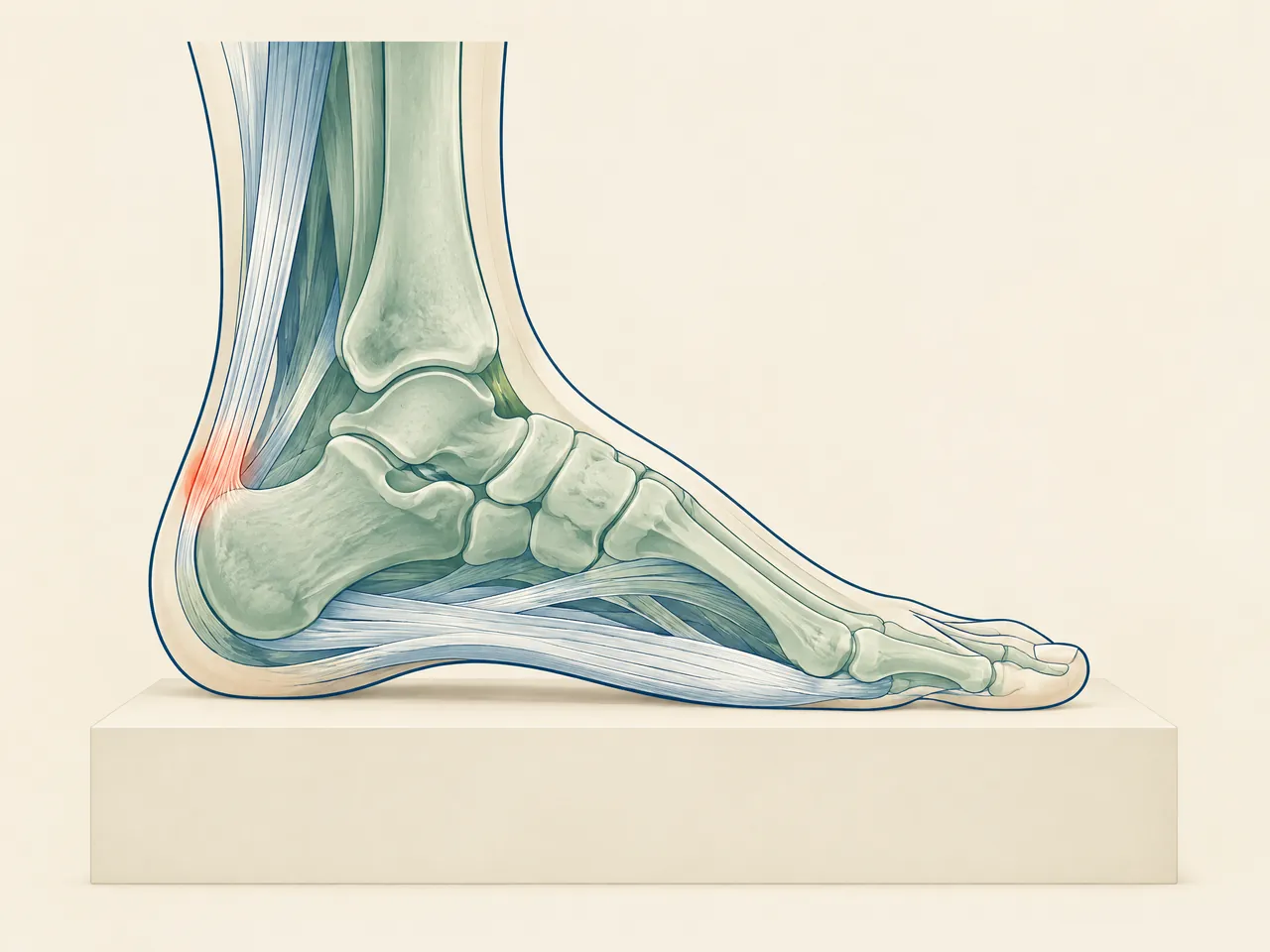
Why does my ankle keep spraining? A prior ligament injury, an early return to twisting activity, reduced ankle movement or strength, and poor balance can all leave the joint less prepared for uneven ground or a sudden landing. Ankle sprain prevention exercises should follow improvement in acute pain and swelling and progress from comfortable movement and weight bearing to strength, balance and sport-specific tasks. Seek medical assessment first if you cannot bear weight, the ankle or foot looks deformed, numbness persists, or the foot becomes pale, blue or cold.
Transparent pricing
See the fees.
Choose your care.
Explore our complete official price list, including first-trial prices, regular prices, packages and branch-specific options.
Opening WhatsApp prepares an enquiry; it does not send a message, take payment or confirm an appointment. Suitability and individual arrangements are confirmed during consultation.
Pain care
All prices in HKDExtracorporeal shockwave treatment
Shockwave treatment for deep-tissue and fascial care. The Kwun Tong clinic offers the multi-area options shown below.
Priced by branch
Branch-specific pricing
Prince Edward: HK$250 per area
Kwun Tong: HK$250 for 1 area / HK$450 for 2 areas / HK$600 for 3 areas
Pain care (manual therapy)
Includes Chinese medicine musculoskeletal assessment, manual joint techniques and tui na.
HK$580 (single session)
Chinese medicine musculoskeletal assessment
Pain care (acupuncture and manual therapy)
Combines acupuncture and manual therapy.
HK$680 (single session)
Combined care
Hair and scalp
All prices in HKDScalp health and hair-loss management
Includes AI scalp analysis, deep scalp and follicle cleansing, and scalp oil-control care.
HK$380 (first trial)
Regular price: HK$680
- 6 sessions: HK$3,480 (HK$580 per session)
- 12 sessions: HK$5,760 (HK$480 per session)
- 20 sessions: HK$8,600 (HK$430 per session)
- 30 sessions: HK$11,400 (HK$380 per session)
Hair acupuncture and Chinese herbal medicine package
Includes scalp acupuncture and 3 days of Chinese herbal medicine that does not require decoction.
HK$580 (single session)
Registered Chinese Medicine Practitioner consultation
- 6 sessions: HK$3,180 (HK$530 per session)
- 12 sessions: HK$5,760 (HK$480 per session)
- 20 sessions: HK$8,600 (HK$430 per session)
- 30 sessions: HK$11,400 (HK$380 per session)
Combined hair and scalp treatment
Combines acupuncture and Chinese herbal medicine with salon-level scalp and follicle care. Packages include complimentary hair-care shampoo and serum.
HK$1,260 (single session)
Combined treatment
- 8 sessions: HK$8,640 (HK$1,080 per session)
- 16 sessions: HK$15,680 (HK$980 per session)
- 20 sessions: HK$18,600 (HK$930 per session)
- 30 sessions: HK$26,400 (HK$880 per session)
Weight management
All prices in HKDFull-body acupoint embedding for weight management
Includes full-body acupoint embedding. Packages include complimentary Chinese herbal medicine for weight management, with the number of included days scaled to the package. Embedding material and the individual treatment arrangement are confirmed during consultation; this is not a cosmetic thread lift.
HK$980 (single session)
No trial session
- 10 sessions: HK$7,800 (HK$780 per session)
- 20 sessions: HK$14,600 (HK$730 per session)
- 30 sessions: HK$20,400 (HK$680 per session)
Facial acupuncture
All prices in HKDFacial acupuncture (basic)
Includes facial acupuncture and meridian-based facial care, including care for facial puffiness.
HK$480 (first trial)
Regular price: HK$680
- 10 sessions: HK$5,200 (HK$520 per session)
- 20 sessions: HK$9,600 (HK$480 per session)
- 30 sessions: HK$13,500 (HK$450 per session)
Facial acupuncture (advanced)
Includes enhanced facial acupuncture with a specially formulated moisturising mask and serum.
HK$780 (first trial)
Regular price: HK$1,180
- 10 sessions: HK$9,000 (HK$900 per session)
- 20 sessions: HK$16,600 (HK$830 per session)
- 30 sessions: HK$23,400 (HK$780 per session)
Chinese medicine
All prices in HKDAcupuncture and Chinese herbal medicine package
Includes a Chinese medicine consultation with pulse assessment, body acupuncture and 3 days of Chinese herbal granules that do not require decoction.
HK$580 (single session)
Chinese medicine consultation with pulse assessment
Why Does My Ankle Keep Spraining? Ankle Sprain Prevention Exercises Start with the Injury Pattern
Most ankle sprains involve a twist that strains one or more ligaments. The outside of the ankle is often involved when the foot rolls inward, but direction alone does not show severity. Record pain, swelling, bruising, stiffness, difficulty walking and the exact tender spot. The Hong Kong College of Orthopaedic Surgeons notes that a previously sprained ankle can feel unstable while walking even without clear pain or swelling [1]. A recurring problem therefore deserves more than a quick judgement based on appearance.
Write down the setting of each episode. Was the surface uneven? Were you tired, stepping off a kerb, landing, or changing direction? A prior sprain, poor balance, unsuitable shoes and uneven surfaces can raise the chance of another sprain [3]. This is not a diagnosis, but it gives a clinician or rehabilitation professional a practical picture of the load that repeatedly exceeds the ankle's current capacity. It can also suggest one safe change now, such as avoiding unstable terrain while control returns.

Why Does My Ankle Keep Spraining? Ankle Sprain Prevention Exercises and What Your Landing Tells You
A landing shows the demand placed on the ankle but cannot prove which structure is injured. A kerb step gives the lower-leg muscles little time to respond; jump landings, cutting and hurried turns add speed and rotation. Notice whether the knee drifts inward, whether you land on the outer foot, or whether the ankle feels unreliable before it rolls. Share these observations rather than trying to correct them by forcing a stretch or repeating a painful single-leg test at home.
Distinguish a new twist from a persistent giving-way pattern. A sudden accident may bring new swelling and tenderness. An ankle that feels wobbly on the same type of surface may instead show a recovery gap in movement, strength or balance. The guide to recurrent ankle sprains and chronic ankle instability explains why this should not be dismissed as bad luck. Bring a short account of earlier injuries, their management and whether you completed rehabilitation.
Why Does My Ankle Keep Spraining? Ankle Sprain Prevention Exercises After Swelling and Bruising
Fresh swelling or bruising calls for protection, not prevention drills. Avoid activities that increase pain, swelling or discomfort. Rest, ice with a protective barrier, appropriate compression and elevation are common early measures; Mayo Clinic describes the later treatment goal as restoring movement, strength and stability [2]. Compression should not cause increasing pain, numbness, colour change or a cold foot. Do not treat a temporary reduction in swelling as proof that the ankle is ready for a demanding hike or court sport.
When acute swelling is changing, make room for daily tasks without repeatedly provoking the ankle. Avoid aggressive massage or heat intended to clear bruising. For immediate steps after a twist, review ankle sprain first aid alongside professional advice. The next stage depends on weight-bearing tolerance, movement and whether symptoms settle rather than build after activity. No single calendar fits every ligament injury, especially when fracture, tendon injury or earlier instability has not been excluded.
Compare your options
| Current pattern | Appropriate focus | Hold or seek advice when |
|---|---|---|
| New pain, swelling or bruising after a twist | Protect the ankle, reduce aggravating activity and use early care advised for the injury | You cannot bear weight, deformity is visible, sensation or foot colour changes, or pain is severe |
| Walking is returning but the ankle is stiff or cautious | Comfortable ankle movement and gradual, controlled weight bearing as advised | Basic walking causes an increasing pain or swelling response |
| Daily walking is manageable but the ankle still feels weak | Progressive strengthening and careful control of calf and ankle movement | The ankle collapses, gives way repeatedly or symptoms flare after each session |
| Straight-line activity is comfortable but turns or uneven ground feel risky | Supported balance practice and activity-specific progression before sharper turns or jumps | You need to return to cutting, jumping or running without a clear progression plan |
| Repeated sprains or ongoing instability | Assessment of the injury history, present function and rehabilitation needs | Pain, swelling or instability persists despite a sensible gradual approach |
On smaller screens, scroll the table sideways to compare all columns.
Why Does My Ankle Keep Spraining? Ankle Sprain Prevention Exercises for a Gradual Return to Weight Bearing
A gradual return means matching the task to the ankle you have today, not to next week's hoped-for sport or walk. Start with ordinary walking or standing on a predictable surface. If this markedly increases pain or swelling, the loading step was too large. If it is comfortable, add a little controlled walking or exercise rather than hills, crowded stairs or turning sport. A brace, tape or crutches may be recommended for some injuries, but their suitability depends on the individual assessment.

Rehabilitation commonly progresses from settling symptoms and protection to movement and functional strength, then balance and skills for work or sport. The Hong Kong College of Orthopaedic Surgeons describes later rehabilitation as progressively increasing stamina and proprioception training—the body's sense of joint position and movement [1]. Walking straight does not necessarily provide the control needed for a side step or uneven ground. Let function, symptoms and professional guidance set the pace, rather than a fixed number of days.

Why Does My Ankle Keep Spraining? Ankle Sprain Prevention Exercises for Movement and Strength
When a clinician or therapist has said that movement is appropriate, begin with comfortable, controlled ankle motion rather than forcing range. For example, a seated ankle may be moved gently up and down or through small circles within a pain-limited range. The purpose is to reconnect movement with control after stiffness and guarding, not to stretch through a sharp pain. As tolerance improves, strengthening may include controlled work for the calf and the muscles that guide the foot and ankle. A rehabilitation professional can decide when resistance, heel raises or other loaded work are suitable, particularly after a more severe injury or a period in a boot or cast.
Strength work should serve a real activity. Calf control helps with walking push-off, while ankle muscles respond when ground is uneven. Use slow controlled repetitions instead of rushing a high count while the foot rolls or the heel drifts. If pain sharpens, swelling returns later, or the ankle repeatedly collapses, stop and review the plan. For a higher-level progression, return to sport after ankle sprain is a useful next topic once ordinary walking and controlled strengthening are reliable.

Why Does My Ankle Keep Spraining? Ankle Sprain Prevention Exercises for Balance and Stability
Balance training is not a performance challenge; it is practice for the small corrections that keep the foot from rolling during everyday movement. A common starting point, when safe and cleared for the individual, is standing near a stable support with weight shared through both feet, then gradually practising more time on the recovering leg. Progression can include less hand support, a firmer single-leg stance, reaching with the other foot, or carefully chosen surface changes. Keep the task beside a counter or wall so that a loss of balance does not become another injury. One-leg balance is also only one piece of stability; movement quality, strength and activity-specific control matter too.
The later drills should resemble the problem that keeps catching you out. Someone who sprains an ankle on stairs may need controlled step work. Someone returning to a sport with cutting or landing needs a staged progression beyond standing balance, guided by a qualified professional. AAOS notes that advanced strengthening and proprioception work precede the gradual return to pre-injury activity, with sharp turning introduced later [3]. A useful check is whether the ankle remains calm during and after the current stage. If you are considering running, the question when can I run after an ankle sprain should be answered through readiness and function, not enthusiasm alone.
Why Does My Ankle Keep Spraining? Ankle Sprain Prevention Exercises and When to Seek Assessment
Exercises are part of recovery, not a way to rule out an important injury. A sprain and a fracture can both cause pain, bruising and swelling, and a careful examination may lead a clinician to consider imaging when appropriate. Difficulty putting weight through the ankle is one reason medical evaluation may be needed [3]. An assessment is especially important if pain or swelling is not improving, if the ankle feels unstable after a reasonable rehabilitation attempt, or if there is repeated giving way. It can clarify the injury pattern and whether another structure, footwear issue, training error or a more focused rehabilitation plan needs attention.
For an appointment, note when the event happened, how the foot moved, the most painful spot, whether you could take steps, the swelling or bruising, and earlier sprains on that side. Mention medications, health conditions and previous imaging, braces or therapy. This prevents important details, such as a pop during injury or changed sensation, from being forgotten. If you want to discuss Chinese medicine as a supportive option, do so after appropriate acute triage; it does not replace assessment for possible fracture or neurovascular concern.
Why Does My Ankle Keep Spraining? Ankle Sprain Prevention Exercises Cannot Replace Urgent Assessment
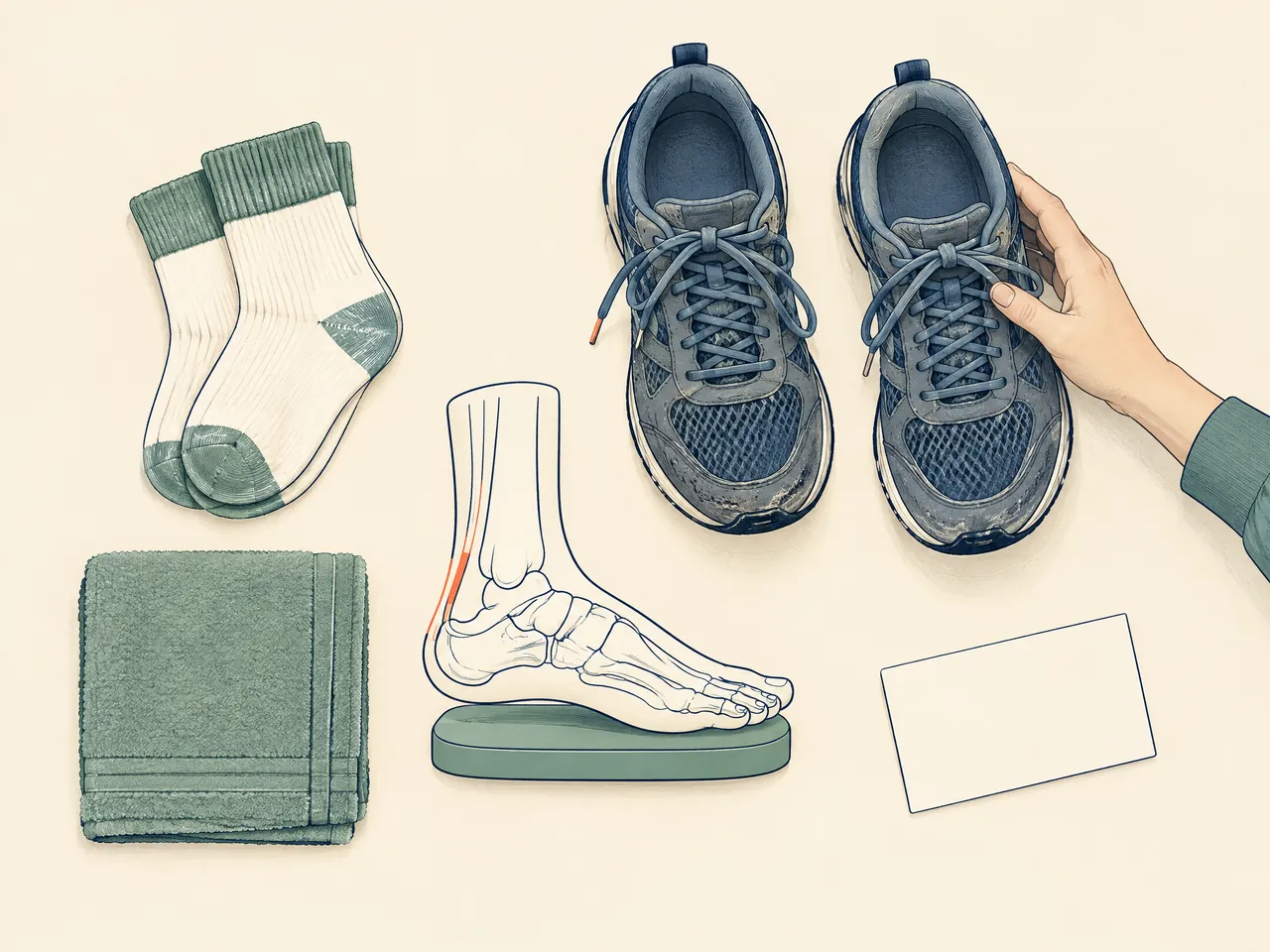
Seek urgent medical assessment rather than attempting home exercises if you cannot bear weight after the injury, the ankle or foot is visibly deformed, you heard a cracking sound with severe symptoms, or numbness, pins and needles, unusual paleness, blueness or coldness persists in the foot. These features can signal a fracture or a nerve or circulation problem that needs prompt attention. Equally, a severe new injury should not be judged by willpower or by whether you can limp a few steps. Protect the area and arrange the appropriate level of care. Do not keep testing it with hopping, forceful stretching or an exercise band while deciding whether it might settle.
Less dramatic symptoms can still justify a timely appointment. Arrange assessment if swelling or pain continues for weeks despite sensible self-care, if the ankle keeps giving way during ordinary walking, or if you cannot progress from basic loading without a flare. Mayo Clinic advises seeking care when self-care does not improve a sprain or it continues to cause pain or instability [2]. An assessment can be the safer choice before a holiday involving long walks, a new training block, or a return to a job where a sudden loss of balance could cause another fall.

Why Does My Ankle Keep Spraining? Ankle Sprain Prevention Exercises for Safer Activity Planning
Plan activity in layers. First identify the load that is currently comfortable, then add only one challenge at a time: distance, speed, stairs, uneven ground, a heavier bag, jumping or a direction change. Keep a brief response note for the following day. If pain, swelling or a giving-way sensation increases, return to the last tolerable level rather than stacking several changes together. Footwear also deserves a practical review. Choose shoes suited to the activity and surface, with a sole that is not worn smooth; this is not a cure for instability, but it can remove one avoidable source of poor grip. Warm-up and fatigue management are sensible parts of prevention as activity becomes more demanding.
After urgent concerns have been addressed, tell TCM Lab about recurrent ankle sprains, current symptoms, and whether you prefer the Chinese medicine clinic Prince Edward or the Kwun Tong Chinese medicine clinic. A Registered Chinese Medicine Practitioner can discuss the information provided and whether a consultation is appropriate; WhatsApp +852 6940 5663 to ask about current arrangements. Do not postpone orthopaedic or emergency assessment when the warning signs above are present. The aim is a safer plan for the next activity, not a promise that one exercise or visit will prevent every future sprain.
Care and health guide
Health service information
This directory brings together services, reading, and visit information related to health services, to help you prepare questions for a consultation.
If you are organising health questions, Chinese medicine clinic Hong Kong is a starting point for learning about related services and preparing for a consultation.
People have different needs; acupuncture Hong Kong provides further reading to help you understand options in your own context.


Your questions, answered
Frequently asked questions
Why does my ankle keep spraining even when it does not hurt much?
Pain and swelling are not the only signs of a lingering problem. After a previous sprain, an ankle can still have reduced movement, strength or balance control and feel unstable on uneven ground or during a turn. Repeated giving way deserves assessment, especially if it affects ordinary walking or prevents progression beyond basic activity.
When can I start ankle sprain prevention exercises?
Start only when the acute injury has been considered and the activity matches your current symptoms and weight-bearing ability. Rehabilitation commonly progresses from comfortable movement and loading to strength, balance and then activity-specific tasks. Do not force a painful exercise or use prevention drills to test a possible serious injury.
Do balance exercises alone stop recurrent ankle sprains?
Balance practice can be an important part of rehabilitation, but it is not the whole plan. Ankle movement, muscle strength, footwear, the surface you use and the demands of your work or sport also matter. Persistent instability, repeated swelling or inability to advance safely calls for professional assessment.
Should I see someone after a repeated ankle sprain?
Yes, particularly when you cannot bear weight, have severe pain, deformity, persistent numbness, colour change or a cold foot, which need urgent assessment. Arrange a non-urgent clinical review when pain or swelling does not improve, the ankle keeps giving way, or recurring sprains limit work, walking or sport despite gradual rehabilitation.
Sources and further information
- [1] The Hong Kong College of Orthopaedic Surgeons — Ankle Sprain
Referenced for: Hong Kong orthopaedic guidance on ankle-sprain symptoms, first aid, rehabilitation stages, instability and prevention.
- [2] Mayo Clinic — Sprained ankle: Diagnosis and treatment
Referenced for: Clinical information on diagnosis, self-care, supports, rehabilitation goals, balance work and when ongoing symptoms merit care.
- [3] American Academy of Orthopaedic Surgeons — Sprained Ankle
Referenced for: Orthopaedic information on recurrence risks, warning signs, staged rehabilitation and activity progression.