
TCM Lab · Health reading
Sciatica from a Herniated Disc and Herniated Lumbar Disc Acupuncture: What to Know
Published Updated
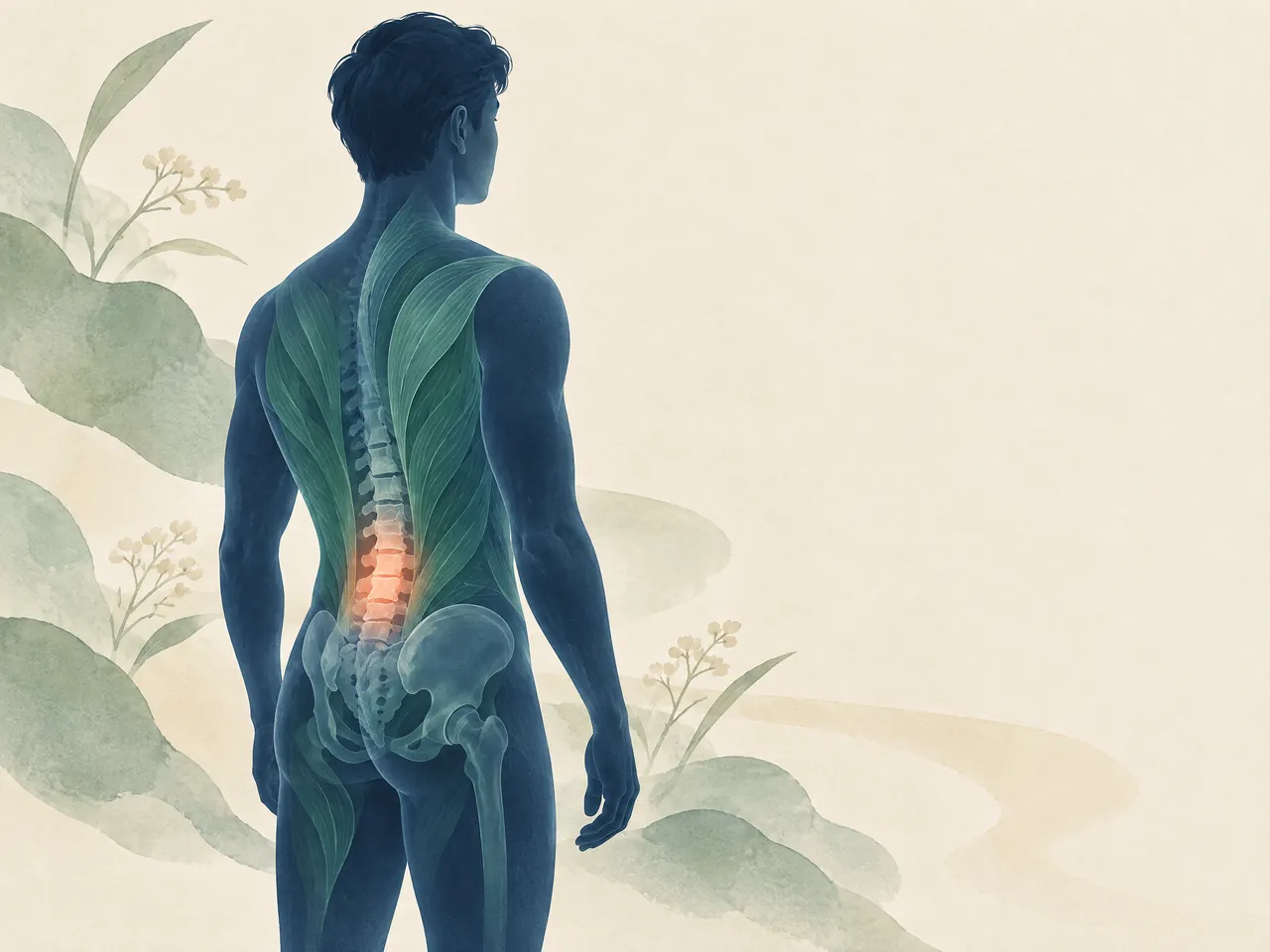
Sciatica from a herniated disc is more than a sore lower back. It can feel like pain travelling from the back or buttock into one leg, with tingling, altered sensation or weakness when a lumbar disc affects a nearby nerve. Herniated lumbar disc acupuncture may be considered within a conservative plan for symptom management, particularly where muscle guarding and movement-related discomfort are part of the picture. It cannot put a disc back in place, reverse degeneration or replace assessment of a significant nerve problem. The immediate priority is to notice changes in strength, walking, bladder or bowel function and saddle-area sensation, then choose the right level of care. [1]
Appointments are confirmed through WhatsApp. If you have language requirements, please mention them in your enquiry.
The short answer
Herniated lumbar disc acupuncture can be discussed as one part of symptom management for sciatica from a herniated disc, not as a repair for the disc itself. A suitable plan begins with the pain pattern, nerve symptoms, function and any scan or medical information already available. New or worsening leg weakness, numbness around the genitals or bottom, difficulty passing urine, or loss of bladder or bowel control needs urgent medical assessment rather than waiting for acupuncture. [1] [2]
Transparent pricing
See the fees.
Choose your care.
Explore our complete official price list, including first-trial prices, regular prices, packages and branch-specific options.
Opening WhatsApp prepares an enquiry; it does not send a message, take payment or confirm an appointment. Suitability and individual arrangements are confirmed during consultation.
Pain care
All prices in HKDExtracorporeal shockwave treatment
Shockwave treatment for deep-tissue and fascial care. The Kwun Tong clinic offers the multi-area options shown below.
Priced by branch
Branch-specific pricing
Prince Edward: HK$250 per area
Kwun Tong: HK$250 for 1 area / HK$450 for 2 areas / HK$600 for 3 areas
Pain care (manual therapy)
Includes Chinese medicine musculoskeletal assessment, manual joint techniques and tui na.
HK$580 (single session)
Chinese medicine musculoskeletal assessment
Pain care (acupuncture and manual therapy)
Combines acupuncture and manual therapy.
HK$680 (single session)
Combined care
Hair and scalp
All prices in HKDScalp health and hair-loss management
Includes AI scalp analysis, deep scalp and follicle cleansing, and scalp oil-control care.
HK$380 (first trial)
Regular price: HK$680
- 6 sessions: HK$3,480 (HK$580 per session)
- 12 sessions: HK$5,760 (HK$480 per session)
- 20 sessions: HK$8,600 (HK$430 per session)
- 30 sessions: HK$11,400 (HK$380 per session)
Hair acupuncture and Chinese herbal medicine package
Includes scalp acupuncture and 3 days of Chinese herbal medicine that does not require decoction.
HK$580 (single session)
Registered Chinese Medicine Practitioner consultation
- 6 sessions: HK$3,180 (HK$530 per session)
- 12 sessions: HK$5,760 (HK$480 per session)
- 20 sessions: HK$8,600 (HK$430 per session)
- 30 sessions: HK$11,400 (HK$380 per session)
Combined hair and scalp treatment
Combines acupuncture and Chinese herbal medicine with salon-level scalp and follicle care. Packages include complimentary hair-care shampoo and serum.
HK$1,260 (single session)
Combined treatment
- 8 sessions: HK$8,640 (HK$1,080 per session)
- 16 sessions: HK$15,680 (HK$980 per session)
- 20 sessions: HK$18,600 (HK$930 per session)
- 30 sessions: HK$26,400 (HK$880 per session)
Weight management
All prices in HKDFull-body acupoint embedding for weight management
Includes full-body acupoint embedding. Packages include complimentary Chinese herbal medicine for weight management, with the number of included days scaled to the package. Embedding material and the individual treatment arrangement are confirmed during consultation; this is not a cosmetic thread lift.
HK$980 (single session)
No trial session
- 10 sessions: HK$7,800 (HK$780 per session)
- 20 sessions: HK$14,600 (HK$730 per session)
- 30 sessions: HK$20,400 (HK$680 per session)
Facial acupuncture
All prices in HKDFacial acupuncture (basic)
Includes facial acupuncture and meridian-based facial care, including care for facial puffiness.
HK$480 (first trial)
Regular price: HK$680
- 10 sessions: HK$5,200 (HK$520 per session)
- 20 sessions: HK$9,600 (HK$480 per session)
- 30 sessions: HK$13,500 (HK$450 per session)
Facial acupuncture (advanced)
Includes enhanced facial acupuncture with a specially formulated moisturising mask and serum.
HK$780 (first trial)
Regular price: HK$1,180
- 10 sessions: HK$9,000 (HK$900 per session)
- 20 sessions: HK$16,600 (HK$830 per session)
- 30 sessions: HK$23,400 (HK$780 per session)
Chinese medicine
All prices in HKDAcupuncture and Chinese herbal medicine package
Includes a Chinese medicine consultation with pulse assessment, body acupuncture and 3 days of Chinese herbal granules that do not require decoction.
HK$580 (single session)
Chinese medicine consultation with pulse assessment
Sciatica from a Herniated Disc and Herniated Lumbar Disc Acupuncture: Understanding the Symptoms
A disc is a cushion between the bones of the spine. When disc material bulges outward, it may irritate or press on a nerve. In the lower back, that can produce sciatica: pain that commonly runs through the buttock and down a leg. The NHS also lists lower-back pain, tingling or numbness, difficulty bending or straightening, and muscle weakness among possible features of a slipped, prolapsed or herniated disc. Not every disc change causes symptoms, and the intensity of pain alone does not show how much a nerve is affected. [1]
That distinction matters when searching for sciatica from a herniated disc. A person may have an old scan finding but a newer pain pattern, or severe pain with no obvious loss of strength. Another person may report less pain yet start catching a foot, struggling on stairs or changing the way they walk. The useful questions are therefore practical: where does the sensation travel, what movements provoke it, what has changed since it began, and which daily tasks are now harder? The related guide to slipped disc and sciatica gives further context on why these terms are often used together.
Sciatica from a Herniated Disc and Herniated Lumbar Disc Acupuncture: Pain, Numbness and Weakness
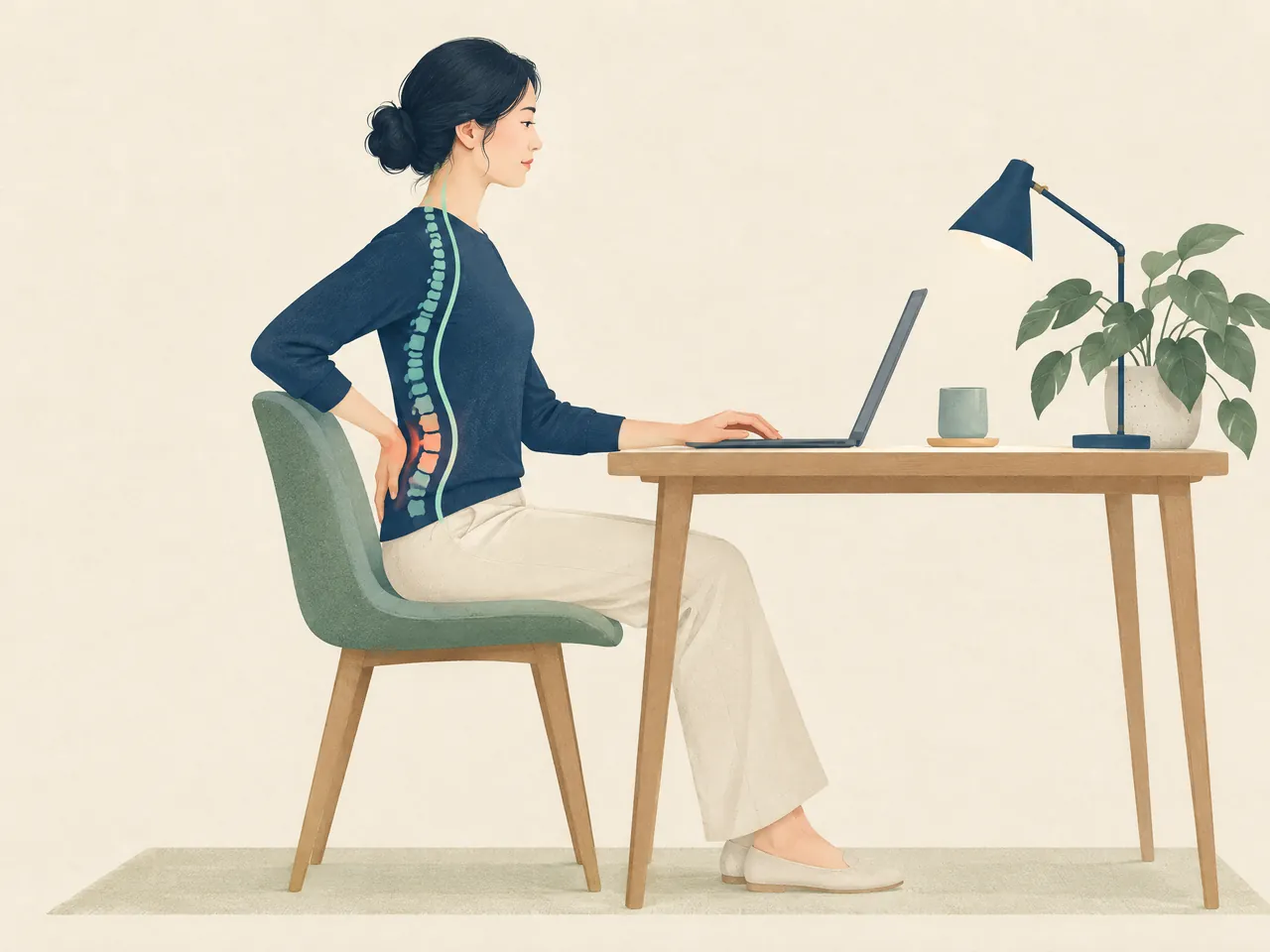
Disc-related sciatic symptoms are often one-sided, but no single sensation confirms the cause. Pain may be sharp, burning, aching or electric. It may start in the back, sit deep in the buttock, or be noticed chiefly in the calf or foot. Sitting, bending forward, coughing or sneezing can be relevant observations because they may change pressure or loading around an irritated area. Record what actually happens rather than trying to diagnose the exact disc level at home. The pattern and a physical examination carry more meaning than one dramatic description of pain. [1]
Numbness and weakness deserve separate attention. Numbness is a change in feeling, such as pins and needles or a patch that feels less normal. Weakness means the leg or foot does not do what you intend: the knee may buckle, the foot may catch, or pushing off may feel less reliable. Pain can make movement hesitant, but true or progressive weakness needs medical assessment. For a different leg-pain pattern centred around the buttock rather than the spine, see piriformis syndrome leg pain; it is not safe to assume all radiating pain has the same source.

Sciatica from a Herniated Disc and Herniated Lumbar Disc Acupuncture: Why Symptoms Can Vary
Symptoms vary because people load their backs differently and because nerve irritation is not an on-off switch. A long commute, prolonged desk work, lifting from a low position, a flare after a sudden twist, poor sleep or guarding around the hip can all change how a day feels. The aim is not to blame a single posture. Instead, identify repeatable aggravators and tolerable movements. A short note on standing, sitting, walking, stairs, sleep and work tasks can make a consultation much clearer than a general statement that the pain is "always bad."
It is also important not to treat an image as the whole story. The NHS notes that diagnosis often begins with symptoms and an examination, and MRI may be considered when symptoms do not improve or further clarification is needed. [1] Existing X-ray or MRI reports can be useful context, but they should be read alongside current symptoms and function. If the leg pain is changing, a previous image does not automatically explain the present episode. A clinician may need to consider other causes of back, hip or leg symptoms before any treatment route is chosen.
Compare your options
| What you notice | Why it changes the decision | Appropriate next step |
|---|---|---|
| Back or buttock pain travelling into one leg, with stable function | This may fit a conservative assessment, but the pain route and examination still matter. | Arrange a clinical assessment and discuss a coordinated symptom-management plan. |
| Tingling or numbness that is new, spreading or affecting daily tasks | A sensory change can indicate nerve involvement and should be documented rather than ignored. | Seek timely medical or clinical advice; bring previous reports if available. |
| New foot catching, knee buckling or clearly worsening leg strength | Progressive weakness can require medical assessment beyond symptom-focused care. | Contact a medical service promptly and do not rely on acupuncture alone. |
| Saddle-area numbness, inability to urinate, bladder or bowel control changes | These are emergency warning signs for serious nerve compression. [1] [2] | Use urgent or emergency medical care immediately, not a routine clinic appointment. |
| Pain after a serious accident, or back pain with fever or feeling very unwell | Trauma or systemic symptoms may point to causes that need medical investigation. | Seek prompt medical assessment before considering conservative treatment. |
On smaller screens, scroll the table sideways to compare all columns.
Sciatica from a Herniated Disc and Herniated Lumbar Disc Acupuncture: Where Care May Fit
Conservative care usually means using more than one sensible measure rather than expecting one treatment to solve every part of the problem. Depending on the assessment, that may include advice on activity, medical pain management, physiotherapy or rehabilitation, and monitoring for neurological change. The NHS encourages a gradual return to gentle activity that does not make back pain worse, while recognising that some people may first need a brief period of rest when pain is severe. [1] The right pace is individual; forcing stretches or exercise through worsening leg symptoms is not a useful goal.
For people considering acupuncture, the most useful question is not whether it can "fix" a scan. Ask whether it has a defined role in the current plan: for example, addressing local muscle tension, movement-related discomfort or the ability to engage with appropriate rehabilitation. The overview of acupuncture for herniated disc explains this boundary in more detail. An honest plan also states what would trigger a change of direction, such as worsening weakness, new sensory loss or symptoms that do not follow the expected course.

Sciatica from a Herniated Disc and Herniated Lumbar Disc Acupuncture: Symptom Management, Not Structural Repair
Herniated lumbar disc acupuncture should not be described as a way to push a disc back, seal a tear or reverse age-related disc change. A needle treatment cannot substitute for urgent investigation or a specialist decision when these are indicated. Its potential place is narrower: as part of a symptom-management discussion after appropriate screening. Evidence summaries on acupuncture address back pain as a broad category and do not turn acupuncture into structural repair for an individual herniated disc. NCCIH also advises people not to use acupuncture to postpone seeing a healthcare provider about a health problem. [3]
That does not mean a patient must choose between approaches. If symptoms are stable and no red flags are present, an assessment can consider whether acupuncture is compatible with the medical or rehabilitation plan already in place. Share all current medicines and treatments, especially any medication that affects bleeding or has been started for this episode. Tell the practitioner if a position is difficult to tolerate or if lying face down increases leg pain. Clear information allows the session to be adapted, deferred or redirected rather than treated as a standard procedure.

Sciatica from a Herniated Disc and Herniated Lumbar Disc Acupuncture: Assessment Before Treatment
A useful pre-treatment assessment starts with the timeline. Was there a fall, a lifting incident or a gradual onset? Does pain stay in the low back, or does it pass below the knee? Has the area of numbness expanded? Has standing, heel walking, toe walking, getting out of a chair or climbing stairs changed? A practitioner may also ask about sleep disruption, fever, unexplained weight loss, night pain and previous episodes. These are not administrative details; they help decide whether conservative symptom management is reasonable or medical review should come first. [1]
Bring reports rather than relying on memory where possible. The report date, scan type, level described, referral letters and a current medication list give a fuller picture. It is equally helpful to explain what the report cannot show: how you are coping with work, caring duties, travel, sleep and walking today. If another condition is being considered, such as buttock-driven symptoms, information about piriformis syndrome treatment may be relevant as a comparison, not as a self-diagnosis. The assessment should remain open to referral when the symptoms do not fit a straightforward conservative path.
Sciatica from a Herniated Disc and Herniated Lumbar Disc Acupuncture: Safety and Next Steps
Safety begins before any needles are used. Acupuncture is not an emergency response to serious nerve compression, infection, fracture or other acute causes of back pain. In addition to the symptom pattern, tell the practitioner about recent trauma, fever, significant medical conditions, pregnancy, implanted devices and medicines. Sterile, single-use needles and proper delivery are important: the U.S. National Center for Complementary and Integrative Health notes that complications can result from nonsterile needles or improper treatment. [3]
Between appointments, aim for gentle, tolerable movement rather than complete bed rest or a sudden return to heavy work. Break up a long sitting period when possible, use a lifting method that keeps the load close and avoid testing the painful movement repeatedly to see whether it has gone away. The NHS suggests keeping active and choosing gentle exercise that does not worsen symptoms. [1] If a new activity clearly increases leg pain, tingling or weakness, stop and seek advice instead of trying to work through a neurological change.

Sciatica from a Herniated Disc and Herniated Lumbar Disc Acupuncture: Red Flags for Urgent Care
Seek urgent medical assessment rather than waiting for herniated lumbar disc acupuncture if there is numbness around the genitals or bottom, inability to pass urine, loss of bladder or bowel control, loss of feeling in one or both legs, or severe back pain after a serious accident. The NHS lists these as reasons for immediate action. [1] These symptoms may indicate a time-sensitive problem. Do not drive yourself if you need emergency help; use local emergency services or have someone assist you.
Rapidly worsening leg weakness, difficulty walking, urinary retention, incontinence and altered sensation around the buttocks or inner thighs are also features associated with cauda equina syndrome, which Cleveland Clinic describes as a medical emergency. [2] Fever or feeling acutely unwell with back pain also needs prompt medical advice. The key point is not to wait for a routine acupuncture consultation to see if these changes settle. Prompt assessment protects options for appropriate medical treatment.

Sciatica from a Herniated Disc and Herniated Lumbar Disc Acupuncture: Preparing for a Consultation
Before a non-urgent consultation, write down when the symptoms began, the path of the pain, what makes it better or worse, and whether you have numbness or weakness. Add work, commute or lifting demands, medicines, past back episodes and any imaging or referral documents. Wear clothing that allows the low back and legs to be assessed comfortably. If travelling to a clinic is difficult because sitting aggravates symptoms, say so when making the enquiry. This helps the conversation start with your current function, not just a label from an old scan.
At TCM Lab, you can ask whether an assessment for sciatica from a herniated disc is appropriate before arranging a treatment discussion. Message WhatsApp at +852 6940 5663 and describe your symptoms and language needs so the appointment arrangement can be confirmed. Consultations may be arranged at the Kwun Tong Chinese medicine clinic or the Chinese medicine clinic Prince Edward, subject to appointment availability. If urgent signs are present, contact emergency medical services instead of messaging a clinic.
Care and health guide
Sciatica: care information
This directory brings together services, reading, and visit information related to sciatica, to help you prepare questions for a consultation.
When sciatica affects your day, noting when it occurs, its relation to activity, and what you have already tried can help prepare a consultation; acupuncture for sciatica is a relevant service or reading entry point.
Individual circumstances differ, and acupuncture Hong Kong offers related information to help you understand options and prepare questions.


Your questions, answered
Frequently asked questions
Can herniated lumbar disc acupuncture push a disc back or reverse degeneration in sciatica from a herniated disc?
No. It should be discussed only as possible symptom management within an appropriate broader plan. It does not reposition a disc, repair a disc or reverse degeneration. If there are significant neurological symptoms, the priority is medical assessment.
What should I bring to an assessment for sciatica from a herniated disc?
Bring any MRI, X-ray or referral reports, a medication list and a short symptom timeline. Note the route of pain, numbness, perceived weakness, triggering movements, sleep impact and changes in work, walking or stairs. This gives a more useful picture than a scan result alone.
When is sciatica from a herniated disc an emergency rather than an acupuncture question?
Can I keep moving during a disc-related sciatica flare?
Gentle activity may be appropriate when it does not worsen symptoms; complete inactivity for a long period is not usually the aim. [1] The suitable level depends on the episode and medical advice. Stop an activity that clearly increases leg pain, tingling or weakness, and seek assessment if neurological symptoms are changing.
Sources and further information
- [1] [1] NHS — Slipped disc
Referenced for: Symptoms of herniated or slipped disc, self-care context, assessment, and immediate warning signs.
- [2] [2] Cleveland Clinic — Cauda Equina Syndrome
Referenced for: Urgent neurological and bladder or bowel symptoms associated with cauda equina syndrome.
- [3] [3] National Center for Complementary and Integrative Health — Acupuncture: What You Need To Know
Referenced for: Evidence context for acupuncture in broad back-pain care, safety and the need not to delay healthcare evaluation.