
TCM Lab · Health reading
When Can I Run After an Ankle Sprain? Check Your Readiness First
Published Updated
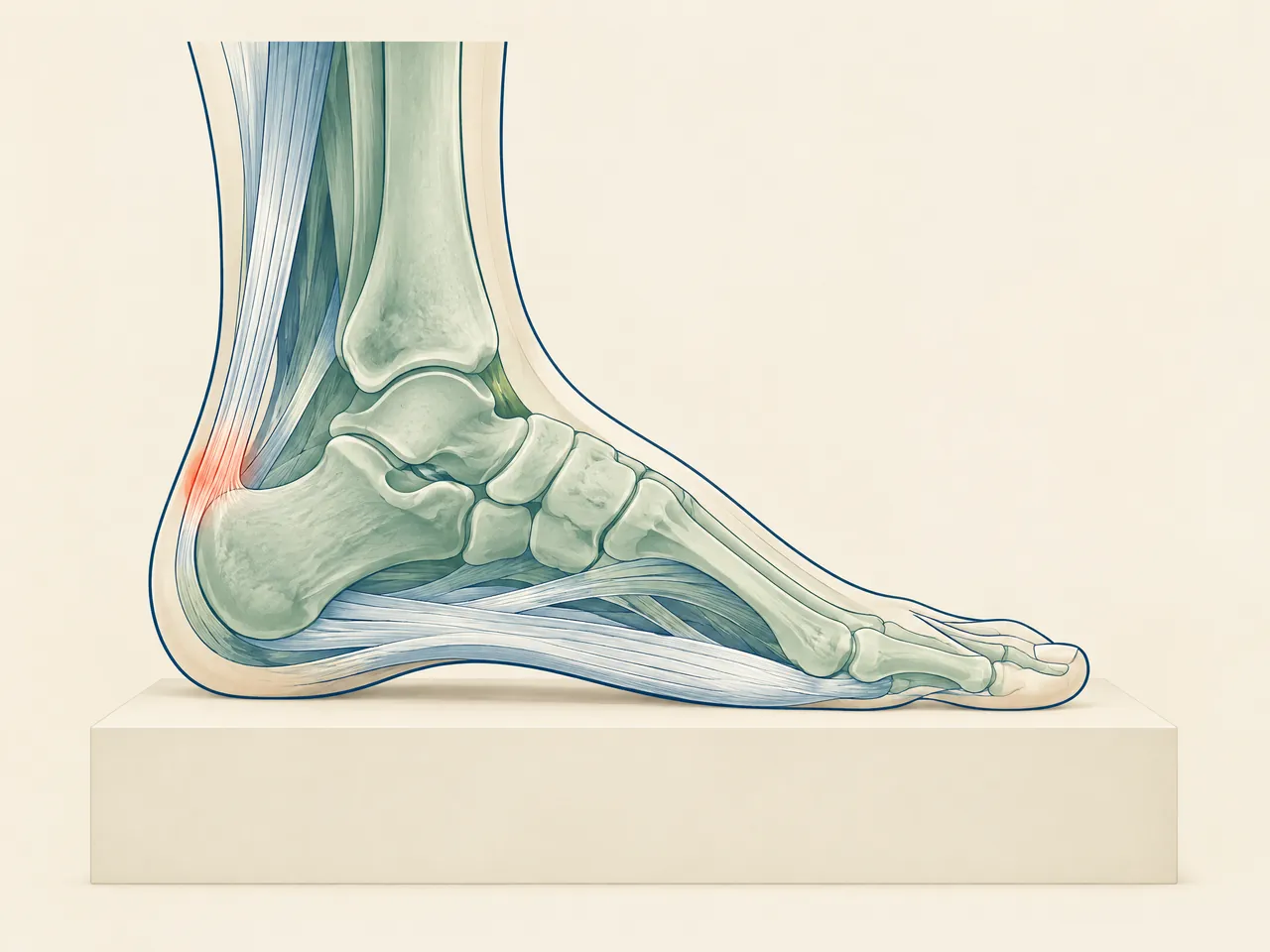
A calendar cannot tell you exactly when you can run after an ankle sprain. A more useful answer is to ask what your ankle can do today: can you walk at a normal pace, take stairs, and bear weight without a limp or a clear flare in pain or swelling? Before your first jog, movement, calf and ankle strength, balance, and confidence on the injured side should be improving. Start with an easy, controlled exposure rather than testing speed, hills, or uneven ground. If you cannot bear weight, the ankle or foot looks deformed, you heard a crack at injury, or numbness, colour change, or coldness persists, seek prompt medical assessment rather than attempting a run.
Appointments are confirmed through WhatsApp. If you have language requirements, please mention them in your enquiry.
The short answer
You may be ready to begin a gradual return to running when ordinary walking and weight bearing are comfortable, swelling is settling rather than building through the day, and ankle movement, strength, balance, and steadiness have improved. Begin well below your usual distance and pace, then review symptoms later that day and the next morning. Stop and step back if pain, swelling, giving-way, or limping increases. A fixed number of days is not a reliable clearance test.
Transparent pricing
See the fees.
Choose your care.
Explore our complete official price list, including first-trial prices, regular prices, packages and branch-specific options.
Opening WhatsApp prepares an enquiry; it does not send a message, take payment or confirm an appointment. Suitability and individual arrangements are confirmed during consultation.
Pain care
All prices in HKDExtracorporeal shockwave treatment
Shockwave treatment for deep-tissue and fascial care. The Kwun Tong clinic offers the multi-area options shown below.
Priced by branch
Branch-specific pricing
Prince Edward: HK$250 per area
Kwun Tong: HK$250 for 1 area / HK$450 for 2 areas / HK$600 for 3 areas
Pain care (manual therapy)
Includes Chinese medicine musculoskeletal assessment, manual joint techniques and tui na.
HK$580 (single session)
Chinese medicine musculoskeletal assessment
Pain care (acupuncture and manual therapy)
Combines acupuncture and manual therapy.
HK$680 (single session)
Combined care
Hair and scalp
All prices in HKDScalp health and hair-loss management
Includes AI scalp analysis, deep scalp and follicle cleansing, and scalp oil-control care.
HK$380 (first trial)
Regular price: HK$680
- 6 sessions: HK$3,480 (HK$580 per session)
- 12 sessions: HK$5,760 (HK$480 per session)
- 20 sessions: HK$8,600 (HK$430 per session)
- 30 sessions: HK$11,400 (HK$380 per session)
Hair acupuncture and Chinese herbal medicine package
Includes scalp acupuncture and 3 days of Chinese herbal medicine that does not require decoction.
HK$580 (single session)
Registered Chinese Medicine Practitioner consultation
- 6 sessions: HK$3,180 (HK$530 per session)
- 12 sessions: HK$5,760 (HK$480 per session)
- 20 sessions: HK$8,600 (HK$430 per session)
- 30 sessions: HK$11,400 (HK$380 per session)
Combined hair and scalp treatment
Combines acupuncture and Chinese herbal medicine with salon-level scalp and follicle care. Packages include complimentary hair-care shampoo and serum.
HK$1,260 (single session)
Combined treatment
- 8 sessions: HK$8,640 (HK$1,080 per session)
- 16 sessions: HK$15,680 (HK$980 per session)
- 20 sessions: HK$18,600 (HK$930 per session)
- 30 sessions: HK$26,400 (HK$880 per session)
Weight management
All prices in HKDFull-body acupoint embedding for weight management
Includes full-body acupoint embedding. Packages include complimentary Chinese herbal medicine for weight management, with the number of included days scaled to the package. Embedding material and the individual treatment arrangement are confirmed during consultation; this is not a cosmetic thread lift.
HK$980 (single session)
No trial session
- 10 sessions: HK$7,800 (HK$780 per session)
- 20 sessions: HK$14,600 (HK$730 per session)
- 30 sessions: HK$20,400 (HK$680 per session)
Facial acupuncture
All prices in HKDFacial acupuncture (basic)
Includes facial acupuncture and meridian-based facial care, including care for facial puffiness.
HK$480 (first trial)
Regular price: HK$680
- 10 sessions: HK$5,200 (HK$520 per session)
- 20 sessions: HK$9,600 (HK$480 per session)
- 30 sessions: HK$13,500 (HK$450 per session)
Facial acupuncture (advanced)
Includes enhanced facial acupuncture with a specially formulated moisturising mask and serum.
HK$780 (first trial)
Regular price: HK$1,180
- 10 sessions: HK$9,000 (HK$900 per session)
- 20 sessions: HK$16,600 (HK$830 per session)
- 30 sessions: HK$23,400 (HK$780 per session)
Chinese medicine
All prices in HKDAcupuncture and Chinese herbal medicine package
Includes a Chinese medicine consultation with pulse assessment, body acupuncture and 3 days of Chinese herbal granules that do not require decoction.
HK$580 (single session)
Chinese medicine consultation with pulse assessment
When Can I Run After an Ankle Sprain? Start With Walking and Weight Bearing
Running places greater demand on an ankle than a quiet walk. Each step combines impact, ankle movement, foot alignment, and body control. So the first checkpoint is not whether bruising has faded or a certain number of days has passed. It is whether ordinary walking is becoming comfortable and controlled. Consider the whole day: walking around home, standing in a queue, moving between MTR platforms, and taking stairs can reveal more than a brief test across a room.
Weight bearing should feel increasingly natural, not like a negotiation with every step. A limp, an altered stride, or a strong fear that the ankle will buckle suggests that running is ahead of current capacity. The Hong Kong College of Orthopaedic Surgeons lists pain, swelling, bruising, difficulty walking, and stiffness among ankle-sprain symptoms, and describes rehabilitation as staged restoration of movement, strength, flexibility, stability, and reflexes [1]. Settle the acute problem first, then rebuild the abilities running needs.
Compare with the uninjured side, while remembering they will not match perfectly. Can the injured ankle move forward over the foot for a normal stride? Can you rise onto the ball of the foot with control? Can you stand briefly on that leg near a stable support without gripping with the toes or throwing the trunk sideways? These observations are not a diagnosis or a pass-fail medical test. They help you select the next load instead of relying on determination alone.

When Can I Run After an Ankle Sprain? Signs Your Walking Is Improving
Look for an easy walking pattern before adding jogging. The foot should land and roll through without a pronounced hitch, and the ankle should not become more sore or puffy after routine errands. It can help to test a small progression on level ground: a normal walk, a slightly brisker walk, several controlled steps up and down, and a few minutes of standing on the affected leg with a hand close to support. If one task produces sharper pain, a new limp, or a sense of giving way, keep the next session at the walking or rehabilitation level rather than moving to impact.
The setting also matters. A person who can stroll on a smooth indoor floor may still be challenged by a wet pavement, a kerb, a crowded crossing, or a sloping trail. Choose a predictable route for the first run attempt, with shoes that feel secure and enough time to stop without rushing. If you are working toward a sport involving cutting, jumping, or sudden turns, a straight easy jog is only an earlier stage. The linked guide on ankle sprain functional tests can help frame why sport-specific control matters before returning to more changeable movement.
When Can I Run After an Ankle Sprain? Why Pain and Swelling Matter
Pain and swelling are useful feedback, but they need to be read over time. A momentary awareness of a recovering ankle is different from sharp pain that changes your stride, or swelling that grows after activity and remains worse the following morning. The aim is not to prove toughness by running through either response. Instead, treat a flare as information that the recent dose was too much, too soon, or too complex. Reduce one variable—duration, pace, surface, hills, or frequency—before you try again.
Early after a sprain, protect the area and avoid activities that cause pain, swelling, or discomfort. Mayo Clinic describes restoring ankle movement, strength, flexibility, and stability after pain and swelling improve, and notes that a clinician or physical therapist may use movement tests before a return to sport [2]. This is why a run should not be used to settle uncertainty about a serious injury. If symptoms are escalating, or ordinary walking is still difficult, assessment and a clearer rehabilitation plan are more useful than repeatedly checking whether you can jog.
Compare your options
| Stage | What to look for | A sensible next choice | What means step back or seek advice |
|---|---|---|---|
| Protected daily activity | Walking is still painful, markedly limping, or swelling is active | Keep activity within comfort; follow assessment advice and protect the ankle | Unable to bear weight, deformity, persistent numbness, colour change, or a cold foot |
| Comfortable walking | A normal walk and basic stairs are becoming easier without a clear later flare | Build ordinary and then brisk level walking before impact | Pain changes the gait or swelling rises after routine activity |
| Control rebuilding | Movement, calf and ankle control, and balance are improving | Continue appropriate strengthening and balance work; choose predictable surfaces | Giving way, repeated rolling, or no functional progress |
| First easy jog | Walking is comfortable and the ankle has remained settled with recent activity | Use short, easy walk-jog intervals on level ground and review later that day and next morning | Sharp pain, a new limp, increased swelling, or instability during or after the session |
| Return toward usual running | Several easy exposures are tolerated and capacity is building | Increase one variable at a time before adding hills, speed, trails, or cutting | Symptoms recur whenever load rises or sport-specific movement feels unreliable |
On smaller screens, scroll the table sideways to compare all columns.
When Can I Run After an Ankle Sprain? Build Movement, Strength and Stability
A return to running is easier to judge when you separate the capacities involved. Movement lets the ankle bend and straighten through a usable range. Strength helps the calf, lower-leg, and foot muscles control the step. Stability is the ability to keep the ankle organised when your body shifts over it. Balance and proprioception describe how well you sense and respond to position changes. An ankle can feel acceptable while sitting yet still be unprepared to manage the quicker, repeated loading of a run. Building these capacities gives your first jog a better foundation.
Do not make the plan unnecessarily dramatic. For many people, the next useful step is a little more purposeful walking, controlled ankle movement, and clinician-guided strengthening or balance work, not a maximal workout. The American Academy of Orthopaedic Surgeons describes a progression from early range-of-motion and balance retraining to advanced strengthening, proprioception work, and a gradual return to pre-injury activity [3]. The exact exercises and pace should reflect the injury, symptoms, and assessment—not an online checklist copied without context.

It is also worth distinguishing a return to an easy jog from a return to usual training. A flat, short, conversational effort has fewer demands than repeated intervals, downhill running, trail running, court sport, or football. Build the simpler task first. The wider guide to return to sport after ankle sprain is relevant if your real goal includes jumping, cutting, accelerating, or competing rather than running in a straight line.

When Can I Run After an Ankle Sprain? Progress From Daily Activity to Easy Jogging
Use a ladder of load rather than jumping from rest to your former route. Once daily walking is comfortable and the ankle is not reacting badly, progress to a brisk but controlled walk on even ground. If that remains calm, an easy walk-jog can be a sensible first exposure: keep the jog portions short, the route flat, and the pace deliberately unremarkable. Leave speed, distance records, hills, sprints, and uneven terrain for later. A companion is not required, but running close to home or on a route with an easy exit makes it simpler to stop if the ankle feels unreliable.
After the first session, do not judge success only by whether you finished. Check the ankle that evening and the next morning. Is there new swelling, more stiffness, tenderness, a limp, or a renewed sense that it may roll? If not, repeat a similar dose before making it longer or faster. If there is a clear deterioration, return to the last well-tolerated stage and consider professional assessment. This conservative pattern is not lost fitness; it is a way to find a load the ankle can absorb consistently.

When Can I Run After an Ankle Sprain? Use Symptoms to Adjust Training
Change one training variable at a time. For example, keep pace and surface easy while increasing only total time, or keep the same short route while replacing a little walking with jogging. Altering distance, speed, frequency, and terrain together makes it hard to know what triggered a setback. Schedule recovery days according to your own symptoms and other daily load, such as long periods on your feet at work. A settled ankle after one run does not automatically mean it is ready for a second demanding session the next day.
A support brace or tape may be part of an individual plan, especially during earlier sport return, but it is not evidence that the ankle is ready for any intensity. Mayo Clinic notes that elastic bandaging, sports tape, or an ankle support brace may be recommended depending on sprain severity [2]. If external support is advised, combine it with progressive movement, strength, and balance work rather than using it to override pain or instability. Repeated rolling, a persistently unsteady feeling, or a history of multiple sprains is a reason to investigate why does my ankle keep spraining before pushing training further.
When Can I Run After an Ankle Sprain? Know When to Seek Assessment
Not every ankle sprain is straightforward, and self-directed running is not the right first move. A clinician can examine the ankle and foot, consider the injury mechanism, and decide whether imaging or rehabilitation referral is appropriate. Severe sprains and fractures can overlap in pain, bruising, and swelling. AAOS advises evaluation for difficulty bearing weight, persistent pain or swelling, or symptoms that do not improve [3]. Seek assessment if recovery is not steadily improving.
Bring useful observations: how the foot turned, whether you could take steps immediately, the site of tenderness, when swelling appeared, and what happens after walking. Mention previous sprains, instability, and sensation or skin-colour changes. This changes the question from “can I run today?” to “what should be assessed or rebuilt before I run?” If pain is mainly in the foot, see foot pain.
When Can I Run After an Ankle Sprain? Red Flags That Need Prompt Care
Seek urgent medical attention rather than testing a run if you cannot bear weight, the ankle or foot is visibly deformed, you heard a crack or pop with major pain, or the foot becomes pale, blue, cold, numb, or persistently tingling. These features may need assessment for a fracture, a more significant ligament injury, or a nerve or circulation problem. Do not try to massage, force movement, or tightly wrap a foot that is becoming numb, discoloured, or colder; loosen restrictive compression and seek help. Severe symptoms need a medical route before any discussion of supportive care.
Arrange a non-urgent assessment if pain or swelling is not settling, normal walking remains difficult, the ankle repeatedly gives way, or you cannot make sensible progress from basic daily activity. A return problem can be mechanical, load-related, or connected to incomplete rehabilitation; it deserves more than a repeated cycle of resting briefly and attempting the same run. Assessment can also clarify whether a brace, structured rehabilitation, or a staged sport-specific plan is appropriate for your situation.

When Can I Run After an Ankle Sprain? Discussing Supportive Care in Hong Kong
At TCM Lab Hong Kong, an enquiry about a recovering ankle can focus on your injury story, current ability to bear weight, swelling pattern, daily demands, and running goal. Chinese medicine consultation or acupuncture, where appropriate after assessment, can be discussed as supportive care. It should not replace fracture triage, assessment of alarming symptoms, external support when indicated, or a structured programme to restore movement, strength, balance, and stability. Research on acupuncture for ankle sprain is variable, so it should not be presented as a guaranteed way to shorten recovery or as a substitute for rehabilitation.
If you would like to discuss the next step after urgent concerns have been addressed, you may enquire through TCM Lab’s Kwun Tong Chinese medicine clinic or Chinese medicine clinic Prince Edward. Explain what happened, what you can and cannot do now, and whether you are aiming for a casual jog, a race, or a change-of-direction sport. This allows the conversation to remain focused on present function and a safe, individual progression rather than a promised date for running again.
Care and health guide
Health service information
This directory brings together services, reading, and visit information related to health services, to help you prepare questions for a consultation.
If you are organising health questions, Chinese medicine clinic Hong Kong is a starting point for learning about related services and preparing for a consultation.
People have different needs; acupuncture Hong Kong provides further reading to help you understand options in your own context.


Your questions, answered
Frequently asked questions
When can I run after an ankle sprain if I can walk normally?
Normal walking is a useful sign, but do not treat it as automatic clearance. Before you jog, consider whether swelling and pain stay settled through the day, movement and balance are improving, and the ankle feels steady with ordinary tasks. Start with a brief, easy test on level ground rather than returning straight to your usual distance.
Should I run through mild ankle stiffness after a sprain?
Do not use running to force through stiffness. Gentle, controlled movement and an appropriate warm-up may be part of recovery, but sharp pain, a limp, growing swelling, or a feeling of instability means the load is too high. Return to the last activity level that was well tolerated and seek assessment if progress stalls.
How should I make my first run after an ankle sprain easier?
Choose level, predictable ground, secure footwear, and an easy pace. Keep the first jog short or use walk-jog intervals. Avoid hills, speedwork, uneven paths, and change-of-direction sport initially. Review the ankle later that day and the next morning before progressing one variable at a time.
When should I seek medical assessment before running again?
Seek prompt care if you cannot bear weight, the ankle or foot is deformed, you heard a crack with severe pain, or numbness, persistent tingling, colour change, or coldness is present. Arrange assessment for pain or swelling that is not settling, ongoing difficulty walking, repeated giving way, or an ankle that is not regaining function.
Sources and further information
- [1] [1] The Hong Kong College of Orthopaedic Surgeons — Ankle Sprain
Referenced for: Symptoms, rehabilitation stages, functional recovery, instability, and local orthopaedic context.
- [2] [2] Mayo Clinic — Sprained ankle: Diagnosis and treatment
Referenced for: Pain and swelling management, support devices, rehabilitation goals, and reassessment when symptoms persist.
- [3] [3] American Academy of Orthopaedic Surgeons — Sprained Ankle
Referenced for: Weight-bearing difficulty, staged rehabilitation, balance and proprioception, gradual activity return, and reasons for medical evaluation.