
Prince Edward & Kwun Tong clinics · Home-visit enquiries elsewhere

TCM Lab

TCM Lab · Beauty & lifestyle / Materials and construction

Lace front and glueless wigs describe different parts of the decision

Content updated

You can want an open-looking hairline and a routine without adhesive at the same time. Compare what you see at the forehead with what holds the cap in position, then test both against the way you actually get dressed and move through your day.

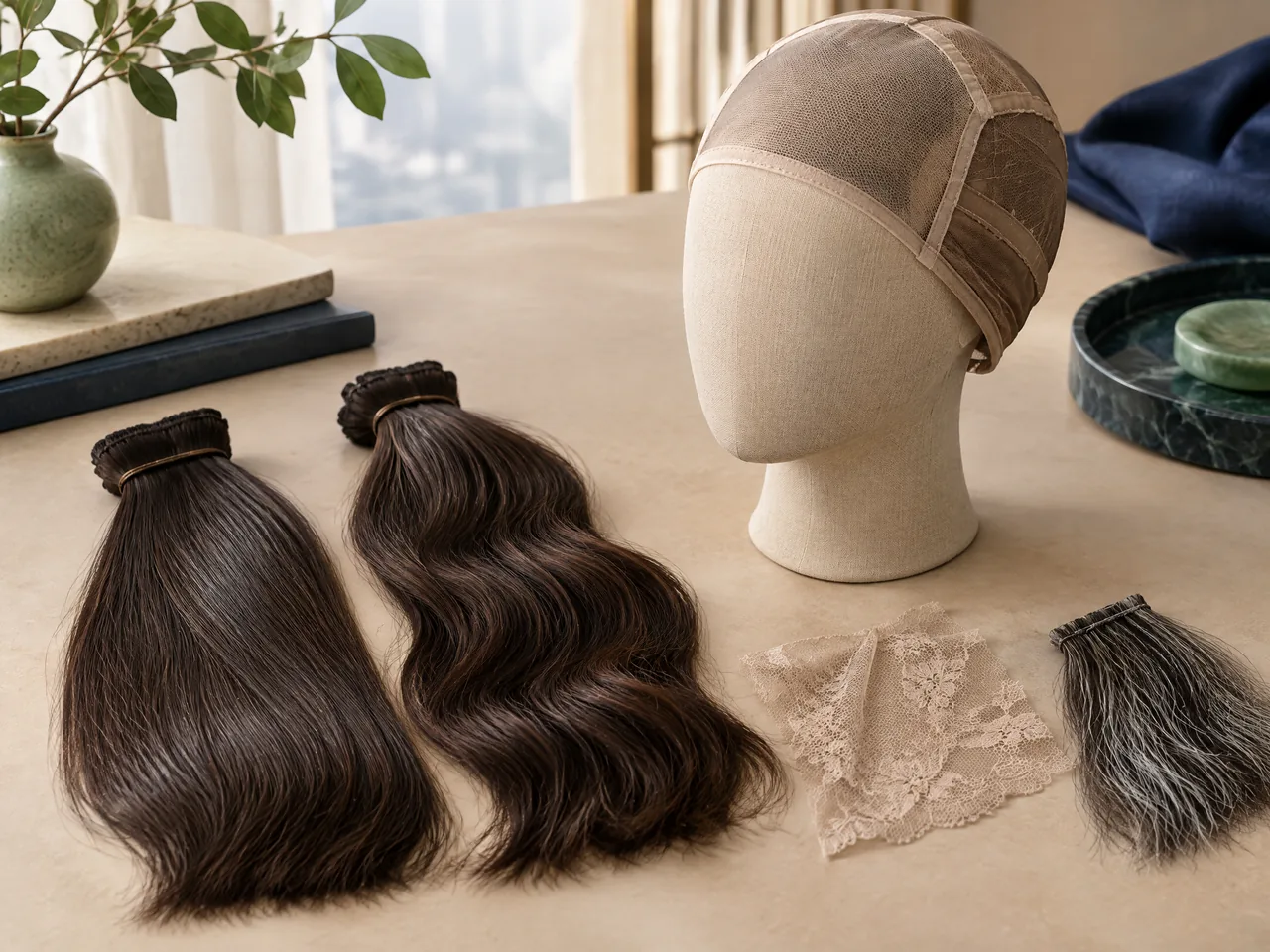
Illustrative hair materials, cap construction and grey colour swatches
Illustrative wig-lifestyle concept; not an OWNSTRAND product photograph or a client record.

The short answer

Lace front describes lace at the front hairline; glueless describes an intended way to wear a wig without adhesive. One wig can have both features. Neither label confirms the whole cap, your size or comfortable, dependable hold. Ask to see the inside and the exact wearing instructions, then assess appearance and fit separately.

OWNSTRAND is an external wig and hairpiece website under the same ownership as TCM Lab. These appearance and everyday wearing guides are separate from Chinese medicine care, not diagnosis, treatment or a promise of hair growth.

Ask two questions instead of choosing between two labels

Start with what you want to change about your morning. Perhaps you want to brush hair away from your forehead, or perhaps you want to remove your wig easily when you arrive home. Those are different preferences. A lace front uses a sheer lace panel at the front hairline to create the appearance of hair emerging there; it describes a visible construction feature, not the complete fastening arrangement.[1]

Glueless concerns how the wig is intended to stay positioned without adhesive. The terms can overlap: UniWigs, for example, describes a glueless full-lace cap with combs, clips and a rear adjustment strap, while describing its lace-front cap separately.[2] That is one manufacturer's design, not a shopping rule for every brand. Treat the words as prompts to inspect the actual item rather than as mutually exclusive categories.

Keep the coverage question separate too. A full wig covers the head; a topper adds coverage over part of the top.[1] A bonded hair system has its own wearing and maintenance arrangements. Do not borrow a fitting routine from one just because a product photograph resembles another. First establish which kind of piece you are comparing, then ask about its front and its intended attachment.

Inspect the front in the hairstyle you will wear

Before judging a hairline close-up, decide how much of your forehead you normally show. Bring a photograph with your usual fringe or parting, and another with the hair swept back if that is a look you want. At a permitted try-on, arrange the hair both ways. You are checking whether the front suits your preferred styling, not whether it passes an extreme camera zoom.

Look in a mirror at ordinary conversation distance, then inspect the edge more closely. Notice where the lace ends at the temples and whether your chosen part reveals another construction underneath. Lace at the forehead does not establish a monofilament top, which is a separate cap feature.[1] Ask to see the front and top from inside as well; a styled photograph cannot show every seam or boundary.

When exploring OWNSTRAND's lace front wig information, save the individual style that interests you and ask for its front construction details.[3] Pair that enquiry with a practical request: can the exact piece be worn with the hair directed away from the forehead as you prefer? Keep an attractive category image as inspiration, not confirmation that the edge or parting will look identical on you.

Find out what does the holding before adjusting it

Ask the fitter to identify the components inside the cap and explain which ones are meant to be used. Locate any rear tabs, elastic band, combs or clips that the particular design includes. Establish whether each component adjusts the cap or anchors it, and where it should sit. UniWigs lists specific holding features for its glueless construction, but those features should not be assumed in another maker's product.[2]

If you have little or no hair underneath, explain that before accepting a clip-based fitting suggestion. Ask how the design is intended to hold in your circumstances rather than assuming every clip has somewhere suitable to attach. Equally, if you have longer hair, ask how to arrange it beneath that cap. Your preparation method belongs in the fitting discussion because it is part of how you will actually wear the piece.

OWNSTRAND's glueless wig guide is a starting point for an adhesive-free enquiry.[4] Request the wearing instructions for the style you select and ask whether any separate accessory is necessary. If the answer introduces an extra band or liner, have its compatibility and fitting demonstrated. A simple routine is only useful if you understand every step and can repeat it yourself.

Make the try-on repeatable, not just reassuring

Follow the maker's measurement instructions and size chart rather than choosing an average label by habit. The American Cancer Society notes that sizing can vary between brands and identifies circumference, front-to-back and side-to-side measurements.[1] Bring your measurements to the enquiry, together with a description of how you intend to prepare your hair. If that preparation may change, ask whether the same size and adjustments will still suit you.

Once the wig is positioned as instructed, pause before styling. Notice the forehead, temples, areas around the ears and nape separately. Then put on the glasses you normally wear, turn your head gently and look down as if reading your phone. These are useful observations for a fitting conversation, not a security certification. Describe a problem precisely: an ear tab catches the glasses, the front lifts, or the nape feels tight.

Have the fitter show you the permitted adjustment, then practise putting the wig on again yourself. Compare the second result with the first. If a comfortable-looking fit depends on someone continually repositioning it, you still need instruction or a different option. Do not solve movement by tightening everything until it hurts. Stop and review the size or design when the fit feels uncomfortable.

Rehearse the morning and the removal

A glue-free preference often comes from wanting fewer application and removal steps. Ask for a complete demonstration, from preparing your hair to releasing each fastening. Try it with the mirror and hand movements you would use at home. If a rear adjustment is awkward to reach, find out whether the fitter can demonstrate an easier approved sequence. Convenience should describe your experience, not just the wording on the box.

Confirm whether the front edge is already finished or requires preparation before wear. Do not cut lace because a tutorial for another wig shows scissors; the exact product's instructions must decide what is appropriate. UniWigs warns against pulling or stretching delicate lace.[2] Ask where to hold the cap during placement and removal so you do not rely on gripping the visible front edge.

Include your real schedule in the discussion. You may take the wig off after work, wear it through dinner, or alternate it with headwear. Ask how to store it between wears and which cleaning instructions apply. An indoor try-on cannot prove suitability for running, swimming or strong wind. If those activities matter, request explicit guidance for that model instead of extending a successful mirror check into an all-day promise.

Choose the combination that fits your priorities

After comparing two styles, write a short observation for each: what you liked about the front, what you felt inside the cap, and what you could manage during removal. Keep appearance and handling as separate observations. You might prefer one hairline but another fastening routine. That is a reason to ask about another combination, not to ignore an uncomfortable fit because the front looks appealing.

TCM Lab and OWNSTRAND share ownership, so the linked pages are related-brand browsing resources rather than independent recommendations. If you want to discuss your shortlist there, OWNSTRAND's only shop is in Kwun Tong, at Unit 2103, 50 Hoi Yuen Road, in 利寶時中心.[5] Confirm which exact samples can be viewed before travelling; a construction guide or catalogue entry is not a promise of in-store availability.

Before paying, ask about exchanges and returns, including whether fitting, cutting or other alterations affect eligibility; the American Cancer Society also advises checking the retailer's return policy.[1] Keep the style name and agreed details with your notes. A wig is an appearance choice, not a treatment for hair loss. The useful endpoint is a look you enjoy with a wearing routine you understand, rather than a label that sounds complete.

Take it into everyday life

A practical checklist

  • Bring photographs showing your usual fringe or part and any swept-back style you want to try.
  • Record the exact style name, fibre, size chart and wearing instructions for each shortlisted wig.
  • Ask to see the cap inside: identify the front lace, top construction and each holding component.
  • Explain how much hair will sit underneath and ask for the intended preparation method.
  • Try your glasses and gentle everyday head movements; note the location of lifting or pressure.
  • Practise placement, permitted adjustment and removal yourself before deciding.
  • Confirm edge preparation, accessory compatibility, care instructions and sample availability.
  • Get the quotation and alteration-related return conditions before paying.

Questions & answers

Can the same wig have a lace front and be glueless?

Yes. A front construction and an adhesive-free wearing method can be features of the same wig. The useful next question is what the exact model includes and how its maker says to wear it. Do not infer a full-lace cap, free parting everywhere or a particular set of clips from those two labels.[1] [2]

Should I add glue if the front lifts during a try-on?

Not as an automatic fix. Ask the fitter to check positioning, size and the approved adjustments first. If it still lifts, the design may not meet your preferred wearing method. Any adhesive use would require explicit product and skin-use guidance; a glue-free description is not permission to attach adhesive to any part of the cap.

What should I ask if I have no hair for the clips to grip?

Tell the seller before choosing and ask for a demonstration of how that exact wig is intended to stay positioned without relying on hair you do not have. Some cap descriptions include combs or clips, but their presence does not establish suitability for every wearer.[2] Do not improvise by pressing fastenings against an uncomfortable area.

Does a finished or pre-cut lace edge mean no fitting is needed?

No. Edge preparation and cap fit are different tasks. Even when the lace is supplied finished, check the model's sizing and placement instructions, then assess the front, ears and nape on you. Brand sizing can differ.[1] Ask whether any further edge work is permitted rather than trimming it to copy another style.

Can I judge suitability for exercise from a secure shop fitting?

A calm indoor fitting is not an exercise test. It can reveal basic movement or pressure, but it does not establish performance during sweating, vigorous activity or wind. Describe the activity to the seller and ask for the maker's model-specific guidance. Avoid purchasing on an unsupported promise that glueless means secure in every situation.

Sources & further context

Numbered references follow the source order below. Product and service websites provide appearance-related context, not medical evidence.

  1. [1] American Cancer Society — Wigs for Hair Loss
  2. [2] UniWigs — Wig Cap Constructions
  3. [3] OWNSTRAND — Lace Front Wig Guide: Understanding the Front Hairline
  4. [4] OWNSTRAND — Glueless Wig Guide: Wearing a Wig Without Glue
  5. [5] OWNSTRAND — Wigs in Hong Kong: Explore OWNSTRAND Wigs

Keep a cap record for each exact style

Give each shortlisted style a separate note rather than combining the best features of several catalogue entries. Divide the note into the front hairline, the top or parting area, the back construction and the holding components. Lace-front and monofilament descriptions concern different cap areas.[1] Ask the seller to mark the boundaries on an inside view of the exact piece, with permission to photograph it if useful.

Beside each fastening, record whether it is supplied, optional or required for the intended adhesive-free routine. Include any separate accessory in the same note. UniWigs describes particular combinations of clips, combs and a rear strap, but that is not a specification for another brand.[2] If the displayed sample differs from the item you would receive, ask which details carry over before treating the demonstration as your wearing plan.
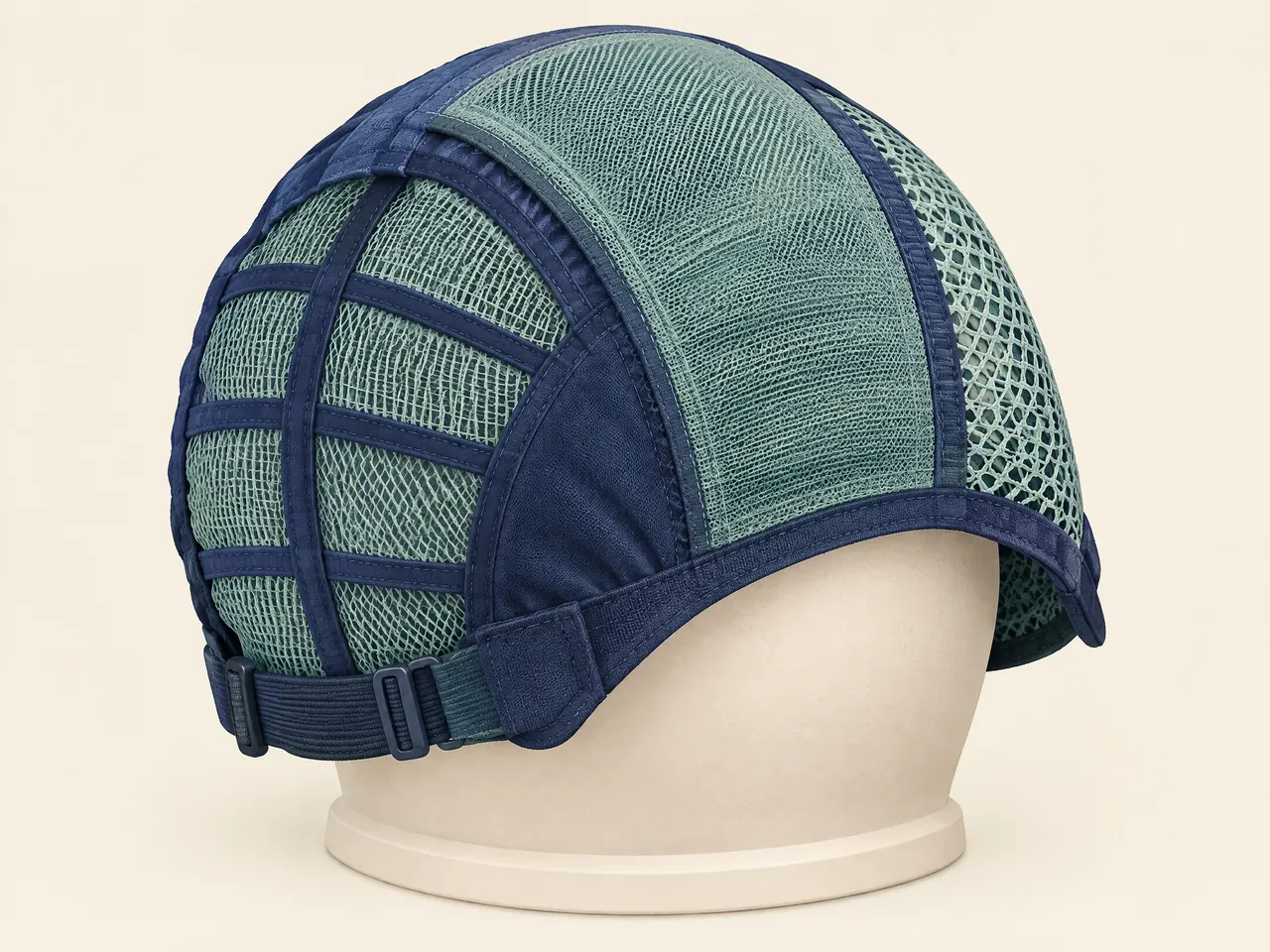
An inside-out generic wig cap on a dome stand, showing mesh panels and an adjustable band
Illustrative cap interior for discussing construction areas; not an OWNSTRAND product photograph or a specification for your selected wig.Generated illustrative image
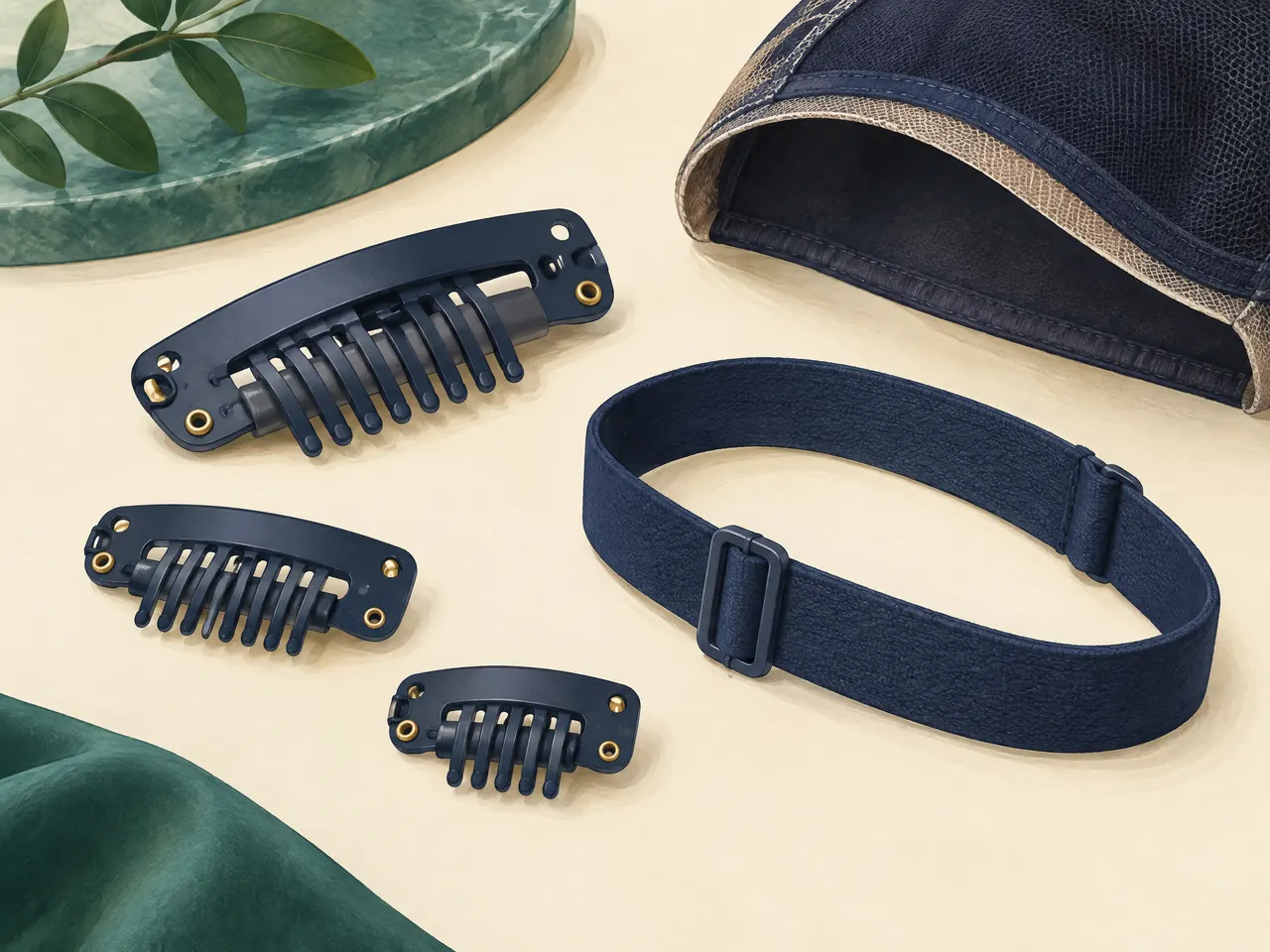
Generic hairpiece clips, a soft adjustable band and a sample cap edge arranged separately on a tabletop
Illustrative holding components to help ask what is supplied or required; not instructions to combine these parts.Generated illustrative image

Compare the front without changing the fit

When comparing a fringe with a swept-back look, keep the cap in its instructed position and use the same hair preparation underneath. Have the size checked against that style's chart first; brand sizing can differ.[1] Moving the cap to improve a photograph makes it harder to tell whether you prefer the hairstyle or have simply changed where the front sits.

For each permitted try-on, use the same mirror and viewing distance. First note the settled cap position, then compare your usual fringe and the more exposed front you want to explore. Put your everyday glasses back on for the comparison. Record what changed: forehead coverage, the visible edge or hair touching the frames. If a look only works after shifting the cap, take that observation back to the fitter rather than approving a trim from the photograph.

A fabric measuring tape loosely around a blank mannequin dome beside an empty fit-note card and a mirror
Illustrative fitting preparation; follow the selected wig's measurement instructions rather than copying the tape position shown.Generated illustrative image
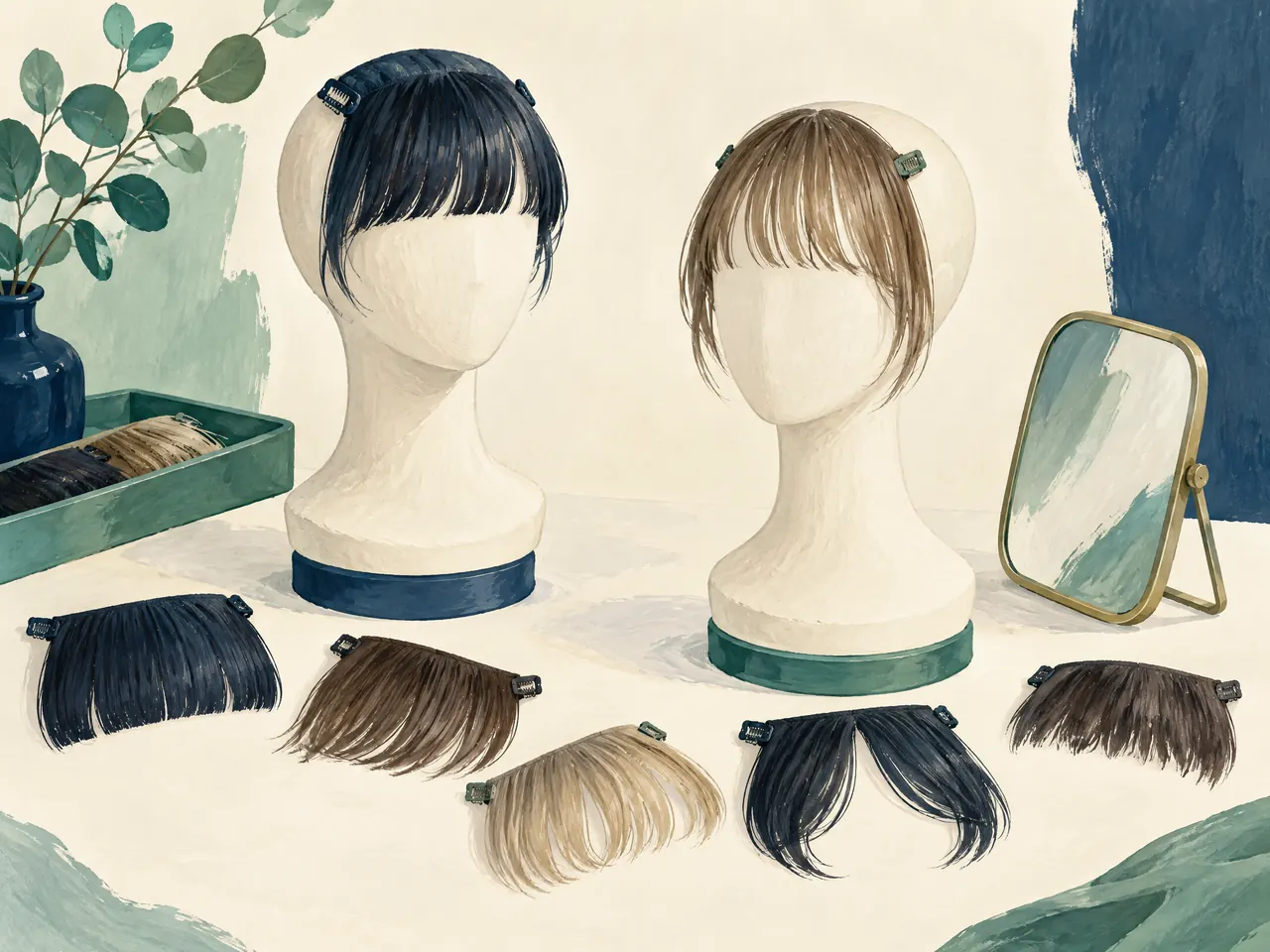
Two featureless mannequin forms with detachable practice fringes and a small mirror
Illustrative fringe design study for comparing forehead coverage; not a demonstration of a lace-front product or a customer result.Generated illustrative image

Check the care routine separately from the fastening

An adhesive-free wearing method does not identify the hair material. Record whether the selected wig uses human hair or synthetic fibre, then ask for its care instructions. The American Cancer Society describes human hair as generally requiring more maintenance and advises against using a dryer or curling iron unless the wig is heat resistant.[1] Neither a lace front nor a glueless label answers that heat question. Confirm any permitted tools and settings for the exact style rather than copying a routine from another wig.

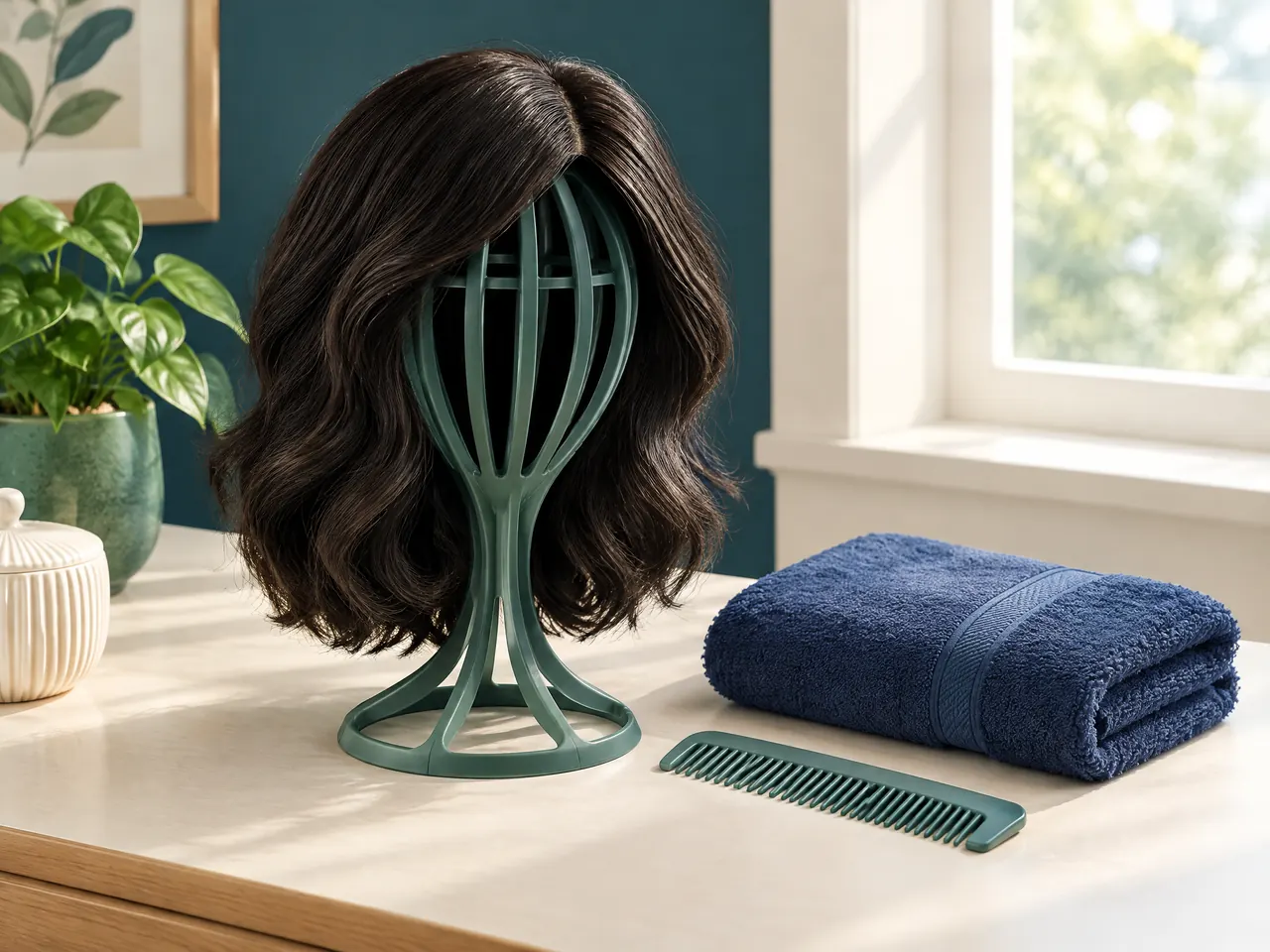
Ask the seller to explain what happens after washing: how the cap is handled, what drying support is appropriate and when the piece is ready to wear again. The American Cancer Society recommends a wig stand for short-term storage.[1] Confirm the support suitable for your model and where it can stay without the front being pulled or stretched; UniWigs specifically cautions against stretching delicate lace.[2] This makes the care discussion practical: you can decide whether you have the space and routine the chosen piece needs.
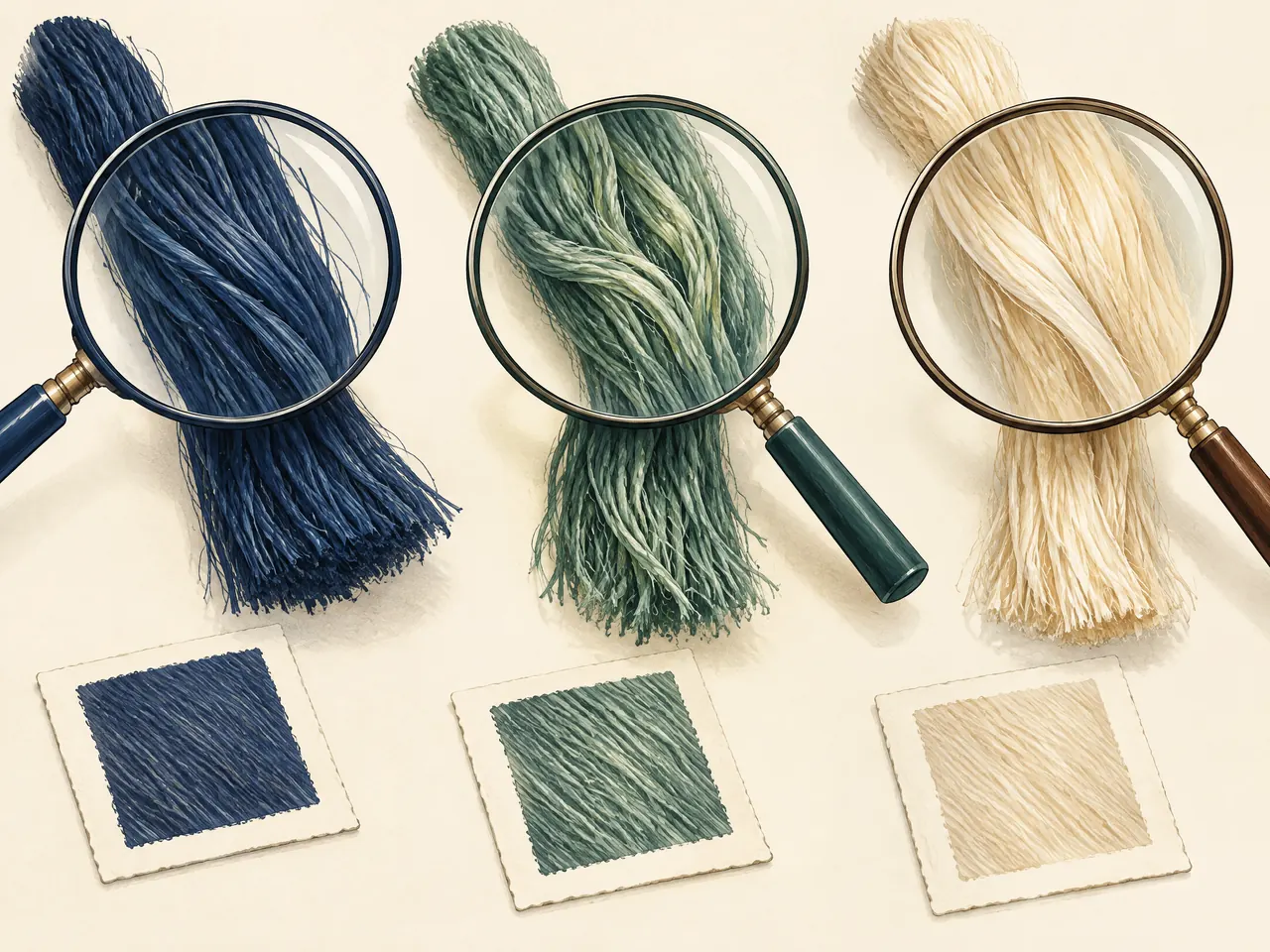
Three separate anonymous hair-like fibre bundles under a magnifying lens beside unlabelled material sample cards
Illustrative fibre samples prompt questions about material and care; appearance alone does not verify fibre type or heat resistance.Generated illustrative image
An anonymous wig on an open ventilated stand beside a folded towel and an unbranded comb in indirect daylight
Illustrative wig-care equipment; confirm the drying and storage support required by the selected model.Generated illustrative image

Clinic enquiries

Contact and appointment arrangements

Clinics
Prince Edward and Kwun Tong
Opening hours
11:00–21:00
WhatsApp and telephone
+852 6940 5663

Appointments, practitioner availability and service arrangements are confirmed via WhatsApp.

Please mention any consultation language needs in your WhatsApp enquiry so that arrangements can be confirmed.

Enquire via WhatsApp
Food, gifts and floral lifeWhatsApp enquiry