
TCM Lab · Health reading
When should I go to A&E for back pain? Should I see a doctor or Chinese medicine practitioner for low back pain? Should I use heat or ice for low back pain?
Published Updated
A sudden back spasm after lifting a suitcase, a familiar ache after a long MTR commute, or pain travelling into a leg can all feel alarming. The first question is not whether to use a hot pack or book a treatment; it is whether the pattern could need urgent medical care. This page separates emergency warning signs from problems that deserve a prompt appointment, then explains how a doctor, physiotherapist and Chinese medicine practitioner may each fit into non-urgent low back pain care in Hong Kong.
Appointments are confirmed through WhatsApp. If you have language requirements, please mention them in your enquiry.
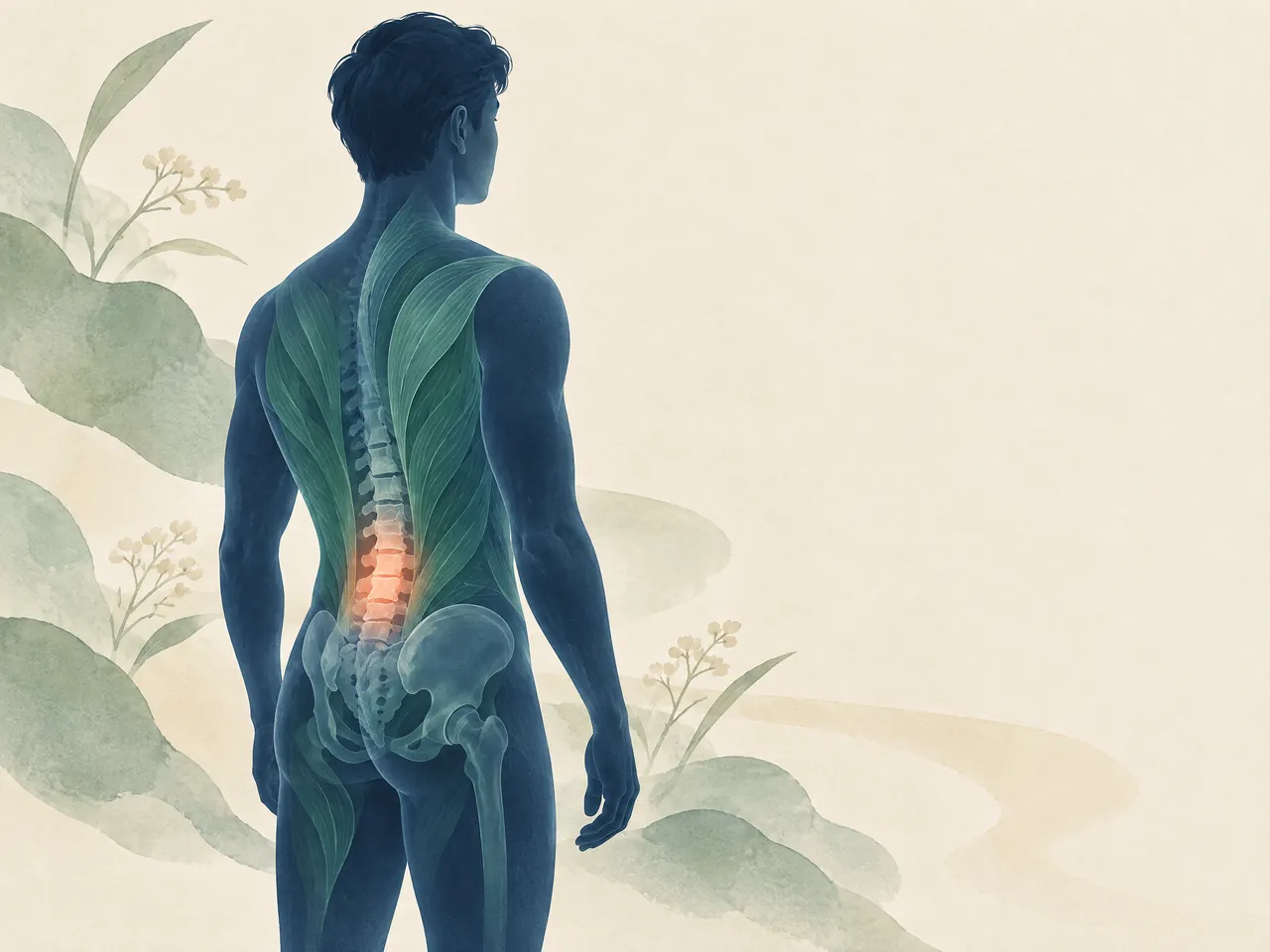
The short answer
Go to A&E or an emergency department now for back pain with symptoms in both legs, new numbness around the genitals or anus, bladder or bowel changes, chest pain, or pain after a serious accident. Fever or rapidly worsening severe pain needs urgent medical advice. If those signs are absent, arrange assessment with a doctor or physiotherapist; Chinese medicine can be discussed as an additional, face-to-face option. Use wrapped heat or ice only for short-term comfort and stop if it aggravates symptoms.
Transparent pricing
See the fees.
Choose your care.
Explore our complete official price list, including first-trial prices, regular prices, packages and branch-specific options.
Opening WhatsApp prepares an enquiry; it does not send a message, take payment or confirm an appointment. Suitability and individual arrangements are confirmed during consultation.
Pain care
All prices in HKDExtracorporeal shockwave treatment
Shockwave treatment for deep-tissue and fascial care. The Kwun Tong clinic offers the multi-area options shown below.
Priced by branch
Branch-specific pricing
Prince Edward: HK$250 per area
Kwun Tong: HK$250 for 1 area / HK$450 for 2 areas / HK$600 for 3 areas
Pain care (manual therapy)
Includes Chinese medicine musculoskeletal assessment, manual joint techniques and tui na.
HK$580 (single session)
Chinese medicine musculoskeletal assessment
Pain care (acupuncture and manual therapy)
Combines acupuncture and manual therapy.
HK$680 (single session)
Combined care
Hair and scalp
All prices in HKDScalp health and hair-loss management
Includes AI scalp analysis, deep scalp and follicle cleansing, and scalp oil-control care.
HK$380 (first trial)
Regular price: HK$680
- 6 sessions: HK$3,480 (HK$580 per session)
- 12 sessions: HK$5,760 (HK$480 per session)
- 20 sessions: HK$8,600 (HK$430 per session)
- 30 sessions: HK$11,400 (HK$380 per session)
Hair acupuncture and Chinese herbal medicine package
Includes scalp acupuncture and 3 days of Chinese herbal medicine that does not require decoction.
HK$580 (single session)
Registered Chinese Medicine Practitioner consultation
- 6 sessions: HK$3,180 (HK$530 per session)
- 12 sessions: HK$5,760 (HK$480 per session)
- 20 sessions: HK$8,600 (HK$430 per session)
- 30 sessions: HK$11,400 (HK$380 per session)
Combined hair and scalp treatment
Combines acupuncture and Chinese herbal medicine with salon-level scalp and follicle care. Packages include complimentary hair-care shampoo and serum.
HK$1,260 (single session)
Combined treatment
- 8 sessions: HK$8,640 (HK$1,080 per session)
- 16 sessions: HK$15,680 (HK$980 per session)
- 20 sessions: HK$18,600 (HK$930 per session)
- 30 sessions: HK$26,400 (HK$880 per session)
Weight management
All prices in HKDFull-body acupoint embedding for weight management
Includes full-body acupoint embedding. Packages include complimentary Chinese herbal medicine for weight management, with the number of included days scaled to the package. Embedding material and the individual treatment arrangement are confirmed during consultation; this is not a cosmetic thread lift.
HK$980 (single session)
No trial session
- 10 sessions: HK$7,800 (HK$780 per session)
- 20 sessions: HK$14,600 (HK$730 per session)
- 30 sessions: HK$20,400 (HK$680 per session)
Facial acupuncture
All prices in HKDFacial acupuncture (basic)
Includes facial acupuncture and meridian-based facial care, including care for facial puffiness.
HK$480 (first trial)
Regular price: HK$680
- 10 sessions: HK$5,200 (HK$520 per session)
- 20 sessions: HK$9,600 (HK$480 per session)
- 30 sessions: HK$13,500 (HK$450 per session)
Facial acupuncture (advanced)
Includes enhanced facial acupuncture with a specially formulated moisturising mask and serum.
HK$780 (first trial)
Regular price: HK$1,180
- 10 sessions: HK$9,000 (HK$900 per session)
- 20 sessions: HK$16,600 (HK$830 per session)
- 30 sessions: HK$23,400 (HK$780 per session)
Chinese medicine
All prices in HKDAcupuncture and Chinese herbal medicine package
Includes a Chinese medicine consultation with pulse assessment, body acupuncture and 3 days of Chinese herbal granules that do not require decoction.
HK$580 (single session)
Chinese medicine consultation with pulse assessment
When should I go to A&E for back pain? — Should I see a doctor or Chinese medicine practitioner for low back pain? — Should I use heat or ice for low back pain? Red flags first
Back pain is common and can arise with a muscle strain, a disc-related problem, sciatica or causes that are not obvious from symptoms alone. Most episodes are not an emergency, but a small group of symptoms changes the decision immediately. It is safer to act on a new loss of function, altered sensation, major injury or marked systemic illness than to try to identify the exact cause at home. The NHS lists problems in both legs, saddle-area sensory changes and bladder or bowel changes among reasons to go to A&E. [1]
Think of triage as choosing the right level of care, not proving that pain is serious enough. Severe pain that starts suddenly or worsens quickly, or feeling hot, cold, shivery or generally unwell with back pain, warrants urgent medical advice rather than a routine treatment booking. Pain that is persistent, affecting daily life, worse at night, associated with unexplained weight loss, or coming from the upper back also merits a medical appointment. [1] The priority is an assessment that can identify what needs to happen next.
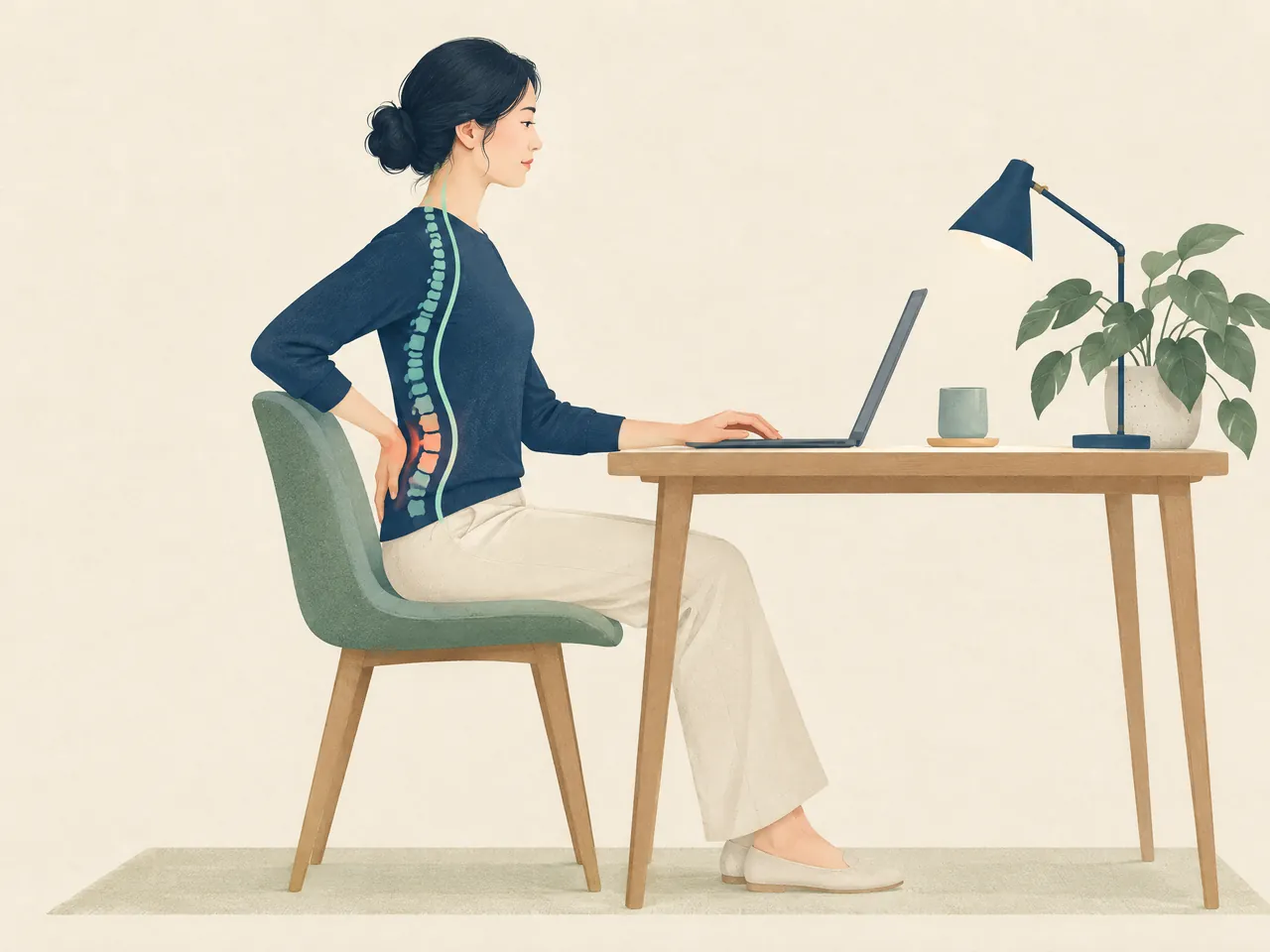
When should I go to A&E for back pain? Should I see a doctor or Chinese medicine practitioner for low back pain? Should I use heat or ice for low back pain? Recognising urgent symptoms
Go to A&E or call emergency services if back pain comes with pain, tingling, weakness or numbness in both legs; a loss of feeling around the genitals or anus; new difficulty passing urine; loss of bladder or bowel control; changes in sexual sensation or function; chest pain; or pain after a serious accident. Do not drive yourself to A&E if you may be unsafe to do so. These combinations can signal a problem that should not be delayed for massage, heat, acupuncture or an ordinary clinic visit. [1]
A one-sided ache down a leg is not automatically an emergency, but it still deserves careful description, particularly if it is new, intensifying or limiting walking. The Hospital Authority notes that low back pain can involve numbness, weakness or pain in the legs or around the buttocks, and highlights urinary retention or loss of bowel control with severe nerve compression. [4] For a clearer explanation of leg symptoms without self-diagnosing their cause, read low back pain and sciatica and bring the pattern to a qualified clinician.
When should I go to A&E for back pain? Should I see a doctor or Chinese medicine practitioner for low back pain? Should I use heat or ice for low back pain? Recording your symptoms
Before a non-emergency appointment, make a short symptom timeline. Note when the pain began, whether it followed a fall, lift, long journey or gradual build-up, and whether it is centred in the low back, buttock, thigh or below the knee. Describe it in ordinary words: dull, sharp, burning, cramping, stiff or electric. Also record what happens when you sit, stand, walk, cough, turn in bed or use the stairs. This is more useful than trying to label yourself with a condition online.
Include any leg tingling, numbness, weakness, feverishness, change in general health, previous episodes and medicines or supplements you take. A practical detail is what you can no longer do comfortably: putting on shoes, caring for a child, commuting, standing at work or sleeping. If a symptom moves from mild inconvenience to worsening weakness, altered saddle sensation, or bladder or bowel change, stop the diary exercise and seek urgent care. The symptom record supports the discussion; it does not replace an examination.
Compare your options
| What you notice | Most appropriate next step | What to take or record |
|---|---|---|
| Symptoms in both legs, saddle-area numbness, bladder or bowel change, chest pain, or a serious accident | Go to A&E or seek emergency help now | Bring or note your medicines; do not rely on heat, ice or a routine clinic appointment |
| Severe pain that starts suddenly, worsens quickly, or back pain with feeling feverish or generally unwell | Seek urgent medical advice | Record onset, temperature-related symptoms, recent illness or injury, and any new leg symptoms |
| Pain persists, disrupts sleep or daily tasks, or you are unsure about safe activity | Book a doctor or physiotherapy assessment | Bring a symptom timeline, work or activity triggers, and a medicines list |
| Non-urgent low back pain after serious causes have been considered | Discuss Chinese medicine as an additional face-to-face option if it suits your preferences | Share medical history, current treatments and the plan for medical review if symptoms change |
| Local soreness or swelling, or stiffness or spasm, without red flags | Try wrapped ice or wrapped heat according to comfort while staying gently active | Stop if symptoms or skin discomfort worsen; do not use comfort care to delay assessment |
On smaller screens, scroll the table sideways to compare all columns.
When should I go to A&E for back pain? Should I see a doctor or Chinese medicine practitioner for low back pain? Should I use heat or ice for low back pain? Understanding assessment choices
When red flags are absent, the most helpful first step is usually an assessment that matches the problem in front of you. A doctor can consider medical causes, examine nerve-related symptoms and advise on whether investigation or referral is appropriate. A physiotherapist can focus on movement, function and a gradual return to activities. NICE advises clinicians to consider alternative diagnoses when symptoms are new or changed, and does not recommend routine imaging in a non-specialist setting unless it is likely to change management. [2]
It is reasonable to ask, “What are we trying to clarify?” rather than choosing a provider by label alone. For a first episode that is not settling, pain after an injury, pain with significant leg symptoms, or uncertainty about safe work and exercise, a medical or physiotherapy assessment can establish a plan. Our companion guide, low back pain Chinese medicine or doctor, compares those roles in more detail without treating them as competing diagnoses.
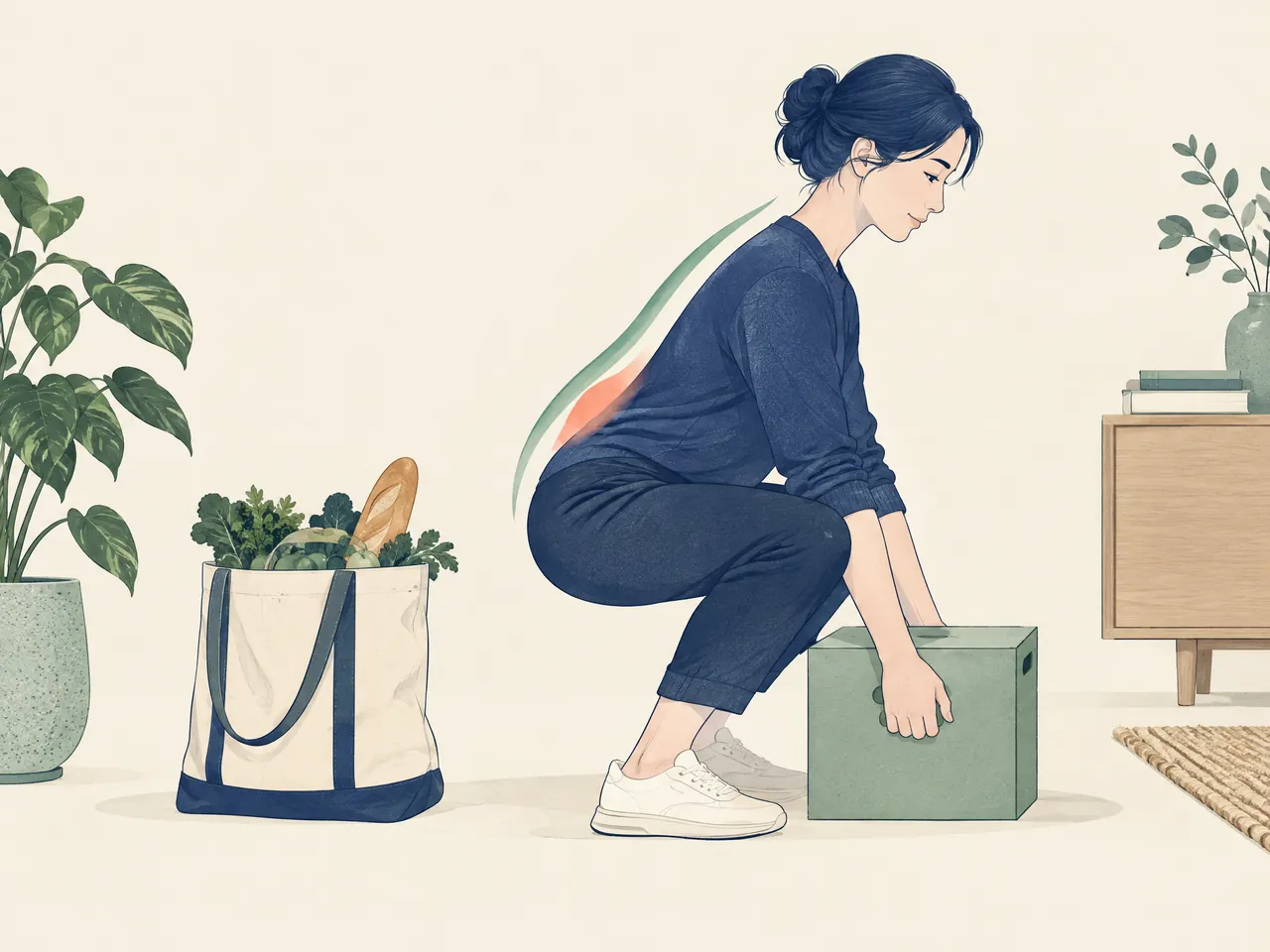
When should I go to A&E for back pain? Should I see a doctor or Chinese medicine practitioner for low back pain? Should I use heat or ice for low back pain? What a medical assessment can clarify
A clinical assessment normally starts with the story: onset, injury, prior episodes, pain distribution, work demands, sleep, general health and symptoms affecting the legs or bladder and bowel. Examination can include posture, movement, strength, sensation and reflexes when appropriate. This process can distinguish an uncomplicated presentation from one needing urgent referral or a different care pathway. It also gives you an opportunity to ask which activities are sensible to continue, which movements should be modified for now, and what change should trigger earlier review.
Imaging is not a default answer to every sore back. NICE says it should not routinely be offered in a non-specialist setting for low back pain with or without sciatica, and that specialist imaging should be considered only if it is likely to change management. [2] That does not mean symptoms are dismissed. It means the history and examination matter, and a scan is considered in context. If pain shoots down a leg, the plain-language comparison sciatica vs sciatica-like pain can help you prepare better questions for the appointment.
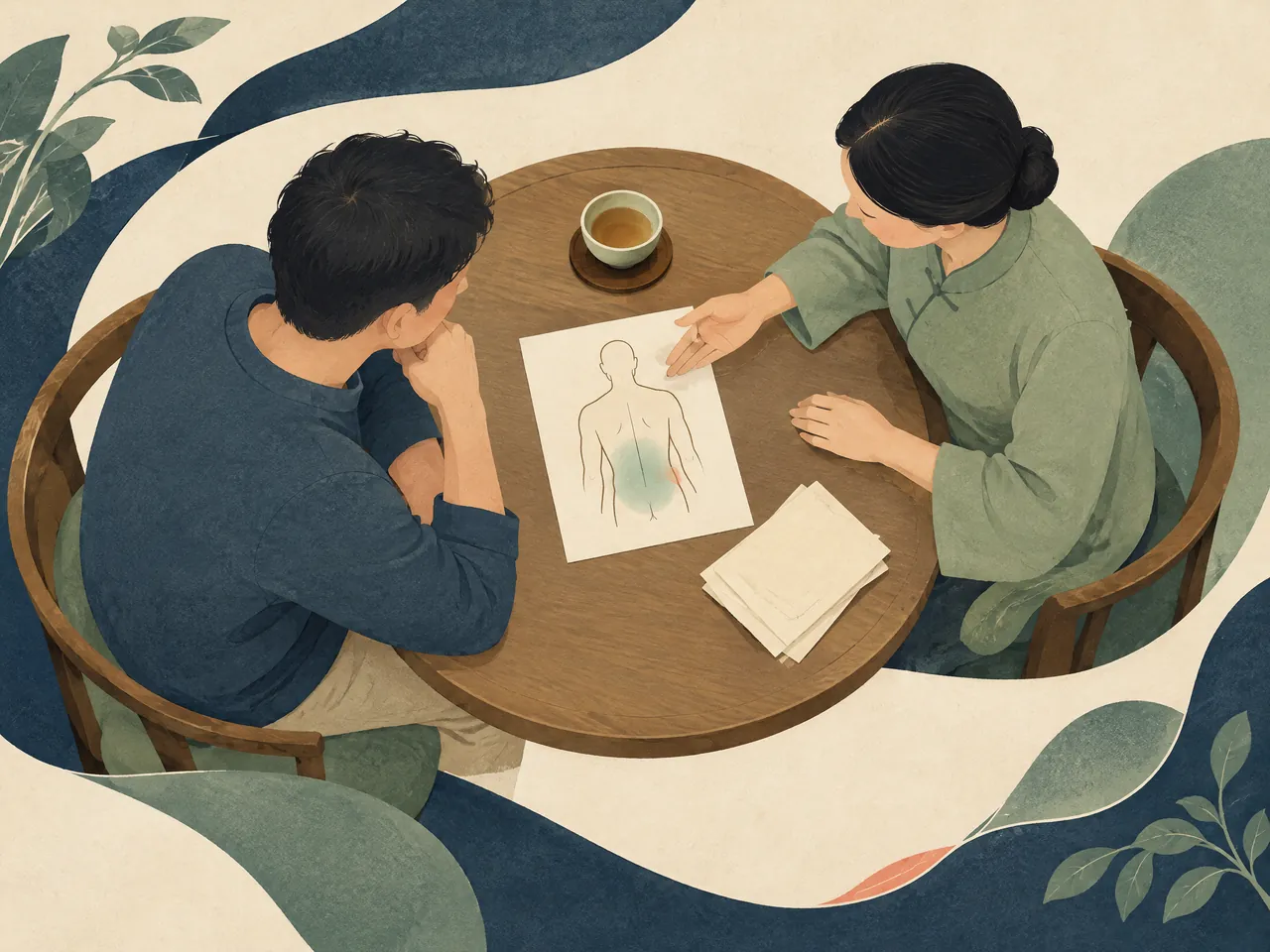
When should I go to A&E for back pain? Should I see a doctor or Chinese medicine practitioner for low back pain? Should I use heat or ice for low back pain? Where Chinese medicine may fit
After urgent causes have been considered, some people choose a Registered Chinese Medicine Practitioner as part of their non-urgent care. A face-to-face consultation may include questions about the pain pattern, aggravating and easing factors, sleep, appetite, energy, relevant medical history and current medicines. Traditional pattern identification is a Chinese medicine approach; it is not the same as a Western medical diagnosis and should not be used to explain away new neurological symptoms, injury or systemic illness.
Acupuncture, herbal medicine, tui-na or other options should be a discussion, not a promise of a fixed number of sessions or a cure. Evidence and guidance differ: NICE says not to offer acupuncture for low back pain or sciatica, while Cochrane found that, for chronic non-specific low back pain, benefits compared with sham treatment may not be clinically meaningful and certainty varied from very low to moderate. [2] [3] Tell every provider what care and medicines you are already using, and keep medical follow-up in the plan when symptoms change.
When should I go to A&E for back pain? Should I see a doctor or Chinese medicine practitioner for low back pain? Should I use heat or ice for low back pain? Practical comfort and follow-up
Comfort measures are not a diagnostic test. A heat pack that feels soothing does not prove pain is muscular, and an ice pack that eases soreness does not rule out a more serious cause. Use them as a temporary way to make ordinary movement, rest or a journey more manageable while you follow the triage plan. If either approach increases pain, produces skin discomfort or makes you feel unwell, stop. Escalate care when the overall pattern, not just the momentary pain level, is getting worse.
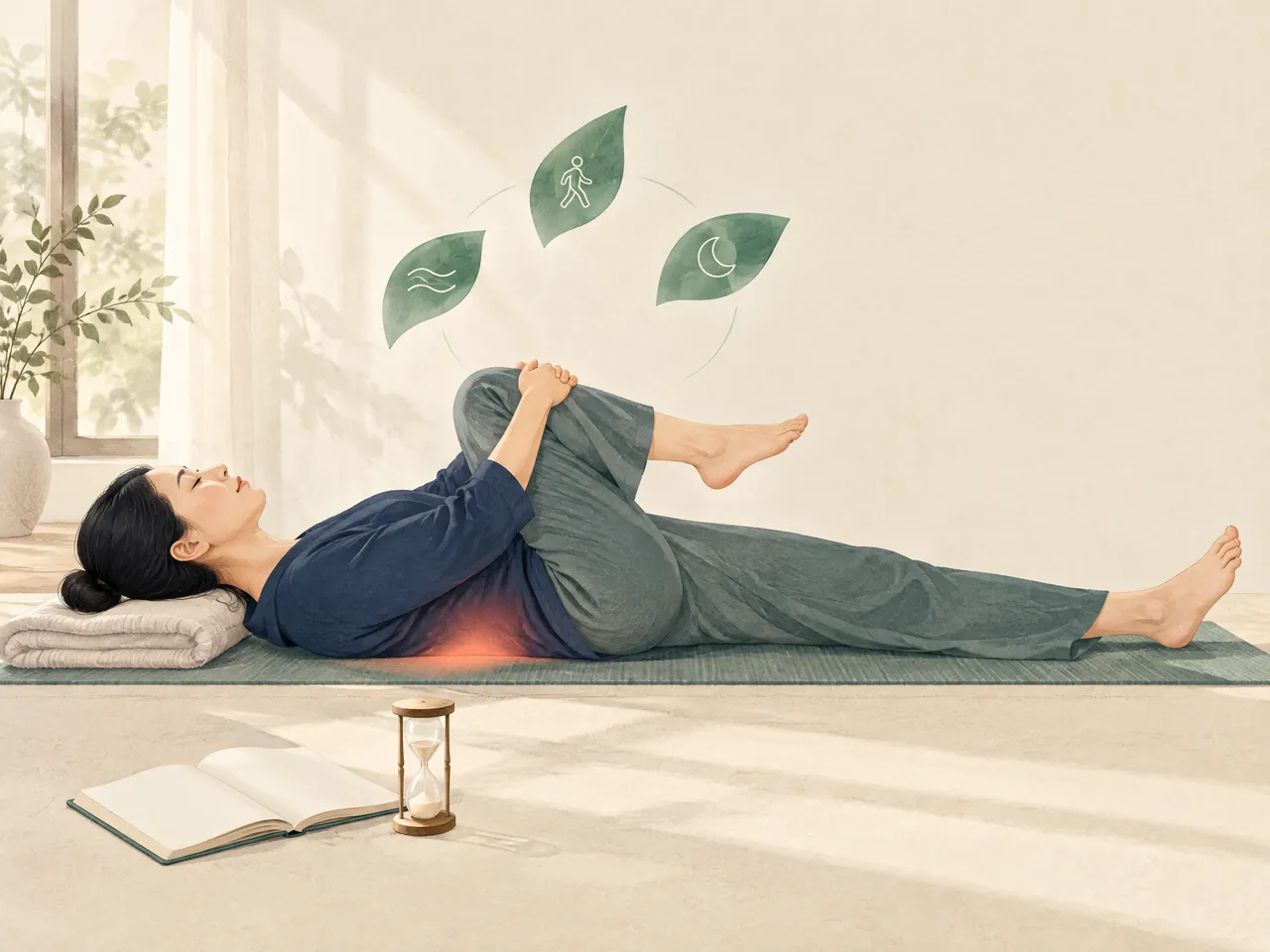
For many non-urgent episodes, the aim is to return gradually to ordinary life rather than to wait until every sensation has disappeared. The NHS advises staying active and continuing daily activities where possible, and advises against long periods in bed. [1] The Hospital Authority similarly encourages resuming activity within one’s ability. [4] This is a paced approach: reduce a task temporarily if needed, then build it back as tolerated, rather than forcing through sharp or escalating pain.

When should I go to A&E for back pain? Should I see a doctor or Chinese medicine practitioner for low back pain? Should I use heat or ice for low back pain? Choosing heat or ice safely
Choose ice when local pain or swelling is the main issue and cold feels comfortable; choose warmth when stiffness or muscle spasm is the more noticeable problem and warmth feels comfortable. The NHS specifically suggests an ice pack, or frozen peas, wrapped in a tea towel for pain and swelling, and a heat pack or hot water bottle wrapped in a tea towel for joint stiffness or muscle spasm. [1] The wrapping matters: never place an extreme temperature source directly on the skin.
There is no universal winner between heat and ice because people and episodes differ. Avoid treating the choice as a challenge to endure. Check the skin and stop if you notice burning, excessive redness, worsening numbness, pain or discomfort. Do not use a hot or cold pack to postpone emergency assessment for the warning signs listed above. If you have reduced sensation or a condition that affects your ability to sense temperature, ask a clinician whether these measures are suitable before using them.
When should I go to A&E for back pain? Should I see a doctor or Chinese medicine practitioner for low back pain? Should I use heat or ice for low back pain? Staying active and arranging care
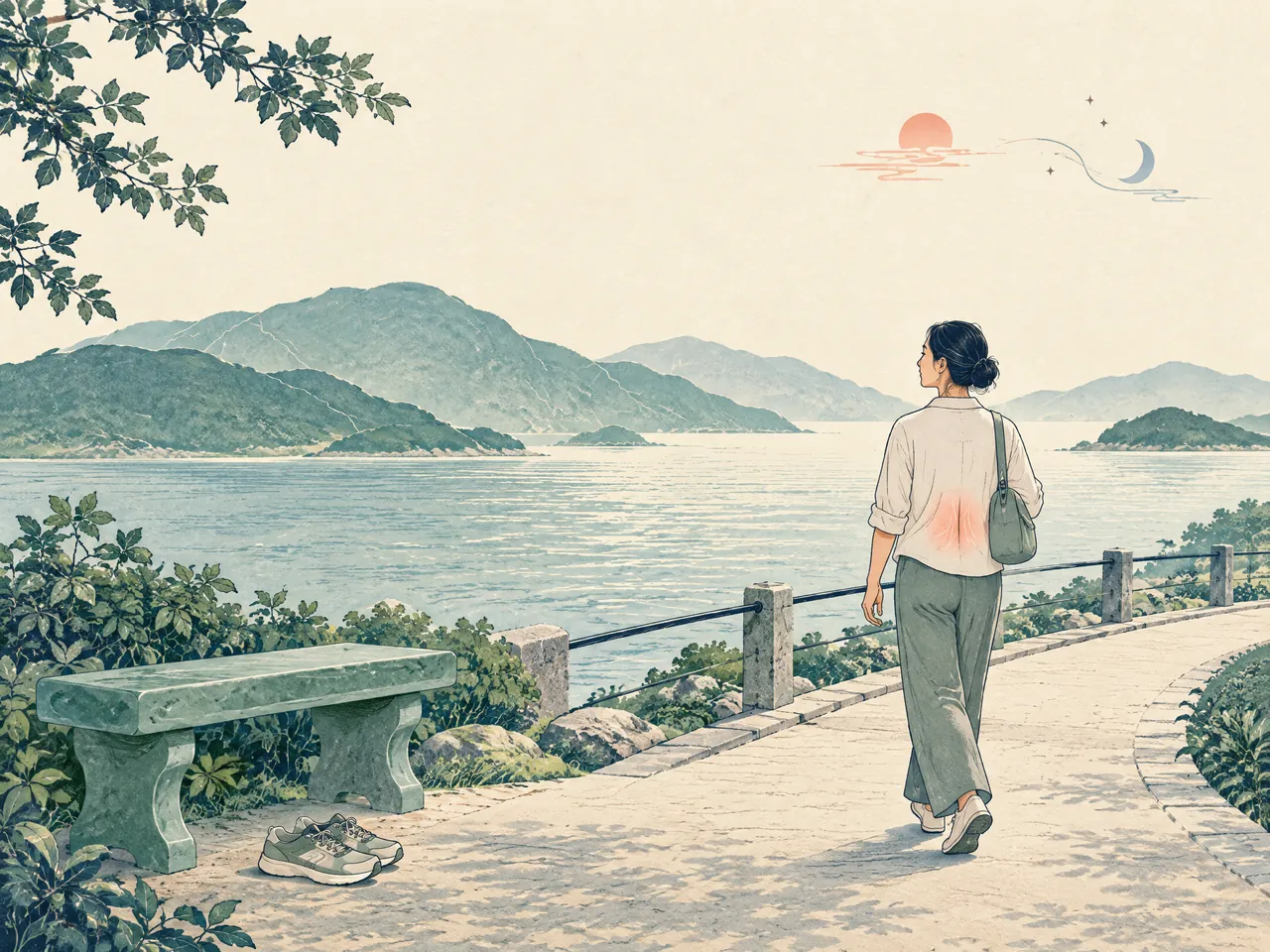
Break a long day into manageable changes of position. If desk work aggravates symptoms, stand or walk briefly before stiffness builds; if prolonged standing bothers you, alternate it with a supported sitting task. A short, comfortable walk can be a useful way to test tolerance without turning pain into a competition. Avoid long bed rest, but also pause an activity that produces sharp, spreading or progressively worsening symptoms. For a fuller discussion of this balance, see Should I rest in bed with low back pain?. [1]
When arranging non-urgent Chinese medicine care, share the symptom record, any scans or letters you already have, and every medication or supplement you use. You can ask what the consultation covers, how progress will be reviewed and when the practitioner would advise medical reassessment. TCM Lab has a Kwun Tong Chinese medicine clinic and a Chinese medicine clinic Prince Edward; review the Chinese medicine clinic price list Hong Kong before making a non-urgent enquiry. If new red flags arise at any point, use emergency medical services instead of waiting for that appointment.
Care and health guide
Low back discomfort: care information
This directory brings together services, reading, and visit information related to low back discomfort, to help you prepare questions for a consultation.
When low back discomfort affects your day, noting when it occurs, its relation to activity, and what you have already tried can help prepare a consultation; acupuncture for low back pain is a relevant service or reading entry point.
Individual circumstances differ, and acupuncture Hong Kong offers related information to help you understand options and prepare questions.


Your questions, answered
Frequently asked questions
Do I need A&E for back pain that travels down one leg?
Pain travelling down one leg is not by itself an automatic A&E indication, but it should be assessed if it is new, worsening, associated with weakness or numbness, or limiting function. Go to A&E for symptoms in both legs, saddle-area numbness, bladder or bowel changes, chest pain, or pain after a serious accident. [1]
Should I see a doctor before trying Chinese medicine for low back pain?
Urgent symptoms should be assessed through emergency or medical services first. Without red flags, a doctor or physiotherapist can clarify medical and functional issues; Chinese medicine may then be discussed as an additional option. Make sure each provider knows about the others’ care and any medicines you take.
Can acupuncture replace exercise or medical follow-up for low back pain?
No. It should not replace urgent assessment, a recommended rehabilitation plan, or review for changing symptoms. NICE advises against offering acupuncture for low back pain or sciatica, and a Cochrane review of chronic non-specific low back pain found mixed findings with evidence-certainty limitations. [2] [3]
What should I do if rest makes my back feel stiffer?
Long periods of bed rest are generally not advised. Within your ability, resume ordinary activity gradually and use a comfortable pace. Stop an activity that clearly worsens symptoms and seek professional advice if pain is severe, worsening or accompanied by neurological or bladder or bowel symptoms. [1] [4]
Sources and further information
- [1] [1] NHS: Back pain
Referenced for: Emergency warning symptoms, urgent advice, heat and ice guidance, activity and bed-rest advice.
- [2] [2] NICE NG59: Low back pain and sciatica in over 16s — assessment and management
Referenced for: Assessment, imaging, activity advice and the recommendation not to offer acupuncture for low back pain or sciatica.
- [3] [3] Cochrane: Acupuncture for chronic non-specific low-back pain
Referenced for: Evidence summary and certainty limitations for acupuncture in chronic non-specific low back pain.
- [4] [4] Hospital Authority: Low Back Pain
Referenced for: Hong Kong patient information on symptoms, neurological complications and gradual resumption of activity.