
TCM Lab · Health reading
Hong Kong acupuncture for back pain and rounded shoulders and upper back tension: what to know
Published Updated
Rounded shoulders and a tight upper back can be frustrating when they show up after desk work, phone use, driving or training. Hong Kong acupuncture for back pain may be worth discussing when the main issue is muscular tension, stiffness or an ache around the neck, shoulder blades and upper back. It is not a method of straightening a structural spinal curve or repairing bone. A useful plan starts by separating a posture habit from a problem that needs medical or physiotherapy assessment, then considers practical changes alongside any acupuncture. If pain is sudden, severe, quickly worsening, follows trauma, or comes with chest pain, breathing difficulty, numbness or weakness, seek medical care first.
Appointments are confirmed through WhatsApp. If you have language requirements, please mention them in your enquiry.
The short answer
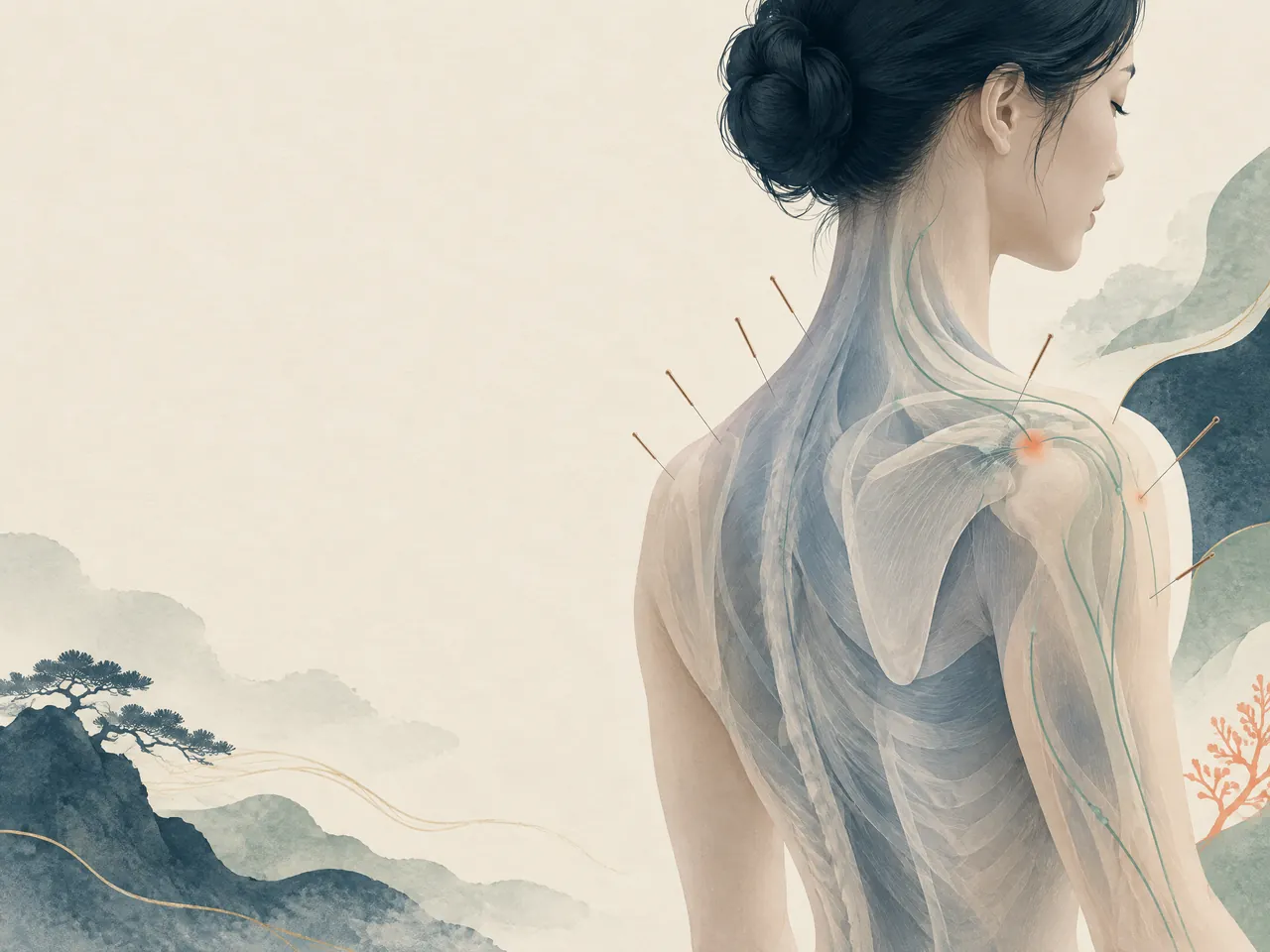
Hong Kong acupuncture for back pain can be discussed as a symptom-management option when rounded shoulders and upper back tension seem linked to muscular tightness and daily posture. A consultation should look at the pattern of discomfort, posture, muscle sensitivity and health history before treatment is considered. Acupuncture cannot correct a structural spinal curve. Desk setup, movement breaks and appropriately selected strengthening or mobility work may be equally important, while red-flag symptoms need medical assessment first.
Transparent pricing
See the fees.
Choose your care.
Explore our complete official price list, including first-trial prices, regular prices, packages and branch-specific options.
Opening WhatsApp prepares an enquiry; it does not send a message, take payment or confirm an appointment. Suitability and individual arrangements are confirmed during consultation.
Pain care
All prices in HKDExtracorporeal shockwave treatment
Shockwave treatment for deep-tissue and fascial care. The Kwun Tong clinic offers the multi-area options shown below.
Priced by branch
Branch-specific pricing
Prince Edward: HK$250 per area
Kwun Tong: HK$250 for 1 area / HK$450 for 2 areas / HK$600 for 3 areas
Pain care (manual therapy)
Includes Chinese medicine musculoskeletal assessment, manual joint techniques and tui na.
HK$580 (single session)
Chinese medicine musculoskeletal assessment
Pain care (acupuncture and manual therapy)
Combines acupuncture and manual therapy.
HK$680 (single session)
Combined care
Hair and scalp
All prices in HKDScalp health and hair-loss management
Includes AI scalp analysis, deep scalp and follicle cleansing, and scalp oil-control care.
HK$380 (first trial)
Regular price: HK$680
- 6 sessions: HK$3,480 (HK$580 per session)
- 12 sessions: HK$5,760 (HK$480 per session)
- 20 sessions: HK$8,600 (HK$430 per session)
- 30 sessions: HK$11,400 (HK$380 per session)
Hair acupuncture and Chinese herbal medicine package
Includes scalp acupuncture and 3 days of Chinese herbal medicine that does not require decoction.
HK$580 (single session)
Registered Chinese Medicine Practitioner consultation
- 6 sessions: HK$3,180 (HK$530 per session)
- 12 sessions: HK$5,760 (HK$480 per session)
- 20 sessions: HK$8,600 (HK$430 per session)
- 30 sessions: HK$11,400 (HK$380 per session)
Combined hair and scalp treatment
Combines acupuncture and Chinese herbal medicine with salon-level scalp and follicle care. Packages include complimentary hair-care shampoo and serum.
HK$1,260 (single session)
Combined treatment
- 8 sessions: HK$8,640 (HK$1,080 per session)
- 16 sessions: HK$15,680 (HK$980 per session)
- 20 sessions: HK$18,600 (HK$930 per session)
- 30 sessions: HK$26,400 (HK$880 per session)
Weight management
All prices in HKDFull-body acupoint embedding for weight management
Includes full-body acupoint embedding. Packages include complimentary Chinese herbal medicine for weight management, with the number of included days scaled to the package. Embedding material and the individual treatment arrangement are confirmed during consultation; this is not a cosmetic thread lift.
HK$980 (single session)
No trial session
- 10 sessions: HK$7,800 (HK$780 per session)
- 20 sessions: HK$14,600 (HK$730 per session)
- 30 sessions: HK$20,400 (HK$680 per session)
Facial acupuncture
All prices in HKDFacial acupuncture (basic)
Includes facial acupuncture and meridian-based facial care, including care for facial puffiness.
HK$480 (first trial)
Regular price: HK$680
- 10 sessions: HK$5,200 (HK$520 per session)
- 20 sessions: HK$9,600 (HK$480 per session)
- 30 sessions: HK$13,500 (HK$450 per session)
Facial acupuncture (advanced)
Includes enhanced facial acupuncture with a specially formulated moisturising mask and serum.
HK$780 (first trial)
Regular price: HK$1,180
- 10 sessions: HK$9,000 (HK$900 per session)
- 20 sessions: HK$16,600 (HK$830 per session)
- 30 sessions: HK$23,400 (HK$780 per session)
Chinese medicine
All prices in HKDAcupuncture and Chinese herbal medicine package
Includes a Chinese medicine consultation with pulse assessment, body acupuncture and 3 days of Chinese herbal granules that do not require decoction.
HK$580 (single session)
Chinese medicine consultation with pulse assessment
Hong Kong acupuncture for back pain and rounded shoulders and upper back tension: understanding posture
People use “rounded shoulders” to describe several things: shoulders that rest forward, a head that drifts ahead of the trunk, a visibly rounded upper-back contour, or pulling across the chest and between the shoulder blades. These descriptions overlap but are not diagnoses. Kyphosis is a spinal curve that can make the upper back look hunched or rounded; the NHS notes that poor posture is one possible cause, while structural spinal problems and previous injury are others. [1] Before assuming a stretch, massage or needle can “fix” the appearance, that distinction needs attention.
For someone working on a laptop in Central, carrying a shoulder bag between MTR stations, or looking down at a phone in the evening, the immediate issue may be holding one position too long. The shoulders may feel drawn forward and the upper-back muscles constantly busy. Symptoms can fluctuate with workload, sleep position, stress, gym training or an unfamiliar task. When discomfort begins, what eases it and whether it travels into an arm are more useful details than posture photos alone. Readers comparing options can also explore acupuncture for rounded shoulders.

A posture label should not make a person ignore other signs. A new or changing back shape, pain that does not settle, night pain or pain centred high between the shoulder blades deserves a conventional clinical review. The NHS also advises assessment when pain limits normal activity or accompanies unexplained weight loss. [3] This does not mean every tight shoulder has a serious cause; it means that an appearance-based explanation should not replace a proper history and examination when the pattern is unusual.
Hong Kong acupuncture for back pain and rounded shoulders and upper back tension: common posture patterns
One common pattern is a person who can stand tall briefly when reminded, yet gradually returns to a forward head and inward-turned shoulders while concentrating. Another is a person whose upper back stays rounded when relaxed and who notices stiffness rather than a clear ache. The first may reflect sustained habits and load tolerance; the second should not automatically be called “poor posture.” The useful question is whether the current position is comfortable, variable and functional enough for work, travel and activity. A clinician may consider how the neck, thoracic area, ribs, shoulder blades and arms move together rather than focusing on one still photograph.
Hong Kong acupuncture for back pain and rounded shoulders and upper back tension: muscle balance and daily strain
Upper-back tension often reflects a mismatch between demand and recovery. Reaching to a keyboard, craning towards a second screen, holding a child, cycling with a fixed grip or repeated overhead work can all load the area. The chest, neck, shoulder and shoulder-blade muscles respond to breathing, arm use, fatigue and the task at hand. Repeatedly pulling the shoulders back all day can become another tiring strategy. Instead, identify the position that brings symptoms on and create chances to change it. For pain lower in the thoracic area, mid back pain acupuncture is a more focused topic.
Traditional Chinese medicine may describe persistent local discomfort in terms of disrupted flow along relevant channels. That language is part of a traditional assessment and is not a modern structural diagnosis. It can sit alongside, not replace, attention to the person’s movement, sleep, work demands, injury history and medical red flags. Keeping both viewpoints clear helps avoid an overconfident explanation for a problem that may have more than one contributor.
Compare your options
| What you notice | Useful next step | What acupuncture can and cannot be asked to do |
|---|---|---|
| Tightness after sustained desk, phone or driving positions | Identify the exact trigger, vary the setup and discuss an individual assessment. | May be discussed for symptom management when muscular tension is relevant; it does not replace task changes. |
| A rounded upper-back shape that is new, marked or concerning | Arrange medical or physiotherapy assessment rather than self-diagnosing posture. | Cannot determine the cause or correct a structural spinal curve. |
| Pain with a known injury, persistent activity limitation or arm symptoms | Share the injury history and any existing clinical advice; seek appropriate review when needed. | Only consider after suitability and safety have been assessed; it is not a diagnostic test. |
| Sudden severe or rapidly worsening pain, chest pain, major trauma, or neurological/bowel/bladder symptoms | Seek urgent or emergency medical care as appropriate. | Not the first step; do not delay urgent evaluation. |
| Mild recurring stiffness while returning to activity | Use a gradual, individually appropriate movement plan and monitor response. | Can be one option to discuss alongside, not instead of, movement and clinical guidance. |
On smaller screens, scroll the table sideways to compare all columns.
Hong Kong acupuncture for back pain and rounded shoulders and upper back tension: assessment and session focus
A careful acupuncture consultation is more than locating a sore spot. It should cover the discomfort’s location and quality, onset, aggravating positions, headaches, arm symptoms, altered sensation, sleep, injury and relevant conditions. Observation of standing and sitting, gentle assessment of neck, shoulder and upper-back movement, and discussion of tense or tender areas can frame the complaint. If the history suggests a structural curve, nerve involvement or another diagnosis needing investigation, acupuncture should not delay assessment. The NHS describes specialist examination and, where appropriate, imaging in kyphosis assessment. [1]
Suitability is individual. It is important to mention pregnancy, bleeding disorders, anticoagulant medication, a tendency to faint, active skin infection and any recent surgery or significant illness. These details can affect whether treatment is deferred, adapted or not appropriate. It is also reasonable to ask what the proposed session is trying to address, how comfort will be checked and what to do afterwards. Research summaries on acupuncture for back or neck pain address pain outcomes; they do not establish that acupuncture corrects a spinal curve or a rounded-shoulder appearance. [2]

Hong Kong acupuncture for back pain and rounded shoulders and upper back tension: what a TCM assessment considers
In a TCM-style assessment, the practitioner may ask about stiffness, sensitivity around the neck and shoulder blades, sleep, energy, exercise and daily routine. They may observe posture and palpate guarding or tender areas. The purpose is an individual treatment conversation, not a declaration that a traditional pattern has proved a particular modern anatomical cause. Bring a short account of the workstation, training routine and provoking positions. Sharing a doctor’s or physiotherapist’s diagnosis or advice can help coordinate care. For wider context, see acupuncture for poor posture, while remembering that it is not a substitute for examination.
The assessment also creates a chance to set a modest, observable goal. For example, a person may want to sit through a meeting with less upper-back tightness, turn the head more comfortably when driving, or resume a prescribed mobility routine without guarding. These are different from promising a particular shoulder position or a permanent change in a spinal curve. Reviewing change against the original symptoms and activities is more meaningful than judging whether someone looks perfectly upright at the end of a session.

Hong Kong acupuncture for back pain and rounded shoulders and upper back tension: possible acupuncture locations and sensations
If acupuncture is considered suitable, attention may be directed to relevant areas around the neck, shoulders and upper back, with point selection based on the individual assessment rather than a fixed “rounded shoulders” recipe. The person may lie face down or on the side if that is comfortable, and the practitioner should explain the position before starting. Some people report a brief ache, heaviness, tingling or spreading sensation around a needle. Others feel very little. Neither a strong sensation nor a particular point selection proves that treatment is working, and pain, dizziness or anxiety should be reported straight away.
Acupuncture involves skin penetration, so safety procedures are central rather than incidental. The National Center for Complementary and Integrative Health notes that complications are uncommon but that nonsterile needles and improper delivery can cause serious harm; it also says acupuncture should not postpone seeing a health-care provider about a health problem. [2] Ask about single-use sterile needles and tell the practitioner about medication and relevant health conditions. A person who dislikes needles may instead wish to discuss non-needling options, movement advice or referral to another appropriate professional.
Hong Kong acupuncture for back pain and rounded shoulders and upper back tension: practical limits and next steps
The practical limit is simple: a treatment session cannot remove the repeated exposures that created or maintain the strain. If upper-back symptoms appear after two uninterrupted hours at a screen, the next step is usually not to force the shoulders down. It is to make the work position easier to vary, bring frequently used items closer, support the arms where helpful and insert short changes of position before discomfort becomes intense. Small adjustments can be tested one at a time so that a person learns what actually changes their symptoms. Acupuncture may be one part of symptom management, not a replacement for this process.
A plan needs room for uncertainty. Some people need a clinician to clarify whether a rounded contour is postural, structural, injury-related or connected with another condition. Others chiefly need a gradual return to movement after a flare. The NHS lists physiotherapy for improving posture and easing kyphosis-related pain and stiffness, but says specific exercises may help pain and stiffness without improving the spinal curve or stopping progression. [1] That boundary also applies when considering acupuncture for back pain evidence.

A consultation can be most productive when the person arrives with a clear question: “Is this muscle tension likely to be part of the problem, and what else should I change or have assessed?” That opens a plan that respects both symptom relief and the limits of what acupuncture can claim.
Hong Kong acupuncture for back pain and rounded shoulders and upper back tension: movement and workstation habits
Start with the task that causes the trouble. During computer work, place the main screen and keyboard so that you do not need to keep the head turned or the arms reaching forward; use the chair and desk arrangement that lets the feet and forearms rest comfortably. During phone use, change the viewing height and alternate hands rather than locking the neck in one angle. For exercise, reduce the movement or load that repeatedly brings on sharp pain, then seek individual advice before adding stretching or strengthening. Gentle regular activity is commonly encouraged for ordinary back pain, but an exercise should be stopped if it makes pain worse. [3] The right programme depends on the person, not on a universal rule to “pull the shoulders back.”
It can be useful to pair a movement cue with an existing routine: stand up after sending a group of messages, walk briefly after a video call, or reset the work surface before starting a new task. These are prompts to vary position, not rigid posture tests. A physiotherapist or other qualified clinician can advise which mobility, breathing, endurance or strength work fits the assessment. If an activity keeps causing symptoms despite sensible modifications, record the trigger and bring it to the next appointment rather than pushing through it.

Hong Kong acupuncture for back pain and rounded shoulders and upper back tension: warning signs and care planning
Do not book acupuncture first for an emergency pattern. Seek immediate emergency help for back pain with chest pain, after a serious accident, with pain, tingling, numbness or weakness in both legs, loss of sensation around the genitals or anus, or new bladder or bowel changes. The NHS also advises urgent help for sudden severe pain that is getting worse quickly or back pain with feeling generally unwell. [3] New breathing difficulty with a marked spinal curve also needs medical assessment. These signs need conventional evaluation because the priority is identifying the cause, not managing muscle tightness.
For non-urgent enquiries about posture-related upper-back tension, contact TCM Lab on WhatsApp at +852 6940 5663 and describe the main symptom, duration, relevant diagnosis and language needs so an appointment arrangement can be confirmed. You may ask about an assessment at the Chinese medicine clinic Prince Edward or the Kwun Tong Chinese medicine clinic. A realistic care plan may include acupuncture if suitable, but should also state what symptom or activity is being monitored, what daily adjustment is being tried, and when medical or physiotherapy review is the better next step.
Care and health guide
Shoulder discomfort: care information
This directory brings together services, reading, and visit information related to shoulder discomfort, to help you prepare questions for a consultation.
When shoulder discomfort affects your day, noting when it occurs, its relation to activity, and what you have already tried can help prepare a consultation; acupuncture for shoulder pain is a relevant service or reading entry point.
Individual circumstances differ, and acupuncture Hong Kong offers related information to help you understand options and prepare questions.


Your questions, answered
Frequently asked questions
How is rounded upper-back tension assessed before acupuncture?
The consultation may cover how the symptoms began, work and activity patterns, standing and sitting posture, neck, shoulder and upper-back movement, tender areas, health history and any warning signs. A TCM pattern assessment is a traditional approach, not a modern structural diagnosis. If the history suggests a structural curve, injury, nerve symptoms or another medical cause, conventional assessment should come first.
Which body areas may be considered during an acupuncture session for upper-back tension?
After individual assessment, the practitioner may consider relevant areas around the neck, shoulders and upper back rather than using one fixed sequence. Positioning may be face down or on the side, depending on comfort. The practitioner should explain the approach, and you should report sharp pain, dizziness, anxiety or other discomfort promptly.
Can acupuncture alone correct rounded shoulders or kyphosis?
No. Acupuncture cannot repair bone, correct a structural spinal curve or guarantee a change in shoulder position. It may be discussed for symptom management where muscular tightness or discomfort is part of the presentation. A plan may also need ergonomic changes, individually selected exercise, physiotherapy or medical review, depending on the cause.
When should upper-back pain be checked medically before booking acupuncture?
Seek urgent or emergency care for chest pain, serious trauma, sudden severe or rapidly worsening pain, bilateral leg numbness or weakness, saddle numbness, or bladder or bowel changes. Arrange clinical review for persistent pain, a changed back shape, pain that is worse at night, unexplained weight loss, pain high between the shoulder blades, or symptoms that are stopping normal activities.
Sources and further information
- [1] [1] NHS: Kyphosis
Referenced for: Definitions, possible causes, assessment, physiotherapy and exercise limits for kyphosis.
- [2] [2] National Center for Complementary and Integrative Health: Acupuncture—Effectiveness and Safety
Referenced for: Evidence boundary for pain-related acupuncture research and acupuncture safety considerations.
- [3] [3] NHS: Back pain
Referenced for: Back-pain self-care boundaries, medical-review prompts and urgent/emergency warning signs.