
TCM Lab · Health reading
Acne Marks After Acne: Facial Acupuncture for Acne Marks and Active Acne Before Facial Acupuncture
Published Updated
A mark left after a breakout may be a temporary colour change, a true scar, or a mixture of both. That difference matters before considering facial acupuncture for acne marks. Red or brown areas can gradually settle, while a depression or raised area is a change in skin structure and needs a different conversation. When there is active acne before facial acupuncture, especially a sore, pus-filled, open or rapidly worsening lesion, the first priority is assessment and control of inflammation rather than needling the affected skin.
Appointments are confirmed through WhatsApp. If you have language requirements, please mention them in your enquiry.
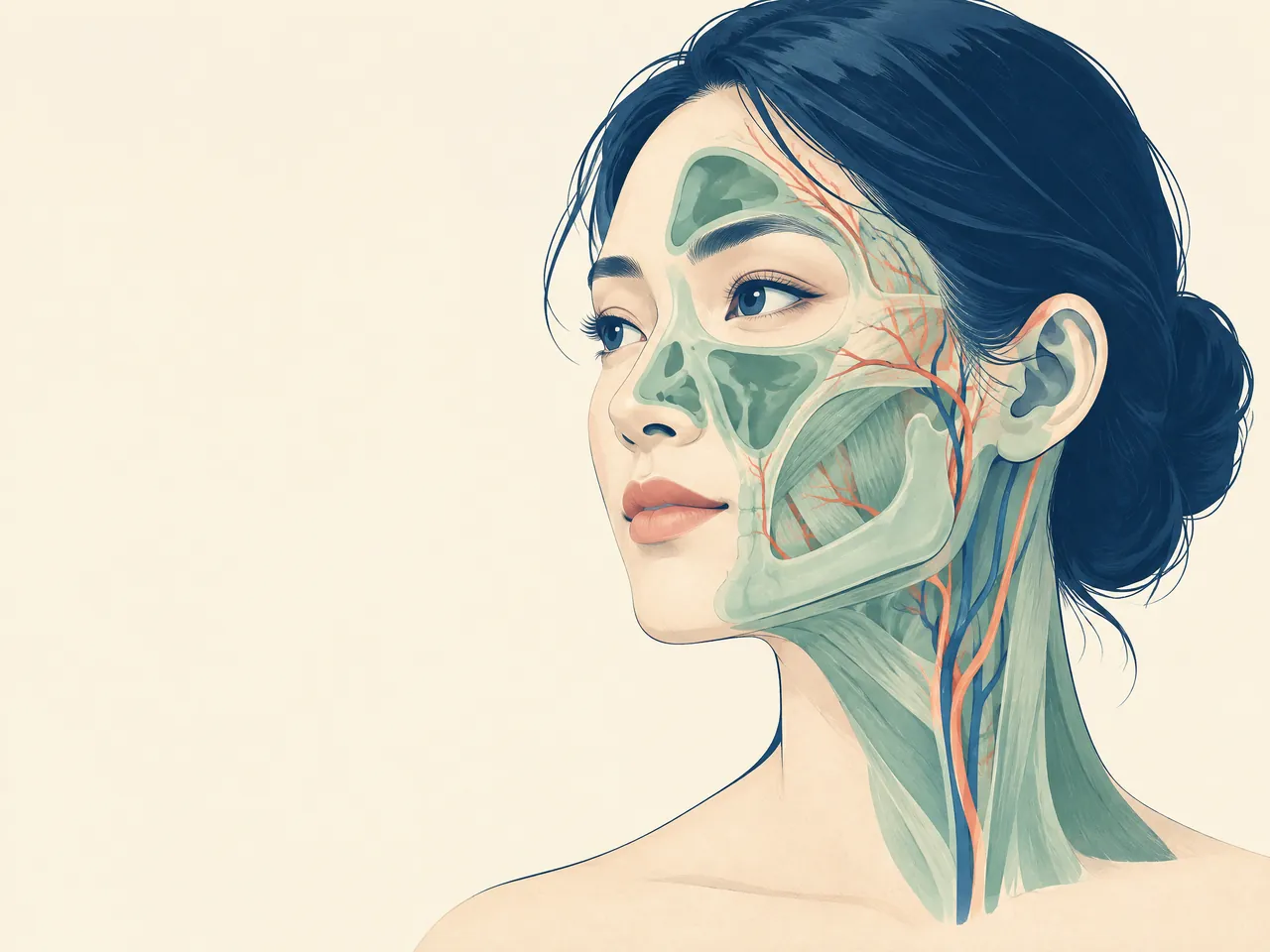
The short answer
Facial acupuncture for acne marks is not a guaranteed way to remove marks or repair indented or raised scars. First identify whether the concern is lingering redness, post-inflammatory pigmentation, or a structural scar. Active acne before facial acupuncture should be assessed first; inflamed, infected or broken areas should not be needled. A registered Chinese medicine practitioner can discuss whether local skin-focused care is appropriate, while painful deep acne, spreading redness, pus or fever needs medical assessment promptly.
Transparent pricing
See the fees.
Choose your care.
Explore our complete official price list, including first-trial prices, regular prices, packages and branch-specific options.
Opening WhatsApp prepares an enquiry; it does not send a message, take payment or confirm an appointment. Suitability and individual arrangements are confirmed during consultation.
Facial acupuncture
All prices in HKDFacial acupuncture (basic)
Includes facial acupuncture and meridian-based facial care, including care for facial puffiness.
HK$480 (first trial)
Regular price: HK$680
- 10 sessions: HK$5,200 (HK$520 per session)
- 20 sessions: HK$9,600 (HK$480 per session)
- 30 sessions: HK$13,500 (HK$450 per session)
Facial acupuncture (advanced)
Includes enhanced facial acupuncture with a specially formulated moisturising mask and serum.
HK$780 (first trial)
Regular price: HK$1,180
- 10 sessions: HK$9,000 (HK$900 per session)
- 20 sessions: HK$16,600 (HK$830 per session)
- 30 sessions: HK$23,400 (HK$780 per session)
Hair and scalp
All prices in HKDScalp health and hair-loss management
Includes AI scalp analysis, deep scalp and follicle cleansing, and scalp oil-control care.
HK$380 (first trial)
Regular price: HK$680
- 6 sessions: HK$3,480 (HK$580 per session)
- 12 sessions: HK$5,760 (HK$480 per session)
- 20 sessions: HK$8,600 (HK$430 per session)
- 30 sessions: HK$11,400 (HK$380 per session)
Hair acupuncture and Chinese herbal medicine package
Includes scalp acupuncture and 3 days of Chinese herbal medicine that does not require decoction.
HK$580 (single session)
Registered Chinese Medicine Practitioner consultation
- 6 sessions: HK$3,180 (HK$530 per session)
- 12 sessions: HK$5,760 (HK$480 per session)
- 20 sessions: HK$8,600 (HK$430 per session)
- 30 sessions: HK$11,400 (HK$380 per session)
Combined hair and scalp treatment
Combines acupuncture and Chinese herbal medicine with salon-level scalp and follicle care. Packages include complimentary hair-care shampoo and serum.
HK$1,260 (single session)
Combined treatment
- 8 sessions: HK$8,640 (HK$1,080 per session)
- 16 sessions: HK$15,680 (HK$980 per session)
- 20 sessions: HK$18,600 (HK$930 per session)
- 30 sessions: HK$26,400 (HK$880 per session)
Weight management
All prices in HKDFull-body acupoint embedding for weight management
Includes full-body acupoint embedding. Packages include complimentary Chinese herbal medicine for weight management, with the number of included days scaled to the package. Embedding material and the individual treatment arrangement are confirmed during consultation; this is not a cosmetic thread lift.
HK$980 (single session)
No trial session
- 10 sessions: HK$7,800 (HK$780 per session)
- 20 sessions: HK$14,600 (HK$730 per session)
- 30 sessions: HK$20,400 (HK$680 per session)
Pain care
All prices in HKDExtracorporeal shockwave treatment
Shockwave treatment for deep-tissue and fascial care. The Kwun Tong clinic offers the multi-area options shown below.
Priced by branch
Branch-specific pricing
Prince Edward: HK$250 per area
Kwun Tong: HK$250 for 1 area / HK$450 for 2 areas / HK$600 for 3 areas
Pain care (manual therapy)
Includes Chinese medicine musculoskeletal assessment, manual joint techniques and tui na.
HK$580 (single session)
Chinese medicine musculoskeletal assessment
Pain care (acupuncture and manual therapy)
Combines acupuncture and manual therapy.
HK$680 (single session)
Combined care
Chinese medicine
All prices in HKDAcupuncture and Chinese herbal medicine package
Includes a Chinese medicine consultation with pulse assessment, body acupuncture and 3 days of Chinese herbal granules that do not require decoction.
HK$580 (single session)
Chinese medicine consultation with pulse assessment
Acne Marks After Acne: Facial Acupuncture for Acne Marks and Active Acne Before Facial Acupuncture — What the Skin Mark May Mean
It is easy to call every leftover spot an acne scar, especially when a close-up mirror or phone camera makes a small colour change look dramatic. Yet colour and texture ask different questions. A mark that is flat but pink, red, brown or grey-brown may be a post-inflammatory colour change. A mark that catches light, feels uneven under a fingertip, or remains visibly sunken or raised suggests a structural component. The distinction does not decide a person’s worth or appearance; it helps avoid promising that one approach can do the same job for every kind of mark. DermNet notes that post-inflammatory erythema and hyperpigmentation may occur with or before scars, and that colour changes can improve with time, sometimes over months or longer [1].
A useful first check is to view the skin in ordinary daylight, without squeezing or rubbing it. Notice whether the mark changes colour during exercise, after a hot shower, or once it is covered with a thin layer of moisturiser. Then notice whether its outline changes when the surrounding skin is gently stretched. These observations are not a diagnosis, but they give a practitioner or dermatologist better starting information than the general phrase “acne marks”. For a closer explanation of texture patterns, see acne scar types. Avoid picking, popping or repeatedly touching current lesions: this can add irritation, infection risk and discolouration, and can make scarring more likely [2].

Acne Marks After Acne: Facial Acupuncture for Acne Marks and Active Acne Before Facial Acupuncture — Red Marks and Pigmentation
A red or pink flat mark after acne is often described as post-inflammatory erythema. It is a colour change associated with the healing process, not automatically a hole in the skin. A brown, grey-brown or darker flat mark may be post-inflammatory hyperpigmentation, where pigment remains after inflammation. Skin tone, sun exposure, irritation and new breakouts can affect how noticeable either type appears. That is why two people who both say “my acne has gone” may still need different advice about what they see in the mirror. The phrase post-inflammatory erythema acne is useful when the main concern is a flat red mark rather than an indentation.
Facial acupuncture for acne marks should be discussed as a possible part of local skin-focused care only after this distinction and a wider assessment. It should not be described as a proven eraser for redness or pigmentation, and no number of sessions can honestly be promised in advance. A practitioner may ask when the marks appeared, whether they are fading, what daily products are used, and whether a recent peel, laser procedure, retinoid or prescription acne treatment has left the skin sensitive. This prevents a treatment discussion from being based solely on a filtered photo or an expectation of instant, uniform clearing.

Acne Marks After Acne: Facial Acupuncture for Acne Marks and Active Acne Before Facial Acupuncture — Indented and Raised Scars
Indented scars are often grouped by their shape, such as narrow deep ice-pick scars, sharply edged boxcar scars and broader rolling scars. Raised scars are different again: they sit above the surrounding skin and may be hypertrophic or keloid-type. These labels are descriptive rather than self-treatment instructions. Their importance is that a structural scar cannot be assumed to behave like a flat area of colour. DermNet explains that acne scars commonly involve collagen changes after inflammation and describes the different atrophic patterns, while raised scars can occur less often [1].
Facial acupuncture cannot be presented as a way to restore destroyed skin structure or guarantee removal of a depression or raised scar. If a mark is deep, changing, firm, tender, spreading beyond the original spot, or difficult to identify, seek medical or dermatology assessment rather than relying on a cosmetic label. The American Academy of Dermatology also distinguishes a flat coloured spot after acne from a scar and notes that scars may remain even when discolouration settles [2]. If the question is whether acupuncture belongs in an overall discussion, Is facial acupuncture suitable for acne scars? sets out the practical limits to consider.
Compare your options
| What you may notice | What it may suggest | Useful next step |
|---|---|---|
| Flat pink or red area after a spot | Post-inflammatory erythema or another healing-related colour change | Track whether it is fading and discuss it at assessment; do not assume it is an indented scar. |
| Flat brown, grey-brown or darker area after inflammation | Post-inflammatory hyperpigmentation | Review current products and irritation, and seek advice if the diagnosis or management is uncertain. |
| Pit, broad depression or uneven texture | Possible atrophic structural scar | Ask for a scar-focused assessment; do not expect facial acupuncture to restore missing structure. |
| Raised, firm, painful, spreading, pus-filled or open area | Active inflammation, infection concern or raised scar requiring clinical judgement | Avoid needling the affected area and seek prompt medical care when symptoms are severe or worsening. |
On smaller screens, scroll the table sideways to compare all columns.
Acne Marks After Acne: Facial Acupuncture for Acne Marks and Active Acne Before Facial Acupuncture — How Assessment Works
An assessment begins with the skin today: flat marks, active whiteheads or inflamed bumps, deeper painful lesions, open areas, crusting or visible pus. It also needs the story behind the marks. Note when breakouts began, whether they recur after a new product or around a menstrual cycle, whether marks are changing, and what has been tried. Bring product and medicine names where possible. This makes it easier to recognise irritation and avoid treating over skin that is not settled.
Traditional Chinese medicine may use pattern-based observations, including questions about sleep, appetite, stress, digestion and menstrual history when relevant. These concepts belong to its own clinical approach and are not the same as a dermatology diagnosis. A registered Chinese medicine practitioner can use them when considering acupuncture, but an assessment cannot replace evaluation of suspected infection, severe acne or a changing scar. CUHK’s Chinese medicine clinics describe personalised consultation and acupuncture within a skin-condition programme, illustrating an approach wider than a promise for one mark [3].

Acne Marks After Acne: Facial Acupuncture for Acne Marks and Active Acne Before Facial Acupuncture — Traditional Chinese Medicine Assessment
In a Chinese medicine consultation, the practitioner may observe the distribution and colour of marks, ask about the timing and pattern of breakouts, and take a wider health history. In traditional terms, lingering redness or recurring eruptions may be discussed through patterns such as heat, dampness or stagnation. These terms should be explained as traditional assessment language, not as a laboratory finding or a substitute for diagnosing bacterial infection, hormone conditions or scarring depth. The practical value of the conversation is to make the person’s concerns specific: what is active, what has already healed, what feels sensitive, and what outcome is realistic.
A responsible plan separates skin support from claims of scar repair. It may include discussion of sleep routines, product irritation, picking habits and the timing of other professional care. The practitioner should also ask about bleeding or clotting problems, fainting with needles, pregnancy, medicines that affect bruising, and any previous adverse reaction to acupuncture or topical products. These answers can change whether acupuncture is deferred, modified or not offered. If the main concern is a chronic indentation or raised scar, the assessment should leave room for a dermatology opinion rather than treating the traditional approach as an alternative diagnosis.

Acne Marks After Acne: Facial Acupuncture for Acne Marks and Active Acne Before Facial Acupuncture — When Skin-Focused Care Is Discussed
When the facial skin is intact and there is no concerning active inflammation, an individual may ask whether facial acupuncture for acne marks is reasonable to discuss. The answer is conditional, not automatic. A practitioner considers the mark type, current sensitivity, ongoing acne treatment, medical history and the person’s goals. Someone who expects a needle-based session to flatten a deep scar has a different decision to make from someone with a few settled flat marks who wants a cautious consultation. High-quality evidence does not support a guarantee that facial acupuncture will remove acne marks, so the conversation should be about suitability and limits, not a package outcome.
It is also sensible to sequence care. Dermatology guidance states that active acne should be treated before scar management [1]. In practice, that means new tender lesions, drainage or a flare may change the day’s plan from local acupuncture to medical assessment or acne control first. Treating the current breakout and reducing picking can be more important for preventing additional marks than trying to correct every old mark at once [2]. Readers deciding between an assessment and a claim of guaranteed results can also read can facial acupuncture help acne marks.
Acne Marks After Acne: Facial Acupuncture for Acne Marks and Active Acne Before Facial Acupuncture — Preparation and Safety
Good preparation protects against a rushed decision. Avoid aggressively scrubbing or using a harsh new active product before the visit. Make a brief timeline: when acne started, when marks appeared, whether they are flat or uneven, and which treatments or procedures have been used. Include prescribed medicines, over-the-counter acne products, supplements and recent procedures. A clear account helps the practitioner identify when added caution or referral may be needed.
Safety includes honest expectations. Sterile technique, skin preparation and communication during a session matter, but they do not make every lesion suitable for needling. Report sharp pain, dizziness, persistent bleeding, a new rash or any other unexpected response at the time. Do not use a facial-acupuncture appointment to delay care for a rapidly worsening skin problem. If you want to ask in person about a non-urgent assessment, TCM Lab has a Kwun Tong Chinese medicine clinic and a Chinese medicine clinic Prince Edward; availability is arranged by appointment.

Acne Marks After Acne: Facial Acupuncture for Acne Marks and Active Acne Before Facial Acupuncture — What to Tell the Practitioner
Start with the concern in plain words: “These red flat areas appeared after acne,” “these brown marks darken after a breakout,” or “these pits have stayed since last year.” Add whether there are current painful lumps, pustules, drainage, crusting or broken skin. Explain if you have recently used oral or topical acne medicine, exfoliating acids, retinoids, steroid creams, laser treatments, chemical peels or microneedling. The point is not to build a perfect skincare diary. It is to give the practitioner enough context to judge whether the skin should be left alone, whether it may be unusually reactive, or whether another clinician should assess it first.
Also mention any tendency to faint, bleed or bruise easily, allergies to cleansers or topical products, a history of keloids or abnormal scarring, pregnancy, and all medicines or supplements. Explain your priority: fewer new breakouts, less visible colour contrast, a discussion of old scars, or help deciding whom to see next. Bringing this goal into the appointment helps avoid a vague request to “remove marks”. If costs are part of the decision, review the Chinese medicine clinic price list Hong Kong before asking what an assessment may involve; no treatment result or number of visits should be assumed from a price alone.

Acne Marks After Acne: Facial Acupuncture for Acne Marks and Active Acne Before Facial Acupuncture — When to Seek Medical Care
Seek timely medical care for deep painful nodules, swelling that is spreading or becoming hot and tender, substantial pus, fever, or an area that looks infected. These features need clinical assessment; they are not signs to manage by needling the lesion. Medical review is also important if acne is leaving new scars, has a major effect on mood or daily life, or does not improve with an existing plan. The AAD advises treating acne early and avoiding picking or squeezing because increasing inflammation raises the chance of scars, infection and discolouration [2].
Arrange a dermatology assessment for a changing raised lesion, a scar that is extensive or painful, uncertain marks, or when you want to understand scar-focused medical options. Bring your timeline and product list to that visit too. For someone considering facial acupuncture after medical issues are addressed, the safest question is not “How many sessions will erase this?” but “What is this mark, is my skin currently suitable, and what can this approach realistically contribute?” That question keeps active acne before facial acupuncture in the right order: settle concerning inflammation first, then make an informed decision about any complementary skin-focused care.
Care and health guide
Facial acupuncture information
This directory brings together services, reading, and visit information related to facial acupuncture, to help you prepare questions for a consultation.
When exploring facial acupuncture, noting the service-arrangement questions you want to discuss can help prepare a consultation; facial acupuncture Hong Kong is a relevant service or reading entry point.
People may have different priorities, and acupuncture Hong Kong offers related information to help you understand options and prepare questions.

Your questions, answered
Frequently asked questions
Can facial acupuncture remove acne marks?
It cannot guarantee that acne marks will disappear, and it should not be presented as a way to repair indented or raised structural scars. First clarify whether the visible change is flat redness, pigmentation, a scar, or a mixture. That distinction changes what a realistic assessment can discuss.
Should active acne be controlled before facial acupuncture?
Yes. Active acne should be assessed first, especially if lesions are painful, inflamed, broken, producing pus or rapidly worsening. Needling directly over an inflamed or infected lesion is not appropriate. Dermatology guidance recommends treating active acne before beginning scar management [1].
How many facial acupuncture sessions are needed for acne marks?
There is no fixed number and no guaranteed response time. The discussion depends on the mark type, whether acne is still active, skin sensitivity, other treatments and the individual assessment. A promised course that claims to erase scars or marks should be treated cautiously.
What should I bring to an assessment for acne marks?
Bring or list your current and recent skincare products, prescribed and over-the-counter medicines, supplements, previous procedures and the timeline of breakouts and marks. Mention bleeding or bruising issues, fainting with needles, pregnancy, allergies, and any painful, open or pus-filled lesions.
Sources and further information
- [1] [1] DermNet — Acne scarring
Referenced for: Definitions of post-inflammatory colour changes and acne scar patterns; active acne should be treated before scar management.
- [2] [2] American Academy of Dermatology — Acne scars: Overview
Referenced for: Patient guidance on early acne treatment, avoiding picking, and distinguishing flat post-inflammatory hyperpigmentation from scars.
- [3] [3] CUHK Integrative Medical Centre — Chinese Medicine for Skin Condition Improvement Program
Referenced for: Hong Kong academic clinic example of individualised Chinese medicine consultation and acupuncture in a skin-condition programme; it does not establish efficacy for this page.