
TCM Lab · Health reading
Upper Back Pain Relief at Home: Upper Back Pain Self Management and Upper Back Pain Activity Modification
Published Updated
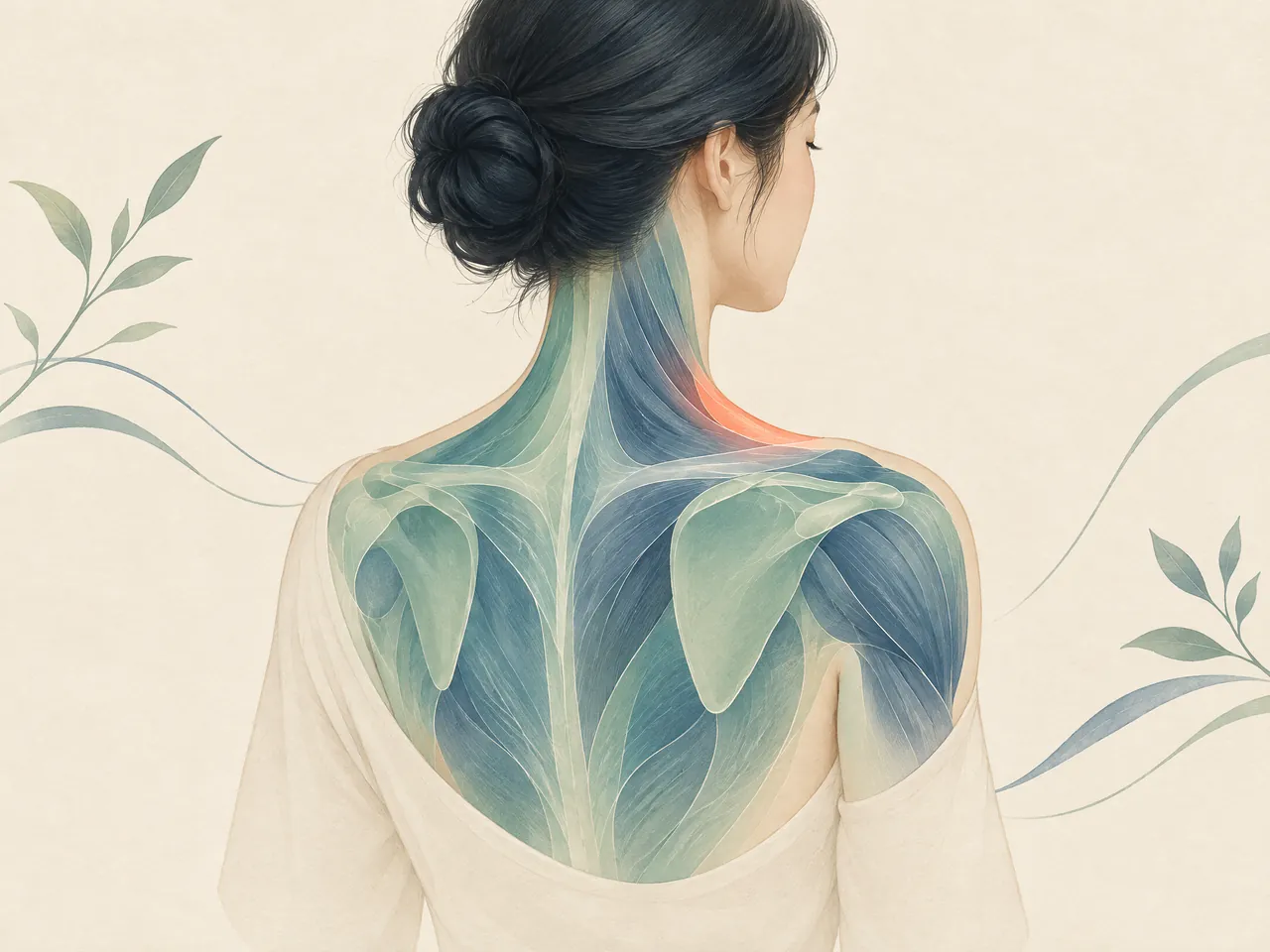
Upper-back pain can make a laptop shift, a grocery bag or even turning to reverse a car feel like a bigger job than it should. For upper back pain relief at home, start by reducing the particular load that reliably stirs symptoms, while keeping everyday movement within a tolerable range. This is a practical middle path: neither pushing through sharp pain nor spending the day still. Simple changes to how you work, carry, reach and recover can make the day more manageable. Because pain between the shoulder blades can also have causes beyond tired muscles, home care belongs only after urgent warning signs have been considered.
Appointments are confirmed through WhatsApp. If you have language requirements, please mention them in your enquiry.
The short answer
Upper back pain relief at home usually means changing aggravating tasks, taking regular movement breaks, and returning to activity gradually rather than stopping everything. A cloth-wrapped cold or gently warm pack may be used carefully for temporary comfort. Keep notes on what triggers or eases symptoms. Stop self-management and seek urgent medical help for chest pain, breathing difficulty, new weakness, major numbness, bladder or bowel changes, or pain after significant trauma.
Transparent pricing
See the fees.
Choose your care.
Explore our complete official price list, including first-trial prices, regular prices, packages and branch-specific options.
Opening WhatsApp prepares an enquiry; it does not send a message, take payment or confirm an appointment. Suitability and individual arrangements are confirmed during consultation.
Pain care
All prices in HKDExtracorporeal shockwave treatment
Shockwave treatment for deep-tissue and fascial care. The Kwun Tong clinic offers the multi-area options shown below.
Priced by branch
Branch-specific pricing
Prince Edward: HK$250 per area
Kwun Tong: HK$250 for 1 area / HK$450 for 2 areas / HK$600 for 3 areas
Pain care (manual therapy)
Includes Chinese medicine musculoskeletal assessment, manual joint techniques and tui na.
HK$580 (single session)
Chinese medicine musculoskeletal assessment
Pain care (acupuncture and manual therapy)
Combines acupuncture and manual therapy.
HK$680 (single session)
Combined care
Hair and scalp
All prices in HKDScalp health and hair-loss management
Includes AI scalp analysis, deep scalp and follicle cleansing, and scalp oil-control care.
HK$380 (first trial)
Regular price: HK$680
- 6 sessions: HK$3,480 (HK$580 per session)
- 12 sessions: HK$5,760 (HK$480 per session)
- 20 sessions: HK$8,600 (HK$430 per session)
- 30 sessions: HK$11,400 (HK$380 per session)
Hair acupuncture and Chinese herbal medicine package
Includes scalp acupuncture and 3 days of Chinese herbal medicine that does not require decoction.
HK$580 (single session)
Registered Chinese Medicine Practitioner consultation
- 6 sessions: HK$3,180 (HK$530 per session)
- 12 sessions: HK$5,760 (HK$480 per session)
- 20 sessions: HK$8,600 (HK$430 per session)
- 30 sessions: HK$11,400 (HK$380 per session)
Combined hair and scalp treatment
Combines acupuncture and Chinese herbal medicine with salon-level scalp and follicle care. Packages include complimentary hair-care shampoo and serum.
HK$1,260 (single session)
Combined treatment
- 8 sessions: HK$8,640 (HK$1,080 per session)
- 16 sessions: HK$15,680 (HK$980 per session)
- 20 sessions: HK$18,600 (HK$930 per session)
- 30 sessions: HK$26,400 (HK$880 per session)
Weight management
All prices in HKDFull-body acupoint embedding for weight management
Includes full-body acupoint embedding. Packages include complimentary Chinese herbal medicine for weight management, with the number of included days scaled to the package. Embedding material and the individual treatment arrangement are confirmed during consultation; this is not a cosmetic thread lift.
HK$980 (single session)
No trial session
- 10 sessions: HK$7,800 (HK$780 per session)
- 20 sessions: HK$14,600 (HK$730 per session)
- 30 sessions: HK$20,400 (HK$680 per session)
Facial acupuncture
All prices in HKDFacial acupuncture (basic)
Includes facial acupuncture and meridian-based facial care, including care for facial puffiness.
HK$480 (first trial)
Regular price: HK$680
- 10 sessions: HK$5,200 (HK$520 per session)
- 20 sessions: HK$9,600 (HK$480 per session)
- 30 sessions: HK$13,500 (HK$450 per session)
Facial acupuncture (advanced)
Includes enhanced facial acupuncture with a specially formulated moisturising mask and serum.
HK$780 (first trial)
Regular price: HK$1,180
- 10 sessions: HK$9,000 (HK$900 per session)
- 20 sessions: HK$16,600 (HK$830 per session)
- 30 sessions: HK$23,400 (HK$780 per session)
Chinese medicine
All prices in HKDAcupuncture and Chinese herbal medicine package
Includes a Chinese medicine consultation with pulse assessment, body acupuncture and 3 days of Chinese herbal granules that do not require decoction.
HK$580 (single session)
Chinese medicine consultation with pulse assessment
Upper Back Pain Relief at Home: Upper Back Pain Self Management and Upper Back Pain Activity Modification Basics
Upper-back pain is a location, not a single diagnosis. The area runs from the base of the neck to the lower edge of the rib cage and includes the thoracic spine, muscles and structures around the shoulder blades. Repeated desk work, a prolonged static position, a new gym session, twisting while lifting, or hours spent looking down at a phone may be relevant. Yet an ache in this area is not automatically a posture problem. It can arise from a strain or joint irritation, and sometimes pain is felt in the back even though its source is elsewhere. That is why an honest first step in upper back pain self management is to observe the pattern rather than guess the cause. Cleveland Clinic similarly notes that upper-back pain can involve the spine, muscles, shoulder blades or referred pain from inside the body [1].
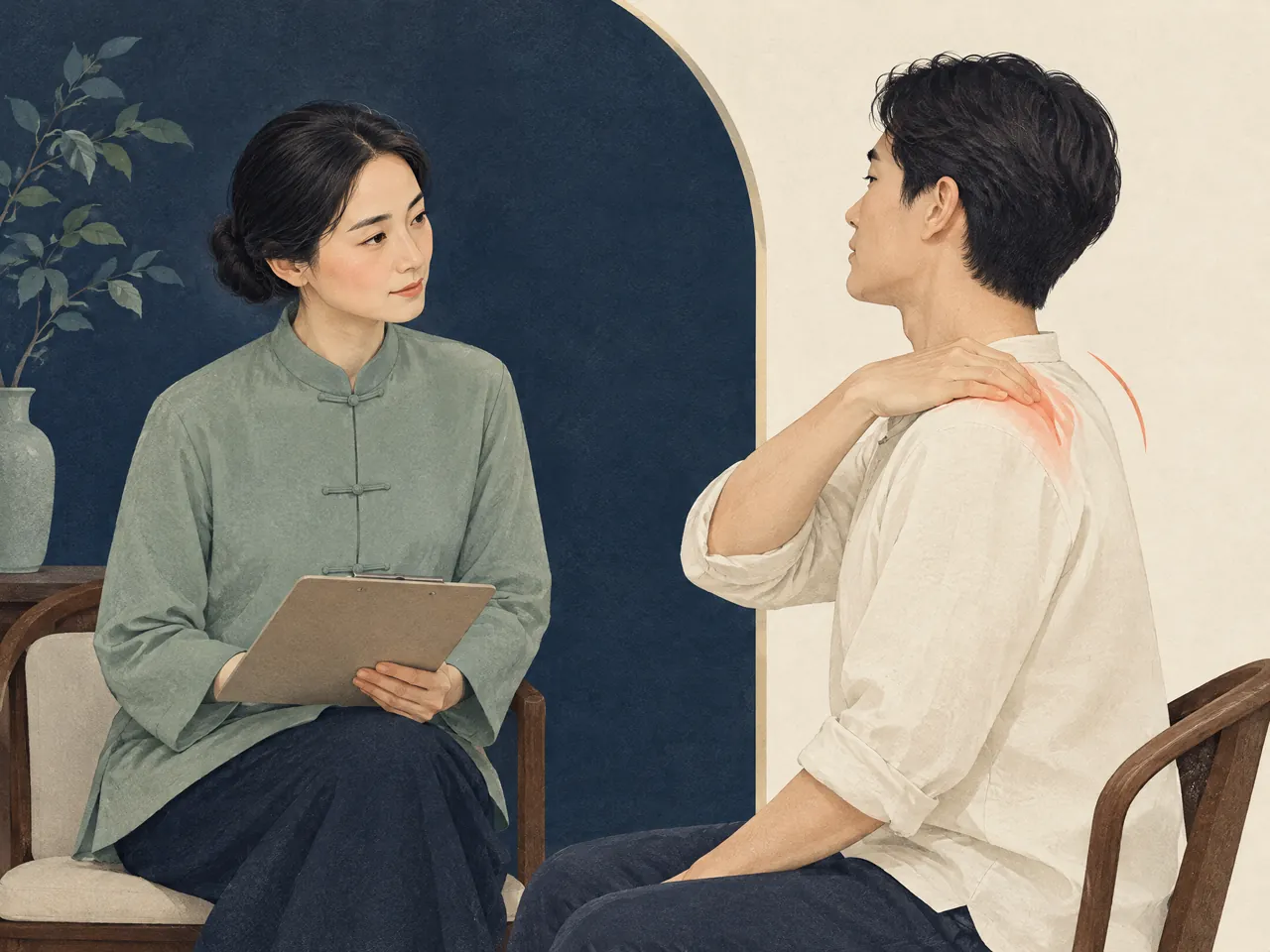
Make a brief, useful record for one or two ordinary days. Where exactly is the discomfort: between the shoulder blades, beside one shoulder blade, along the ribs, or nearer the neck? Does it begin after carrying a backpack, at the end of a screen-heavy afternoon, with a deep breath, or only after a certain reach? Record what eases it as well as what aggravates it. The purpose is not to diagnose yourself. It is to spot a repeatable load you can adjust and to notice whether symptoms are moving in the right direction. This makes home decisions less random and gives a clinician clearer information if the pain does not settle.

Upper Back Pain Relief at Home: Upper Back Pain Self Management for Daily Loads and Upper Back Pain Activity Modification
Activity modification means changing the dose of a task, not abandoning normal life. If carrying one heavy tote triggers pain, split the load, hold it close to your body and make an extra trip. If folding laundry on the floor means repeated bending and twisting, raise the basket to a chair or table. For a long commute, shift position before stiffness builds instead of waiting for pain to force a stop. At a desk, place frequently used items within easy reach and set the screen so you are not repeatedly craning your neck. These changes lower repeated demand without making you afraid of movement. For a broader overview of practical choices, see upper back pain self-care.
Upper Back Pain Relief at Home: Upper Back Pain Self Management Without Complete Rest and Upper Back Pain Activity Modification
Complete bed rest can leave the upper back feeling stiffer and make returning to normal routines harder. When no red flags are present, choose light movement that does not create a marked flare: a short walk, changing position between calls, a gentle shoulder roll, or easy household activity paced into smaller blocks. The NIH advises people with back pain not to lie down all day, but instead to limit activities that make pain worse and slowly increase activity as able [3]. That is a useful principle for upper-back discomfort too. The goal is not to prove toughness or to hit a workout target. The goal is to keep moving enough that the day does not become organised around guarding the area.
Compare your options
| What you notice | A reasonable home adjustment | When not to rely on home care |
|---|---|---|
| A desk or phone position gradually brings on an ache | Change position regularly, bring the screen or task closer, and alternate sitting with short easy movement breaks. | Symptoms persist, worsen, or include numbness, weakness or other new neurological signs. |
| A carrying or lifting task provokes pain | Reduce the load, keep it close, split the task into smaller trips and build back gradually. | Pain followed a significant injury or is sharp, severe or progressively limiting. |
| Stiffness after a fixed position | Try an easy walk or gentle controlled upper-back movement; use a cloth-wrapped, gently warm pack only if it is safe for you. | Pain is severe at rest, wakes you persistently, or comes with fever or feeling unwell. |
| Recent minor soft-tissue irritation | Consider a cloth-wrapped cold pack with skin checks, then resume comfortable activity at a reduced dose. | There is chest pain, difficulty breathing, loss of bladder or bowel control, major numbness or weakness. |
On smaller screens, scroll the table sideways to compare all columns.
Upper Back Pain Relief at Home: Upper Back Pain Self Management Through Movement and Upper Back Pain Activity Modification
Upper back pain relief at home is often more sustainable when movement is spread through the day. A single ‘perfect’ sitting position is hard to maintain and is not the only factor that affects symptoms. Instead, give your back variety. Stand to take part of a call, walk while thinking through a problem, alternate computer work with a task that uses the hands at a different height, or take a short reset before a long meeting. Check whether the chair gives you a stable base and whether the keyboard and mouse force you to reach. These are practical experiments, not a test of whether your posture is good or bad. The question Can posture cause upper back pain? is worth exploring alongside other contributors such as workload, sleep, stress and a recent change in activity.
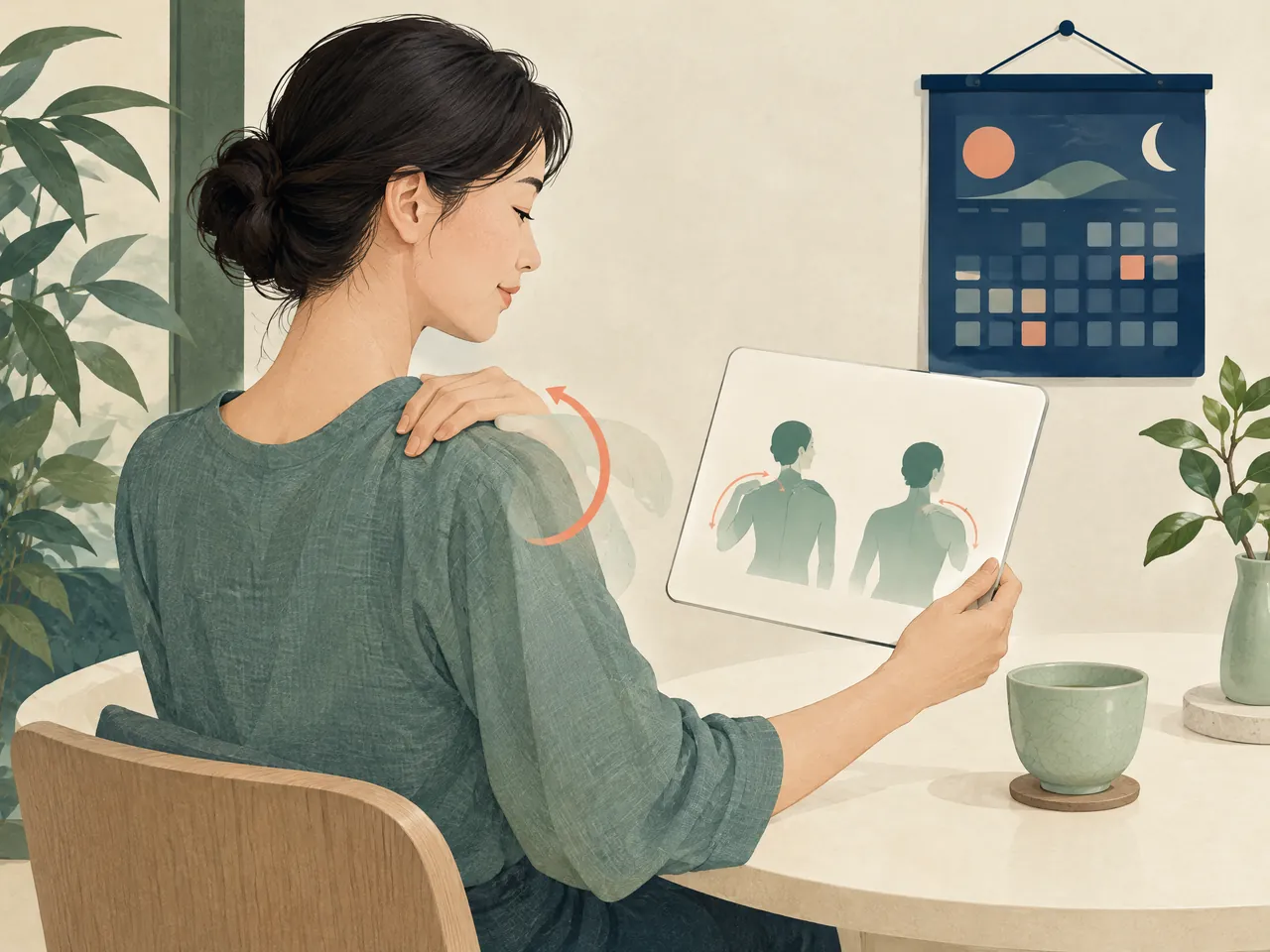
Build a movement routine around function. If rotating to look over a shoulder feels restricted, begin with a small, slow turn while seated and supported. If reaching to a high shelf is the problem, first practise an easy shoulder and upper-back movement below shoulder height. Breathe normally and keep the effort low. Stop a movement that produces sharp pain, new spreading symptoms, dizziness or a clear worsening that does not settle. NHS thoracic-back guidance supports staying active, gradual build-up and selecting movements that are comfortable rather than trying to do every exercise available [2]. A movement that looks impressive is not automatically the right choice; a repeatable movement that leaves you no worse is more useful.
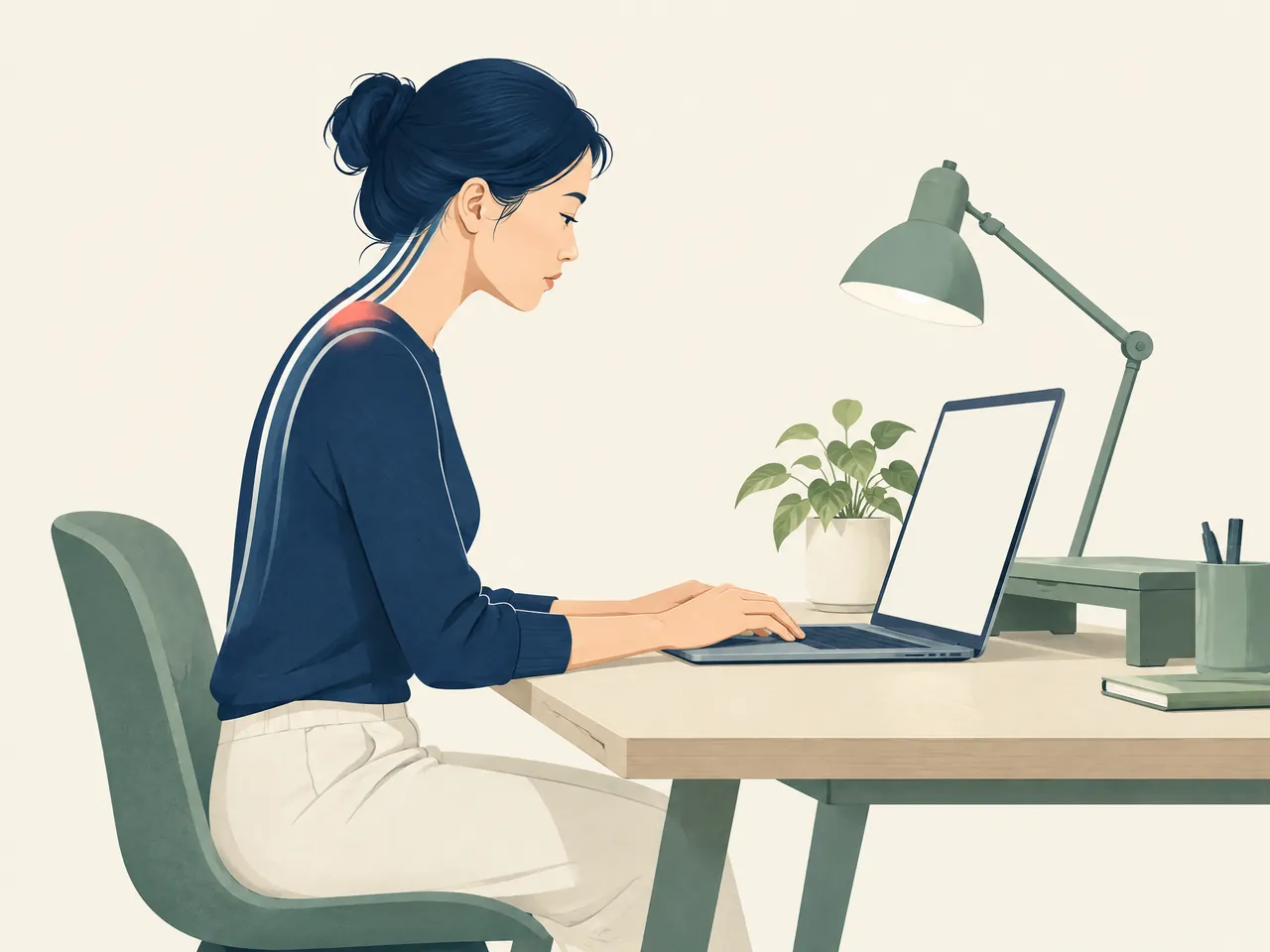
Avoid treating a temporary easing of pain as proof that a heavy task is suddenly safe. If heat, a walk or a rest break makes you feel better, use that window to return to ordinary activity at a lower dose rather than to catch up on all missed lifting, cleaning or training. Equally, a little discomfort during a new movement does not always mean damage. Look at the trend: is the pain settling, staying much the same, or becoming more intense and more limiting? A calm, measured progression allows you to adjust before a minor flare becomes several lost days.
Upper Back Pain Relief at Home: Upper Back Pain Self Management With Gentle Mobility and Upper Back Pain Activity Modification
Gentle mobility is a way to explore available movement, not a contest to stretch as far as possible. Try sitting tall with both feet supported, then slowly turn the rib cage a small distance to each side while keeping your breathing easy. Another option is to let the shoulders move forward and back without yanking them down. Choose one or two motions that feel acceptable and repeat them during the day, especially after a fixed position. Keep the motion controlled and avoid bouncing, forceful twisting or asking a friend to push you farther. The thoracic region is connected to the ribs, neck and shoulders, so an exercise should feel like a quiet investigation of the area rather than a hard pull in one spot. For more detail on selecting gentle options, see upper back pain stretches.
Upper Back Pain Relief at Home: Upper Back Pain Self Management With Heat, Cold and Upper Back Pain Activity Modification
Heat and cold are comfort tools, not a way to identify the cause of pain. Use a pack that feels comfortably cool or gently warm, never extreme, and place a cloth between the pack and skin. Check the skin regularly. Gloucestershire Hospitals NHS advises avoiding direct ice on skin and limiting ice use to areas with normal sensation and circulation; it also advises a towel barrier and skin checks for heat [4]. Do not use either method over an open wound. If you notice painful blotching, blue colour, excessive numbness, burning or an unexpected skin reaction, remove the pack. People with reduced sensation or circulation should ask a clinician or pharmacist before using a pack.
Upper Back Pain Relief at Home: Upper Back Pain Self Management Safety and Upper Back Pain Activity Modification Limits
Home measures have clear limits because upper-back pain may sometimes signal a problem that needs prompt medical care. Seek emergency help now for chest pain, trouble breathing, or upper-back pain with symptoms that could suggest a heart or lung emergency. Do not try to stretch, massage or heat away those symptoms. Cleveland Clinic specifically identifies chest pain and trouble breathing with upper-back pain as reasons for immediate medical attention [1]. If you are deciding whether a chest-related symptom could be serious, read can upper back pain with chest pain be serious, but do not use an article to delay emergency care.
Stop self-management and seek urgent assessment for new or progressive weakness, difficulty walking, major numbness, loss of bladder or bowel control, or inability to pass urine. Urgent review is also sensible after a significant fall, road collision or other trauma. Fever, feeling generally unwell, unexplained weight loss, a history of cancer, constant severe pain, or pain that is worsening rather than easing deserve medical advice. These features do not diagnose a particular condition by themselves. They matter because exercises, ergonomic changes and packs do not rule out infection, a fracture, nerve involvement or a non-musculoskeletal cause. NHS thoracic-back guidance also highlights gait changes, leg weakness, bladder or bowel changes and numbness around the genitals or back passage as urgent symptoms [2].
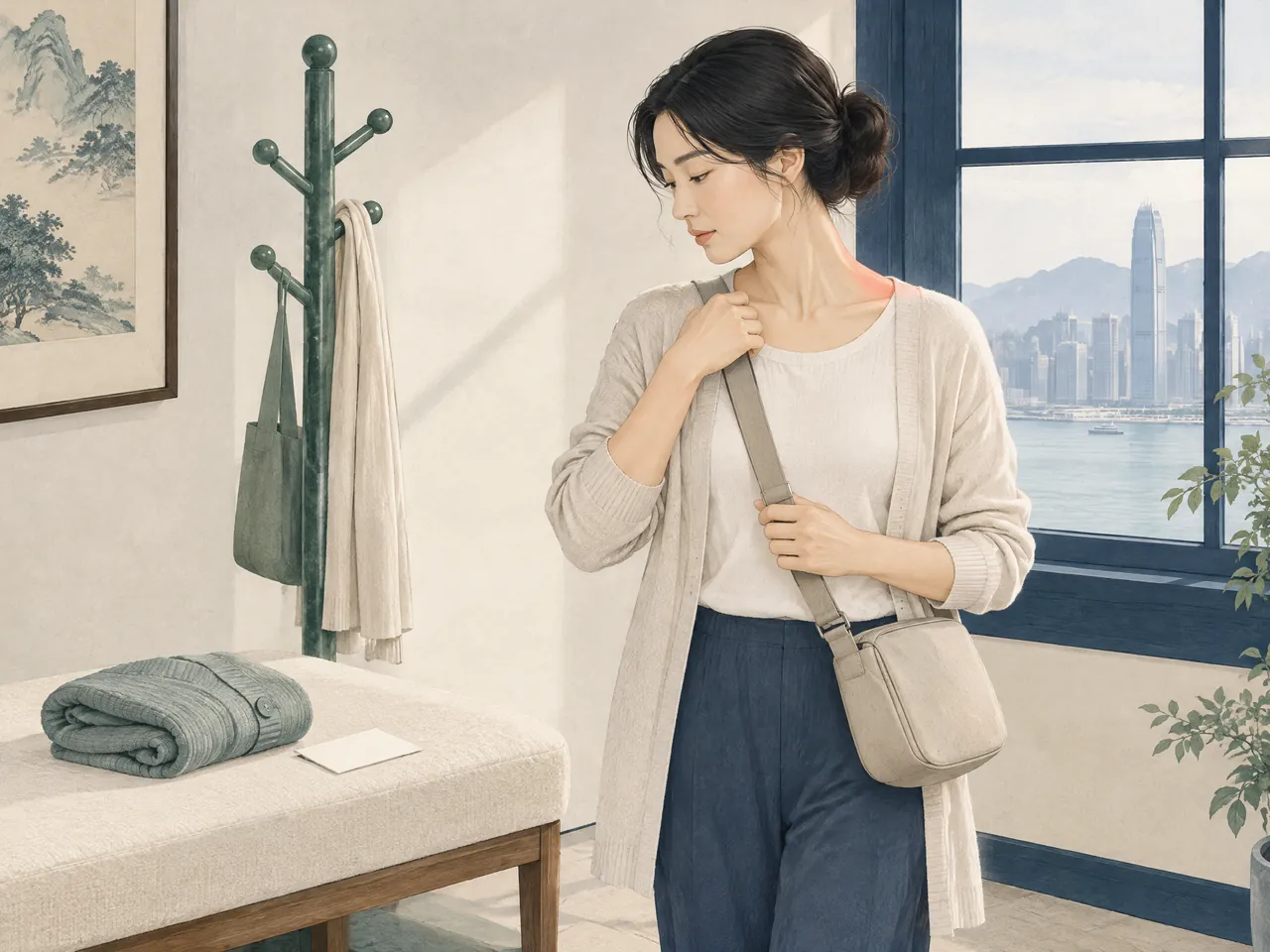
Upper Back Pain Relief at Home: Upper Back Pain Self Management Red Flags and Upper Back Pain Activity Modification
The absence of an emergency sign does not mean you must keep coping alone indefinitely. Arrange a professional assessment if pain is not improving, keeps returning with ordinary activity, is disturbing sleep, or is changing your ability to work, care for yourself or participate in life. Bring the notes you made: onset, any injury or change in routine, exact location, triggers, relieving factors, medication and other symptoms. Mention health conditions, pregnancy, immune suppression, a bleeding risk and medicines that could affect treatment choices. Clear information helps the clinician decide whether self-management can continue, whether an examination or tests are needed, and what sort of movement plan is suitable. A focused guide to timing assessment is available at when to see a doctor for upper back pain.
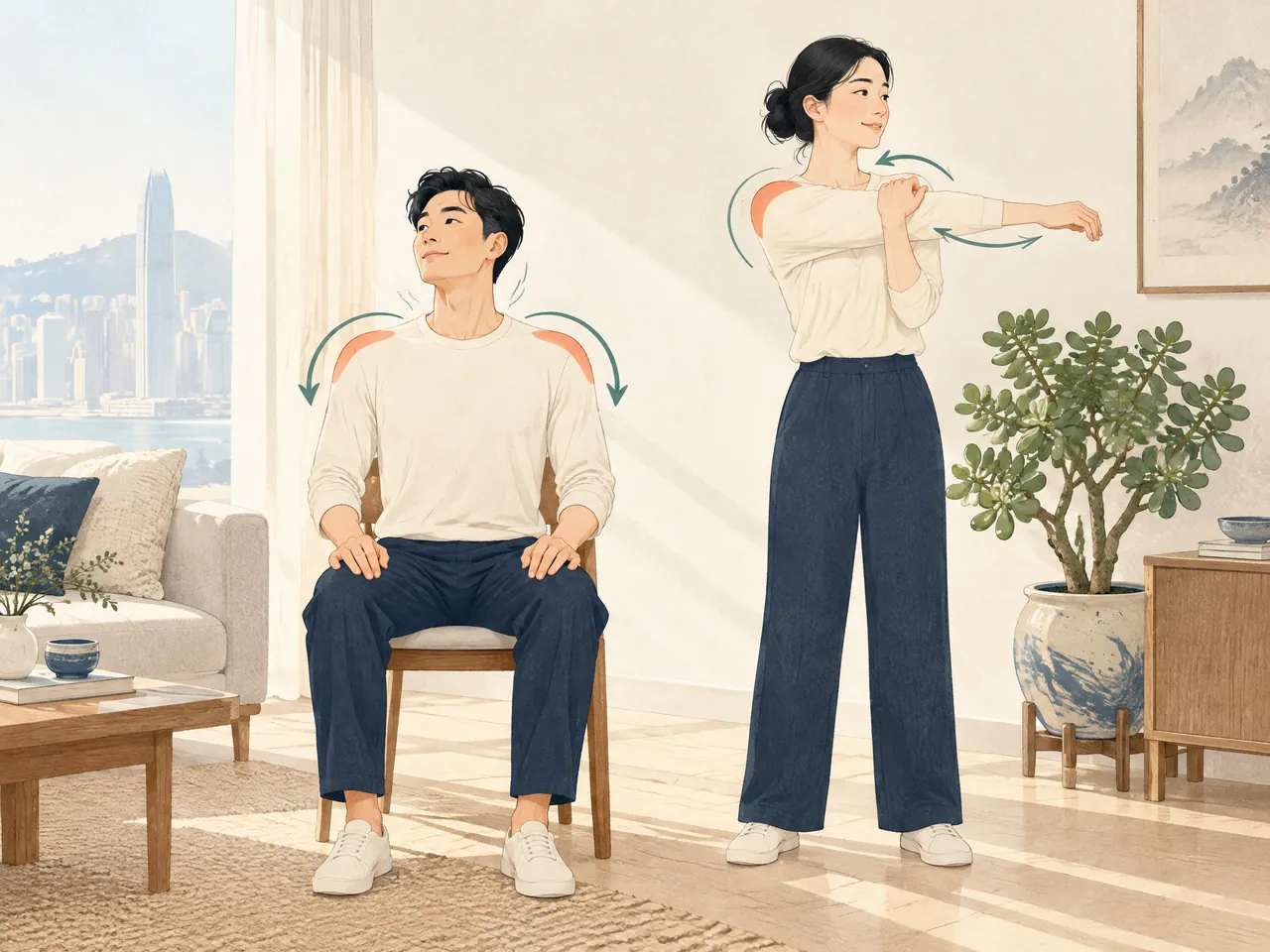
Upper Back Pain Relief at Home: Upper Back Pain Self Management and Professional Advice After Upper Back Pain Activity Modification
A consultation can be useful when you want help sorting a stubborn pattern, but it should begin with a careful history and an appropriate assessment rather than a promised quick fix. A Registered Chinese Medicine Practitioner may discuss whether Chinese medicine approaches are appropriate after considering your symptoms and health background. Acupuncture is sometimes discussed as a complementary option for pain, but it should not replace urgent conventional medical evaluation or be presented as a way to repair every cause of upper-back pain. Tell any practitioner about anticoagulants, bleeding concerns, pregnancy, immune suppression, allergies, recent procedures and all other care you are receiving. Ask how the proposed approach fits with the medical assessment you may need.
Care and health guide
Low back discomfort: care information
This directory brings together services, reading, and visit information related to low back discomfort, to help you prepare questions for a consultation.
When low back discomfort affects your day, noting when it occurs, its relation to activity, and what you have already tried can help prepare a consultation; acupuncture for low back pain is a relevant service or reading entry point.
Individual circumstances differ, and acupuncture Hong Kong offers related information to help you understand options and prepare questions.


Your questions, answered
Frequently asked questions
What is the safest first step for upper back pain relief at home?
First screen for urgent symptoms. If none are present, identify the task that clearly aggravates the pain, reduce its load or duration, and keep gentle daily movement. Track the response over the day and next morning instead of escalating several remedies at once.
Can I exercise with upper back pain?
Gentle, tolerable movement is often more useful than complete rest when there are no warning signs. Begin below the level that provokes a flare, build slowly, and stop an exercise that causes sharp pain, new spreading symptoms or a sustained worsening. Seek advice after trauma or if you are unsure what is safe.
Should I use heat or cold for pain between my shoulder blades?
Either may offer temporary comfort, but use a cloth barrier and inspect the skin. Cold is commonly used soon after a soft-tissue injury, while gentle warmth can suit later stiffness or spasm. Do not apply heat to a new injury without advice, and avoid packs when sensation or circulation is impaired unless a clinician has advised you.
When should upper back pain activity modification stop and medical help be sought?
Seek emergency help for chest pain or trouble breathing. Seek urgent assessment for new weakness, major numbness, walking difficulty, bladder or bowel changes, inability to urinate, or significant trauma. Also arrange medical advice for fever, unexplained weight loss, constant severe or worsening pain, or pain that does not improve with sensible self-care.
Sources and further information
- [1] [1] Cleveland Clinic — Upper Back Pain
Referenced for: Upper-back pain location and possible sources; ergonomics, activity and heat/cold context; emergency chest or breathing symptoms and other review triggers.
- [2] [2] Tyneside Integrated Musculoskeletal Service, NHS — Managing Thoracic Back Pain
Referenced for: Thoracic-back self-management, remaining active, gradual activity and mobility, plus neurological and systemic warning signs.
- [3] [3] National Institute of Arthritis and Musculoskeletal and Skin Diseases — Living With Back Pain
Referenced for: Federal health guidance on avoiding all-day bed rest, limiting aggravating activity, gradual return to activity and reasons to seek medical care.
- [4] [4] Gloucestershire Hospitals NHS Foundation Trust — Ice and heat treatment
Referenced for: Cloth barriers, skin checks, sensation and circulation precautions, and cautious heat/cold use after soft-tissue injury.