
TCM Lab · Explore a health topic
Tennis Elbow TCM Hong Kong: A Practical Tennis Elbow Guide
Published Updated
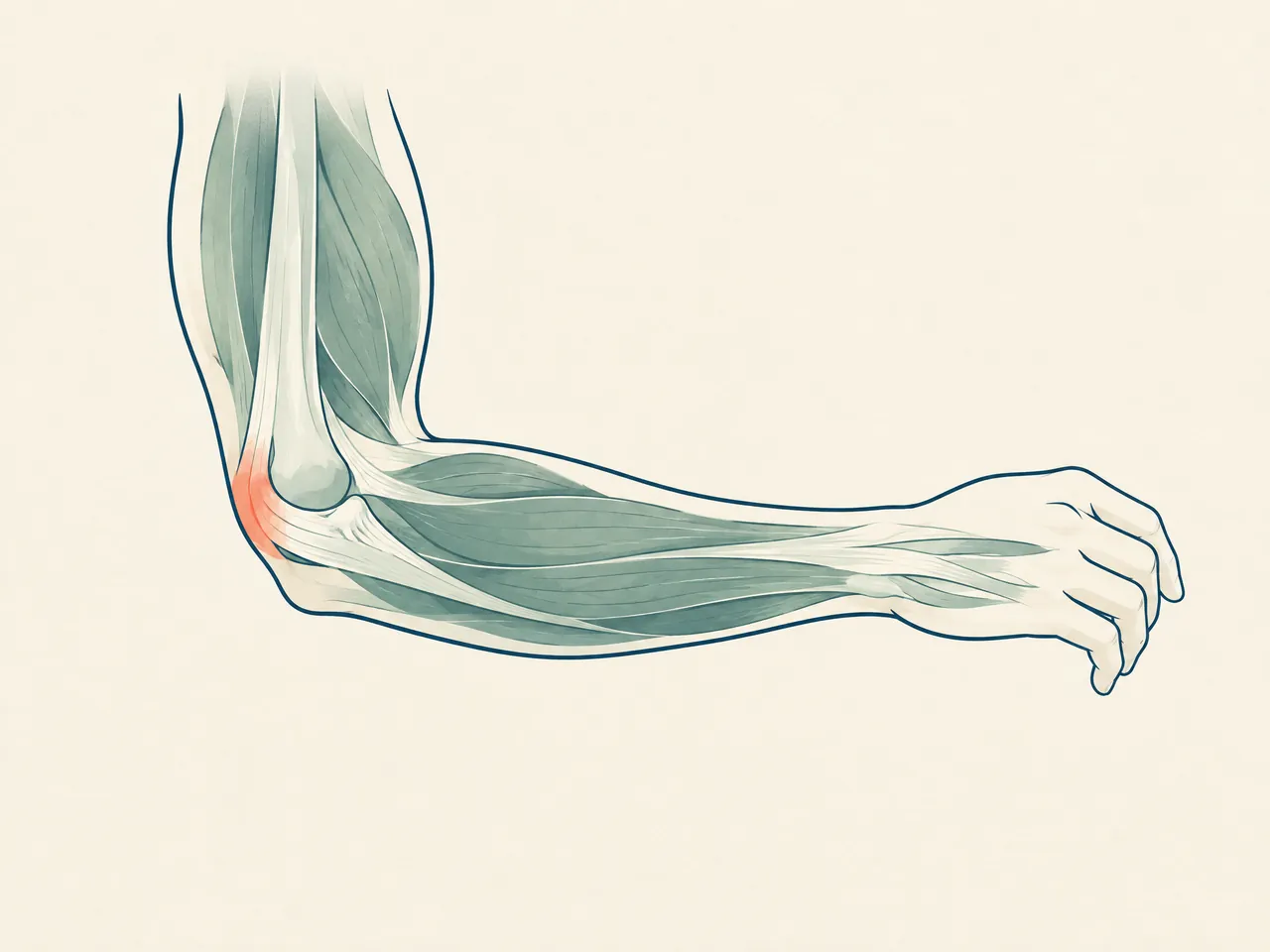
Pain on the outside of an elbow when you lift a coffee cup, carry shopping, turn a key or use a mouse can make an ordinary day feel unexpectedly difficult. This tennis elbow TCM Hong Kong guide helps you notice the movement pattern behind the pain, make safer short-term adjustments and know when an examination should come first. Tennis elbow is a common label for a particular outer-elbow tendon problem, but the location alone cannot confirm it. A useful next step is to look at what the pain does during real tasks, rather than trying to force a diagnosis or a treatment from one sore spot.
Appointments are confirmed through WhatsApp. If you have language requirements, please mention them in your enquiry.
The short answer
Tennis elbow usually describes pain around the outside of the elbow that is often worse with gripping, lifting or wrist movement. It can be linked to repeated forearm and wrist loading, not only tennis. Reduce the task that provokes it, use gentle movement rather than painful forcing, and seek medical assessment for injury, marked weakness, numbness, fever, a hot swollen joint or worsening symptoms. A TCM discussion can sit alongside, not replace, appropriate assessment.
Transparent pricing
See the fees.
Choose your care.
Explore our complete official price list, including first-trial prices, regular prices, packages and branch-specific options.
Opening WhatsApp prepares an enquiry; it does not send a message, take payment or confirm an appointment. Suitability and individual arrangements are confirmed during consultation.
Pain care
All prices in HKDExtracorporeal shockwave treatment
Shockwave treatment for deep-tissue and fascial care. The Kwun Tong clinic offers the multi-area options shown below.
Priced by branch
Branch-specific pricing
Prince Edward: HK$250 per area
Kwun Tong: HK$250 for 1 area / HK$450 for 2 areas / HK$600 for 3 areas
Pain care (manual therapy)
Includes Chinese medicine musculoskeletal assessment, manual joint techniques and tui na.
HK$580 (single session)
Chinese medicine musculoskeletal assessment
Pain care (acupuncture and manual therapy)
Combines acupuncture and manual therapy.
HK$680 (single session)
Combined care
Hair and scalp
All prices in HKDScalp health and hair-loss management
Includes AI scalp analysis, deep scalp and follicle cleansing, and scalp oil-control care.
HK$380 (first trial)
Regular price: HK$680
- 6 sessions: HK$3,480 (HK$580 per session)
- 12 sessions: HK$5,760 (HK$480 per session)
- 20 sessions: HK$8,600 (HK$430 per session)
- 30 sessions: HK$11,400 (HK$380 per session)
Hair acupuncture and Chinese herbal medicine package
Includes scalp acupuncture and 3 days of Chinese herbal medicine that does not require decoction.
HK$580 (single session)
Registered Chinese Medicine Practitioner consultation
- 6 sessions: HK$3,180 (HK$530 per session)
- 12 sessions: HK$5,760 (HK$480 per session)
- 20 sessions: HK$8,600 (HK$430 per session)
- 30 sessions: HK$11,400 (HK$380 per session)
Combined hair and scalp treatment
Combines acupuncture and Chinese herbal medicine with salon-level scalp and follicle care. Packages include complimentary hair-care shampoo and serum.
HK$1,260 (single session)
Combined treatment
- 8 sessions: HK$8,640 (HK$1,080 per session)
- 16 sessions: HK$15,680 (HK$980 per session)
- 20 sessions: HK$18,600 (HK$930 per session)
- 30 sessions: HK$26,400 (HK$880 per session)
Weight management
All prices in HKDFull-body acupoint embedding for weight management
Includes full-body acupoint embedding. Packages include complimentary Chinese herbal medicine for weight management, with the number of included days scaled to the package. Embedding material and the individual treatment arrangement are confirmed during consultation; this is not a cosmetic thread lift.
HK$980 (single session)
No trial session
- 10 sessions: HK$7,800 (HK$780 per session)
- 20 sessions: HK$14,600 (HK$730 per session)
- 30 sessions: HK$20,400 (HK$680 per session)
Facial acupuncture
All prices in HKDFacial acupuncture (basic)
Includes facial acupuncture and meridian-based facial care, including care for facial puffiness.
HK$480 (first trial)
Regular price: HK$680
- 10 sessions: HK$5,200 (HK$520 per session)
- 20 sessions: HK$9,600 (HK$480 per session)
- 30 sessions: HK$13,500 (HK$450 per session)
Facial acupuncture (advanced)
Includes enhanced facial acupuncture with a specially formulated moisturising mask and serum.
HK$780 (first trial)
Regular price: HK$1,180
- 10 sessions: HK$9,000 (HK$900 per session)
- 20 sessions: HK$16,600 (HK$830 per session)
- 30 sessions: HK$23,400 (HK$780 per session)
Chinese medicine
All prices in HKDAcupuncture and Chinese herbal medicine package
Includes a Chinese medicine consultation with pulse assessment, body acupuncture and 3 days of Chinese herbal granules that do not require decoction.
HK$580 (single session)
Chinese medicine consultation with pulse assessment
Explore this topic
Tennis Elbow TCM Hong Kong: Recognising Tennis Elbow Triggers
Tennis elbow is commonly used for pain around the bony outer side of the elbow. It may stay local or travel into the upper forearm and wrist. The name is also called lateral epicondylitis or lateral elbow tendinopathy, but the everyday question is usually simpler: which action turns a tolerable arm into a painful one? Official NHS guidance lists gripping objects, moving the wrist and lifting or bending the arm among the movements that can worsen the symptom pattern [1]. That information is useful for observation; it is not a self-test that proves the cause.
Start by separating the painful area from the painful activity. A person may point to the outside of the elbow yet only feel it while opening a tight jar, pouring from a kettle, holding a phone with the wrist bent back, or lifting a child from under the arms. Another may notice it after a long session of keyboard and mouse work, then assume the last movement caused everything. Write down when discomfort begins, whether it settles after rest and whether it changes with a lighter grip or a different hand position. This turns a vague complaint into practical information for an assessment.
Tennis Elbow TCM Hong Kong: What Tennis Elbow Feels Like During Everyday Tasks
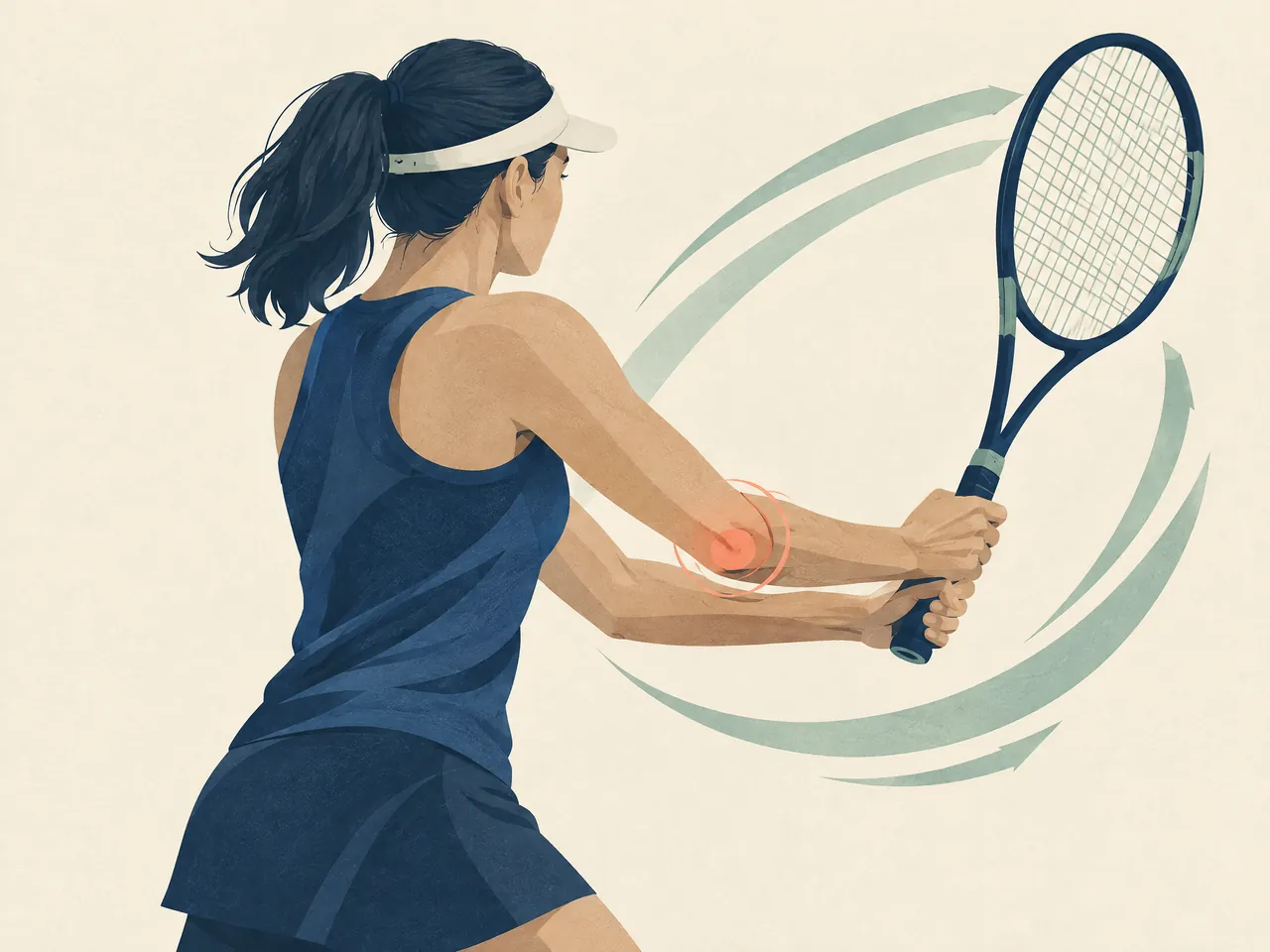
The feeling is often described as tenderness, aching or burning at the outer elbow, with a pull into the forearm. Some people mainly notice an unreliable grip: a cup feels less secure, a handshake is unpleasant, or turning a doorknob requires a pause. These examples occur in medical descriptions of tennis elbow, but they still need context [2]. Ask whether the symptom is reproduced by gripping, by lifting with the palm down, by turning the forearm, or by extending the wrist. A clear pattern is more informative than a single painful day.
Keep the check simple for several ordinary days. Note the task, which side is affected, the position of the wrist, the weight or duration involved, and what happens later that evening or the next morning. Also note pain at rest, night discomfort, swelling, tingling, neck or shoulder symptoms, and a genuine drop in hand strength. This is not about repeatedly provoking pain to collect evidence. Stop a movement that produces sharp pain, numbness or a clear flare. The notes can help distinguish a local load pattern from a problem that deserves earlier medical review.
Tennis Elbow TCM Hong Kong: Why Tennis Elbow Is Not Limited to Tennis Players
The sports name can be misleading. Repeated or forceful wrist and forearm work may occur in a kitchen, workshop, office, gym or home as readily as on a tennis court. Mayo Clinic notes that many people with this condition do not play tennis and gives examples including computer-mouse use, painting, plumbing tools and food preparation [2]. A new racket routine may be relevant, but so can repeated screwdriver work, pruning, carrying stock, knitting, gaming or an abrupt change in gym exercises. The useful question is what changed in total hand-and-forearm demand.
That said, repetition is not a verdict. Someone can have outer-elbow pain after a fall, alongside tingling in the hand, or with discomfort that begins in the neck and travels down the arm. Arthritis, nerve compression and other injuries can need a different approach; an orthopaedic assessment may use the story, an examination and, when appropriate, tests to rule out another cause [3]. If you want a fuller explanation of the load side of the question, read What causes tennis elbow?. It is more useful than assuming every ache from work or sport has the same label.
Compare your options
| What you notice | Useful first adjustment or note | When assessment should move up the list |
|---|---|---|
| Pain mainly with a cup, bag, jar or doorknob | Record grip, wrist position and load; reduce the provoking dose and use two hands where practical. | The pain becomes severe, the grip is clearly weaker, or ordinary tasks are increasingly limited. |
| Discomfort after mouse, typing or hand-tool work | Break up the task, vary the hand position and note whether a lighter grip changes the pattern. | Numbness, burning, neck-to-hand symptoms or no clear task relationship appears. |
| Mild outer-elbow ache after sport or gym work | Pause painful movements and resume gradually only when comfortable; consider technique or equipment review. | There was a sudden injury, a pop, marked swelling or inability to move normally. |
| Red, hot or swollen elbow, or pain with fever | Do not force stretches, massage or self-treat as routine tennis elbow. | Seek prompt medical assessment; this needs attention beyond a routine overuse plan. |
On smaller screens, scroll the table sideways to compare all columns.
Tennis Elbow TCM Hong Kong: Understanding Tennis Elbow Causes and Load
The outer elbow is where forearm muscles attach through tendons near a bony prominence. Those muscles help steady the wrist and fingers while you grip, lift, turn or hold an object. Repeating a task, increasing its force or duration too quickly, or working with an awkward wrist angle can make that system less tolerant. AAOS describes tennis elbow as an overuse condition involving the forearm tendons on the outside of the elbow [3]. This does not mean one mouse click or one tennis backhand is necessarily the sole cause. Often, the relevant story is an accumulation of load over days or weeks.
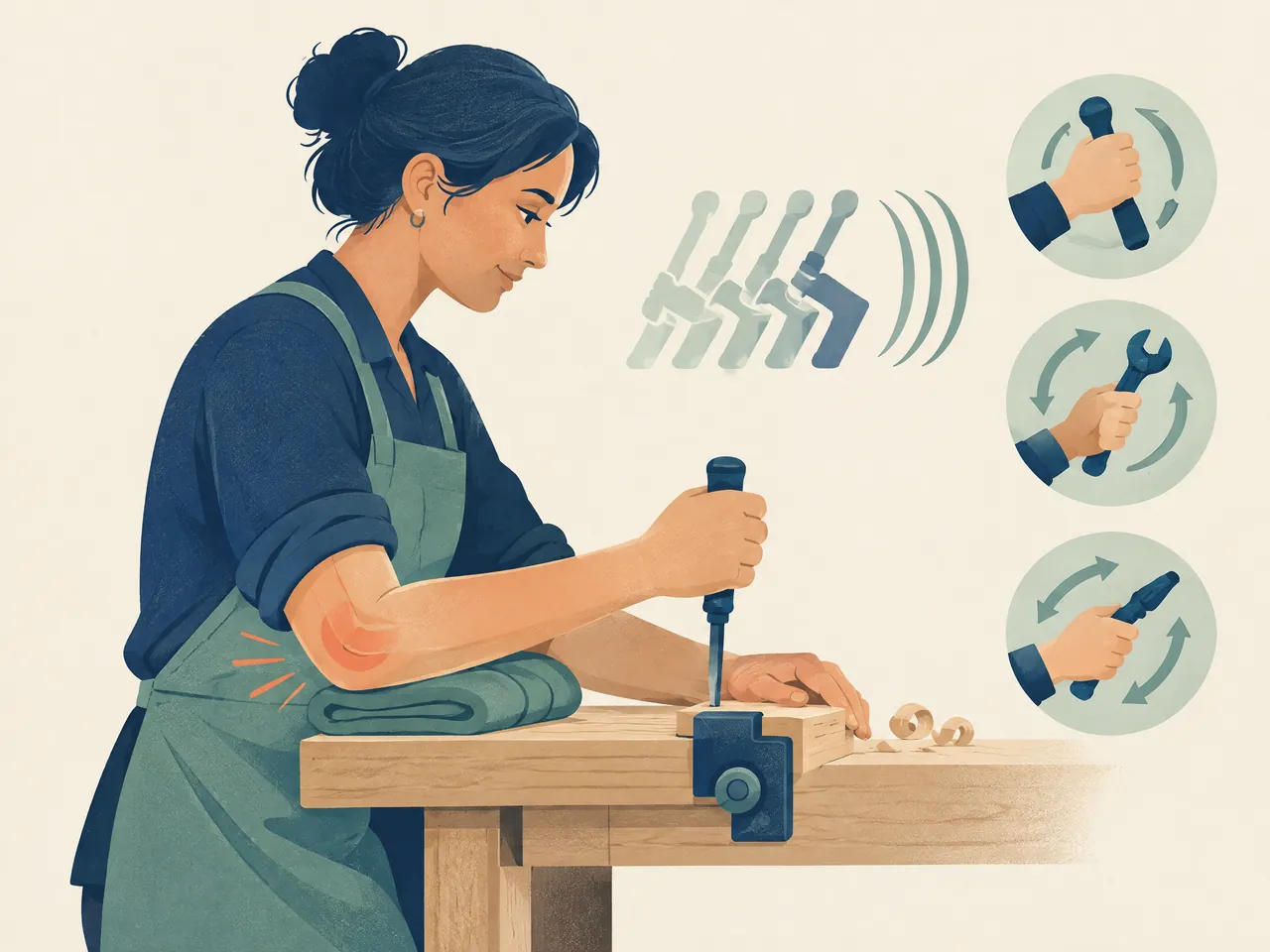
Load is not only the object’s weight. It also includes how tightly you grip, how far the wrist is held back, the length of an uninterrupted task, vibration from a tool, speed, recovery between shifts and whether the other hand can share the work. A light pan held at arm’s length can challenge the forearm more than its weight suggests. A small change, such as moving the item closer to the body or using two hands, may be more realistic than attempting to rest an arm completely while daily responsibilities continue.
Tennis Elbow TCM Hong Kong: Repeated Grip, Wrist Motion and Forearm Work
Look for the most repeatable trigger rather than treating every arm use as equally risky. If a heavy bag hurts, split the load or use the other hand where safe. If a mouse grip is the issue, take short movement breaks, vary the task and avoid clenching the device. If using a hand tool causes pain, consider handle size, wrist position, two-handed support and whether the task can be divided. For sports, a coach or appropriate professional can review technique and equipment. These changes reduce an aggravating dose; they are not proof of diagnosis or a promise of a quick recovery.
When symptoms settle enough to move comfortably, gradual forearm and wrist capacity work can be more useful than jumping straight back to the heaviest task. Think in small, observable steps: a lighter load, fewer repetitions, more rest between bouts, then reassessment of the next-day response. Keep a task at a level that does not cause a marked or lingering flare. The NHS similarly advises reducing activities that make symptoms worse and lists simple exercise among self-care options [1]. If you need more detail about a symptom that will not settle, see persistent elbow pain.
Tennis Elbow TCM Hong Kong: How to Think About Tennis Elbow Alongside Other Pain
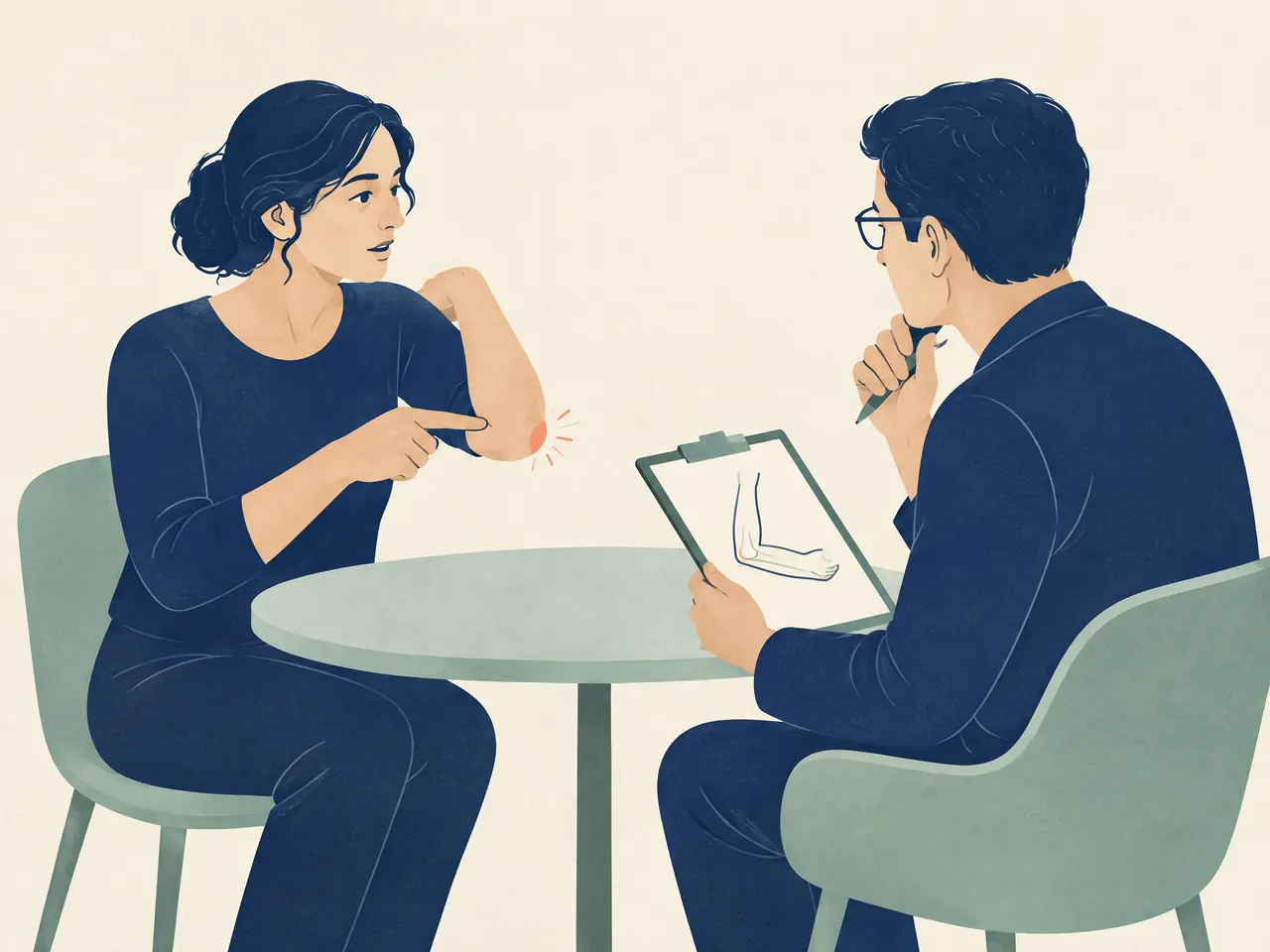
A careful account includes the whole arm, not only the sore point. Symptoms that begin in the neck or shoulder and shoot toward the hand, pins and needles, altered sensation, or weakness that is not simply pain-limited may point to a different issue. Pain on the inner elbow also has a different pattern from classic outer-elbow pain. Likewise, a sudden injury, a locked joint or an inability to move the elbow normally should not be managed as routine overuse. Tell a clinician about previous elbow injury, inflammatory joint disease, neck symptoms or nerve problems because they can change what needs to be examined [3].
TCM can be part of a broader conversation about a musculoskeletal concern, including the person’s activity pattern, sleep, work demands and what they have already tried. It should not be used to dismiss a red flag or to continue forceful manual treatment when the picture is unclear. If acupuncture, hands-on approaches or other supportive care are being considered, ask what assessment has been made, what response would mean pausing, and how the plan fits with medical or rehabilitation advice. That keeps the focus on safe decision-making rather than on chasing a single named technique.
Tennis Elbow TCM Hong Kong: Safer Tennis Elbow Self-Care and Assessment
A sensible starting point is to calm down the task that predictably stirs symptoms while keeping the elbow moving within a comfortable range. There is no need to repeatedly test a painful grip to see whether it still hurts. Plan the day around fewer high-demand bouts, use both hands for bulky objects where possible and take a pause before fatigue turns into clenching. A wrapped warm or cold pack may be a comfort option for some people; NHS guidance advises protecting the skin with a towel and limiting use to short sessions [1]. Choose the temperature that feels reasonable, not the most intense sensation.

An assessment is especially useful when you cannot work, sleep or manage daily tasks as expected, when the pattern is not clear, or when careful changes have not helped. A clinician can ask about onset and injuries, examine the arm and consider whether another cause needs attention. Do not delay a needed medical review while trying increasingly painful stretches, aggressive massage or a succession of unproven fixes. If you are also considering Chinese medicine, bring your activity notes and any diagnoses, medicines, imaging reports or rehabilitation advice so the discussion is grounded in the full picture.
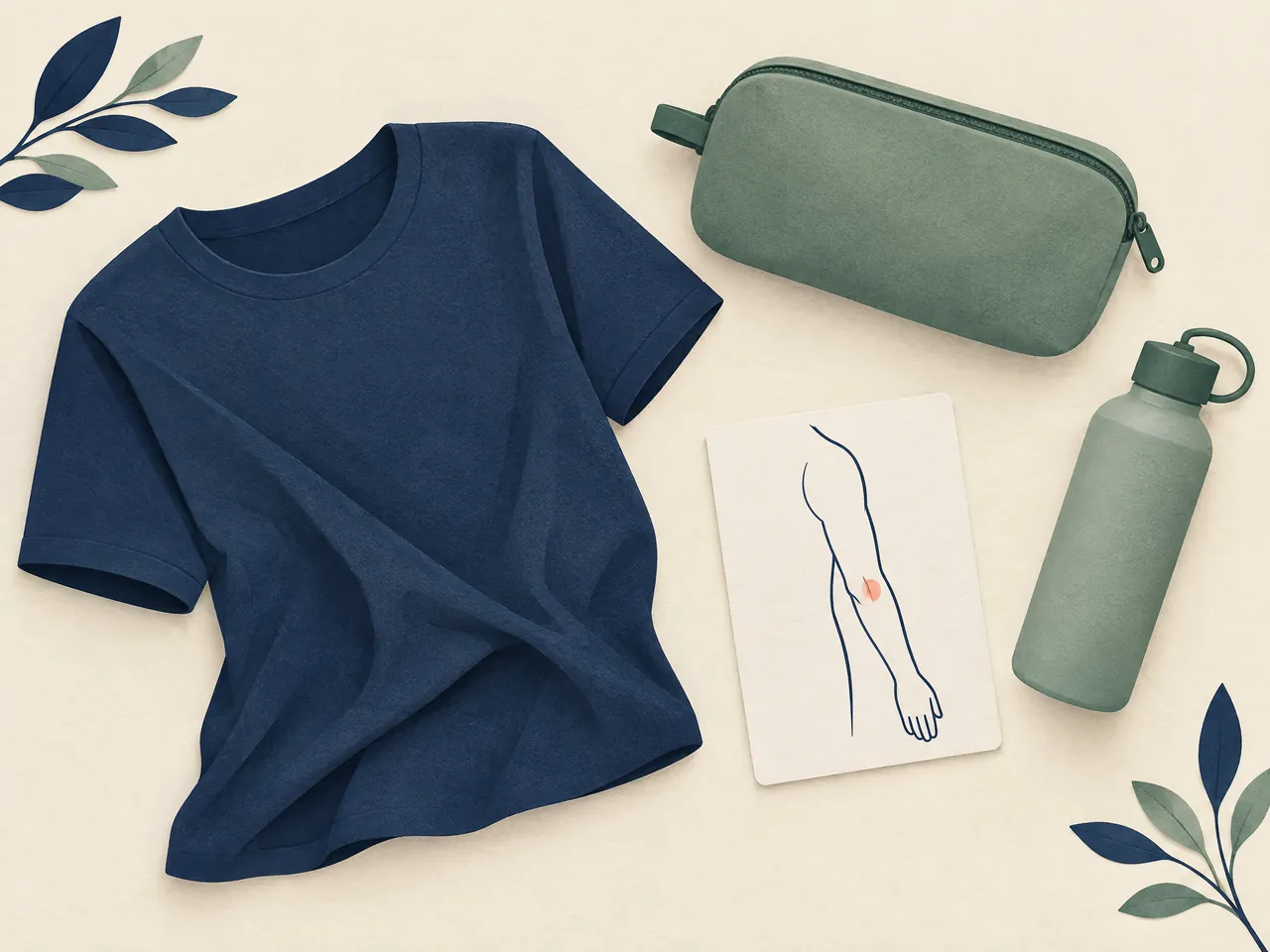
Tennis Elbow TCM Hong Kong: Gentle Stretching, Strength and Activity Adjustment
Stretching should feel gentle, never like a challenge to push through. A low-intensity wrist or forearm stretch can be stopped before sharp pain, tingling or burning appears. Let the elbow and hand relax between attempts. If a movement is painful at the start, try a less demanding position or leave it for a professional to assess rather than forcing range. Strength work has the same rule: begin only at a comfortable level and increase gradually. Exercises selected for someone else’s elbow, sport or equipment may not be the right dose for yours.
Use the response during and after activity as a guide. Comfortable movement that settles is different from pain that rises through the day, disturbs sleep or is clearly worse the following morning. Revisit the previous step if that happens. Some people ask about straps or braces; they may be discussed as a way of modifying symptoms during activity, but they do not replace an assessment of the task and overall plan. For a focused comparison of temperature-based comfort measures, see Should I use heat or ice for tennis elbow?.

Tennis Elbow TCM Hong Kong: Warning Signs That Make Tennis Elbow a Medical Priority
Seek prompt medical assessment after a fall or impact if the elbow looks deformed, cannot be moved normally or the pain is severe. A rapidly swelling joint, obvious redness and heat with fever, a growing lump, persistent numbness or burning pain, or a clear loss of grip strength is not a situation for self-stretching or forceful massage. The same applies when arm pain comes with neck-to-hand radiating symptoms or you are unsure whether a wound or infection is involved. Read swollen hot elbow with fever for the specific fever-and-swelling warning pattern.
For less urgent but persistent pain, arrange an appropriate medical or musculoskeletal assessment rather than accepting a shrinking range of daily activities. NHS guidance advises seeing a GP if elbow pain remains after resting the elbow and trying self-care for at least two weeks [1]. The exact pathway in Hong Kong will vary, but the practical message is the same: changing symptoms deserve a real examination. TCM Lab accepts WhatsApp enquiries at +852 6940 5663 for an in-person discussion at Prince Edward or Kwun Tong; describe the symptom and any language needs so arrangements can be confirmed. A clinic consultation does not substitute for urgent or emergency care.
Care and health guide
Health service information
This directory brings together services, reading, and visit information related to health services, to help you prepare questions for a consultation.
If you are organising health questions, Chinese medicine clinic Hong Kong is a starting point for learning about related services and preparing for a consultation.
People have different needs; acupuncture Hong Kong provides further reading to help you understand options in your own context.


Your questions, answered
Frequently asked questions
Can tennis elbow happen if I do not play tennis?
Yes. Repeated gripping, wrist motion and forearm work can occur with tools, mouse use, housework, cooking, music, gym training and many jobs. The name does not confirm the diagnosis, so consider the full symptom pattern and an examination when needed.
Is pain on the outside of my elbow definitely tennis elbow?
No. Tendon, joint, nerve, neck-related and injury problems can overlap in this area. Numbness, radiating pain, major weakness, fever, a hot swollen joint, a lump or a traumatic deformity are reasons to seek medical assessment rather than rely on the location alone.
Should a tennis elbow stretch hurt to work?
No. Do not aim for sharp pain, burning or numbness. Keep stretching and strengthening gentle, adjust the activity that triggers symptoms, and step back if pain clearly builds during or after the exercise. A professional can tailor progression when the correct dose is uncertain.
What can I prepare for a tennis elbow TCM discussion in Hong Kong?
Bring a short account of when the symptom started, tasks that trigger it, injuries, numbness or weakness, relevant medical diagnoses, medicines, imaging and any rehabilitation advice. This helps keep supportive care discussions aligned with appropriate medical assessment.
Sources and further information
- [1] [1] NHS — Tennis elbow
Referenced for: Supports the symptom pattern, repetitive-use triggers, self-care language and advice to seek assessment when pain persists.
- [2] [2] Mayo Clinic — Tennis elbow: Symptoms and causes
Referenced for: Supports the explanation of common everyday triggers, outer-elbow symptoms and the point that tennis elbow is not limited to tennis players.
- [3] [3] American Academy of Orthopaedic Surgeons — Tennis Elbow Lateral Epicondylitis
Referenced for: Supports the overuse and forearm-tendon explanation, assessment considerations and the need to distinguish possible nerve, neck, joint and injury causes.