
TCM Lab · Explore a health topic
Foot Pain, Ball of Foot Pain and Bottom of Foot Pain: Find the Right Starting Point
Published Updated
A sore sole can mean very different things depending on whether the pain sits beneath the heel, through the arch, under the ball of the foot, or across a wider area. Start by mapping the exact spot and the moments that bring it on. Foot pain that is worst with the first steps after rest has a different pattern from pain that builds during a long shift, follows a twist, or feels burning between the toes. This guide helps you organise those details, choose proportionate next steps, and understand where Chinese medicine may be discussed as supportive care after appropriate assessment.
Appointments are confirmed through WhatsApp. If you have language requirements, please mention them in your enquiry.
The short answer
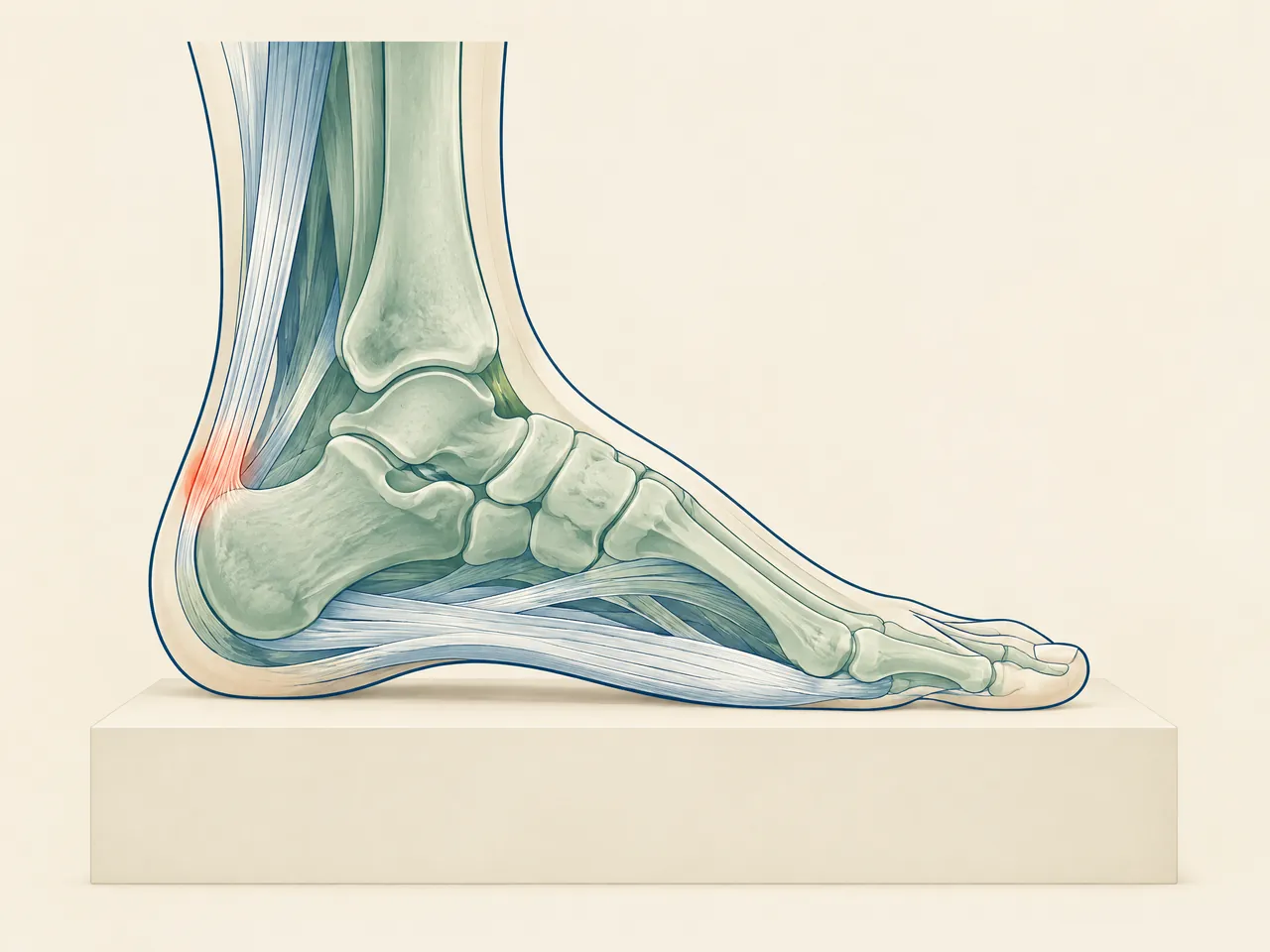
Foot pain is not automatically plantar fasciitis. Ball of foot pain and bottom of foot pain may be linked with load, footwear, soft tissue, joints, nerves or an injury, so the location and timing matter. Record first-step pain, standing and walking tolerance, recent changes and any numbness, swelling or skin changes. Seek medical assessment first if you cannot bear weight, have marked swelling or deformity, persistent altered sensation, a wound or infection signs, or have diabetes and new foot pain.
Transparent pricing
See the fees.
Choose your care.
Explore our complete official price list, including first-trial prices, regular prices, packages and branch-specific options.
Opening WhatsApp prepares an enquiry; it does not send a message, take payment or confirm an appointment. Suitability and individual arrangements are confirmed during consultation.
Pain care
All prices in HKDExtracorporeal shockwave treatment
Shockwave treatment for deep-tissue and fascial care. The Kwun Tong clinic offers the multi-area options shown below.
Priced by branch
Branch-specific pricing
Prince Edward: HK$250 per area
Kwun Tong: HK$250 for 1 area / HK$450 for 2 areas / HK$600 for 3 areas
Pain care (manual therapy)
Includes Chinese medicine musculoskeletal assessment, manual joint techniques and tui na.
HK$580 (single session)
Chinese medicine musculoskeletal assessment
Pain care (acupuncture and manual therapy)
Combines acupuncture and manual therapy.
HK$680 (single session)
Combined care
Hair and scalp
All prices in HKDScalp health and hair-loss management
Includes AI scalp analysis, deep scalp and follicle cleansing, and scalp oil-control care.
HK$380 (first trial)
Regular price: HK$680
- 6 sessions: HK$3,480 (HK$580 per session)
- 12 sessions: HK$5,760 (HK$480 per session)
- 20 sessions: HK$8,600 (HK$430 per session)
- 30 sessions: HK$11,400 (HK$380 per session)
Hair acupuncture and Chinese herbal medicine package
Includes scalp acupuncture and 3 days of Chinese herbal medicine that does not require decoction.
HK$580 (single session)
Registered Chinese Medicine Practitioner consultation
- 6 sessions: HK$3,180 (HK$530 per session)
- 12 sessions: HK$5,760 (HK$480 per session)
- 20 sessions: HK$8,600 (HK$430 per session)
- 30 sessions: HK$11,400 (HK$380 per session)
Combined hair and scalp treatment
Combines acupuncture and Chinese herbal medicine with salon-level scalp and follicle care. Packages include complimentary hair-care shampoo and serum.
HK$1,260 (single session)
Combined treatment
- 8 sessions: HK$8,640 (HK$1,080 per session)
- 16 sessions: HK$15,680 (HK$980 per session)
- 20 sessions: HK$18,600 (HK$930 per session)
- 30 sessions: HK$26,400 (HK$880 per session)
Weight management
All prices in HKDFull-body acupoint embedding for weight management
Includes full-body acupoint embedding. Packages include complimentary Chinese herbal medicine for weight management, with the number of included days scaled to the package. Embedding material and the individual treatment arrangement are confirmed during consultation; this is not a cosmetic thread lift.
HK$980 (single session)
No trial session
- 10 sessions: HK$7,800 (HK$780 per session)
- 20 sessions: HK$14,600 (HK$730 per session)
- 30 sessions: HK$20,400 (HK$680 per session)
Facial acupuncture
All prices in HKDFacial acupuncture (basic)
Includes facial acupuncture and meridian-based facial care, including care for facial puffiness.
HK$480 (first trial)
Regular price: HK$680
- 10 sessions: HK$5,200 (HK$520 per session)
- 20 sessions: HK$9,600 (HK$480 per session)
- 30 sessions: HK$13,500 (HK$450 per session)
Facial acupuncture (advanced)
Includes enhanced facial acupuncture with a specially formulated moisturising mask and serum.
HK$780 (first trial)
Regular price: HK$1,180
- 10 sessions: HK$9,000 (HK$900 per session)
- 20 sessions: HK$16,600 (HK$830 per session)
- 30 sessions: HK$23,400 (HK$780 per session)
Chinese medicine
All prices in HKDAcupuncture and Chinese herbal medicine package
Includes a Chinese medicine consultation with pulse assessment, body acupuncture and 3 days of Chinese herbal granules that do not require decoction.
HK$580 (single session)
Chinese medicine consultation with pulse assessment
Explore this topic
Foot Pain, Ball of Foot Pain and Bottom of Foot Pain: Map the Pattern
The most useful first distinction is anatomical. Heel pain is often described under or just inside the heel. Arch symptoms run through the mid-sole. Ball of foot pain is concentrated beneath the padded area behind the toes, sometimes under one side rather than the centre. A more diffuse bottom of foot pain may be hard to point to at first, but try pressing gently around the area and noting the one-finger location that feels most familiar. Foot symptoms can occur in the heel, arch, toes and intervening areas; location is therefore a sensible starting point, not a diagnosis [2]. If both feet hurt, record whether the pattern is genuinely alike or simply being described with the same word.
Then put the pain into an ordinary Hong Kong day. Does it appear on the first few steps from bed, during the walk to the MTR, halfway through a standing shift, after a run, or only after shoes come off in the evening? Note whether it settles as you warm up and whether it returns later. A sudden increase in hill walking, running, dance, standing, or time in a new shoe is more informative than a general statement that you have been busy. Our related guide to foot pain causes can help you turn those observations into clear questions, but it cannot replace an examination when symptoms are persistent, worsening or unclear.
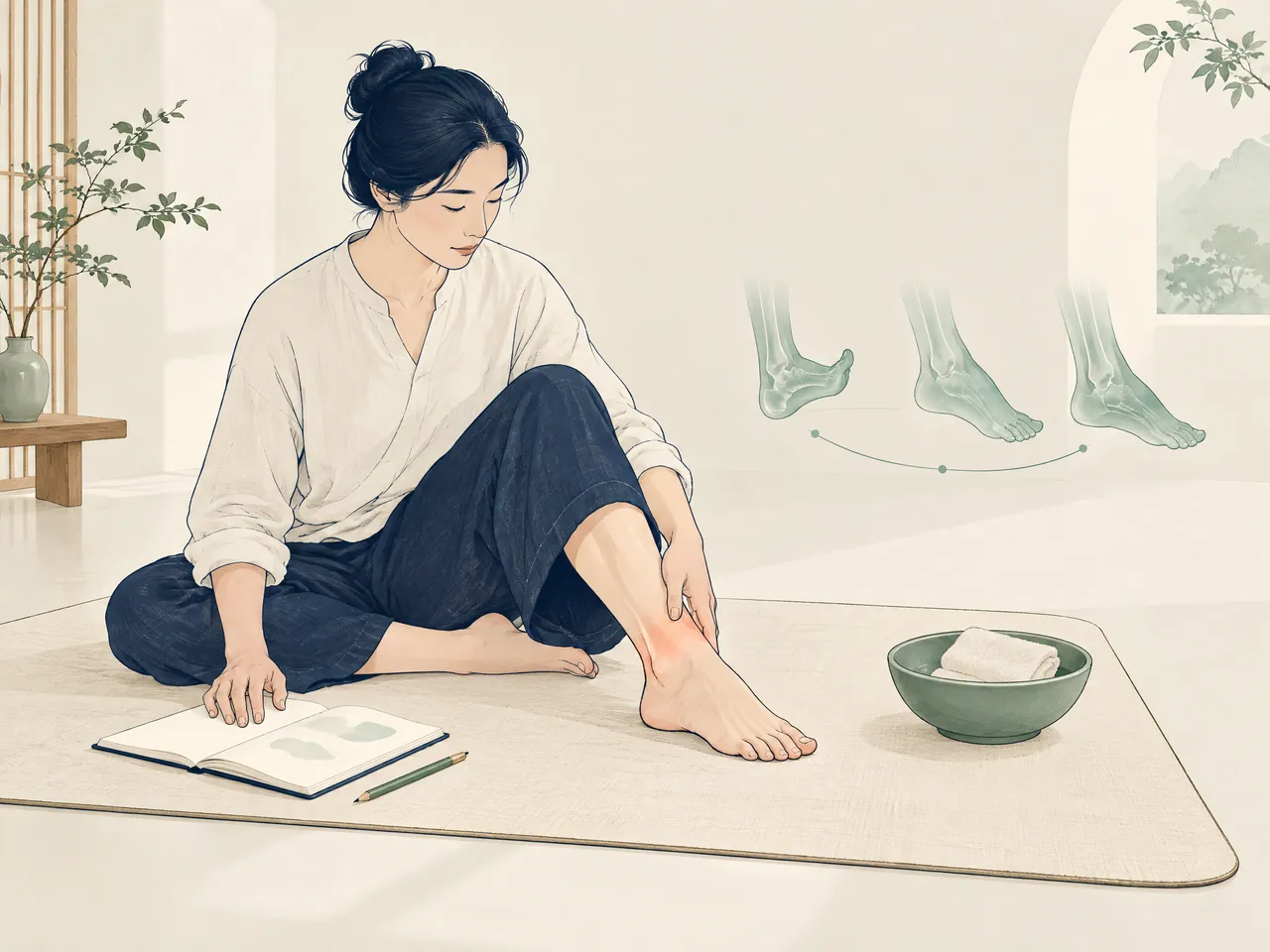
Use the short pattern log below for several typical days, including a lower-load day if possible. It is not a test and it is not meant to make you monitor every step. The aim is to arrive at a consultation with a usable story: where it hurts, what changes it and what has already been tried. A clinician may also ask about symptom duration, activities, previous episodes and methods already used for relief [2]. Bring the shoes most often worn when symptoms occur, or take clear photos of their soles and the area where the foot feels compressed.

Foot Pain, Ball of Foot Pain and Bottom of Foot Pain: Note Location and Timing
Describe the pain in practical words without trying to name the condition. For example: “a sharp spot at the inner heel on getting up,” “a bruised feeling under the second and third toe joints after standing,” or “an ache through the arch after a long walk.” Also record whether it is sharp, aching, hot, numb, tingling or like an electric sensation. Burning, tingling and electric-shock sensations are among ways nerve pain may be experienced, so they deserve mention rather than being folded into a vague account of soreness [2]. Look for visible swelling, a colour change, callus, blister or skin break as well. These observations do not tell you what is wrong, but they help separate a pressure-area complaint from a wider change in sensation or skin health.
Foot Pain, Ball of Foot Pain and Bottom of Foot Pain: Track Walking, Standing and Rest
Timing can be as revealing as location. A heel-and-arch pattern that is distinctly worse when walking after sleep or rest, eases with early movement, then returns after prolonged walking or standing is commonly discussed in plantar fasciitis guidance [1] [3]. By contrast, a complaint that starts only in a narrow pair of work shoes or becomes sharper as the forefoot is loaded may need a different conversation. Do not force a painful stretch to see whether it fits a pattern. Instead, note the activity, the footwear, the duration and what happens the next morning. That makes changes in load easier to review and helps avoid the unhelpful cycle of resting completely on one day and trying to catch up with a demanding activity on the next.
Compare your options
| Feature to note | What to record | Why it helps the discussion |
|---|---|---|
| Exact place | Heel, arch, ball of foot, toes, side or a broad area; left, right or both | Separates a general complaint from the area that is actually loaded or tender |
| Start and timing | First steps, after sitting, during a commute, after a shift, during sport or at rest | Shows whether rest, repetitive load or a particular activity changes the pattern |
| Recent change | New shoes, longer shifts, different route, new training, jump, twist or impact | Creates a clear timeline for considering load and injury context |
| Associated signs | Swelling, bruising, redness, warmth, skin break, burning, tingling or reduced feeling | Helps identify signs that should move assessment ahead of self-care |
| What you tried | Rest, shoe change, insert, gentle movement, ice or a stretch, and the response | Prevents repeating a measure that clearly aggravates symptoms |
On smaller screens, scroll the table sideways to compare all columns.
Foot Pain, Ball of Foot Pain and Bottom of Foot Pain: Consider Possible Causes
One label cannot cover every sore sole. For bottom of foot pain, recognised possibilities include plantar fascia-related pain, sprains or strains, problems around joints, corns or calluses, and nerve-related conditions; ball of foot pain can appear within that broader group [2]. Pain may also follow direct trauma or a change in repetitive load. This does not mean that a long list should alarm you. It means that the exact site, onset and associated signs guide the next question. A tender heel and arch after the first steps of the day should not be treated as interchangeable with pain beneath the forefoot that begins in a tight shoe, or with soreness that followed a misstep.
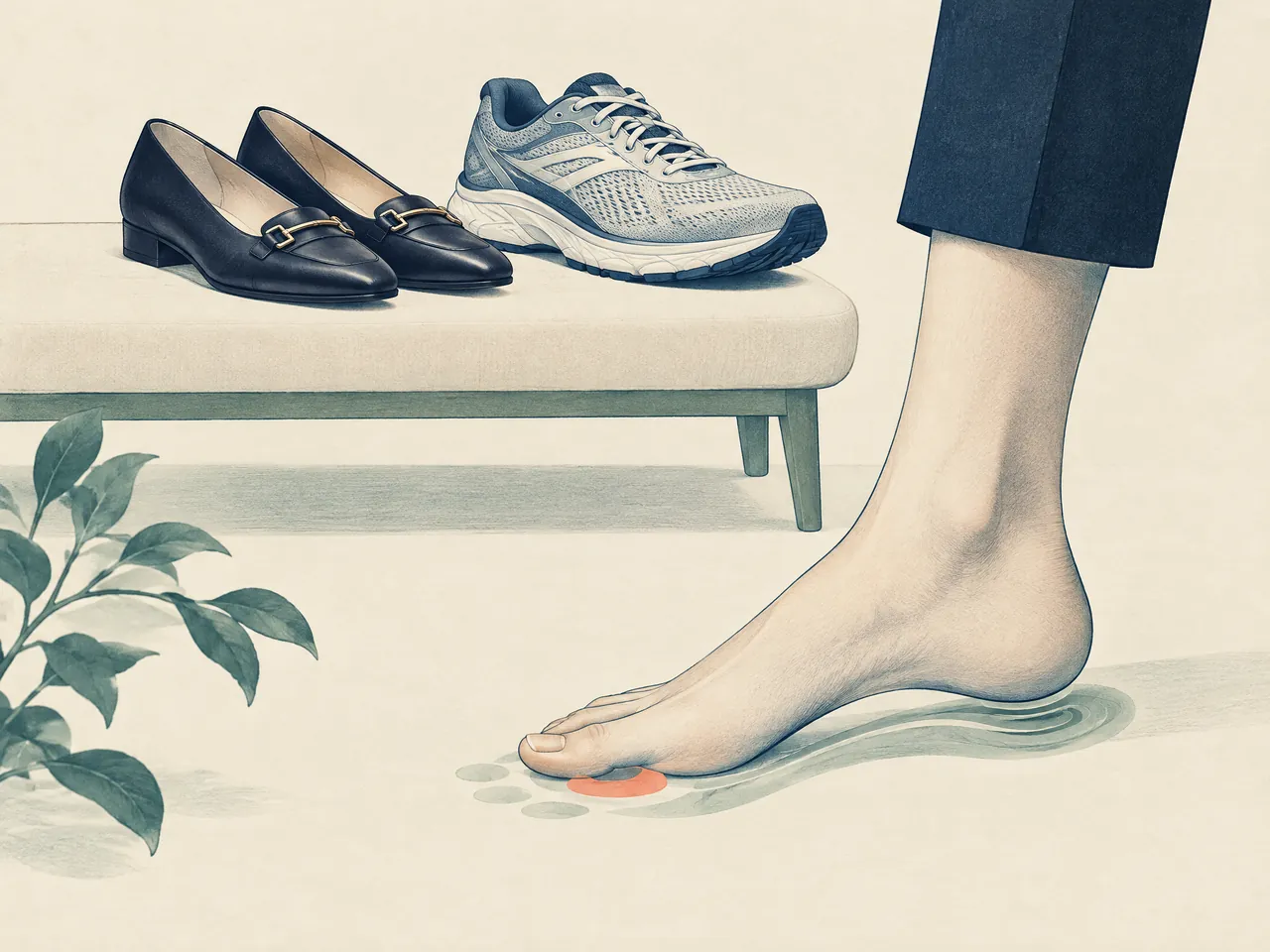
Think about what changed before trying to decide why it changed. Examples include a return to jogging, longer standing at work, a sudden switch from trainers to flat shoes, a new pair with a narrow toe area, or walking differently after an ankle injury. After a twist or fall, ankle symptoms can alter how the foot is loaded. If that is part of your story, ankle sprain functional tests explains the kinds of practical questions used to judge readiness for activity; it is not permission to test through acute pain. Give the assessor a simple timeline, including the first day you noticed discomfort, any accident, and whether the pattern is improving, static or spreading.
Foot Pain, Ball of Foot Pain and Bottom of Foot Pain: Why Plantar Fasciitis Is Not the Only Possibility
Plantar fasciitis is a reasonable topic to raise when the pain is around the heel and arch and is especially troublesome on initial weight bearing after sleep or prolonged sitting. The Hong Kong College of Orthopaedic Surgeons describes a typical pattern in which pain improves with further walking and returns after prolonged standing or walking [3]. Yet that description is a pattern, not a self-diagnosis. Pain centred under the ball of the foot, pain that is chiefly numb or burning, marked swelling, or pain that began after trauma needs its own assessment rather than an automatic plantar fascia explanation. The NHS likewise describes plantar fasciitis as pain around the heel and arch, which is narrower than every kind of bottom of foot pain [1].
Foot Pain, Ball of Foot Pain and Bottom of Foot Pain: Notice Nerve, Joint and Injury Signs
Certain descriptions change the priority of the conversation. Persistent tingling, reduced feeling, burning or electric sensations should be reported because they can point toward nerve involvement rather than simple tissue soreness [2]. A sharply localised painful spot after a jump, impact or increase in running also deserves caution, particularly if it makes normal weight bearing difficult. Joint-related symptoms may feel more focused around a toe joint or come with stiffness, while a skin lesion, callus or blister may make direct pressure in shoes the central issue. Do not cut, aggressively massage or repeatedly stretch an area simply because it is on the sole. If the foot looks deformed, becomes noticeably swollen or hot, changes colour, or has an open wound, arrange medical advice rather than continuing to experiment at home.
Foot Pain, Ball of Foot Pain and Bottom of Foot Pain: Plan Sensible Next Steps
For non-urgent symptoms, make the first changes small and observable. Reduce or break up the activity that reliably brings on pain instead of treating every movement as forbidden. Review whether the shoes used for the painful activity fit, give enough room at the toes and feel appropriate for the task. The NHS advises avoiding long periods of walking or standing when plantar fasciitis is painful and recommends shoes with cushioned heels and good arch support; it also recommends regular gentle exercises for the sole and heel [1]. Those measures are most relevant to a compatible heel-and-arch pattern. They are not a universal cure for ball of foot pain, nerve symptoms or an injury, so reassess rather than escalating a self-care routine that makes the problem worse.
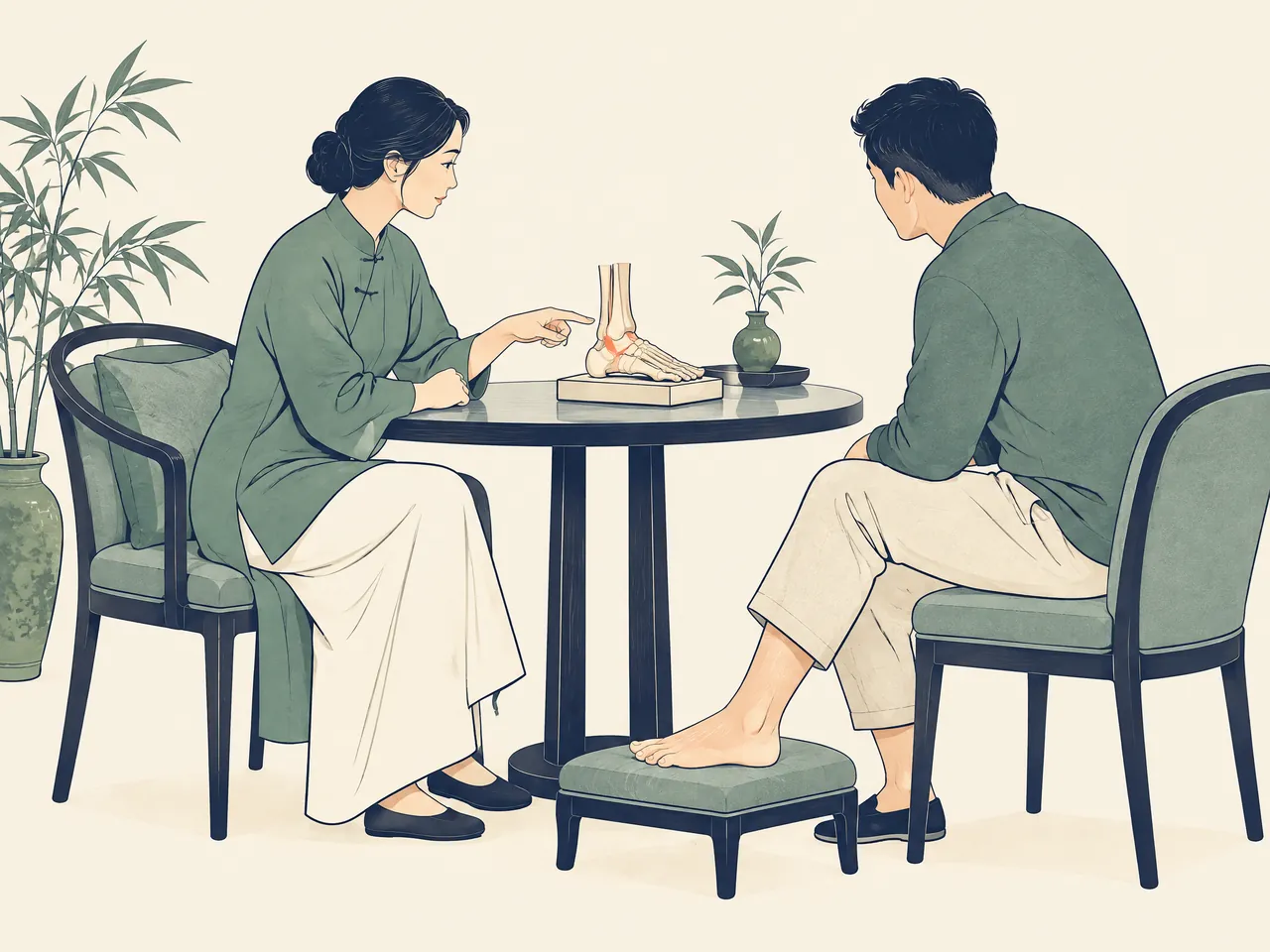
Chinese medicine may be discussed as supportive care once the presentation has been considered, not as a substitute for working out whether urgent or conventional assessment is needed. A consultation can include the pattern you recorded, current activity, shoe concerns and your goals for standing, commuting or returning to sport. It is reasonable to ask what part of the plan is intended to address symptoms and what practical load or movement advice remains important. For a focused discussion of the evidence and limits, see Can acupuncture help with foot pain?. No responsible plan should promise that acupuncture will diagnose the cause, correct footwear problems or guarantee an outcome. If symptoms are severe, neurologic or injury-related, medical assessment comes first.
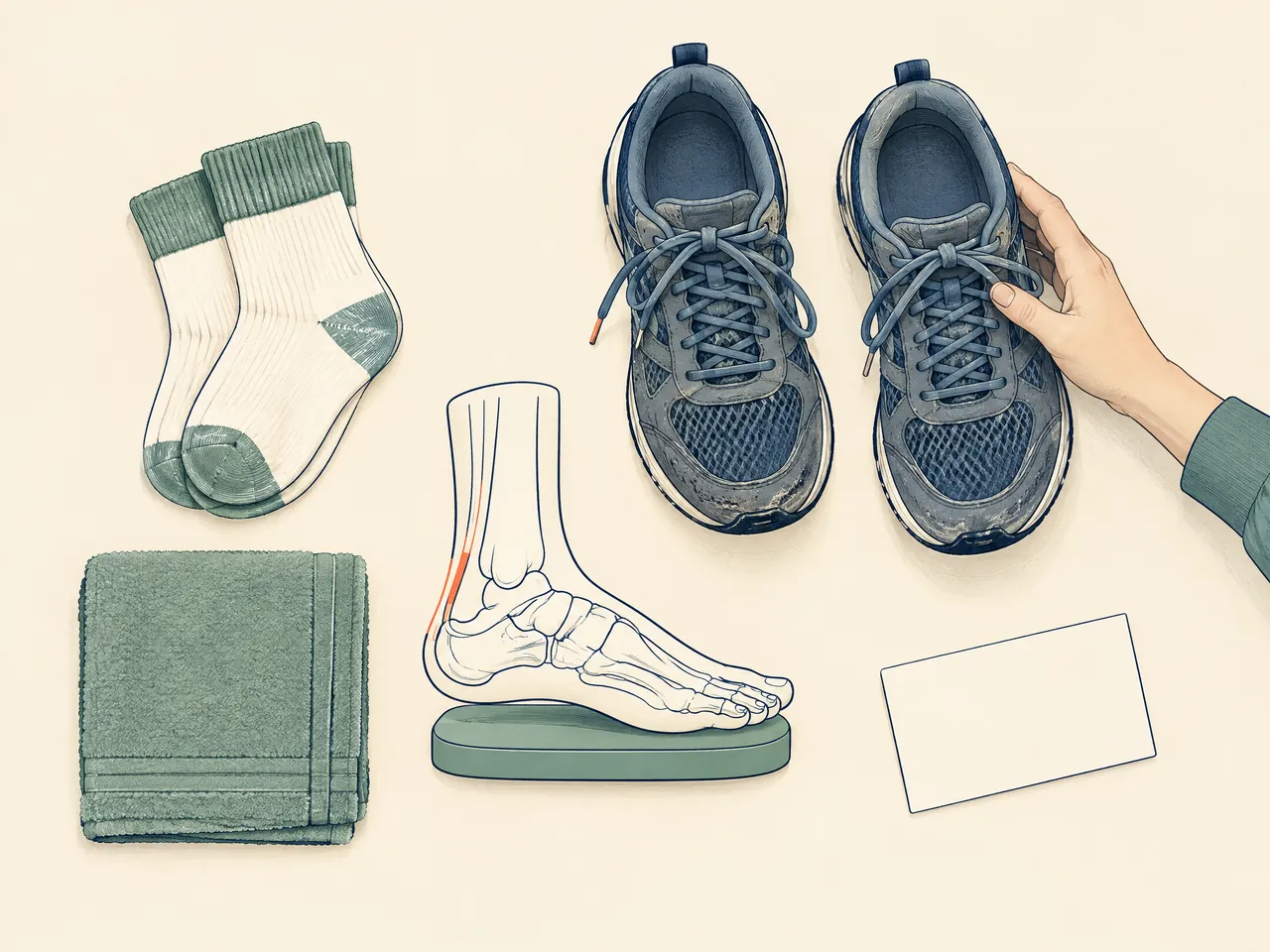
Foot Pain, Ball of Foot Pain and Bottom of Foot Pain: Discuss Load, Shoes and Gentle Stretching
Bring a practical goal to the discussion: walking through a station without limping, completing a standing shift with manageable symptoms, or returning gradually to a chosen activity. State what currently provokes pain, what you have reduced and what has helped or aggravated it. Gentle stretching may suit some heel-and-arch presentations, but sharp pain, increased numbness or a flare that lingers after the exercise is a reason to stop and seek guidance. The same caution applies to hard rolling, deep pressure and barefoot drills. If the story began after an ankle sprain and the question is about returning to running, when can I run after an ankle sprain offers a more specific progression topic. Do not use a calendar date alone to decide that the foot is ready; function, symptoms and the original injury context matter.
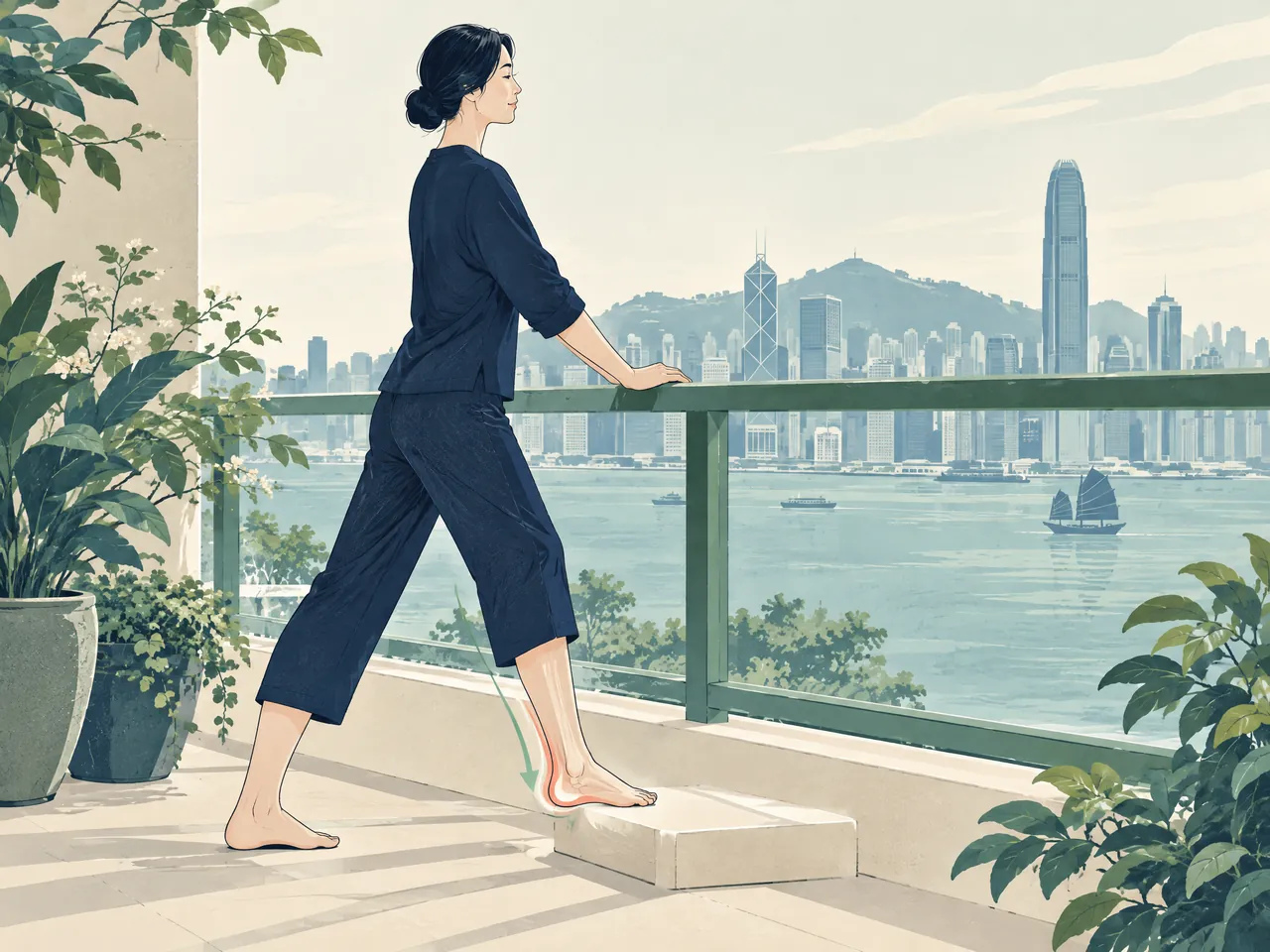
Foot Pain, Ball of Foot Pain and Bottom of Foot Pain: Know When Medical Assessment Comes First
Seek prompt medical assessment after an injury if you cannot bear weight, or if there is marked swelling, deformity or severe pain. Arrange medical advice for redness, warmth, fever, a wound or other possible infection signs. Ongoing tingling or loss of feeling is also a reason not to rely on self-care alone. The NHS advises assessment for severe bottom-of-foot pain that stops normal activities, worsening or recurring pain, symptoms not improving after two weeks of self-care, altered sensation, and any foot pain in a person with diabetes [1]. Cleveland Clinic similarly flags sudden or severe pain, injury-related pain, infection signs and diabetes or conditions affecting blood flow [2]. New pain, colour change or broken skin in a person with diabetes warrants particular caution. These are not situations to solve by stretching, massage or an online checklist.
Care and health guide
Foot discomfort: care information
This directory brings together services, reading, and visit information related to foot discomfort, to help you prepare questions for a consultation.
When foot discomfort affects your day, noting when it occurs, its relation to activity, and what you have already tried can help prepare a consultation; acupuncture for foot pain is a relevant service or reading entry point.
Individual circumstances differ, and acupuncture Hong Kong offers related information to help you understand options and prepare questions.


Your questions, answered
Frequently asked questions
Is foot pain always plantar fasciitis, including ball of foot pain or bottom of foot pain?
No. Plantar fasciitis typically concerns pain around the heel and arch, often with a first-step pattern after sleep or rest [1]. Bottom of foot pain and ball of foot pain can also involve soft tissue, joints, skin pressure areas, nerves or an injury. Persistent, worsening or unclear symptoms need assessment rather than a web-based diagnosis.
What should I record about foot pain, ball of foot pain or bottom of foot pain?
Record the one-finger location, onset, first-step symptoms, standing and walking tolerance, footwear, recent activity or injury, and any swelling, skin change, burning, tingling or reduced feeling. These are the same kinds of details clinicians use when exploring whether symptoms vary by activity or time of day [2].
Can Chinese medicine or acupuncture be discussed for foot pain?
It may be discussed as supportive care after the likely presentation and need for medical assessment have been considered. It should not replace load adjustment, appropriate footwear, exercise guidance, injury assessment or urgent care. Ask how it fits with the wider plan and do not expect a guaranteed result.
Should I stretch harder if bottom of foot pain is still present?
No. A gentle exercise approach may be suitable for some heel-and-arch presentations, but pain that becomes sharp, spreads, brings on numbness or leaves symptoms clearly worse is a reason to stop. The NHS describes regular gentle stretching in its plantar fasciitis advice, not pushing into escalating pain [1].
Sources and further information
- [1] [1] NHS — Plantar fasciitis
Referenced for: Official health guidance for heel-and-arch plantar fasciitis symptoms, gentle self-care and reasons to seek assessment.
- [2] [2] Cleveland Clinic — Foot Pain
Referenced for: Clinical overview of foot pain locations, possible causes, nerve-symptom descriptions and assessment prompts.
- [3] [3] The Hong Kong College of Orthopaedic Surgeons — Plantar Fasciitis
Referenced for: Hong Kong orthopaedic context for the typical plantar heel pain and initial weight-bearing pattern.
- [4] [4] Hong Kong Adventist Hospital — Plantar Fasciitis Explained
Referenced for: Hong Kong hospital educational context for heel-and-arch symptoms, activity modification, footwear and stretching terminology.