
TCM Lab · Explore a health topic
Insomnia and Chinese Medicine, Insomnia and Menopause, and Chronic Insomnia
Published Updated
When sleep stops feeling restorative, the useful first question is not simply “How many hours did I get?” but “What is happening across the night and the next day?” Trouble falling asleep, repeated waking, early waking and unrefreshing sleep can point to different conversations. This guide explains how insomnia and Chinese medicine may be discussed as supportive care, why insomnia and menopause deserve a wider look, and why chronic insomnia should be assessed rather than managed through guesswork. It is designed to help you bring a clear sleep story to the right clinician while keeping sleep habits, medical care and safety in view.
Appointments are confirmed through WhatsApp. If you have language requirements, please mention them in your enquiry.
The short answer
Insomnia and Chinese medicine can be discussed as part of a personalised, supportive plan after your sleep pattern, medicines, health history and daily impact are understood. Menopause can bring night sweats, mood changes and disrupted sleep, but it is still important to consider other causes. If sleep difficulty lasts, affects daytime functioning, or comes with breathing pauses, choking, severe low mood or safety concerns, seek medical assessment rather than relying on self-care alone.
Transparent pricing
See the fees.
Choose your care.
Explore our complete official price list, including first-trial prices, regular prices, packages and branch-specific options.
Opening WhatsApp prepares an enquiry; it does not send a message, take payment or confirm an appointment. Suitability and individual arrangements are confirmed during consultation.
Chinese medicine
All prices in HKDAcupuncture and Chinese herbal medicine package
Includes a Chinese medicine consultation with pulse assessment, body acupuncture and 3 days of Chinese herbal granules that do not require decoction.
HK$580 (single session)
Chinese medicine consultation with pulse assessment
Hair and scalp
All prices in HKDScalp health and hair-loss management
Includes AI scalp analysis, deep scalp and follicle cleansing, and scalp oil-control care.
HK$380 (first trial)
Regular price: HK$680
- 6 sessions: HK$3,480 (HK$580 per session)
- 12 sessions: HK$5,760 (HK$480 per session)
- 20 sessions: HK$8,600 (HK$430 per session)
- 30 sessions: HK$11,400 (HK$380 per session)
Hair acupuncture and Chinese herbal medicine package
Includes scalp acupuncture and 3 days of Chinese herbal medicine that does not require decoction.
HK$580 (single session)
Registered Chinese Medicine Practitioner consultation
- 6 sessions: HK$3,180 (HK$530 per session)
- 12 sessions: HK$5,760 (HK$480 per session)
- 20 sessions: HK$8,600 (HK$430 per session)
- 30 sessions: HK$11,400 (HK$380 per session)
Combined hair and scalp treatment
Combines acupuncture and Chinese herbal medicine with salon-level scalp and follicle care. Packages include complimentary hair-care shampoo and serum.
HK$1,260 (single session)
Combined treatment
- 8 sessions: HK$8,640 (HK$1,080 per session)
- 16 sessions: HK$15,680 (HK$980 per session)
- 20 sessions: HK$18,600 (HK$930 per session)
- 30 sessions: HK$26,400 (HK$880 per session)
Weight management
All prices in HKDFull-body acupoint embedding for weight management
Includes full-body acupoint embedding. Packages include complimentary Chinese herbal medicine for weight management, with the number of included days scaled to the package. Embedding material and the individual treatment arrangement are confirmed during consultation; this is not a cosmetic thread lift.
HK$980 (single session)
No trial session
- 10 sessions: HK$7,800 (HK$780 per session)
- 20 sessions: HK$14,600 (HK$730 per session)
- 30 sessions: HK$20,400 (HK$680 per session)
Facial acupuncture
All prices in HKDFacial acupuncture (basic)
Includes facial acupuncture and meridian-based facial care, including care for facial puffiness.
HK$480 (first trial)
Regular price: HK$680
- 10 sessions: HK$5,200 (HK$520 per session)
- 20 sessions: HK$9,600 (HK$480 per session)
- 30 sessions: HK$13,500 (HK$450 per session)
Facial acupuncture (advanced)
Includes enhanced facial acupuncture with a specially formulated moisturising mask and serum.
HK$780 (first trial)
Regular price: HK$1,180
- 10 sessions: HK$9,000 (HK$900 per session)
- 20 sessions: HK$16,600 (HK$830 per session)
- 30 sessions: HK$23,400 (HK$780 per session)
Pain care
All prices in HKDExtracorporeal shockwave treatment
Shockwave treatment for deep-tissue and fascial care. The Kwun Tong clinic offers the multi-area options shown below.
Priced by branch
Branch-specific pricing
Prince Edward: HK$250 per area
Kwun Tong: HK$250 for 1 area / HK$450 for 2 areas / HK$600 for 3 areas
Pain care (manual therapy)
Includes Chinese medicine musculoskeletal assessment, manual joint techniques and tui na.
HK$580 (single session)
Chinese medicine musculoskeletal assessment
Pain care (acupuncture and manual therapy)
Combines acupuncture and manual therapy.
HK$680 (single session)
Combined care
Explore this topic
Insomnia and Chinese Medicine: Insomnia and Menopause: Chronic Insomnia Patterns
Insomnia is a pattern of poor or insufficient sleep that affects how a person feels or functions, not a score based on one imperfect night. The Hong Kong Department of Health describes difficulty falling asleep, waking intermittently and waking too early as common presentations [1]. In a busy Hong Kong week, the same complaint may appear as lying awake after work, waking at 3 a.m. with a busy mind, or reaching the morning exhausted despite allowing time for sleep. Naming the pattern helps separate a temporary disruption from a problem that needs fuller assessment.
Look beyond the bedroom when you notice the pattern. A new shift schedule, travel, late caffeine, pain, cough, frequent urination, stress or a medicine change can all alter sleep. The aim is not to self-diagnose from a checklist. It is to notice what is new, what is regular and what affects the following day. If you want a symptom-led starting point, the guide to insomnia symptoms can help you organise the language for a consultation without assuming a cause.
Insomnia and Chinese Medicine for Trouble Falling Asleep, Insomnia and Menopause Changes, and Chronic Insomnia
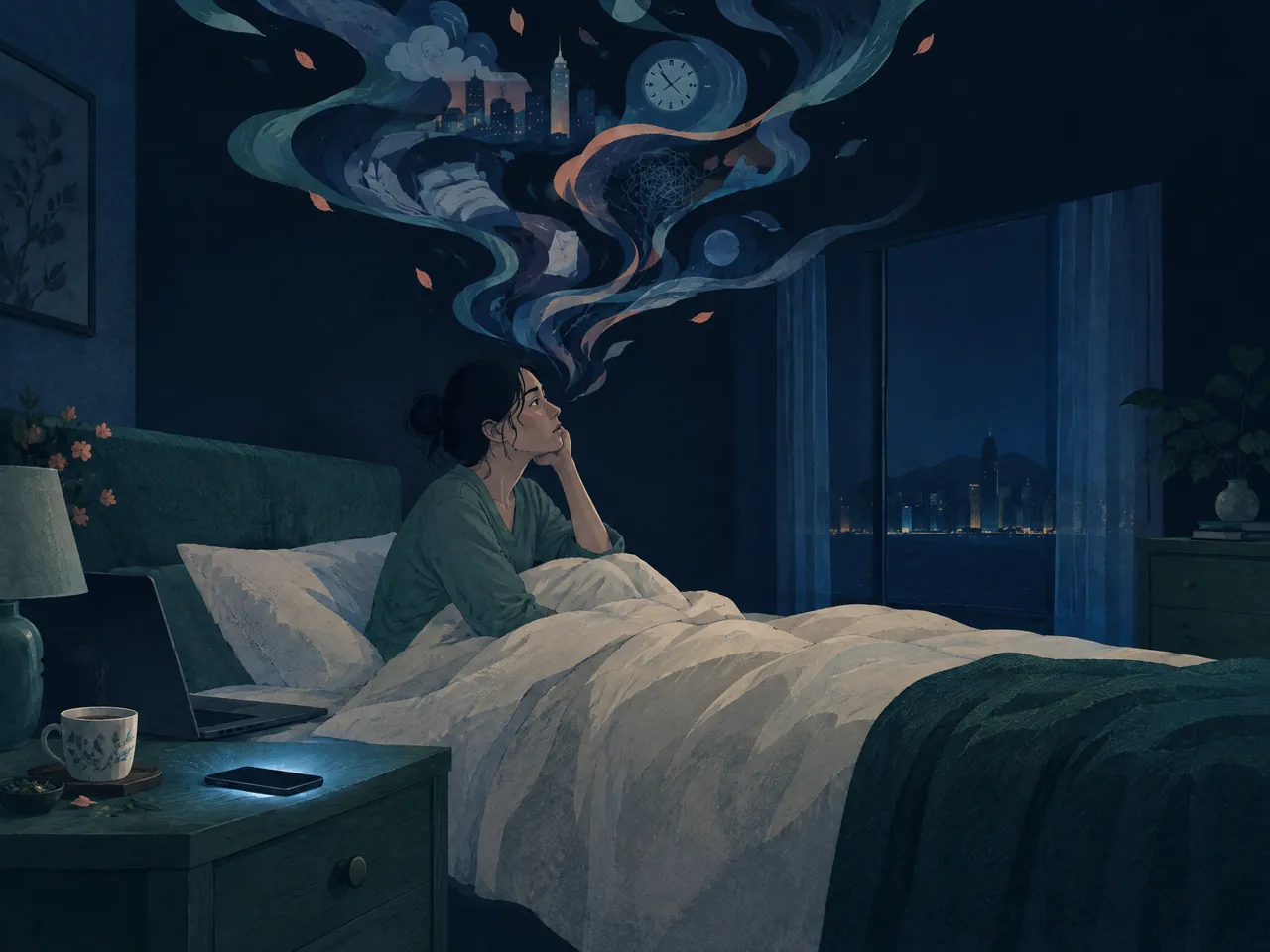
Trouble falling asleep means the main difficulty is at the beginning of the night. For one person, it may follow scrolling in bed, a late work call or an irregular bedtime. For another, it may sit alongside physical discomfort, worry or a menopause-related heat episode. Do not assume that a longer time in bed will solve it. Record roughly when you got into bed, when you believe sleep began, whether you napped, and how awake you felt in the morning. Those details show whether the problem is timing, wakefulness, disruption or several factors together.
A Chinese medicine consultation can include questions about routine, stress, digestion, temperature sensations and overall wellbeing as part of a traditional assessment. It should also include an accurate list of prescription medicines, over-the-counter remedies and supplements. That fuller context is important because a traditional consultation is not a sleep-study diagnosis and cannot rule out every medical contributor. The Chinese Medicine Hospital of Hong Kong describes insomnia care in terms of regular sleep patterns, lifestyle recommendations and Chinese medicine treatments [4]; it does not make a universal promise of outcome or a fixed number of visits.

Insomnia and Chinese Medicine for Night Waking, Insomnia and Menopause Sleep Changes, and Chronic Insomnia
Night waking deserves its own description. Note whether you wake to use the bathroom, because of pain, warmth, a dream, noise, snoring, a choking sensation or no obvious trigger. Also note whether you return to sleep quickly or stay awake for a long period. In menopause, hot flashes and night sweats can contribute to poor sleep, while mood changes may also play a part [2]. That association is useful context, but it should not become an automatic explanation for every new waking pattern.
A practical response starts with the environment and the next-day consequences. Keep the room comfortable, protect a regular wake time where possible, and avoid treating drowsy driving as something to push through. The Department of Health warns that persistent insomnia needs professional support and highlights loud snoring, breathing pauses and daytime sleepiness as possible signs of a sleep disorder [1]. If night waking is the main concern, compare options in the insomnia treatment options overview before deciding what question to bring to your clinician.
Compare your options
| What you notice | Useful details to record | Why it matters for the next conversation |
|---|---|---|
| Trouble falling asleep | Bedtime, estimated time asleep, evening caffeine, screen use, worries, pain or temperature discomfort | Helps distinguish a bedtime routine issue from a persistent pattern needing broader assessment. |
| Repeated night waking | Number of awakenings, likely trigger, time awake, snoring, gasping, bathroom trips, night sweats or pain | Shows whether breathing symptoms, physical discomfort or menopause symptoms should be discussed. |
| Early waking | Final waking time, ability to return to sleep, mood, daytime concentration and how long the pattern has lasted | Connects the night pattern with daytime effect and possible mood or schedule factors. |
| Poor daytime functioning | Sleepiness while driving, mistakes, unplanned naps, irritability, low mood and impact on work or caregiving | Highlights safety and helps decide whether medical or sleep-specialist assessment should be prioritised. |
On smaller screens, scroll the table sideways to compare all columns.
Insomnia and Chinese Medicine: Insomnia and Menopause Assessment for Chronic Insomnia
Assessment is more useful when it starts with a timeline. Write down when the sleep change began, whether it followed an illness, a medication change, a stressful period, menopause symptoms or a work-schedule change, and whether it happens most nights. Include what time you try to sleep, how often you wake and how sleep changes on days off. A partner’s observation can be useful if there is loud snoring, apparent pauses in breathing or unusual movements. This information does not diagnose a condition, but it gives a family doctor, sleep clinician or registered Chinese medicine practitioner something specific to explore.
Chronic insomnia is not simply a label for being tired. One clinical description uses sleep difficulty at least three times a week for at least three months, with daytime impact, after other explanations are considered [3]. This definition is helpful because it directs attention to frequency, duration and functioning rather than a single bad stretch. It does not mean you should wait three months before asking for help. Earlier assessment is sensible when sleep loss affects driving, work, caregiving, mood or your ability to manage safely.
Insomnia and Chinese Medicine Questions for Insomnia and Menopause and Chronic Insomnia
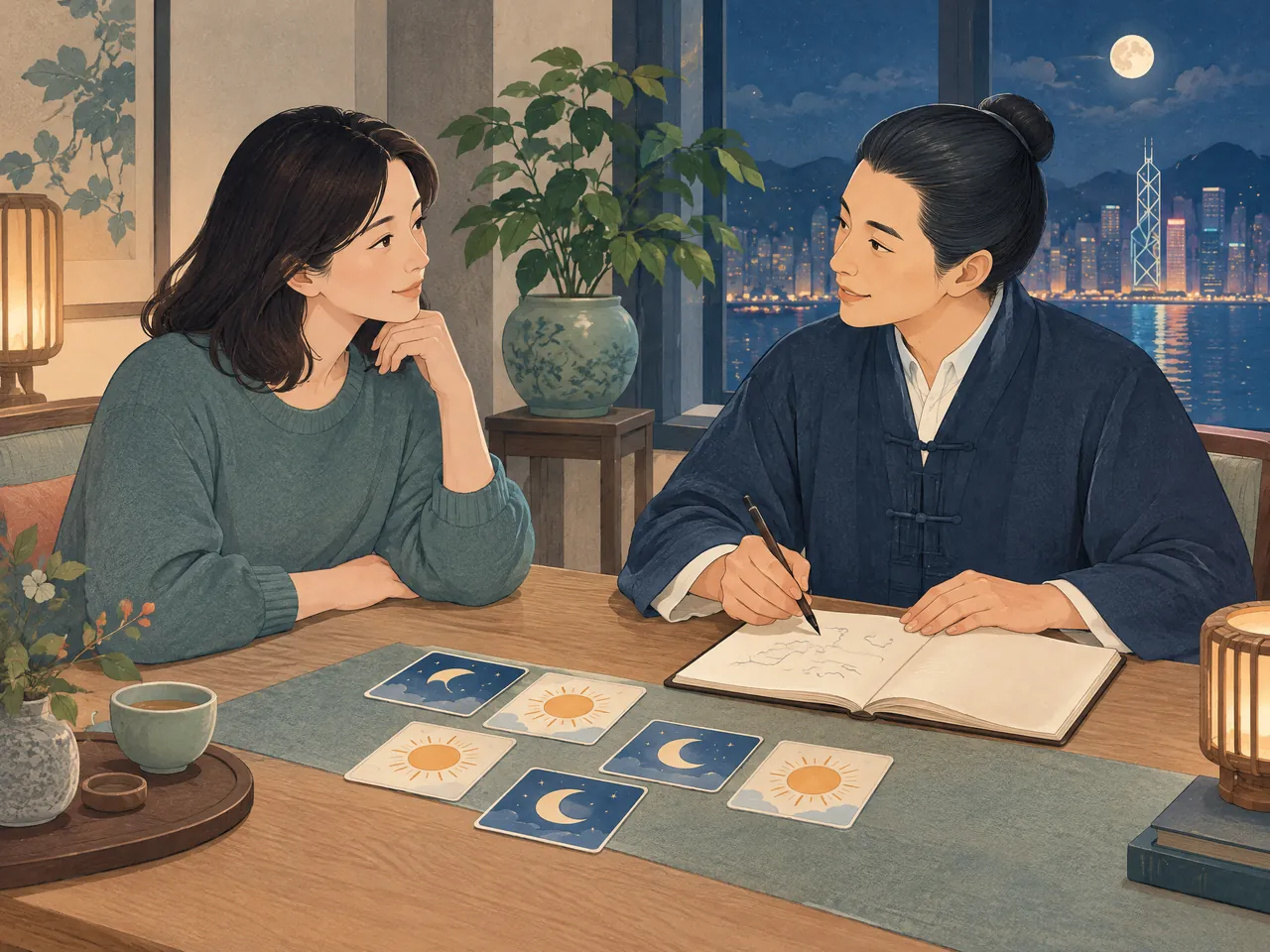
Prepare questions that distinguish information from expectation. You might ask: “What factors should be checked for my pattern?”, “Could my current medicine or supplement affect sleep?”, “Should I discuss menopause symptoms with my usual doctor?”, and “What would make referral appropriate?” If you are considering Chinese medicine, ask what the assessment involves, what information the practitioner needs, and how proposed supportive care will sit alongside current treatment. The article Can Chinese medicine help with insomnia? is a useful prompt for a balanced conversation, not a substitute for personalised advice.
Bring exact product names where you can. “A sleep tablet” or “a natural calming product” may leave out details that matter for safety and interactions. Do not reduce, stop or combine prescribed sleep medicines because a new supportive approach is being considered. The prescriber who manages the medicine should be involved in any change. Similarly, do not assume that a supplement is harmless because it is sold without a prescription; a clinician needs the complete list and relevant medical history to advise responsibly.

Insomnia and Chinese Medicine Consultation Notes for Insomnia and Menopause and Chronic Insomnia
Use a simple sleep note for several days before a consultation. The purpose is accuracy, not perfect tracking. A useful entry includes bedtime, estimated time asleep, waking episodes, final wake time, naps, caffeine or alcohol timing, exercise timing, night sweats or pain, and daytime concentration. Add a brief note about what you did when awake. This can reveal whether the difficulty is mostly sleep onset, sleep maintenance or early waking, and whether a repeating trigger needs attention. It also reduces the pressure to remember every detail while tired.
After a consultation, write down what was actually agreed: the questions still being investigated, self-care changes you will try, any treatments discussed, medicine cautions and the point at which you should seek another type of care. This is especially helpful when menopause symptoms and insomnia overlap, because several concerns may need parallel attention. A consultation can help structure the conversation; it cannot confirm that one intervention will work for every person or replace assessment for breathing, hormonal, mood or medication-related problems.
Insomnia and Chinese Medicine Support: Insomnia and Menopause and Chronic Insomnia Safety
Supportive care works best when it is placed beside, not in competition with, evidence-based sleep care. Regular sleep and wake timing, a quiet comfortable bedroom, and a wind-down routine are reasonable foundations. For menopause-related sleep problems, the National Institute on Aging also advises attention to late caffeine, large meals near bedtime, alcohol, exercise timing and the bedroom environment [2]. These steps are not a test of willpower. They are practical ways to reduce avoidable disruption while a clinician considers causes that may need more than routine changes.
For persistent insomnia, ask a clinician about cognitive behavioural therapy for insomnia, often called CBT-I. It addresses habits, thoughts and behaviours that can maintain poor sleep and is described as a first-line treatment in Cleveland Clinic’s clinical overview [3]. Sleeping medicines and self-purchased products raise different questions about side effects, interactions and appropriate use. The comparison CBT-I versus sleeping pills can help you frame those questions, but an individual medicine plan belongs with the prescribing clinician.
Insomnia and Chinese Medicine Alongside Sleep Care for Insomnia and Menopause and Chronic Insomnia
If you choose to discuss Chinese medicine, treat it as one strand of coordinated care. Explain the sleep pattern, menopause symptoms if relevant, existing diagnoses, pregnancy status where relevant, all medicines and supplements, and any plan already given by another clinician. A registered Chinese medicine practitioner can then decide what a traditional assessment can appropriately address and when another professional should be involved. This approach is more useful than asking for a standard remedy, because the same word “insomnia” can cover very different night-time and daytime experiences.
Keep your expectations concrete: a useful consultation should help clarify the next safe question, not guarantee a particular response by a particular date. Continue medical follow-up already in place, and tell each clinician about treatments started elsewhere. When you are ready to ask about an appointment, the Kwun Tong Chinese medicine clinic page gives the location context. You can also use WhatsApp to describe the main sleep concern and ask what information is helpful before a consultation; this starts an enquiry, not an automatic treatment decision.

Insomnia and Chinese Medicine Referral Signs in Insomnia and Menopause and Chronic Insomnia
Arrange medical assessment promptly if insomnia continues, worsens or meaningfully impairs daily life. Seek help sooner for loud habitual snoring with breathing pauses, choking or gasping at night, unintended daytime dozing, new confusion, severe anxiety, depression, thoughts of self-harm, or any safety risk. Do not drive or operate machinery if drowsiness makes that unsafe. These signs do not tell you exactly what the cause is, but they do indicate that online information and routine self-care are not enough.
Menopause-related symptoms also deserve a wider conversation when sleep problems are substantial or new. A family doctor or appropriate clinician can consider whether night sweats, mood changes, medicines, pain or another health issue needs separate care. If you are already taking a prescribed sleep medicine, contact the prescriber before changing the dose or stopping it. For a non-urgent Chinese medicine enquiry nearer Mong Kok, review the Chinese medicine clinic Prince Edward details and bring the sleep note rather than relying on memory alone.
Care and health guide
Health service information
This directory brings together services, reading, and visit information related to health services, to help you prepare questions for a consultation.
If you are organising health questions, Chinese medicine clinic Hong Kong is a starting point for learning about related services and preparing for a consultation.
People have different needs; acupuncture Hong Kong provides further reading to help you understand options in your own context.


Your questions, answered
Frequently asked questions
Can insomnia and Chinese medicine be discussed if I already take sleeping medication?
Yes, but give both the prescribing clinician and the registered Chinese medicine practitioner a complete list of medicines, over-the-counter products and supplements. Do not lower, stop or add to a prescribed sleep medicine on your own. A Chinese medicine discussion should be coordinated with, not replace, the plan made by the prescriber.
How can I tell if insomnia and menopause are connected?
Note whether sleep disruption occurs with hot flashes, night sweats, cycle changes, mood changes or other menopause symptoms, and share that timeline with your clinician. Menopause can contribute to sleep problems, but it does not exclude other causes such as pain, breathing-related sleep disorders, medication effects or stress.
What is the most useful sleep record for chronic insomnia?
For several days, record bedtime, estimated time asleep, awakenings, final waking time, naps and daytime alertness. Add possible triggers such as caffeine, alcohol, shift work, pain, night sweats or a medicine change. The record does not diagnose insomnia, but it makes an assessment more specific.
When should I seek medical help rather than try more sleep tips?
Seek medical advice when sleep trouble persists or impairs work, driving, mood or daily safety. Get prompt help for loud snoring with pauses in breathing, choking or gasping at night, severe depression or anxiety, thoughts of self-harm, new confusion, or unsafe daytime sleepiness.
Sources and further information
- [1] Hong Kong Department of Health — Insomnia
Referenced for: Definitions of difficulty falling asleep, intermittent waking and early waking; practical self-help context; persistent insomnia and breathing-related referral signs.
- [2] National Institute on Aging — Sleep Problems and Menopause: What Can I Do?
Referenced for: Menopause-related sleep disruption, hot flashes and night sweats, sleep habit suggestions and the role of CBT-I discussion.
- [3] Cleveland Clinic — Insomnia
Referenced for: Clinical insomnia terminology, chronic insomnia criteria, daytime effects, assessment and CBT-I context.
- [4] Chinese Medicine Hospital of Hong Kong — Insomnia
Referenced for: Hong Kong Chinese medicine insomnia-service wording around regular sleep patterns, lifestyle recommendations and supportive care; not evidence of a guaranteed result or of TCM Lab services.