
TCM Lab · Health reading
Acupuncture for Acne, Chinese Herbal Medicine for Acne and Non-Comedogenic Skin Care for Acne: What to Know
Published Updated
Acne is not one uniform problem, so the most useful first step is to identify what is actually present: mainly blocked pores, inflamed spots, deep painful lumps, lingering marks, or a mixture. Acupuncture for acne and Chinese herbal medicine for acne may be discussed as supportive options within a broader plan, but they should not replace medical assessment when inflammation is extensive or scarring is a concern. A calm routine built around non-comedogenic skin care for acne can protect the skin from avoidable irritation while the next step is clarified.
Appointments are confirmed through WhatsApp. If you have language requirements, please mention them in your enquiry.
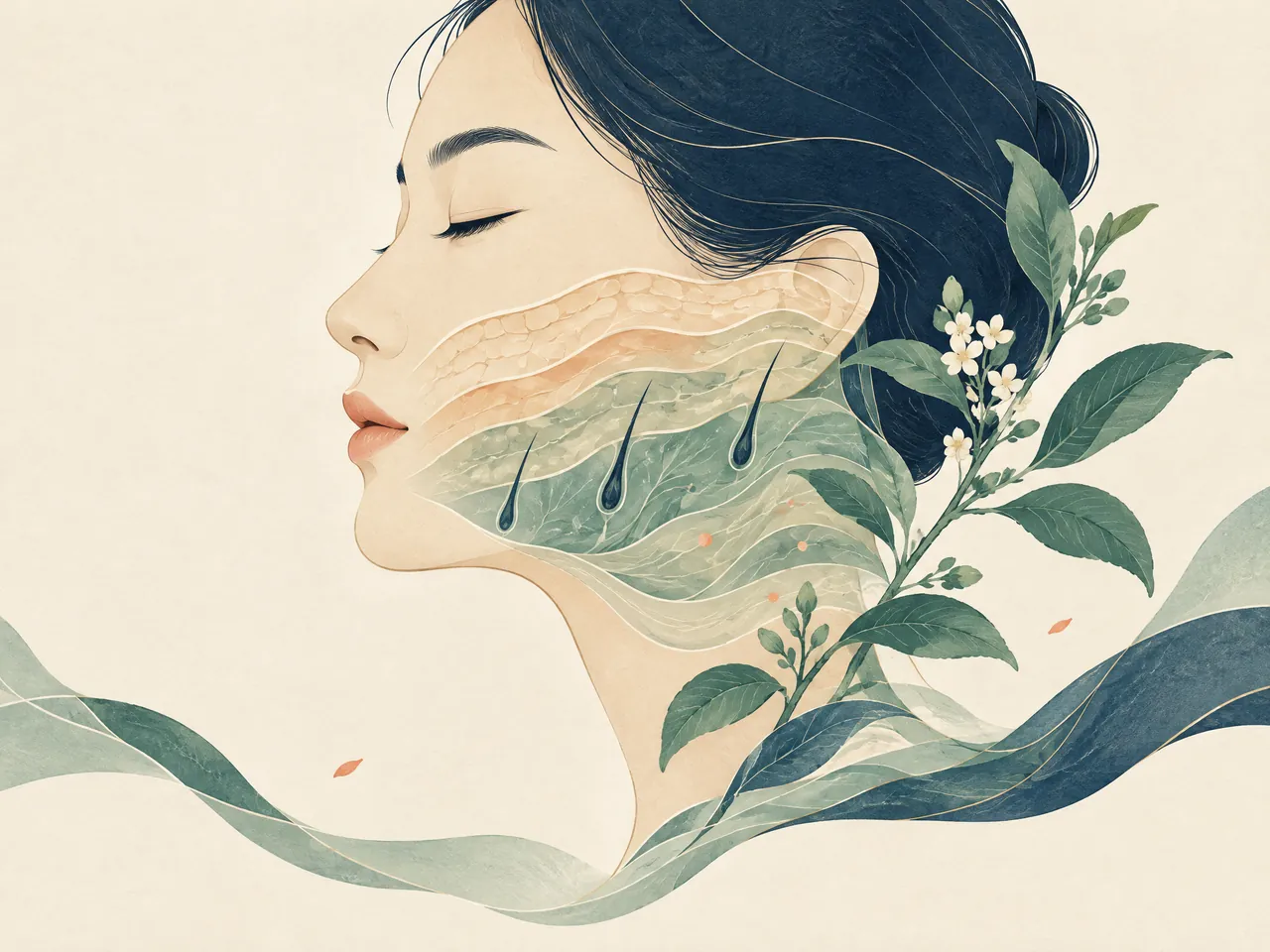
The short answer
Acupuncture for acne or Chinese herbal medicine for acne may be considered as supportive care after an individual assessment, particularly when a person also wants to review habits and skin-care burden. They are not a substitute for evidence-based dermatology treatment. Start with gentle, non-comedogenic skin care for acne, do not pick spots, and arrange medical assessment promptly for deep painful nodules or cysts, possible infection, scarring, treatment-resistant acne, or substantial distress.
Transparent pricing
See the fees.
Choose your care.
Explore our complete official price list, including first-trial prices, regular prices, packages and branch-specific options.
Opening WhatsApp prepares an enquiry; it does not send a message, take payment or confirm an appointment. Suitability and individual arrangements are confirmed during consultation.
Chinese medicine
All prices in HKDAcupuncture and Chinese herbal medicine package
Includes a Chinese medicine consultation with pulse assessment, body acupuncture and 3 days of Chinese herbal granules that do not require decoction.
HK$580 (single session)
Chinese medicine consultation with pulse assessment
Hair and scalp
All prices in HKDScalp health and hair-loss management
Includes AI scalp analysis, deep scalp and follicle cleansing, and scalp oil-control care.
HK$380 (first trial)
Regular price: HK$680
- 6 sessions: HK$3,480 (HK$580 per session)
- 12 sessions: HK$5,760 (HK$480 per session)
- 20 sessions: HK$8,600 (HK$430 per session)
- 30 sessions: HK$11,400 (HK$380 per session)
Hair acupuncture and Chinese herbal medicine package
Includes scalp acupuncture and 3 days of Chinese herbal medicine that does not require decoction.
HK$580 (single session)
Registered Chinese Medicine Practitioner consultation
- 6 sessions: HK$3,180 (HK$530 per session)
- 12 sessions: HK$5,760 (HK$480 per session)
- 20 sessions: HK$8,600 (HK$430 per session)
- 30 sessions: HK$11,400 (HK$380 per session)
Combined hair and scalp treatment
Combines acupuncture and Chinese herbal medicine with salon-level scalp and follicle care. Packages include complimentary hair-care shampoo and serum.
HK$1,260 (single session)
Combined treatment
- 8 sessions: HK$8,640 (HK$1,080 per session)
- 16 sessions: HK$15,680 (HK$980 per session)
- 20 sessions: HK$18,600 (HK$930 per session)
- 30 sessions: HK$26,400 (HK$880 per session)
Weight management
All prices in HKDFull-body acupoint embedding for weight management
Includes full-body acupoint embedding. Packages include complimentary Chinese herbal medicine for weight management, with the number of included days scaled to the package. Embedding material and the individual treatment arrangement are confirmed during consultation; this is not a cosmetic thread lift.
HK$980 (single session)
No trial session
- 10 sessions: HK$7,800 (HK$780 per session)
- 20 sessions: HK$14,600 (HK$730 per session)
- 30 sessions: HK$20,400 (HK$680 per session)
Facial acupuncture
All prices in HKDFacial acupuncture (basic)
Includes facial acupuncture and meridian-based facial care, including care for facial puffiness.
HK$480 (first trial)
Regular price: HK$680
- 10 sessions: HK$5,200 (HK$520 per session)
- 20 sessions: HK$9,600 (HK$480 per session)
- 30 sessions: HK$13,500 (HK$450 per session)
Facial acupuncture (advanced)
Includes enhanced facial acupuncture with a specially formulated moisturising mask and serum.
HK$780 (first trial)
Regular price: HK$1,180
- 10 sessions: HK$9,000 (HK$900 per session)
- 20 sessions: HK$16,600 (HK$830 per session)
- 30 sessions: HK$23,400 (HK$780 per session)
Pain care
All prices in HKDExtracorporeal shockwave treatment
Shockwave treatment for deep-tissue and fascial care. The Kwun Tong clinic offers the multi-area options shown below.
Priced by branch
Branch-specific pricing
Prince Edward: HK$250 per area
Kwun Tong: HK$250 for 1 area / HK$450 for 2 areas / HK$600 for 3 areas
Pain care (manual therapy)
Includes Chinese medicine musculoskeletal assessment, manual joint techniques and tui na.
HK$580 (single session)
Chinese medicine musculoskeletal assessment
Pain care (acupuncture and manual therapy)
Combines acupuncture and manual therapy.
HK$680 (single session)
Combined care
Acupuncture for Acne, Chinese Herbal Medicine for Acne and Non-Comedogenic Skin Care for Acne: Start with Acne Type
A useful acne plan begins with description rather than assumption. Acne vulgaris can include non-inflammatory comedones and inflammatory papules, pustules or nodules, often together rather than in neat stages. A blackhead, a cluster of tender red bumps, and a painful lump beneath the skin create different concerns and should not be managed as if they were identical. DermNet notes that acne can also leave pigment changes and scars, which helps explain why the visible aftermath deserves attention as well as active spots [2]. For a clearer vocabulary before discussing options, see our guide to acne types and severity.
Look at the distribution as well as the individual lesions. Notice whether the change is mostly on the forehead, cheeks, jawline, chest or back; whether it is new or recurrent; and whether a spot is sore, warm, draining or healing with a mark. A short record of recent products, prescriptions, supplements and prior treatments can make a consultation more useful and can help distinguish an occasional flare from a pattern that needs medical care.

Acupuncture for Acne, Chinese Herbal Medicine for Acne and Non-Comedogenic Skin Care for Acne: Recognising Comedones and Inflammation
Comedones are blocked pores: whiteheads are closed bumps and blackheads are open, darker-looking spots. Papules are raised inflamed bumps, while pustules contain visible pus; nodules and cysts are deeper lumps that may be painful. More than one kind can appear at once, so it is reasonable to say exactly what you see rather than call every bump a “pimple.” The NHS describes this range and advises medical help when spots are numerous, deep, painful or causing scars [1]. That distinction is especially important before deciding whether complementary support is a reasonable conversation or whether treatment should be escalated first.
For predominantly clogged pores with only occasional inflammation, the immediate task is usually consistency rather than an aggressive experiment. Introduce one purposeful product at a time, remove make-up at the end of the day, and avoid harsh scrubs or repeated squeezing. Non-comedogenic skin care for acne is a practical way to reduce one avoidable source of pore-clogging concern, not a promise that a cleanser or moisturiser will solve inflammatory acne. If a product stings, creates marked dryness, or seems to coincide with worsening irritation, note it and seek tailored advice instead of repeatedly layering more products.

Acupuncture for Acne, Chinese Herbal Medicine for Acne and Non-Comedogenic Skin Care for Acne: Understanding Severity and Scarring Risk
Severity is not only the number of visible spots. Deep lesions, persistent tenderness, widespread inflammation, repeated breakouts in the same area, marks that remain after spots settle, and any developing pits or raised scars all change the urgency of a plan. Picking, squeezing and scratching can add injury to already inflamed skin; the NHS specifically advises against picking or squeezing because it can cause scarring [1]. Do not wait for every flare to settle on its own if pain, scarring, or rapid spread is becoming part of the story.
A consultation is easier to act on when you bring the right details: a brief timeline, photos taken in similar light if the acne fluctuates, current topical and oral products, allergies, menstrual or pregnancy context where relevant, and how acne affects sleep, work, school, exercise or confidence. No one needs to prove that acne is “severe enough” to ask for help. The emotional and social burden is clinically relevant too. The comparison below is a planning aid, not a grading diagnosis; it is designed to keep daily care, complementary discussion and dermatology assessment in the right order.
Compare your options
| What you notice | Immediate focus | Useful next conversation | Why the order matters |
|---|---|---|---|
| Mostly blackheads or whiteheads, with little discomfort | Keep cleansing and products gentle; choose non-comedogenic options and avoid squeezing | Pharmacist or clinician advice on suitable topical care; a Chinese medicine discussion only if desired | A simple, consistent routine makes it easier to see whether the skin is becoming irritated |
| Recurring red papules or pustules | Avoid scrubbing and picking; review current products and treatment history | Medical or dermatology advice on inflammation; discuss acupuncture for acne as complementary, not replacement, care | Inflammation may need treatment beyond cosmetic product changes |
| Deep painful nodules, cyst-like lumps, hot swollen skin, or rapid worsening | Seek prompt medical assessment; do not try to drain lesions | Dermatologist or other medical clinician first | Deep inflammation and possible infection can raise the risk of lasting scars |
| Persistent dark marks, texture change, pits, or significant distress after spots | Document the pattern and protect skin from further picking or irritation | Dermatology assessment, with coordinated supportive care if wanted | Active acne, marks and scars may need different decisions rather than one catch-all remedy |
On smaller screens, scroll the table sideways to compare all columns.
Acupuncture for Acne, Chinese Herbal Medicine for Acne and Non-Comedogenic Skin Care for Acne: A Whole-Person Review
A whole-person review should add context without turning everyday life into a list of causes. Ask when the acne began, what changed around that time, which treatments have already been tried, and what makes skin care hard to sustain. A person who wears make-up for long working days, exercises after commuting, wears a mask regularly, or has acne on the back may need a different routine from someone with dry, sensitive facial skin. The aim is not to blame sleep, stress, food, or a menstrual cycle for every spot. It is to identify practical pressures that may affect comfort, product use and timely treatment.
In a Chinese medicine consultation, the clinician may use the traditional four examinations—observation, listening and smelling, inquiry, and palpation—to explore the skin complaint alongside general symptoms, routine and history. Traditional pattern labels such as heat, dampness, toxicity or stasis are ways of organising symptoms within that medical tradition; they are not laboratory diagnoses of bacteria, hormones or an infection. Our overview of TCM acne assessment explains what information may be discussed. A local CUHK pilot programme similarly described combining Chinese medicine consultations and lifestyle discussion with access to dietary and dermatology perspectives, illustrating coordination rather than a substitute for conventional acne care [4].
Acupuncture for Acne, Chinese Herbal Medicine for Acne and Non-Comedogenic Skin Care for Acne: Traditional Pattern Assessment
If you ask about acupuncture for acne, expect a discussion before any conclusion. Useful questions include the type and duration of lesions, pain, bowel and sleep changes, energy, current skin products, prescriptions, supplements and past reactions. The practitioner may also ask about cycle-related timing and whether the concern is active inflammation, persistent marks, or both. This context can guide a traditional assessment, but it cannot confirm a medical diagnosis that needs examination, testing or dermatology review. Be direct about any existing medical care so the different parts of the plan do not work at cross-purposes.
Chinese herbal medicine for acne should be approached with the same care. “Natural” does not automatically mean suitable for every person or compatible with every medicine. The U.S. National Center for Complementary and Integrative Health notes mixed findings for Chinese herbal products and reports safety concerns including contamination and incorrect herbs; it advises discussing complementary approaches with health-care providers [3]. A responsible conversation therefore includes allergies, prescribed medicines, over-the-counter acne treatments, supplements, pregnancy or nursing, and any previous adverse reaction. Neither herbs nor acupuncture should be presented as a guaranteed cure, or as a reason to delay treatment for deep inflammation.
Acupuncture for Acne, Chinese Herbal Medicine for Acne and Non-Comedogenic Skin Care for Acne: Cycles, Sleep, Diet and Stress
Some people notice that their skin changes near a period, while others see no reliable cycle pattern. A jawline breakout alone cannot diagnose a hormone condition, and a calendar pattern does not rule out other acne triggers or skin conditions. If you notice a repeated relationship, record the timing and bring it to a medical clinician, particularly when acne is sudden, persistent, or accompanied by other changes that concern you. Our page on period acne can help you prepare observations without treating location on the face as a diagnosis.
Sleep, stress, meals and workload still matter because they shape what a person can realistically maintain. Rather than promising that one food, supplement, detox or strict avoidance plan will clear acne, start with regular meals that meet your needs and a routine you can follow on busy days. Note whether late nights lead to skipped cleansing, whether a new hair product touches the forehead, or whether exercise clothing stays damp against the back. This turns vague frustration into useful consultation information. If dietary change is being considered, keep it proportionate and avoid a restrictive plan that creates nutritional or social strain.
Acupuncture for Acne, Chinese Herbal Medicine for Acne and Non-Comedogenic Skin Care for Acne: Coordinating Next Steps
Coordination means deciding what needs attention now, what can be monitored, and who should lead the next decision. For mild clogged pores or occasional spots without red flags, gentle cleansing, non-comedogenic moisturiser and make-up, and avoiding picking may be a sensible foundation. A pharmacist, primary-care clinician or dermatologist can discuss treatments appropriate to the acne pattern; the NHS lists topical options and prescription treatments that may be considered by medical professionals [1]. Acupuncture or Chinese medicine can be raised as a supportive preference, but should be disclosed alongside all conventional treatment rather than run as a separate, hidden plan.
When the acne is painful, widespread, leaving scars, or not improving with usual care, medical assessment comes first. This is not a dismissal of the person’s interest in Chinese medicine; it is a way to protect the skin and avoid losing time while deeper inflammation continues. If you are unsure about the threshold, read When should I see a dermatologist for acne. A clear plan can include dermatology treatment, a simplified routine, follow-up on any medicine side effects, and, if appropriate, a carefully coordinated discussion of complementary care.
Acupuncture for Acne, Chinese Herbal Medicine for Acne and Non-Comedogenic Skin Care for Acne: Gentle Daily Care
Gentle daily care is deliberately unglamorous. Wash the affected skin twice daily with a gentle cleanser, remove make-up at day’s end, and choose skin-care and make-up products described as non-comedogenic. The NHS also advises against scrubbing, because irritation can make acne worse [1]. Keep the routine simple enough to tell what is helping or irritating the skin. A product shelf full of acids, exfoliants, masks and spot treatments can make it difficult to recognise whether inflammation is being treated, over-treated, or merely covered up.
Practical adjustments can be specific without becoming rigid rules. Cleanse after heavy sweating when feasible, change anything that rubs repeatedly against affected skin, and pay attention to greasy hair products if breakouts concentrate at the hairline. Do not share towels or applicators if a skin area looks infected, and do not attempt to drain deep lesions yourself. If you are considering acupuncture for acne, bring a current product and medicine list to the discussion; if you are considering Chinese herbs, ask how the proposed approach will be reviewed alongside your other care. At TCM Lab, you may enquire about an acne-focused consultation at the Kwun Tong Chinese medicine clinic or Chinese medicine clinic Prince Edward.

Acupuncture for Acne, Chinese Herbal Medicine for Acne and Non-Comedogenic Skin Care for Acne: When to Seek Dermatology Advice
Arrange prompt medical advice for many deep or painful spots, nodules or cysts, hot swollen skin, possible infection, signs of scarring, acne that has not improved with reasonable self-care, or acne that is weighing heavily on mood and daily life. These are not situations to solve by adding more home remedies. A clinician can assess whether the eruption is acne or another condition, review medicines and products, and discuss treatments that match the severity. Early attention is especially worthwhile when lesions are deep because scars can remain after active inflammation has settled [1] [2].
Bring a concise list of what you have used and for how long, including topical treatments, oral medicines, supplements and any Chinese herbal products. Mention if you are pregnant, planning pregnancy, nursing, or have had allergic reactions, because this can affect treatment choices. If dermatology treatment is started, do not stop or substitute it solely because another approach has been suggested; ask each clinician how the plan should fit together. The most useful outcome is not a promise of instant clear skin, but a safe, understandable route that addresses active acne, protects the skin barrier and responds quickly if scarring or distress is emerging.
Care and health guide
Health service information
This directory brings together services, reading, and visit information related to health services, to help you prepare questions for a consultation.
If you are organising health questions, Chinese medicine clinic Hong Kong is a starting point for learning about related services and preparing for a consultation.
People have different needs; acupuncture Hong Kong provides further reading to help you understand options in your own context.


Your questions, answered
Frequently asked questions
Can acupuncture or Chinese medicine cure acne permanently?
No approach should promise a permanent cure. Acne can be influenced by skin biology, hormones, medicines, products and other factors. Acupuncture or a Chinese medicine assessment may be considered as supportive care, while appropriate conventional assessment remains important for persistent, painful or scar-forming acne.
Can I use Chinese herbal medicine for acne while using dermatologist-prescribed treatment?
Do not assume the combination is suitable without discussion. Tell both practitioners about every prescribed medicine, topical product, supplement and herbal product. This supports coordinated decisions and helps avoid overlapping side effects, interactions or an unclear picture of what is affecting the skin.
Does non-comedogenic skin care for acne mean a product will not break me out?
Non-comedogenic means the product is formulated not to clog pores, but it cannot guarantee that every person’s skin will tolerate it or that it will treat inflammatory acne. Introduce products carefully and seek advice if irritation or worsening persists.
Should I seek help even if acne is not painful?
Yes, particularly if it is persistent, affecting confidence or daily life, leaving marks, or not improving with appropriate self-care. A clinician can review the type of eruption and discuss options before scarring or distress becomes more difficult to manage.
Sources and further information
- [1] NHS: Acne
Referenced for: Acne lesion descriptions, gentle skin-care measures, avoiding picking or scrubbing, medical referral signs and treatment context.
- [2] DermNet: Acne vulgaris
Referenced for: Inflammatory and non-inflammatory lesion terminology, deeper lesions, pigment changes and scarring context.
- [3] NCCIH: Traditional Chinese Medicine: What You Need To Know
Referenced for: Evidence limitations and safety considerations for Chinese herbal products and complementary care coordination.
- [4] CUHK Integrative Medical Centre: Integrative Medicine Treatment in Acne: A Pilot Service Program
Referenced for: Hong Kong example of an integrative acne pilot describing Chinese medicine consultation, lifestyle discussion, dietetic advice and dermatology input; not evidence of efficacy.