
TCM Lab · Health reading
Sciatica Causes, Sciatic Nerve Pain Causes and Should I Keep Moving with Sciatica?
Published Updated
Pain that starts in the low back or buttock and travels into one leg can make ordinary choices—getting up from a desk, taking the MTR, carrying shopping, or sleeping—feel uncertain. Sciatica is a description of a radiating nerve-pain pattern, not a conclusion about exactly which structure is responsible. The useful question is therefore not only “what caused it?” but also whether the pattern includes altered sensation or weakness, whether it is changing, and whether there are warning signs that need urgent medical care. This guide explains common sciatica causes, sensible movement, assessment, and the limited place of supportive Chinese medicine discussions.
Appointments are confirmed through WhatsApp. If you have language requirements, please mention them in your enquiry.
The short answer
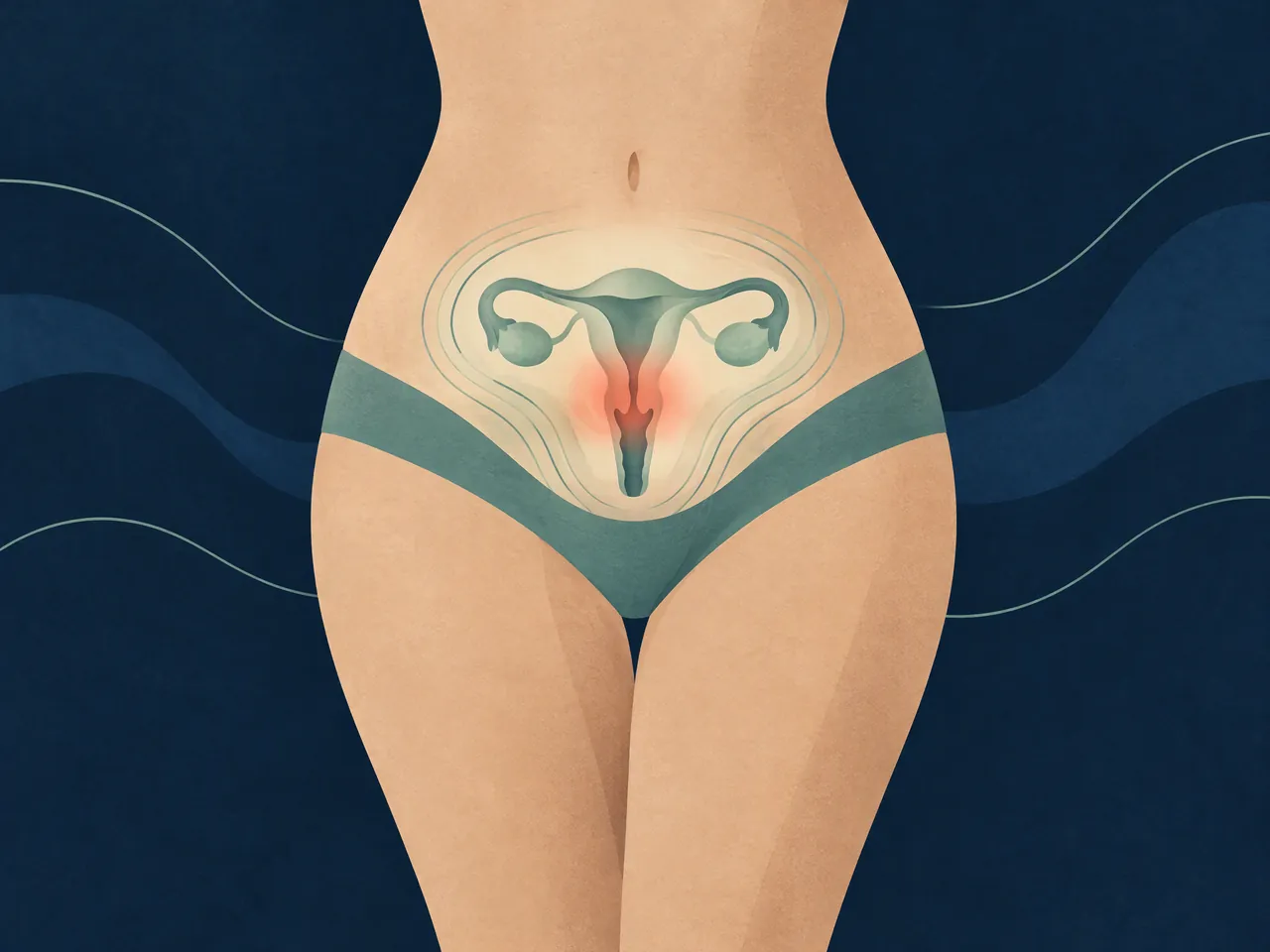
Sciatica usually means pain from irritation or compression affecting the sciatic nerve pathway, often from a slipped disc, spinal narrowing, a bone spur, spondylolisthesis, or injury. Gentle, tolerable movement is generally preferable to prolonged bed rest when there are no warning signs. Seek urgent medical care for pain affecting both legs, worsening leg weakness or numbness, saddle-area sensation changes, or new bladder or bowel problems. [1] [2]
Transparent pricing
See the fees.
Choose your care.
Explore our complete official price list, including first-trial prices, regular prices, packages and branch-specific options.
Opening WhatsApp prepares an enquiry; it does not send a message, take payment or confirm an appointment. Suitability and individual arrangements are confirmed during consultation.
Pain care
All prices in HKDExtracorporeal shockwave treatment
Shockwave treatment for deep-tissue and fascial care. The Kwun Tong clinic offers the multi-area options shown below.
Priced by branch
Branch-specific pricing
Prince Edward: HK$250 per area
Kwun Tong: HK$250 for 1 area / HK$450 for 2 areas / HK$600 for 3 areas
Pain care (manual therapy)
Includes Chinese medicine musculoskeletal assessment, manual joint techniques and tui na.
HK$580 (single session)
Chinese medicine musculoskeletal assessment
Pain care (acupuncture and manual therapy)
Combines acupuncture and manual therapy.
HK$680 (single session)
Combined care
Hair and scalp
All prices in HKDScalp health and hair-loss management
Includes AI scalp analysis, deep scalp and follicle cleansing, and scalp oil-control care.
HK$380 (first trial)
Regular price: HK$680
- 6 sessions: HK$3,480 (HK$580 per session)
- 12 sessions: HK$5,760 (HK$480 per session)
- 20 sessions: HK$8,600 (HK$430 per session)
- 30 sessions: HK$11,400 (HK$380 per session)
Hair acupuncture and Chinese herbal medicine package
Includes scalp acupuncture and 3 days of Chinese herbal medicine that does not require decoction.
HK$580 (single session)
Registered Chinese Medicine Practitioner consultation
- 6 sessions: HK$3,180 (HK$530 per session)
- 12 sessions: HK$5,760 (HK$480 per session)
- 20 sessions: HK$8,600 (HK$430 per session)
- 30 sessions: HK$11,400 (HK$380 per session)
Combined hair and scalp treatment
Combines acupuncture and Chinese herbal medicine with salon-level scalp and follicle care. Packages include complimentary hair-care shampoo and serum.
HK$1,260 (single session)
Combined treatment
- 8 sessions: HK$8,640 (HK$1,080 per session)
- 16 sessions: HK$15,680 (HK$980 per session)
- 20 sessions: HK$18,600 (HK$930 per session)
- 30 sessions: HK$26,400 (HK$880 per session)
Weight management
All prices in HKDFull-body acupoint embedding for weight management
Includes full-body acupoint embedding. Packages include complimentary Chinese herbal medicine for weight management, with the number of included days scaled to the package. Embedding material and the individual treatment arrangement are confirmed during consultation; this is not a cosmetic thread lift.
HK$980 (single session)
No trial session
- 10 sessions: HK$7,800 (HK$780 per session)
- 20 sessions: HK$14,600 (HK$730 per session)
- 30 sessions: HK$20,400 (HK$680 per session)
Facial acupuncture
All prices in HKDFacial acupuncture (basic)
Includes facial acupuncture and meridian-based facial care, including care for facial puffiness.
HK$480 (first trial)
Regular price: HK$680
- 10 sessions: HK$5,200 (HK$520 per session)
- 20 sessions: HK$9,600 (HK$480 per session)
- 30 sessions: HK$13,500 (HK$450 per session)
Facial acupuncture (advanced)
Includes enhanced facial acupuncture with a specially formulated moisturising mask and serum.
HK$780 (first trial)
Regular price: HK$1,180
- 10 sessions: HK$9,000 (HK$900 per session)
- 20 sessions: HK$16,600 (HK$830 per session)
- 30 sessions: HK$23,400 (HK$780 per session)
Chinese medicine
All prices in HKDAcupuncture and Chinese herbal medicine package
Includes a Chinese medicine consultation with pulse assessment, body acupuncture and 3 days of Chinese herbal granules that do not require decoction.
HK$580 (single session)
Chinese medicine consultation with pulse assessment
Sciatica Causes, Sciatic Nerve Pain Causes and Should I Keep Moving with Sciatica? — Recognising the Pain Pattern
Sciatica is commonly used for pain related to irritation or compression along the sciatic nerve pathway. It is often felt on one side, rather than as a broad ache across the whole lower back. The distinction matters because the word describes a symptom pattern, not a final diagnosis. A person can have back pain without sciatica, while another may have relatively little back pain but very noticeable pain in the buttock, leg, calf, foot, or toes. The NHS describes sharp or burning pain, tingling, numbness, and weakness as possible features. [1]
A useful description distinguishes the main pain route from separate aches that happen at the same time. Say whether the pain is mainly behind, beside, or in front of the thigh; whether it stops at the knee or reaches the toes; and whether numbness has a smaller or larger area than the pain. Also note whether symptoms are constant or appear after a specific duration of sitting, standing, or walking. These details give an assessor a clearer starting point than a pain score alone and help track meaningful change between visits. [3] [4]

Sciatica Causes, Sciatic Nerve Pain Causes and Should I Keep Moving with Sciatica? — From the Back to the Foot
The path of discomfort can be more informative than its intensity alone. Typical sciatica may begin around the lower back or buttock, pass through the back of the thigh, and continue below the knee toward the calf, ankle, or foot. It may feel electric, hot, stabbing, or like a deep ache. A cough, sneeze, sitting position, or a particular movement can sometimes aggravate it, but no one trigger proves the cause. For a fuller description of this symptom pattern, see sciatic nerve pain. [1] [4]
Pain spreading into a leg is not automatically true sciatica. A Hong Kong hospital source notes that soft-tissue or other chronic pain can be sciatica-like, and that location and movement response can overlap. This is why a pain map is more useful than guessing from one moment of discomfort. Notice where symptoms start, their farthest point, whether they stay on one side, and whether sitting, standing, walking, coughing, or changing position alters them. Share the pattern with a clinician rather than trying to identify a nerve level yourself. [3]
Sciatica Causes, Sciatic Nerve Pain Causes and Should I Keep Moving with Sciatica? — Numbness, Tingling and Weakness
Numbness, pins and needles, a burning sensation, or weakness add important context because they can reflect altered nerve function. In daily life, weakness may show up as the foot catching on a step, difficulty lifting the front of the foot, or an unfamiliar change in balance. These observations do not confirm sciatica, but they should not be dismissed as ordinary soreness. Read more about the range of sciatica symptoms, especially if the sensation or strength in the leg seems to be changing. [1] [3]
A simple symptom record can make an appointment more productive. Write down when the problem began, whether it came on after an injury or gradually, what normal task it interrupts, and whether the affected area is becoming more numb or weak. Include past back episodes, current medicines, and any previous scan or treatment. Avoid repeated forceful stretching or self-testing to “find the nerve”; provoking pain does not clarify the cause and may leave you more guarded for the rest of the day. [4]
Compare your options
| Pattern or change | What it may mean | Sensible next step |
|---|---|---|
| One-sided pain from buttock or back into the leg, with possible tingling | Can fit a sciatica pattern but does not identify one cause | Record the route, triggers, and functional impact; arrange assessment if it is troubling or persistent |
| Low-back or buttock pain without leg radiation | Not the usual pattern of sciatica | Avoid self-labelling; discuss ongoing or limiting pain with a healthcare professional |
| Manageable symptoms that settle with position changes or gentle activity | Movement may be tolerable, but the response is individual | Stay gently active, pace tasks, and seek tailored exercise advice if unsure |
| Pain is worsening or makes normal walking, work, or sleep difficult | Needs clinical review to assess the pattern and possible source | Arrange timely medical assessment rather than escalating self-treatment |
| Both legs affected, progressive weakness, saddle-area numbness, or bladder/bowel change | Possible serious neurological problem | Seek emergency medical care immediately |
On smaller screens, scroll the table sideways to compare all columns.
Sciatica Causes, Sciatic Nerve Pain Causes and Should I Keep Moving with Sciatica? — Understanding Possible Sources
People often search for one neat answer to sciatica causes, but a radiating pain pattern needs to be interpreted alongside an examination. The sciatic nerve can be affected when nearby structures irritate or press on a nerve root. A slipped or herniated disc is a common contributor, while spinal stenosis, a bone spur, spondylolisthesis, and back injury are other recognised possibilities. The presence of one of these changes on a scan does not, by itself, establish that it is the source of a particular person’s pain. [1] [3]

Sciatica Causes, Sciatic Nerve Pain Causes and Should I Keep Moving with Sciatica? — Disc and Spinal Changes
A disc sits between the bones of the spine. When disc material pushes outward and affects a nearby nerve root, pain can radiate into the leg. Narrowing of the space through which nerves pass can also contribute, as can a vertebra that has slipped out of position. These descriptions help explain why symptoms may be worse with some postures or loads, but they do not give a safe self-diagnosis. Our related guide asks Can a herniated disc cause sciatica? and explains why assessment still matters. [1] [3]
The practical focus is function and change over time. For example, a person whose pain follows a familiar route but is gradually easing may need a different plan from someone whose walking is becoming less secure or whose sensation is spreading. A recent fall, a significant injury, history of cancer, fever or feeling systemically unwell, unexplained weight loss, or persistent night pain are all details to raise promptly with a medical professional because they can point beyond routine mechanical pain. [2]
It can be tempting to treat an imaging report as a complete explanation, particularly if it mentions disc wear, narrowing, or a bulge. Imaging can be valuable when a clinician needs to investigate the anatomy, but it belongs alongside the history and neurological examination. Tell the clinician about previous reports if you have them, rather than assuming an old finding explains a new pain route or a new loss of strength. Equally, a normal-looking day at work does not rule out a genuine problem if walking or sensation has changed. [3] [4]

Sciatica Causes, Sciatic Nerve Pain Causes and Should I Keep Moving with Sciatica? — Why Symptoms Need Assessment
A clinician usually begins with your story and a physical and neurological examination: the distribution of pain, sensation, muscle movement, reflexes, walking, and any bladder or bowel symptoms all matter. Depending on those findings, imaging such as MRI may be considered to clarify structural issues. The purpose is not simply to label every ache, but to look for a cause that changes management and to rule out more serious problems. This overview of sciatica diagnosis can help you prepare useful questions for that discussion. [3] [4]
A Registered Chinese Medicine Practitioner may also take a detailed in-person history, including the quality and timing of pain, sleep, digestion, activity, and medicines, within a traditional Chinese medicine assessment. Traditional pattern terms are not the same as a biomedical diagnosis and should not be used to explain away neurological warning signs. After appropriate medical assessment, acupuncture may be discussed as a supportive option. A systematic review found that the included trials varied substantially and were often methodologically weak, so it does not justify promises of relief, cure, or a fixed treatment course. [5]
Sciatica Causes, Sciatic Nerve Pain Causes and Should I Keep Moving with Sciatica? — Safe Next Steps
For many people without red flags, the answer to “Should I keep moving with sciatica?” is yes—within what is tolerable and sensible for the day. The aim is not to push through severe radiating pain or to complete a demanding exercise routine. It is to avoid becoming still for hours at a time and to keep up manageable parts of normal life. NHS advice is to carry on normal activities as much as possible and avoid sitting or lying down for long periods. [1]

Sciatica Causes, Sciatic Nerve Pain Causes and Should I Keep Moving with Sciatica? — Activity and Daily Comfort
Break an unavoidable long day into smaller changes of position. A short, comfortable walk after desk work, a pause from a prolonged commute, or dividing one household task into parts may be more manageable than either a strenuous session or total rest. Choose a pace that lets symptoms settle rather than steadily travel further down the leg. If a new activity causes clear worsening, reduce it and discuss it with a qualified clinician or physiotherapist. Individualised exercise advice is especially useful where weakness, repeated flares, pregnancy, recent injury, or another health condition is involved. [1] [4]
Comfort measures are not a substitute for assessment, but some people find a wrapped heat or cold pack soothing if it feels comfortable; stop if it aggravates symptoms or irritates the skin. Be cautious with online demonstrations that recommend aggressive hamstring stretches, deep twisting, or repeated loading without knowing your presentation. It is also reasonable to ask a pharmacist or doctor about medicine questions rather than combining products based on internet advice. For a consultation after medical red flags have been considered, you can ask about the Kwun Tong Chinese medicine clinic or the Chinese medicine clinic Prince Edward. [1]
Use the following day as one practical check on pacing. A modest increase in discomfort that settles may call for a smaller dose of the same activity next time; pain that continues to spread, new numbness, or reduced control of the leg calls for medical advice rather than repeated experiments. Avoid defining success only as getting through one demanding task. Being able to change position, walk short distances, sleep more comfortably, and complete necessary daily routines without a lasting flare can be more useful milestones to discuss with your clinician. [1] [4]

Sciatica Causes, Sciatic Nerve Pain Causes and Should I Keep Moving with Sciatica? — Urgent Warning Signs
Seek emergency medical care immediately rather than waiting for a routine or complementary consultation if pain affects both legs, weakness or numbness in both legs is severe or getting worse, or there is numbness around the genitals, anus, or inner buttock area. New difficulty starting urination, inability to pass urine, loss of control of urine or stool, or loss of awareness of rectal fullness also needs urgent assessment. These signs can occur with serious nerve compression, including possible cauda equina syndrome. [1] [2]
Arrange timely medical assessment if symptoms are worsening, persist despite a period of self-care, or prevent ordinary activities. Make the urgency clear if walking, foot control, sensation, or sleep is deteriorating. Once urgent conditions have been excluded, an integrated plan may include medical care, physiotherapy, and—if you choose—an in-person discussion of Chinese medicine support. If you are comparing consultation costs, see the Chinese medicine clinic price list Hong Kong; pricing does not determine which care is clinically appropriate. [1] [4]

Care and health guide
Sciatica: care information
This directory brings together services, reading, and visit information related to sciatica, to help you prepare questions for a consultation.
When sciatica affects your day, noting when it occurs, its relation to activity, and what you have already tried can help prepare a consultation; acupuncture for sciatica is a relevant service or reading entry point.
Individual circumstances differ, and acupuncture Hong Kong offers related information to help you understand options and prepare questions.


Your questions, answered
Frequently asked questions
What are the most common sciatica causes?
Should I rest in bed when I have sciatica?
Usually, no. If you have no warning signs, aim to continue normal activities as comfortably as possible and avoid sitting or lying down for long periods. Use pacing rather than forcing painful movements, and ask a clinician or physiotherapist to tailor activity if symptoms are severe or recurrent. [1]
When is sciatica an emergency?
Seek emergency medical care for symptoms on both sides, severe or worsening weakness or numbness in both legs, numbness around the genitals or anus, difficulty starting or controlling urination, or loss of bowel control. These signs need urgent assessment and should not be managed through online advice. [1] [2]
Can acupuncture cure sciatica?
Acupuncture can be discussed as a supportive option after appropriate assessment, but it should not be presented as a cure or as a replacement for medical evaluation. A systematic review found limitations in trial quality and variation in the acupuncture interventions studied. [5]
Sources and further information
- [1] [1] NHS: Sciatica
Referenced for: Symptoms, common causes, activity advice, and urgent warning signs.
- [2] [2] NICE Clinical Knowledge Summaries: Sciatica red flag symptoms and signs
Referenced for: Serious spinal-pathology and cauda equina warning signs.
- [3] [3] Hong Kong Adventist Hospital: Sciatica
Referenced for: Hong Kong clinical terminology, sciatica-like pain, structural causes, and assessment context.
- [4] [4] Hong Kong College of Orthopaedic Surgeons: Sciatica
Referenced for: Sciatica as a symptom, neurological assessment, and conservative-management context.
- [5] [5] Liu et al.: Effectiveness of Acupuncture for Treating Sciatica
Referenced for: Evidence limitations and heterogeneity in an acupuncture systematic review.