
TCM Lab · Health reading
Knee Pain Self-Care, Knee Pain Exercises and Gentle Exercises for Knee Pain
Published Updated
A sore knee after a long day of standing, a new walking routine, or repeated stair use can make every movement feel like a decision. For mild symptoms, knee pain self-care means reducing the load that clearly aggravates the knee while keeping some comfortable movement rather than testing how much pain you can push through. A calm, low-load starting point is often more useful than a demanding workout: notice what happened before the pain, adjust the day’s activities, and try a small lying knee bend only if the knee can move comfortably. This page separates that cautious approach from situations that need prompt assessment, such as a knee that is badly swollen, deformed, locked, gives way, cannot take weight, or is hot and red with feverish illness. Those warning signs are not a home-exercise problem. [1]
Appointments are confirmed through WhatsApp. If you have language requirements, please mention them in your enquiry.
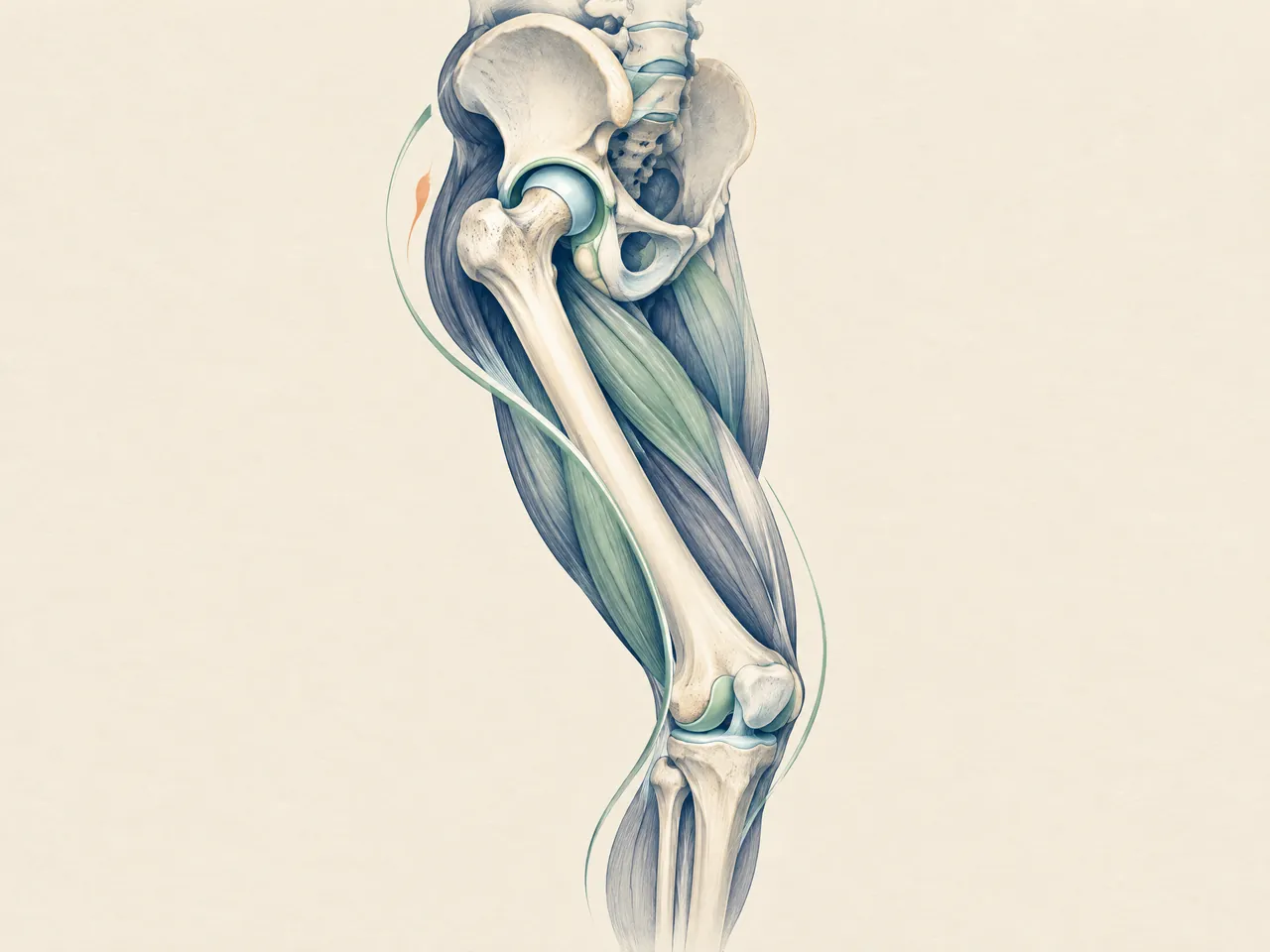
The short answer
For mild knee pain without a major injury, locking, deformity, inability to bear weight, or a hot red knee with fever or chills, reduce the activities that clearly worsen symptoms and keep movement gentle. A lying knee bend can be a low-load option: slide the heel towards you only as far as is comfortable, pause briefly, then straighten. Stop for new or increasing pain, or pain that is worse the next morning, and seek advice if symptoms persist.
Transparent pricing
See the fees.
Choose your care.
Explore our complete official price list, including first-trial prices, regular prices, packages and branch-specific options.
Opening WhatsApp prepares an enquiry; it does not send a message, take payment or confirm an appointment. Suitability and individual arrangements are confirmed during consultation.
Pain care
All prices in HKDExtracorporeal shockwave treatment
Shockwave treatment for deep-tissue and fascial care. The Kwun Tong clinic offers the multi-area options shown below.
Priced by branch
Branch-specific pricing
Prince Edward: HK$250 per area
Kwun Tong: HK$250 for 1 area / HK$450 for 2 areas / HK$600 for 3 areas
Pain care (manual therapy)
Includes Chinese medicine musculoskeletal assessment, manual joint techniques and tui na.
HK$580 (single session)
Chinese medicine musculoskeletal assessment
Pain care (acupuncture and manual therapy)
Combines acupuncture and manual therapy.
HK$680 (single session)
Combined care
Hair and scalp
All prices in HKDScalp health and hair-loss management
Includes AI scalp analysis, deep scalp and follicle cleansing, and scalp oil-control care.
HK$380 (first trial)
Regular price: HK$680
- 6 sessions: HK$3,480 (HK$580 per session)
- 12 sessions: HK$5,760 (HK$480 per session)
- 20 sessions: HK$8,600 (HK$430 per session)
- 30 sessions: HK$11,400 (HK$380 per session)
Hair acupuncture and Chinese herbal medicine package
Includes scalp acupuncture and 3 days of Chinese herbal medicine that does not require decoction.
HK$580 (single session)
Registered Chinese Medicine Practitioner consultation
- 6 sessions: HK$3,180 (HK$530 per session)
- 12 sessions: HK$5,760 (HK$480 per session)
- 20 sessions: HK$8,600 (HK$430 per session)
- 30 sessions: HK$11,400 (HK$380 per session)
Combined hair and scalp treatment
Combines acupuncture and Chinese herbal medicine with salon-level scalp and follicle care. Packages include complimentary hair-care shampoo and serum.
HK$1,260 (single session)
Combined treatment
- 8 sessions: HK$8,640 (HK$1,080 per session)
- 16 sessions: HK$15,680 (HK$980 per session)
- 20 sessions: HK$18,600 (HK$930 per session)
- 30 sessions: HK$26,400 (HK$880 per session)
Weight management
All prices in HKDFull-body acupoint embedding for weight management
Includes full-body acupoint embedding. Packages include complimentary Chinese herbal medicine for weight management, with the number of included days scaled to the package. Embedding material and the individual treatment arrangement are confirmed during consultation; this is not a cosmetic thread lift.
HK$980 (single session)
No trial session
- 10 sessions: HK$7,800 (HK$780 per session)
- 20 sessions: HK$14,600 (HK$730 per session)
- 30 sessions: HK$20,400 (HK$680 per session)
Facial acupuncture
All prices in HKDFacial acupuncture (basic)
Includes facial acupuncture and meridian-based facial care, including care for facial puffiness.
HK$480 (first trial)
Regular price: HK$680
- 10 sessions: HK$5,200 (HK$520 per session)
- 20 sessions: HK$9,600 (HK$480 per session)
- 30 sessions: HK$13,500 (HK$450 per session)
Facial acupuncture (advanced)
Includes enhanced facial acupuncture with a specially formulated moisturising mask and serum.
HK$780 (first trial)
Regular price: HK$1,180
- 10 sessions: HK$9,000 (HK$900 per session)
- 20 sessions: HK$16,600 (HK$830 per session)
- 30 sessions: HK$23,400 (HK$780 per session)
Chinese medicine
All prices in HKDAcupuncture and Chinese herbal medicine package
Includes a Chinese medicine consultation with pulse assessment, body acupuncture and 3 days of Chinese herbal granules that do not require decoction.
HK$580 (single session)
Chinese medicine consultation with pulse assessment
Knee Pain Self-Care, Knee Pain Exercises and Gentle Exercises for Knee Pain: Start Safely
Start with a practical safety check, not an exercise target. Think about how the problem began and what the knee can do now. Mild discomfort that developed gradually and still allows controlled walking is different from a sudden injury followed by immediate swelling or an inability to put weight through the leg. A minor ache may settle when standing time, kneeling, deep bending, running, or repeated stairs are scaled back. It does not prove that the cause is minor, so keep watching the pattern instead of attaching a label to it. The NHS lists problems such as sprains, tendon problems, ligament or meniscus injuries, osteoarthritis, bursitis, gout, and infection among the possible causes of knee pain. [1]
Write down a few useful observations before changing several things at once: whether pain came after a twist, a fall, unfamiliar activity, or no obvious event; whether it is linked to stairs, sitting-to-standing, walking, or rest; whether there is swelling, warmth, catching, or a sense of instability; and whether it is affecting sleep or ordinary tasks. If pain feels mainly around the kneecap, our guide to pain in front of the knee may help you describe the pattern more precisely. A description is useful for a consultation, but it should not be used to diagnose a tendon, ligament, cartilage, or arthritis problem at home.
Knee Pain Self-Care, Knee Pain Exercises and Gentle Exercises for Knee Pain: Check Warning Signs First
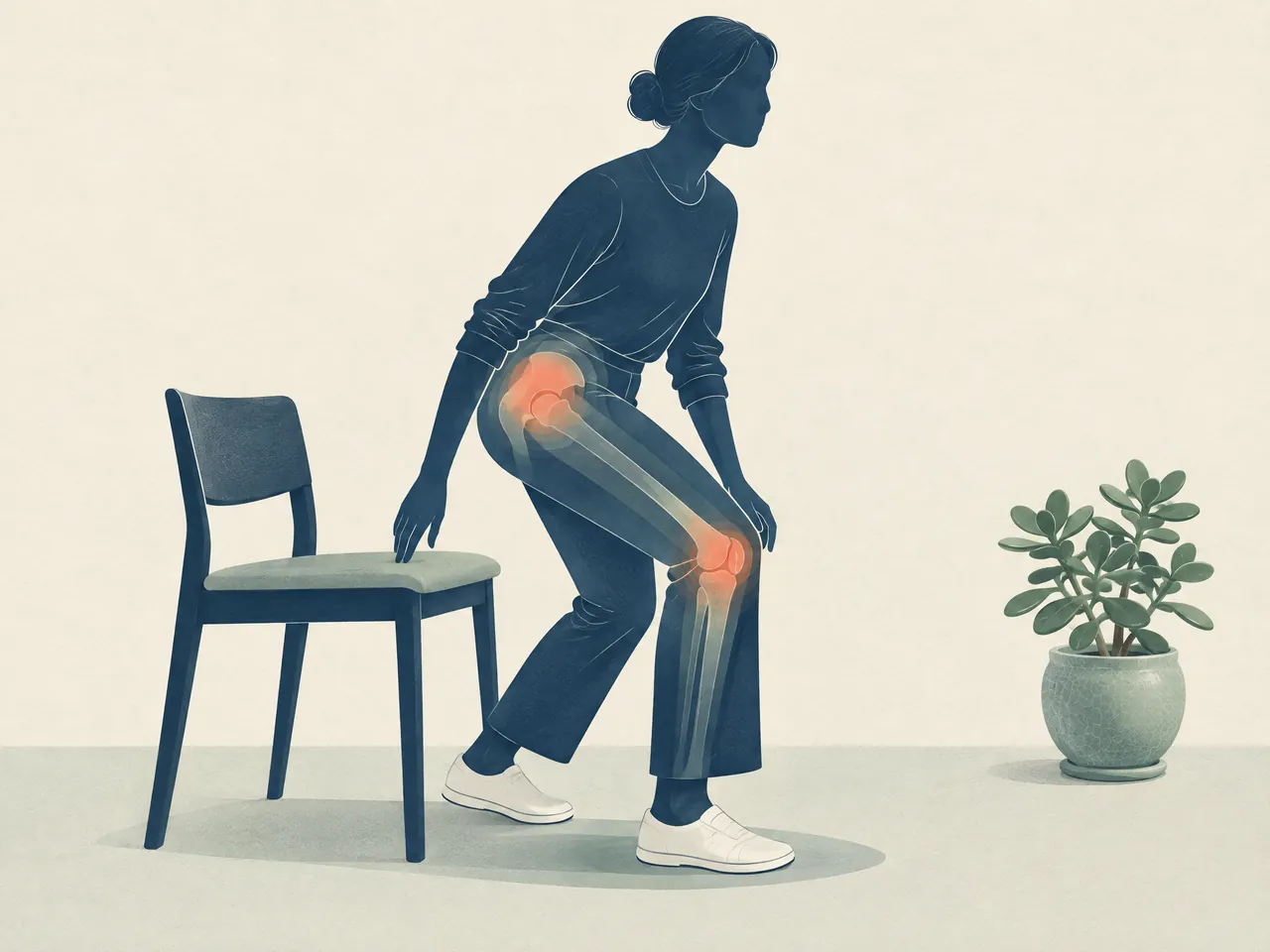
Do not begin generic knee pain exercises after a major impact, a fall from height, or a forceful twist with rapid swelling. Seek urgent assessment if the knee has changed shape, is severely painful, cannot move, cannot bear weight, locks, gives way, or is painfully clicking. A red, hot knee with a high temperature, chills, or feeling unwell also needs urgent medical attention because infection is one possible concern. [1] [3] These signs matter more than the exact place you feel pain.
People with a diagnosed knee condition, a recent operation, or specific post-injury restrictions should follow the plan given by their treating team rather than copy a general exercise online. The same is true when a knee has been worsening quickly, or when a new symptom does not fit the usual pattern. Self-care is a way to respond cautiously while arranging help when appropriate; it is not a test to prove that a knee is safe.
Knee Pain Self-Care, Knee Pain Exercises and Gentle Exercises for Knee Pain: Adjust Activity Without Forcing Movement
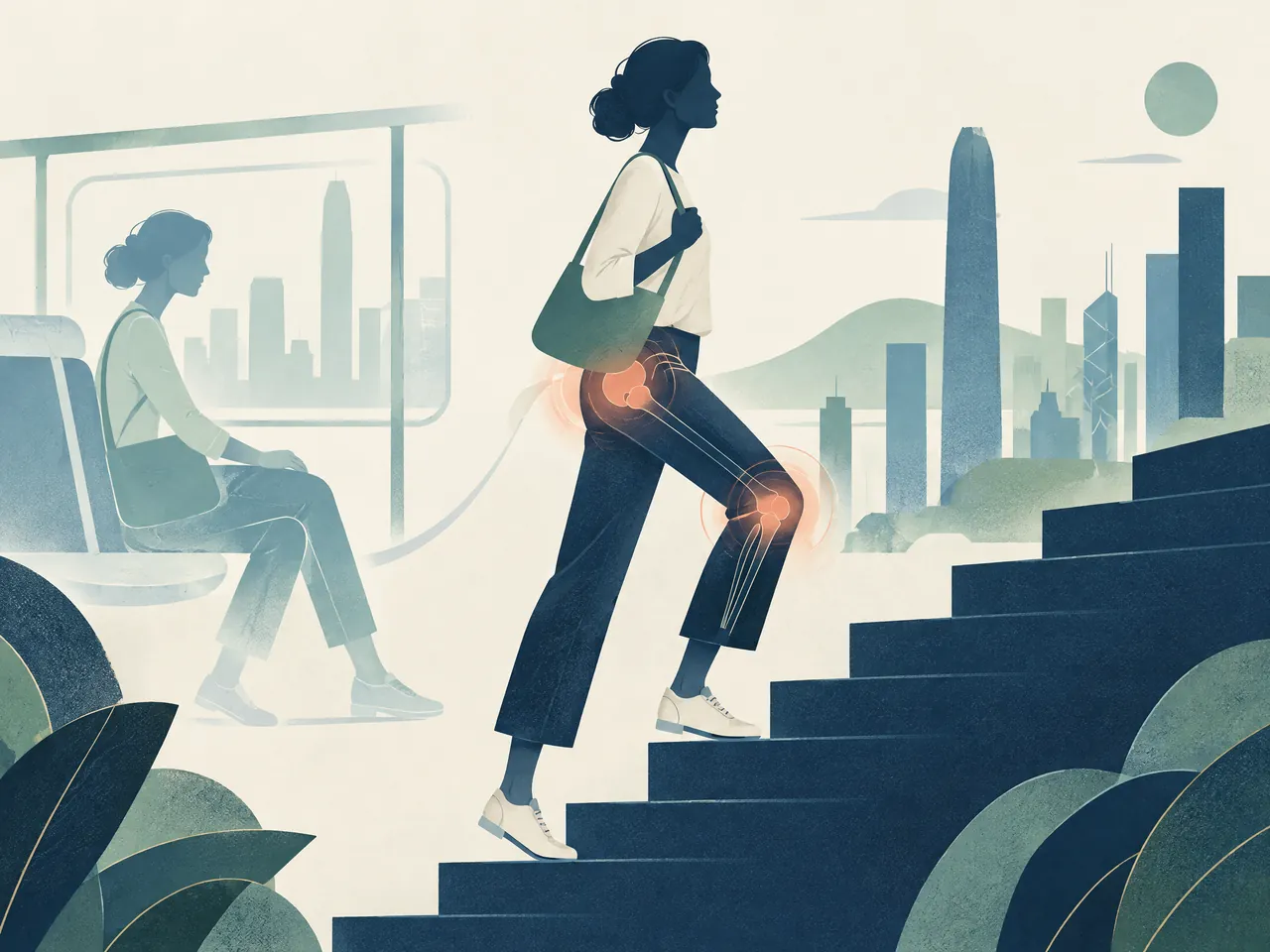
Adjust the activity that irritates the knee before deciding that all activity is harmful. On a busy Hong Kong day, that might mean breaking up long periods of standing, choosing a lift where available, using a handrail on stairs, or taking shorter and flatter walking routes for a short time. NHS Inform advises reducing activity while moving as symptoms allow and avoiding long periods on your feet early in a new knee problem. [2] The aim is not to make the knee completely still; it is to find a manageable amount of movement without repeatedly provoking it.
Choose one change, then observe what happens later that day and the next morning. If a journey involving many stairs is predictably sore, reduce stair trips and avoid adding a new squat routine on the same day. If sitting has left the knee stiff, rise slowly, take a brief easy walk, and assess the response rather than forcing a deep bend. Readers trying to map symptoms by area can also use knee pain location as a vocabulary guide for an assessment conversation.
Compare your options
| Situation | First low-load adjustment | What to monitor | When to change course |
|---|---|---|---|
| Mild ache after a long period of standing | Break standing time into shorter blocks; sit or change position before pain builds. | Whether easier pacing prevents a later flare or next-morning worsening. | Seek advice if pain persists for weeks, worsens, or limits normal walking. [1] |
| Stiffness after sitting | Stand up slowly, take a short easy walk, or use a small comfortable lying knee bend. | Whether movement settles stiffness without increasing pain later. | Stop the exercise if it causes new pain or leaves the knee worse overall. [4] |
| Recent injury with swelling | Reduce load and consider a wrapped cold pack for comfort; avoid testing the knee with sport or deep bends. | Increasing swelling, inability to move or bear weight, or change in shape. | Get urgent assessment for severe pain, deformity, inability to bear weight, locking, or giving way. [1] |
| Hot, red, tender knee or feverish illness | Do not rely on heat, exercise, or a home routine to manage it. | Temperature, chills, feeling unwell, and rapid change in pain or swelling. | Seek urgent medical assessment because infection is one possible concern. [1] |
On smaller screens, scroll the table sideways to compare all columns.
Knee Pain Self-Care, Knee Pain Exercises and Gentle Exercises for Knee Pain: A Low-Load Approach
Low-load does not mean that every exercise is suitable for every painful knee. It means starting with a position that lets you control the range and stop easily. A bed or other stable, safe surface can remove the balance and weight-bearing demands of standing exercises. Do not use this page to decide that a straight-leg raise, lunge, half-squat, resistance band, or cycling programme is the correct first exercise. Those choices depend on the source of pain, movement, strength, recent injury, and individual goals.
The comparison below is a way to choose a cautious response for common day-to-day situations. It is not a diagnosis chart and it cannot replace an examination. In particular, a sudden change in function or a prominent warning sign moves the situation out of ordinary self-care. For a wider explanation of selecting activity, see What exercises are safe for knee pain?.
Knee Pain Self-Care, Knee Pain Exercises and Gentle Exercises for Knee Pain: Try a Comfortable Lying Knee Bend
The lying knee bend is a controlled movement, sometimes called a heel slide. Lie on a stable bed or safe floor surface with both knees comfortably straight. Slowly slide the foot of the sore side along the surface towards you, allowing the knee to bend only as far as is comfortable. Pause for 2 seconds, then slowly slide the foot back until the leg is comfortably straight. There is no need to pull the leg with your hands or press the knee straight at the end range. These are the core instructions published by NHS Inform. [4]
The right starting amount is the amount you can repeat with control, not a number copied from another person. Begin with a small bend and a small number of repetitions. Slow the movement, reduce the bend, or rest longer if it becomes uncomfortable. NHS Inform suggests building exercises gradually and notes that small amounts spread through the day can be a useful starting approach. [4] Keep the floor clear, avoid a rolling chair or unstable mattress edge, and stop immediately if the exercise produces a new symptom or makes an existing symptom distinctly worse.
Knee Pain Self-Care, Knee Pain Exercises and Gentle Exercises for Knee Pain: Monitor Symptoms After Movement
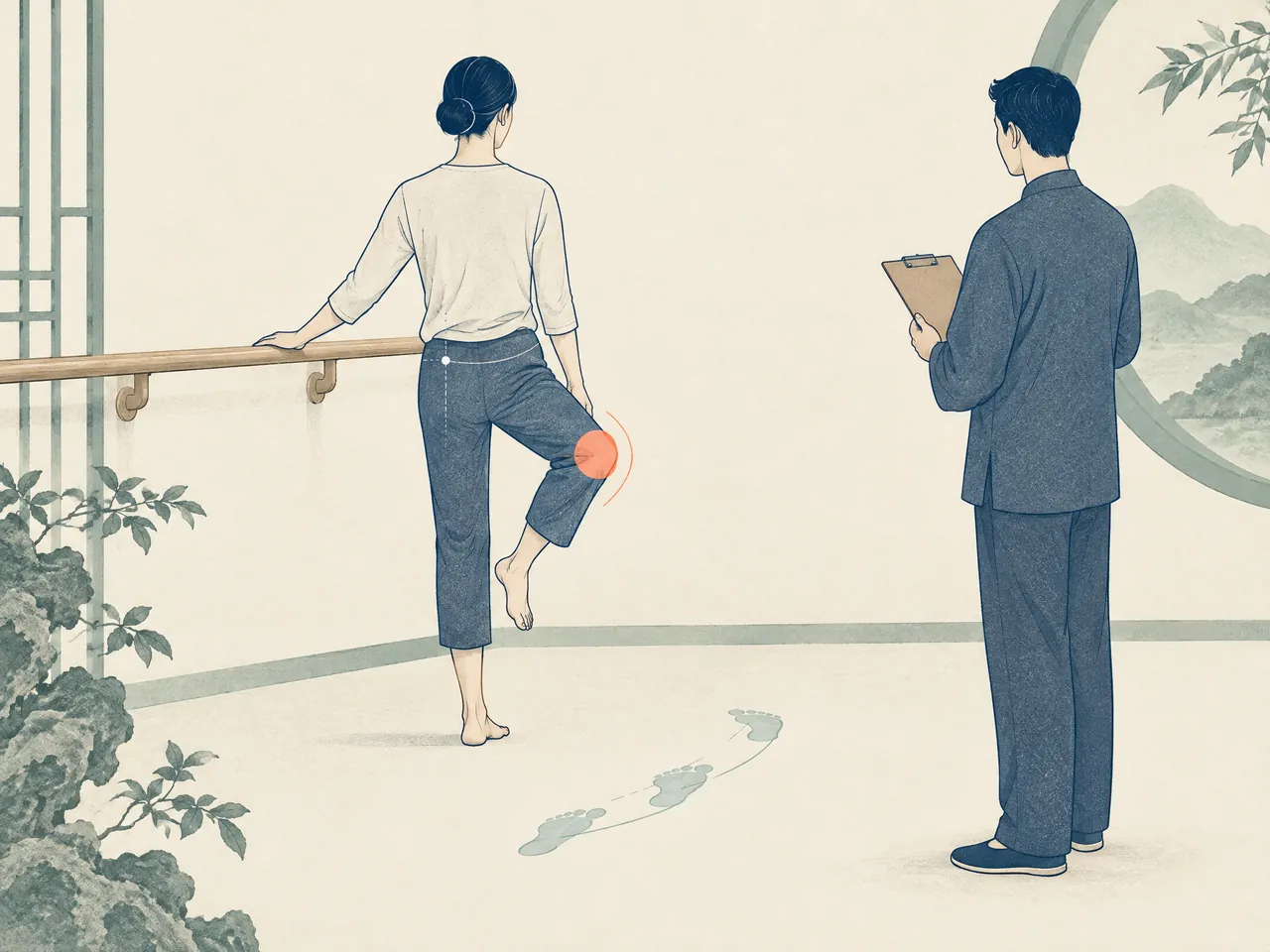
Use the response after movement as feedback. Some unfamiliar movement may feel mildly uncomfortable at first, but the exercise should not leave your existing knee pain worse overall or worse the next morning. [4] If symptoms flare, return to the last comfortable level by reducing the range, number of repetitions, pace, or frequency. Avoid the tempting pattern of adding more repetitions each time the knee feels slightly better, then compensating with complete rest after it becomes more sore.
A simple note can make the pattern clearer: record the activity, the knee’s response during it, symptoms later that day, and the next morning. Include swelling, warmth, confidence when walking, and whether routine tasks changed. If an ice pack or heat pack is being considered, choose based on the situation rather than habit: ice may be more suitable for an injury-related problem, while heat may be tried when there is no swelling and the symptoms are not from a recent injury. Keep a towel barrier between the skin and the pack, and stop if skin becomes more red, discoloured, blistered, or painful. [2] Our knee pain ice or heat guide covers that choice in more detail.
Knee Pain Self-Care, Knee Pain Exercises and Gentle Exercises for Knee Pain: When to Seek Advice
Arrange a medical assessment if knee pain is not improving after a few weeks, is getting worse rather than settling, keeps interfering with normal walking, sleep, or work, or repeatedly returns when you resume ordinary activity. Bring the notes you made: the onset, any injury, pain location, activity triggers, swelling, and the effect of gentle movement. This information helps a clinician decide what needs examining. Do not assume that pain on the inside, outside, front, or back of the knee identifies one specific structure; knee pain can arise from the joint itself or nearby ligaments, tendons, or bursae. [3]
If you have already been diagnosed with knee osteoarthritis, management should be tailored to symptoms and function. NICE identifies therapeutic exercise and, when appropriate, weight management as core treatments; it recommends tailored exercise and says supervised sessions may be considered. [5] That guidance is for diagnosed osteoarthritis, not an instruction for every reader with knee pain to lose weight or follow the same programme. It also states that acupuncture or dry needling should not be offered to manage osteoarthritis. [5]
Knee Pain Self-Care, Knee Pain Exercises and Gentle Exercises for Knee Pain: Understand Possible Causes
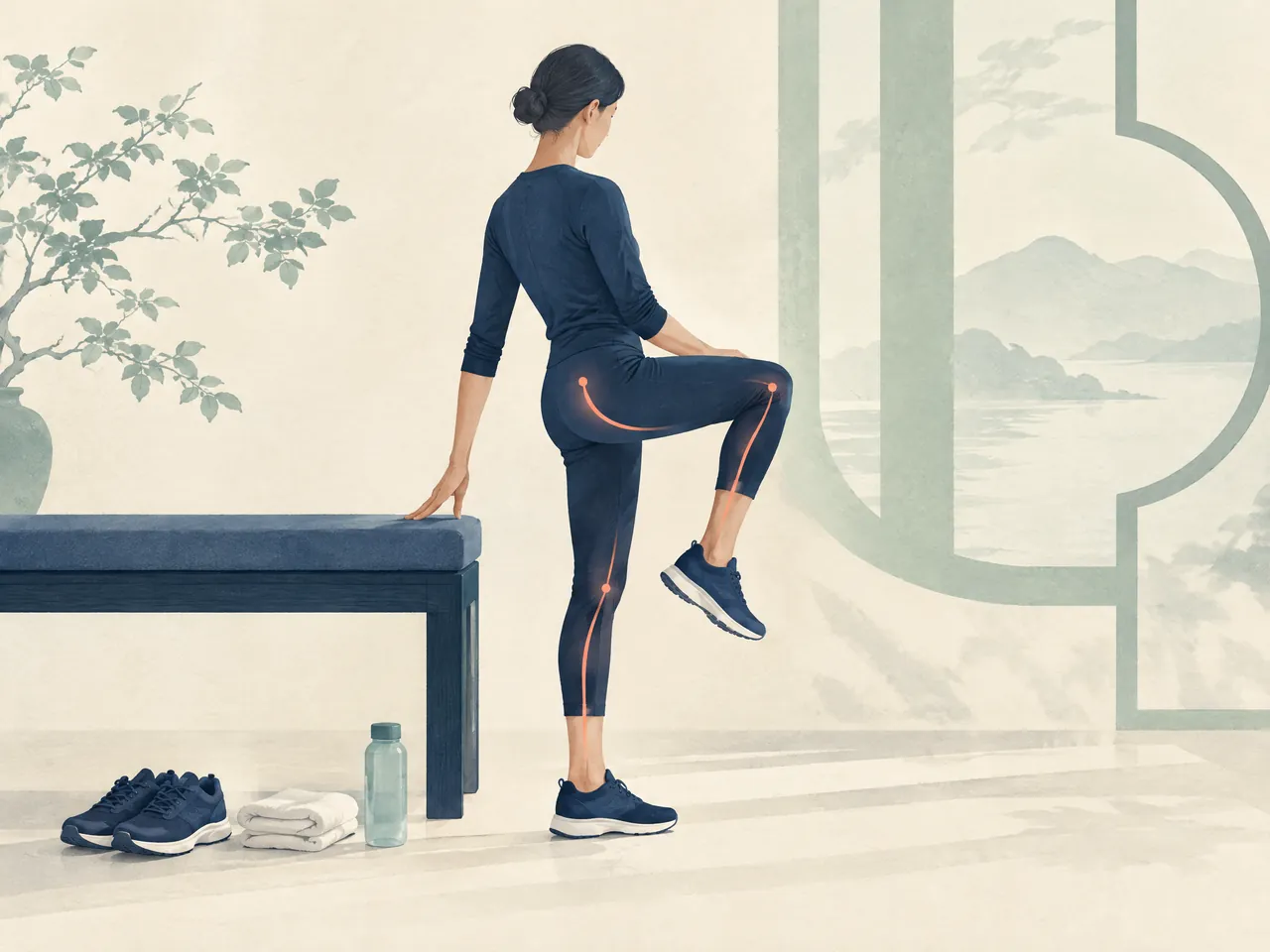
Knee pain is a symptom rather than a single condition. A twist or overuse can be linked with a sprain or tendon problem; instability or difficulty straightening after injury can occur with ligament, tendon, or meniscus damage; stiffness in both knees may have a different pattern from a sudden hot, red attack. These are examples of why the history and examination matter. The NHS advises against self-diagnosis because many conditions can cause similar symptoms. [1]
The location of pain is still worth describing carefully. Say whether it is in front of the kneecap, on the inner or outer side, behind the knee, or diffuse; explain whether stairs, kneeling, standing from a chair, walking downhill, or prolonged sitting changes it. Also mention what you can still do safely. This turns a vague statement of knee pain into information that can guide an assessment without pretending to identify the cause yourself.

Knee Pain Self-Care, Knee Pain Exercises and Gentle Exercises for Knee Pain: Discuss Ongoing Symptoms
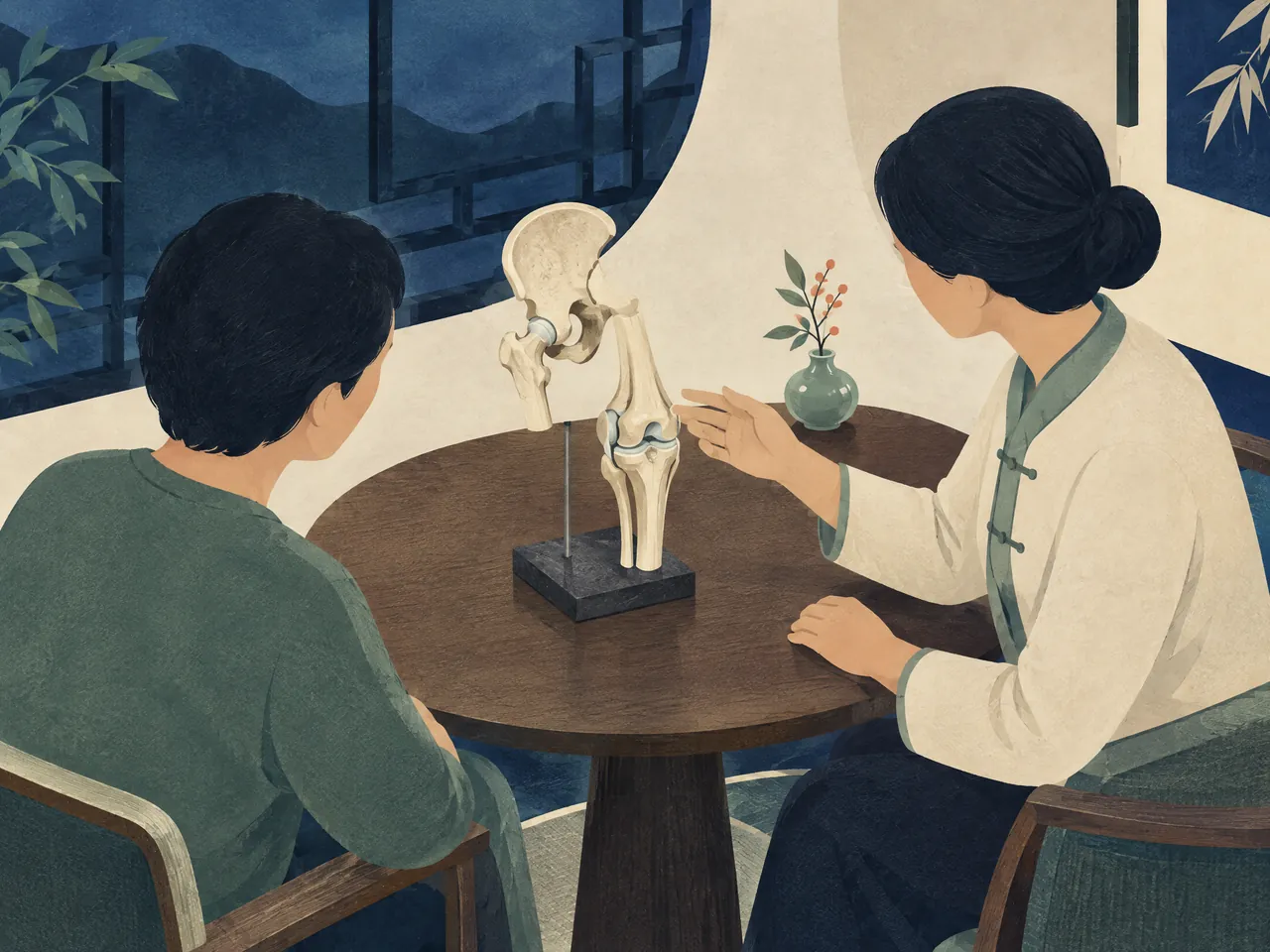
For ongoing symptoms, ask what assessment is appropriate before committing to a treatment or exercise plan. You might ask which movements to continue, what changes should trigger earlier review, whether a rehabilitation programme needs supervision, and how the plan will be adjusted if walking or work remains difficult. If traditional Chinese medicine is part of the conversation, it should be discussed alongside a clear understanding of the suspected medical cause and warning signs. Traditional pattern terms used in a Chinese medicine consultation are not the same as a modern medical diagnosis.
TCM Lab can be contacted on WhatsApp at +852 6940 5663 to enquire about an appointment and discuss ongoing knee symptoms. You may also review location information for the Chinese medicine clinic Prince Edward or the Kwun Tong Chinese medicine clinic. Bring prior diagnoses, imaging reports if you have them, medication details, and a short symptom record. This supports a more focused discussion, but urgent signs should be assessed promptly rather than waiting for a routine appointment.
Care and health guide
Knee discomfort: care information
This directory brings together services, reading, and visit information related to knee discomfort, to help you prepare questions for a consultation.
When knee discomfort affects your day, noting when it occurs, its relation to activity, and what you have already tried can help prepare a consultation; Chinese medicine pain management Hong Kong is a relevant service or reading entry point.
Individual circumstances differ, and acupuncture Hong Kong offers related information to help you understand options and prepare questions.


Your questions, answered
Frequently asked questions
Should I use heat or ice for knee pain self-care?
For an injury-related knee problem, ice may be the more suitable option. If there is no swelling and symptoms are not related to a recent injury, heat may help some people manage discomfort. Never put either directly on the skin: use a towel barrier, stop for skin irritation or blistering, and avoid heat or ice if you have circulation or sensation problems unless a clinician says it is suitable. [2]
Should I stop all movement while doing knee pain exercises?
Not usually, if there are no warning signs. Reduce activities that clearly provoke symptoms and keep movement within a comfortable range instead of forcing the knee or staying inactive for long periods. Gentle movement is not a reason to ignore a knee that locks, gives way, cannot bear weight, has major swelling or deformity, or is hot and red with feverish illness. [1]
When should I stop gentle exercises for knee pain and seek help?
Stop if an exercise causes new pain, makes symptoms progressively worse, or leaves existing pain worse overall or worse the next morning. Seek urgent help after major trauma, with a deformed knee, inability to bear weight or move the knee, locking or giving way, severe swelling, or a hot red knee with fever or chills. [1] [4]
Can acupuncture cure my knee pain?
No treatment can be presented as a cure for every cause of knee pain. The cause should be assessed first, especially after injury or when warning signs are present. For diagnosed osteoarthritis, NICE advises not offering acupuncture or dry needling to manage the condition. [5] Discuss any option with an appropriately qualified healthcare professional in the context of your diagnosis, function, and safety needs.
Sources and further information
- [1] NHS: Knee pain
Referenced for: Supports home-care wording, urgent warning signs, and the range of possible causes; it does not diagnose an individual reader.
- [2] NHS Inform: Knee problems
Referenced for: Supports activity adjustment, movement as symptoms allow, and heat or ice safety wording.
- [3] Mayo Clinic: Knee pain symptom
Referenced for: Supports the distinction between joint and surrounding-soft-tissue causes and clinical triage language.
- [4] NHS Inform: Exercises for knee problems
Referenced for: Supports the lying knee bend steps, gradual progression, and monitoring symptoms after exercise.
- [5] NICE NG226: Osteoarthritis in over 16s: diagnosis and management
Referenced for: Supports statements limited to diagnosed osteoarthritis, including therapeutic exercise, appropriate weight management, and the recommendation not to offer acupuncture or dry needling for osteoarthritis.