
TCM Lab · Health reading
Is Acupuncture Suitable for Everyone? What Is Traditional Chinese Medicine and What to Expect at a First TCM Consultation
Published Updated
Acupuncture is not suitable for everyone, and a first visit should not begin with choosing needles, herbs or any other method from a symptom list. Traditional Chinese medicine (TCM) is a broad clinical approach that can consider your main concern alongside its pattern over time, daily demands, sleep, digestion, past illness, medicines and other relevant context. In Hong Kong, a thoughtful consultation gives you space to describe what has changed, ask whether acupuncture is a sensible option, and understand when another form of assessment should come first. It does not promise that a particular treatment will work. The purpose of the first consultation is to make an informed next-step decision, including the possibility that acupuncture is not the right choice now.
Appointments are confirmed through WhatsApp. If you have language requirements, please mention them in your enquiry.

The short answer
No. Acupuncture suitability depends on the nature and severity of the problem, your health history, current medicines and individual precautions. A first TCM consultation usually explores these details before any method is selected. Bring a clear symptom timeline and relevant reports, and mention pregnancy, allergies, bleeding concerns, skin problems and all medicines or supplements. TCM should not replace urgent assessment or necessary conventional care.
Transparent pricing
See the fees.
Choose your care.
Explore our complete official price list, including first-trial prices, regular prices, packages and branch-specific options.
Opening WhatsApp prepares an enquiry; it does not send a message, take payment or confirm an appointment. Suitability and individual arrangements are confirmed during consultation.
Chinese medicine
All prices in HKDAcupuncture and Chinese herbal medicine package
Includes a Chinese medicine consultation with pulse assessment, body acupuncture and 3 days of Chinese herbal granules that do not require decoction.
HK$580 (single session)
Chinese medicine consultation with pulse assessment
Hair and scalp
All prices in HKDScalp health and hair-loss management
Includes AI scalp analysis, deep scalp and follicle cleansing, and scalp oil-control care.
HK$380 (first trial)
Regular price: HK$680
- 6 sessions: HK$3,480 (HK$580 per session)
- 12 sessions: HK$5,760 (HK$480 per session)
- 20 sessions: HK$8,600 (HK$430 per session)
- 30 sessions: HK$11,400 (HK$380 per session)
Hair acupuncture and Chinese herbal medicine package
Includes scalp acupuncture and 3 days of Chinese herbal medicine that does not require decoction.
HK$580 (single session)
Registered Chinese Medicine Practitioner consultation
- 6 sessions: HK$3,180 (HK$530 per session)
- 12 sessions: HK$5,760 (HK$480 per session)
- 20 sessions: HK$8,600 (HK$430 per session)
- 30 sessions: HK$11,400 (HK$380 per session)
Combined hair and scalp treatment
Combines acupuncture and Chinese herbal medicine with salon-level scalp and follicle care. Packages include complimentary hair-care shampoo and serum.
HK$1,260 (single session)
Combined treatment
- 8 sessions: HK$8,640 (HK$1,080 per session)
- 16 sessions: HK$15,680 (HK$980 per session)
- 20 sessions: HK$18,600 (HK$930 per session)
- 30 sessions: HK$26,400 (HK$880 per session)
Weight management
All prices in HKDFull-body acupoint embedding for weight management
Includes full-body acupoint embedding. Packages include complimentary Chinese herbal medicine for weight management, with the number of included days scaled to the package. Embedding material and the individual treatment arrangement are confirmed during consultation; this is not a cosmetic thread lift.
HK$980 (single session)
No trial session
- 10 sessions: HK$7,800 (HK$780 per session)
- 20 sessions: HK$14,600 (HK$730 per session)
- 30 sessions: HK$20,400 (HK$680 per session)
Facial acupuncture
All prices in HKDFacial acupuncture (basic)
Includes facial acupuncture and meridian-based facial care, including care for facial puffiness.
HK$480 (first trial)
Regular price: HK$680
- 10 sessions: HK$5,200 (HK$520 per session)
- 20 sessions: HK$9,600 (HK$480 per session)
- 30 sessions: HK$13,500 (HK$450 per session)
Facial acupuncture (advanced)
Includes enhanced facial acupuncture with a specially formulated moisturising mask and serum.
HK$780 (first trial)
Regular price: HK$1,180
- 10 sessions: HK$9,000 (HK$900 per session)
- 20 sessions: HK$16,600 (HK$830 per session)
- 30 sessions: HK$23,400 (HK$780 per session)
Pain care
All prices in HKDExtracorporeal shockwave treatment
Shockwave treatment for deep-tissue and fascial care. The Kwun Tong clinic offers the multi-area options shown below.
Priced by branch
Branch-specific pricing
Prince Edward: HK$250 per area
Kwun Tong: HK$250 for 1 area / HK$450 for 2 areas / HK$600 for 3 areas
Pain care (manual therapy)
Includes Chinese medicine musculoskeletal assessment, manual joint techniques and tui na.
HK$580 (single session)
Chinese medicine musculoskeletal assessment
Pain care (acupuncture and manual therapy)
Combines acupuncture and manual therapy.
HK$680 (single session)
Combined care
Is Acupuncture Suitable for Everyone? What Is Traditional Chinese Medicine and What to Expect at a First TCM Consultation: Choosing an Approach
The useful question is rarely simply ‘Can acupuncture help?’ It is ‘What is happening, what needs checking, and which option is proportionate to the situation?’ A stiff neck after a long week at a screen, a long-standing pattern of low-back discomfort, and sudden pain after a fall may all sound like pain, yet they call for different conversations. The first may involve posture; the second needs a careful history; the third may need prompt medical assessment.
Traditional Chinese medicine is not one procedure. It can include acupuncture, Chinese herbal products, movement or self-care discussion, and manual approaches; the methods are not interchangeable. The Hong Kong Health Bureau describes Chinese medicine consultation through a holistic lens, considering the state of the body rather than one symptom, and separately identifies Internal Medicine in CM and Acupuncture and Moxibustion in CM as service categories [4]. That wording is useful because it frames the consultation as an assessment before an intervention. Your reason for attending may be very focused, but the practitioner may reasonably ask about related changes that influence whether it is appropriate to proceed or to refer elsewhere.

Is Acupuncture Suitable for Everyone? What Is Traditional Chinese Medicine and What to Expect at a First TCM Consultation: Start with Symptoms and Context
Start by putting your concern into a timeline. Note when it first appeared, whether the onset was gradual or sudden, where you feel it, what a typical day looks like, and what changes it. For example, a desk worker might notice a dull ache that rises after meetings and eases with movement; a runner may notice discomfort only at a particular stage of training; someone with headaches may see a relationship with sleep, meals or a new medicine. These observations do not diagnose the cause, but they make a consultation more precise than saying that you feel ‘tight’ or ‘unwell’.
Context includes what has already been tried and what happened next. Tell the practitioner about exercises, rest, over-the-counter products, physiotherapy, previous acupuncture, scans, blood tests and any diagnosis you have received. It is equally useful to say if you are worried because the pattern is new, intensifying, waking you at night or affecting ordinary tasks. A consultation is not a test of how well you can use medical words. Plain details about function, timing and change often give a safer starting point than an assumed explanation.
Is Acupuncture Suitable for Everyone? What Is Traditional Chinese Medicine and What to Expect at a First TCM Consultation: Why Assessment Comes First
Assessment comes first because similar symptoms can have very different explanations and levels of urgency. It also prevents a treatment preference from obscuring information that matters, such as a recent injury, fever, unexplained weight change, progressive weakness, chest symptoms, severe shortness of breath or a sudden neurological change. These are examples of reasons not to wait for a routine TCM appointment; seek urgent medical care when symptoms are severe, sudden or alarming. TCM can be part of a broader care conversation, but it is not a substitute for emergency treatment or investigations that are needed to clarify a serious problem.
The assessment also makes room for your goals and boundaries. One person may want to understand options before deciding; another may be seeking support alongside an existing care plan; a third may not wish to have needles. Say this directly. A practitioner can explain the reasoning for or against a proposed approach, what sensations or after-effects might be expected, and what information is still missing. You can also check credentials: the Hong Kong Government provides a route to the list of registered Chinese medicine practitioners and to Chinese medicine clinic information [2]. That is a practical part of choosing care, not an afterthought.
Compare your options
| What you notice or know | Helpful detail to bring | Why it may affect the discussion | A sensible next step |
|---|---|---|---|
| A pain, tension or functional discomfort | Onset, location, triggers, what eases it and impact on work, sleep or movement | Helps distinguish a stable pattern from a new or changing concern | Explain the timeline before asking for a particular method |
| Previous tests or treatment | Relevant reports, scans, diagnoses and what you have already tried | Prevents important background from being missed | Bring copies or photos if available |
| Medicines, herbs or supplements | Names, doses where known, labels and recent changes | May alter safety considerations, especially if herbal medicine is discussed | Share the complete list, not only prescriptions |
| Pregnancy, bleeding, skin or chronic-health concerns | Current status and any clinician advice already given | May mean a method needs adapting, delaying or avoiding | Mention it before any treatment begins |
| Unexplained, sudden or worsening symptoms | When the change began and associated warning signs | May indicate a need for urgent or conventional medical assessment | Seek timely medical care rather than waiting for a routine visit |
On smaller screens, scroll the table sideways to compare all columns.
Is Acupuncture Suitable for Everyone? What Is Traditional Chinese Medicine and What to Expect at a First TCM Consultation: Common Methods
Once the consultation has clarified the question, a practitioner may discuss more than one route. Acupuncture involves the use of thin needles at selected points; moxibustion is a separate heat-based method that may be discussed in some settings; herbal medicine and manual care have different practical demands and safety questions. Do not assume that a recommendation for one means you need all of them. Asking what each option is intended to address, why it is being considered for your circumstances, and what alternatives exist keeps the discussion grounded. A focused explanation of acupuncture and moxibustion may help you prepare questions, but the method selected should follow the face-to-face assessment.
Evidence and expectations deserve a calm, specific conversation. The U.S. National Center for Complementary and Integrative Health notes that acupuncture and other TCM approaches have been studied, but findings vary by intervention and condition; it also cautions against using TCM to replace or delay conventional care [1]. This does not mean a person must choose one system of care against another. It means that the goal, diagnosis, ongoing treatments and evidence relevant to the individual problem should be visible before claims are made. Be cautious of anyone who guarantees a result or treats a single method as a universal answer.

Is Acupuncture Suitable for Everyone? What Is Traditional Chinese Medicine and What to Expect at a First TCM Consultation: Acupuncture and Related Care
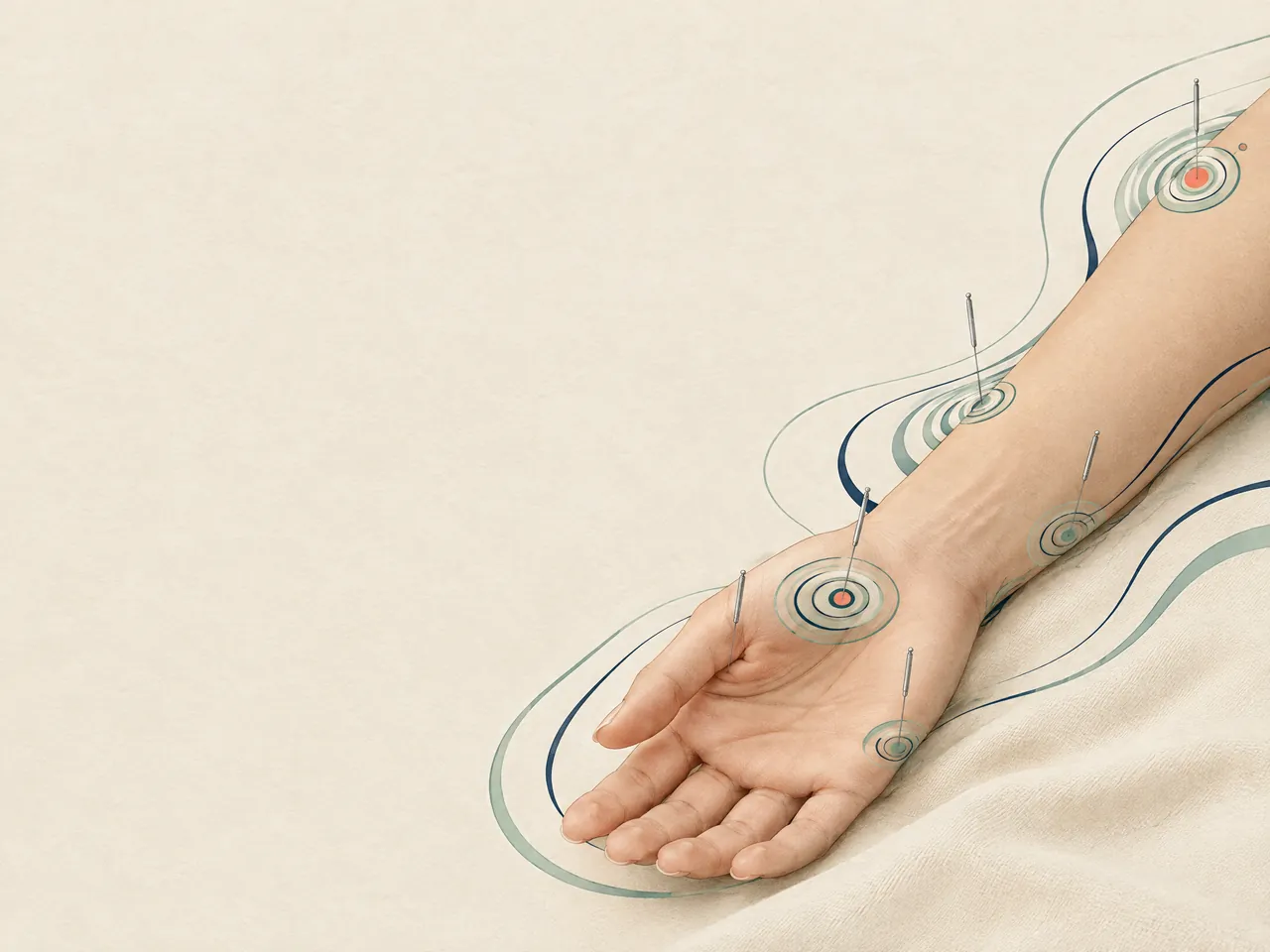
If acupuncture is under consideration, ask what the session would involve and how the plan will be reviewed. The answer should be understandable: where treatment may be applied, whether you need to change position, how you can flag discomfort, and what to do if you feel faint or unwell. A needle procedure is invasive, so clean practice and a full pre-treatment conversation matter. NCCIH reports that complications are relatively uncommon but can be serious when treatment is improperly delivered, including where needles are nonsterile [1]. This is a reason for clear communication and appropriate professional care, not a reason to hide relevant health information.
Moxibustion should not be treated as a decorative add-on to acupuncture. It uses heat and has its own comfort and skin-safety considerations, so it is reasonable to ask why it is proposed and whether there is a reason to avoid it. The comparison in moxibustion vs acupuncture can help you distinguish the two before your appointment. Likewise, a preference for needles, a dislike of heat or a history of skin sensitivity is useful information to share, not something to minimise. The safest plan is the one that makes sense for the person in front of the practitioner.

Is Acupuncture Suitable for Everyone? What Is Traditional Chinese Medicine and What to Expect at a First TCM Consultation: Herbs, Manual Care and Advice
Chinese herbal medicine needs the same full medication conversation as any other product. Bring photographs of labels or the actual list when possible, including prescribed medicines, over-the-counter remedies, vitamins, powders, teas and other supplements. Do not assume that ‘natural’ means compatible with everything else you take. NCCIH describes potential safety issues with some Chinese herbal products, including contamination, undeclared ingredients and adverse effects, and advises people to discuss TCM use with their health-care providers [1]. This is especially important if you are managing a chronic condition or your medication list changes often.
Manual care, which may include Tui-na in the wider Chinese medicine context, and lifestyle discussion are also choices rather than automatic extras. A practitioner may ask about work set-up, activity pattern, sleep, meals and stress because these factors can shape symptoms and what is practical to try. Advice should be realistic: an office worker may be able to vary position between calls, while a carer with little predictable time may need a different plan. For a local first-visit discussion, the pages for an acupuncture consultation Kwun Tong and an acupuncture clinic Prince Edward can help you choose the setting that is more convenient to enquire about.
Is Acupuncture Suitable for Everyone? What Is Traditional Chinese Medicine and What to Expect at a First TCM Consultation: Safety and Preparation
Preparation is not about arriving with a self-diagnosis. It is about making sure the first conversation contains the information that could change the plan. Keep a short list of your main concern, when it began, the change you most want help understanding, past conditions, surgery, allergies and current care. Add every medicine and supplement, not only the ones you think are relevant. If you have imaging, blood-test results, discharge notes or referral letters, bring copies or clear photos. The Chinese Medicine Regulatory Office publishes patient information on Chinese medicine consultation and treatments, which is a useful reminder that patients can ask questions and take an active role in the discussion [3].
On the day, wear or bring clothing that allows the area of concern to be assessed while preserving your comfort and privacy. Allow enough time that you do not need to rush away. If you feel anxious about needles, faint easily, have had an unexpected reaction during a procedure, or would rather discuss options before agreeing to any treatment, say so at the outset. The consultation can still be valuable even if its conclusion is to defer acupuncture or seek further medical input.

Is Acupuncture Suitable for Everyone? What Is Traditional Chinese Medicine and What to Expect at a First TCM Consultation: Risks and Precautions
Some precautions are easy to overlook because they are not the main reason for the visit. Mention pregnancy or the possibility of pregnancy, breastfeeding, a tendency to bleed or bruise, medicines that affect bleeding, a pacemaker or implanted medical device, diabetes, immune suppression, seizures, serious heart or lung disease, current infection, open wounds and skin irritation where treatment might be considered. These details do not automatically rule out every form of care. They give the practitioner the chance to decide whether treatment needs adapting, postponing or avoiding, and whether another clinician should be involved.
After any treatment, follow the individual advice you were given and report a concerning reaction rather than trying to interpret it alone. Local soreness, a small bruise or temporary tiredness can occur after needling, but symptoms that feel severe, unusual or worsening deserve prompt medical advice. The same principle applies to herbs: stop and seek timely advice if you suspect an adverse reaction, and make sure the clinicians involved in your care know what you are taking. A safe consultation does not promise zero risk; it identifies foreseeable issues early and gives you a clear way to respond.

Is Acupuncture Suitable for Everyone? What Is Traditional Chinese Medicine and What to Expect at a First TCM Consultation: Questions to Bring
Useful questions are practical and personal: What are you trying to understand from my symptoms? Why might acupuncture be appropriate or inappropriate today? Are there reasons to seek another assessment first? What does this method involve, what discomforts or risks should I know about, and what changes would mean I should contact a clinician? If herbs are discussed, ask how they fit with your medication list and how you should take them. Write the answers down or bring someone you trust if that makes it easier to remember the plan.
Location is also part of preparation when travel and recovery time are relevant. You can review the Kwun Tong Chinese medicine clinic or the Chinese medicine clinic Prince Edward page before making an enquiry. At TCM Lab, use WhatsApp +852 6940 5663 to describe your main concern, any important precautions and your preferred location; appointments are arranged according to practitioner availability.
Care and health guide
Health service information
This directory brings together services, reading, and visit information related to health services, to help you prepare questions for a consultation.
If you are organising health questions, Chinese medicine clinic Hong Kong is a starting point for learning about related services and preparing for a consultation.
People have different needs; acupuncture Hong Kong provides further reading to help you understand options in your own context.


Your questions, answered
Frequently asked questions
Is acupuncture suitable for everyone?
No. Suitability depends on the concern, possible cause, severity, health history, medicines and precautions. Pregnancy, bleeding or bruising concerns, skin infection, implanted devices and serious ongoing illness are examples of information that should be discussed before a treatment decision.
What is traditional Chinese medicine?
Traditional Chinese medicine is a broad approach that can include acupuncture, Chinese herbal medicine, manual methods and health-maintenance advice. In a consultation, the practitioner may consider symptoms together with their course, health history, current care and daily context rather than selecting a method from one symptom alone.
What should I expect at a first TCM consultation?
Expect questions about your main concern, symptom timeline, past conditions, sleep and daily demands where relevant, current medicines and supplements, and previous tests or treatment. You should have an opportunity to ask about possible options, limits, risks and whether another assessment should happen before treatment.
Can I take Chinese herbs with my usual medicines?
Do not assume that they can be combined without review. Tell the practitioner and your other health-care providers about every prescription, non-prescription medicine, herb and supplement. The full list helps identify potential safety or interaction concerns and supports coordinated care.
Do I need to have acupuncture at the first visit?
No. The first visit can be used to clarify the concern, discuss options and decide whether acupuncture is appropriate. You can say that you prefer information first, have concerns about needles, or want to consider another option after the consultation.
Sources and further information
- [1] NCCIH — Traditional Chinese Medicine: What You Need To Know
Referenced for: Supports the broad description of TCM, the limits of evidence across approaches, acupuncture safety context and the need to discuss complementary care and herbal products with health-care providers.
- [2] GovHK — Chinese Medicine
Referenced for: Supports Hong Kong terminology and the availability of government links to Chinese medicine clinic information and the list of registered Chinese medicine practitioners.
- [3] Chinese Medicine Regulatory Office — Public-health pamphlets
Referenced for: Supports the availability of Hong Kong patient information concerning Chinese medicine consultation, treatments, use of Chinese medicines and adverse reactions.
- [4] Health Bureau, Hong Kong — Chinese Medicine Clinical Services
Referenced for: Supports official Hong Kong terminology for holistic consultation, Internal Medicine in CM, Acupuncture and Moxibustion in CM, Tui-na and related Chinese medicine service categories.