
TCM Lab · Health reading
Can acupuncture help with foot pain? Is foot pain always plantar fasciitis? When should I see a doctor for foot pain?
Published Updated
The useful first question about a sore sole is not simply whether it is plantar fasciitis. It is where the pain sits, when it appears, what changed before it began, and whether the foot is safe to load. A sharp ache near the inner heel on the first few steps after rest may fit a plantar-fascia-related pattern, but pain under the forefoot, burning, a tender bony spot, or pain after an injury calls for a different line of thought. This page helps Hong Kong readers describe the pattern, make sensible footwear and activity adjustments, and recognise when an in-person medical assessment should take priority. Acupuncture can be discussed as supportive care after that sorting process; it is not a way to diagnose every kind of foot pain or to bypass warning signs.
Appointments are confirmed through WhatsApp. If you have language requirements, please mention them in your enquiry.
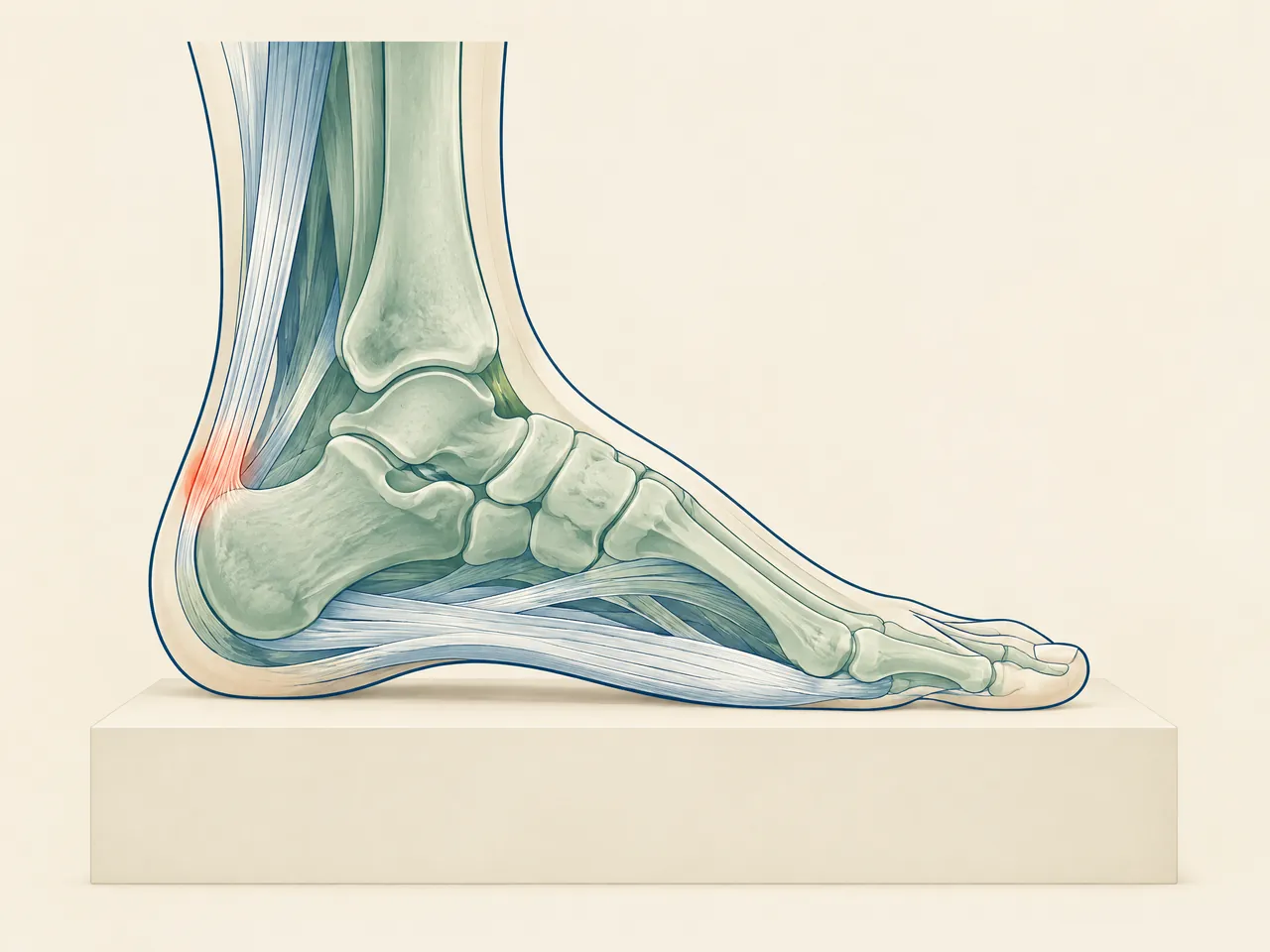
The short answer
Acupuncture may be considered as supportive care for foot pain once the location, load pattern and likely cause have been assessed, but it cannot confirm a diagnosis or guarantee relief. Foot pain is not always plantar fasciitis: heel, arch, forefoot, nerve and injury-related problems can feel different. Seek prompt medical assessment for an inability to bear weight, a significant injury, marked swelling or deformity, numbness, a wound or infection signs, or new foot pain when you have diabetes.
Transparent pricing
See the fees.
Choose your care.
Explore our complete official price list, including first-trial prices, regular prices, packages and branch-specific options.
Opening WhatsApp prepares an enquiry; it does not send a message, take payment or confirm an appointment. Suitability and individual arrangements are confirmed during consultation.
Pain care
All prices in HKDExtracorporeal shockwave treatment
Shockwave treatment for deep-tissue and fascial care. The Kwun Tong clinic offers the multi-area options shown below.
Priced by branch
Branch-specific pricing
Prince Edward: HK$250 per area
Kwun Tong: HK$250 for 1 area / HK$450 for 2 areas / HK$600 for 3 areas
Pain care (manual therapy)
Includes Chinese medicine musculoskeletal assessment, manual joint techniques and tui na.
HK$580 (single session)
Chinese medicine musculoskeletal assessment
Pain care (acupuncture and manual therapy)
Combines acupuncture and manual therapy.
HK$680 (single session)
Combined care
Hair and scalp
All prices in HKDScalp health and hair-loss management
Includes AI scalp analysis, deep scalp and follicle cleansing, and scalp oil-control care.
HK$380 (first trial)
Regular price: HK$680
- 6 sessions: HK$3,480 (HK$580 per session)
- 12 sessions: HK$5,760 (HK$480 per session)
- 20 sessions: HK$8,600 (HK$430 per session)
- 30 sessions: HK$11,400 (HK$380 per session)
Hair acupuncture and Chinese herbal medicine package
Includes scalp acupuncture and 3 days of Chinese herbal medicine that does not require decoction.
HK$580 (single session)
Registered Chinese Medicine Practitioner consultation
- 6 sessions: HK$3,180 (HK$530 per session)
- 12 sessions: HK$5,760 (HK$480 per session)
- 20 sessions: HK$8,600 (HK$430 per session)
- 30 sessions: HK$11,400 (HK$380 per session)
Combined hair and scalp treatment
Combines acupuncture and Chinese herbal medicine with salon-level scalp and follicle care. Packages include complimentary hair-care shampoo and serum.
HK$1,260 (single session)
Combined treatment
- 8 sessions: HK$8,640 (HK$1,080 per session)
- 16 sessions: HK$15,680 (HK$980 per session)
- 20 sessions: HK$18,600 (HK$930 per session)
- 30 sessions: HK$26,400 (HK$880 per session)
Weight management
All prices in HKDFull-body acupoint embedding for weight management
Includes full-body acupoint embedding. Packages include complimentary Chinese herbal medicine for weight management, with the number of included days scaled to the package. Embedding material and the individual treatment arrangement are confirmed during consultation; this is not a cosmetic thread lift.
HK$980 (single session)
No trial session
- 10 sessions: HK$7,800 (HK$780 per session)
- 20 sessions: HK$14,600 (HK$730 per session)
- 30 sessions: HK$20,400 (HK$680 per session)
Facial acupuncture
All prices in HKDFacial acupuncture (basic)
Includes facial acupuncture and meridian-based facial care, including care for facial puffiness.
HK$480 (first trial)
Regular price: HK$680
- 10 sessions: HK$5,200 (HK$520 per session)
- 20 sessions: HK$9,600 (HK$480 per session)
- 30 sessions: HK$13,500 (HK$450 per session)
Facial acupuncture (advanced)
Includes enhanced facial acupuncture with a specially formulated moisturising mask and serum.
HK$780 (first trial)
Regular price: HK$1,180
- 10 sessions: HK$9,000 (HK$900 per session)
- 20 sessions: HK$16,600 (HK$830 per session)
- 30 sessions: HK$23,400 (HK$780 per session)
Chinese medicine
All prices in HKDAcupuncture and Chinese herbal medicine package
Includes a Chinese medicine consultation with pulse assessment, body acupuncture and 3 days of Chinese herbal granules that do not require decoction.
HK$580 (single session)
Chinese medicine consultation with pulse assessment
Can acupuncture help with foot pain? Is foot pain always plantar fasciitis? When should I see a doctor for foot pain? — Read the pattern first
A foot carries body weight thousands of times in ordinary days, so a description such as “pain on the bottom” is a starting point rather than an explanation. Begin with a simple map: heel, inner arch, centre of the sole, ball of the foot, toes, outer border or top. Then add the quality—dull, sharp, bruised, hot, burning, tingling or electric—and whether one spot is tender when pressed. This is more useful than choosing a label from a search result. The same broad term can cover a load-related heel problem, a shoe-pressure issue, an irritated nerve, a joint concern or an injury. The broader foot pain topic explains why location is a practical first sorting tool rather than a diagnosis in itself.
Look for the change that came before the pain. Perhaps a work week involved more standing, a holiday involved more walking, training distance rose quickly, or a familiar pair of shoes became worn, narrow or unsupportive. Equally, note a twist, fall, direct impact or sudden pop. A gradual symptom after repeated loading can often be discussed very differently from acute pain after trauma. Recording this short history before a consultation also prevents the important details being lost when the foot happens to feel better on the day.
Timing provides a second map. Ask whether the first steps after getting out of bed are most uncomfortable, whether the pain settles as you move, and whether it returns after a longer shift or walk. Ask whether it wakes you, occurs while sitting, or only appears on hills, stairs or push-off. None of these patterns can establish a diagnosis online. They can, however, help decide whether a short period of gentle load adjustment is reasonable or whether the symptom needs a clinician to look at the foot. Cleveland Clinic similarly describes location, duration, activity and time-of-day changes as useful questions in assessment [1].

Can acupuncture help with foot pain? Is foot pain always plantar fasciitis? When should I see a doctor for foot pain? — Map the painful area
Pain close to the inner heel that reaches into the arch is often discussed in relation to the plantar fascia, the band of tissue along the sole. Pain focused under the ball of the foot, between toes, on the side of the foot, or on the top deserves a broader differential conversation. A burning, pins-and-needles or electric feeling is especially important to mention because it differs from a simple sore-after-standing description. Cleveland Clinic lists plantar fasciitis among several possible causes of bottom-of-foot and arch pain, alongside issues such as sprains, strains, corns, calluses, bursitis and nerve-related conditions [1]. The aim is not to self-diagnose from that list; it is to avoid assuming that every sole symptom has one cause.
Can acupuncture help with foot pain? Is foot pain always plantar fasciitis? When should I see a doctor for foot pain? — Note timing and load
Use a brief seven-day note rather than relying on memory. Write down the first-step feeling, walking or standing exposure, exercise, footwear, and what made symptoms better or worse later that day. Include whether the other foot is affected and whether pain is changing your gait. This can reveal a repeatable load pattern without turning a diary into a test. If standing is the obvious trigger, the practical next read is What should I do for foot pain after standing or walking?. If pain is escalating despite reducing the provoking activity, the next step is assessment, not ever-harder self-treatment.
Compare your options
| What you notice | What it may help describe | Safer next step |
|---|---|---|
| Inner-heel or arch discomfort on the first steps after rest, easing after initial movement | A pattern sometimes associated with plantar-fascia-related pain; not a diagnosis | Note the pattern, adjust provoking load and footwear, and arrange assessment if it persists or worsens |
| Pain under the ball of the foot, between toes, or under a pressure point in a shoe | A different location that may involve shoe pressure, soft tissue, joint or nerve concerns | Avoid assuming it is plantar fasciitis; have the specific area assessed if it continues |
| Burning, tingling, numbness or electric-shock sensations | Features that can suggest a nerve-related component | Seek clinical advice rather than stretching or massaging through the sensation |
| Sudden pain after a twist, fall, impact or a new inability to bear weight | An injury pattern requiring assessment for more than overuse | Seek prompt medical evaluation; do not rely on home treatment or acupuncture alone |
| Redness, warmth, fever, wound, marked swelling or a colour change | Possible infection, circulation or other urgent concern | Seek urgent medical advice, particularly with diabetes or blood-flow concerns |
On smaller screens, scroll the table sideways to compare all columns.
Can acupuncture help with foot pain? Is foot pain always plantar fasciitis? When should I see a doctor for foot pain? — Understand possible causes
Plantar-fascia-related pain is a common reason people search for heel or arch pain, but “common” does not mean “certain.” Hong Kong Adventist Hospital describes a typical pattern as sharp heel pain on the first steps after rest, often easing with initial movement and becoming worse again after extended standing, walking or exercise; discomfort is commonly near the inner heel and may extend towards the arch [2]. That pattern is useful when it matches the person’s experience. It should not be used to dismiss a different location, a sudden injury, a changing skin colour, a wound, or neurological symptoms.
Other explanations can overlap with a plantar-fascia pattern. Repetitive load may affect soft tissues, and a poorly fitting or unsuitable shoe can concentrate pressure where it is not wanted. A forefoot complaint may feel like a pebble under the shoe; a heel may feel bruised after long time on a hard surface; a nerve-type symptom may sting, tingle or burn. There are also concerns that cannot be sorted safely with an online checklist, including stress injury, inflammatory conditions and problems related to circulation or diabetes. For a fuller location-based overview, see foot pain causes, but use it to prepare questions for care rather than to declare a diagnosis.
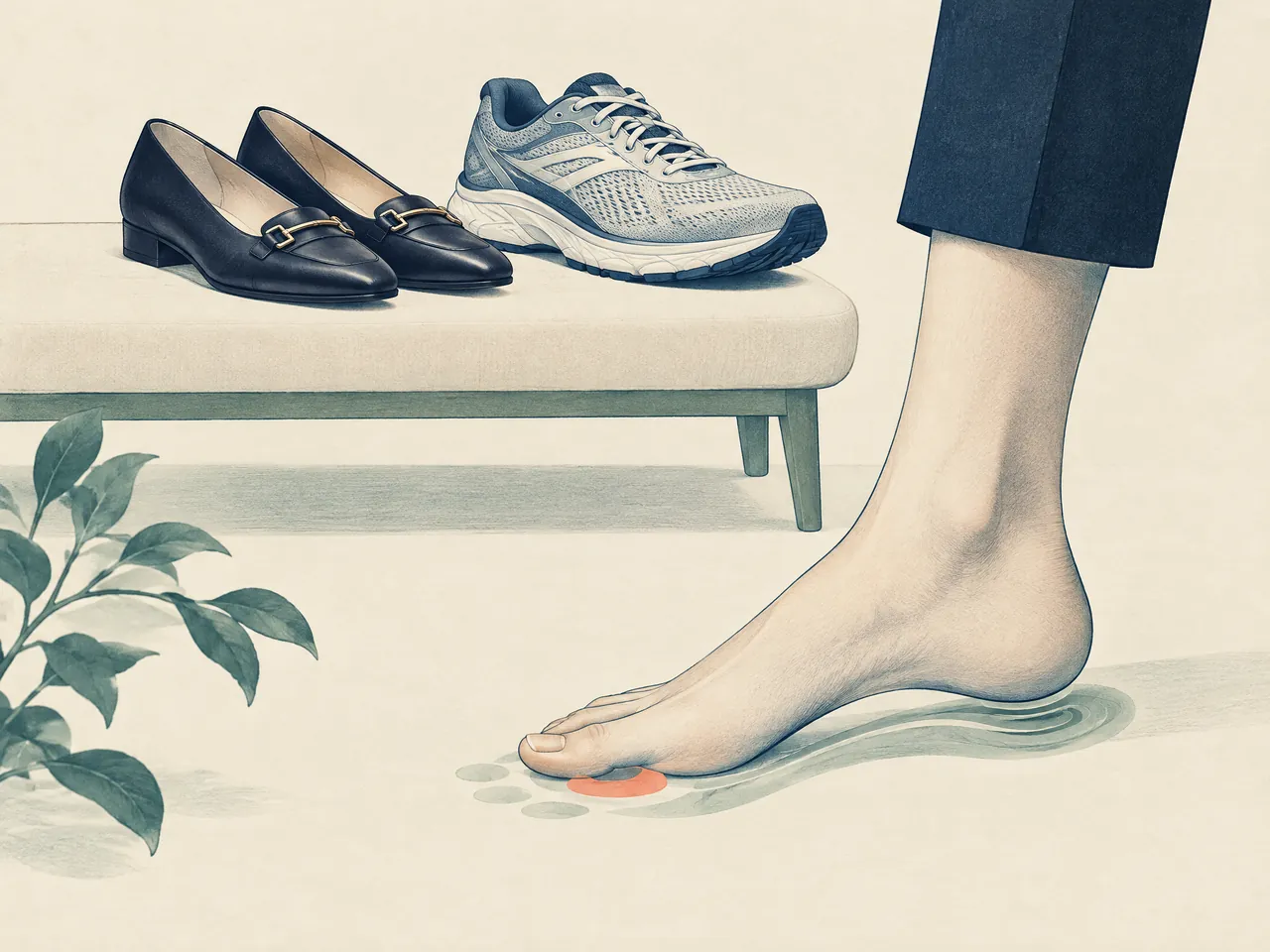
The decision is therefore not “plantar fasciitis or nothing.” It is whether the story is stable, clearly load-linked and improving with simple adjustments, or unusual, severe, persistent or worsening. A clinician may use examination findings and, when appropriate, other tests to distinguish causes. The most honest benefit of a careful symptom history is that it gives that assessment a better starting point. It also helps an acupuncture consultation stay within its supportive role instead of treating a named condition as already proven.
Can acupuncture help with foot pain? Is foot pain always plantar fasciitis? When should I see a doctor for foot pain? — Why plantar fascia is not the whole story
The plantar fascia is important in foot mechanics, but the sole has more than one structure. Location matters: a person pointing precisely to the arch is giving different information from someone who indicates the ball of the foot or a line of pain near the toes. Likewise, pain after a new impact differs from gradually developing morning stiffness. A search for arch pain may be useful when the arch is truly the main site, but it should not narrow attention away from numbness, a spreading red area, or an inability to put weight through the foot. Those features change the urgency of the question.
Can acupuncture help with foot pain? Is foot pain always plantar fasciitis? When should I see a doctor for foot pain? — Where supportive care fits
Acupuncture may be discussed as one supportive option after the pattern and safety concerns have been considered. It should sit beside, not displace, the basics that are relevant to the identified problem: a sensible activity plan, suitable footwear, and rehabilitation or medical care when indicated. The U.S. National Center for Complementary and Integrative Health notes that acupuncture research has found possible benefit for several pain conditions, while mechanisms are not fully understood and outcomes can differ when compared with sham procedures [3]. That broad evidence does not establish that acupuncture will resolve an individual person’s foot pain. It is also not a reason to postpone evaluation of a potentially serious problem.
Can acupuncture help with foot pain? Is foot pain always plantar fasciitis? When should I see a doctor for foot pain? — Choose the next safe step
For a familiar, mild pattern with no warning signs, start by reducing the exposure that reliably aggravates it instead of stopping all movement indefinitely. This may mean shortening a long walk, breaking up a standing shift where possible, temporarily choosing a lower-impact activity, or avoiding barefoot time on hard floors if that is a clear trigger. Wear shoes that fit the task and do not squeeze the toes or leave the foot unstable. Hong Kong Adventist Hospital includes activity modification, supportive footwear and gradual stretching among conservative approaches discussed for plantar-fascia symptoms [2]. The right details depend on the cause, so a change that helps one person may not fit another.
Stretching is not a contest to reach pain. If a clinician or rehabilitation professional has advised a calf or plantar-fascia stretch, begin gently and watch the response during and after it. Stop if the pain becomes sharp, spreads, produces numbness, or remains clearly worse. Strength and mobility work are usually more useful when they are matched to a diagnosis and progressed at a tolerable pace. Do not use a ball, bottle, massage device or a home stretch to force through a fresh injury or a foot that cannot bear weight.
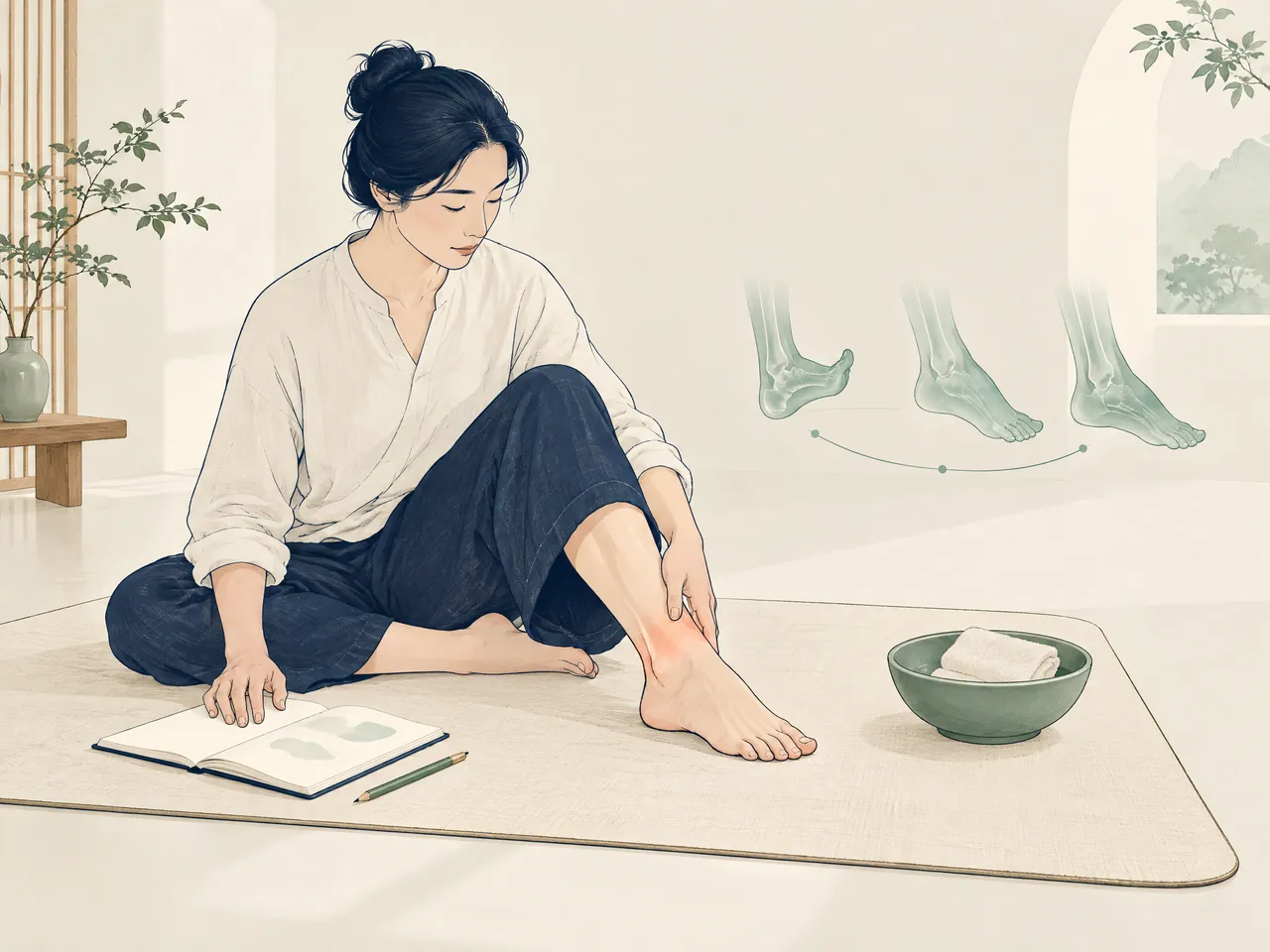
Footwear is best judged in real use. Notice whether the shoe is worn unevenly, has become less supportive, presses the painful area, or is unlike what you normally wear for that activity. Bring the relevant pair to an assessment if possible. This is especially practical for people whose symptoms only happen in work shoes, running shoes, sandals, or at the end of a standing day. A clinician can decide whether an insert, a different shoe style or another intervention is appropriate; an online article cannot prescribe a device for an individual foot.
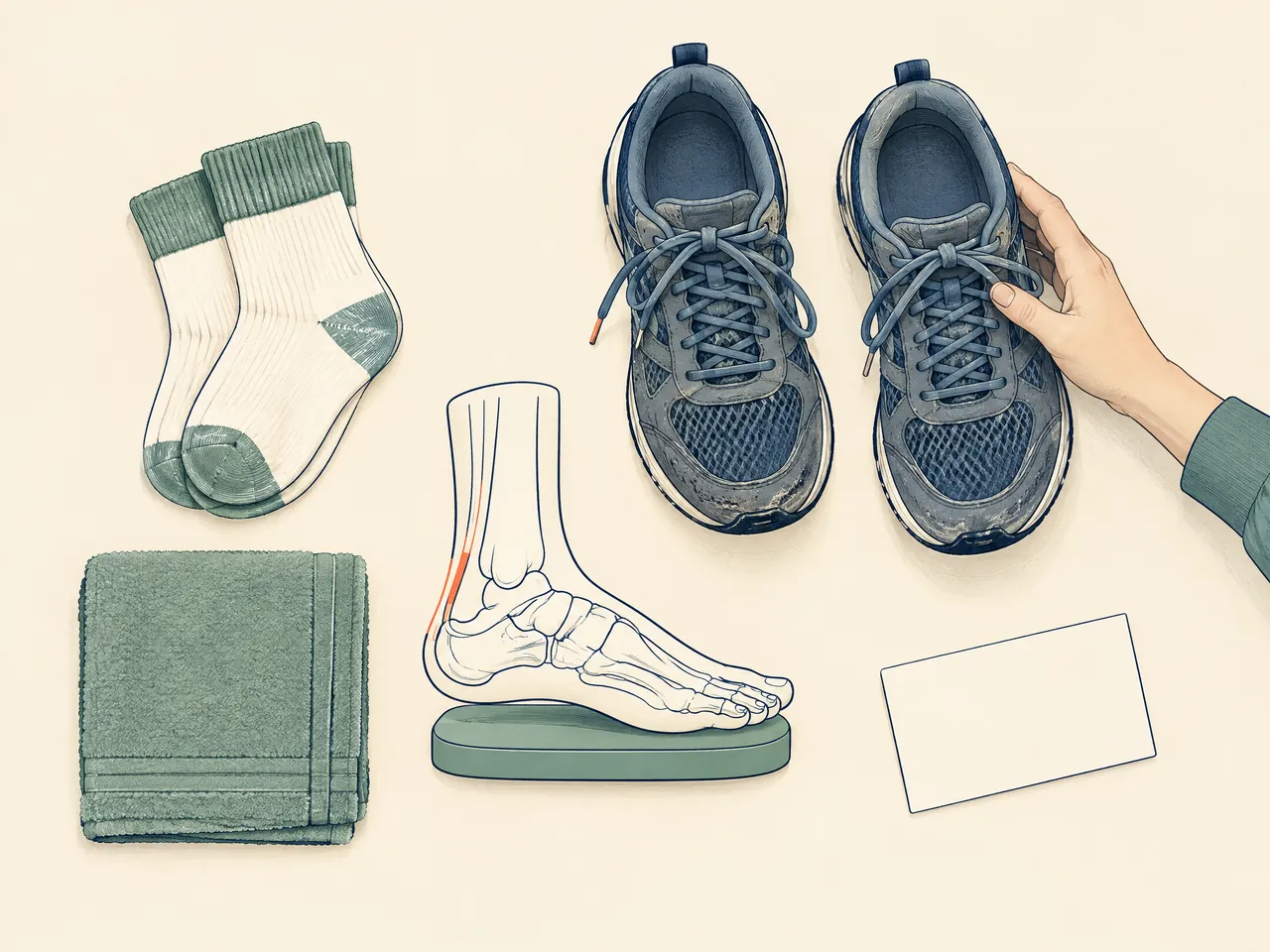
If you want to discuss acupuncture, arrive with the location-and-load notes, the timeline, relevant medical history, and the changes you have already tried. Explain any numbness, diabetes, circulation concerns, medication, previous injury or skin problems. That conversation can clarify whether supportive care is reasonable now or whether medical assessment should come first. For a local enquiry after the safety questions are addressed, TCM Lab can be contacted at a Chinese medicine clinic Prince Edward or a Kwun Tong Chinese medicine clinic; an enquiry does not replace urgent medical care.
Can acupuncture help with foot pain? Is foot pain always plantar fasciitis? When should I see a doctor for foot pain? — Try practical load and footwear changes
Choose one or two changes that match the clearest trigger, then observe rather than changing everything at once. For example, someone whose heel pain follows a long standing shift might pace breaks and use a more suitable work shoe; someone whose pain follows a new running routine might reduce that new load before adding it back gradually. Keep ordinary daily movement within a comfortable range unless a clinician says otherwise. The point is to reduce an obvious provocation while gathering useful information, not to promise a cure from footwear, stretching or acupuncture.

Can acupuncture help with foot pain? Is foot pain always plantar fasciitis? When should I see a doctor for foot pain? — Recognise warning signs
Arrange prompt medical assessment if you cannot bear weight, pain starts suddenly or severely, or symptoms follow an injury. Seek care as well for marked swelling, deformity, redness, warmth, fever, an open wound, colour change, or persistent burning and numbness. New foot pain in a person with diabetes or a condition affecting blood flow also needs professional attention. Cleveland Clinic advises assessment for sudden or severe pain, pain after injury, infection signs, diabetes or pain that has not improved after two weeks [1]. These are not situations to manage by increasing stretches, massage or acupuncture sessions.
Care and health guide
Foot discomfort: care information
This directory brings together services, reading, and visit information related to foot discomfort, to help you prepare questions for a consultation.
When foot discomfort affects your day, noting when it occurs, its relation to activity, and what you have already tried can help prepare a consultation; acupuncture for foot pain is a relevant service or reading entry point.
Individual circumstances differ, and acupuncture Hong Kong offers related information to help you understand options and prepare questions.


Your questions, answered
Frequently asked questions
Can acupuncture help with foot pain?
It may be discussed as supportive care after the pain pattern and possible causes have been considered. It cannot diagnose the source of pain, guarantee relief, or replace load management, footwear changes, rehabilitation or medical assessment when those are needed. Tell the practitioner about injury, numbness, wounds, diabetes and other health concerns before treatment is considered.
Is foot pain always plantar fasciitis?
No. Plantar-fascia-related pain is one possible explanation for heel or arch pain, particularly with a first-step pattern, but pain can also arise in the forefoot, joints, nerves, other soft tissues or after injury. The exact painful spot, timing, recent load changes and associated symptoms help guide assessment.
When should I see a doctor for foot pain?
Seek prompt medical assessment if you cannot bear weight, have severe or sudden pain, or pain follows an injury. Redness, warmth, swelling, fever, a wound, deformity, colour change, persistent numbness or burning also warrant assessment. New foot pain with diabetes or a blood-flow condition should not be self-managed.
Should I keep stretching if foot pain gets worse?
No. A gradual, comfortable stretch may be appropriate for some diagnosed load-related problems, but sharp pain, tingling, numbness or a lasting flare is a signal to stop. Do not try to stretch through a fresh injury, an inability to bear weight or a foot with warning signs. Ask a qualified clinician what movement is suitable for your pattern.
Sources and further information
- [1] Cleveland Clinic — Foot Pain
Referenced for: Location-based causes of foot pain, assessment questions, warning signs and general care-seeking guidance.
- [2] Hong Kong Adventist Hospital — Plantar Fasciitis Explained
Referenced for: Typical plantar-fasciitis symptom pattern and conservative discussions of activity, footwear and stretching.
- [3] National Center for Complementary and Integrative Health — Acupuncture: Effectiveness and Safety
Referenced for: Evidence context, safety considerations and the need not to postpone health-care evaluation when using acupuncture.