
TCM Lab · Health reading
Chinese medicine perspective on hair loss: TCM hair loss theory and hair loss and Chinese medicine
Published Updated
Hair loss is often more unsettling than it first appears: hair may collect in the shower, the parting may look wider in photographs, or a patch may become noticeable during an already demanding period. A Chinese medicine perspective on hair loss uses traditional ideas about the liver, kidney, spleen, stomach, qi and blood to organise a consultation. TCM hair loss theory is not a proven account of follicle biology, and it should not turn a traditional pattern into a medical diagnosis. Hair loss and Chinese medicine can be discussed thoughtfully alongside ordinary hair and scalp care, medical assessment of persistent change, and clear questions about herbs or acupuncture.
Appointments are confirmed through WhatsApp. If you have language requirements, please mention them in your enquiry.
The short answer
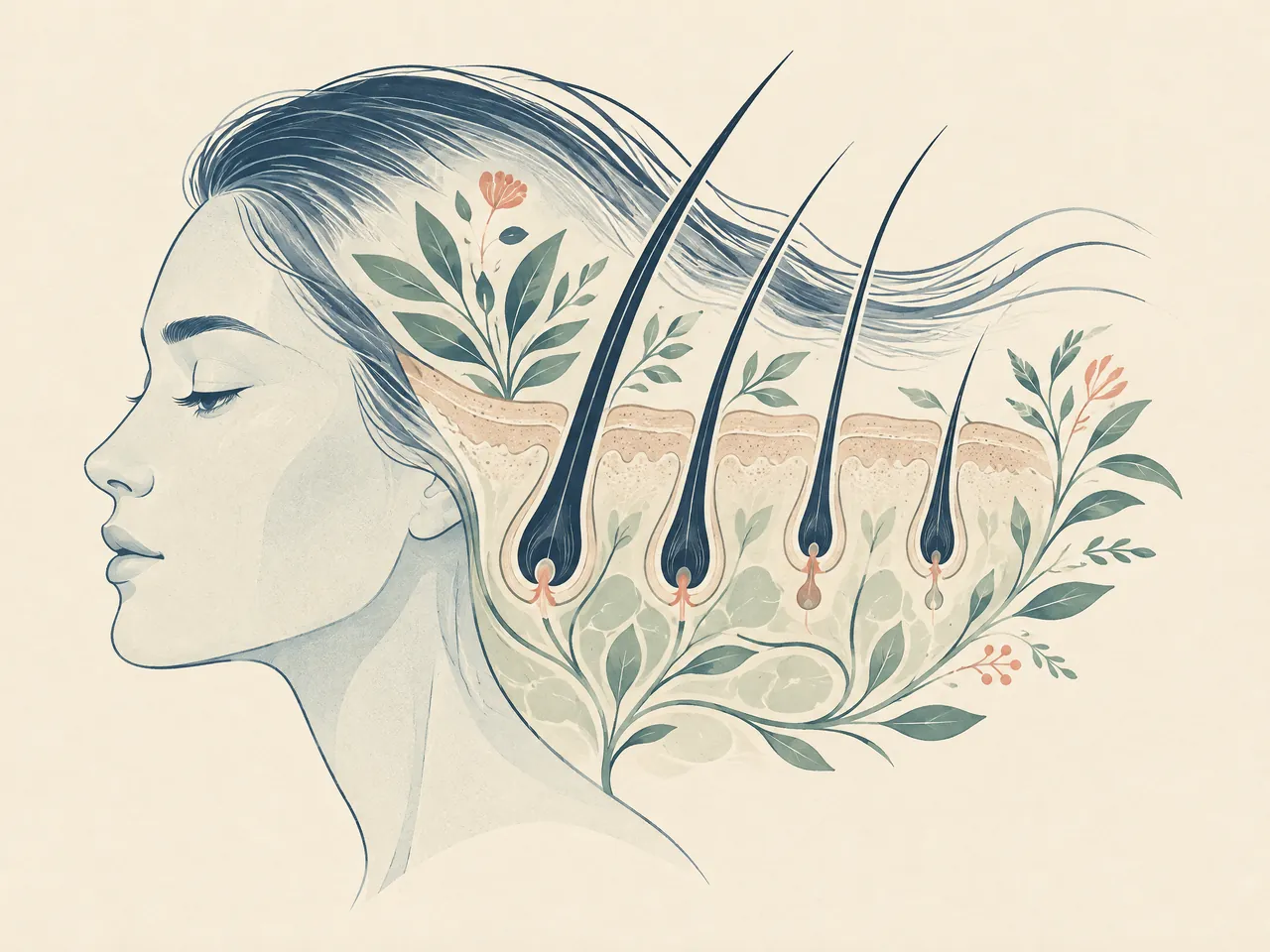
TCM hair loss theory describes thinning through traditional pattern differentiation involving qi, blood and the organ systems named in Chinese medicine. A Chinese medicine perspective on hair loss may include discussion of herbs, acupuncture or daily care after an individual assessment, but these are not guaranteed regrowth methods. Because hair loss has many possible causes, persistent, sudden or worrying change should also be medically assessed before relying on any complementary approach.
Transparent pricing
See the fees.
Choose your care.
Explore our complete official price list, including first-trial prices, regular prices, packages and branch-specific options.
Opening WhatsApp prepares an enquiry; it does not send a message, take payment or confirm an appointment. Suitability and individual arrangements are confirmed during consultation.
Hair and scalp
All prices in HKDScalp health and hair-loss management
Includes AI scalp analysis, deep scalp and follicle cleansing, and scalp oil-control care.
HK$380 (first trial)
Regular price: HK$680
- 6 sessions: HK$3,480 (HK$580 per session)
- 12 sessions: HK$5,760 (HK$480 per session)
- 20 sessions: HK$8,600 (HK$430 per session)
- 30 sessions: HK$11,400 (HK$380 per session)
Hair acupuncture and Chinese herbal medicine package
Includes scalp acupuncture and 3 days of Chinese herbal medicine that does not require decoction.
HK$580 (single session)
Registered Chinese Medicine Practitioner consultation
- 6 sessions: HK$3,180 (HK$530 per session)
- 12 sessions: HK$5,760 (HK$480 per session)
- 20 sessions: HK$8,600 (HK$430 per session)
- 30 sessions: HK$11,400 (HK$380 per session)
Combined hair and scalp treatment
Combines acupuncture and Chinese herbal medicine with salon-level scalp and follicle care. Packages include complimentary hair-care shampoo and serum.
HK$1,260 (single session)
Combined treatment
- 8 sessions: HK$8,640 (HK$1,080 per session)
- 16 sessions: HK$15,680 (HK$980 per session)
- 20 sessions: HK$18,600 (HK$930 per session)
- 30 sessions: HK$26,400 (HK$880 per session)
Weight management
All prices in HKDFull-body acupoint embedding for weight management
Includes full-body acupoint embedding. Packages include complimentary Chinese herbal medicine for weight management, with the number of included days scaled to the package. Embedding material and the individual treatment arrangement are confirmed during consultation; this is not a cosmetic thread lift.
HK$980 (single session)
No trial session
- 10 sessions: HK$7,800 (HK$780 per session)
- 20 sessions: HK$14,600 (HK$730 per session)
- 30 sessions: HK$20,400 (HK$680 per session)
Facial acupuncture
All prices in HKDFacial acupuncture (basic)
Includes facial acupuncture and meridian-based facial care, including care for facial puffiness.
HK$480 (first trial)
Regular price: HK$680
- 10 sessions: HK$5,200 (HK$520 per session)
- 20 sessions: HK$9,600 (HK$480 per session)
- 30 sessions: HK$13,500 (HK$450 per session)
Facial acupuncture (advanced)
Includes enhanced facial acupuncture with a specially formulated moisturising mask and serum.
HK$780 (first trial)
Regular price: HK$1,180
- 10 sessions: HK$9,000 (HK$900 per session)
- 20 sessions: HK$16,600 (HK$830 per session)
- 30 sessions: HK$23,400 (HK$780 per session)
Pain care
All prices in HKDExtracorporeal shockwave treatment
Shockwave treatment for deep-tissue and fascial care. The Kwun Tong clinic offers the multi-area options shown below.
Priced by branch
Branch-specific pricing
Prince Edward: HK$250 per area
Kwun Tong: HK$250 for 1 area / HK$450 for 2 areas / HK$600 for 3 areas
Pain care (manual therapy)
Includes Chinese medicine musculoskeletal assessment, manual joint techniques and tui na.
HK$580 (single session)
Chinese medicine musculoskeletal assessment
Pain care (acupuncture and manual therapy)
Combines acupuncture and manual therapy.
HK$680 (single session)
Combined care
Chinese medicine
All prices in HKDAcupuncture and Chinese herbal medicine package
Includes a Chinese medicine consultation with pulse assessment, body acupuncture and 3 days of Chinese herbal granules that do not require decoction.
HK$580 (single session)
Chinese medicine consultation with pulse assessment
Chinese medicine perspective on hair loss: TCM hair loss theory and hair loss and Chinese medicine in traditional texts
Traditional writings connect hair with the kidney, liver and the movement or nourishment of qi and blood. Familiar phrases such as ‘the kidney manifests in the hair’ and ‘hair is the surplus of blood’ describe a traditional relationship between outward hair condition and internal balance; they do not demonstrate that an organ deficiency shrinks a follicle or that a remedy reverses genetic hair loss. That distinction matters when a reader is looking for an explanation. Hair shedding may follow illness, stress, weight loss or iron deficiency, while male and female pattern baldness commonly runs in families; the NHS advises seeing a clinician if hair loss is a concern [1]. A TCM conversation can add personal context, but it should begin with the actual pattern of change rather than a promise hidden in traditional language.
Chinese medicine perspective on hair loss: TCM hair loss theory and hair loss and Chinese medicine through qi, blood and the organs
In TCM hair loss theory, a practitioner may ask whether hair seems dry and brittle, whether shedding followed exhaustion or recovery from illness, whether the scalp feels oily or itchy, and how sleep, appetite, bowel habits, menstrual history where relevant, mood and workload have changed. The traditional terms qi, blood, liver, kidney, spleen and stomach give a language for grouping those observations. They are not laboratory findings, and people should not assume they have a particular pattern after matching one symptom online.
This is why two people who both say ‘my hair is thinning’ may have very different conversations. One may be worried by gradual widening at the crown in a family with pattern hair loss; another may notice diffuse shedding after a difficult period; a third may have soreness, scale or a new bald patch. If stress feels central to the change, the guide to hair loss from stress can help you organise observations, but it cannot identify the cause on its own. Useful details are when it started, where it appears, whether it is getting faster, and what other symptoms are present.
Chinese medicine perspective on hair loss: TCM hair loss theory and hair loss and Chinese medicine as a traditional pattern framework
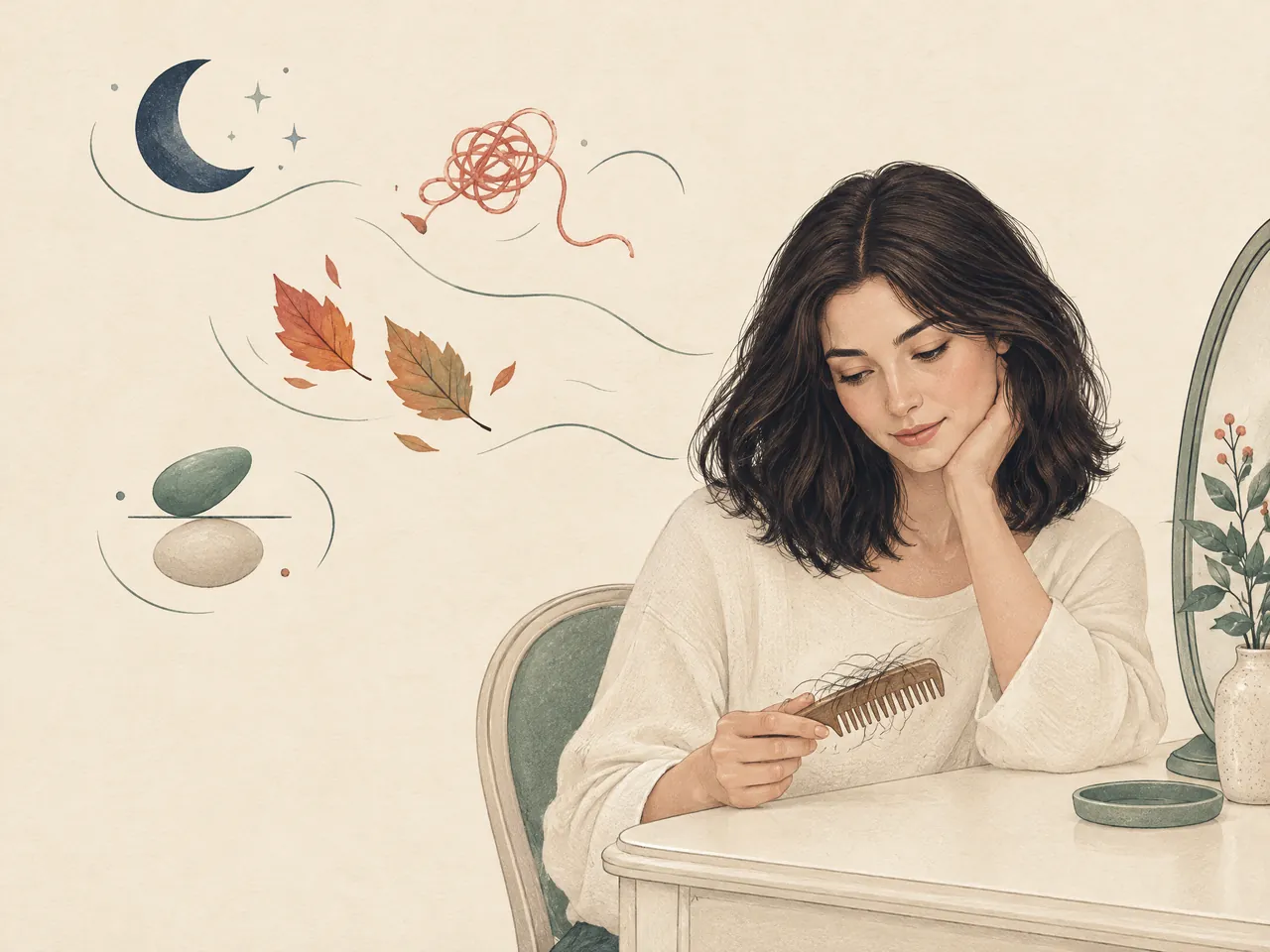
Traditional descriptions may use names such as liver–kidney insufficiency, qi and blood deficiency, or spleen and stomach damp-heat. These labels can guide what a Registered Chinese Medicine Practitioner asks about, rather than functioning as fixed boxes. Dryness, fatigue or a greasy scalp alone cannot confirm one of them. A careful discussion also leaves room for more than one influence, including grooming damage, nutrition, medicines, a skin condition, a recent illness or a form of alopecia that needs medical diagnosis.
It is sensible to keep the traditional and biomedical questions side by side. The first asks how symptoms, constitution and everyday strain fit together in Chinese medicine. The second asks what kind of hair loss may be happening and whether examination, tests or a dermatologist’s opinion is needed. Readers wondering How does male pattern baldness start? should not treat a TCM label as an answer to that medical question. Separating the two prevents a gradual inherited pattern from being mistaken for a short-term imbalance, or a sudden change from being brushed aside.
Compare your options
| What you notice | Useful information to bring | How Chinese medicine may discuss it | Practical next step |
|---|---|---|---|
| Gradual thinning at the parting, crown or front | Timeline, family pattern, photographs in similar light and current hair treatments | A practitioner may ask about constitution, sleep, stress and hair quality without assuming one cause | Seek medical advice if concerned; discuss whether pattern hair loss assessment is appropriate |
| More diffuse shedding after a major change | Recent illness, stress, weight or diet changes, medicines and other symptoms | Traditional questions may explore qi, blood, rest and recovery as a personal context | Do not self-treat; consider medical assessment of the trigger and bring the information to any consultation |
| Itch, flakes, oiliness, soreness or rash | Exact scalp symptoms, product changes, locations affected and photos if useful | The scalp environment may be discussed, but a pattern label does not diagnose a skin disorder | Ask a clinician about persistent, painful or inflamed scalp changes |
| A sudden patch or a rapidly changing area | When it appeared, whether hairs break, skin symptoms and relevant health changes | Traditional care can only be considered after the nature of the change is understood | Arrange timely medical evaluation rather than relying on a regrowth claim |
On smaller screens, scroll the table sideways to compare all columns.
Chinese medicine perspective on hair loss: TCM hair loss theory and hair loss and Chinese medicine pattern differentiation
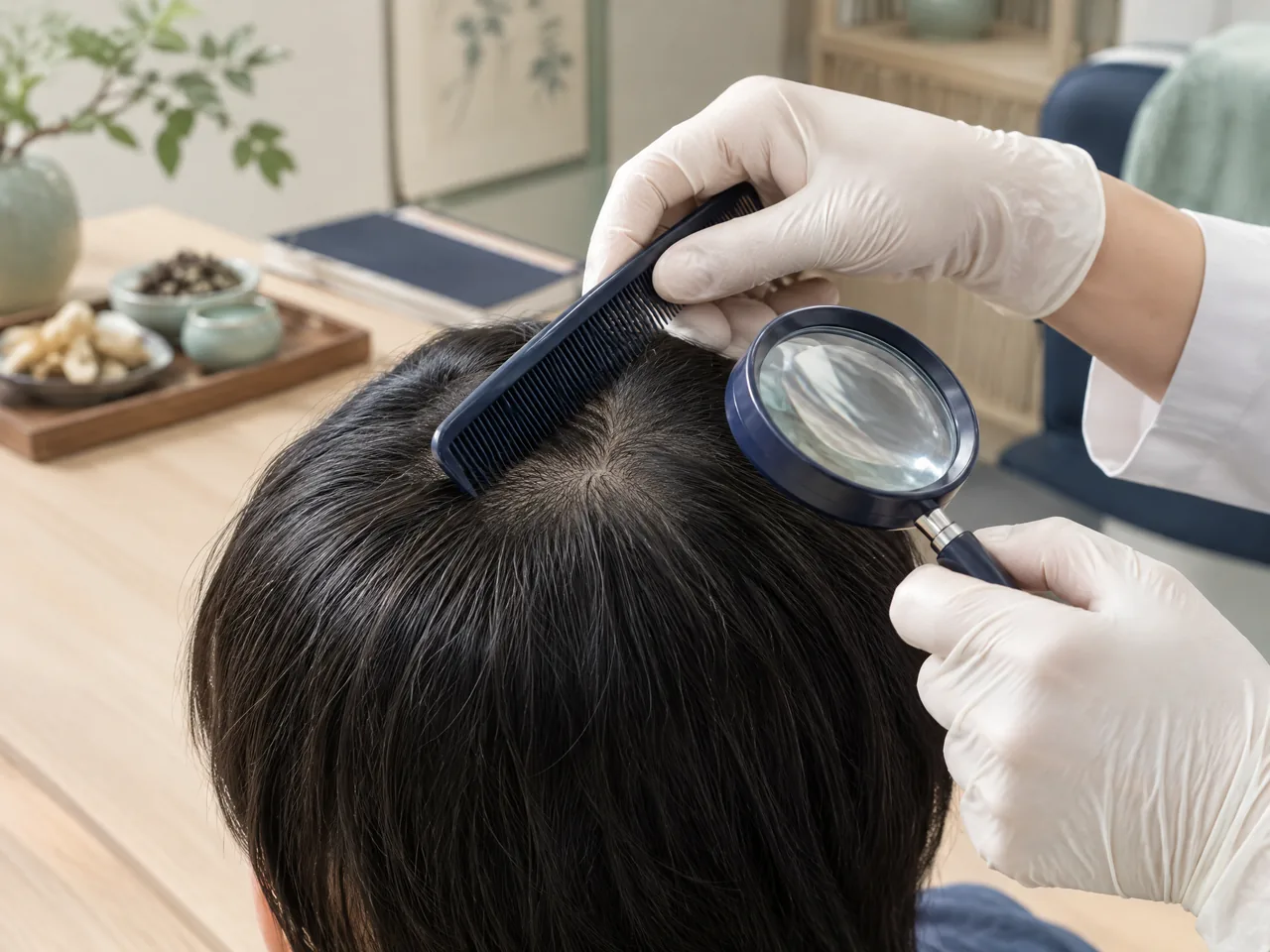
Pattern differentiation is meant to be individual, not a shortcut from a scalp photograph to a treatment. A consultation may consider the distribution of loss, the condition of the scalp and hair shaft, the timeline, diet and sleep, current medicines and supplements, family history, work strain and other health changes. Bringing a few dated photographs in similar light can make a gradual change easier to describe. It is also important to say whether there is burning, pain, scaling, a rash, broken hairs, eyebrow loss or a sharply defined patch. Those features may change what should happen next. From a decision-making point of view, the useful outcome is a clearer plan for assessment and care, not an instant traditional label.
Chinese medicine perspective on hair loss: TCM hair loss theory and hair loss and Chinese medicine in common presentations
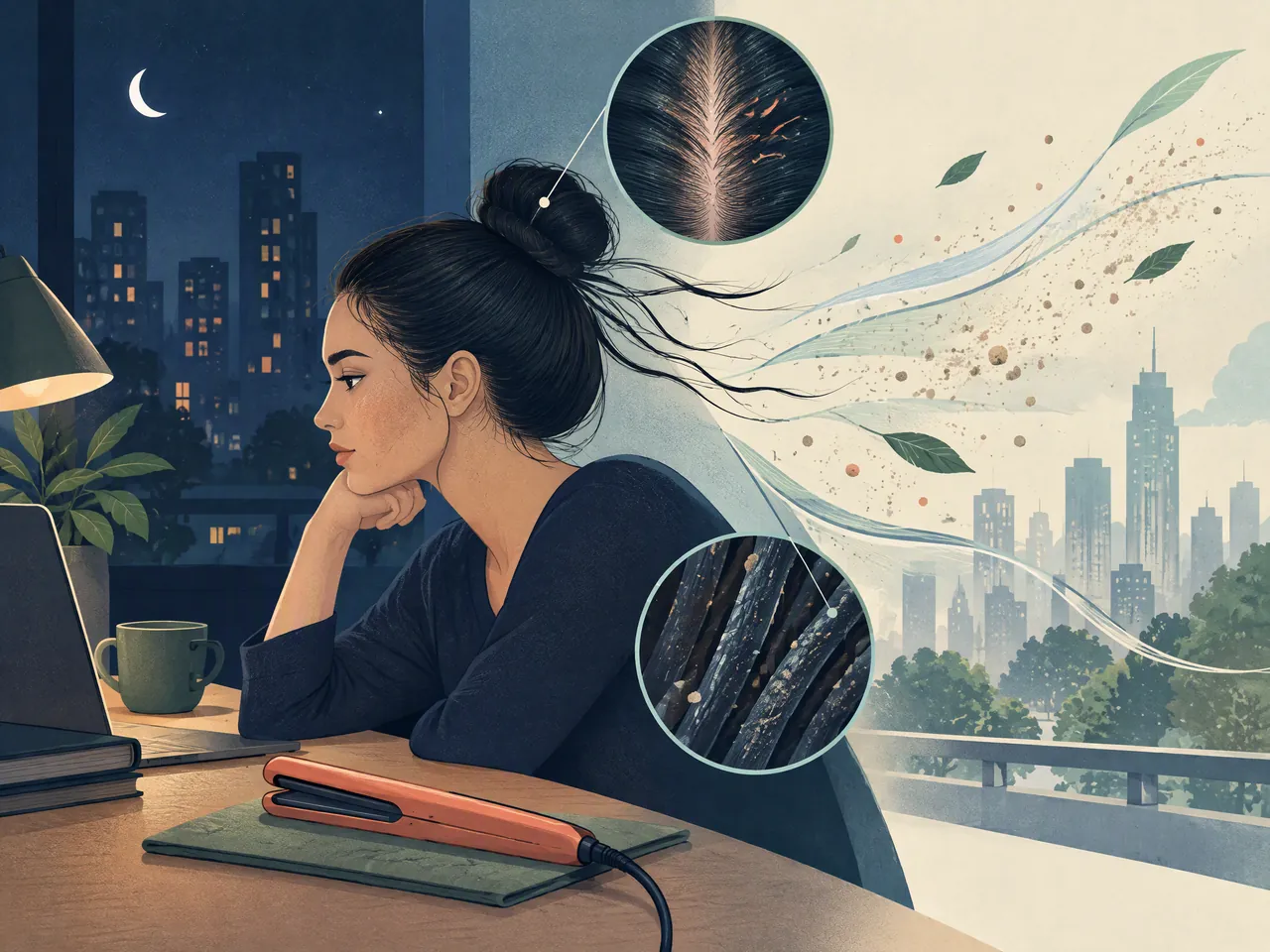
A gradual front, crown or parting change may prompt questions about family pattern and how long it has been visible. Diffuse shedding can prompt questions about recent physical or emotional strain, dietary restriction, illness, weight change or new medication. Oiliness, flakes and itch deserve their own description rather than being assumed to be the reason for hair loss. A patchy area, marked inflammation, tenderness or scarring calls for particular care because a scalp condition may need a different kind of assessment. The NHS notes that some hair loss is temporary while other forms, including pattern baldness, can be permanent [1].
For this reason, a traditional presentation is best treated as a discussion aid. It can help a practitioner ask about tiredness, digestion, sleep, stress and scalp comfort in a connected way, but it cannot reveal a nutrient deficiency or distinguish all types of alopecia. Avoid changing several things at once simply because a pattern name sounds familiar. Keep a simple record of new products, supplements, restrictive diets and treatments so that symptoms and possible reactions can be discussed clearly with the relevant clinician.
Chinese medicine perspective on hair loss: TCM hair loss theory and hair loss and Chinese medicine when symptoms overlap
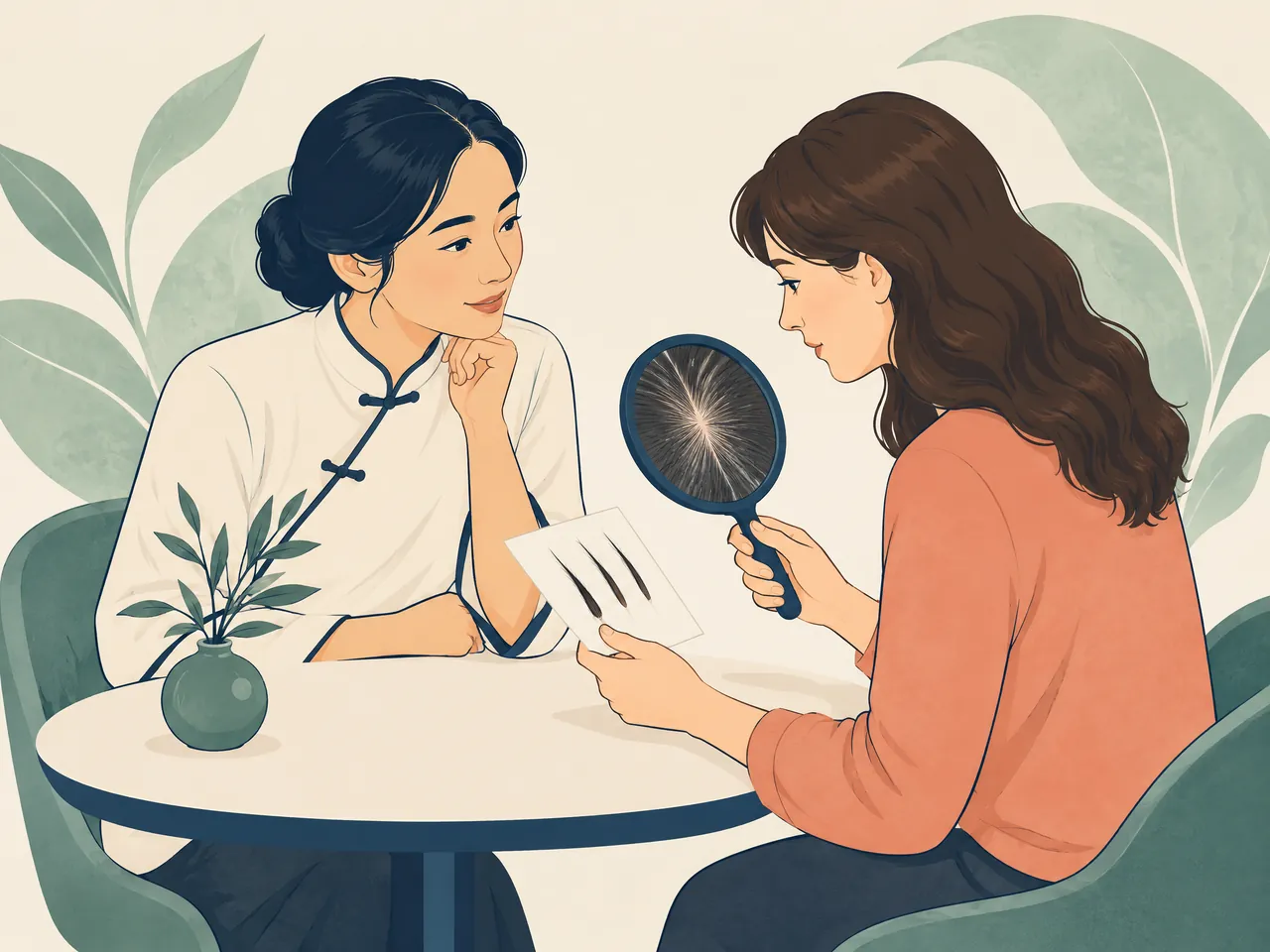
Symptoms commonly overlap. A person with a family tendency to pattern hair loss can also be sleeping badly; someone recovering from illness may also have an irritated scalp; someone who colours or tightly styles hair may also be under work pressure. It is tempting to choose the single explanation that feels most reassuring, but that can delay useful assessment. Tell the practitioner what came first and what changed around the same time. Be especially direct about new prescription medicines, hormonal changes, eating patterns, pregnancy or the period after birth, and any condition already diagnosed by another clinician.
A safe first conversation includes the possibility that Chinese medicine is not the only or immediate answer. Sudden loss, a new bald patch, a painful or inflamed scalp, loss with other troubling symptoms, or a change that is affecting wellbeing is a reason to seek medical advice. Complementary care should not postpone that step. If a traditional consultation is later considered, share the outcome of medical assessment and all current care. That gives the practitioner a fuller picture and reduces the risk of treating a broad label while missing the practical issue that needs attention.
Chinese medicine perspective on hair loss: TCM hair loss theory and hair loss and Chinese medicine in care discussions
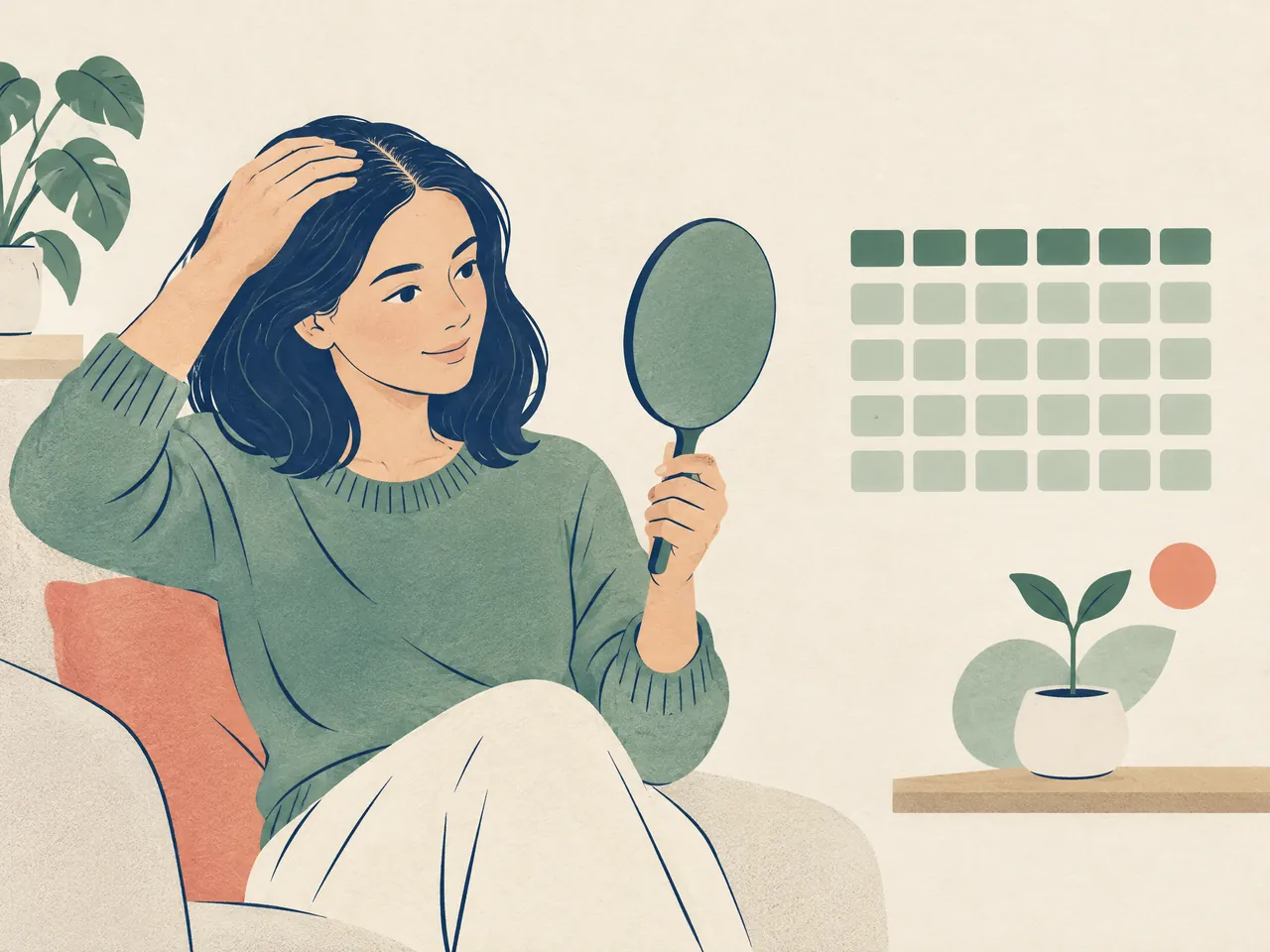
People often search for hair loss and Chinese medicine because they want to know whether herbs, acupuncture, scalp techniques or lifestyle changes might help. The most honest answer is that these options can be discussed, but they do not offer a reliable, universal route to regrowth. Studies of Chinese herbal products for medical conditions have produced mixed results, and the U.S. National Center for Complementary and Integrative Health says firm conclusions cannot be made from many studies because of poor quality [3]. Ask what is being proposed, why it fits the individual discussion, what is known and unknown, and what signs would make medical review more urgent.
Chinese medicine perspective on hair loss: TCM hair loss theory and hair loss and Chinese medicine, from herbs to acupuncture
Herbal prescribing in Chinese medicine is traditionally individualised, which is precisely why a list of ‘hair herbs’ is not a safe self-care plan. A practitioner needs to know about pregnancy or nursing, diagnosed conditions, allergies, alcohol use, current prescriptions, over-the-counter medicines and supplements. Chinese herbal products may pose safety issues including contamination, substitution and interactions; NCCIH advises people considering TCM to discuss it with their health-care providers rather than replacing or delaying conventional care [3]. Do not buy a formula because its marketing promises to nourish follicles or balance hormones.
Acupuncture or a skin-needling technique may also arise in a care discussion, but neither should be described as a proven way to restart follicles. A narrative review of acupuncture and moxibustion for alopecia found that the available clinical literature was small, heterogeneous and often examined acupuncture alongside other interventions, making effects difficult to isolate [4]. The separate question Can acupuncture help with hair loss? explains why a careful enquiry is more useful than a blanket claim. If acupuncture is considered, ask about the aim, practitioner assessment, hygiene and what to report afterwards. NCCIH notes that complications can result from nonsterile needles or improper delivery and advises not postponing health-care evaluation for a problem [2].
Chinese medicine perspective on hair loss: TCM hair loss theory and hair loss and Chinese medicine, with daily care and safety
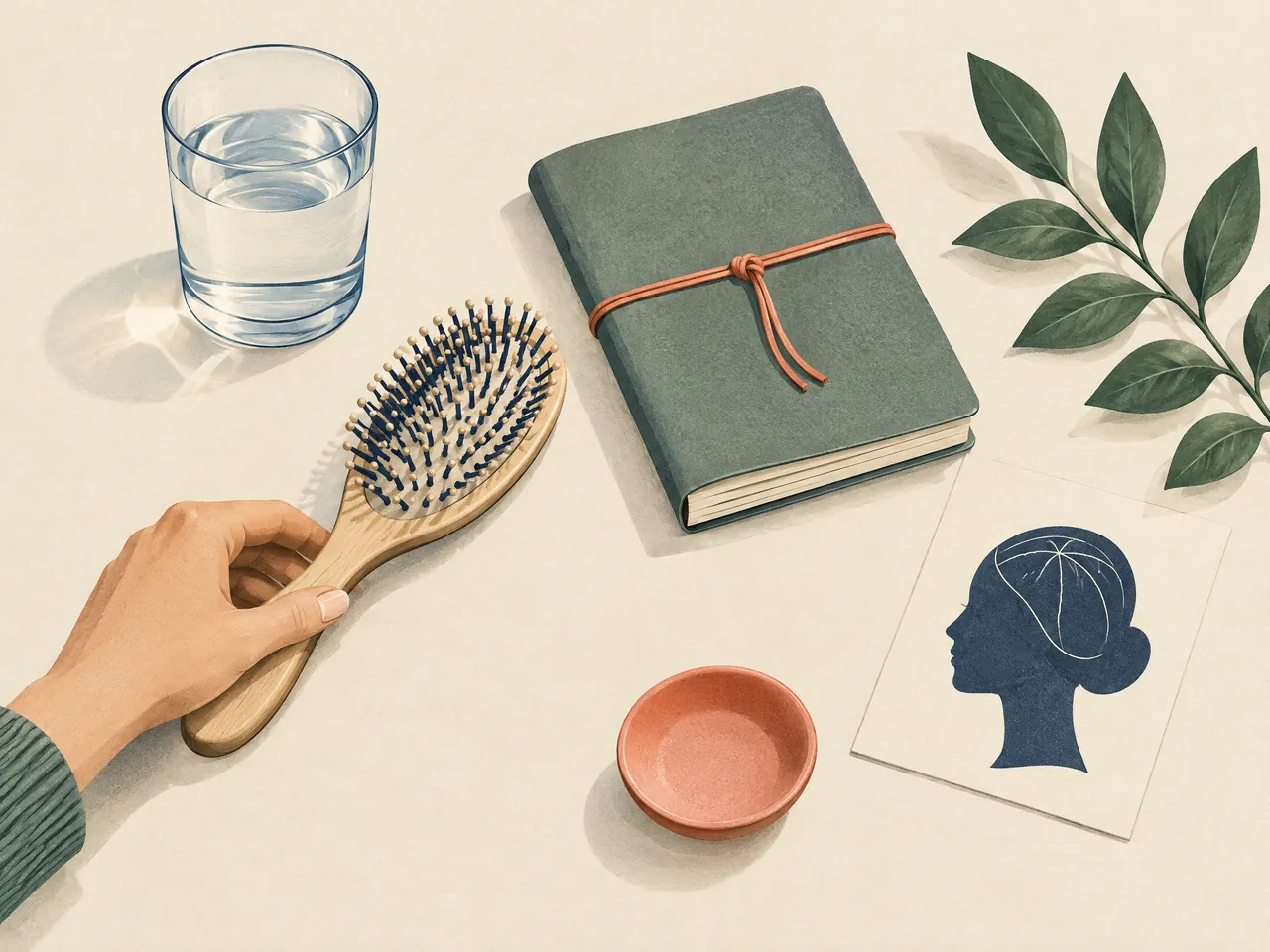
Daily care can support comfort and make the pattern easier to observe, but it should not be sold as a cure. Choose gentle washing and styling habits that suit your scalp, avoid forceful scratching, and pause a new product if it coincides with irritation until you can seek advice. Aim for regular meals with adequate variety rather than a restrictive ‘hair diet,’ and protect sleep and recovery where possible. Gentle fingertip contact may feel relaxing, but avoid vigorous scalp massage over a sore, infected, broken or inflamed area. These practical measures work best as background care, not as a substitute for finding the cause of persistent loss.
Before arranging a visit, prepare three questions: What needs medical assessment first? What does the proposed Chinese medicine approach aim to address? How will medicines and safety considerations be reviewed? You can read Can Chinese herbal medicine help hair regrowth? before deciding what to ask, and consult the Chinese medicine clinic price list Hong Kong for practical cost information. TCM Lab has consultation locations at Chinese medicine clinic Prince Edward and Kwun Tong Chinese medicine clinic; WhatsApp +852 6940 5663 to enquire about an appointment arrangement, not to assume a treatment is suitable before assessment.

Care and health guide
Hair and scalp care information
This directory brings together services, reading, and visit information related to hair and scalp care, to help you prepare questions for a consultation.
For questions about hair or scalp care, noting the everyday concerns and service questions you want to discuss can help prepare a consultation; Chinese medicine for hair loss is a relevant service or reading entry point.
People may have different priorities, and acupuncture Hong Kong offers related information to help you understand options and prepare questions.

Your questions, answered
Frequently asked questions
How does a Chinese medicine perspective on hair loss explain thinning?
It uses traditional pattern differentiation, relating hair condition to ideas about the liver, kidney, spleen, stomach, qi and blood, together with symptoms and everyday context. These are traditional concepts rather than established biological explanations of follicle growth. Medical causes of hair loss still need appropriate assessment.
Can I choose Chinese herbs for hair loss myself?
No. A herb or formula should not be chosen from a generic hair-loss list. A Registered Chinese Medicine Practitioner needs to consider your symptoms, health history and all medicines and supplements. Herbal products may have safety and interaction concerns, and they cannot be relied on to guarantee regrowth.
Can acupuncture be considered for hair loss and Chinese medicine?
It may be discussed as part of an individual Chinese medicine consultation, but the evidence for acupuncture in hair loss is limited and research has important design limitations. It should not be presented as proven follicle stimulation or as a substitute for medical evaluation of sudden, persistent or concerning hair loss.
What daily care is reasonable while I seek advice about hair loss?
Use gentle scalp and hair care, avoid forceful scratching or traction, keep meals varied rather than following a restrictive hair diet, and note changes in sleep, stress, illness, medicines and products. Stop and seek advice for a painful, inflamed or broken scalp. Daily care supports observation but does not diagnose or cure hair loss.
Sources and further information
- [1] NHS — Hair loss
Referenced for: Official public-health guidance on common causes, the difference between temporary and permanent types, and seeking medical advice when hair loss is a concern.
- [2] NCCIH — Acupuncture: Effectiveness and Safety
Referenced for: NIH public-health information on acupuncture safety, its evidence context and the importance of not postponing health-care assessment.
- [3] NCCIH — Traditional Chinese Medicine: What You Need To Know
Referenced for: NIH public-health information on mixed evidence for Chinese herbal products, safety concerns and discussing TCM with health-care providers.
- [4] Efficacy of Acupuncture and Moxibustion in Alopecia: A Narrative Review
Referenced for: Scholarly review describing the small, heterogeneous and often combined-intervention evidence base for acupuncture and moxibustion in alopecia.