
TCM Lab · Health reading
Menopause Sleep Hygiene for Menopause Sleep Problems and Sleep Problems During Menopause
Published Updated
Menopause sleep hygiene can make nights more manageable when hot flashes, night sweats, or a restless mind are interrupting sleep. Start with the conditions you can control: a predictable wake time, a cooler and quieter room, breathable bedding, and fewer sleep-disrupting habits late in the day. Yet menopause sleep problems are not always caused by menopause alone. Repeated waking, snoring, low mood, pain, medicines, thyroid concerns, and life pressures can overlap. Looking at the timing and pattern of sleep problems during menopause helps you decide which daily changes to try, what to record, and when to arrange medical review.
Appointments are confirmed through WhatsApp. If you have language requirements, please mention them in your enquiry.
The short answer
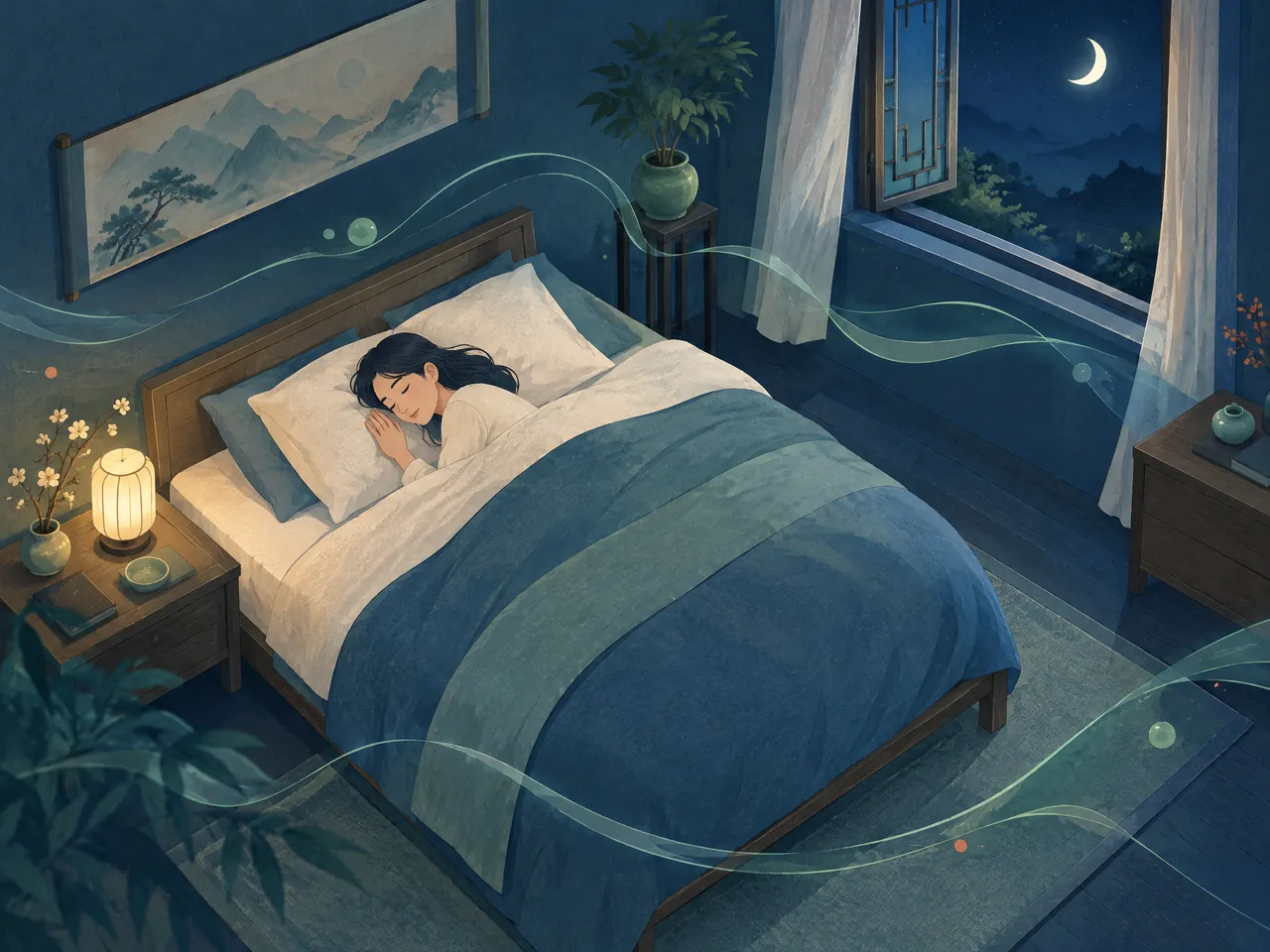
Menopause sleep hygiene means creating a regular, cool, low-stimulation sleep routine while paying attention to the symptom that wakes you. A consistent schedule, comfortable bedroom temperature, less late caffeine and alcohol, and a wind-down routine can help. If menopause sleep problems persist, impair daytime functioning, or come with loud snoring, breathing pauses, low mood, palpitations, or new bleeding, arrange medical assessment rather than assuming hormones are the only cause.
Transparent pricing
See the fees.
Choose your care.
Explore our complete official price list, including first-trial prices, regular prices, packages and branch-specific options.
Opening WhatsApp prepares an enquiry; it does not send a message, take payment or confirm an appointment. Suitability and individual arrangements are confirmed during consultation.
Chinese medicine
All prices in HKDAcupuncture and Chinese herbal medicine package
Includes a Chinese medicine consultation with pulse assessment, body acupuncture and 3 days of Chinese herbal granules that do not require decoction.
HK$580 (single session)
Chinese medicine consultation with pulse assessment
Hair and scalp
All prices in HKDScalp health and hair-loss management
Includes AI scalp analysis, deep scalp and follicle cleansing, and scalp oil-control care.
HK$380 (first trial)
Regular price: HK$680
- 6 sessions: HK$3,480 (HK$580 per session)
- 12 sessions: HK$5,760 (HK$480 per session)
- 20 sessions: HK$8,600 (HK$430 per session)
- 30 sessions: HK$11,400 (HK$380 per session)
Hair acupuncture and Chinese herbal medicine package
Includes scalp acupuncture and 3 days of Chinese herbal medicine that does not require decoction.
HK$580 (single session)
Registered Chinese Medicine Practitioner consultation
- 6 sessions: HK$3,180 (HK$530 per session)
- 12 sessions: HK$5,760 (HK$480 per session)
- 20 sessions: HK$8,600 (HK$430 per session)
- 30 sessions: HK$11,400 (HK$380 per session)
Combined hair and scalp treatment
Combines acupuncture and Chinese herbal medicine with salon-level scalp and follicle care. Packages include complimentary hair-care shampoo and serum.
HK$1,260 (single session)
Combined treatment
- 8 sessions: HK$8,640 (HK$1,080 per session)
- 16 sessions: HK$15,680 (HK$980 per session)
- 20 sessions: HK$18,600 (HK$930 per session)
- 30 sessions: HK$26,400 (HK$880 per session)
Weight management
All prices in HKDFull-body acupoint embedding for weight management
Includes full-body acupoint embedding. Packages include complimentary Chinese herbal medicine for weight management, with the number of included days scaled to the package. Embedding material and the individual treatment arrangement are confirmed during consultation; this is not a cosmetic thread lift.
HK$980 (single session)
No trial session
- 10 sessions: HK$7,800 (HK$780 per session)
- 20 sessions: HK$14,600 (HK$730 per session)
- 30 sessions: HK$20,400 (HK$680 per session)
Facial acupuncture
All prices in HKDFacial acupuncture (basic)
Includes facial acupuncture and meridian-based facial care, including care for facial puffiness.
HK$480 (first trial)
Regular price: HK$680
- 10 sessions: HK$5,200 (HK$520 per session)
- 20 sessions: HK$9,600 (HK$480 per session)
- 30 sessions: HK$13,500 (HK$450 per session)
Facial acupuncture (advanced)
Includes enhanced facial acupuncture with a specially formulated moisturising mask and serum.
HK$780 (first trial)
Regular price: HK$1,180
- 10 sessions: HK$9,000 (HK$900 per session)
- 20 sessions: HK$16,600 (HK$830 per session)
- 30 sessions: HK$23,400 (HK$780 per session)
Pain care
All prices in HKDExtracorporeal shockwave treatment
Shockwave treatment for deep-tissue and fascial care. The Kwun Tong clinic offers the multi-area options shown below.
Priced by branch
Branch-specific pricing
Prince Edward: HK$250 per area
Kwun Tong: HK$250 for 1 area / HK$450 for 2 areas / HK$600 for 3 areas
Pain care (manual therapy)
Includes Chinese medicine musculoskeletal assessment, manual joint techniques and tui na.
HK$580 (single session)
Chinese medicine musculoskeletal assessment
Pain care (acupuncture and manual therapy)
Combines acupuncture and manual therapy.
HK$680 (single session)
Combined care
Menopause Sleep Hygiene, Menopause Sleep Problems and Sleep Problems During Menopause: Common Patterns
Sleep may change in perimenopause, menopause, or after periods have stopped. Some people lie awake for a long time at the start of the night. Others fall asleep readily but wake hot and damp, wake much earlier than planned, or feel that every small sound brings them fully awake. The useful question is not simply whether you are sleeping badly; it is which pattern is happening, how often it happens, and what follows the waking. That description gives you something practical to work with.
Hot flushes and night sweats are common menopausal symptoms, and sleep problems can feel worse when night sweats are present. Mood changes, anxiety, irritability, tiredness, and changes in daily responsibilities may add to the strain. The NHS notes that difficulty getting to sleep or staying asleep can affect daily life and may be worse alongside night sweats. NHS guidance [2] is a useful reminder that the experience differs from person to person.
Menopause Sleep Hygiene, Menopause Sleep Problems and Sleep Problems During Menopause: How Hot Flashes Affect Rest
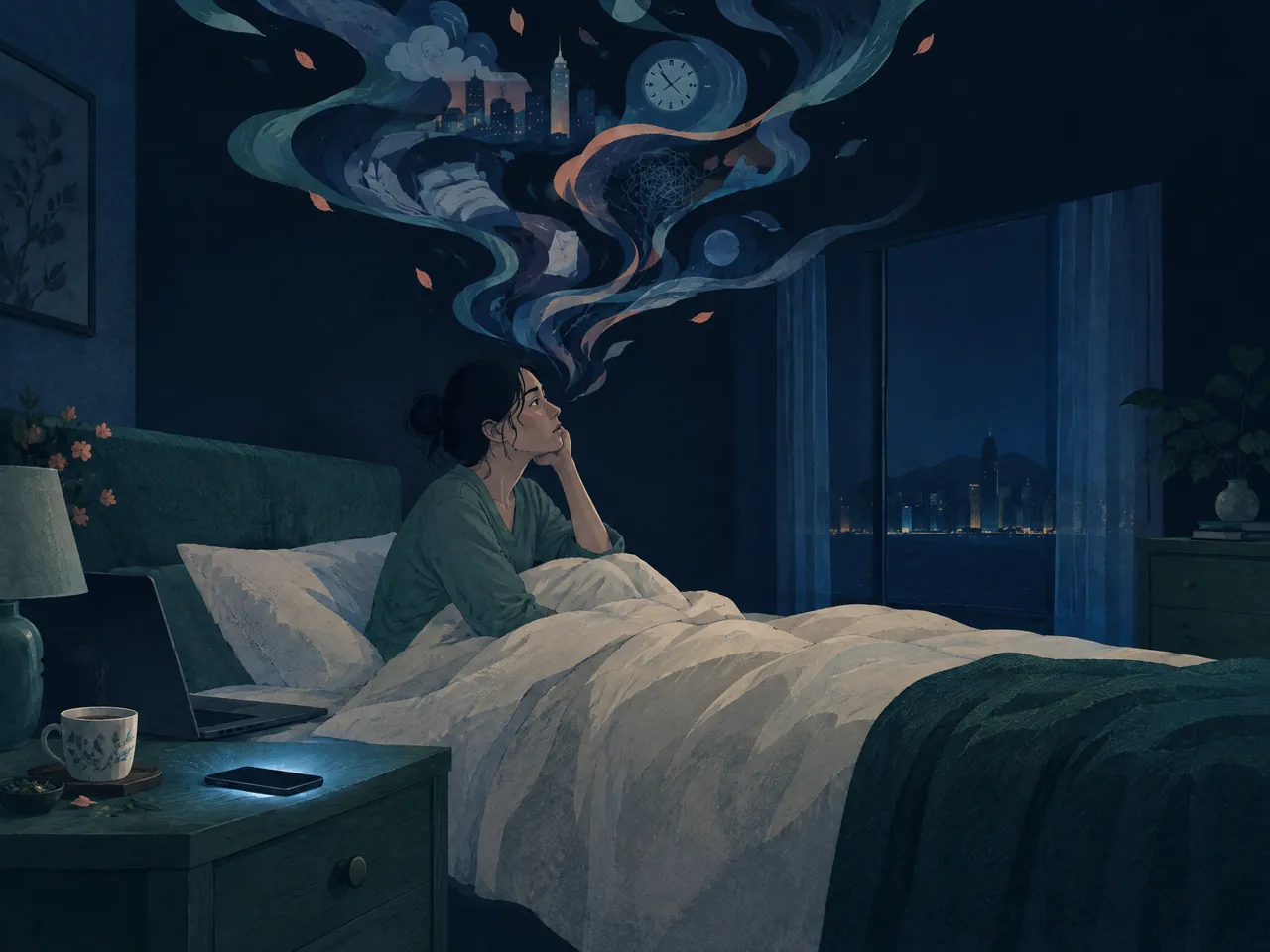
A heat-related waking often has a recognisable sequence: warmth rises through the chest, neck, or face; bedding suddenly feels uncomfortable; sweating begins; and the person becomes alert while changing clothes, drinking water, or checking the time. The sleep disruption may come from the episode itself, but the bright light, phone use, worry about tomorrow, and effort to force sleep can then keep the brain switched on after the heat has eased.
Plan for the practical part of that sequence before bedtime. Keep the room at a temperature that feels comfortable to you, use light layers that can be removed easily, and place a spare top or towel within reach if this reduces disruption. If you wake, keep the response boring and dim: take care of comfort, avoid scrolling or clock-watching, and return to the same quiet routine. This is not a promise that hot flashes will disappear; it is a way to reduce the extra stimulation around them.
A short record can reveal whether the worst nights follow spicy meals, alcohol, a warm room, stressful days, or no clear trigger. Record bedtime, estimated sleep onset, awakenings, whether heat or sweat was involved, what you did next, and how you felt the following day. For more context on repeated waking and difficulty settling again, see menopause insomnia. The record helps a clinician see a pattern without pretending every bad night has one explanation.

Sleep Problems During Menopause, Menopause Sleep Problems and Menopause Sleep Hygiene: Other Possible Contributors
Sleep problems during menopause can have more than one contributor on the same night. A person may wake sweaty, then notice hip pain while changing position, then start worrying about an early meeting. Caffeine late in the day, alcohol in the evening, a long late-afternoon nap, or a bedroom used for work can all make a fragile night harder. The aim is to identify the parts that are changeable rather than to blame yourself for the symptoms.
Think about timing. Symptoms that began while periods were becoming irregular may fit the wider experience of perimenopause sleep problems, but a new sleep complaint after a medicine change deserves a medication review. Persistent pain can also make it difficult to find a comfortable position; practical information on hip pain affecting sleep or daily activities may help you describe that part of the picture.
Breathing symptoms need their own attention. Loud habitual snoring, gasping, observed pauses in breathing, or strong daytime sleepiness should not be explained away as a normal menopausal change. Likewise, an urge to move the legs, reflux, frequent urination, grief, depression, or anxiety may call for a different conversation. Keeping menopause in view is helpful; making it the only possible answer is not.
Compare your options
| Night-time pattern | Details to note | Useful next step |
|---|---|---|
| Heat or sweat waking | Time of waking, warmth or sweating, bedding or room comfort, and how long you were awake | Adjust cooling and layers; discuss frequent or distressing episodes with a clinician |
| Difficulty falling asleep | Caffeine, alcohol, screens, late work, exercise timing, and the thoughts present at bedtime | Try a repeatable wind-down and a regular wake time; review persistent insomnia |
| Breathing-related waking | Snoring, gasping, witnessed pauses, morning headache, or marked daytime sleepiness | Arrange medical assessment rather than relying on sleep hygiene alone |
| Pain or physical discomfort | Body area, position, new symptoms, medicines taken, and whether discomfort wakes you | Bring the record to a clinician; address the pain or condition as well as the sleep routine |
| Early waking with low mood or worry | Time of waking, mood, daytime impact, stressors, and whether you can return to sleep | Discuss mental-health support and menopause care with an appropriate health professional |
On smaller screens, scroll the table sideways to compare all columns.
Menopause Sleep Hygiene, Menopause Sleep Problems and Sleep Problems During Menopause: Chinese Medicine Assessment
A Chinese medicine consultation for menopause sleep problems should begin with listening carefully to the sleep story, not with a fixed treatment claim. The practitioner may ask what time you go to bed, how long sleep takes, why you wake, whether you sweat, what your mood and energy are like in the day, and what you have already tried. Bringing a medication list, including supplements and occasional sleep aids, makes the discussion safer and more useful.
In Hong Kong, integrative menopause care is sometimes discussed alongside family-medicine and Chinese-medicine input. For example, CUHK Medical Centre describes a programme involving both medical and Traditional Chinese Medicine practitioners for menopause-related concerns. CUHK Medical Centre [4] illustrates why a complete history and appropriate medical review remain important when symptoms overlap.

Menopause Sleep Hygiene, Menopause Sleep Problems and Sleep Problems During Menopause: What a Four-Diagnosis Assessment Covers
Traditional Chinese medicine uses a four-diagnosis approach: observation, listening and smelling, questioning, and palpation. In a sleep-focused visit, questioning is especially important. A practitioner may ask whether waking is linked with warmth, sweating, racing thoughts, palpitations, dreams, discomfort, thirst, bowel changes, or fatigue. They may also ask about menstrual changes, although irregular periods alone do not settle every clinical question.
This traditional assessment uses pattern language such as yin, yang, qi, and blood. It is a way of organising symptoms within Chinese medicine; it is not the same as a modern hormone test or an endocrine diagnosis. Clear communication matters. Tell the practitioner if you are taking hormone therapy, prescription sleep medicine, antidepressants, blood thinners, or products bought without a prescription, and do not stop or alter prescribed treatment on your own.
A useful assessment also asks what success would look like for you. It may be fewer long wakeful periods, less distress after waking, enough daytime energy to function, or a more reliable morning routine. Keeping that goal concrete prevents a vague promise to ‘balance hormones’. To understand the broader supportive role commonly discussed in a consultation, read Chinese medicine for menopause symptoms.

Menopause Sleep Hygiene, Menopause Sleep Problems and Sleep Problems During Menopause: Acupuncture and Herbal Medicine
After an individual assessment, acupuncture or herbal medicine may be discussed as supportive options. They should be considered alongside practical sleep changes and, where appropriate, medical care. A responsible discussion includes your symptoms, medicines, other treatments, needle comfort, and what you hope to monitor. It does not assume that one point prescription or herbal formula suits every person with night sweats or early waking.
Evidence should be described carefully. A publication indexed in PubMed Central on acupuncture for insomnia in menopausal women is a trial protocol: it sets out a proposed study rather than reporting a completed treatment result. Its authors note that evidence had been limited by methodological problems in earlier research. The protocol [3] therefore cannot establish that acupuncture will improve your sleep or hot flashes.
Herbal medicine also requires individual review because products and prescriptions can interact with other treatment or be unsuitable in particular circumstances. Report any new symptom promptly, and keep your family doctor or gynaecologist informed about all therapies you use. The sensible role for Chinese medicine is supportive symptom management and shared information, not a substitute for investigating severe insomnia, sleep apnoea, thyroid concerns, or mental-health symptoms.
Menopause Sleep Hygiene, Menopause Sleep Problems and Sleep Problems During Menopause: Practical Next Steps
Improving menopause sleep hygiene works best as a small experiment rather than a demanding overhaul. Choose two or three actions that fit your real evening: perhaps a fixed wake time, moving caffeine earlier, preparing cooler bedding, and creating a screen-free wind-down. Try them consistently enough to notice a pattern, then keep what genuinely helps. A difficult night does not mean the routine has failed; sleep varies and the goal is to make recovery easier.
Use the table as a prompt for a simple sleep note. It can help separate a heat-related waking from a breathing concern, an uncomfortable environment, or a worry pattern. Bring the note to a medical or Chinese medicine consultation instead of relying on memory after several tiring weeks. The National Institute on Aging similarly recommends a regular schedule, a comfortable quiet bedroom, avoiding late caffeine and alcohol, and seeking professional advice when sleep remains difficult. National Institute on Aging [1] provides those practical foundations.
Menopause Sleep Hygiene for Menopause Sleep Problems and Sleep Problems During Menopause: Daily Habits
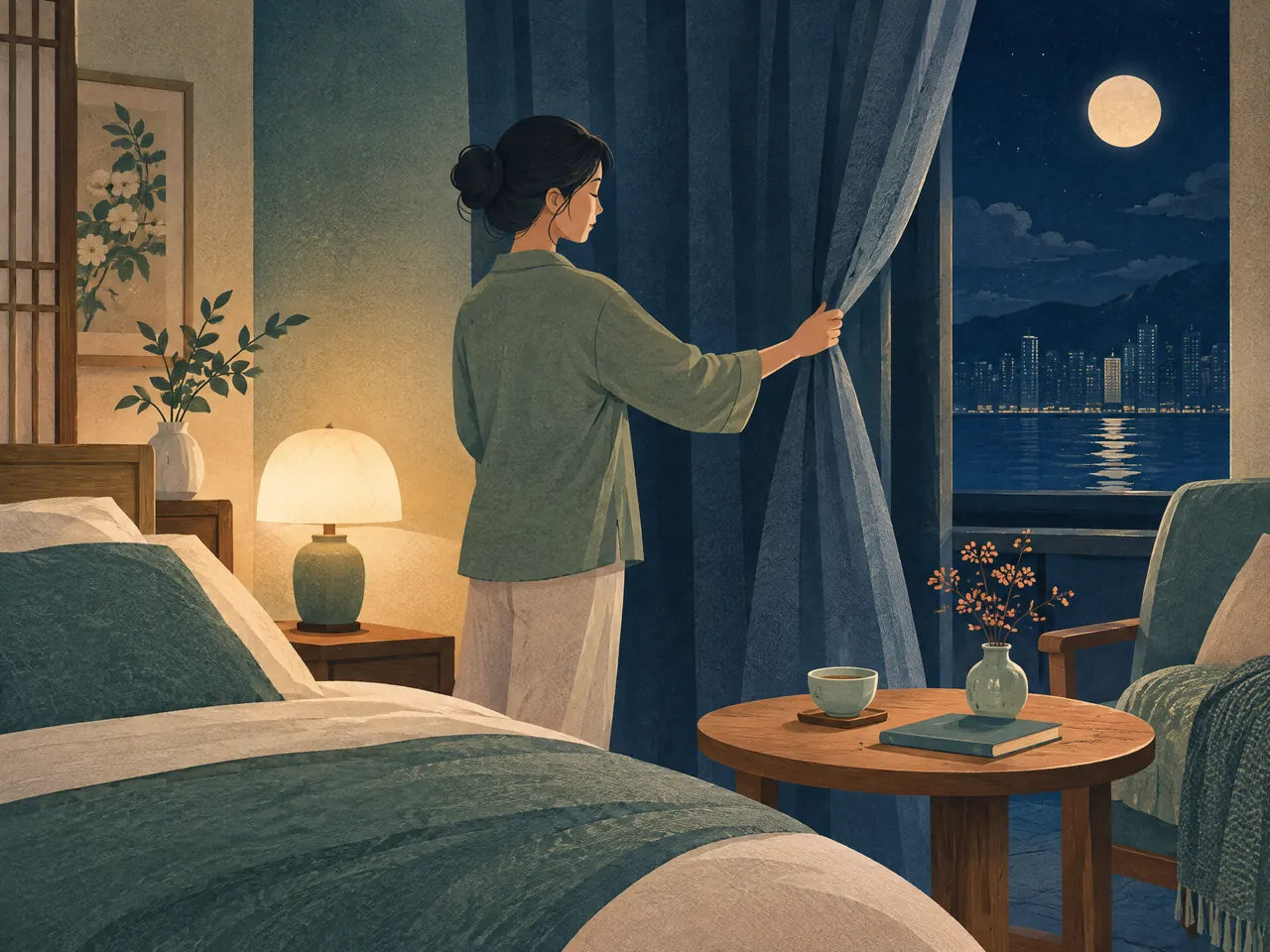
Anchor the day before you focus on bedtime. Wake at roughly the same time each day, get daylight and ordinary movement when you can, and avoid trying to compensate for a bad night with a long late nap. Exercise can be part of a healthy routine, but leave vigorous activity far enough from bed that you have time to cool down and settle. A calm activity can then mark the transition out of work and household tasks.
Make the bedroom support sleep rather than negotiation. Adjust layers, bedding, and airflow for comfort; reduce noise and unwanted light where possible; and reserve the bed for sleep and intimacy rather than emails or prolonged phone use. When a hot flash wakes you, choose the smallest response that restores comfort. Repeatedly checking the time can turn a brief waking into a calculation about tomorrow, which often makes returning to sleep feel harder.
Food and drink routines deserve an honest look. Caffeine can appear in coffee, tea, energy drinks, chocolate, and some medicines, so note not only what you consume but when. Alcohol may make someone feel sleepy at first but can make it harder to stay asleep, according to the National Institute on Aging [1]. Avoid large meals close to bed if they leave you uncomfortable. For more everyday ideas, see How can I sleep better during menopause?.

Menopause Sleep Problems, Sleep Problems During Menopause and Menopause Sleep Hygiene: When to Seek Medical Review
Arrange a family-doctor or gynaecology review when poor sleep is lasting, is getting worse, or is affecting concentration, mood, safety, work, or relationships. Seek assessment sooner if there is loud snoring, gasping or witnessed breathing pauses, marked daytime sleepiness, palpitations, a new or concerning medicine effect, significant anxiety or low mood, or symptoms that do not fit the pattern you expected. A clinician can consider sleep disorders, thyroid problems, medication effects, and menopause treatment options where relevant.
Vaginal bleeding after 12 months without periods should be checked even if it happens once. Changes in bleeding that concern you during the transition also deserve medical advice. The NHS specifically advises review for postmenopausal bleeding and for symptoms that are affecting health or daily life [2]. If you feel unsafe, have thoughts of harming yourself, chest pain, severe breathlessness, or another urgent symptom, use urgent local medical services rather than waiting for a routine consultation.
If you would like to discuss supportive Chinese medicine care after or alongside appropriate medical review, you can make an enquiry with TCM Lab. Choose the location most convenient for you: Kwun Tong Chinese medicine clinic or Chinese medicine clinic Prince Edward. State your sleep pattern, current medicines, and any language needs when you contact the clinic so that the appointment arrangement can be confirmed appropriately.
Care and health guide
Health service information
This directory brings together services, reading, and visit information related to health services, to help you prepare questions for a consultation.
If you are organising health questions, Chinese medicine clinic Hong Kong is a starting point for learning about related services and preparing for a consultation.
People have different needs; acupuncture Hong Kong provides further reading to help you understand options in your own context.


Your questions, answered
Frequently asked questions
How long should I try menopause sleep hygiene before asking for help?
Start with a few sustainable changes and track the pattern, but do not wait through months of disabling symptoms. Arrange review sooner if sleep is affecting daytime functioning, mood, safety, work, or relationships, or if you notice snoring, gasping, breathing pauses, palpitations, or new concerning symptoms.
Can herbal medicine balance hormones during menopause sleep problems?
Chinese medicine pattern language is not the same as a modern endocrine diagnosis. Herbal medicine should not be described as balancing hormones or curing menopause. If it is discussed, it should follow an individual assessment and a review of all medicines and supplements you use.
Can acupuncture help sleep problems caused by hot flashes?
Acupuncture may be discussed as a supportive option after assessment, but it does not guarantee relief of hot flashes or insomnia. Evidence needs careful interpretation; the cited PubMed Central article is a study protocol, not a completed outcome study. Continue appropriate medical assessment and do not stop prescribed treatment without the prescriber’s advice.
Should I tell a Chinese medicine practitioner about sleep medicines or hormone therapy?
Yes. Bring or list all prescription medicines, over-the-counter sleep aids, hormone therapy, supplements, and herbal products. This supports safer discussion of possible interactions and helps the practitioner understand which changes may be linked with your sleep. Medication changes should be decided with the clinician who prescribed them.
Sources and further information
- [1] [1] National Institute on Aging — Sleep Problems and Menopause: What Can I Do?
Referenced for: Supports menopause-related sleep disruption, hot flashes and night sweats, regular sleep routines, bedroom comfort, caffeine and alcohol guidance, and discussion with a doctor or trained professional.
- [2] [2] NHS — Symptoms of menopause and perimenopause
Referenced for: Supports the description of hot flushes, night sweats, difficulty sleeping, mood effects, and advice to seek medical review for symptoms and postmenopausal bleeding.
- [3] [3] PubMed Central — Effect of acupuncture on insomnia in menopausal women: a study protocol for a randomized controlled trial
Referenced for: Supports the limited statement that this is a trial protocol and that the article describes methodological limitations in prior acupuncture research; it is not used as proof of treatment benefit.
- [4] [4] CUHK Medical Centre — Holistic Medical Care for Menopause (Integrative Medicine)
Referenced for: Supports the Hong Kong context that a menopause programme can combine family-physician and Traditional Chinese Medicine practitioner input; it does not describe TCM Lab services.