
TCM Lab · Health reading
Chinese medicine for low back pain: low back pain acupuncture Hong Kong and low back pain acupuncture treatment explained
Published Updated
A sore low back after a long desk day, a lifting incident or an awkward turn does not automatically point to one cause. Chinese medicine for low back pain starts with an in-person account of where the pain is felt, how it began, what changes it and whether leg or general symptoms are present. A low back pain acupuncture Hong Kong consultation can discuss acupuncture as one possible adjunct, but it is not a substitute for medical assessment and cannot promise recovery. The first priority is to identify symptoms that need urgent conventional care, then make a considered plan for activity, comfort and follow-up.
Appointments are confirmed through WhatsApp. If you have language requirements, please mention them in your enquiry.
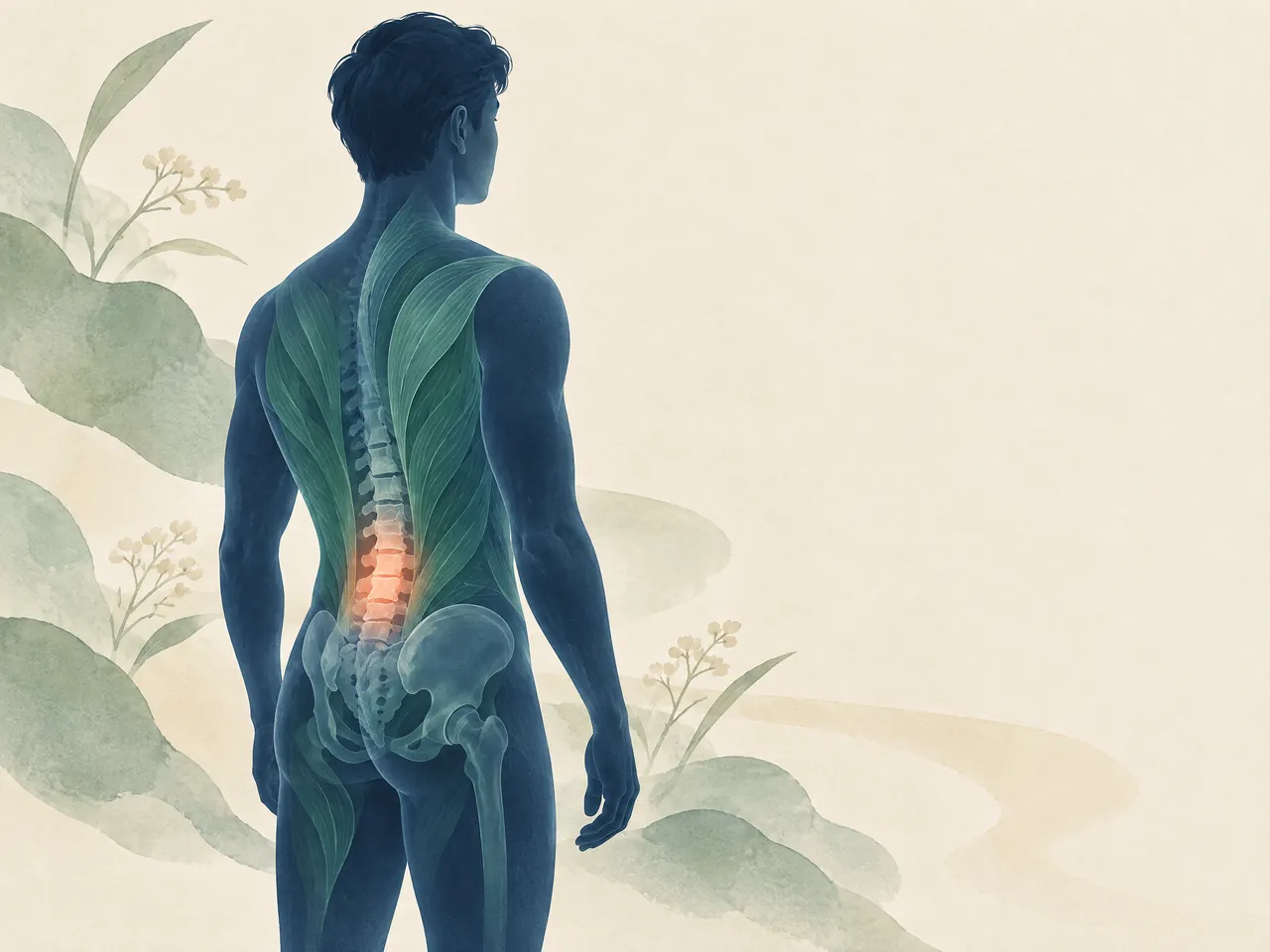
The short answer
Chinese medicine for low back pain may include an individual consultation and a discussion of acupuncture as an adjunct. It should not be presented as a guaranteed cure or as a replacement for medical assessment. NICE does not recommend acupuncture for low back pain with or without sciatica [1]. Seek urgent medical care rather than a routine low back pain acupuncture Hong Kong appointment if there are new symptoms in both legs, altered sensation around the genitals or anus, bladder or bowel changes, chest pain, serious trauma, fever or rapidly worsening pain [2].
Transparent pricing
See the fees.
Choose your care.
Explore our complete official price list, including first-trial prices, regular prices, packages and branch-specific options.
Opening WhatsApp prepares an enquiry; it does not send a message, take payment or confirm an appointment. Suitability and individual arrangements are confirmed during consultation.
Pain care
All prices in HKDExtracorporeal shockwave treatment
Shockwave treatment for deep-tissue and fascial care. The Kwun Tong clinic offers the multi-area options shown below.
Priced by branch
Branch-specific pricing
Prince Edward: HK$250 per area
Kwun Tong: HK$250 for 1 area / HK$450 for 2 areas / HK$600 for 3 areas
Pain care (manual therapy)
Includes Chinese medicine musculoskeletal assessment, manual joint techniques and tui na.
HK$580 (single session)
Chinese medicine musculoskeletal assessment
Pain care (acupuncture and manual therapy)
Combines acupuncture and manual therapy.
HK$680 (single session)
Combined care
Hair and scalp
All prices in HKDScalp health and hair-loss management
Includes AI scalp analysis, deep scalp and follicle cleansing, and scalp oil-control care.
HK$380 (first trial)
Regular price: HK$680
- 6 sessions: HK$3,480 (HK$580 per session)
- 12 sessions: HK$5,760 (HK$480 per session)
- 20 sessions: HK$8,600 (HK$430 per session)
- 30 sessions: HK$11,400 (HK$380 per session)
Hair acupuncture and Chinese herbal medicine package
Includes scalp acupuncture and 3 days of Chinese herbal medicine that does not require decoction.
HK$580 (single session)
Registered Chinese Medicine Practitioner consultation
- 6 sessions: HK$3,180 (HK$530 per session)
- 12 sessions: HK$5,760 (HK$480 per session)
- 20 sessions: HK$8,600 (HK$430 per session)
- 30 sessions: HK$11,400 (HK$380 per session)
Combined hair and scalp treatment
Combines acupuncture and Chinese herbal medicine with salon-level scalp and follicle care. Packages include complimentary hair-care shampoo and serum.
HK$1,260 (single session)
Combined treatment
- 8 sessions: HK$8,640 (HK$1,080 per session)
- 16 sessions: HK$15,680 (HK$980 per session)
- 20 sessions: HK$18,600 (HK$930 per session)
- 30 sessions: HK$26,400 (HK$880 per session)
Weight management
All prices in HKDFull-body acupoint embedding for weight management
Includes full-body acupoint embedding. Packages include complimentary Chinese herbal medicine for weight management, with the number of included days scaled to the package. Embedding material and the individual treatment arrangement are confirmed during consultation; this is not a cosmetic thread lift.
HK$980 (single session)
No trial session
- 10 sessions: HK$7,800 (HK$780 per session)
- 20 sessions: HK$14,600 (HK$730 per session)
- 30 sessions: HK$20,400 (HK$680 per session)
Facial acupuncture
All prices in HKDFacial acupuncture (basic)
Includes facial acupuncture and meridian-based facial care, including care for facial puffiness.
HK$480 (first trial)
Regular price: HK$680
- 10 sessions: HK$5,200 (HK$520 per session)
- 20 sessions: HK$9,600 (HK$480 per session)
- 30 sessions: HK$13,500 (HK$450 per session)
Facial acupuncture (advanced)
Includes enhanced facial acupuncture with a specially formulated moisturising mask and serum.
HK$780 (first trial)
Regular price: HK$1,180
- 10 sessions: HK$9,000 (HK$900 per session)
- 20 sessions: HK$16,600 (HK$830 per session)
- 30 sessions: HK$23,400 (HK$780 per session)
Chinese medicine
All prices in HKDAcupuncture and Chinese herbal medicine package
Includes a Chinese medicine consultation with pulse assessment, body acupuncture and 3 days of Chinese herbal granules that do not require decoction.
HK$580 (single session)
Chinese medicine consultation with pulse assessment
Chinese medicine for low back pain: what a low back pain acupuncture Hong Kong assessment considers before low back pain acupuncture treatment
Low back pain is a symptom rather than a single diagnosis. It may be linked with a strain, sustained posture, a disc-related problem, joint changes or nerve irritation; sometimes no single structural explanation is identified. The Hong Kong Hospital Authority notes that pain in this region may involve muscles, tendons, discs and facet joints, and may extend to the buttocks or backs of the thighs [3]. That range is why a useful conversation begins with the story of this episode, not with an assumption that a scan, a familiar label or a traditional pattern explains every ache.
It is also worth separating a new episode from a familiar flare. A new pain after a fall, a change in pain location, or a flare that no longer behaves like previous episodes deserves fresh attention. Bring any previous imaging reports if you have them, but do not assume an old result identifies the present source of pain. NICE says imaging is not routinely offered in a non-specialist setting and should be considered in specialist care only when the result is likely to change management [1]. The same principle applies to traditional and conventional conversations: assessment should be driven by the current symptoms and function, not by a label alone.
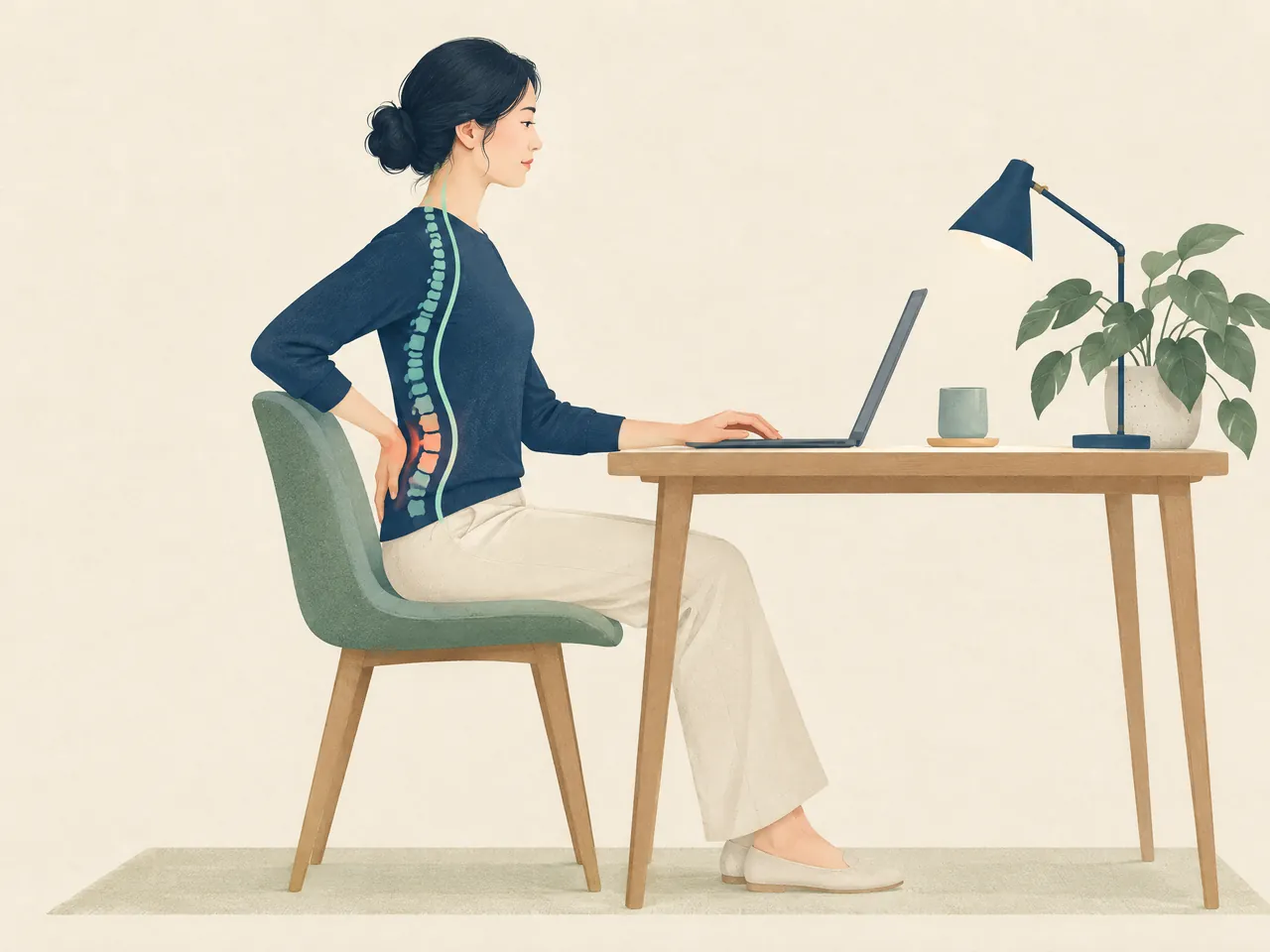
Chinese medicine for low back pain: recording symptoms before a low back pain acupuncture Hong Kong consultation and low back pain acupuncture treatment
Bring a brief record rather than trying to remember everything while in pain. Note when the episode began, whether it was sudden or gradual, the exact area involved and whether the pain stays in the back or moves into a buttock, thigh, calf or foot. Describe its character in ordinary language: aching, catching, burning, tight, sharp, numb or tingling. Also note what was happening shortly before it began, such as lifting, a long drive, repeated bending, an unfamiliar workout or several hours at a screen. This information is more useful than trying to decide the diagnosis alone. A clinician also needs to know what makes it easier or worse, whether sleep is interrupted, how walking and sitting are affected, and whether the pain is changing from day to day.
Chinese medicine for low back pain: common patterns discussed in low back pain acupuncture Hong Kong care and low back pain acupuncture treatment
A Chinese medicine practitioner may ask about the quality of pain, sensitivity to cold or damp conditions, fatigue, sleep, digestion, stress, prior injuries and medicines. Observation and palpation may form part of an in-person assessment. In traditional practice, terms such as cold-dampness, blood stasis or kidney deficiency may be used to organise a pattern discussion. They are traditional approaches, not modern medical diagnoses, and they do not prove that a particular tissue is injured or that a serious condition has been excluded. A Hong Kong acupuncture guideline likewise describes syndrome differentiation as dependent on traditional theory and clinical experience, with relatively low-grade evidence for that part of its roadmap [4]. Clear communication about medical history and existing care helps avoid treating the label rather than the person.
Compare your options
| What to notice | Why it matters in an assessment | Appropriate next step |
|---|---|---|
| Pain mainly in the low back after a familiar strain or prolonged posture | Helps describe the episode, triggers and limits on routine activities | Record the pattern and arrange an assessment if it persists, recurs or affects daily life |
| Pain moving into one leg, with tingling or numbness | May need a more detailed neurological and medical history | Tell the clinician exactly where it travels and whether it is progressing |
| New symptoms in both legs, saddle-area sensory change, or bladder or bowel change | These are emergency warning symptoms | Seek immediate emergency medical assessment rather than a routine acupuncture appointment |
| Fever, feeling unwell, serious trauma, chest pain, unexplained weight loss or rapidly worsening pain | May indicate a problem requiring urgent medical evaluation | Use urgent or emergency medical services as appropriate; do not rely on self-care alone |
| Considering acupuncture while using medicines or receiving other treatment | Safety and coordination depend on the full health picture | Bring a medicines list and discuss whether acupuncture is suitable as an adjunct |
On smaller screens, scroll the table sideways to compare all columns.
Chinese medicine for low back pain: evidence and expectations for low back pain acupuncture Hong Kong and low back pain acupuncture treatment
People often search for an answer after ordinary tasks become difficult: getting up from a chair, carrying shopping, commuting, turning in bed or returning to exercise. An assessment should make room for that practical goal while being honest about uncertainty. If acupuncture is raised, ask what it is intended to complement, what changes would count as meaningful for you, how progress will be reviewed and when conventional assessment should be brought in. This is more useful than deciding in advance that one approach must work for every type or duration of low back pain.
Conventional assessment and complementary discussions do not have to compete. If you are already seeing a doctor, physiotherapist or other clinician, say so and share the plan rather than starting parallel care without context. A low back pain acupuncture Hong Kong consultation is a place to ask informed questions, not a reason to discontinue prescribed treatment on your own. If there is concern about a specific cause, new neurological symptoms, or a major limitation in ordinary activity, the order of care matters: medical evaluation may need to come first. It is reasonable to ask how information will be shared and what would trigger referral or reassessment.

Chinese medicine for low back pain: what guidance says about low back pain acupuncture Hong Kong and low back pain acupuncture treatment
Guidance is not uniform, so readers deserve the distinction rather than a sales claim. NICE advises clinicians not to offer acupuncture for managing low back pain, with or without sciatica [1]. Its guidance also encourages tailored self-management and continuing normal activities where possible. A published Hong Kong acupuncture guideline sets out an assessment and practice approach for practitioners, including exclusions and monitoring, but its authors state that evidence supporting acupuncture for low back pain is not sufficient [4]. These documents answer different questions: one makes a healthcare recommendation, while the other describes practice in a local acupuncture context. Neither justifies a promise that needles will repair a disc, remove a nerve compression or eliminate recurrent pain. For further background, see acupuncture for low back pain.
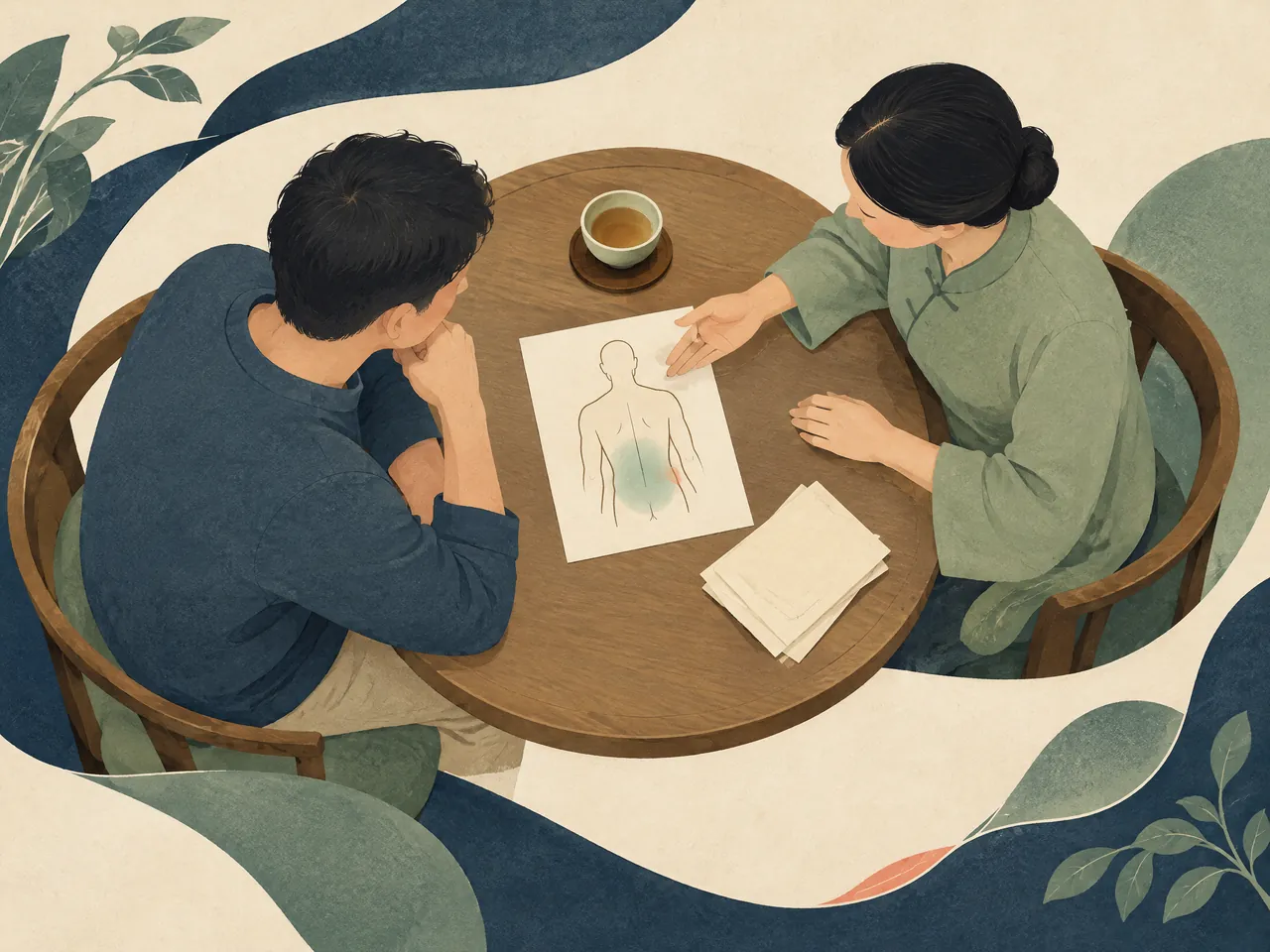
Chinese medicine for low back pain: why low back pain acupuncture Hong Kong advice should not promise results from low back pain acupuncture treatment
A responsible low back pain acupuncture treatment discussion separates comfort, function and diagnosis. A person may hope to sit through work with less discomfort, resume a short walk or sleep more easily; those are individual aims to review, not guaranteed outcomes. There is no reliable universal number of sessions, and an online article cannot determine needle placement, whether acupuncture is suitable, or whether it should be stopped. Do not self-needle. Tell the practitioner about blood-thinning medicines, bleeding problems, pregnancy, implanted devices, fainting history, allergies and all current treatments. The Hong Kong guideline identifies bleeding disorders and severe visceral disease among situations unsuitable for acupuncture and says serious spinal or systemic pathology needs a complementary, not replacement, approach [4]. Readers comparing claims may also find is acupuncture effective for lower back pain helpful.
Questions worth asking before agreeing to a plan include: What information from my symptoms suggests acupuncture is or is not appropriate? What side effects or reactions should I report? Which clinician should I contact if the pain changes? How will we assess whether my goal is being met? These are not confrontational questions. They make consent meaningful and support coordinated care. A practitioner should not advise a reader to begin needling at home, prescribe a personal herbal formula through general web content, or set a fixed course before evaluating the individual. An honest plan leaves room to pause, refer, or use a different approach when the circumstances call for it.
Chinese medicine for low back pain: self-care and safety around low back pain acupuncture Hong Kong and low back pain acupuncture treatment
For many uncomplicated episodes, a plan is not just about a treatment room. It is about how to keep moving within a tolerable range while avoiding the boom-and-bust pattern of doing too much on a better day and then remaining still for days. The NHS advises people with back pain to stay active and continue daily activities where possible, rather than stay in bed for long periods [2]. This is general information, not a personalised exercise prescription. A painful movement that is severe, new or clearly worsening is a reason to stop and seek individual advice.
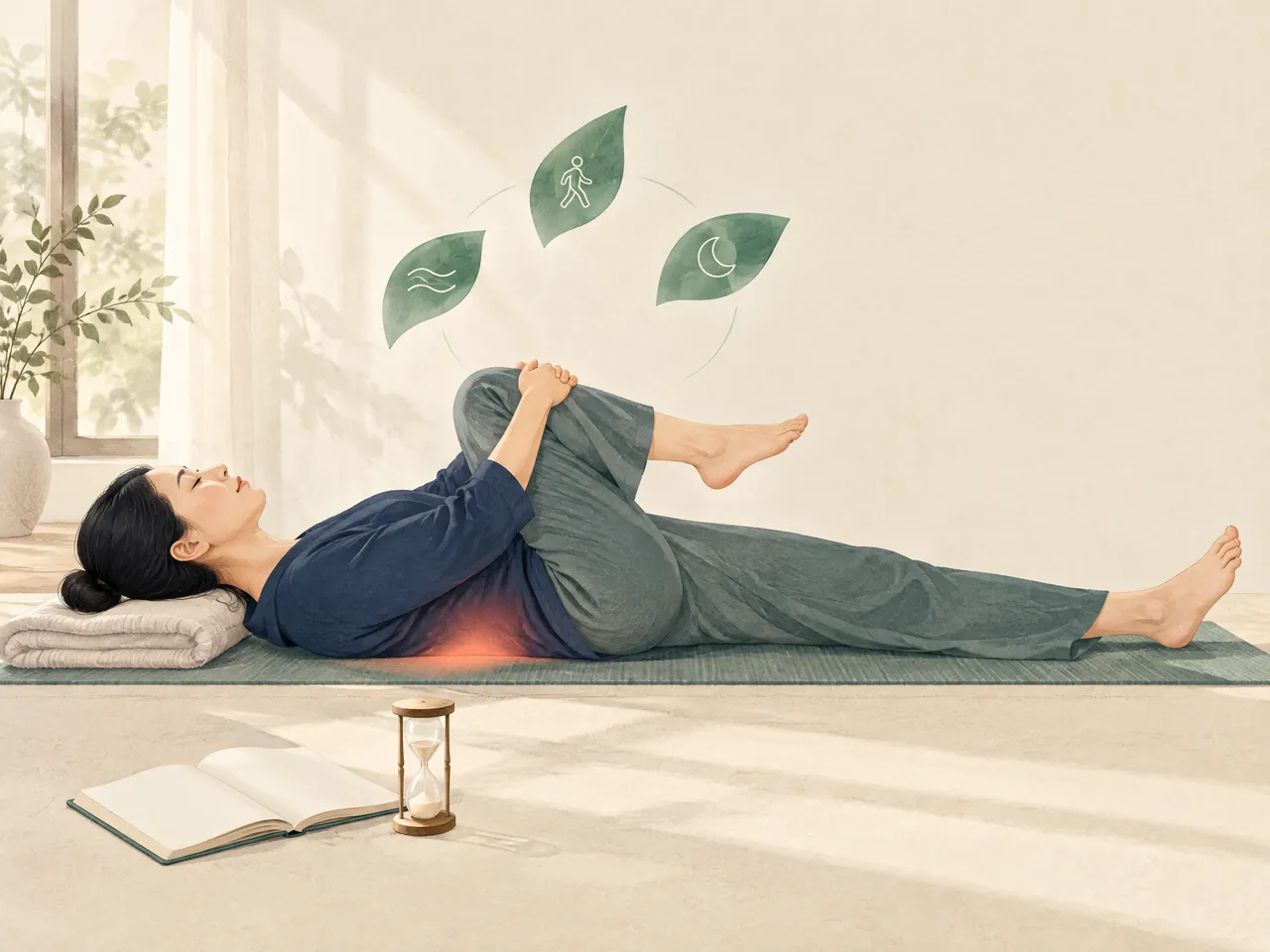
Low back pain can make people cautious about every movement, yet complete stillness can make ordinary tasks feel harder later. Choose manageable changes: break up one long sitting period, use a position that reduces strain during a task, or take a shorter route on a walk and build from there if it is comfortable. There is no single correct posture for every body or job. What matters is noticing whether a position can be varied and whether a gradual adjustment is tolerated. A clinician can tailor advice when a job involves driving, lifting, standing, caring duties or a recent return to sport.

Chinese medicine for low back pain: heat, cold and movement alongside low back pain acupuncture Hong Kong or low back pain acupuncture treatment
Heat or cold can be a comfort choice, not a test of the cause of pain. The NHS suggests a wrapped ice pack for pain and swelling and a wrapped heat pack for joint stiffness or muscle spasm [2]. Keep a cloth between the pack and skin, use the option that feels comfortable, and stop if skin irritation, numbness or worse pain occurs. A short, gentle walk, changing position during a desk task, or a gradual return to familiar movement may be more realistic than a demanding new routine. The Hospital Authority also highlights posture, prolonged positions and work that involves sustained bending as contributors worth discussing [3]. For a related explanation, read acute low back pain causes; for persistent but non-emergency symptoms, nonspecific low back pain acupuncture adds useful context.
Workstation and travel habits are common opportunities for small changes. During a long computer session, stand up and change position before discomfort becomes intense instead of waiting for one long break. When lifting, plan the route, keep the object close where possible, avoid twisting while carrying, and get help for an awkward load. These are general load-management ideas, not a substitute for assessment after an injury. Do not force a stretch, exercise or self-massage because an online routine promises a quick release. Stop if it creates sharp or spreading pain, new numbness, dizziness or another worrying symptom, then ask a qualified clinician what is appropriate for your situation.

Chinese medicine for low back pain: red flags requiring care beyond low back pain acupuncture Hong Kong and low back pain acupuncture treatment
Do not wait for a routine acupuncture discussion if back pain comes with weakness, tingling, numbness or pain in both legs; loss of feeling around the genitals or anus; or new difficulty controlling or passing urine or stool. The NHS lists these as reasons for immediate emergency assessment, alongside chest pain and pain after a serious accident [2]. Feeling feverish or generally unwell, severe pain that begins suddenly, or pain that worsens quickly also warrants urgent assessment [2]. The Hospital Authority advises medical review for concerns such as persistent numbness, weakness, urinary retention, loss of bowel control, fever or marked weight loss [3]. These symptoms do not prove one diagnosis, but they change the priority: prompt medical assessment comes before self-care, herbal discussion or low back pain acupuncture treatment.
Care and health guide
Low back discomfort: care information
This directory brings together services, reading, and visit information related to low back discomfort, to help you prepare questions for a consultation.
When low back discomfort affects your day, noting when it occurs, its relation to activity, and what you have already tried can help prepare a consultation; acupuncture for low back pain is a relevant service or reading entry point.
Individual circumstances differ, and acupuncture Hong Kong offers related information to help you understand options and prepare questions.


Your questions, answered
Frequently asked questions
Can acupuncture help low back pain?
It may be discussed as an adjunct after an in-person assessment, but it is not a guaranteed treatment. NICE advises not to offer acupuncture for low back pain with or without sciatica [1]. A local acupuncture practice guideline describes a clinical approach but acknowledges insufficient supporting evidence [4].
What should I record before a low back pain appointment?
Write down the onset, location, pain quality, triggers, relieving factors, effect on sleep and daily activity, and any symptoms in the legs. Include prior injuries, diagnoses, scans, current medicines and any new fever, urinary or bowel changes, or unexplained weight loss.
When is low back pain an emergency?
Seek immediate emergency assessment for symptoms in both legs, loss of sensation around the genitals or anus, bladder or bowel changes, chest pain, or pain following a serious accident [2]. Rapid deterioration, severe sudden pain, fever or feeling generally unwell also needs urgent medical advice [2].
Should I use heat or ice for a sore low back?
They are comfort measures, not a diagnosis or a cure. The NHS suggests a wrapped ice pack for pain and swelling and a wrapped heat pack for stiffness or muscle spasm [2]. Protect the skin, stop if symptoms worsen, and seek advice for persistent or changing pain.
Sources and further information
- [1] [1] NICE: Low back pain and sciatica in over 16s: assessment and management
Referenced for: Directly verified for assessment, activity and the recommendation not to offer acupuncture for low back pain with or without sciatica.
- [2] [2] NHS: Back pain
Referenced for: Directly verified for activity, heat and ice guidance, and urgent or emergency warning symptoms.
- [3] [3] Hong Kong Hospital Authority Smart Patient: Low Back Pain
Referenced for: Directly verified for local terminology, common contributing factors and escalation context.
- [4] [4] Acupuncture for low back pain: a clinical practice guideline from the Hong Kong taskforce of standardized acupuncture practice
Referenced for: Directly verified for the scope and evidence limitations of its acupuncture assessment and practice approach.