Turn a reference photograph into a dry-length brief
Bring one reference for the lower edge and, if needed, another for how the sides sit. Explain which feature you mean in each; otherwise a photograph of a lob may also suggest layers or a fringe you do not want. Describe the desired result with your head level and hair dry, rather than asking for the same number of centimetres to be removed everywhere.
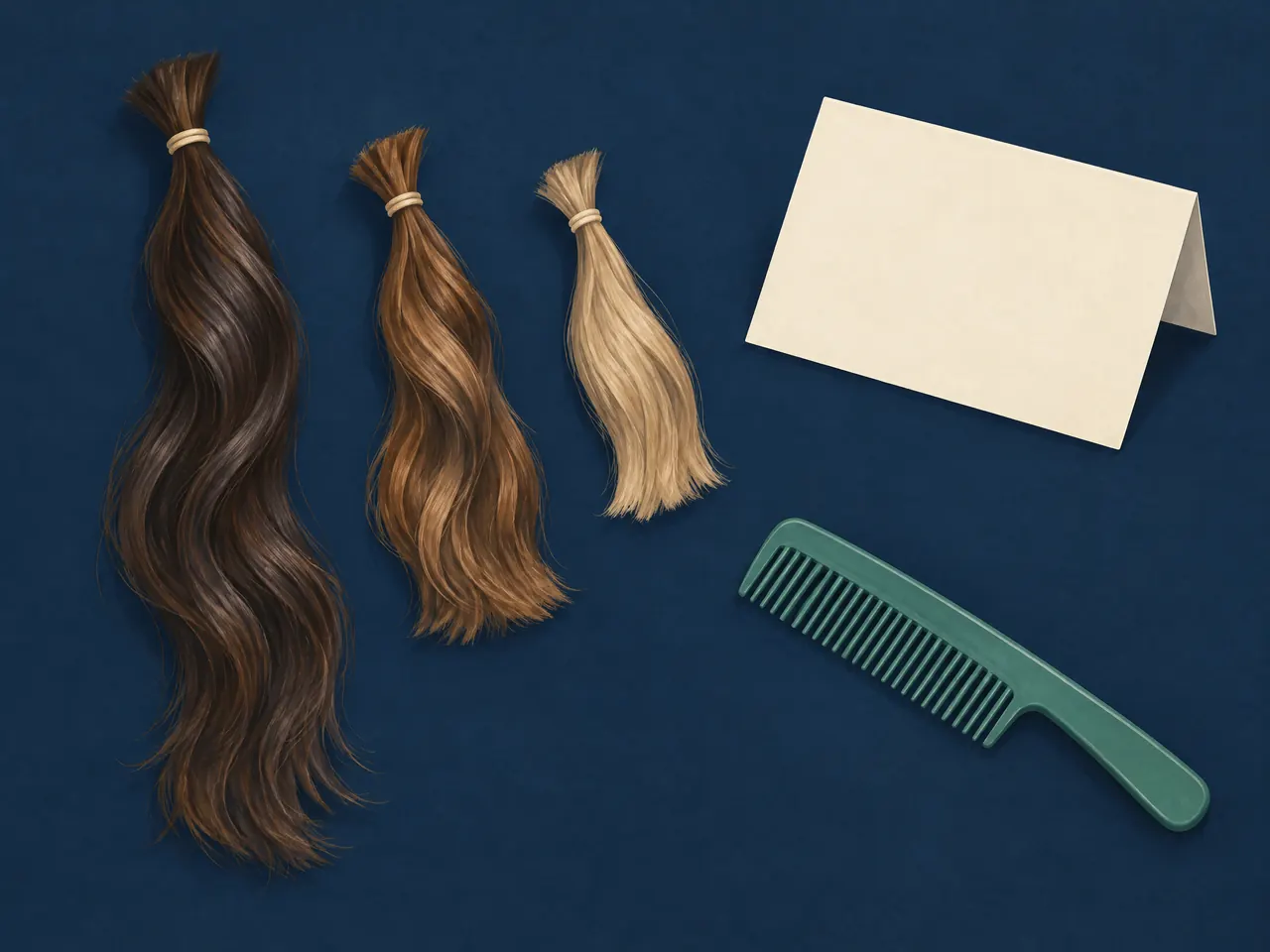
A useful brief might be: keep the back clear of my usual collar, leave the sides long enough for an ear tuck, and do not shorten the front into a fringe. Ask the stylist to point out any conflict between those requests before cutting. Separate practice tresses illustrate length differences, but cannot show exactly where a cut will sit on your own neck.
Name the sections that must retain their reach
Turn your tie-back test into a request about particular sections. Ask the stylist to identify the front pieces, hair beside the ears and lower nape separately before agreeing on the perimeter. Explain which pieces must enter your usual tie and which you are happy to secure with a clip. This makes a request for a shorter back more precise than simply saying that the haircut must still tie up.
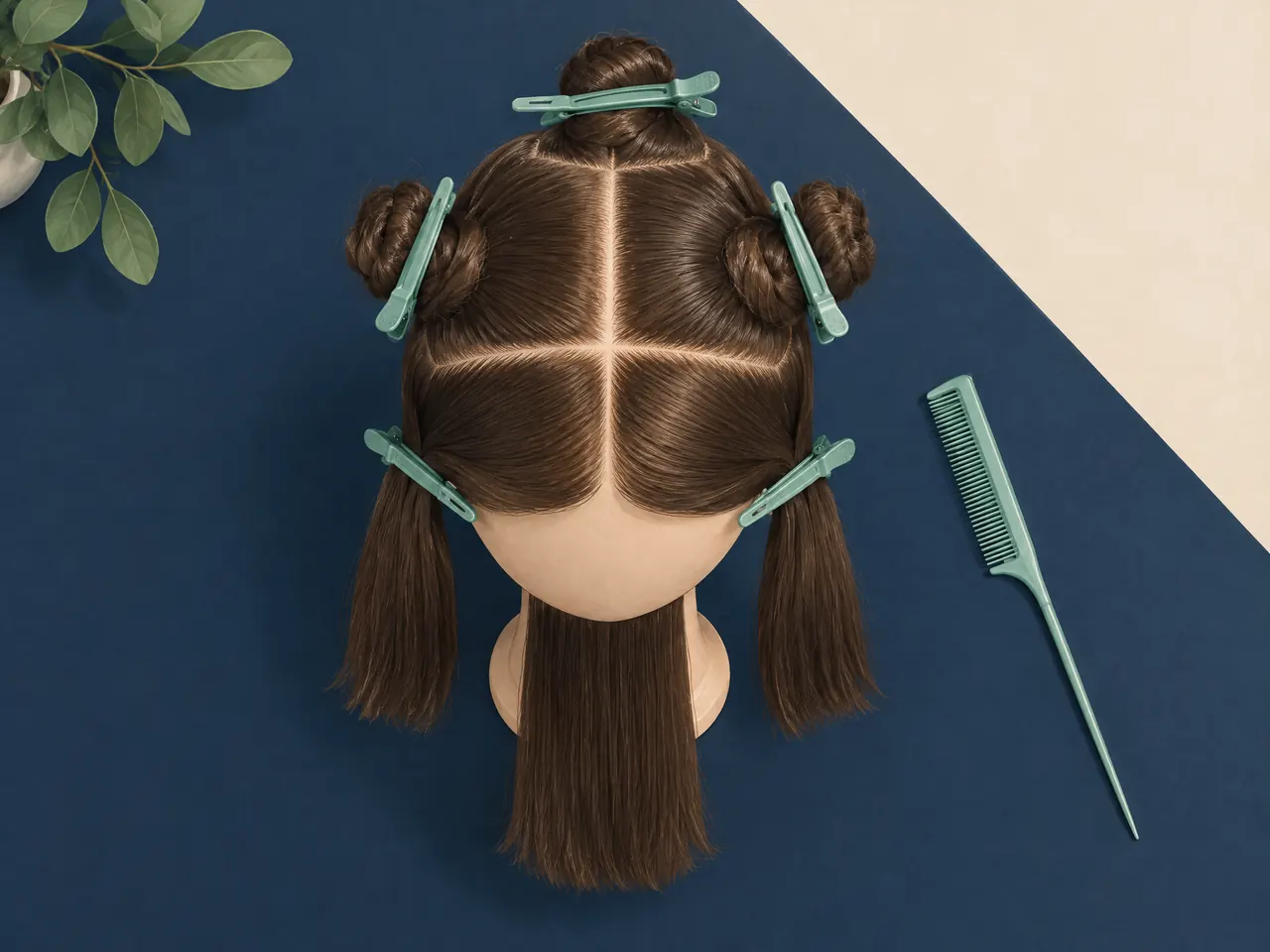
Repeat the comfortable arrangement yourself while those sections are still uncut. Do not pull harder to make the test pass: loose tie-back practice and covered styling bands remain the AAD advice [1]. The sectioned mannequin is a planning illustration, not proof that every section of a proposed bob or lob will reach an elastic.
Keep a fringe decision separate from the lower edge
If the reference includes a fringe, decide whether you want that feature before discussing the bob or lob perimeter. Show your usual parting and explain whether the front must tuck, clip back or stay loose. A photograph with the front swept sideways may hide the shortest pieces, so ask to see where those pieces would finish when resting without that arrangement.
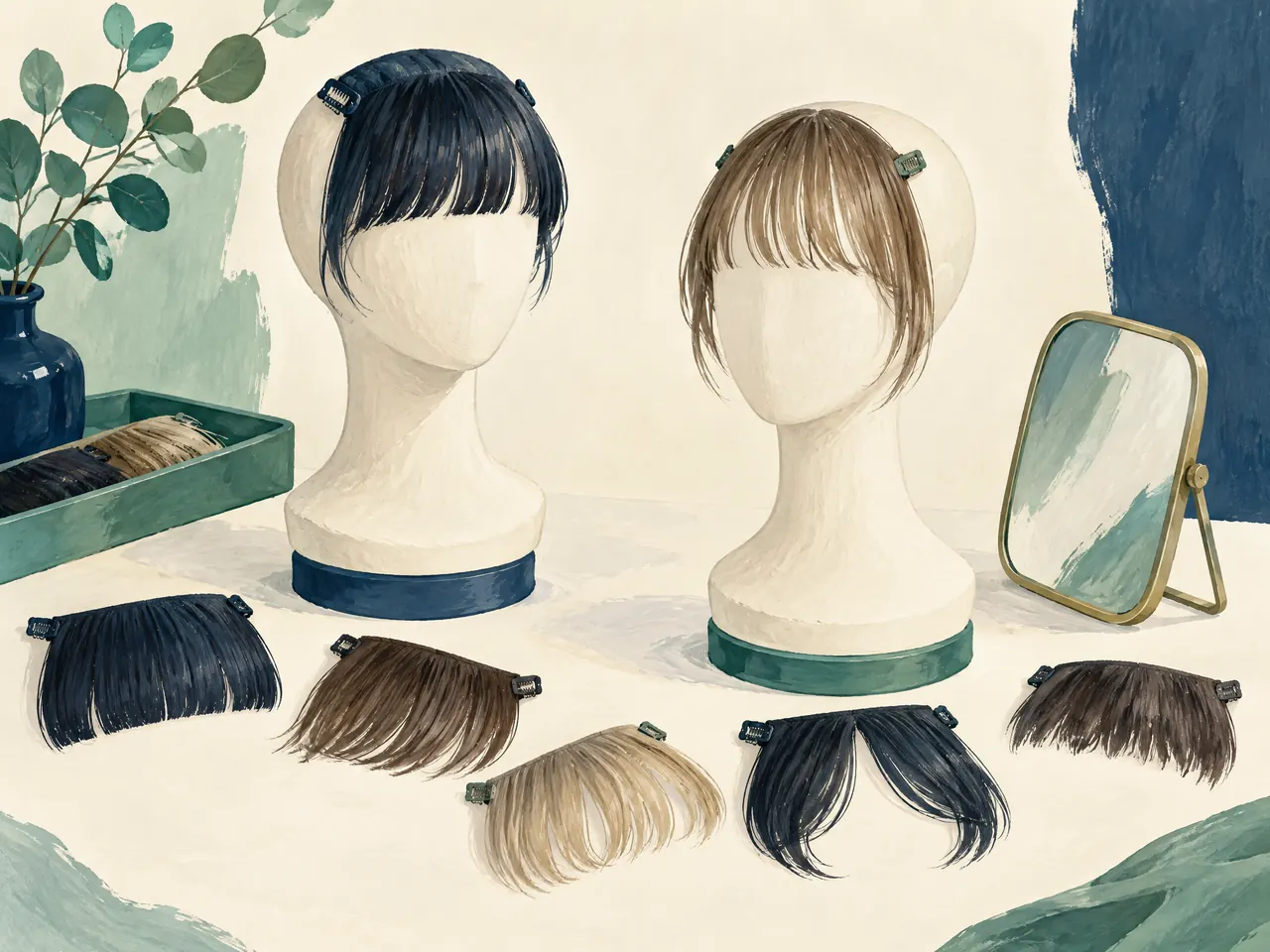
For a first substantial length change, you can request that the existing front be retained while the lower outline changes. That leaves the fringe decision open rather than combining every feature in the reference at once. Detachable practice fringe pieces help illustrate this separate choice; they do not demonstrate the result on your hair.
Check the end point with your usual texture visible
Bring a photograph from an ordinary dry-hair day if your consultation hair has been straightened or arranged into waves. Point out where your own bends sit and whether the ends have been stretched with a brush. Ask how the proposed dry edge will be assessed with that usual texture visible, rather than using the stretched length as your only reference.
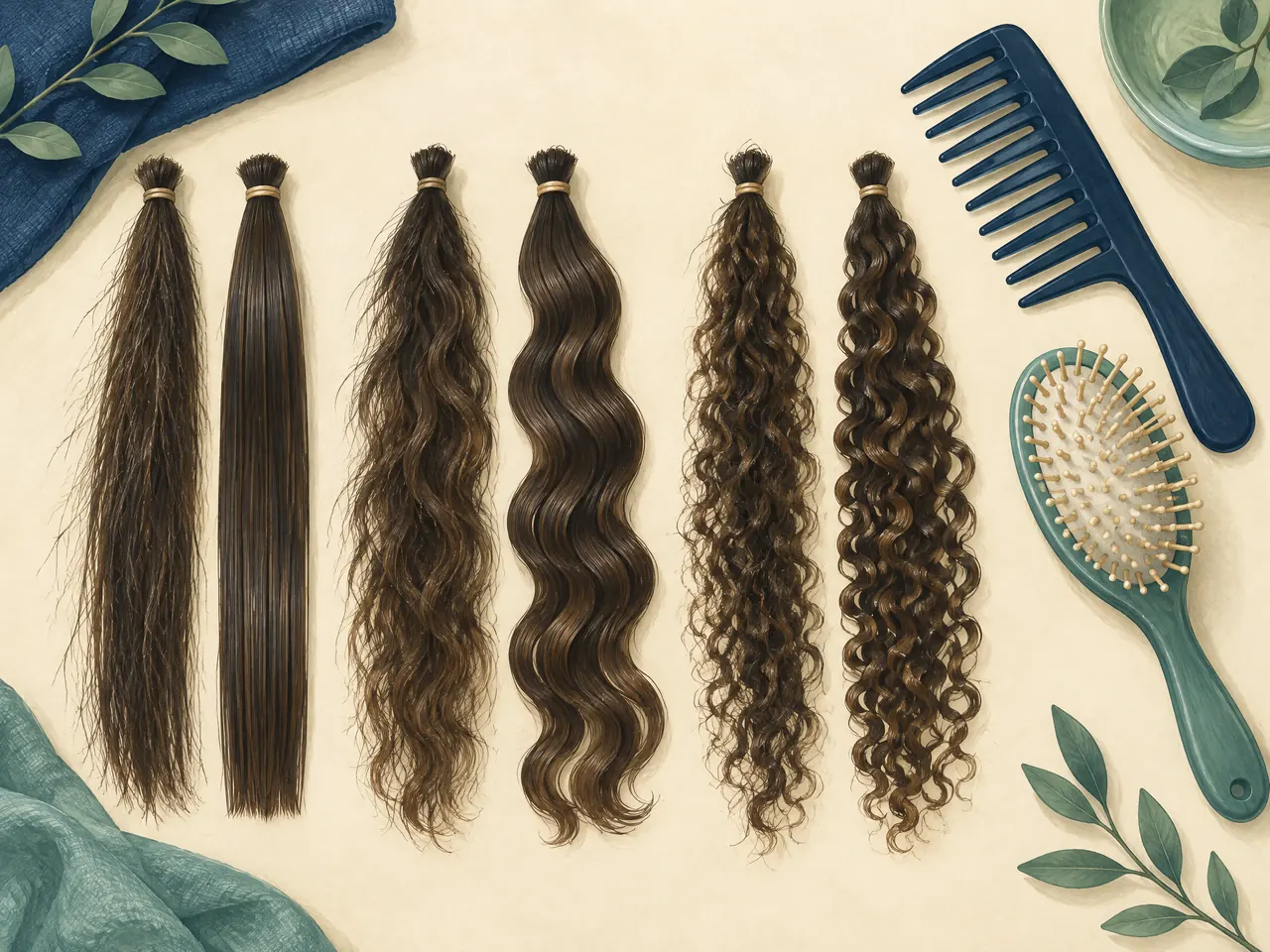
Keep the comparison focused on your hair: a straight, wavy or curly practice tress shows a different resting outline, not a rule assigning each texture to a bob or lob. If you want to keep natural movement, say which bend you like and which section you normally rearrange. That gives the stylist a specific preference without promising a perfectly uniform finish.
Ask for a finish you can repeat at the back
Before relying on a rounded salon finish, ask which parts were shaped with a brush and which were left to settle. If the back needs an action you cannot comfortably perform, explain that before choosing an outline you expect to wear that way. Ask to see the simpler finish you would use on a rushed morning, and distinguish that request from an occasional polished style.
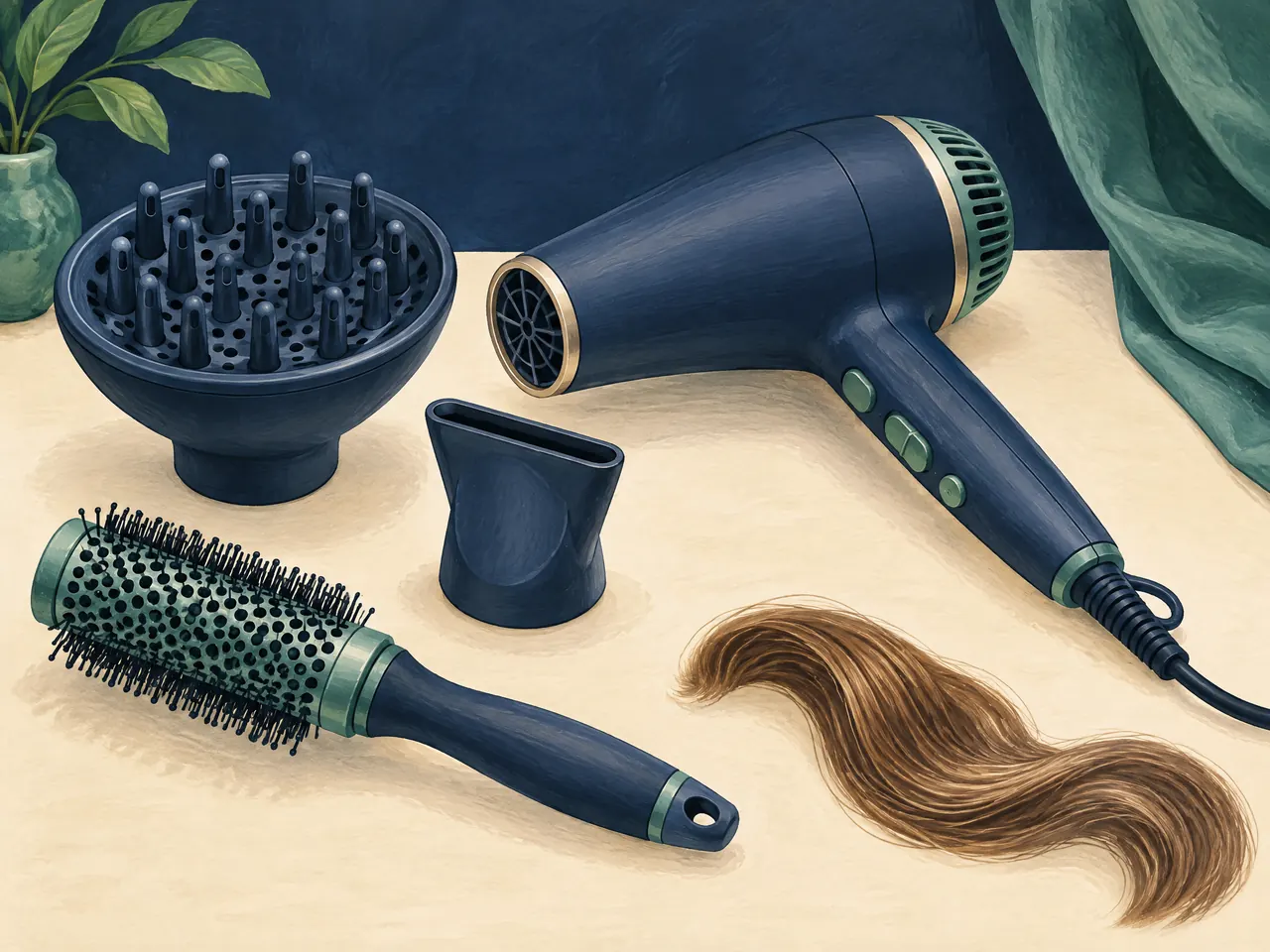
The dryer, nozzle and diffuser are prompts for discussing the tools already in your routine, not a shopping list. If using a flat iron, retain the AAD guidance for dry hair and low or medium heat [2]. A tool demonstration can clarify the work involved; it cannot guarantee that the edge will stay turned inward after sleep or contact with clothing.