
Prince Edward & Kwun Tong clinics · Home-visit enquiries elsewhere

TCM Lab

TCM Lab · Beauty & lifestyle / Root colour maintenance

Roots or lengths? Decide what actually needs a colour refresh

Content updated

Visible roots do not tell you whether the rest of your colour needs changing. A simple map of what you like, what has shifted and what remains uncertain can help you avoid booking a larger refresh than you actually want.

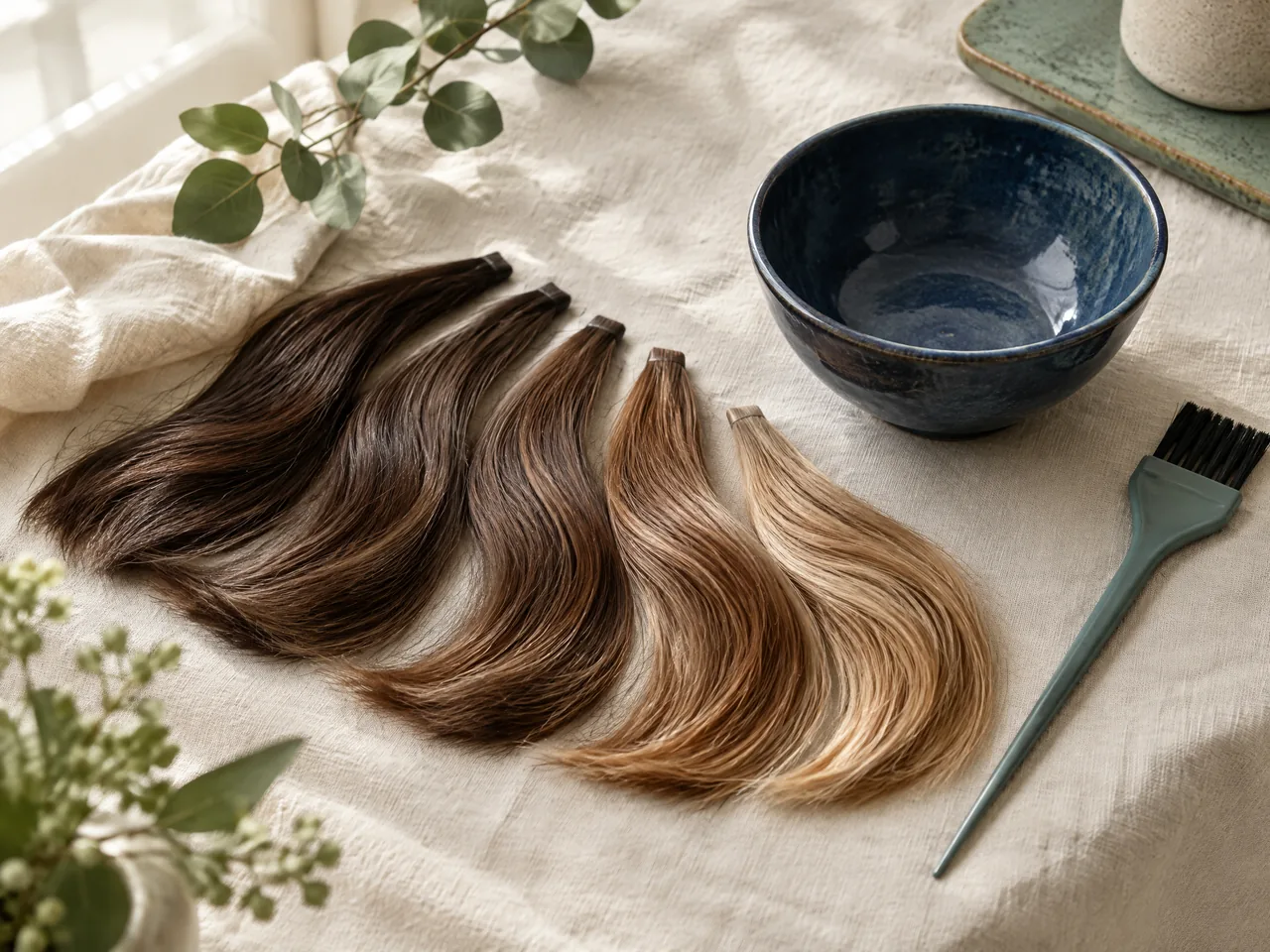
Illustrative colour swatches and tonal planning
Illustrative hair-lifestyle concept; not a client record or a Vit So portfolio photograph.

The short answer

Choose the scope by location and goal. If new growth is the only unwanted contrast, explore root-only colour while preserving the lengths. If the lengths have changed too, specify their separate colour goal. Ask how old processing boundaries will be handled, and confirm optional toning and the total quote before agreeing.

Vit So is an external hair and beauty website under the same ownership as TCM Lab. Its beauty services are separate from Chinese medicine care. This section is for beauty and lifestyle education, not diagnosis or treatment.

Map your colour before naming a service

Look at dry hair beside a window, away from direct sun, and divide your observations into three areas: new growth, previously coloured lengths and anything uneven. This is a visual record, not a diagnosis of hair condition. Along your usual parting, locate where the current natural colour meets the older colour. Then check the temples and lift a section at the back; one neat front view can conceal a different boundary underneath.

Record colour history beside that map. A dark section close to the scalp might be fresh growth, an intentional deeper root or an older colour band. Distance alone cannot identify it. If you have highlights, some dark strands may have been deliberately left uncoloured. Mark uncertain areas as uncertain instead of drawing an imaginary straight line across the whole head.

Label each area 'keep', 'change' or 'unsure'. Perhaps the temples need more coverage, the middle still looks right and the ends are lighter but attractive. The root touch up resource is relevant when your enquiry centres on regrowth; it is not a reason to place every darker section in the same application area. Your map should preserve the features you enjoy, not just list faults.

Test whether the root line or the lengths bother you most

Temporarily cover the root area with a plain headband, without adding a colour product. Look only at the lengths. Would you still want them recoloured? Then uncover the roots and loosely gather the lengths out of view. This separates two impressions that often merge into 'my colour looks tired'. It does not predict a salon result, but it can reveal which change matters most to you.

Describe the difference precisely. 'The ends look more orange than the middle' is more useful than 'everything is faded'. 'The white strands interrupt my dark parting' identifies contrast rather than an unwanted tone across the whole head. Compare an earlier photograph taken in similar light if available. Warm bathroom lighting and phone filters can make a colour difference look larger or smaller, so avoid judging from one image alone.

Keep colour and feel as separate questions. If the lengths still have the shade you want but feel rough or catch during detangling, that does not by itself establish a need for more dye. Conversely, smooth-feeling hair can have a colour you dislike. Set a visual priority first: soften the root contrast, change the warmth at the ends, or reconsider the overall shade. These lead to different scopes.

Compare three scopes, not just roots versus everything

There is a useful middle option between leaving all lengths alone and requesting a complete colour change: roots with a separately assessed refresh in selected coloured areas. For example, you might want a familiar brown at the roots while discussing only the warmer ends. Treat this as a proposed goal, not a guaranteed method or a claim that a particular salon offers it.

The root touch up vs full head colour comparison can help you frame the service enquiry, but decide what 'full' means for your own hair. Do you want every area changed, or simply a more coordinated overall appearance? Existing lighter ribbons may belong in the finished look. A request for uniform darkness could remove contrast you intended to preserve.

Vocational teaching published through BCcampus distinguishes a regrowth retouch from refreshing faded ends, with the latter assessed separately for condition and colour. That supports discussing separate zones rather than assuming the root formula should also be used everywhere else. It is teaching for a specific oxidative-colour lightening context, not a universal application recipe. [1] If the lengths need a substantially different shade or have uneven bands, widen the assessment rather than promising yourself a simple add-on.

Make the old processing boundary part of the plan

Overlap means applying product onto hair that has already been processed. Its significance depends on the product and previous work; it is especially important when lightening meets old lightening. The BCcampus teaching chapter warns that overlapping its lightening retouch onto previously lightened hair can cause banding and breakage. [1] This is a reason to ask about placement, not to select a developer strength or processing time yourself.

Tell the colourist which areas have been bleached, tinted or coloured at home, including applications still present far down the lengths. Ask them to identify the proposed boundary with you: where will root work stop, where would a different refresh begin, and what will remain untouched? If the boundary is unclear, further assessment is more useful than insisting that all visible darkness must be removed. Do not confuse a temporary tonal change with permanent repair of processed hair.

A smaller scope also does not remove dye safety requirements. The FDA advises following product directions and doing the instructed skin test before every use; previous uneventful colouring and a negative skin test do not rule out a reaction. It also advises against dyeing an irritated, sunburned or damaged scalp. [2] Share past reactions before booking and seek healthcare advice for symptoms rather than using a cosmetic appointment to investigate them.

Compare quotes against the areas you have agreed

Read a root touch up price alongside its stated scope, then ask whether your assessed regrowth fits that entry. Check whether the quote concerns ordinary colour maintenance, lightening or additional work through an old band. Those descriptions should not be treated as interchangeable simply because each starts near the scalp. A listed price is a starting point for identifying the applicable work, not confirmation of your personal total.

Request a short written breakdown: root work, any length or tone adjustment, washing and finishing, and optional additions. If a length refresh is suggested, ask what visible difference it is intended to make and what happens if you decline it. Confirm applicable length conditions and separate charges before comparing totals. An apparently cheaper root quote and a broader colour quote are not like-for-like unless their inclusions match.

Afterwards, keep one ordinary-light photograph and a note of which areas were coloured. At your next review, compare those areas separately rather than automatically repeating every stage. Vit So is an external hair-styling website under the same ownership as TCM Lab; its services are cosmetic, not Chinese medicine medical care. The useful decision remains yours: preserve what works, identify the change you want and agree only the work that serves it.

Take it into everyday life

A practical checklist

  • Inspect the parting, temples and back in comparable daylight; mark uncertain boundaries.
  • Label roots, mid-lengths and ends as keep, change or unsure.
  • Separate unwanted root contrast from changes in warmth, darkness or feel.
  • Record previous products and processing areas, including old work in the ends.
  • Ask where each application will begin and stop, especially beside old lightening.
  • Confirm product safety preparation, optional toning, inclusions and the total in writing.

Questions & answers

Can I refresh my roots while keeping lighter ends?

That is a valid visual goal to discuss. Explain that the lighter ends are intentional, rather than asking for an identical shade everywhere. Suitability and the application boundary need assessment, especially where those ends were previously lightened.

Does a warmer appearance mean I need full-head colour?

Not necessarily. Locate the warmth and compare it in similar lighting. Warmth confined to the ends raises a different question from a whole-head shade change. Discuss the desired tone and whether the rest should stay unchanged.

Is a dark ring near the scalp definitely new growth?

No. It may be a previous colour band or deliberate depth. Show the sequence of earlier services and identify what you do not know. A visible ring alone cannot establish that the hair is untreated.

Should root dye be pulled through the ends to make everything match?

Do not assume so. Previously processed lengths may need a separate product decision or no further colour. Ask what the proposed end application would achieve and how earlier processing will be taken into account.

How should I compare a root-only quote with one including toner?

Compare the application areas and intended changes, then check the inclusions. Ask whether toning is optional or part of the proposed colour goal, which areas it addresses and what the total becomes. A service label alone does not settle those details.

Sources & further context

Numbered references follow the order in which the sources are listed below. Service websites provide beauty-service context, not medical evidence.

  1. [1] BCcampus Open Education: Hair Colour for Hairstylists Level 2, section 4.3
  2. [2] U.S. Food and Drug Administration: Hair Dyes
  3. [3] Vit So: Root touch-up service resource
  4. [4] Vit So: Root touch-up versus full-head colour resource
  5. [5] Vit So: Published price resource

Give your current photograph and colour reference different jobs

Send a current-hair view to show the starting point, and a separate reference to explain the goal. Do not ask one older photograph to do both jobs. If you liked your colour immediately after a previous appointment, identify what you liked: its darker middle, quieter warmth or lighter pieces. Then say whether the roots should relate to today's lengths or to that earlier appearance. These can be different requests even when both are described as matching. The root-touch-up service resource explicitly asks readers to distinguish the current lengths from an earlier shade. [3]

Use an unfiltered wider view to show the overall pattern and a closer view for the area you want assessed. Keep a note of the lighting beside each image. If the ends look acceptable by a window but too warm beneath your usual indoor lamp, report both impressions rather than selecting only the photograph that looks most dramatic. A sample board can help you discuss this comparison, but it cannot show how your own previously coloured hair would respond to a product.
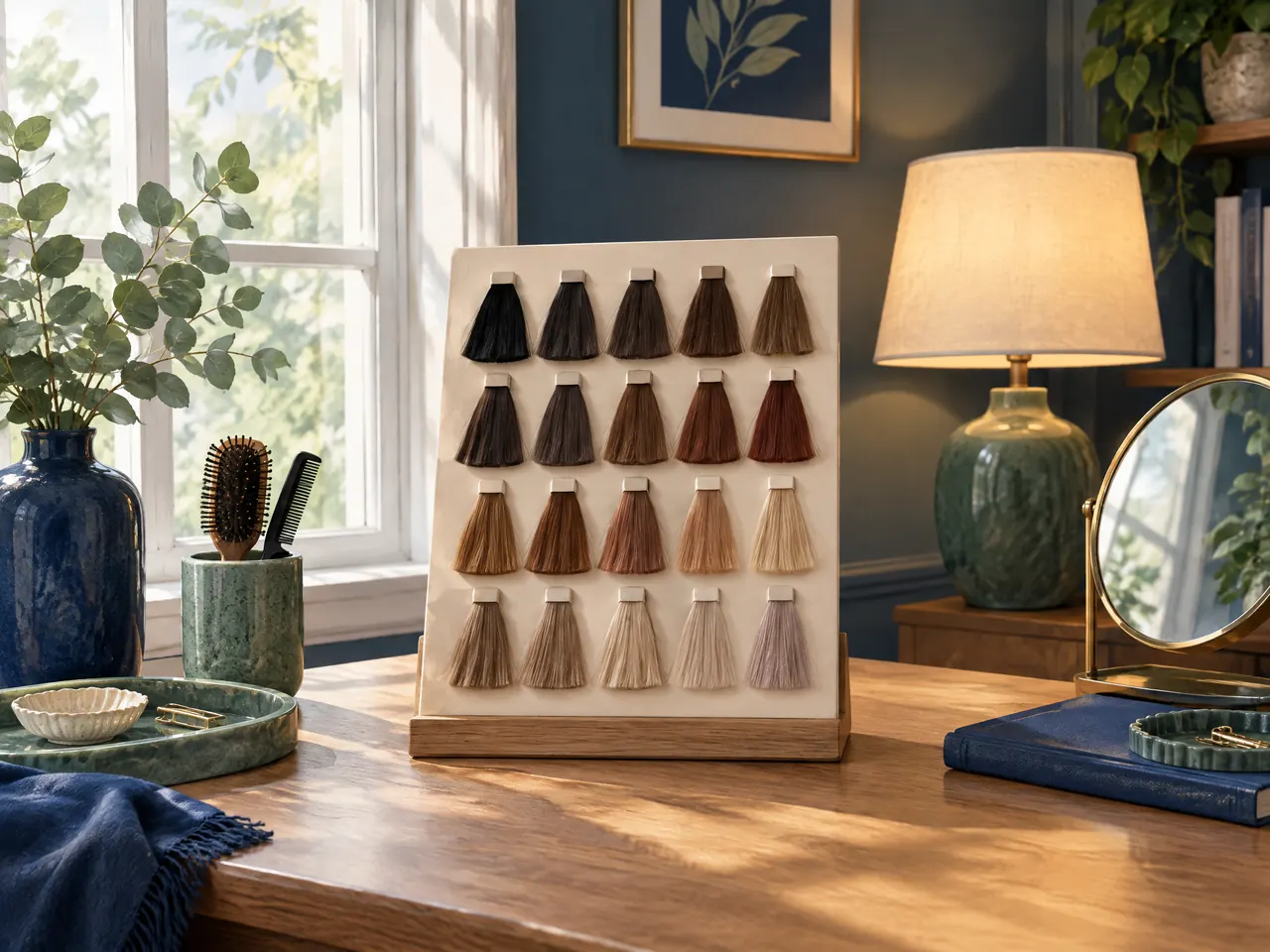
Neutral hair sample board between soft window daylight and a shaded indoor lamp, beside a mirror
A sample-board illustration for discussing colour in different light; not a colour result on someone's hair.Generated illustrative image

Turn the colour map into a brief that can be checked

Try a brief with a priority and a limit: 'I want the new growth to sit beside the brown middle; keep the lighter ribbons and assess the warm tips separately.' This tells the colourist what success would look like without choosing a formula. If your priority is different, make that explicit: 'I want a more consistent overall brown, but I need to understand what changing the lighter pieces would involve.' Neither request establishes suitability or reserves a particular technique.

Ask the colourist to explain the proposed areas using your normal parting, then check a side and back view. Sectioning helps make an underneath boundary visible; it is not proof that the hair on either side has the same history. Where your notes say 'unsure', leave the area open for assessment rather than converting it into an instruction to colour. If the recommended work is broader than your brief, ask which stated goal requires that change before agreeing to it.
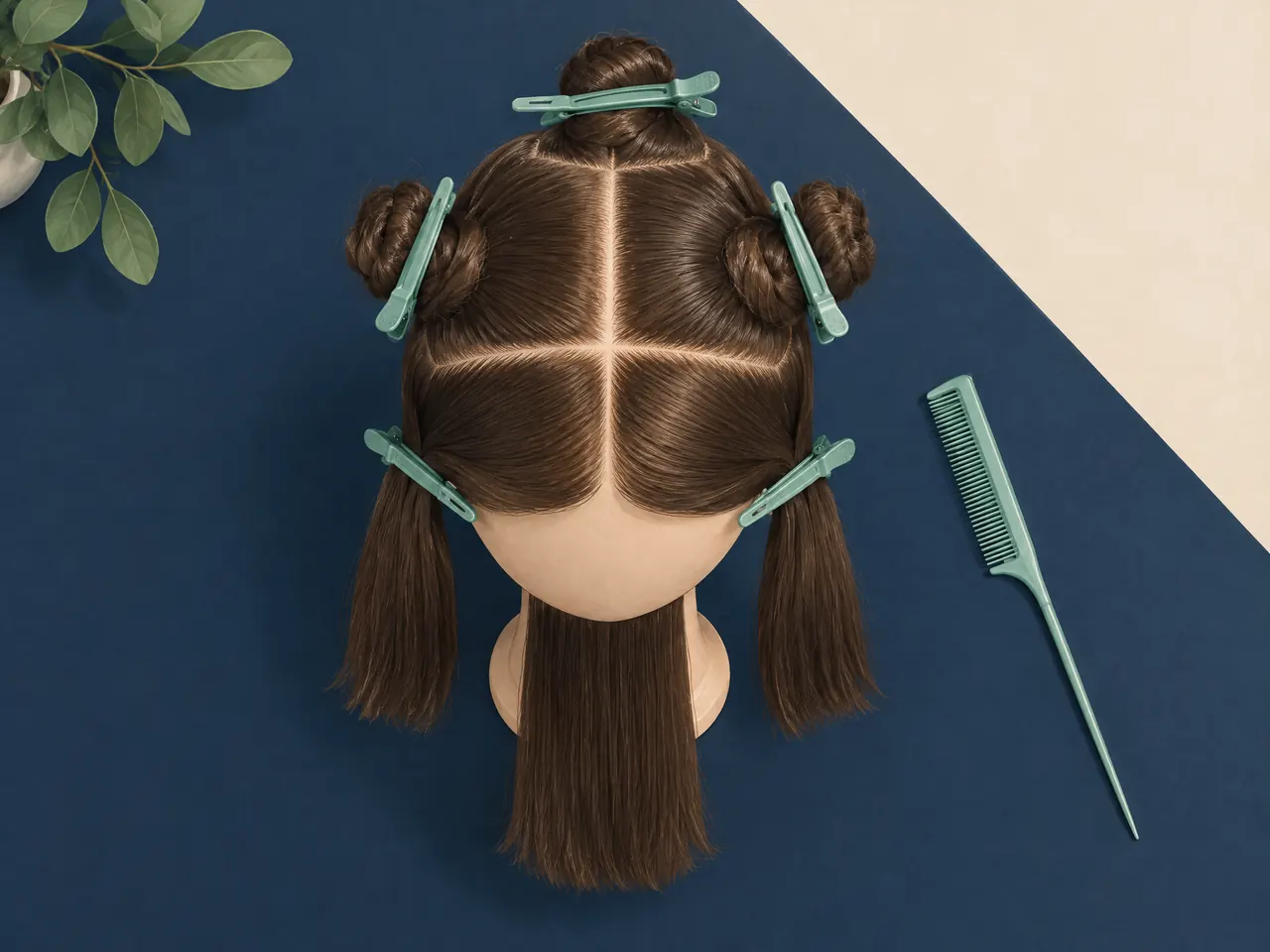
Faceless practice mannequin viewed from above, with hair divided into clipped sections and a tail comb beside it
Sectioned practice hair illustrates how different areas can be shown during a colour-scope discussion; it is not an application recipe.Generated illustrative image

Bring a handling note alongside the colour brief

If handling is also a concern, describe an ordinary experience rather than conducting a home test: 'The comb catches at the tips after washing, while the middle detangles more easily.' Note whether the concern affects all the lengths or particular lighter sections. Avoid deliberately stretching, pulling or repeatedly brushing the hair to investigate it. A comparison of straight, wavy and curly practice tresses is a reminder to describe your own texture, not a way to classify damage from an illustration.

Keep this note separate from 'the tips look too warm'. You may have a tone question, a handling question or both, and should hear what each proposed service is intended to address. BCcampus's specific oxidative-colour teaching assesses condition, texture, depth and tone before refreshing faded ends. [1] It does not justify prescribing the same end treatment for every reader. If the colour proposal changes after assessment, request a revised area-by-area explanation rather than assuming that a larger appointment will solve both concerns.
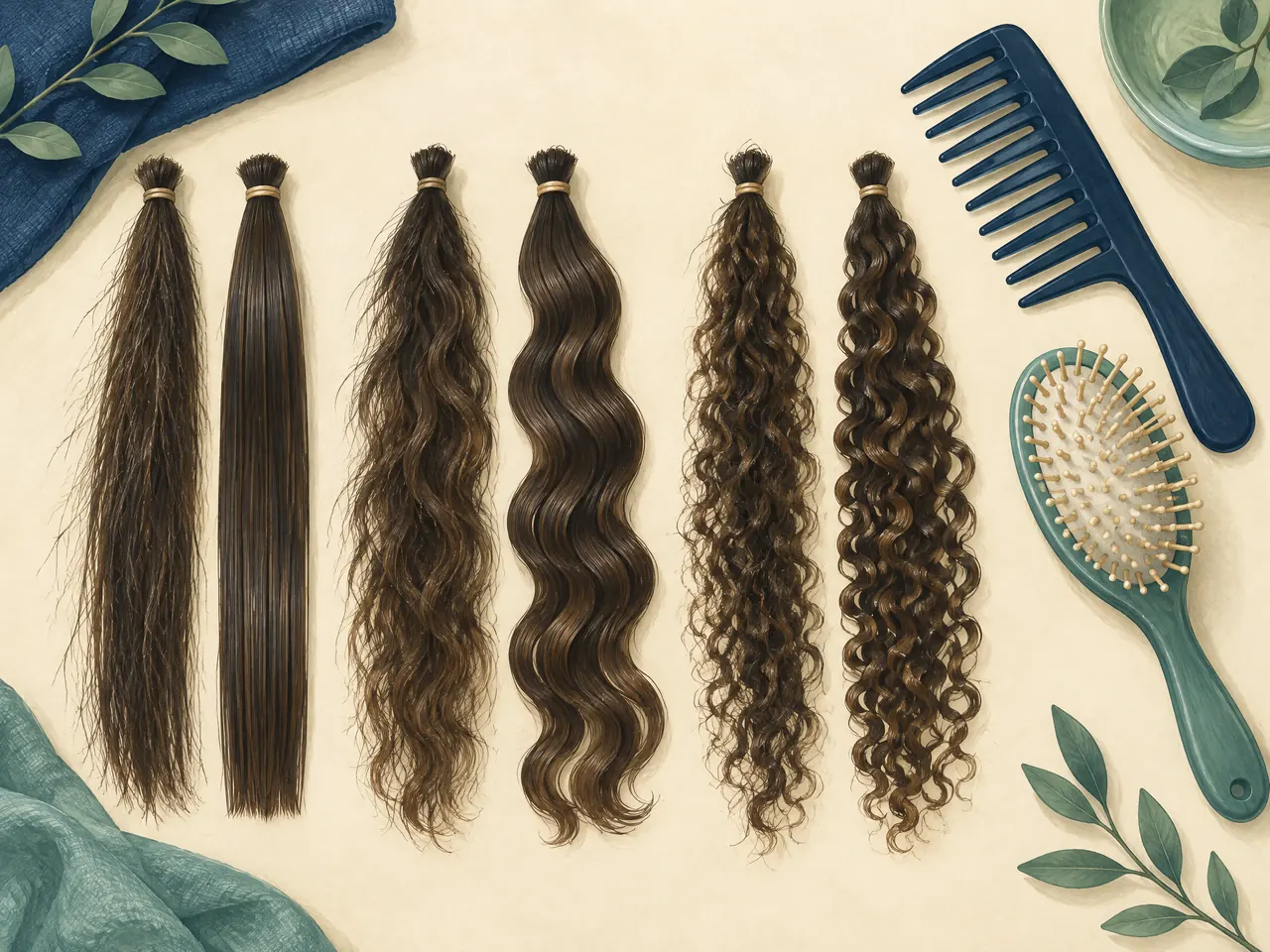
Separate straight, wavy and curly practice hair tresses beside a wide-tooth comb and soft brush
Practice tresses illustrate texture vocabulary for a handling discussion; they do not demonstrate damage, repair or a product effect.Generated illustrative image

Clinic enquiries

Contact and appointment arrangements

Clinics
Prince Edward and Kwun Tong
Opening hours
11:00–21:00
WhatsApp and telephone
+852 6940 5663

Appointments, practitioner availability and service arrangements are confirmed via WhatsApp.

Please mention any consultation language needs in your WhatsApp enquiry so that arrangements can be confirmed.

Enquire via WhatsApp
Food, gifts and floral lifeWhatsApp enquiry