
Prince Edward & Kwun Tong clinics · Home-visit enquiries elsewhere

TCM Lab

TCM Lab · Beauty & lifestyle / Men’s hair colour

Subtle men’s colour without erasing every grey

Content updated

A small colour change need not mean a completely dark head of hair. Decide which contrasts you enjoy, which distract you, and how the finish should look as your short haircut grows and is trimmed.

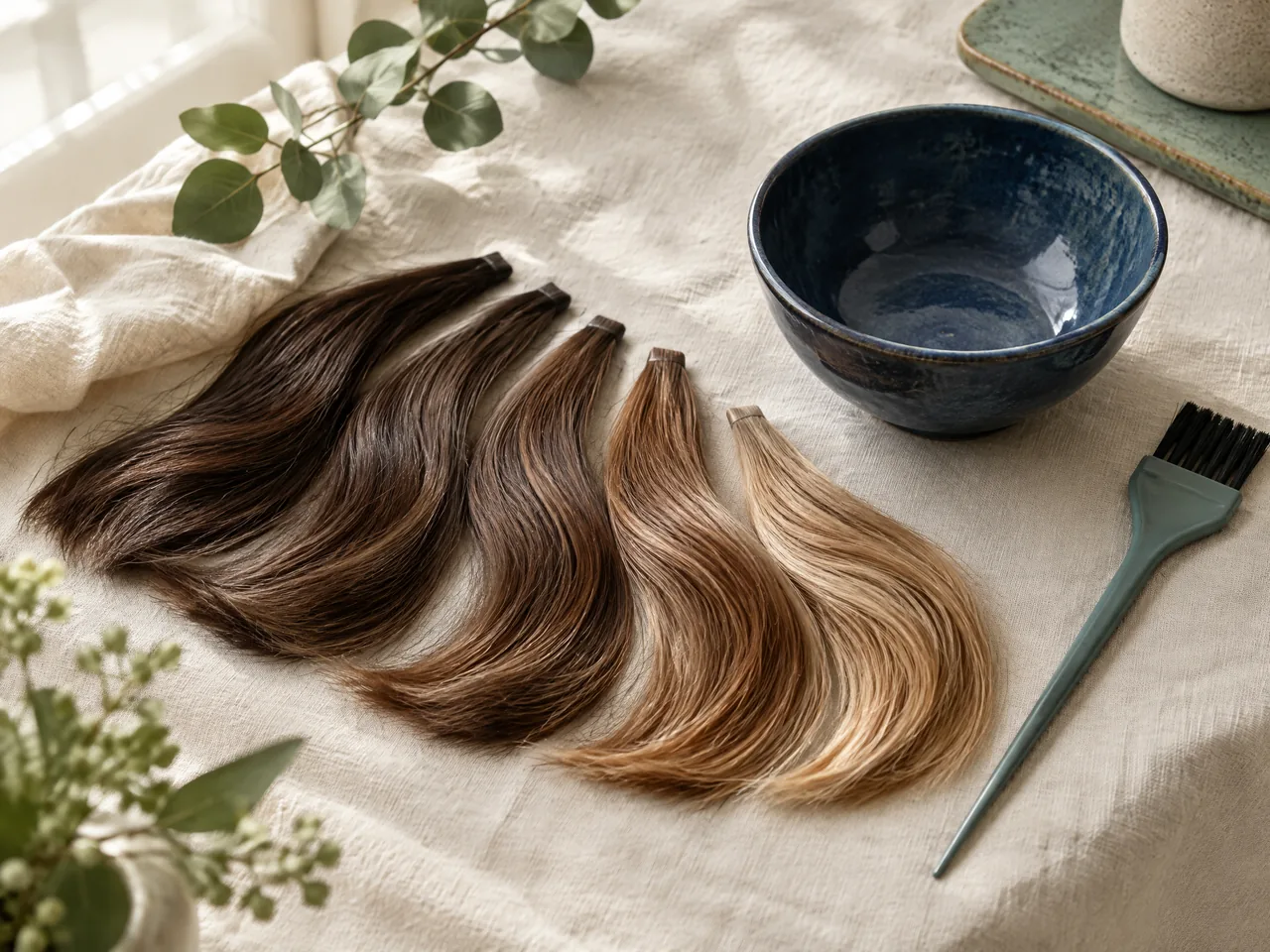
Illustrative colour swatches and tonal planning
Illustrative hair-lifestyle concept; not a client record or a Vit So portfolio photograph.

The short answer

For subtle men’s hair colour, choose the appearance before the coverage label: a different tone, less contrast between dark and grey strands, or full concealment. Keep the grey you like as part of the brief, assess your usual haircut, and follow the actual dye’s instructions rather than improvising a lighter application.

Vit So is an external hair and beauty website under the same ownership as TCM Lab. Its beauty services are separate from Chinese medicine care. This section is for beauty and lifestyle education, not diagnosis or treatment.

Choose what changes—and what stays recognisable

Start with one feature you want to change. Perhaps your hair looks too dark beside the pale strands at your temples, or you want a brown reflection without losing those strands. Neither request means that every grey must disappear. Leaving your colour alone is also a valid choice; visible grey does not create a maintenance obligation or a problem that needs fixing.

Separate three goals. A tone change alters the colour impression you want to see, such as a warmer or cooler brown. Reduced contrast means making light and dark areas feel less sharply divided. Full concealment aims for grey to be no longer visibly distinct. These goals can overlap, but none automatically delivers the others. A subtle brown on the darker hair could still leave a striking temple patch.

Write a brief with a limit as well as a wish: ‘I want the top to look less stark, but I would like the silver at the sides to remain noticeable.’ If you explore men's hair colour, use that distinction to interpret the service discussion, not as a guaranteed finish. Vit So is an external hair-beauty website under the same ownership as TCM Lab; its services are not Chinese medicine care.

Look at the grey pattern, not just its amount

Stand at an ordinary mirror distance before inspecting individual strands. A few pale hairs scattered through the crown can make a different visual impression from a concentrated patch at one temple. Look from both sides and from behind using a second mirror. The useful question is not a precise percentage of grey, but where your eye goes first and whether you like that emphasis.

Wear your hair in its usual dry shape, then change the parting or push the fringe back. A swept style may conceal a pale patch that becomes prominent when you lift the top. Close sides can show skin between strands, so their lightness should not automatically be read as the same colour issue as a longer top. Assess the outline and the hair together, rather than treating every light area as something to darken.

Identify any area you would deliberately retain: both temples, a silver forelock, or scattered grey throughout. That makes a request for men's grey hair coverage more precise than ‘cover the grey’. For example, you could prefer a quieter contrast at the parting while keeping the temples visible. This describes an appearance target; whether selective work can achieve it depends on the product, existing colour and application assessment.

Compare softened contrast with a more opaque look

A softer transition means that neighbouring colours are less visually far apart; it does not necessarily mean fewer grey strands. Some can remain lighter than the surrounding hair. A more opaque-looking finish aims for a more consistently coloured surface. Neither is inherently more natural or better. A consistent dark finish may suit a sharply defined crop, while visible variation may suit someone who wants their existing silver pattern to remain recognisable.

Use two reference pictures with similar hair length, then name the difference. Are individual light strands still apparent? Is the temple patch distinct from the top? Does the hairline look darker than you want? Judge the pictures in comparable lighting, without colour filters. Do not try to estimate an exact coverage percentage from a screen: gloss, shadow and exposure can disguise the contrast you are actually choosing.

Treat hair tinting as a route to discussing colour, not a shorthand for either transparent grey blending or complete concealment. Ask what the proposed finish is intended to look like on your current mixture of dark and grey hair. Do not create a ‘subtle’ result by shortening processing time, diluting dye or changing mixing proportions yourself. The FDA specifically advises following package directions and not exceeding the stated processing time. [1]

Plan for the next haircut, not only the first day

Short hair puts colour close to the haircut outline. If the sides are clipped frequently but the top is kept longer, coloured hair can be removed from the sides while remaining above them. That can make the top-to-side relationship different from the initial finish. Plan around the length you intend to keep, especially if a very close taper or a shorter fringe is already on your next haircut agenda.

New growth and fading are different observations. A lighter strip next to the scalp is not the same as a warmer reflection along existing lengths. After a trim, seeing more natural colour may simply mean that coloured length has been cut away. Compare the same areas before deciding that the whole head needs recolouring; a change at the edges does not by itself establish what should happen to the retained top.

Choose a personal follow-up trigger instead of assuming a universal timetable. It might be a distinct line at the parting, an unwanted dark block above the ears, or losing the temple contrast you liked. Take a baseline photograph with your ordinary styling, then compare in the same light before and after a haircut. If you prefer gaps between colour appointments, discuss the acceptable grown-out appearance as explicitly as the freshly coloured one.

Keep the colour history and safety checks specific

A cropped side may be uncoloured while a longer top still carries older dye or lightening. Record those areas separately, including colour shampoos, home dye and any perm or straightening. Keep the product name or packaging photograph where possible. If a retained section looks darker than the rest, mention it rather than expecting one application to make every area identical. Say when the history is uncertain instead of guessing.

A discreet finish is not a safety category. The FDA warns that reactions can occur after previous trouble-free use and recommends a skin test before every use according to the instructions. It also says a negative skin test cannot rule out a reaction during colouring. Do not dye an irritated, sunburned or damaged scalp. Check these precautions for the actual product even when the intended colour change is small. [1]

Keep a strand test separate from allergy precautions: looking at colour on a sample of hair cannot replace the required skin-testing process. The NHS advises following dye instructions and explains that a doctor may arrange dermatology patch testing after a reaction to identify an ingredient allergy. If you have reacted before, seek healthcare advice rather than choosing a different shade as a workaround. A satisfactory appearance plan can wait until suitability is clear. [2]

Take it into everyday life

A practical checklist

  • Choose your priority: a tone change, less contrast, or full grey concealment.
  • Mark the grey areas you want to retain as well as those you want less prominent.
  • Compare your normal dry style with the hair pushed back; check both temples and the parting.
  • Describe the side and top lengths you expect to keep after your next haircut.
  • Set a visible upkeep trigger rather than assuming everyone needs the same interval.
  • Record colour history by area and check the actual product’s instructions and reaction precautions.

Questions & answers

Can I keep grey temples but make the top look quieter?

That is a useful appearance goal. Name the temples as areas to retain and describe what ‘quieter’ means on top: less contrast or a different tone. Do not assume any particular formula can preserve that pattern without an assessment.

Does a darker shade always look more subtle?

No. Darkening the coloured areas can make adjacent pale regrowth or retained grey more conspicuous. Compare the contrast at your hairline and parting, not just the shade in isolation. A less uniform result may feel more discreet to you.

Will keeping some grey remove the need for upkeep?

Not necessarily. New growth, changes in the remaining colour and haircuts can all alter the visible balance. Decide which changes you tolerate comfortably; retaining grey is a design choice, not a promise of maintenance-free colour.

Should I copy a reference with much longer hair?

Use it for the colour direction, but find a second image closer to your haircut. Longer overlapping strands and close sides present colour differently. Explain whether you like its depth, grey contrast or reflection rather than asking to reproduce the entire photograph.

Is a strand test enough before a subtle tint?

No. It does not replace product-specific skin-testing precautions. Follow the actual dye’s instructions, and disclose previous reactions. A small intended change and a negative skin test do not guarantee freedom from a reaction. [1] [2]

Sources & further context

Numbered references follow the order in which the sources are listed below. Service websites provide beauty-service context, not medical evidence.

  1. [1] FDA — Hair Dyes
  2. [2] NHS — Hair dye reactions
  3. [3] Vit So — Men's Hair Colour: Balance Your Cut and Colour
  4. [4] Vit So — Hair Colour and Hair Tinting: Plan Your Shade and Coverage

Check the same colour reference in two everyday settings

If a brown looks appealing beside a window, check the same reference in the indoor light where you usually see your hair. Keep the sample and viewing angle similar rather than comparing two unrelated photographs. Name what changes: perhaps the brown reflection becomes less noticeable, while the difference beside the silver still catches your eye. This gives you a more specific preference than asking for a shade that looks identical everywhere. The men's colour service resource also recommends comparing soft daylight with ordinary indoor light. [3]

A loose sample can help communicate colour direction, but it cannot show how your own grey pattern will respond. Ask to compare its depth beside the darker top and the pale temple area separately, without applying any product. If you like the sample but dislike its contrast beside the temple, say so. Record which comparison matters most to you; the sample is a conversation aid, not proof that an application will preserve exactly the same silver strands.
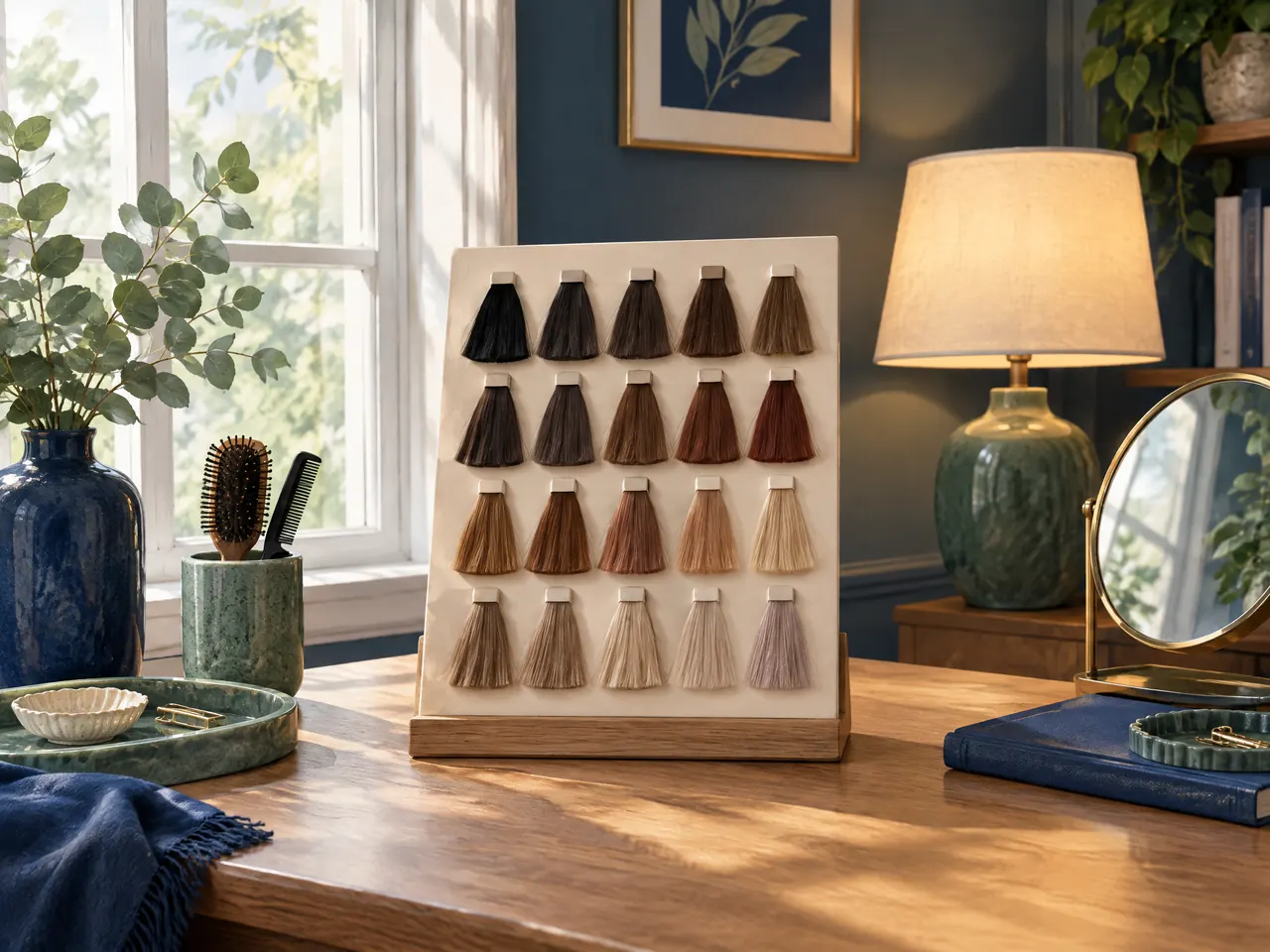
Illustrative hair sample board between soft window daylight and a shaded indoor lamp, with a mirror
Compare the same sample in different lighting to describe its apparent depth and reflection. An illustrative study, not a predicted dye result.Generated illustrative image

Make an area map for the haircut you intend to keep

Use a simple front, side and back sketch to connect the colour brief with your next cut. Mark the hair that will remain long enough to contribute to the finish, then mark the sides or fringe you intend to shorten. Add a separate note beside any grey feature you want to keep visible. This avoids a vague request such as 'leave some grey', which does not identify whether you mean a temple patch, scattered strands or a particular edge of the haircut.

Sectioning clips and a parted practice mannequin illustrate how areas can be discussed separately; they are not instructions for applying dye yourself. Bring the map to the assessment and ask whether your preferred boundaries can be considered within the proposed work. If your usual parting crosses an area you hoped to retain, show the hair both settled and pushed aside. The map records your priorities, while the stylist still needs to assess the actual product, colour history and hair you will retain.

Faceless practice mannequin seen from above with hair divided by jade clips and a tail comb beside it
Separate areas make a colour brief clearer: identify retained length and the grey features you want to discuss. Practice illustration, not a customer or application guide.Generated illustrative image

Confirm what happens to each area before agreeing to colour

Turn the finished brief into questions about the work being proposed. Which areas are intended to change, which will be left alone, and is cutting included in the quoted scope? If you like the existing colour on the longer top, ask whether it needs any colour work rather than treating a change at the clipped sides as a request to refresh everything. Vit So's men's colour resource asks readers to confirm colour and haircut scope together; a general tinting listing is not a dedicated combined package. [3]

Length samples help explain the distinction between the top you will keep and the short edges you will remove, but they do not prescribe a service. Repeat back the agreed areas in plain language before confirming the appointment. If the proposed work cannot retain the grey feature that matters most to you, ask about revising the appearance goal or leaving the colour unchanged instead of quietly accepting full concealment.
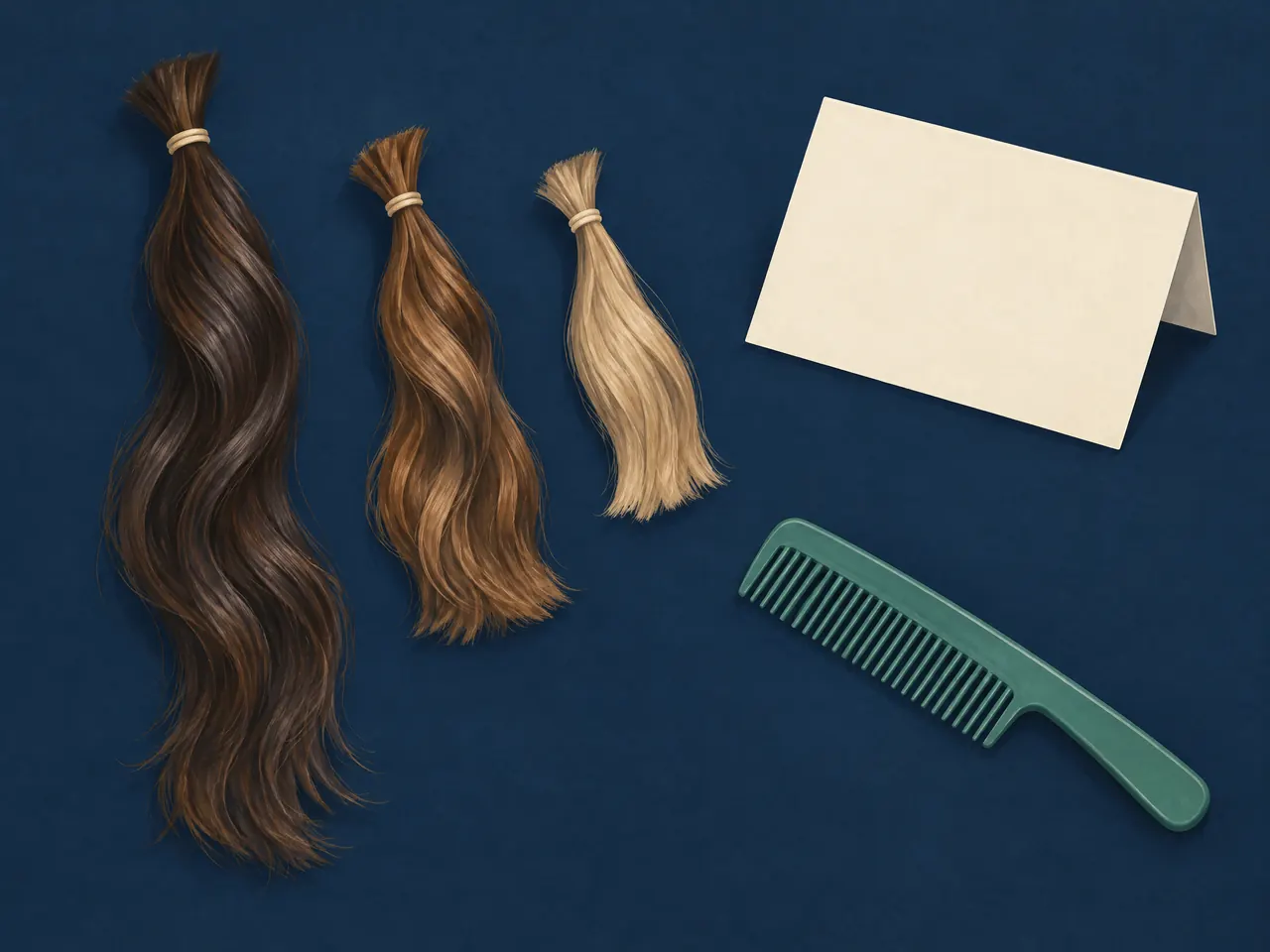
Three separate practice hair tresses of different lengths beside a blank folded consultation card and a comb
Use length references to explain which hair will remain after cutting before confirming the colour areas. Illustrative objects, not a service result.Generated illustrative image

Clinic enquiries

Contact and appointment arrangements

Clinics
Prince Edward and Kwun Tong
Opening hours
11:00–21:00
WhatsApp and telephone
+852 6940 5663

Appointments, practitioner availability and service arrangements are confirmed via WhatsApp.

Please mention any consultation language needs in your WhatsApp enquiry so that arrangements can be confirmed.

Enquire via WhatsApp
Food, gifts and floral lifeWhatsApp enquiry