
Prince Edward & Kwun Tong clinics · Home-visit enquiries elsewhere

TCM Lab

TCM Lab · Beauty & lifestyle / Prices and packages

Is a salon package useful? Compare what you will actually use

Content updated

A bundle can simplify an appointment, but its value depends on your actual plan. Compare the work you need, the work included and the cost of anything still missing.

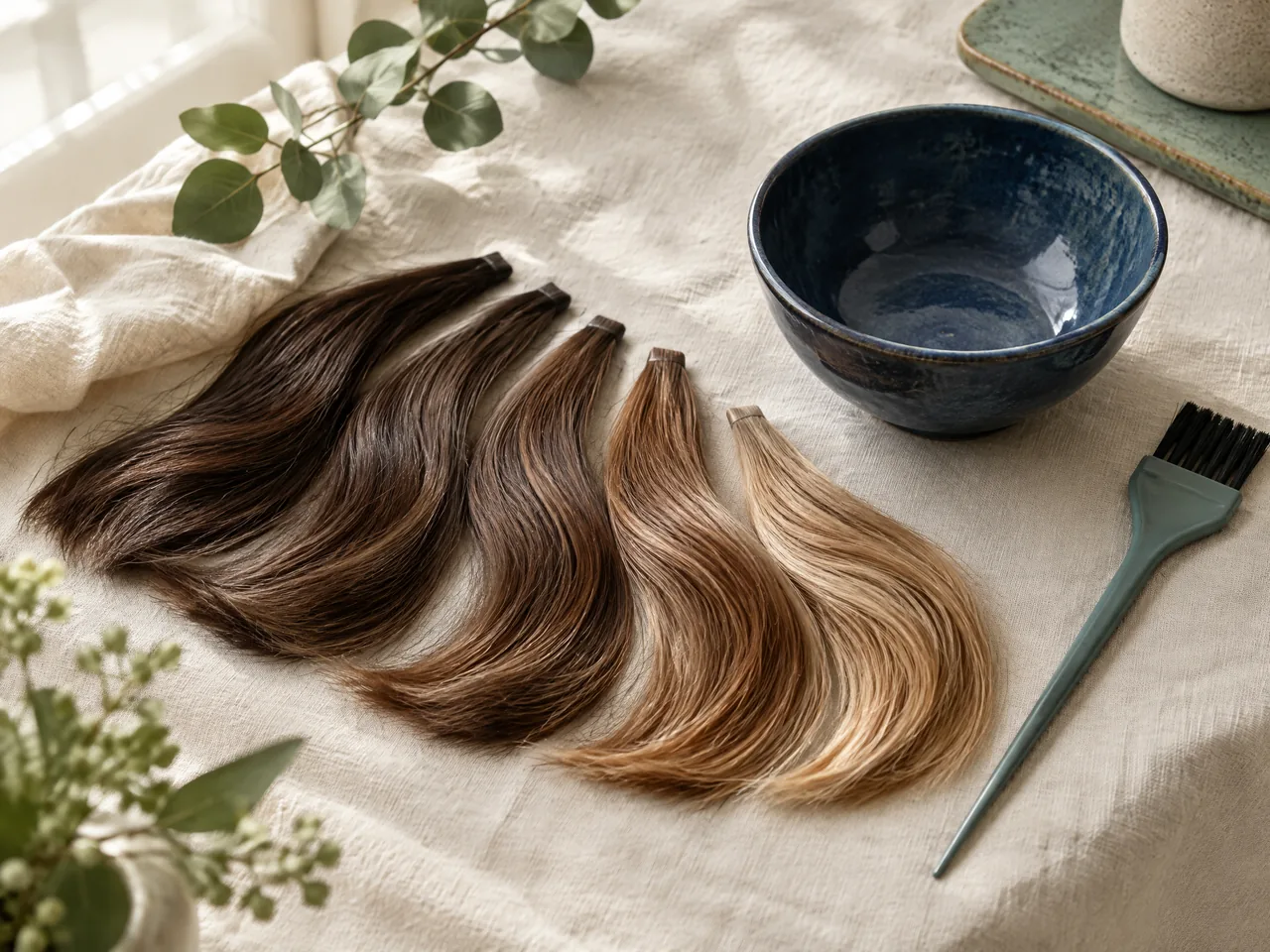
Illustrative colour swatches and tonal planning
Illustrative hair-lifestyle concept; not a client record or a Vit So portfolio photograph.

The short answer

Start with the services you would buy separately, then compare a package covering the same work. Count unwanted extras as having no value to you, check the final payable total and reject chemical changes you did not want. A larger advertised saving is not automatically a better choice.

Vit So is an external hair and beauty website under the same ownership as TCM Lab. Its beauty services are separate from Chinese medicine care. This section is for beauty and lifestyle education, not diagnosis or treatment.

1. Make your own service basket before reading the bundle

Write down what needs changing today, rather than everything you might eventually enjoy. Perhaps the fringe needs shortening while your colour still looks right. Perhaps visible regrowth is the priority, but the haircut can wait. These are different purchasing decisions from wanting a new shape and colour together. Name the smallest set of services that would leave you satisfied.

Use a hair salon price list as a starting resource for identifying separate entries, not as proof that every combination is available or suitable. Vit So is an external hair-styling business under the same ownership as TCM Lab; its cosmetic services are not Chinese medicine care. This article does not quote current offers or establish a price for your appointment. [3]

Give your list two columns: essential today and optional later. If you would not pay separately for an included treatment or elaborate finish, do not assign it its full menu value when judging the bundle. It may still be pleasant, but pleasure and money genuinely saved are not the same calculation.

2. Compare equivalent tasks, and count shared steps once

A fair comparison uses the final quoted cost of the same useful work. Adding unrelated menu prices can exaggerate a saving. If two standalone entries both include washing and finishing, ask for the cost of doing the requested work in one appointment. Do not assume that both full entries must be charged, or that overlapping steps automatically earn a deduction.

When browsing hair salon packages, translate each appealing name into tasks: cutting, specified chemical work, named care and the agreed finish. Then mark what matches your own basket. A package with more components may be a poorer match than a simpler option if the component driving its price is something you do not need.

Keep convenience separate from financial saving. One visit may avoid another journey, but a longer appointment may require time off work. If you value the combined visit for scheduling reasons, that can justify your choice without claiming it is cheaper. Compare confirmed appointment lengths alongside confirmed totals, rather than assuming a bundle is faster.

3. For cut and colour, match coverage before comparing totals

Colour is not a single interchangeable task. Refreshing visible regrowth, colouring all the lengths and placing lighter sections describe different briefs. Write down the area you want changed and the result you want to preserve. A package comparison becomes misleading if the standalone quote addresses only roots while the combination is being discussed as a full-head change.

For a haircut and colour package enquiry, separate the cutting brief from the colour brief. State the length to retain and whether the cut is a trim or a reshaping request. Then establish the colour coverage. Where relevant, ask whether lightening and toner are part of that specific quote or separately assessed tasks; their inclusion cannot be inferred from a photograph.

Also consider the shape you will actually keep. If a substantial length change is planned, agree the retained colour placement rather than paying for a design based on the old outline. Ask how the cutting and colouring sequence will support that plan. Future colour maintenance belongs in a separate budget; an inclusion today is not a promise of later visits.

4. For cut and perm, compare the area and everyday finish

Describe a perm goal in visible terms: closer sides, movement through the lengths or a bend near the ends. Those requests should not be treated as equivalent simply because each involves changing shape. Compare the agreed treatment area and the cutting work, not just a style name or an image of a finished look.

A haircut and perm package is worth considering only when both tasks belong in your plan. If the main issue is a heavy outline, first establish whether the proposed cut addresses it without a perm. If movement is the goal, discuss how much length needs retaining. Do not pay for a broader treatment area merely because the combination sounds more complete.

Check what the finish will require at home. A carefully styled reference is not a demonstration of how the shape will look after your usual drying routine. Explain whether you use a diffuser, brush-dry or prefer minimal styling. A bundle that delivers a look you cannot realistically maintain may be less useful than a simpler cut, even when its quoted total seems attractive.

5. Treat care extras and chemical changes as separate decisions

A care label alone is not enough to compare two options. Establish the product or procedure, when it is applied and what cosmetic benefit is being offered. Pre-service care and a finishing conditioner should not be counted as interchangeable solely because both are called treatments. Ask whether the named component is part of the agreed procedure, an optional upgrade or a separate charge.

An included protection step does not make chemical processing damage-free. The American Academy of Dermatology explains that appearance-enhancing treatments can leave hair dry and brittle, and stresses following product instructions when perming. That supports a practical spending rule: do not add colour, lightening or a perm merely to use an offer, and do not treat an included care step as permission for unnecessary processing. [2]

Finishing deserves its own check too. Clarify whether the quote includes drying to show the cut, a particular blow-dried style or more involved occasion styling. You may value a polished finish before an event but not during an ordinary maintenance visit. If an extra is unwanted, ask whether it can be omitted and what happens to the price; do not assume it can be exchanged.

6. Confirm the payable total and the plan if something changes

Before choosing, obtain a written scope for both options: the standalone work you actually want and the package being considered. Include any applicable length or density charge, stylist-level condition and work excluded from the initial amount. A range or starting figure is not a final total. Ask what could change the quote after assessment and require agreement before extra work begins.

Hong Kong's Consumer Council advises checking less prominent salon conditions, including hair-length and designated-hairdresser surcharges, before service. It also recommends retaining a receipt listing the services provided. These are useful comparison habits, not evidence that any particular salon currently applies those conditions. Keep the agreed scope with the itemised receipt so you can check what was charged. [1]

Finally, ask what happens if one component is unsuitable on the day. Can you proceed with the cut alone, and how will it be priced? For any offer you encounter, confirm availability, expiry and cancellation or change conditions directly. Choose the option meeting your essential basket at an acceptable total, even if that means ignoring the bundle with the most impressive headline saving.

Take it into everyday life

A practical checklist

  • List essential work before browsing combinations; put optional changes in a separate column.
  • Match colour coverage, perm area and cutting scope between the two quotes.
  • Check washing, named care and finishing without counting shared steps twice.
  • Get the payable total, applicable extras and change conditions in writing.
  • Ask how an unsuitable or omitted component affects the remaining work and price.
  • Keep chemical choices independent of promotions, and retain the itemised receipt.

Questions & answers

Does an included treatment make the package better value?

Only if you want the identified procedure or it is part of the agreed work. Ask what it involves. An unwanted extra does not create a personal saving just because it has a standalone menu price.

How should I compare a root-colour quote with a colour bundle?

First match the coverage. Ask for a combination quote addressing the same regrowth area and cutting needs. A full-head proposal is a different purchase, so its larger apparent saving cannot settle the comparison.

Can I replace an unwanted perm with another service?

Do not assume substitution is allowed. Ask whether the salon can offer a different scope and obtain its price before booking. Alternatively, compare a standalone haircut against your original needs.

What if the salon recommends extra work after I arrive?

Ask why it is needed, what it adds to the total and whether your original goal remains feasible without it. Agree the revised scope before proceeding; a booked package is not a reason to accept every upgrade.

Should I bring colour forward to use an expiring offer?

Not merely for the offer. Reconsider whether colour belongs in today's essential basket and whether it is suitable. Forgoing a promotion may be the better choice when you would otherwise buy unnecessary chemical work.

Sources & further context

Numbered references follow the order in which the sources are listed below. Service websites provide beauty-service context, not medical evidence.

  1. [1] Hong Kong Consumer Council — Consumers' Woes against Hair Salons Many and Varied
  2. [2] American Academy of Dermatology — Coloring and perming tips for healthier-looking hair
  3. [3] Vit So — Hair Salon Price List and Hair Salon Packages

Test salon package value against the purchase you would actually make

Imagine that you need regrowth colour today but would otherwise leave your haircut until later. Compare the package total with the confirmed quote for regrowth alone first. The difference is money you would spend to bring the haircut and any other components into this visit. It is not money saved on today's original plan. Decide whether that additional work is worth the additional spend before comparing an advertised combination saving.

If you genuinely want both the cut and colour now, use a second comparison: the confirmed total for those same tasks together outside the package. Keep the coverage and finish unchanged. Do not deduct an unwanted care component's menu price from the package total yourself; an item you decline does not create a rebate unless the salon confirms one.

Send the same hair map with both quote requests

Prepare one front photograph and one view showing the back and lengths, then describe the areas in words: new growth to change, coloured lengths to preserve and sections needing discussion. Add previous home dye, lightening, perming or straightening to the relevant areas rather than giving only the date of your last appointment. This follows the service resource's advice to share current hair and earlier processing before confirming scope. [3]

Use that identical brief for the standalone and package enquiries. If one response proposes work in an extra area, ask why it has been added and whether your original goal can be quoted without it. A different design is a new option to evaluate, not evidence that the first comparison was cheaper.
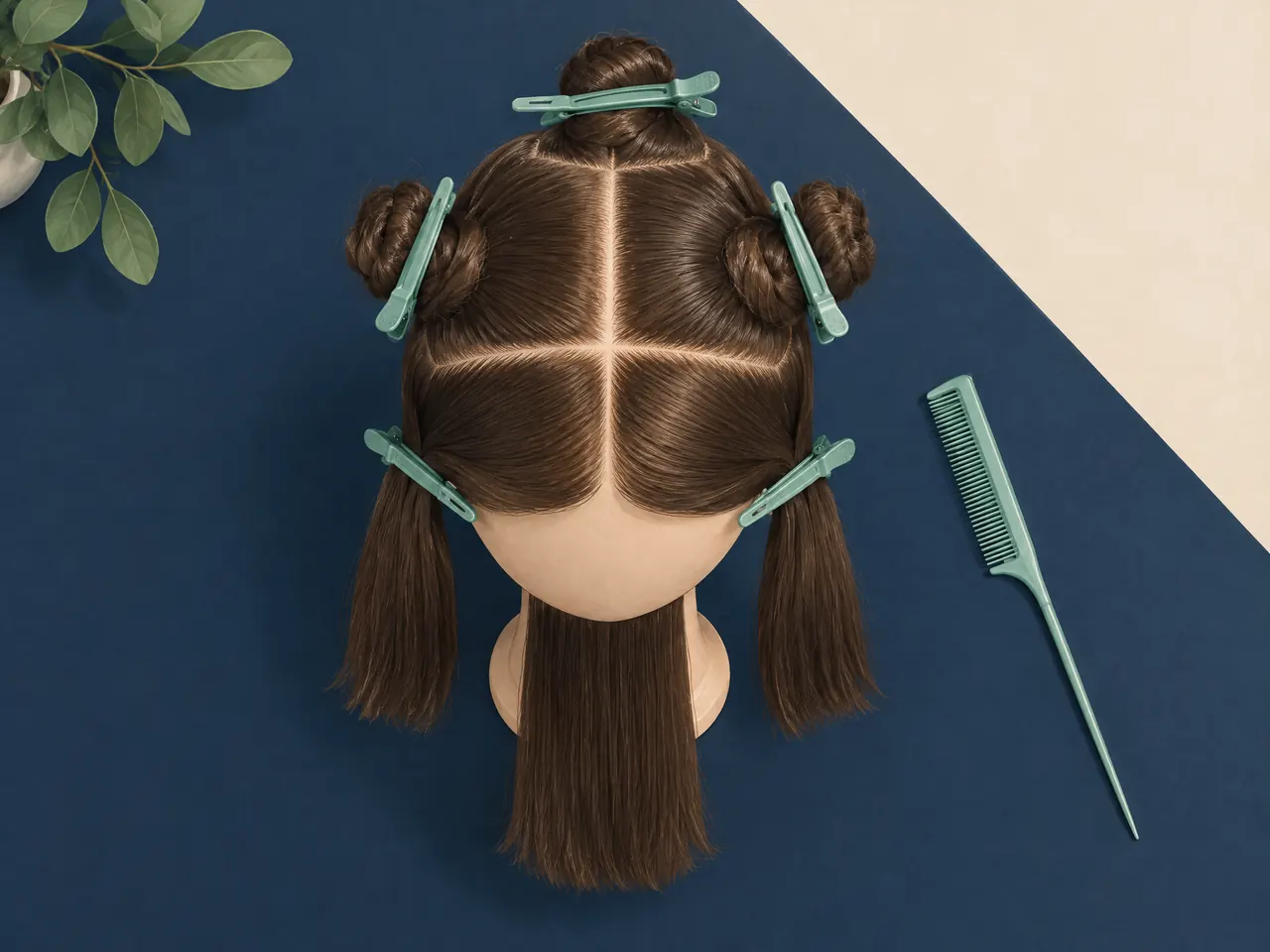
Overhead view of a featureless practice mannequin with hair divided by jade clips, with a tail comb beside it.
Sectioned practice hair illustrates how to describe the areas included in a quote; it is not a client assessment or salon result.Generated illustrative image

Ask which length the quote is based on

When a package combines a substantial cut with colour or a perm, show both your present length and the length you intend to retain. Ask whether any applicable length condition is assessed before cutting or on the hair that will receive the later work. Also ask which component the condition affects and whether it is charged once or separately. These are questions to resolve, not assumptions about how a salon bills.

Write the answer beside each quote. Otherwise, one total may be based on your current lengths while the other assumes your planned shorter cut. The Consumer Council's advice to clarify less prominent hair-length conditions supports checking this before service, but does not prescribe a particular salon's charging method. [1]

Three separate practice hair tresses of different lengths beside a blank folded consultation card and a comb.
Different practice lengths prompt a question about the length used for quoting; they do not show a surcharge threshold.Generated illustrative image

Find out where the care component sits in the appointment

Ask the salon to describe the appointment in order, including washing, any preparation before chemical work, the named care component and the final finish. This helps you notice when routine washing is being discussed as though it were an additional treatment, or when two differently named components refer to different stages. The original service resource distinguishes pre-service protection from other care entries; a general treatment label is not enough to identify an inclusion. [3]

If an additional care step is recommended, ask whether it is necessary for the assessed plan or simply optional. If necessary, request the revised total and a suitable alternative that does not require the extra chemical work. If optional, decide separately whether you want it. An appointment inclusion should not be confused with a take-home product; confirm any product purchase independently before adding it to your budget.

Plain wash basin, unbranded pump bottle, folded towel and wide-tooth comb arranged on a cream shelf.
Routine washing objects help separate washing inclusions from a named care service; no product efficacy or treatment result is shown.Generated illustrative image

Check the cost of reproducing the finish at home

Before treating a styled package photograph as the result you are buying, ask which parts of the appearance come from the cut or chemical work and which come from the finishing technique. Explain the dryer attachment and brush you already use. Ask for the simplest routine compatible with your usual equipment, rather than assuming a new diffuser, brush or styling product is essential.

If the proposed look depends on equipment you do not own, keep any possible purchase outside the appointment comparison until you have decided whether to make it. You can also ask to see a less elaborately styled finish that better reflects your ordinary routine. That request helps evaluate usefulness; it is not a guarantee that the salon finish will last or that a perm will eliminate styling.
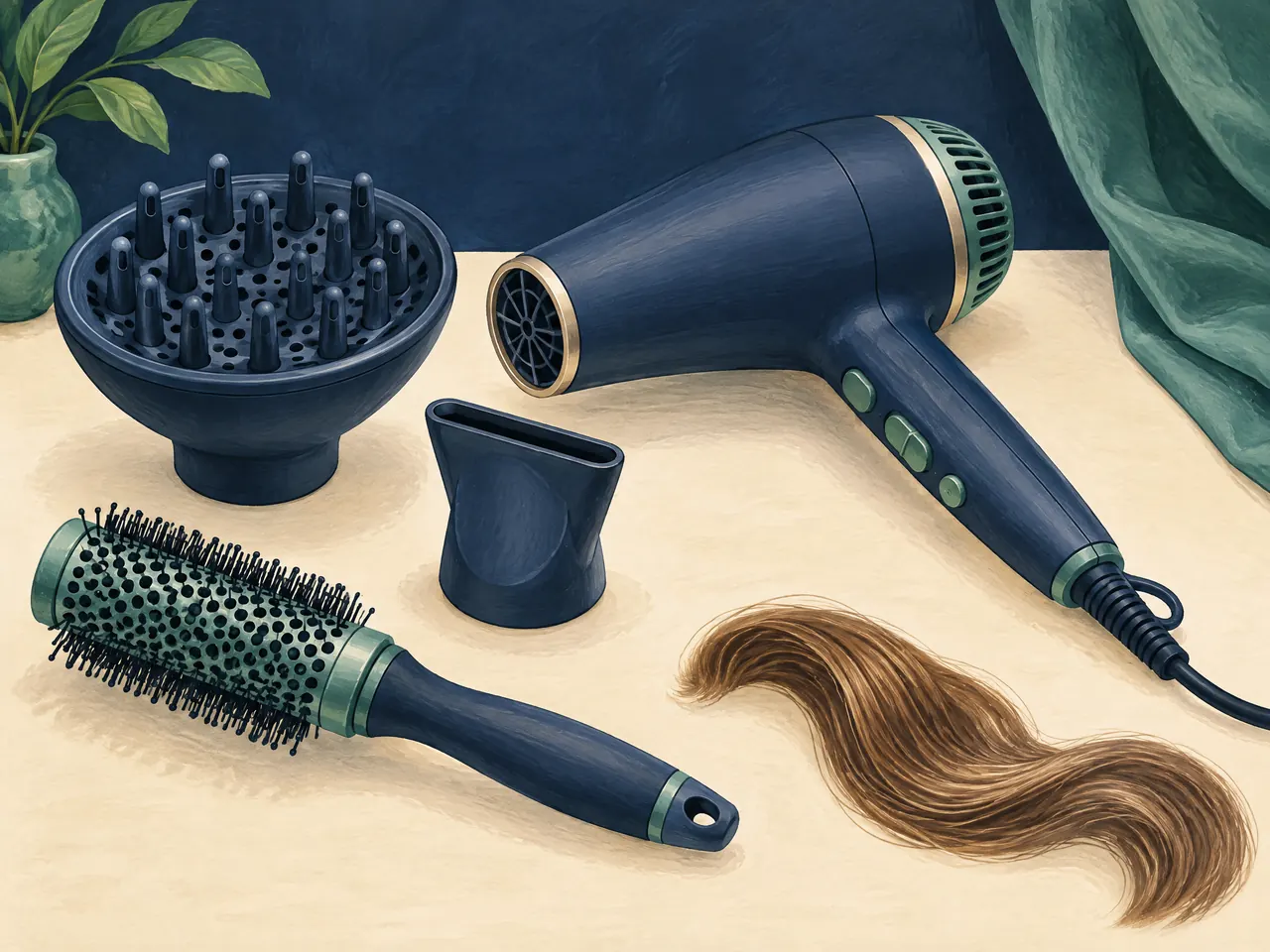
Unplugged unbranded dryer with a diffuser and nozzle beside a round brush and a loose practice hair tress.
Styling tools illustrate the equipment to discuss when comparing an appointment finish with your home routine, not required purchases.Generated illustrative image

Clinic enquiries

Contact and appointment arrangements

Clinics
Prince Edward and Kwun Tong
Opening hours
11:00–21:00
WhatsApp and telephone
+852 6940 5663

Appointments, practitioner availability and service arrangements are confirmed via WhatsApp.

Please mention any consultation language needs in your WhatsApp enquiry so that arrangements can be confirmed.

Enquire via WhatsApp
Food, gifts and floral lifeWhatsApp enquiry