
Prince Edward & Kwun Tong clinics · Home-visit enquiries elsewhere

TCM Lab

TCM Lab · Beauty & lifestyle / Perm placement

Partial or full perm? Put movement where you need it

Content updated

A curl at the front, a curved hem of ends and a wave throughout the haircut are different design jobs. Choose coverage by what should change, what should stay familiar and how the two areas will sit together.

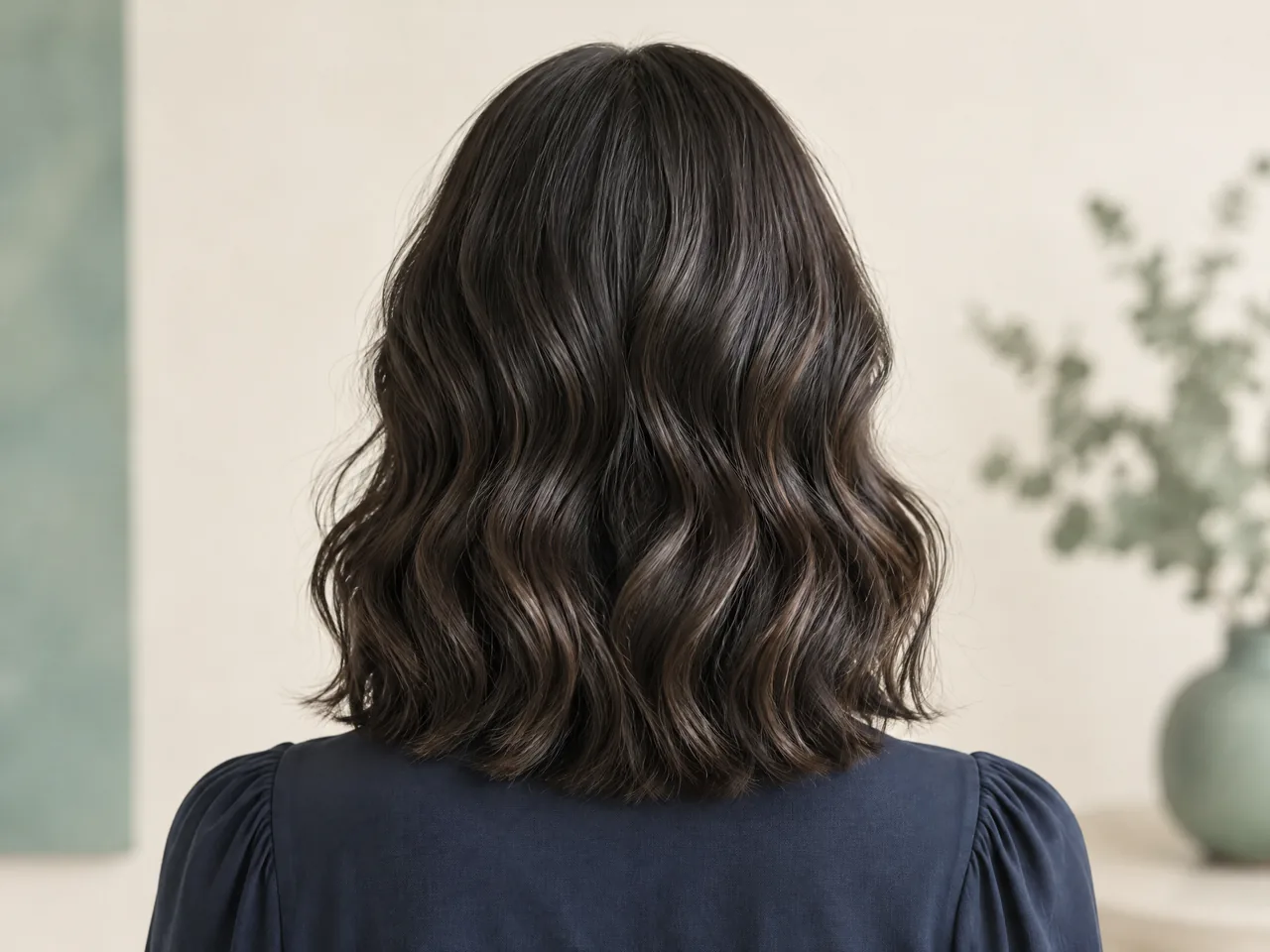
Illustrative waves and curly-hair silhouette
Illustrative hair-lifestyle concept; not a client record or a Vit So portfolio photograph.

The short answer

For partial versus full perm, start with a map rather than a menu label. Targeted placement makes sense when the change is local and its boundary works with the haircut. Wider coverage suits a more connected pattern. Neither establishes suitability: chemical history, dry shape and the actual quoted work still matter.

Vit So is an external hair and beauty website under the same ownership as TCM Lab. Its beauty services are separate from Chinese medicine care. This section is for beauty and lifestyle education, not diagnosis or treatment.

Map the change before choosing the coverage

Look at your ordinary dry hair with its usual parting. Identify the smallest change that would improve the shape: perhaps the front drops too straight, the ends feel rigid, or the back lacks the movement you like at the sides. Then identify a feature you want to preserve. Keeping a smooth crown is a different brief from keeping the entire upper half straight.

Make two simple notes on a front-and-back photograph: ‘change here’ and ‘leave this shape’. Mark the height where movement should become visible, not just the scalp area where a section starts. A long section from the crown can lie over shorter hair at the back, so a scalp diagram alone may miss what you actually see. Include your usual tucked-behind-the-ear or tied-back position.

Treat the hair perm service resource as a way to discuss coverage, not as a picture catalogue that guarantees a finish. Its scope discussion separates full-head and selected-area work. [4] If your goal is simply curved ends for occasional evenings, try a temporary styling approach first; it can help you judge the placement without committing to a chemical change.

A selected section and an all-over pattern solve different problems

A partial perm is useful terminology for selected coverage, but it does not define a universal fraction of the head. [4] A few front sections and a band of ends involve different boundaries. Describe the actual sections rather than asking for ‘half the amount’. Smaller coverage also does not mean a weaker chemical process on the hair that is treated.

Targeted placement preserves more of the existing texture by design. That can suit someone who likes a straight upper silhouette but wants movement lower down. The tradeoff is a mixed-texture routine: the untouched sections may need one kind of positioning while the curled sections need another. If your main frustration is different textures already competing across the haircut, adding another local texture may not simplify mornings.

An enquiry about a full head perm instead concerns broader coverage, but does not require identical curls from scalp to tip. [4] Discuss a connected outline with a calmer front, for example, rather than assuming every section must match. Wider coverage can make movement more consistent visually; it also brings more hair into the treatment plan, including areas you might otherwise have left alone.

Check the join from more than the front view

The important boundary is where straight and curved hair are visible beside, or on top of, one another. On a blunt outline, curved ends next to straight ends may finish at noticeably different apparent heights. With layers, an uncurled upper section may hang over movement underneath. Neither is automatically wrong, but both can look different from a reference photographed with every strand carefully arranged.

Ask the stylist to show the proposed join using sectioning clips before agreeing to treatment. Look from the side and back, then release the hair and change the parting if you regularly wear it differently. Check what happens behind your ears and at the nape. A boundary hidden with hair down may become a conspicuous straight tail when the rest is gathered into a loose ponytail.

Discuss cutting as part of the geometry. A trim or revised layer can move the visible join, but removing length also changes what reaches your tie or collar. Decide which matters more before committing. Ask how much of the pictured blend relies on brushwork or finishing products; a carefully styled transition is not proof that the same join will disappear when you leave it to dry casually.

Match the placement map to the chemical-history map

Beside your placement notes, record earlier lightening, colour, straightening and perms by area. Include older work still present in the lengths, not only the latest appointment. If you cannot identify a home product, bring its name or packaging rather than guessing. Today’s dark shade should not be used as your only description of previously lightened ends. Uncertain history is worth stating plainly.

The American Academy of Dermatology warns that appearance-enhancing treatments can leave hair dry and brittle. [1] That makes existing breakage and roughness relevant to the decision, not something a smaller coverage label cancels out. A tiny requested area may contain your most heavily processed strands. Ask whether the proposed sections should be excluded, assessed further or left without another chemical change; do not assume a care add-on makes processing risk-free.

A manageable routine matters for both designs. The Academy recommends conditioner after shampoo, gentle detangling and lower heat when heat tools are used. [2] Ask how those principles fit the mixed or connected texture you are planning. If excessive stinging or burning occurs during perming, tell the stylist immediately so the solution can be rinsed off promptly; the Academy advises immediate washing off and dermatological advice. [1]

Compare quotes for the same placement and finish

Use the perm cost resource to identify the listed coverage and package contents, then match them to your map. It separates standalone entries from combinations involving cutting and finishing. [5] A lower headline amount is not necessarily the lower total for your chosen design. Avoid comparing selected-area work alone with wider coverage that already includes the haircut you need.

Ask for the treated areas, cutting scope, washing and final drying to be written together. Clarify whether a proposed care component is included or optional, and check any applicable length charge before agreeing. Hong Kong’s Consumer Council recommends establishing less prominent surcharges beforehand and keeping a receipt that lists the services. [3] This is a budgeting habit, not an assumption about any particular salon’s practices.

Separate today’s charge from future maintenance. Ask what a later trim could remove and how the outline may look as untreated roots become more visible; do not assume the whole head will need repeating on a fixed schedule. Agree on product-specific first-wash instructions and a realistic drying demonstration. Vit So is an external hair-beauty website under the same ownership as TCM Lab; its services are cosmetic, not Chinese medicine care.

Take it into everyday life

A practical checklist

  • Mark wanted movement and preserved shape on dry front, side and back photographs.
  • Show the usual parting, ear tuck and loose tie-back position.
  • List chemical history separately for the front, crown, lengths and ends.
  • Ask to see where treated and untreated hair will meet before proceeding.
  • Agree on retained length and whether cutting changes the visible boundary.
  • Confirm coverage, haircut, care additions, washing, finishing and applicable extras in the quote.
  • Request first-wash instructions and a drying routine matched to the actual procedure.

Questions & answers

Can I perm only the ends and keep the top straight?

That is a placement goal you can discuss, not an automatic service entitlement. Show where the first visible curve should appear and what length must remain. The chosen method, haircut and condition of those ends affect whether that boundary is workable.

Will a partial perm always be less damaging?

It leaves more hair outside the planned treatment, but that does not establish safety for the selected strands. If those strands are fragile or heavily processed, smaller coverage does not resolve their suitability. The decision needs to consider the actual hair being treated.

Does full-head coverage mean a curly fringe too?

Do not assume it does. Explain whether you want the fringe left unchanged, gently curved or connected to the sides. Ask which front sections the proposed coverage includes and how their dry shape will work with glasses or an ear tuck.

Can a later haircut remove the partial perm?

Cutting removes only the treated hair actually cut off. An ends-only design may lose much of its movement with a substantial trim, while curls in higher sections can remain. Ask where the treatment will sit relative to your expected next haircut.

How can I compare quotes when salons use different placement names?

Send the same marked photographs and ask each salon to describe the areas and inclusions in ordinary language. Compare the agreed work rather than trying to equate menu names. Keep optional care or event finishing separate so you can see what changes the total.

Sources & further context

Numbered references follow the order in which the sources are listed below. Service websites provide beauty-service context, not medical evidence.

  1. [1] American Academy of Dermatology: Coloring and perming tips for healthier-looking hair
  2. [2] American Academy of Dermatology: How to stop damaging your hair
  3. [3] Hong Kong Consumer Council: Consumers' Woes against Hair Salons Many and Varied
  4. [4] Vit So: Hair Perm service resource
  5. [5] Vit So: Hair Salon Price List and Hair Salon Packages

Keep coverage and technique as separate questions

The coverage decision answers which hair is included; the technique discussion answers how the proposed movement will be made. Vit So's service resource treats full-head and partial entries as coverage descriptions, while Technical Perm is a separate menu name that does not, by itself, identify a hot, cold or digital procedure. [4] A request for a partial perm therefore still needs an explanation of the chosen process rather than an assumption based on the amount of hair involved.

Ask the stylist to describe the treatment area and method separately. Sectioning clips can make the area easier to follow, but a clipped outline is only a discussion aid: it does not establish the hair's suitability or the eventual curl. If the assessment changes the proposed sections, check whether that also changes the intended blend, included cutting or quoted scope before agreeing.
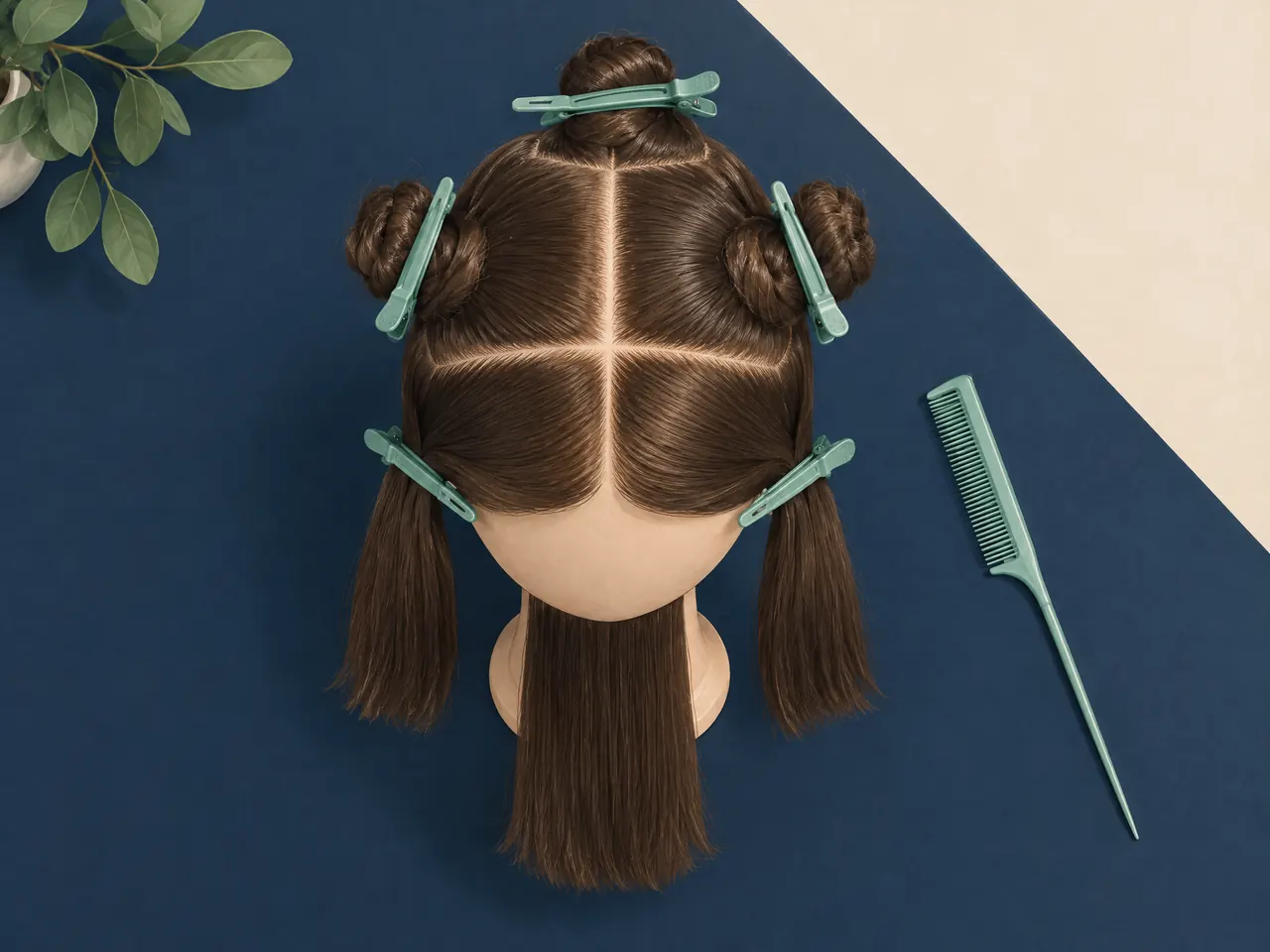
Overhead illustration of a faceless practice mannequin with hair divided by clips, beside a tail comb
Sectioning helps explain which areas are being discussed; this practice-mannequin illustration is not a treatment plan or client result.Generated illustrative image

Give retained length and front movement their own brief

Two reference photographs can show movement beginning at a similar height yet leave very different amounts of hair below it. State both the desired starting point and the dry finishing length. For an ends-only request, identify which length you need to keep for a tie-back and which ends could be trimmed. Separate practice tresses can help explain different length preferences, but they cannot predict the apparent shortening or outline of your own hair.

Treat the fringe as a separate design question even when discussing wider coverage. Show it resting normally, then with your glasses or usual ear tuck. If you alternate between a centre and side parting, demonstrate both rather than relying on the photograph's arrangement. Ask which front pieces would remain untreated and how they would sit beside the changed lengths. That makes a calmer front an explicit preference, rather than an assumption hidden inside the words 'full head'.
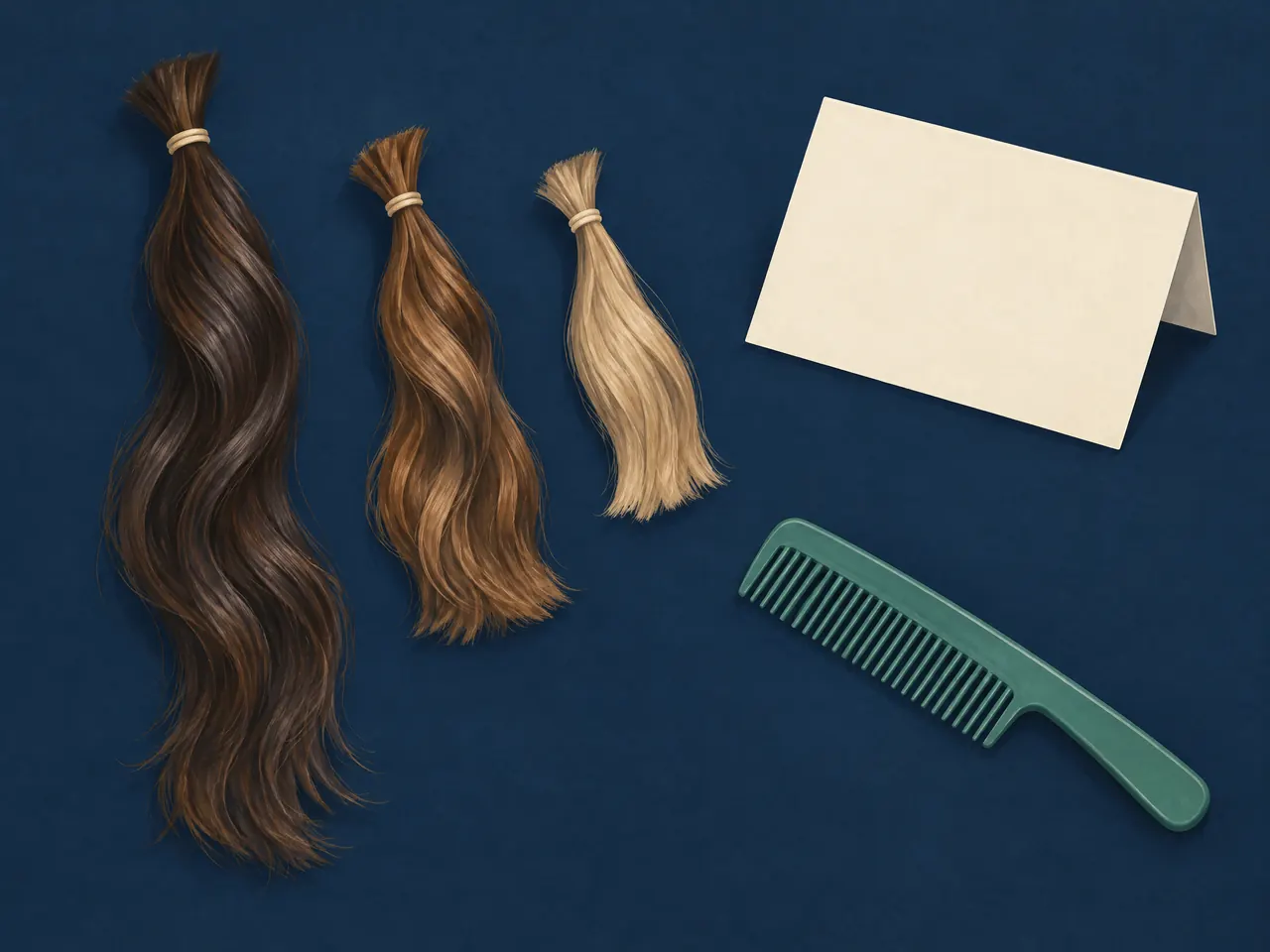
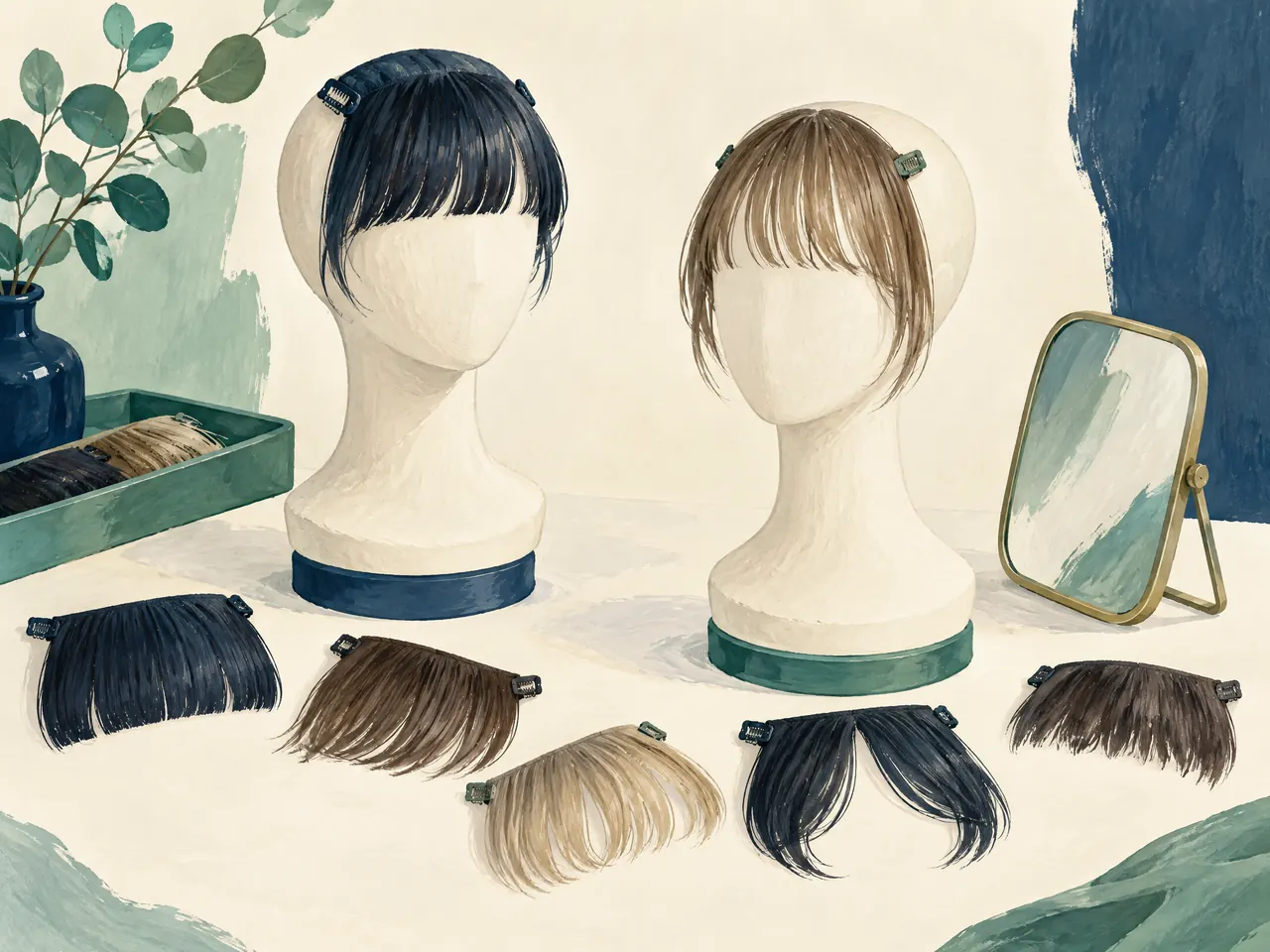
Illustration of three separate practice hair tresses of different lengths beside a comb and blank consultation card
Use length references to explain what must remain after cutting; these practice tresses do not forecast a perm's dry result.Generated illustrative image
Illustration of two featureless mannequin forms with detachable practice fringes and a small mirror
Discuss the front separately from the overall coverage, including parting and glasses; these are illustrative practice forms, not customer hairstyles.Generated illustrative image

Check how you will wash and detangle both textures

With targeted placement, ask how to handle the untouched and treated sections during the same wash. General dermatology advice is to massage shampoo gently into the scalp, let the rinse flow through the lengths, use conditioner after shampoo and absorb water with a towel rather than rubbing. [2] These habits concern gentle handling; they do not determine when your particular perm should first be washed. Keep that timing tied to the actual procedure's instructions.

The Academy's combing advice distinguishes straight hair, which can dry a little before gentle wide-tooth combing, from textured hair or tight curls, which should be combed while damp. [2] Do not assign one rule to the entire head simply because the service was called partial or full. Ask for a demonstration suited to the textures actually present, including how to work around their join without tugging through resistance. Neither a comb nor conditioner guarantees that a difficult boundary will blend.
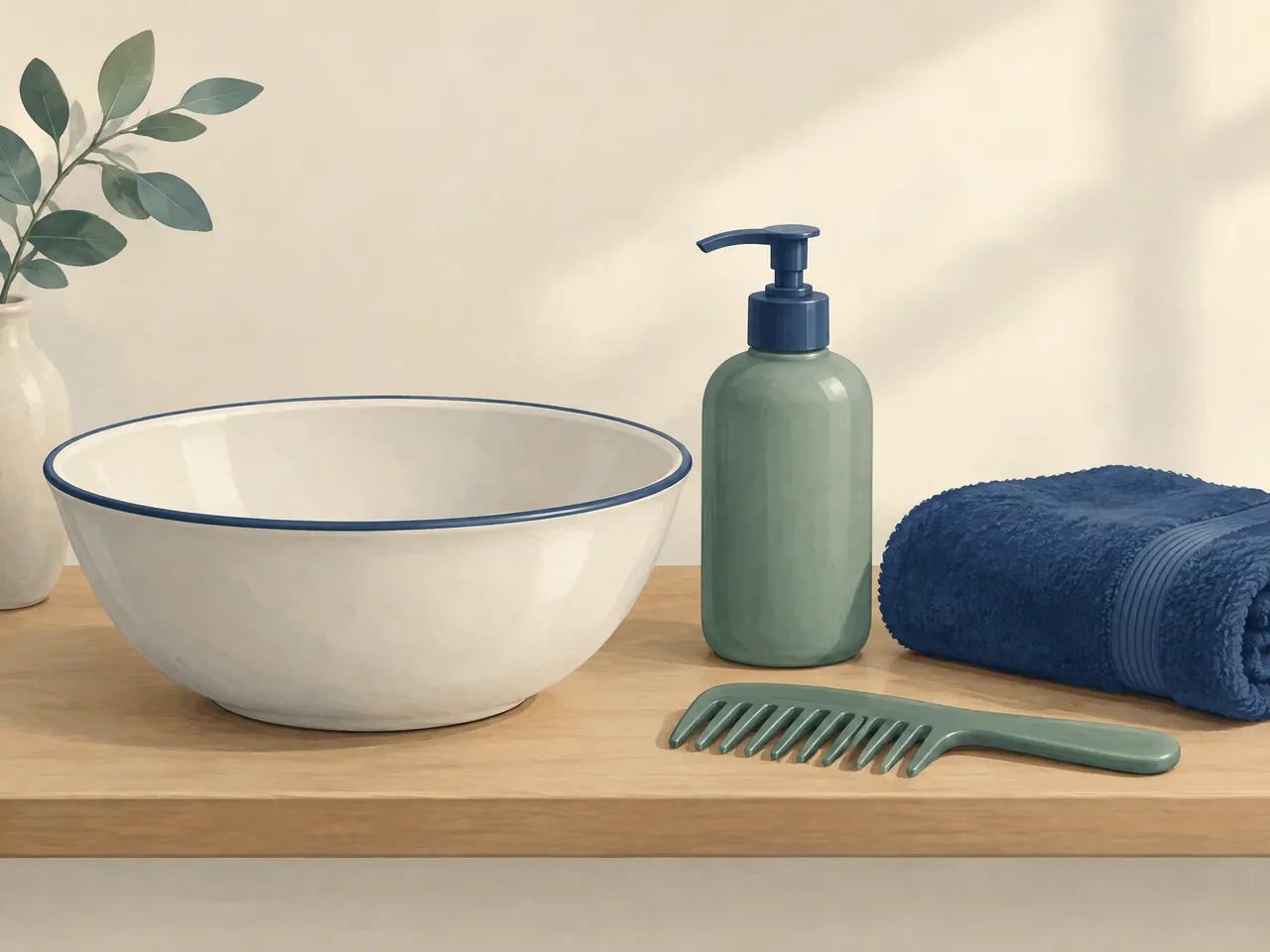
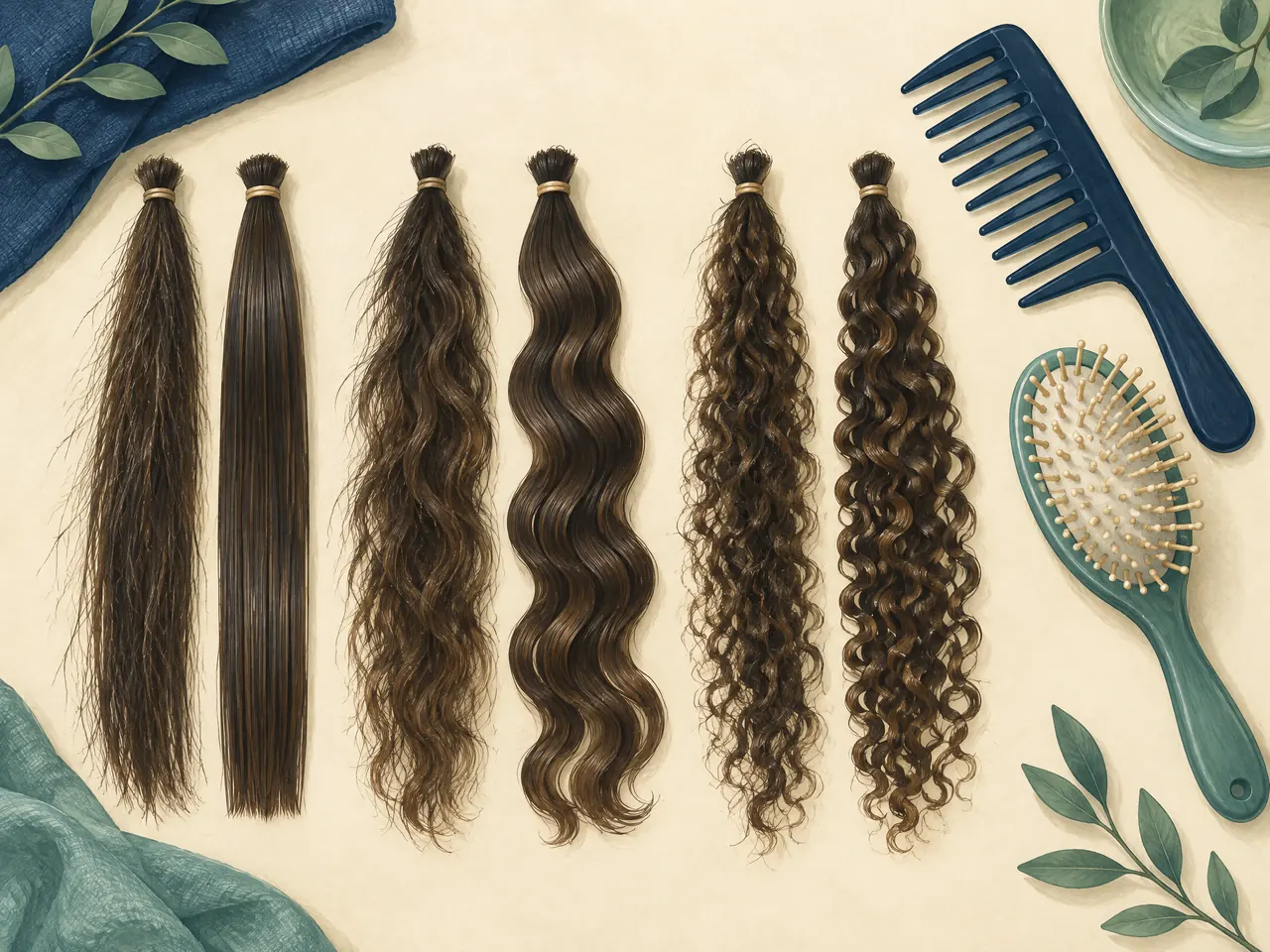
Illustration of a plain wash basin, unbranded pump bottle, folded towel and wide-tooth comb on a shelf
Discuss gentle washing and the procedure-specific first wash separately; the unbranded objects do not imply product efficacy.Generated illustrative image
Illustration of separate straight, wavy and curly practice hair tresses beside a wide-tooth comb and soft brush
Different textures can need different handling questions within one hairstyle; these practice samples are not before-and-after results.Generated illustrative image

Rehearse the finish you will use on an ordinary day

Describe the dryer, attachments and brush you already own before discussing extra equipment. Vit So's service guidance recommends explaining an ordinary morning and asking how to position the front and dry the lengths without pulling out the intended movement. [4] Ask which parts of a demonstration are essential to the everyday outline and which are optional polishing. A diffuser or nozzle in a reference image is not evidence that the same tool is required for your proposed placement.

For a mixed-texture design, ask to see how the unchanged crown and curved ends are handled separately, then brought together. For wider coverage, focus on how the front and back are positioned without assuming every curl must be identical. If the routine depends on frequent heat styling that you do not want to do, revisit the design before treatment. The Academy advises air-drying where possible and the lowest heat setting when using heat tools. [2]
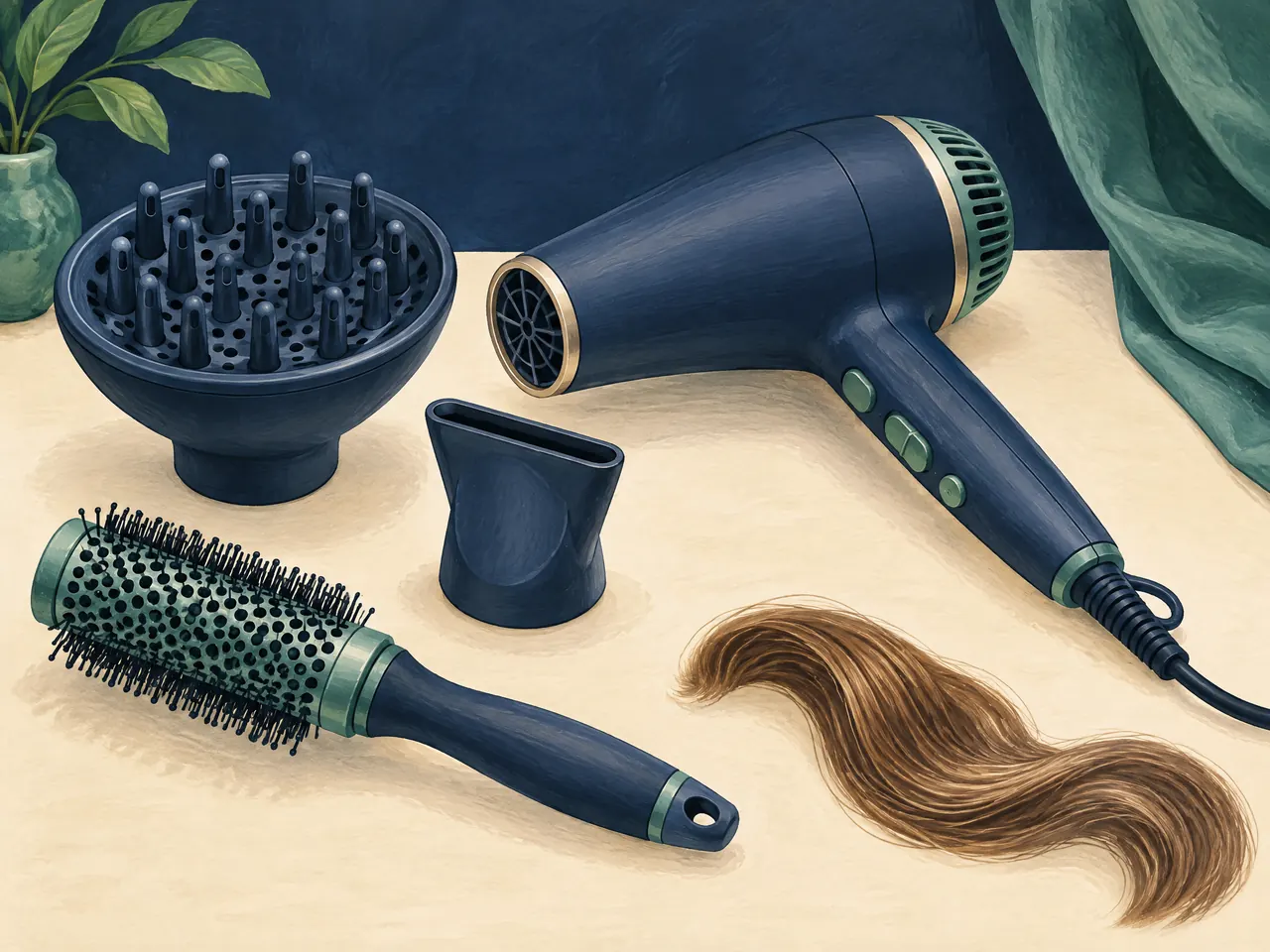
Illustration of an unplugged unbranded hair dryer with diffuser and nozzle, beside a round brush and practice hair tress
Ask which tools and steps suit the agreed finish; this equipment illustration does not prescribe an attachment or guarantee effortless styling.Generated illustrative image

Clinic enquiries

Contact and appointment arrangements

Clinics
Prince Edward and Kwun Tong
Opening hours
11:00–21:00
WhatsApp and telephone
+852 6940 5663

Appointments, practitioner availability and service arrangements are confirmed via WhatsApp.

Please mention any consultation language needs in your WhatsApp enquiry so that arrangements can be confirmed.

Enquire via WhatsApp
Food, gifts and floral lifeWhatsApp enquiry