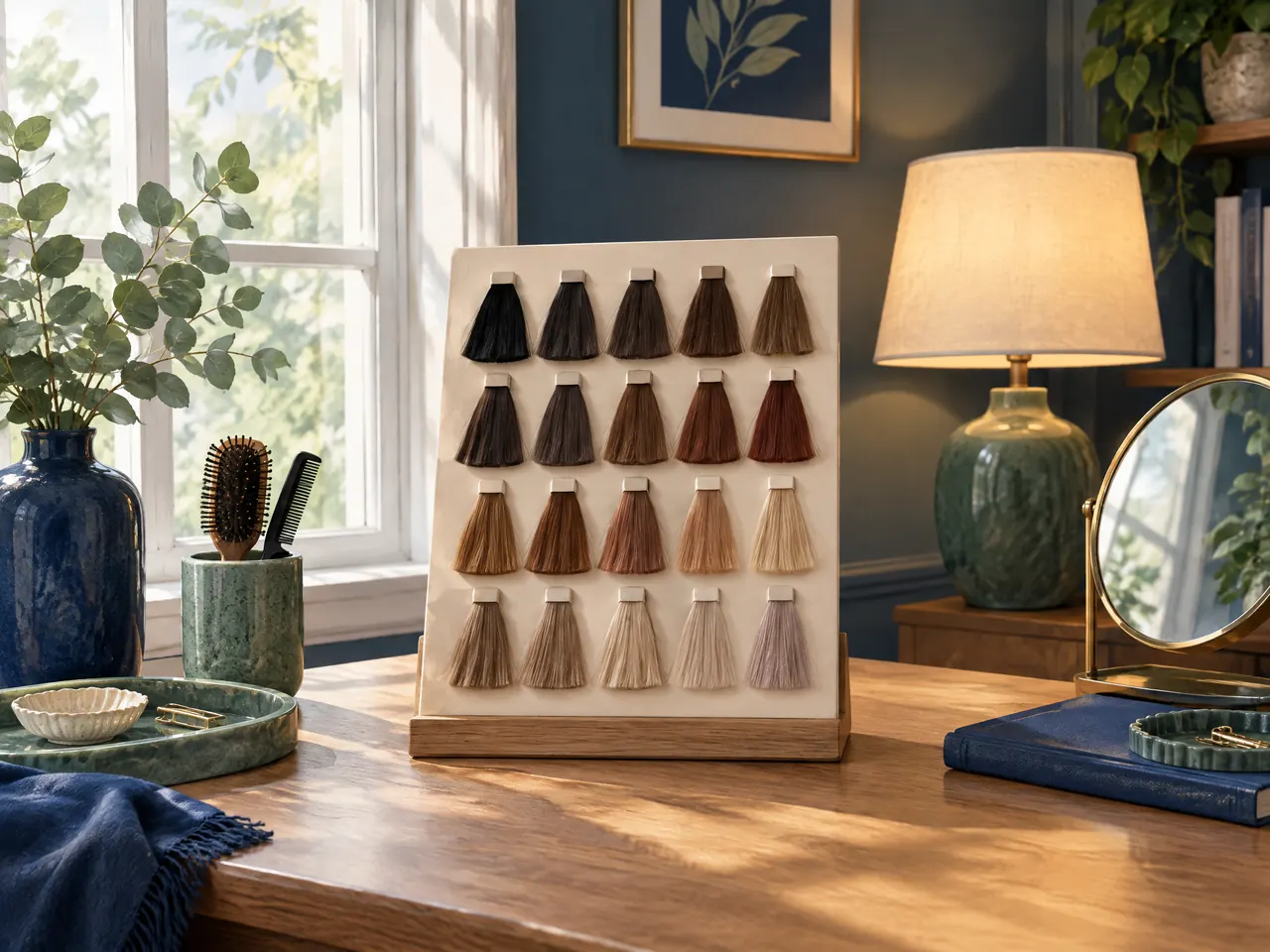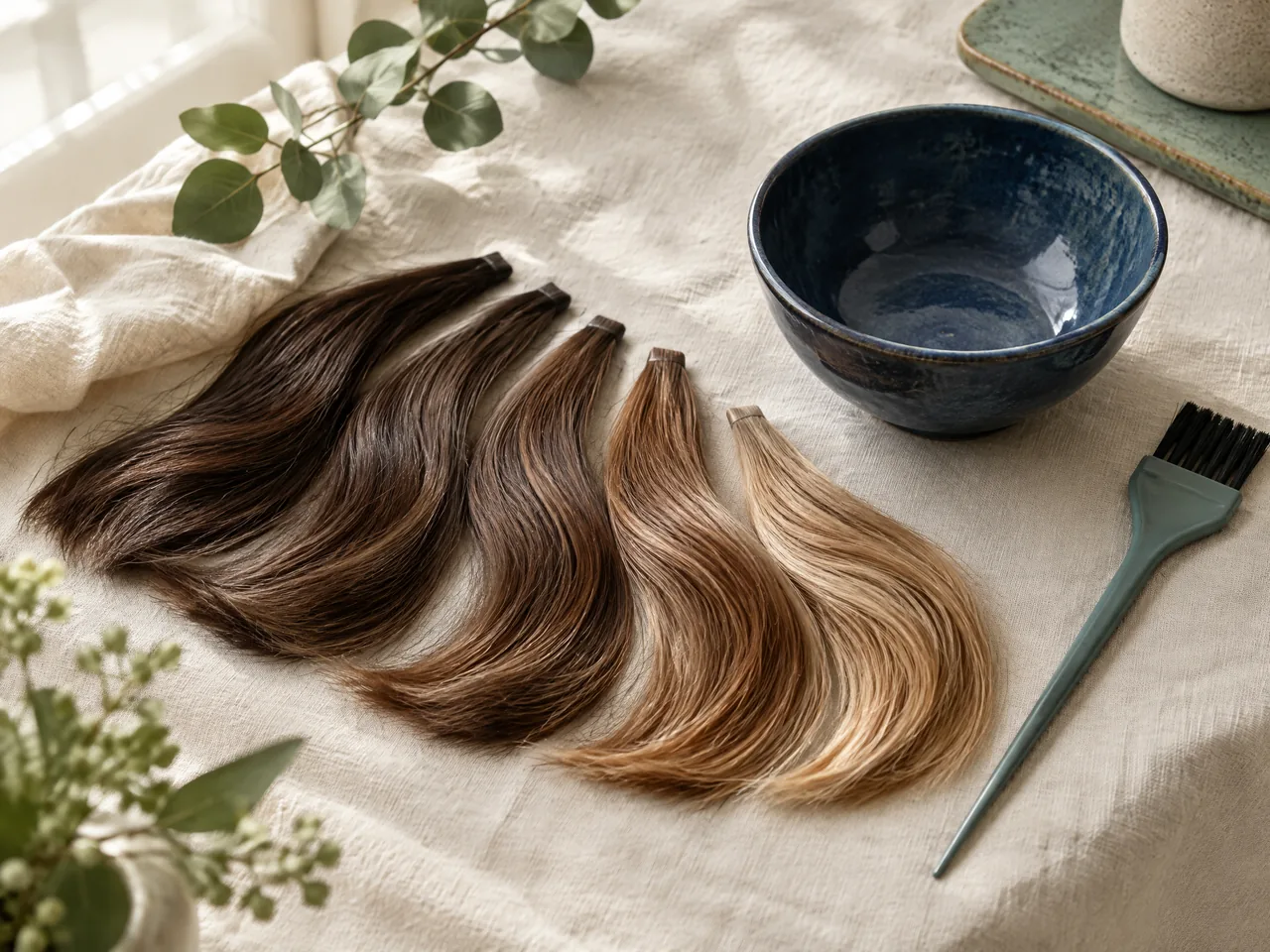
Give each reference photograph one job
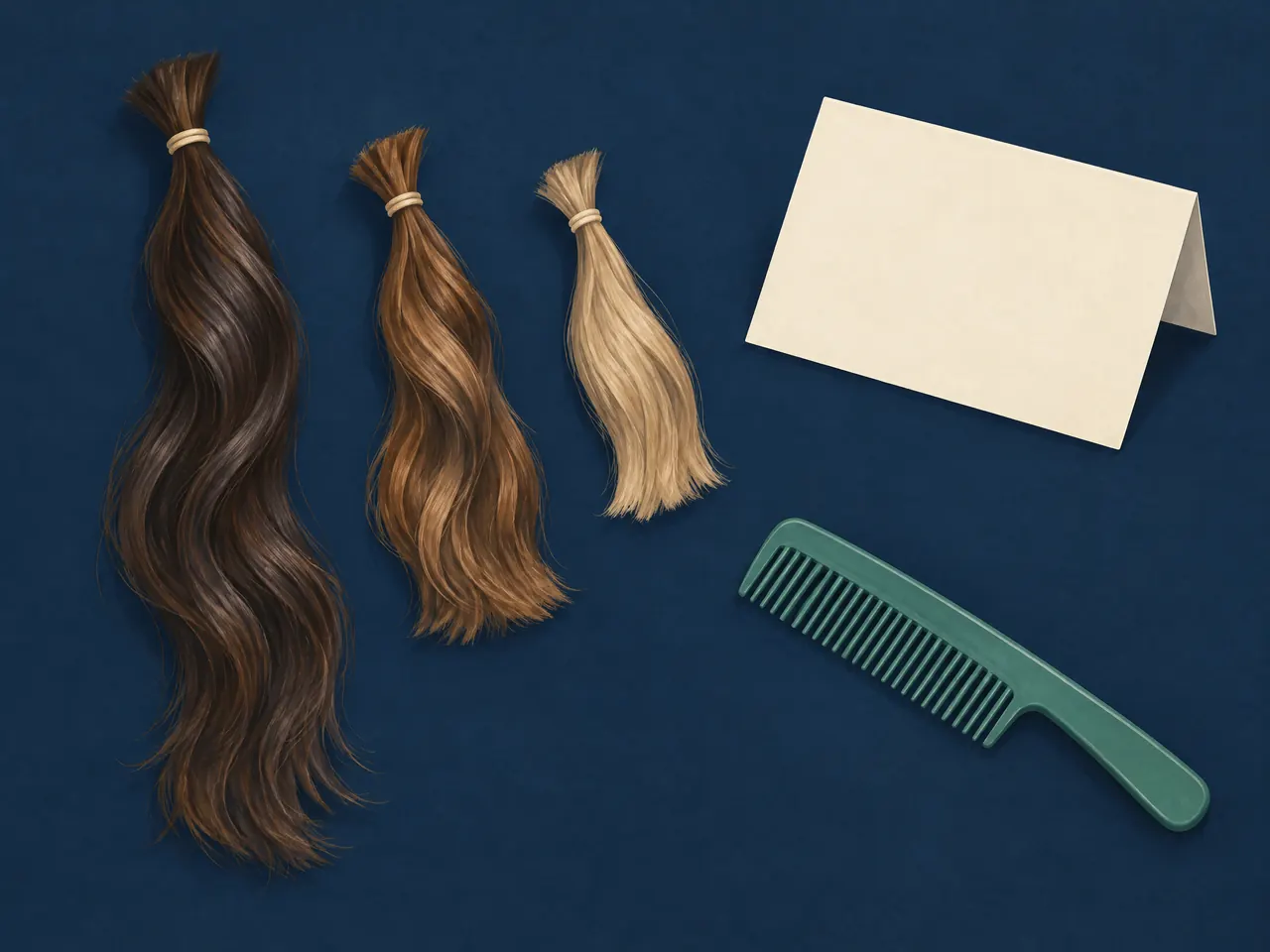
Build a small reference sheet rather than asking one photograph to describe everything. Label one image for the length you intend to keep, another for the distribution of dark and light hair, and a third for the tone you prefer. Wella notes that your idea of subtle balayage may differ from your colourist's, making photographs useful discussion aids [1]. Add a rejected example and explain the feature you do not want. Separate practice tresses of different lengths can help clarify the intended haircut, but they do not show whether your own hair can reach a particular shade.
Make keeping the roots dark a specific request
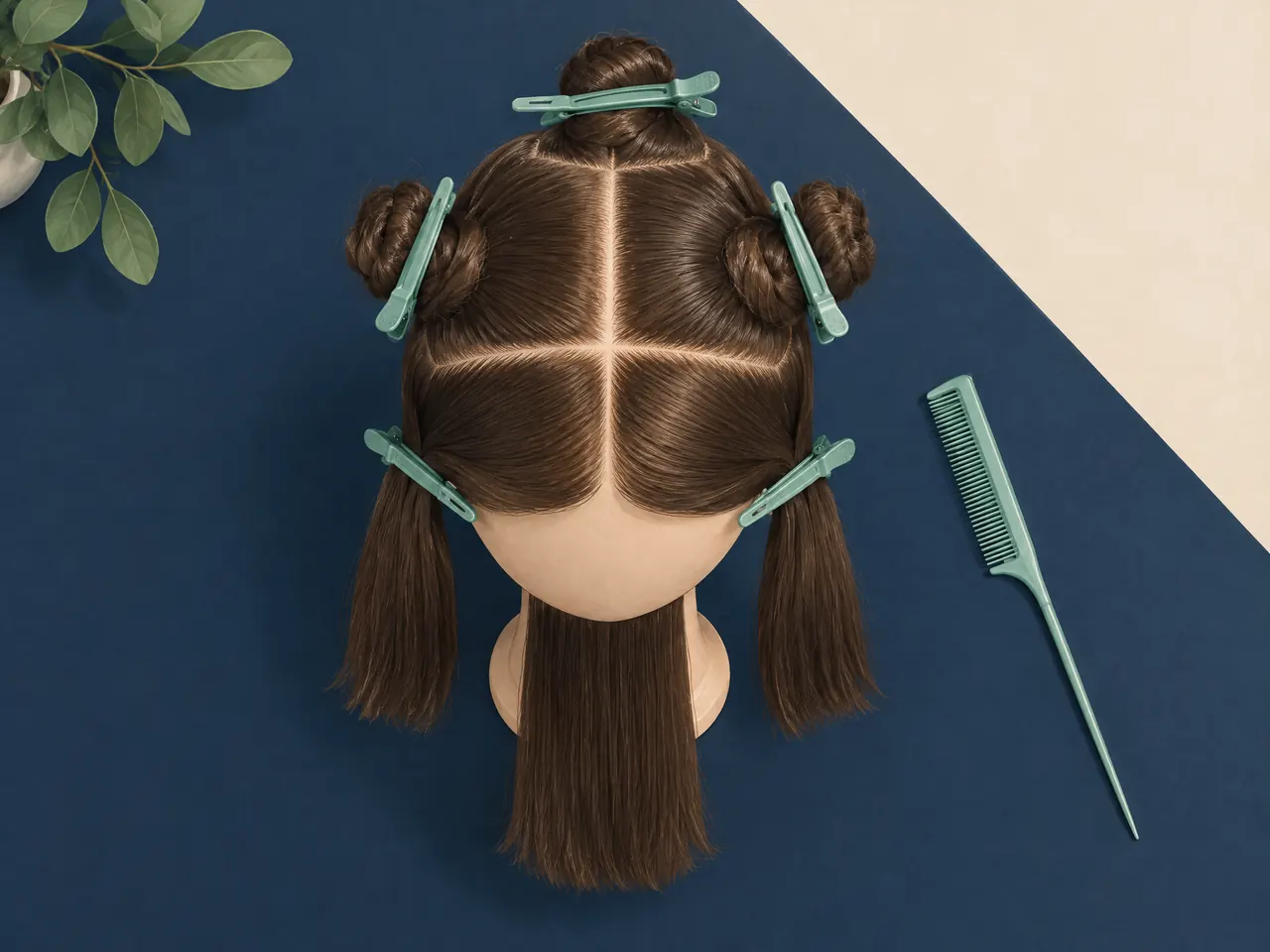
A dark crown can mean leaving natural new growth untouched, retaining an earlier dark tint, or asking for a new dark root colour. These are not interchangeable requests. Vit So's service explanation asks readers to state whether the original base should be left alone or changed [5]. Before discussing the lighter ends, mark which upper areas should stay as they are, including the underside. Then ask whether any base-colour work is part of the proposed scope. A sectioned practice head illustrates how to describe separate areas, not an application method to copy at home.
Keep the setup consistent when comparing samples
If colour samples are available, use the same selection for both a window-side comparison and an ordinary indoor-light comparison. Keep the proposed darker base beside the lighter sample instead of judging the end colour alone. Note whether you still enjoy their contrast in each setting, and which reflection you would accept if it appeared more noticeable later. Avoid swapping to a different sample while changing the lighting: you would no longer know which change influenced your preference. A sample board helps communicate taste; it cannot predict how old dye or previously lightened ends will respond.