
Prince Edward & Kwun Tong clinics · Home-visit enquiries elsewhere

TCM Lab

TCM Lab · Beauty & lifestyle / Colour service costs

Compare highlight quotes by coverage, not the technique name

Content updated

Two colour quotes can sound comparable while describing different work. TCM Lab shows how to compare the areas being lightened, the finish you expect and the parts you will want to maintain.

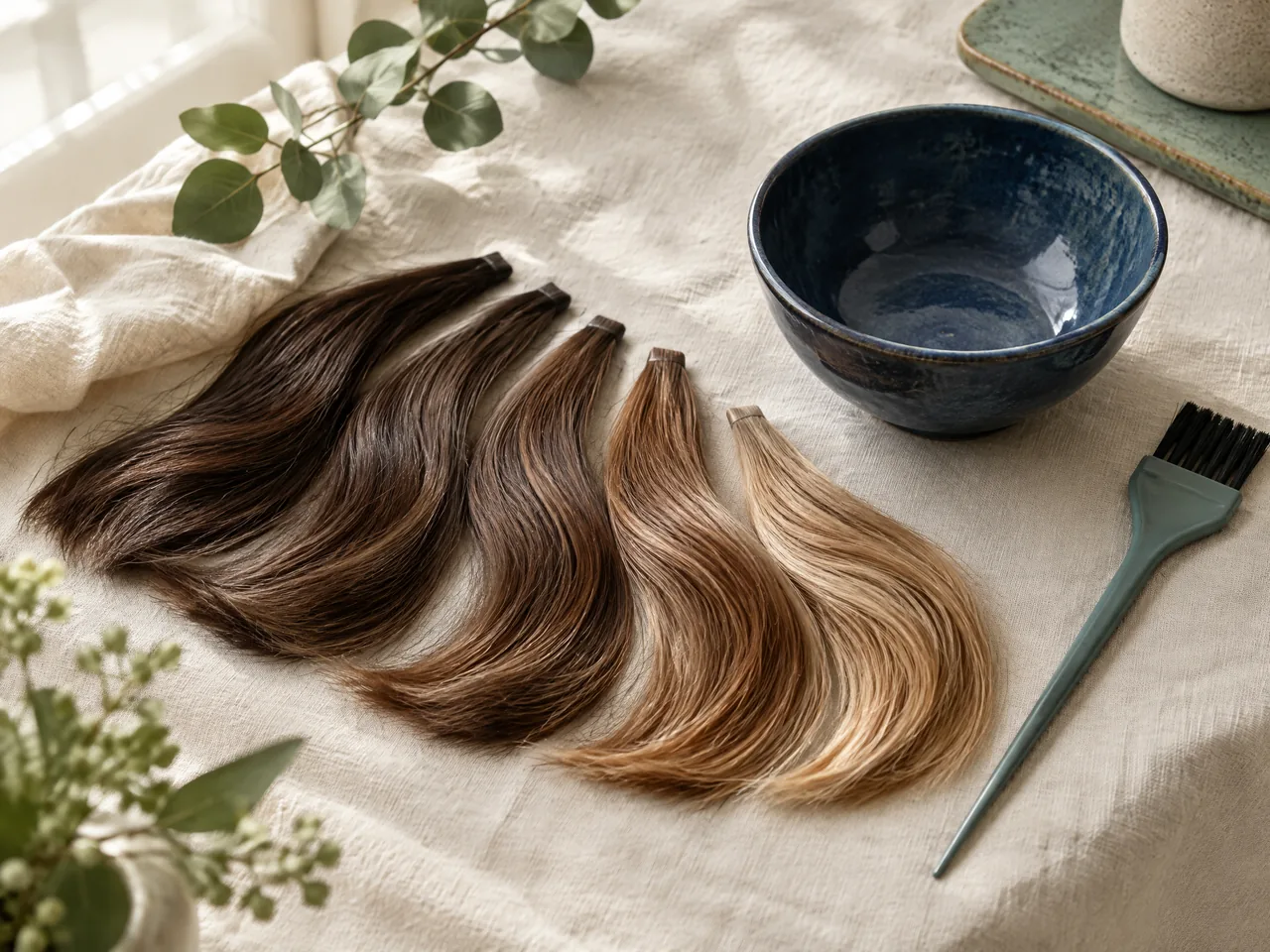
Illustrative colour swatches and tonal planning
Illustrative hair-lifestyle concept; not a client record or a Vit So portfolio photograph.

The short answer

For a useful highlight quote comparison, hold the desired result constant: brightness near the roots, coverage underneath, lighter lengths and final tone. Then check each quote for lightening, toning and finishing. Neither full-head foils nor painted placement is automatically cheaper; different coverage or omitted finishing can explain a difference before technique does.

Vit So is an external hair and beauty website under the same ownership as TCM Lab. Its beauty services are separate from Chinese medicine care. This section is for beauty and lifestyle education, not diagnosis or treatment.

A brighter-looking photograph does not measure the work

A bright front section can dominate a portrait while most of the back remains dark. Conversely, fine light strands distributed throughout the head may be less obvious in a front photograph. Start by separating three things: the regions included, how much hair is selected within them, and the contrast between light and dark. A quote that covers more regions does not necessarily promise a blonder appearance, and a striking photograph does not tell you how much hair was lightened.

The open textbook Hair Colour for Hairstylists: Level 2 explains that fine weaving, heavier weaving and slicing produce different visible patterns, and that the same selection can look different with different strand thickness and hair density. [1] For a reader, the practical lesson is to compare patterns on hair reasonably similar to your own. A delicate result is not proof of a small service, nor can a foil count reliably translate between two different heads of hair.

Write the visual brief before comparing amounts: perhaps a darker parting, noticeable brightness beside the face and scattered lighter lengths without an all-over blonde impression. Check references in ordinary loose hair, not only arranged waves. If you like the pale colour but dislike how much of the hair is pale, record both preferences. Otherwise, two salons could quote different distributions while apparently answering the same request.

Compare foils and painted placement against the same goal

Foils and painted placement are not mutually exclusive categories. Wella's teaching guide describes balayage as hand-painted highlighting and foilyage as painted highlights processed in foils. [2] That overlap matters when reading a quote: seeing the word balayage does not establish that no foils will be used. More useful distinctions are where the lighter areas start, whether they appear as separate strands or broader areas, and how much dark hair remains between them.

For example, take the goal of bright lengths with a deliberately darker root area. A foiled plan might select fine strands across several regions while retaining root depth; a painted plan might concentrate brightness lower down and leave more interior hair untouched. These are illustrative design possibilities, not fixed rules. Ask each quote to identify the intended root boundary and lower coverage. If one includes substantial underneath work and the other covers only visible surfaces, the headline amounts are not yet like-for-like.

The external resource on balayage vs highlights offers terminology for discussing those choices. [7] Use the names to locate a conversation, not to rank value. A higher quote might cover a different result or extra finishing; a lower one might simply have a narrower scope. Neither difference proves that one technique is inherently more economical. Decide first whether both plans would give you the views and contrast you actually want.

Make “full-head” a map rather than a promise of maximum lightness

When considering full head highlights, ask which regions the proposed service covers rather than reading “full” as every strand becoming light. The linked page is a service resource, not a universal coverage standard. [6] Make a simple map of the top, sides, back and underside. Then note whether lightness should begin near the root or farther down in each region. This turns a broad label into something you can compare.

Test that map against daily wear. With a low bun, the sides and lower hairline may be prominent; with hair loose, upper layers may cover those same areas. If you change your parting, check both positions. This is not a reason to request maximum coverage everywhere. It is a way to decide whether broader but less concentrated placement would suit you better than a very bright surface-only arrangement. The visual priority belongs to your routine, not to the word “full”.

Also distinguish new lightening from work on existing lighter hair. A fresh design on previously uncoloured lengths and a refresh that retains many existing highlights are different starting scopes. Ask which pieces would be preserved and which need further work. The American Academy of Dermatology warns that cosmetic colouring can cause dryness and brittleness, with greater lightening carrying additional damage concerns. [4] A softly blended look therefore does not establish a gentler process, and adding more lightening solely to make quotes match is not a sensible comparison method.

Separate the first finish from the parts you may refresh later

Lightening and tone adjustment are different steps. In its global toning lesson, the open textbook describes toner application after the lightening service and explains that toner fades over time, exposing underlying pigment. [3] A quote for placement alone therefore cannot be assumed to include the exact beige, cool or warm finish in your reference. Ask whether toner is included, which areas it covers and whether an additional root-shading step forms part of the proposed appearance.

Finishing also deserves its own line. Confirm washing and drying, then clarify whether a haircut or specially styled finish is included or separately charged. A curled reference can make ribbons easier to see; it does not mean the same effect will look identical when you air-dry or wear the hair straight. Request a description of the expected appearance in your usual texture. Compare equivalent finishing before treating one quote as a better deal.

For upkeep, separate moving brightness back towards the roots from changing the tone of existing lengths. A darker root transition may remain acceptable to you while a particular cool finish needs attention; alternatively, you may tolerate warmer lengths but dislike a visible root gap. Wella distinguishes retained lightened pieces from toner maintenance. [2] Ask about these possible follow-ups separately, without adopting a universal return schedule. Include the kind of upkeep you would realistically choose, not every optional service mentioned.

Read the written scope before deciding which quote is better value

Build a short side-by-side record with the same fields for both quotes: agreed regions, retained dark areas, work on roots and lengths, toner, drying and any haircut. Mark an unanswered item as “not confirmed”, rather than treating silence as either inclusion or exclusion. If one plan does not cover an important view, ask about the revised scope before comparing totals. If the budget is firm, decide which visible priority to preserve instead of requesting the most extensive version by default.

If you are checking full head highlights cost, use the linked menu as a starting resource for that business and confirm the scope that applies to you. [8] Do not transfer a package inclusion, surcharge rule or follow-up policy from another salon. The Hong Kong Consumer Council advises clarifying less-prominent surcharges beforehand and retaining a receipt listing the services provided. [5] Keep the agreed description alongside the amount, and ask for any proposed addition and its charge before agreeing to extra work.

The useful comparison is not “foils versus painting, which wins?” It is whether each written plan delivers your priority areas and finish with an upkeep commitment you accept. A narrower plan can be better value if it omits only areas you do not care about; it can be poor value if the missing coverage is essential to your everyday hairstyle. Vit So is an external hair-beauty website under the same ownership as TCM Lab. Its services are cosmetic, not Chinese medicine or medical treatment.

Take it into everyday life

A practical checklist

  • Describe root brightness, lighter lengths and retained dark areas separately.
  • Check front, back and tied-back views against the proposed coverage map.
  • Identify existing light strands to retain rather than assuming a full restart.
  • Confirm toner, root shading, washing, drying and haircut inclusions individually.
  • Mark unclear quote items as not confirmed and request the missing scope.
  • Separate the first-visit total from optional later tone and placement refreshes.
  • Keep the agreed scope and confirm additions before accepting extra charges.

Questions & answers

Is painted placement always cheaper than a full head of foils?

No. The labels do not fix the regions covered, the amount of lightening or the finishing included. Compare two assessed plans for the same visual goal before attributing an amount difference to technique.

Can a full-head highlight service still leave plenty of dark hair?

Yes. Coverage across the head and the amount selected within each region are separate choices. Ask where darker hair will remain, including the underside and ends, rather than assuming full-head means maximum brightness.

Does a higher foil count make a quote better value?

Not by itself. Selection size and the starting hair affect the visible result. Compare the intended distribution and finish; a foil count is not a reliable common unit for different designs or different heads of hair.

What if one quote includes toner and the other does not mention it?

Treat toner as unconfirmed in the second quote. Ask whether it is needed for the agreed finish, what areas it covers and what the complete amount would be. Do not assume that silence means a free inclusion.

How can I compare upkeep without knowing exact future appointment dates?

Identify what you would want refreshed: root placement, tone on existing light strands or both. Ask about those scopes separately and consider your tolerance for change. A fixed calendar is not necessary to recognise different maintenance priorities.

Sources & further context

Numbered references follow the order in which the sources are listed below. Service websites provide beauty-service context, not medical evidence.

  1. [1] Hair Colour for Hairstylists: Level 2 — 5.1 Weaves Versus Slices, BCcampus Open Publishing
  2. [2] Wella Professionals — What is Balayage? Your Complete Guide
  3. [3] Hair Colour for Hairstylists: Level 2 — 4.7 Application Process: Global Toning Service, BCcampus Open Publishing
  4. [4] American Academy of Dermatology — Coloring and perming tips for healthier-looking hair
  5. [5] Hong Kong Consumer Council — Consumers' Woes against Hair Salons Many and Varied
  6. [6] Vit So — Hair Highlights and Babylights: Choose Your Line Design
  7. [7] Vit So — Balayage vs Highlights: Read the Design, Not Just the Name
  8. [8] Vit So — Hair Salon Price List and Hair Salon Packages

Record which coverage compromises you would accept

Turn your coverage map into a decision brief by marking each region as essential, optional or deliberately dark. For example, brightness beside the face might be essential, while lighter hair under the back layers is optional. Ask what would change visually if an optional region were omitted. This is more useful than requesting an unexplained discount, because the revised quote can describe a smaller design you would actually accept.

The sectioned practice head illustrates separate planning areas, not a standard highlight package. A region being discussed does not mean all its hair will be lightened. If the stylist proposes a different arrangement, ask them to explain it against your priorities and record the revised brief before comparing it with the other quote.
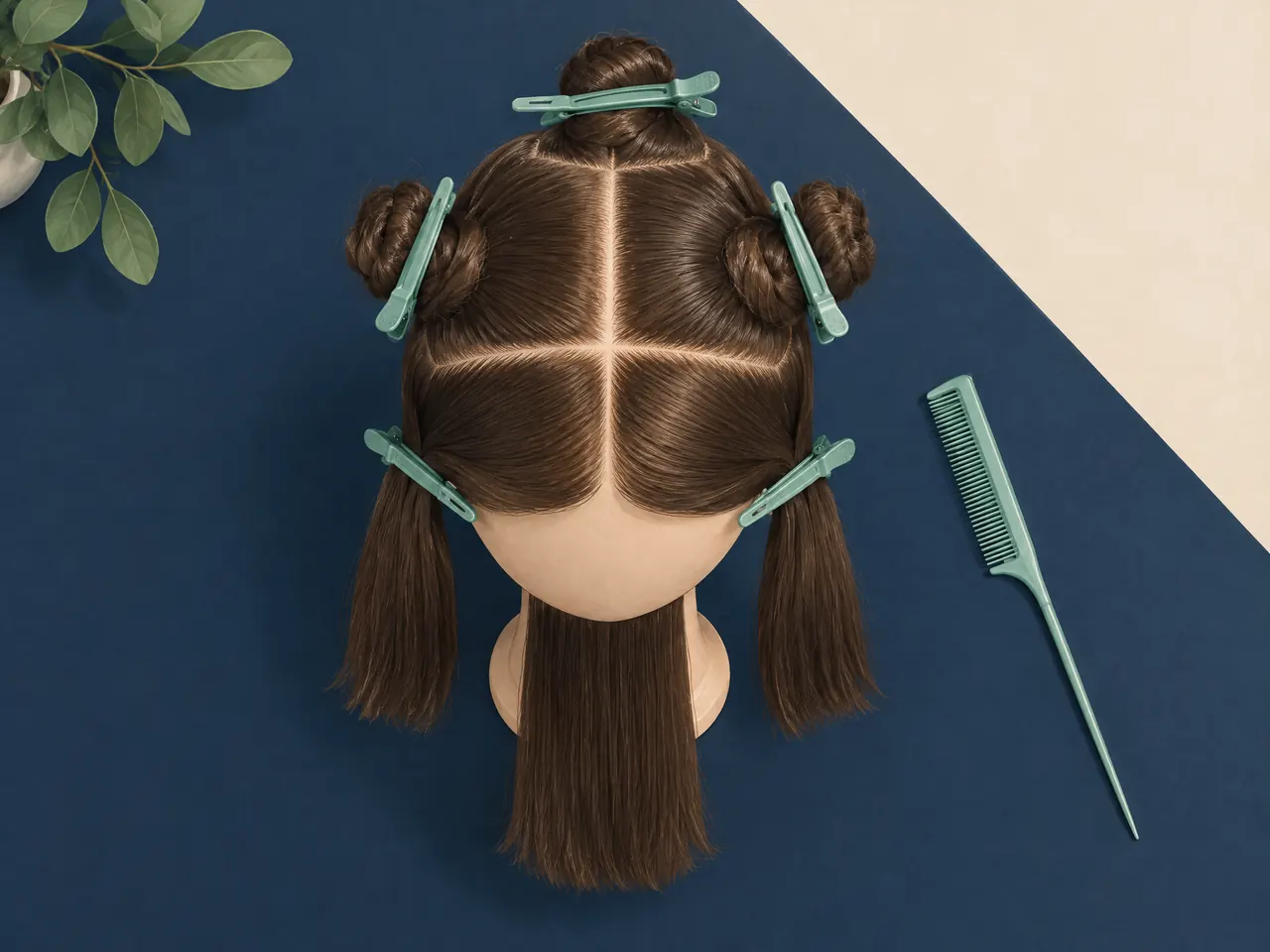
Faceless practice head viewed from above, divided into sections with clips beside a tail comb
Illustrative planning areas for a coverage conversation; not a customer service or a standard highlight package.Generated illustrative image

Check whether the reference is about shade or lightness

When a photograph looks right, identify whether you like the shade of the light pieces or how pale they are. The open colour-theory text treats tone and level as separate characteristics: level describes lightness or darkness, while tone concerns the colour direction. [10] A request for a cooler finish therefore needs a different clarification from a request for lighter pieces. Ask which change the proposed quote is addressing rather than using ‘brighter’ to mean both.

The sample board under two light sources illustrates another comparison problem. American Salon explains that lighting can change the apparent tone of hair and make a photographed colour differ from what a client sees elsewhere. [9] Keep your preferred reference, but discuss it beside your current hair in consistent lighting. An appearance difference between photographs is not, on its own, evidence that one quote includes more lightening.
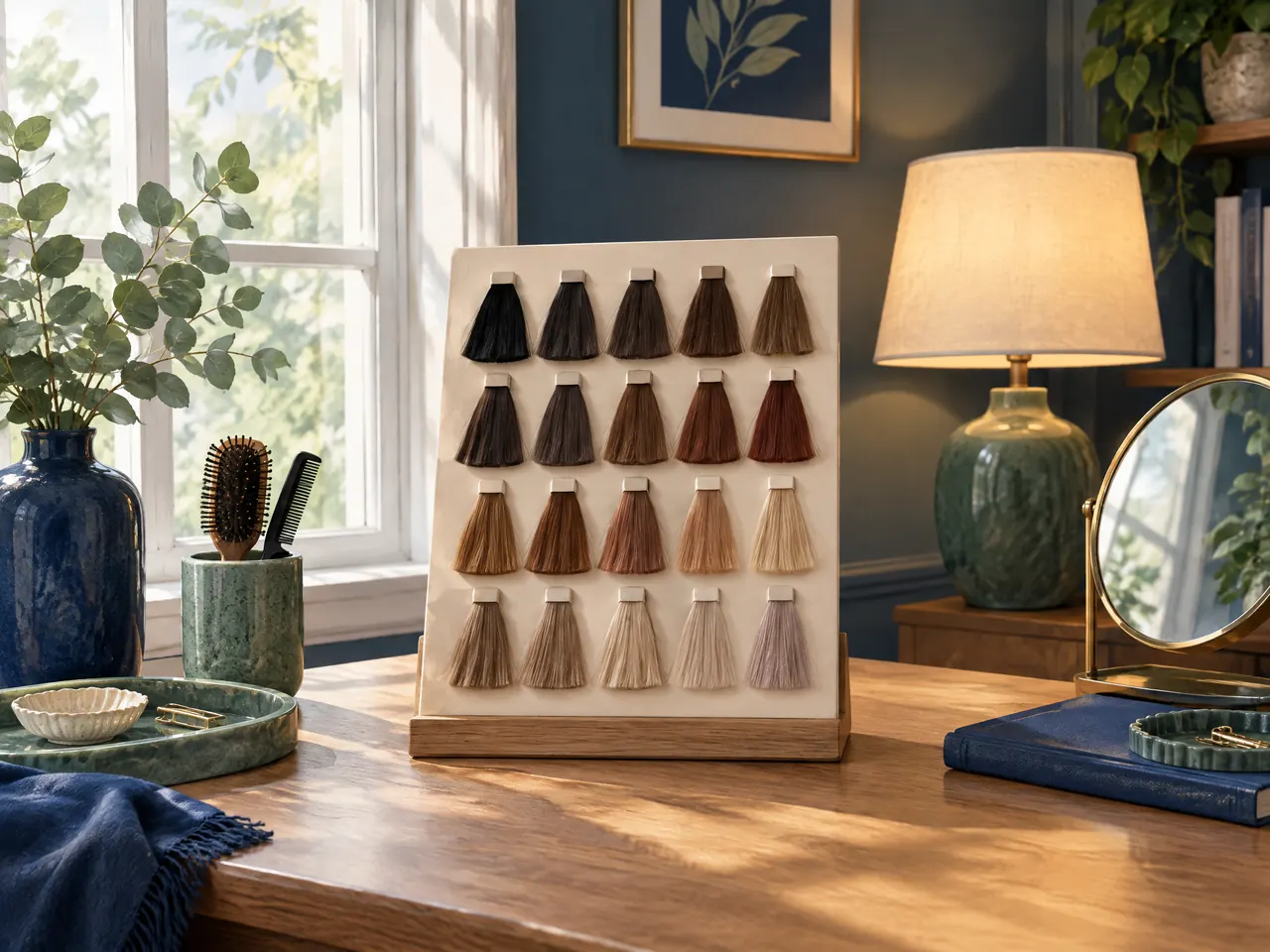
Neutral hair sample board positioned between window daylight and a shaded interior lamp beside a mirror
Illustrative comparison of a hair sample under different light sources; not a promised salon colour result.Generated illustrative image

Use your ordinary drying routine as the comparison baseline

Describe how you normally finish your hair before comparing the quoted finish: straight and brushed, naturally wavy, or with curls arranged using a diffuser or brush. The separate practice tresses are texture references, not evidence that a highlight technique creates any of those shapes. Ask how the proposed light and dark pattern is intended to read in your usual dry texture, including whether the underside remains visible.

The dryer and attachments represent styling equipment, not extra colour coverage. If a reference depends on a finish you seldom recreate, ask for the intended appearance without that styling. Confirm whether the appointment includes only drying or the particular styled finish being discussed. This keeps a presentation difference from being mistaken for a larger lightening service, without assuming that any tool or finish is automatically included.
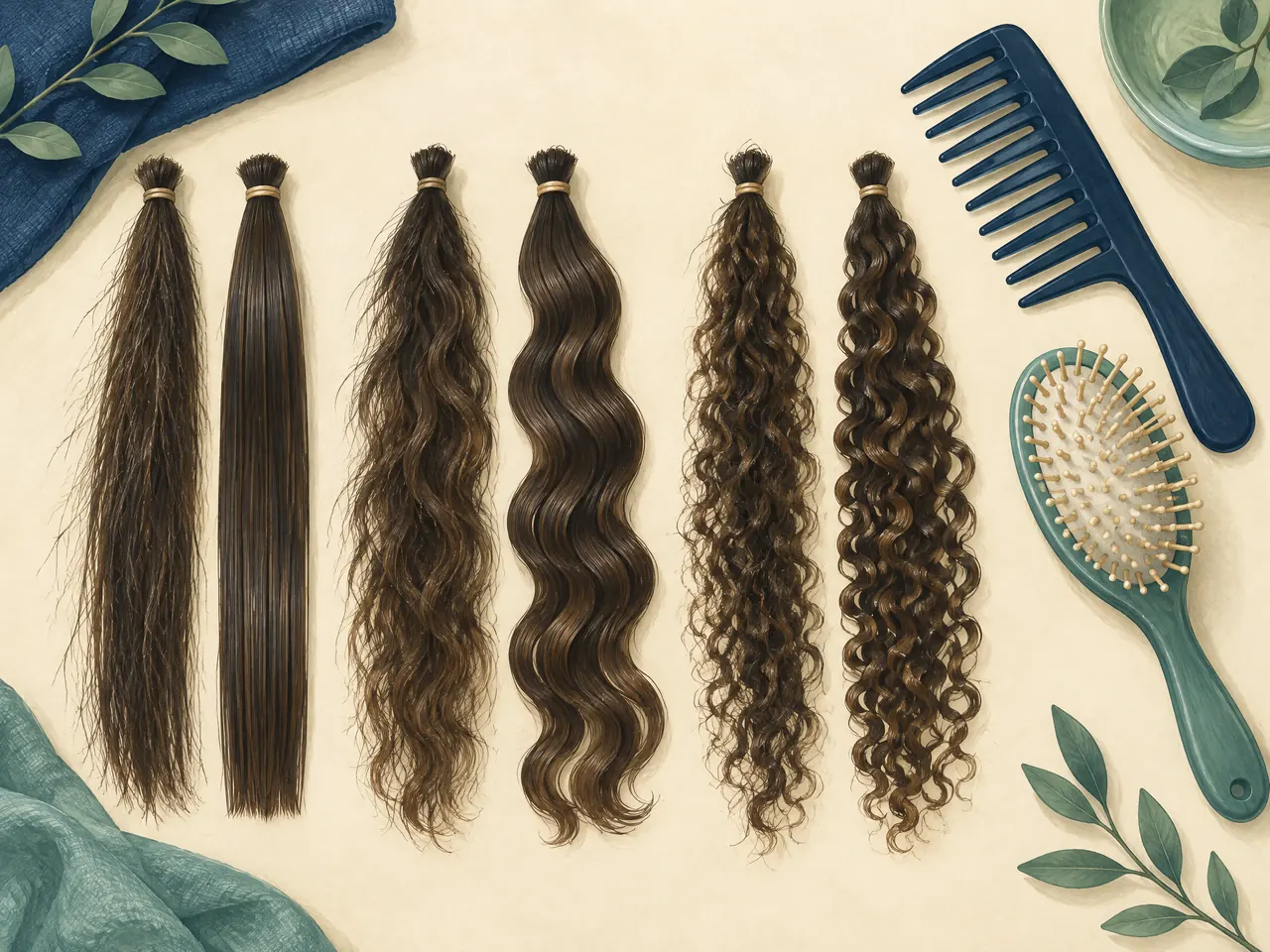
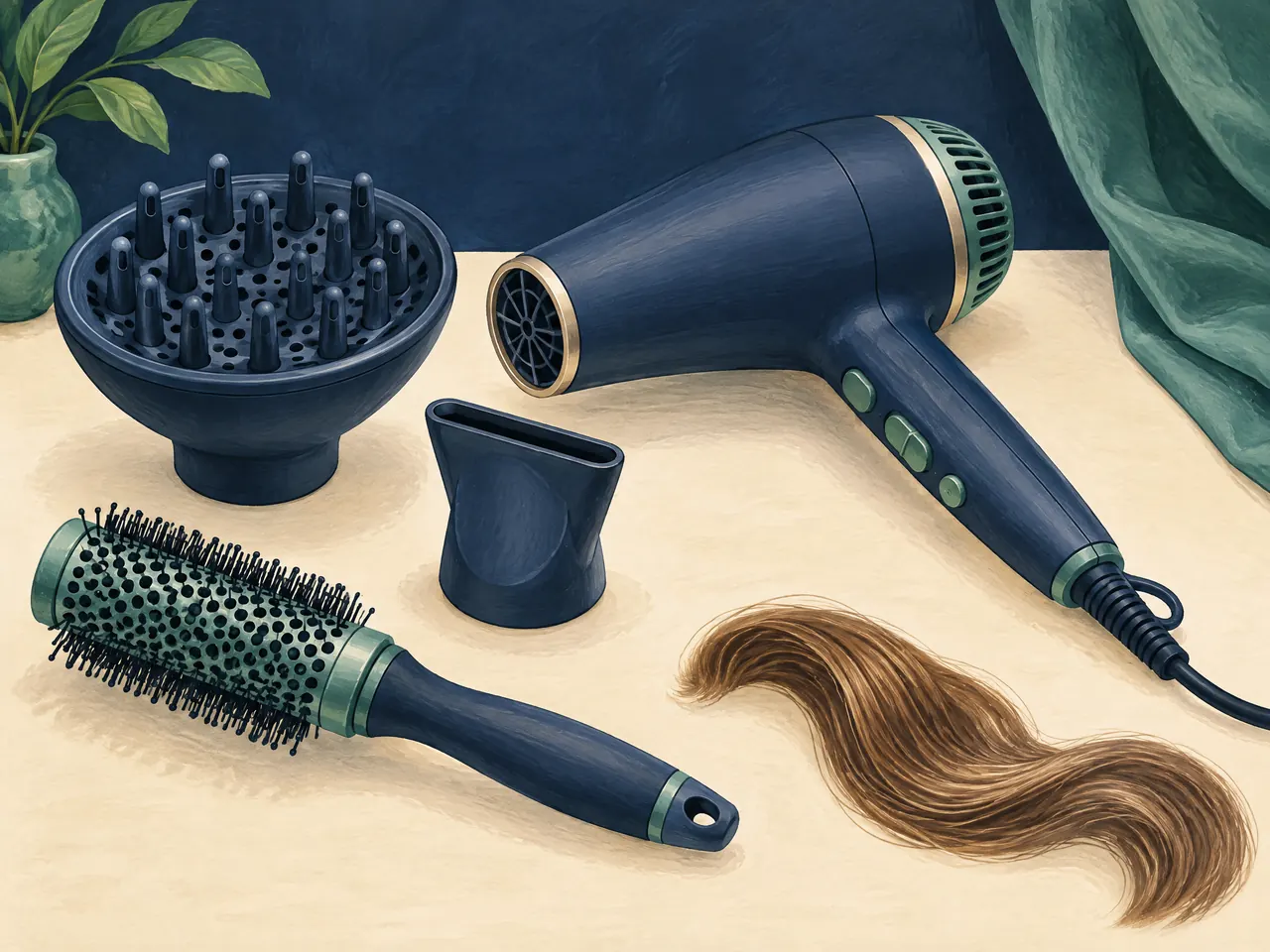
Separate straight, wavy and curly practice hair tresses beside a wide-tooth comb and soft brush
Illustrative texture references for discussing how a colour pattern will be worn; not customer results.Generated illustrative image
Unplugged hair dryer with separate diffuser and nozzle beside a round brush and practice hair tress
Illustrative finishing equipment; tool use and appointment inclusions need individual confirmation.Generated illustrative image

Compare colour on the length you intend to keep

If a haircut is part of the same plan, show the proposed end point before asking for lighter lengths. The three practice tresses illustrate different retained lengths, not recommended cuts. Identify which existing light pieces would remain after the cut and which would be removed. A quote based on your current ends may describe work on hair you do not intend to keep.

Ask the stylist how the agreed cut and colour design will be coordinated; there is no need to prescribe the order yourself. Keep the retained length and placement brief consistent across both quotes, then confirm the haircut inclusion separately. If you later change the cut substantially, request an updated scope instead of assuming the earlier colour quote still answers the new brief.
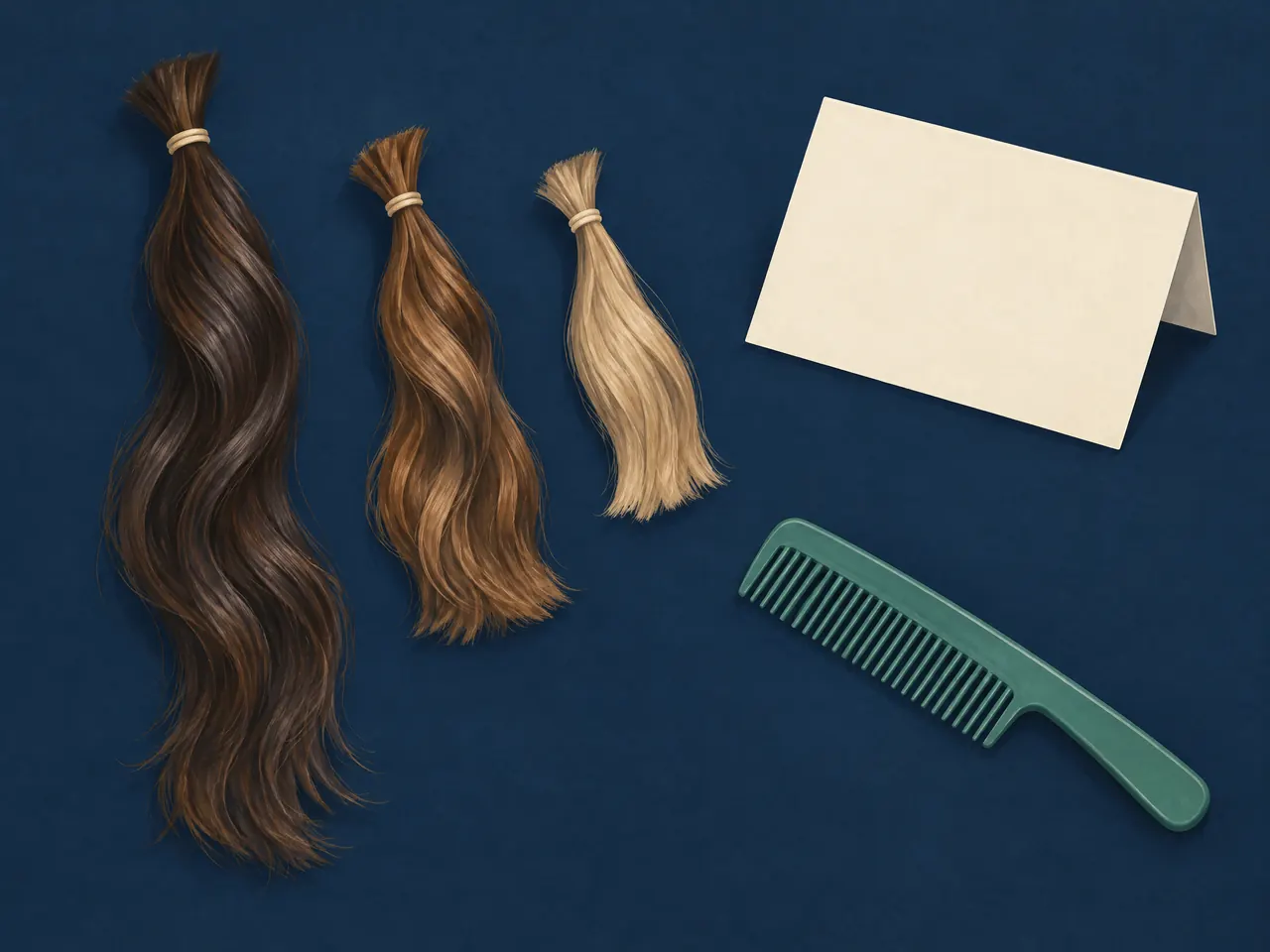
Three unbranded practice hair tresses ending at different lengths beside a blank folded card and comb
Illustrative retained-length references for coordinating a haircut with colour coverage; not a customer before-and-after.Generated illustrative image

Supplemental references

  • American Salon — How To: Create the Right Lighting for a Hair Color Session

    New citation [9], following the original eight sources. Industry education article explaining that different light sources alter apparent hair colour and that inconsistent photographic lighting can misrepresent the colour clients request. Supports comparing reference images and current hair in consistent lighting only; no ring-light purchase advice, numerical lighting specification, treatment efficacy or salon practice claim is adopted.

  • Hair Colour for Hairstylists: Level 2 — 1.1 Colour Theory, BCcampus Open Publishing

    New citation [10], following the original eight sources and source [9]. Independent open teaching text distinguishing hue/tone, level and intensity, with level described as relative lightness or darkness. Supports asking separately about shade direction and desired lightness; no chemical formulation, shade-number prescription, guaranteed outcome or price inference is adopted.

Clinic enquiries

Contact and appointment arrangements

Clinics
Prince Edward and Kwun Tong
Opening hours
11:00–21:00
WhatsApp and telephone
+852 6940 5663

Appointments, practitioner availability and service arrangements are confirmed via WhatsApp.

Please mention any consultation language needs in your WhatsApp enquiry so that arrangements can be confirmed.

Enquire via WhatsApp
Food, gifts and floral lifeWhatsApp enquiry