Ask which tools belong to the styling task
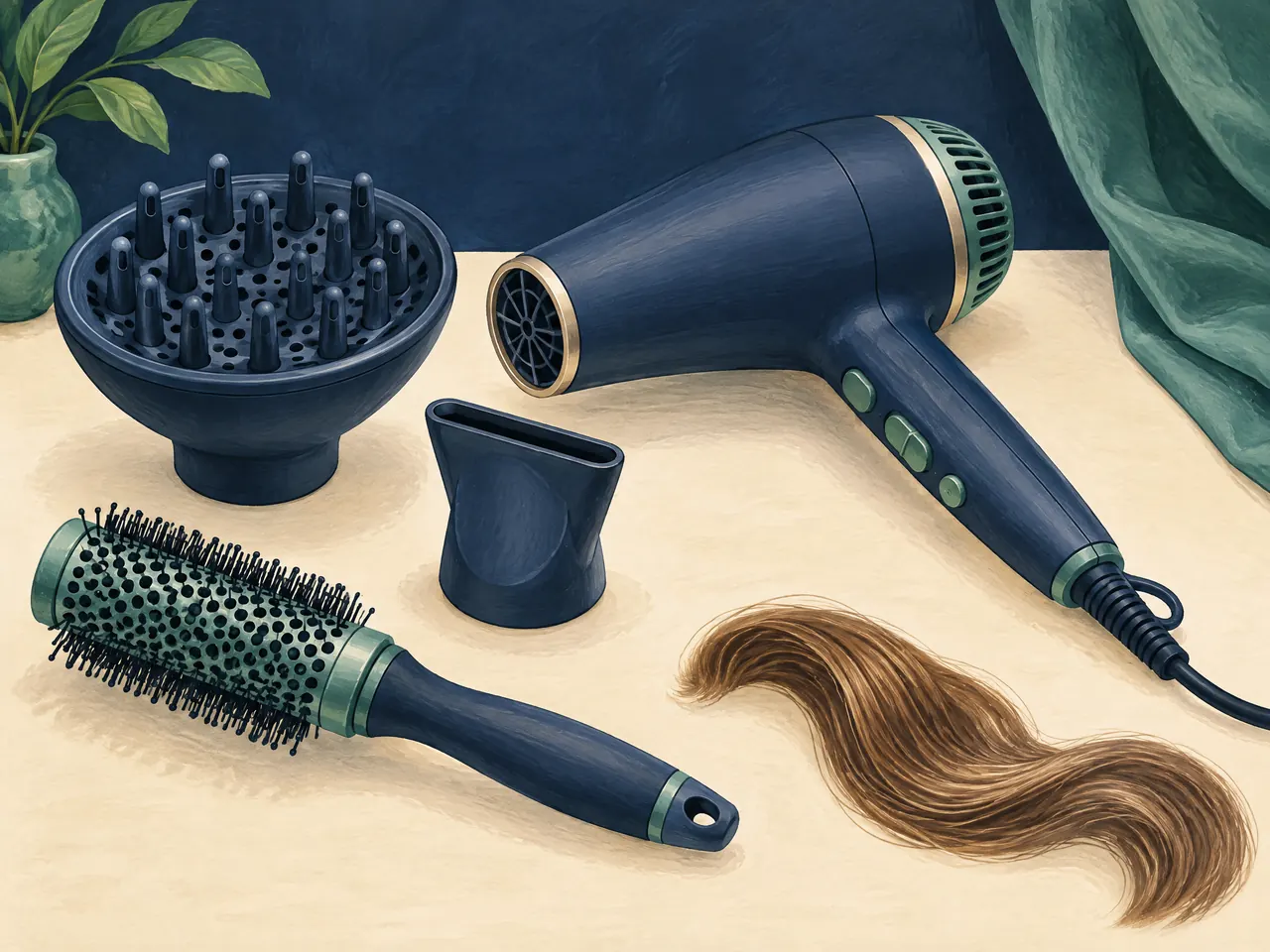
Use your sample styling brief to ask the instructor to identify the equipment needed for that task. For a blow-dry, ask which brush and dryer attachment you will practise with, and whether you share equipment or have it available throughout your attempt. DT Hub lists both blow-drying and heated-tool work, but a list of techniques does not explain the kit available at your station. Confirm the current arrangement rather than buying equipment from a promotional photograph. [1]
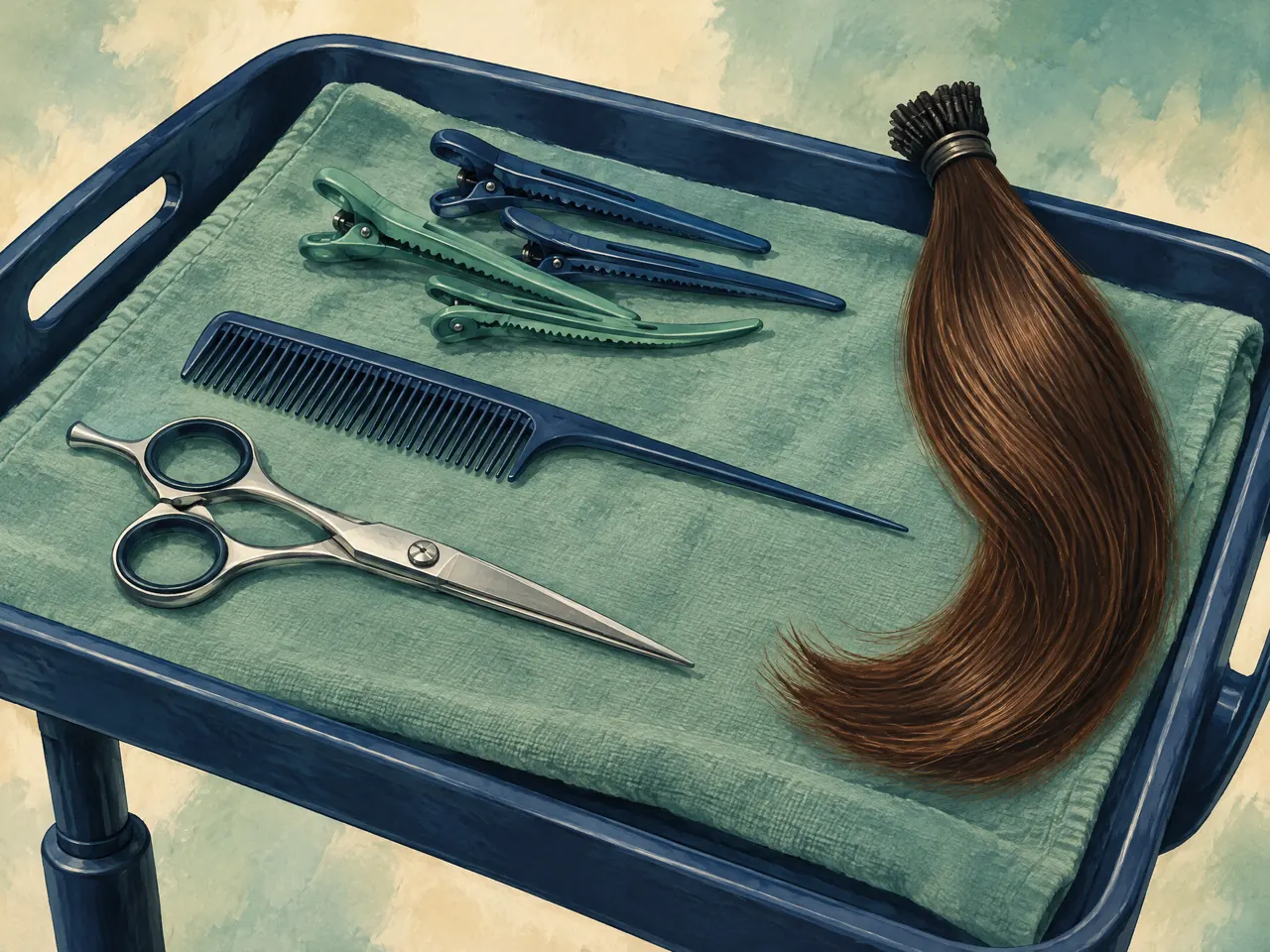
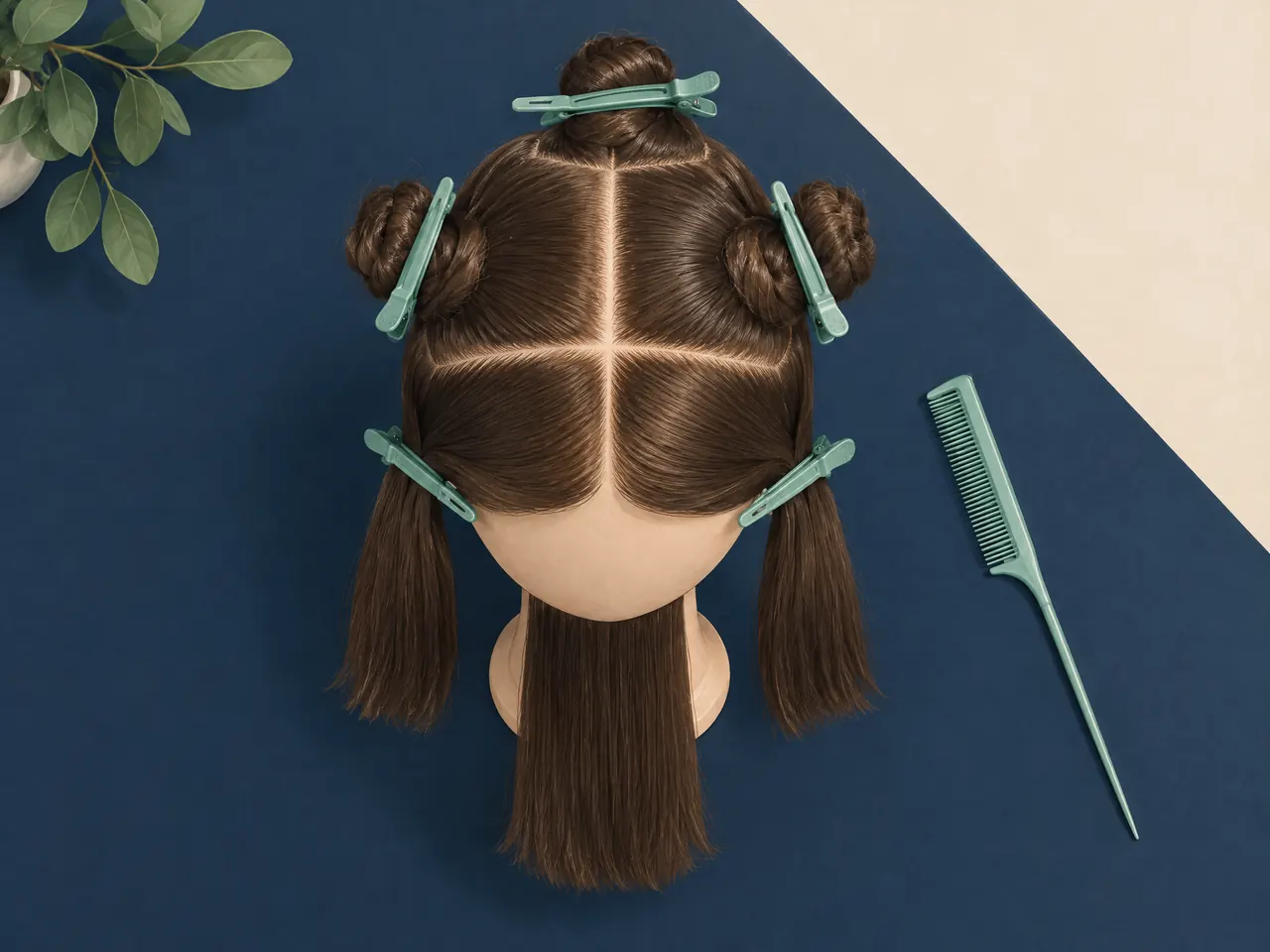
Separate tools used for preparing sections from tools used for cutting. A comb, clips and a practice tress can support styling exercises; scissors in a general training kit do not mean cutting tuition is included. Ask whether you may bring your own dryer and who checks its suitability before use. The unplugged equipment in the illustration is a discussion aid, not a recommended product or a demonstration of heat settings.
Test whether you can repeat the section plan
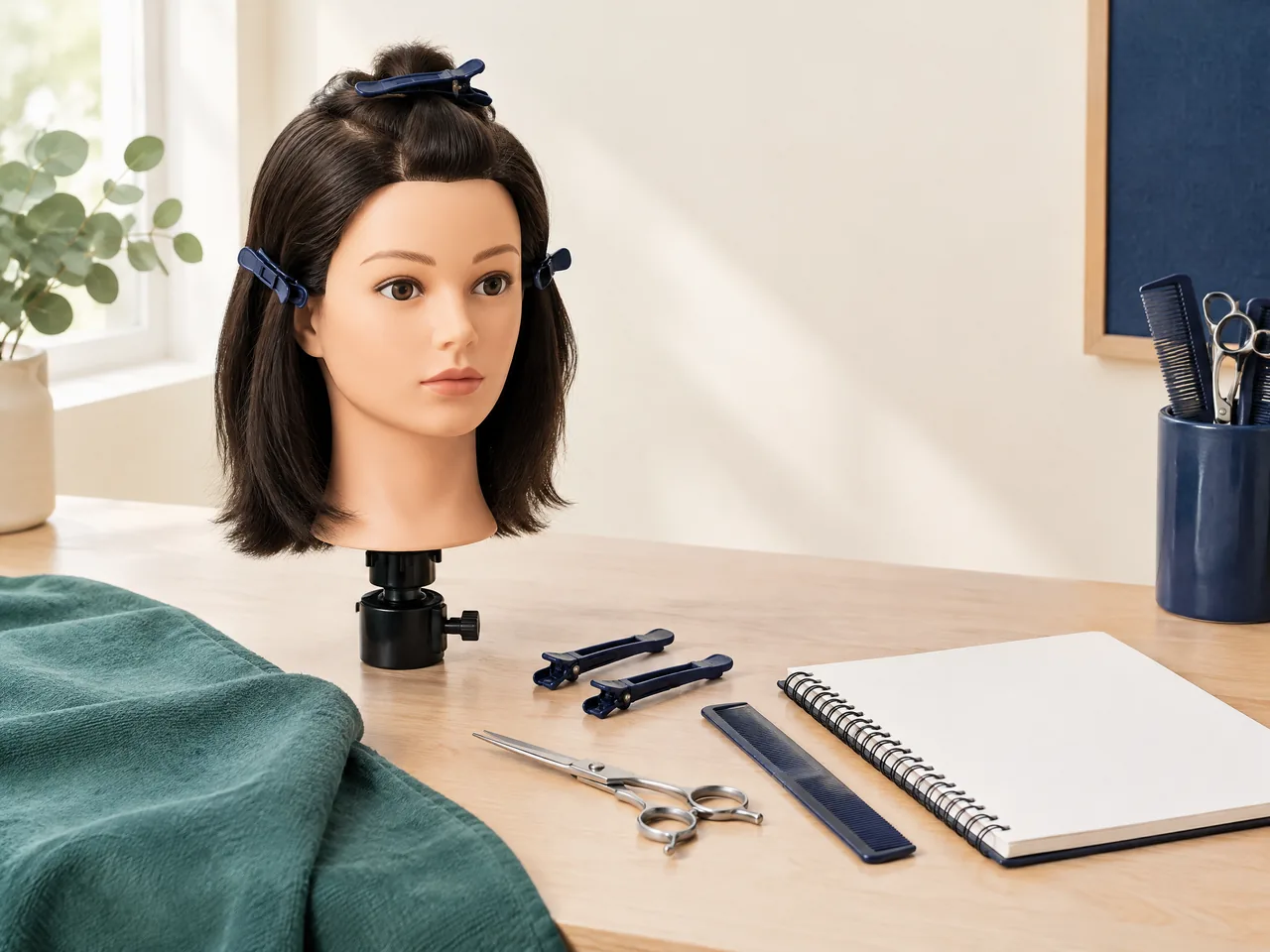
For a supervised practice exercise, ask to work through one section plan before attempting an entire event look. On a suitable mannequin, explain where you intend to part the hair and which areas you will clip aside. Have the instructor check your preparation before you move on. Then undo the preparation and repeat it without copying a finished photograph. This makes it easier to tell whether you understand the sequence or are following positions someone else created. Ask how the exercise changes when you move from a mannequin to a consenting model; do not treat success on the practice head as evidence that comfort checks are unnecessary.
Turn one correction into a retest
After an attempt, ask the instructor to choose one correction you can test in the next repetition. Write down the point in the sequence where it matters: preparing the section, positioning the brush or checking the model's comfort. Repeat the same small task so that the correction, rather than a completely different design, is what you are comparing. Keep preparation, demonstration and your own attempt separate in your practice notes. A timer can help you notice where you wait or hesitate, but speed should not become the pass criterion at the expense of safe handling. Ask when the instructor can observe the retest; unsupervised repetition cannot replace feedback on a difficulty you have not understood.


Rehearse the station reset between models
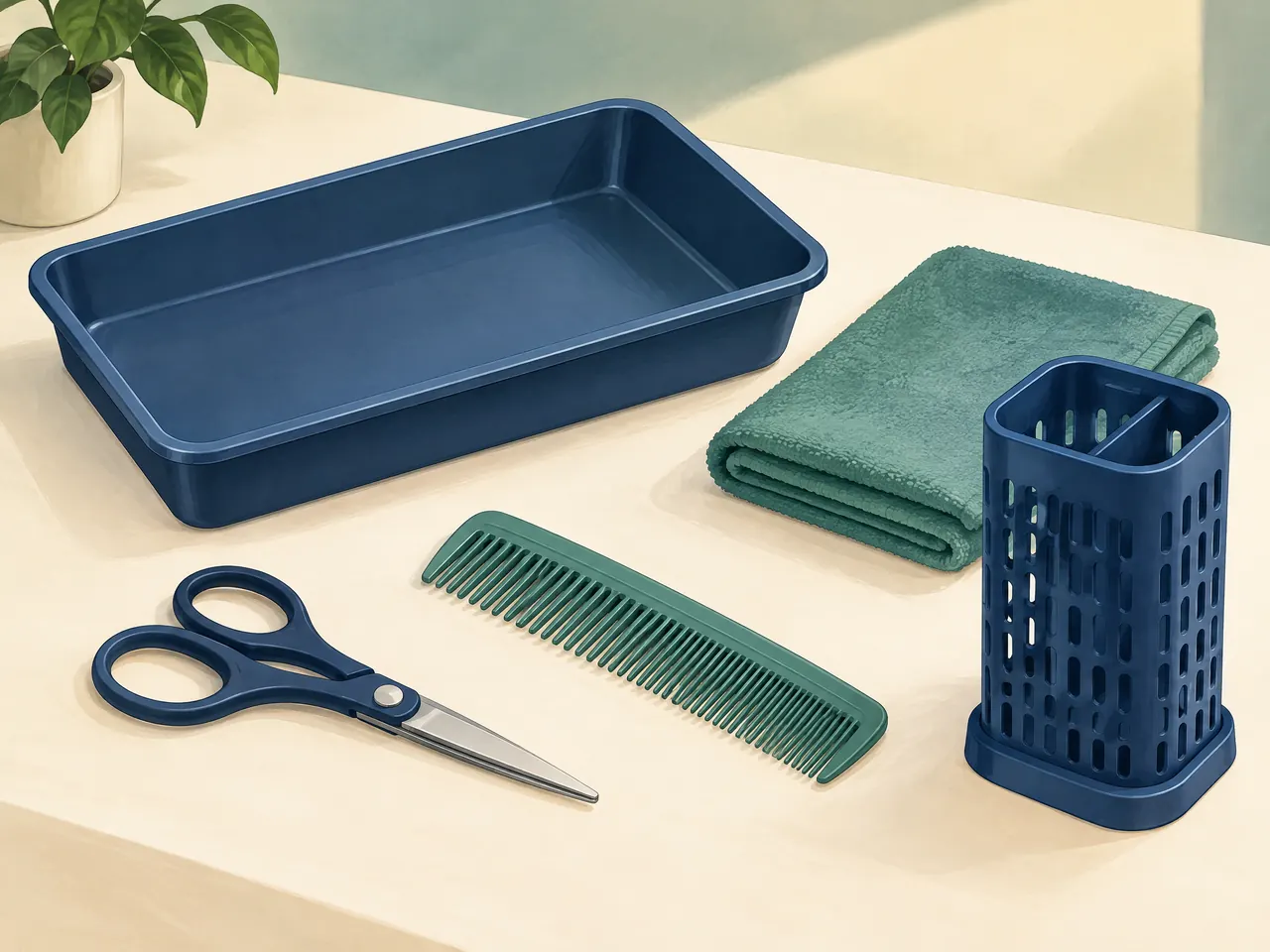
Ask to include the end of a session in the practical assessment. The learner should be able to explain where used combs, clips and towels go, what cleaning procedure the course requires and how an item is kept out of use until that procedure is complete. An empty cleaning tray is not proof that equipment has been cleaned. Follow the instructions for the particular tools and cleaning products rather than treating a quick wipe as a universal method. DermNet advises avoiding contact with contaminated surfaces and towels and following manufacturers' protective-equipment recommendations for hairdressing chemicals. Use those principles to question the station routine, not to invent a disinfectant mixture or a fixed cleaning time. [5]