
Prince Edward & Kwun Tong clinics · Home-visit enquiries elsewhere

TCM Lab

TCM Lab · Hair choices & preparation / Occasion styling

Wedding makeup and extensions: write a schedule that includes removal

Content updated

A wedding beauty booking is not finished when the last pin goes in. Plan the trial, outfit changes, extra hair and journey together, then decide how everything comes off when the celebration ends.

Illustrative haircut consultation tools
AI-generated illustrative concept; not a DT Hub location, product photograph or case record.

The short answer

Start with the first photo time and work backwards through dressing, travel and the provider's agreed preparation time. Trial the actual accessories and any added hair. Confirm who supplies, fits and removes each attachment; removable clip-ins and professionally attached systems need different plans. Put evening removal or a follow-up appointment in writing before committing.

DT Hub is an external website under the same ownership as TCM Lab, with salon and Academy, hair assessment and Chinese medicine hair-growth information, and wig sections. Salon services and scalp spas concern styling and beauty care; Academy concerns skills learning. Chinese medicine and medical options require individual assessment and do not guarantee hair growth; wigs are appearance products, not treatment. Business sources support service information, not evidence of medical effectiveness.

Build the booking around the first photo, not the ceremony

Your first fixed deadline may be family photographs at home rather than the ceremony itself. When enquiring about bridal makeup kwun tong, give the preparation address, first photo time and ceremony location together. DT Hub's bridal page describes makeup, hair and trial arrangements; ask which elements are included in your specific booking rather than assuming everything shown online applies. [1] Work backwards from the moment you must be dressed and ready, leaving separate time for putting on the outfit and checking accessories. Ask the provider to confirm when preparation starts and what could extend it.

A useful comparison of wedding makeup hong kong should cover the whole day, not just the finished portrait. Write down whether the morning ceremony and evening banquet need different looks, who handles the changeover and whether that person remains on site. Record the agreed finishing time, travel arrangements and any additional charges in the booking confirmation. A touch-up kit does not mean an artist is present all evening. If removal is not part of the service, decide now whether you can manage the chosen attachments yourself or need a separate appointment.

Use the trial to rehearse clothes, accessories and movement

Bring outfit photographs, your actual veil or headpiece, and earrings to a trial for makeup and hair styling kwun tong. DT Hub's occasion-styling page discusses using outfit references to coordinate the look. [2] Make the trial practical: turn your head, sit down and see how the neckline meets the hairstyle. Take front, side and back photographs, then check the appearance in daylight and the lighting you expect at the venue where possible. Explain what you want to keep recognisable about your usual appearance; a reference photograph should start a conversation, not promise someone else's result.

If extra hair is proposed, include it in the rehearsal rather than testing only your natural hair. Check whether attachment points show when you bend, lift the veil or change the parting. Tell the artist about previous cosmetic or adhesive reactions, and ask which products would be used. Eyelash adhesive is separate from hair-extension attachment: the FDA notes that it can cause irritation or allergic reactions around the delicate eyelids. [5] A comfortable trial is useful information, but it cannot guarantee that a later application will be reaction-free. Record both the agreed look and any unresolved concerns.

Choose extra hair by attachment and removal requirements

Before booking hair extensions kwun tong, explain whether you want volume for one evening or length that stays beyond the wedding. DT Hub's salon page lists clip-in, tape-in and keratin-bond options and describes professional removal for attached systems. [3] Ask the stylist to name the proposed method, assess the existing hair needed to support it, and explain the total fitting and blending time. More length is not automatically the better choice. Confirm the full cost of hair, fitting, any cutting or colour matching, maintenance and removal rather than comparing installation prices alone.

The wig-site destination for hair extensions hong kong is another place to ask about added-hair appearance services. Clarify whether the proposal is an extension attached to existing hair or a separate wig or hairpiece, because the fitting and removal instructions are different. These are appearance choices, not hair-growth treatments. If you already have unexplained thinning or a painful scalp, seek medical assessment rather than treating an occasion fitting as a diagnosis. Hair loss has several possible causes, and repeated pulling can contribute to traction alopecia, a form of hair loss caused by tension. [4]

Practise removing clip-ins before choosing them for the night

For a one-day look, clip in hair extensions hong kong may be worth discussing because removable clips offer a different commitment from attached tape or bonds. The linked product page also discusses tape-in options, so confirm that your chosen item really is a clip-in set. Request a fitting and removal demonstration with that exact piece. Practise opening each clip without pulling the surrounding hair, and check whether styling pins hide any fastenings. Agree where the removed pieces will be kept and who can help if the completed hairstyle makes the clips difficult to locate.

Temporary does not mean tension-free. Added hair combined with a tight updo can still pull; the American Academy of Dermatology advises changing a hairstyle immediately if it causes pain, scalp stinging or crusting. [4] Tell the stylist during the trial and fitting if you feel pulling rather than waiting to see whether it settles. Discuss less added weight or a looser shape. Keep a workable backup look without the extra hair, especially if wearing extensions is new to you. Comfort should be part of the decision, not something postponed until after the photographs.

Give every outfit change its own hair instructions

An image makeover hong kong enquiry becomes more useful when you describe clothing changes as well as the desired style. Send photographs of the ceremony outfit and banquet outfit, including their closures and necklines. If one must pass over your head, ask whether it can go on before the final hair accessories or whether a helper is needed. A high collar might catch loose curls, while a veil removal could expose pins. Write a short instruction for each change so the person helping you knows what can move and what should remain untouched.

For preparation, choose a button-front or zip-front top that opens fully rather than one you must pull over finished makeup and hair. DT Hub's styling page suggests a button-up top for this reason. [2] Keep the trial photographs and attachment instructions available to whoever assists with dressing. If a haircut or colour change is also planned, treat it as a separate decision and ask whether another trial is needed afterwards. A styling rehearsal based on one length or shade may no longer answer your questions after a major change. Do not squeeze unconfirmed extra services into the wedding morning.

Allow for the real journey and the evening changeover

Readers comparing a hair salon tiu keng leng option should plan for DT Hub's actual Kwun Tong premises, not assume a Tiu Keng Leng branch. The address is Room 03, 21/F, Lee Bo Times Centre, 50 Hoi Yuen Road, Kwun Tong, Kowloon. [1] Check your route and appointment location directly; do not build a wedding deadline around an unverified journey estimate. Allow for walking, the lift and getting into the preparation space. If requesting hotel or home styling instead, confirm that location, arrival arrangements and availability separately before removing salon travel from your schedule.

For example, if the first photographs are at 11:00, reserve a distinct dressing and final-check period immediately beforehand, then work backwards using the provider's confirmed makeup and hair duration. Include travel if preparation happens elsewhere. For the banquet, name the moment you become available for restyling, not simply the dinner start time. Check whether there is a chair, mirror, suitable light and somewhere to put the kit. A spare half-hour already occupied by greetings or photographs is not a genuine changeover window. Ask which parts of the look can realistically change within the time you have.

Write the last appointment: getting everything off

Before the event, make a removal note that identifies the veil fastenings, styling pins, removable hair pieces and any professionally attached extensions. Ask the stylist to show the order for your actual look; there is no single sequence for every arrangement. Follow the demonstrated clip-in method, and do not pull out tape or bonded extensions as if they were clips. For professionally attached hair, agree a removal appointment and care instructions for the period before it. DT Hub's salon page specifies professional removal for those systems. [3] If pain develops, contact the provider promptly for release or removal rather than waiting for the scheduled date. [4]

Keep makeup removal separate from hair-attachment removal: one product is not automatically suitable for both. Ask how to remove any temporary lashes and which remover suits the cosmetics used. The FDA advises careful removal to avoid scratching the eye, clean tools, and no application or removal in a moving vehicle. Stop using eye cosmetics if they cause irritation, and see a doctor if it persists. [5] Pack the agreed supplies before leaving for the event. Finish the schedule with a realistic removal time and any follow-up booking, so exhaustion does not force you to improvise with unfamiliar clips or adhesives.

Take it into everyday life

A practical checklist

  • Send the preparation address, first photo time, ceremony location and evening changeover window before confirming the booking.
  • Bring outfit photographs, veil, headpiece and earrings to the trial; include the actual added hair if possible.
  • Record each attachment method, who supplies the piece, who fits it and who removes it.
  • Confirm fitting, blending, travel, touch-up, maintenance and removal costs in the written quote.
  • Choose preparation clothing that opens at the front and assign a helper for difficult outfit changes.
  • Check the real route to Kwun Tong or confirm the agreed on-location preparation address.
  • Practise clip-in removal, prepare suitable storage and keep a backup hairstyle without added hair.
  • Pack the recommended makeup-removal supplies and confirm any professional extension-removal appointment.

Questions & answers

Should extensions be fitted on the wedding morning?

Not automatically. First confirm the method, fitting duration and whether blending or colour matching needs a separate visit. Including the proposed hair in the trial helps you assess both the look and comfort. Avoid making a new, untested attachment system part of an already tight morning schedule.

Can I remove all extensions myself after the banquet?

No. Removable clip-ins and professionally attached tape or bonds are different. Practise taking out the exact clip-in set after a demonstration. DT Hub's salon extension page specifies professional removal for attached systems. [3] Confirm who will remove your chosen method and when before booking it.

What should I bring to a trial if I cannot bring the dress?

Bring clear photographs of the neckline, back, colour and fastening, together with your actual accessories. Explain every outfit change. The trial should test how the hairstyle meets the collar and veil, and how you will get dressed afterwards, rather than considering only a close-up of your face.

Does a trial prove that eyelash adhesive will not irritate me?

No. A trial can reveal practical problems but does not guarantee a later reaction will not occur. Tell the artist about previous reactions and ask about ingredients and alternatives. FDA guidance notes that lash adhesives can irritate the eye area or cause allergic reactions; persistent irritation needs medical advice. [5]

What if the hairstyle pulls but I like how it photographs?

Ask for adjustment immediately rather than accepting discomfort for the photograph. AAD guidance identifies pain, stinging and crusting as reasons to change the hairstyle. [4] Discuss a looser shape or less added hair. If symptoms continue or you notice hair loss, seek medical assessment.

Is there a DT Hub branch in Tiu Keng Leng?

The area page is service-area information, not evidence of a separate branch. The actual premises are in Kwun Tong at Room 03, 21/F, Lee Bo Times Centre, 50 Hoi Yuen Road. [1] Confirm the appointment address and check your actual journey before agreeing a wedding-day start time.

Sources & further context

Numbered references follow the source order below. Business websites provide relevant service or product information, not evidence of medical effectiveness.

  1. [1] DT Hub — Bridal Makeup & Hair in Kwun Tong
  2. [2] DT Hub — Makeup & Hair Styling in Kwun Tong
  3. [3] DT Hub — Hair Extensions in Kwun Tong
  4. [4] American Academy of Dermatology — Hairstyles that pull can lead to hair loss
  5. [5] US Food and Drug Administration — Eye Cosmetic Safety

Make the trial photographs useful to your helper

Alongside the front, side and back photographs, ask the stylist to identify which areas hold added hair, which hold the veil and which must stay untouched during dressing. Record those distinctions on copies of the trial photographs rather than asking a helper to guess from the finished shape. A sectioned practice head illustrates planning areas only: it does not show the correct attachment pattern for your hair. Use the record to ask what changes when the veil comes off.
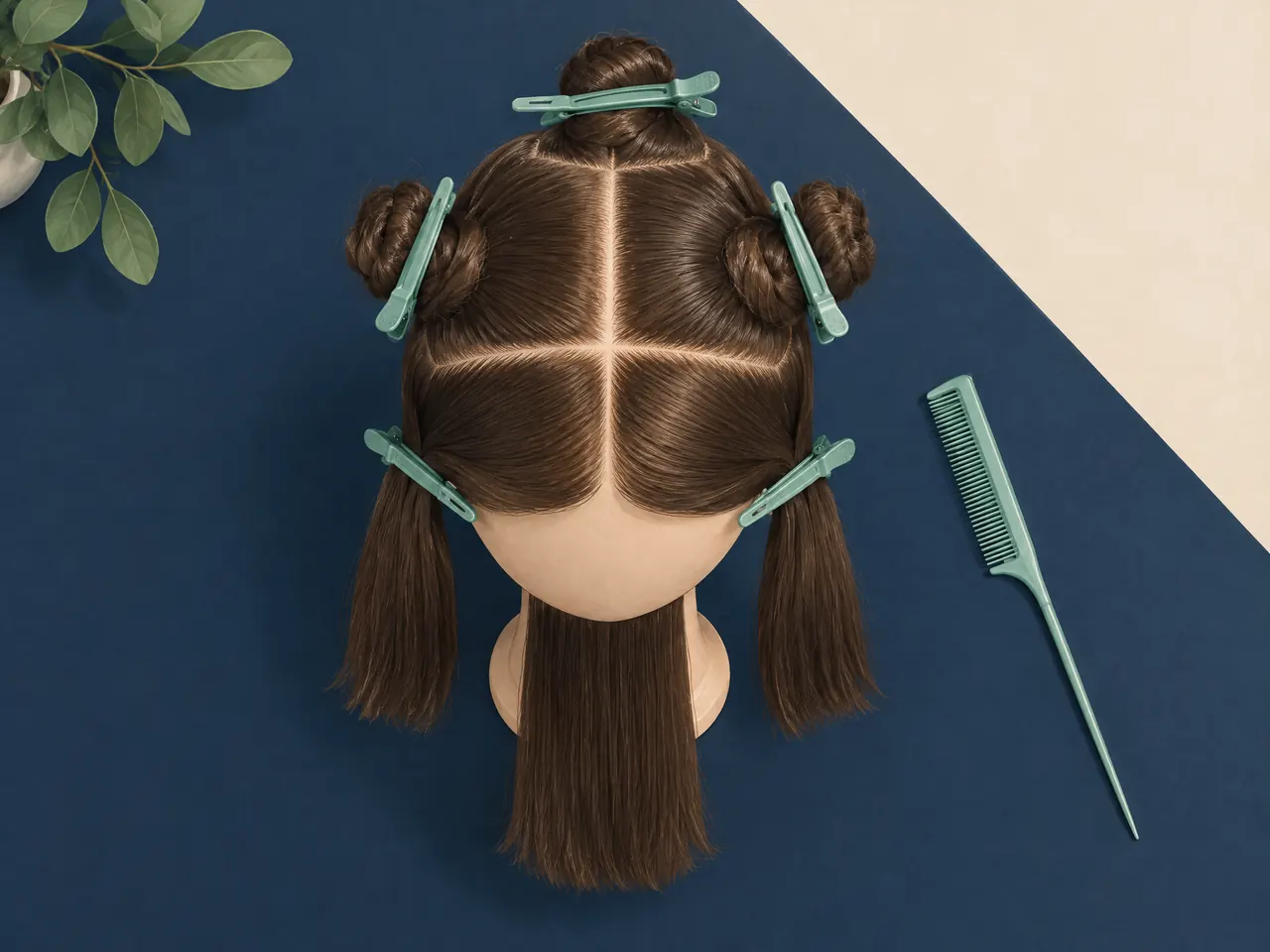
Illustration of a faceless practice head divided into sections with clips, with a tail comb beside it
Sectioning as a planning aid for discussing veil and added-hair placement; not a fitting pattern or a real bridal appointment.Generated illustrative image

Describe where the added length should finish

Make the length request specific to both outfits: explain whether the ends should sit above the collar, fall over a shoulder or leave the back neckline visible. Separate that request from the wish for fuller hair, so the stylist can discuss each objective without assuming longer is better. Ask to see the proposed length with your accessories at the trial. If cutting or blending the added hair is proposed, confirm the change before it is made and record whether it alters the agreed evening look.
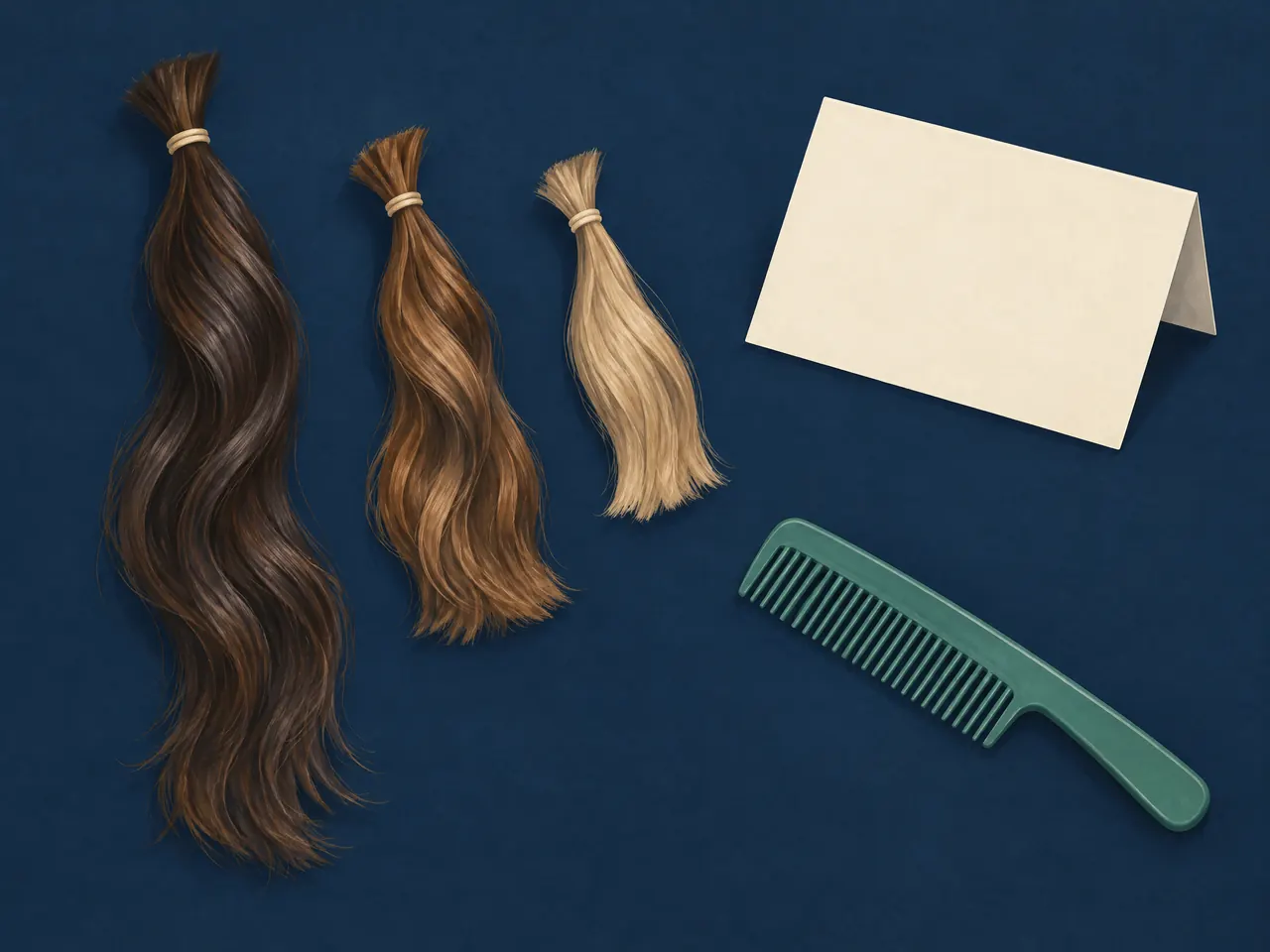
Illustration of three separate practice hair tresses of different lengths beside a blank consultation card and comb
Different sample lengths help frame an outfit-specific request; these are not product sizes or promised styling results.Generated illustrative image

Keep a separate record of the colour match

When colour matching is part of the extension discussion, bring the actual proposed hair into the trial photographs rather than relying only on a reference image. Compare it beside your own hair in the daylight and venue-style lighting available to you. Note which sample was agreed, as well as the finished hairstyle. If you subsequently change your own colour, tell the stylist before the event and ask whether the same piece and trial record still answer the matching question.
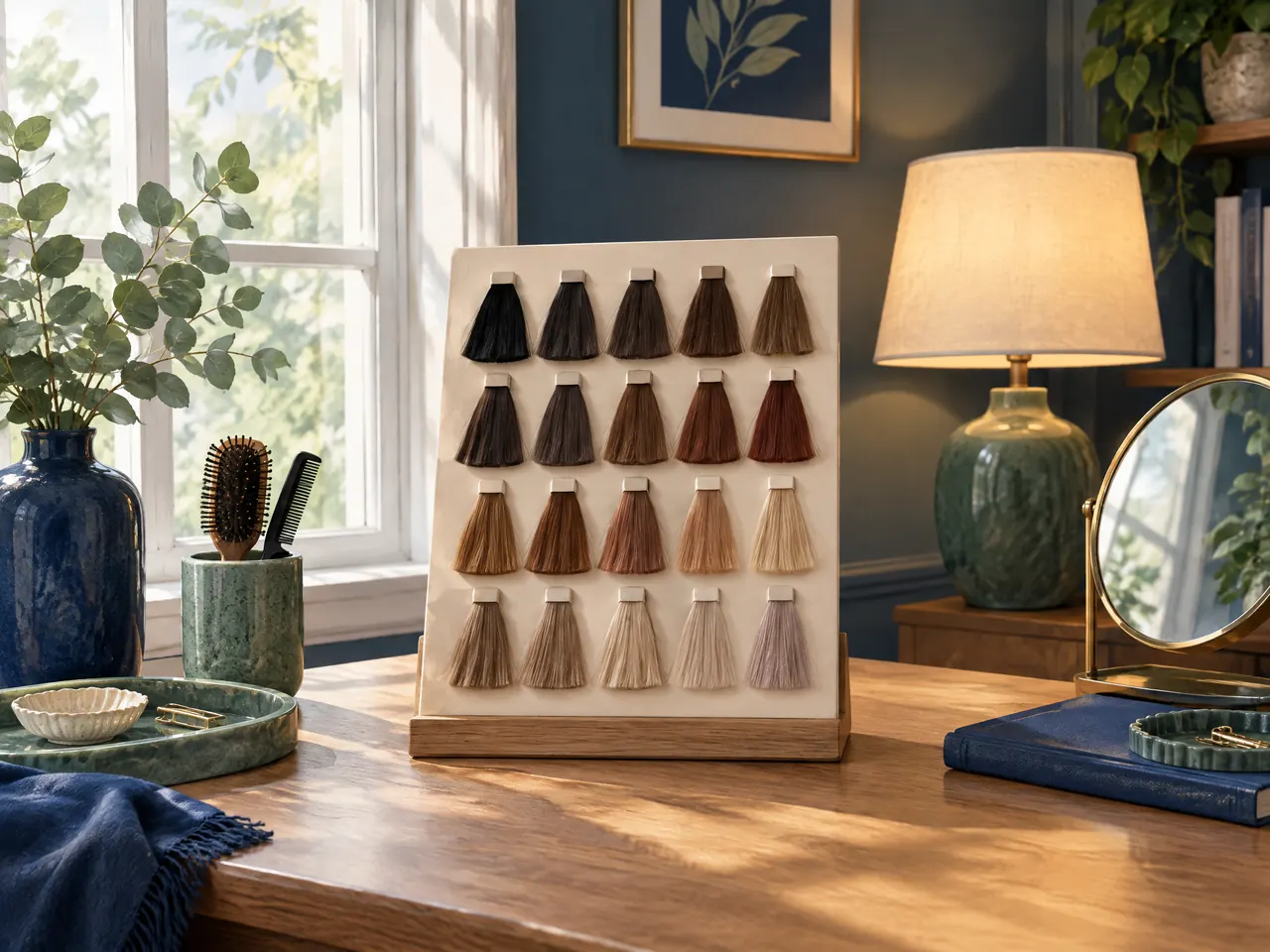
Illustration of a hair sample board between soft window daylight and an interior lamp, with a mirror
A conceptual lighting comparison for discussing the actual added-hair sample, not a verified colour match or product photograph.Generated illustrative image

Ask for care instructions for the exact piece

Give the chosen piece its own note: the supplier's product description, the attachment method and the instructions provided for handling it before and after the wedding. If you expect to restyle or reuse removable hair, ask which tools and products are suitable for that particular item rather than applying your usual routine by default. The fibre illustration is a prompt for those questions, not a way to identify a material by sight. Keep unresolved care questions separate from the agreed visual look.
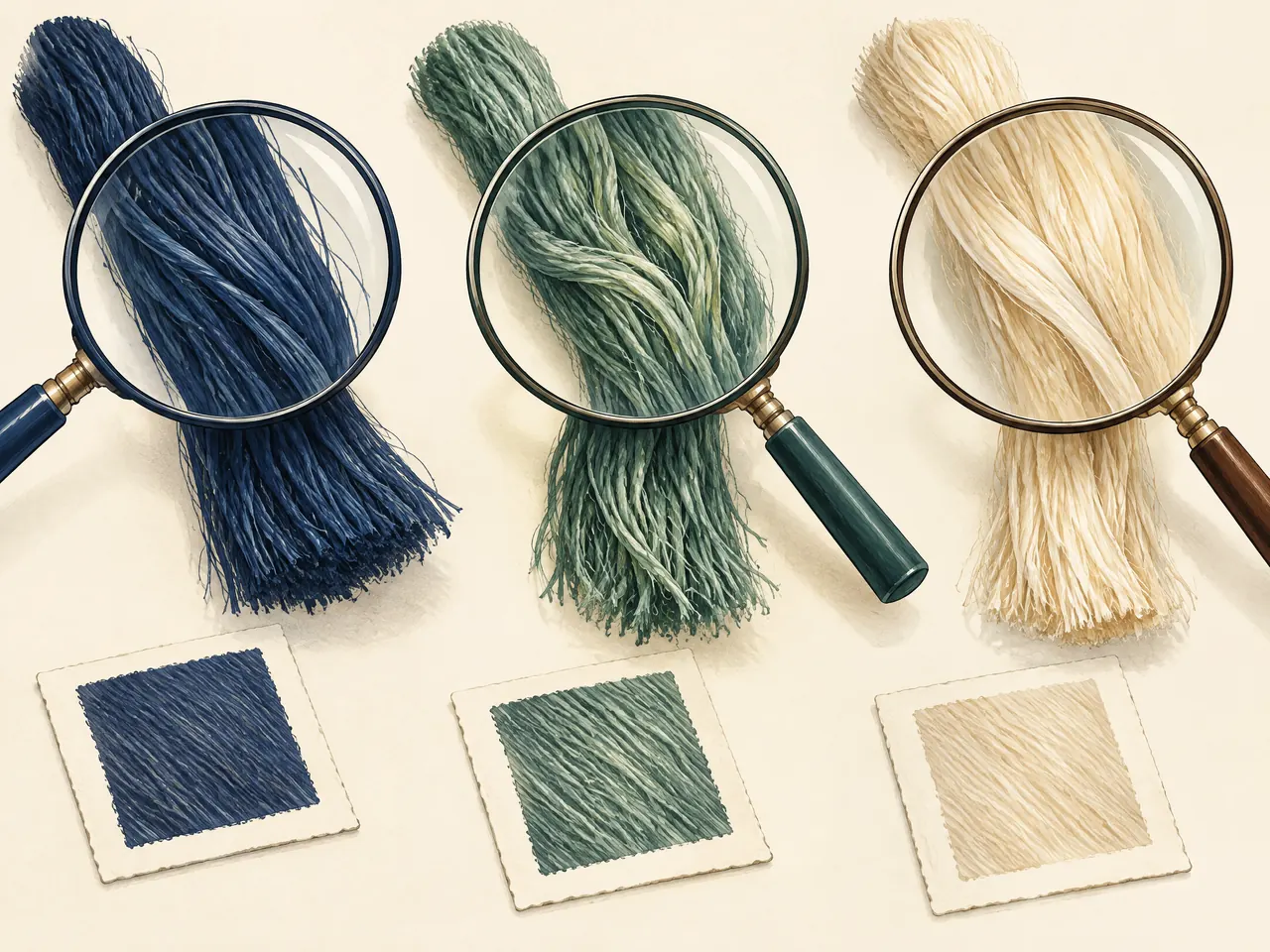
Illustration of three separate hair-like fibre bundles under a magnifying lens beside unlabelled sample cards
Material questions belong in the piece-specific care note; the illustrated fibres do not identify a real product or establish its properties.Generated illustrative image

Give the evening helper a fastening handover

If someone other than the stylist will help at the end of the banquet, ask for a handover using your actual pieces. Distinguish the removable hair fastenings from the pins securing the hairstyle and the fastenings holding the veil. Record what the helper may release and what requires the provider, including any attached extensions that must remain for professional removal. A generic clip or cap edge cannot establish your method. Ask the helper to explain the agreed plan back before the event, while questions can still be resolved.
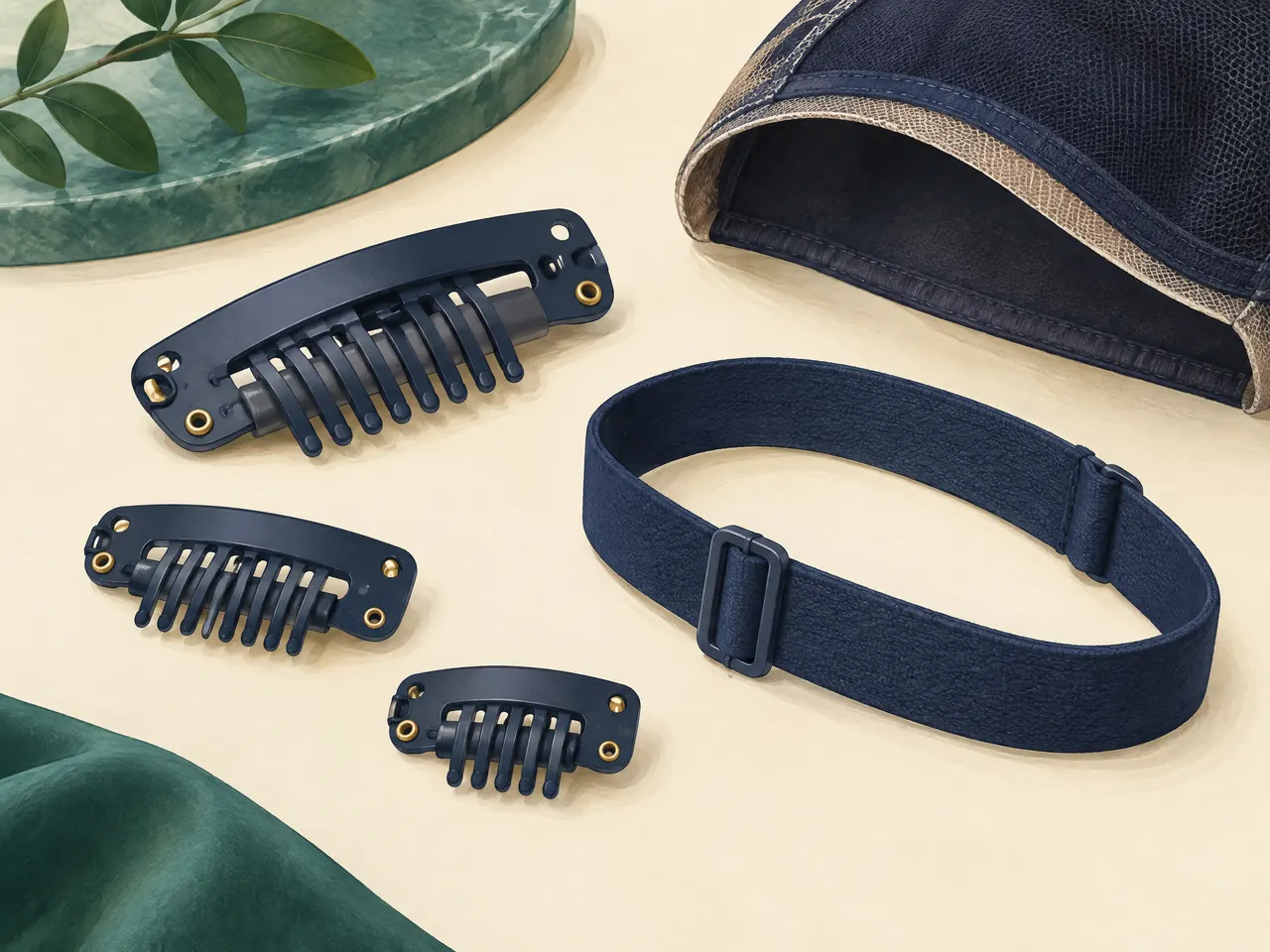
Illustration of generic hairpiece clips, a soft adjustable band and an empty sample cap edge arranged on a tabletop
Different fastening components prompt a piece-specific handover; this is not a removal demonstration or a recommendation for an attachment method.Generated illustrative image

Pack for the end of the evening, not only touch-ups

Separate the supplies for touching up the look from the supplies agreed for removing it. Keep the makeup-removal instructions with the relevant cosmetics, and put the removable-hair instructions and suitable storage in a separate part of the bag. Confirm who carries that bag through the outfit changes and who takes it home. If professionally attached hair is staying in place, keep its care note and follow-up booking available instead of packing an improvised removal kit. Ask the supplier how your exact removable piece should be stored.
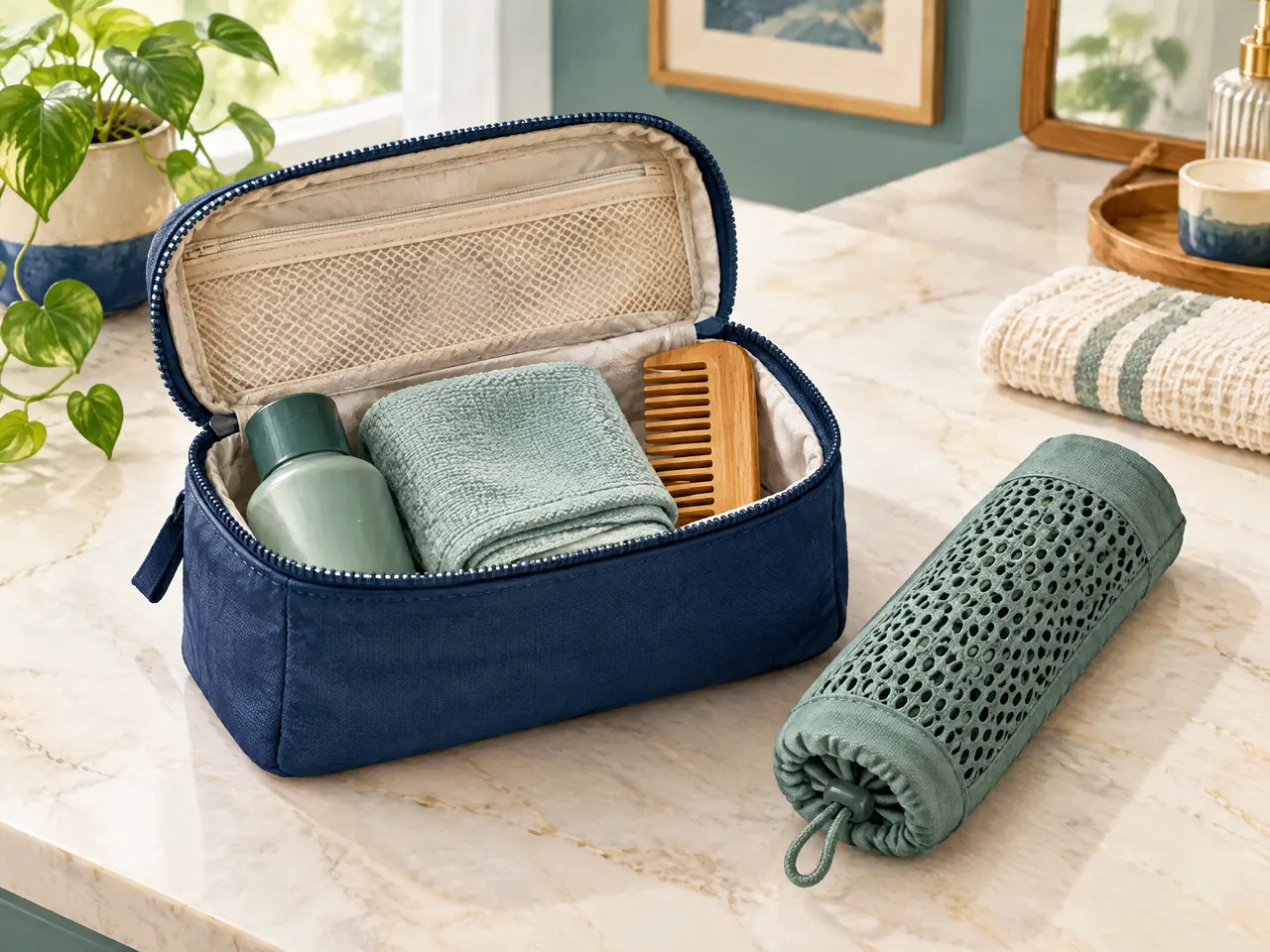
Illustration of an open travel pouch with a capped bottle, folded cloth and comb beside a separate storage sleeve
An evening packing concept for separating cosmetics supplies from removable-hair storage; follow the instructions for the actual items.Generated illustrative image

Clinic enquiries

Contact and appointment arrangements

Clinics
Prince Edward and Kwun Tong
Opening hours
11:00–21:00
WhatsApp and telephone
+852 6940 5663

Appointments, practitioner availability and service arrangements are confirmed via WhatsApp.

Please mention any consultation language needs in your WhatsApp enquiry so that arrangements can be confirmed.

Enquire via WhatsApp
Food, gifts and floral lifeWhatsApp enquiry