
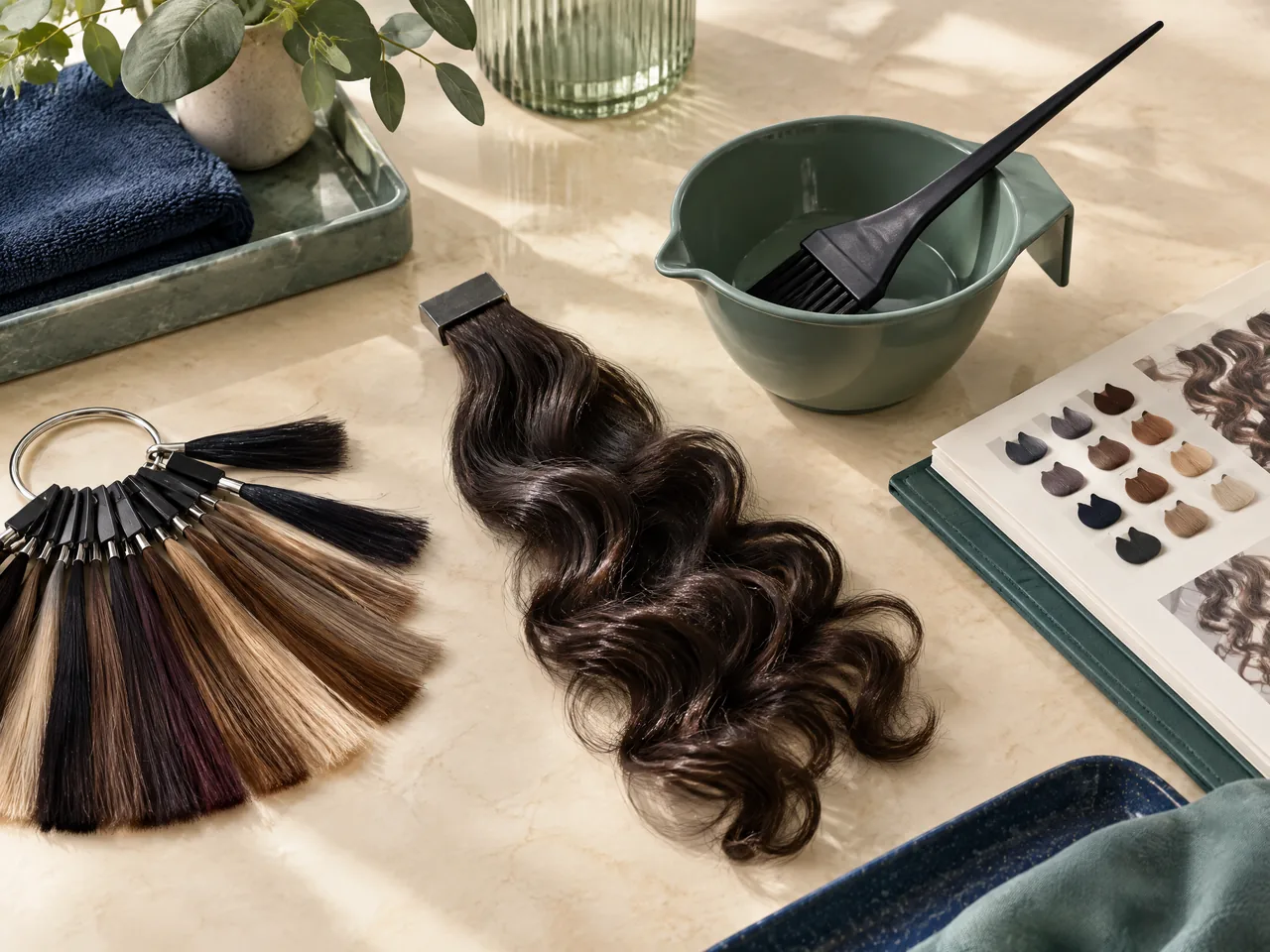
Put the colour placement on a simple sketch
Ask the colourist to mark the proposed placement on a simple outline of your usual hairstyle. Identify the parting and distinguish the roots, middle lengths and ends. Beside each area, note whether the plan leaves it unchanged, adds tone or includes lightening. For face-framing colour, ask where the visible pieces begin when your hair is tucked behind your ears. A sectioning illustration helps explain this vocabulary; it is not an application guide. Keep the agreed sketch with your estimate so that a later tone refresh is not confused with extending the coloured area.
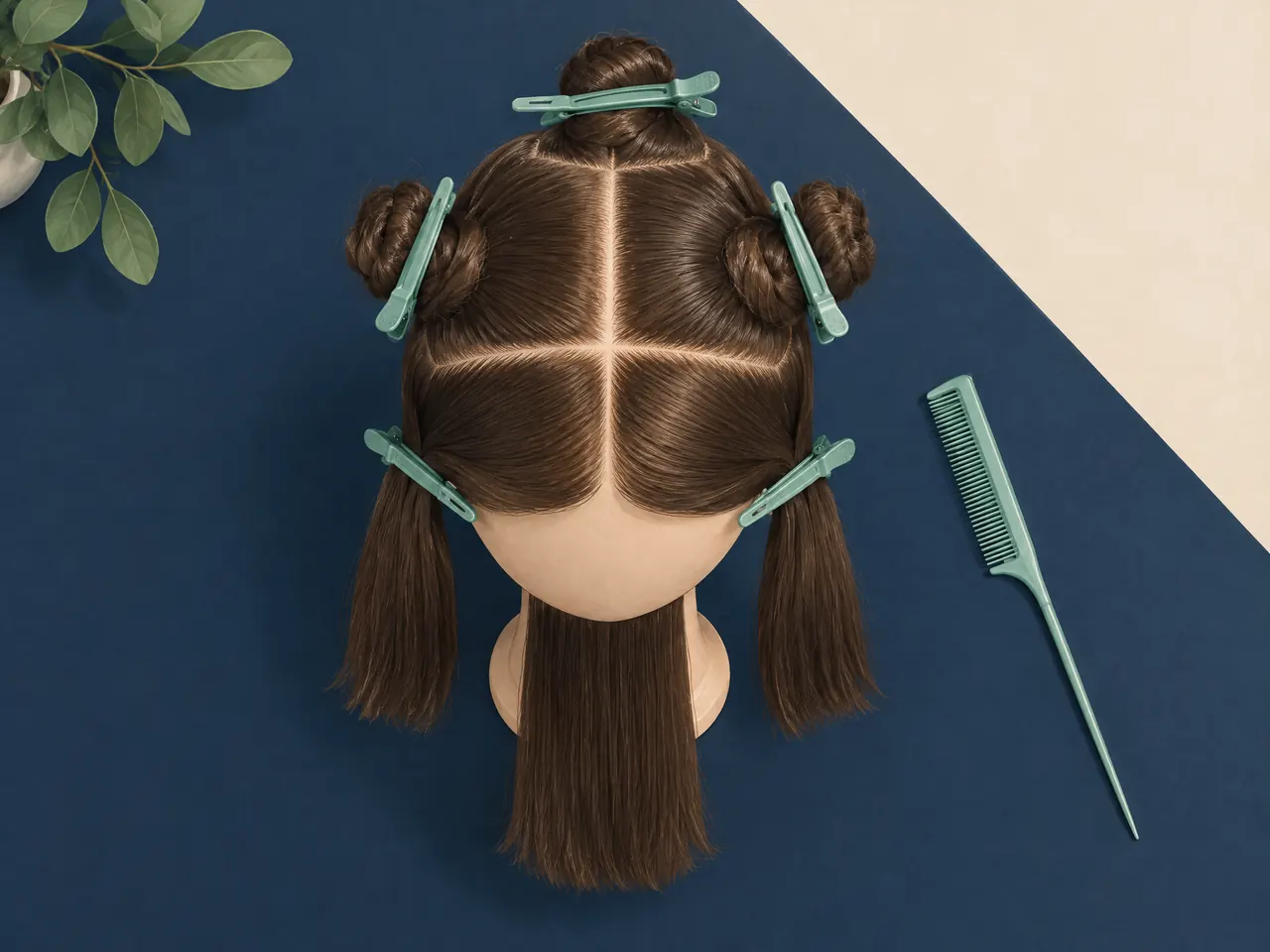
Keep the sample comparison consistent
When a shade sample is available, compare the same sample beside your hair in daylight and ordinary indoor lighting, rather than switching both the sample and the setting. Explain which version you prefer and what you would find too warm or too light. Keep notes identifying the sample and lighting so your reference remains understandable at a later appointment. The illustrated board is a comparison prompt, not a prediction of how dye will develop on your hair.
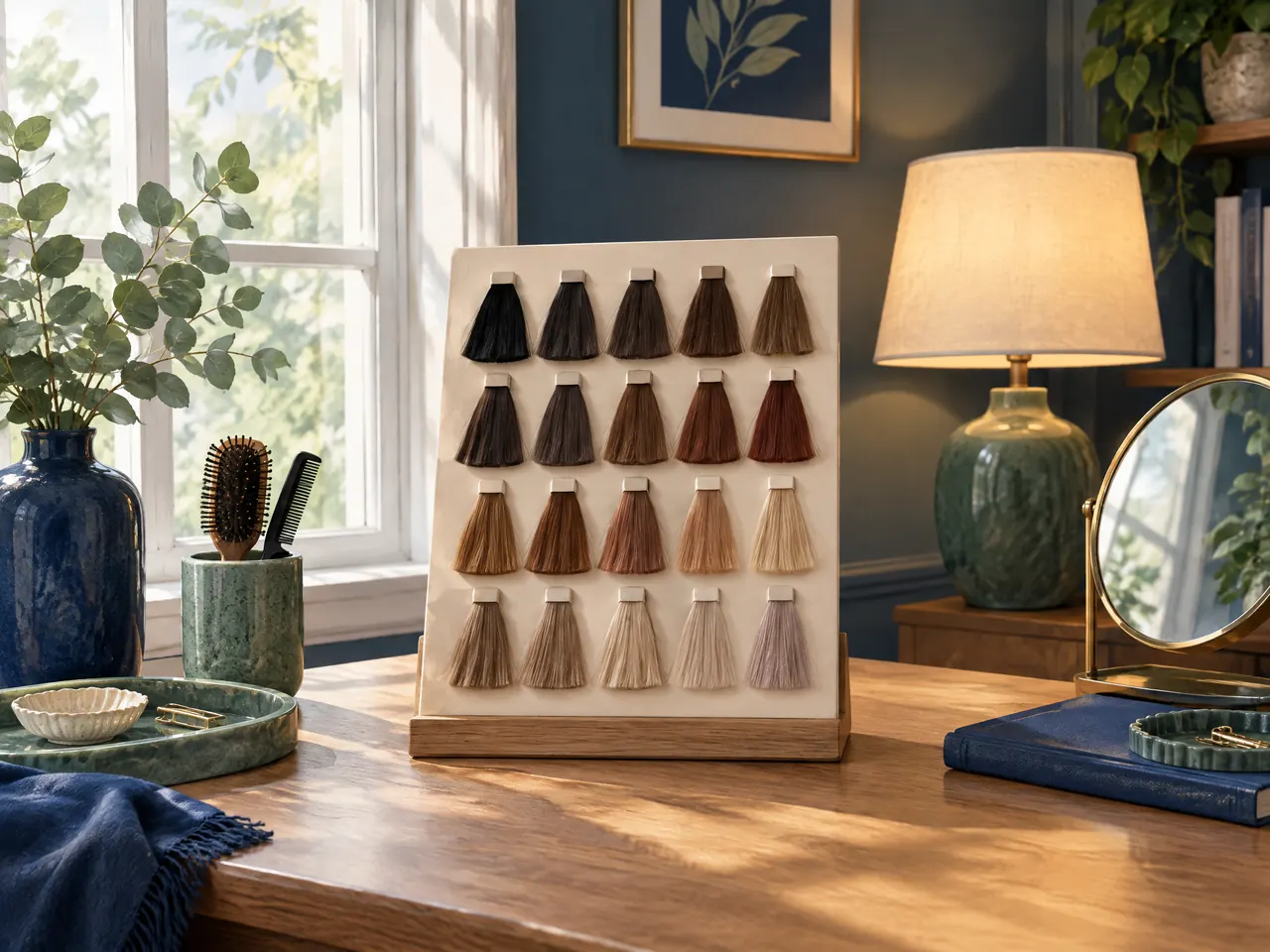
Make the upkeep plan clear about everyday handling
Separate the purpose of a colour-care product from how you handle your hair. The American Academy of Dermatology recommends gently massaging shampoo into the scalp, letting the rinse run through the lengths rather than rubbing them, and using conditioner after shampooing. [6] Ask how the products proposed for your colour fit that routine. An unbranded bottle in an illustration cannot identify a suitable formula or prove colour protection.
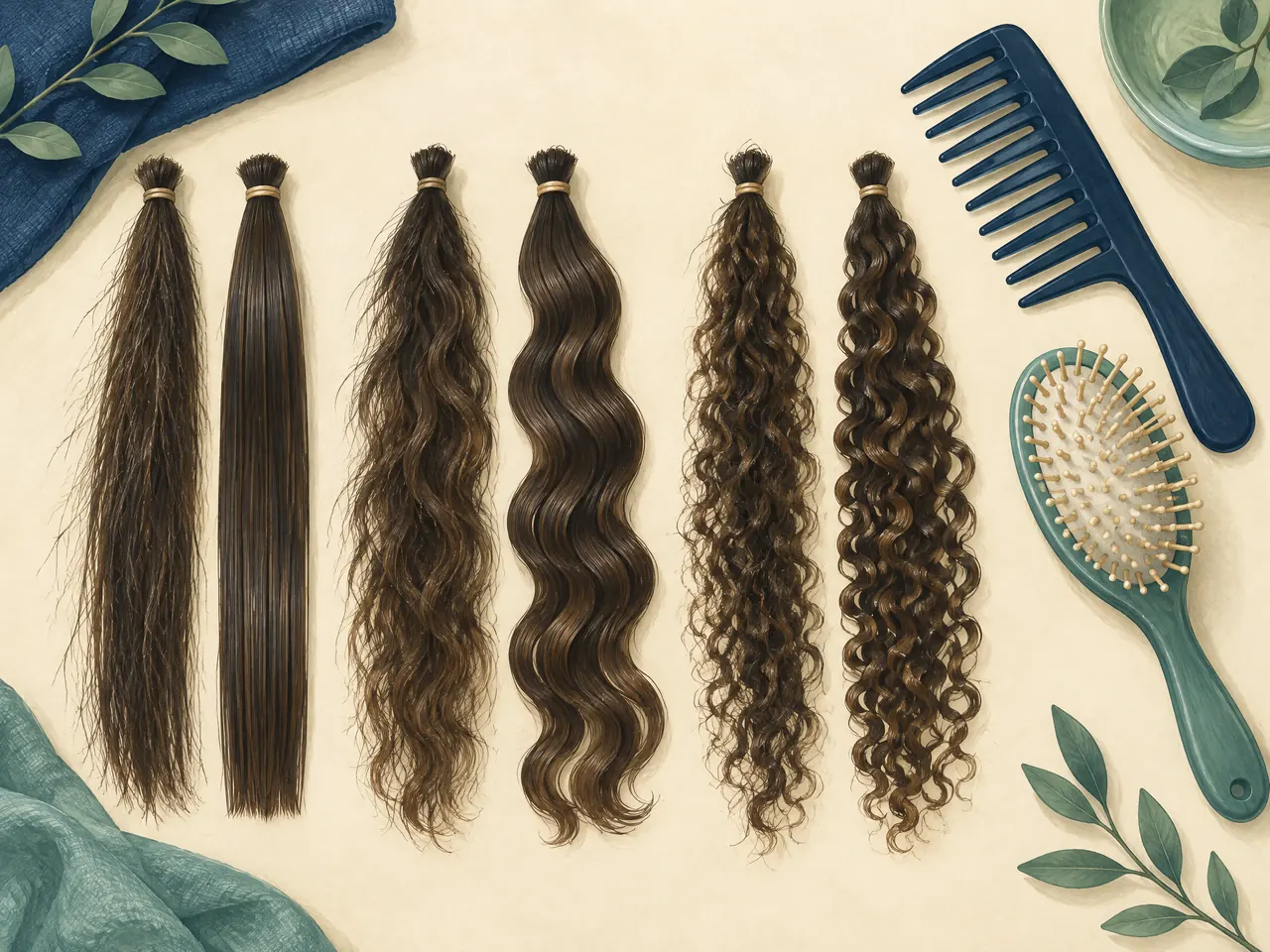
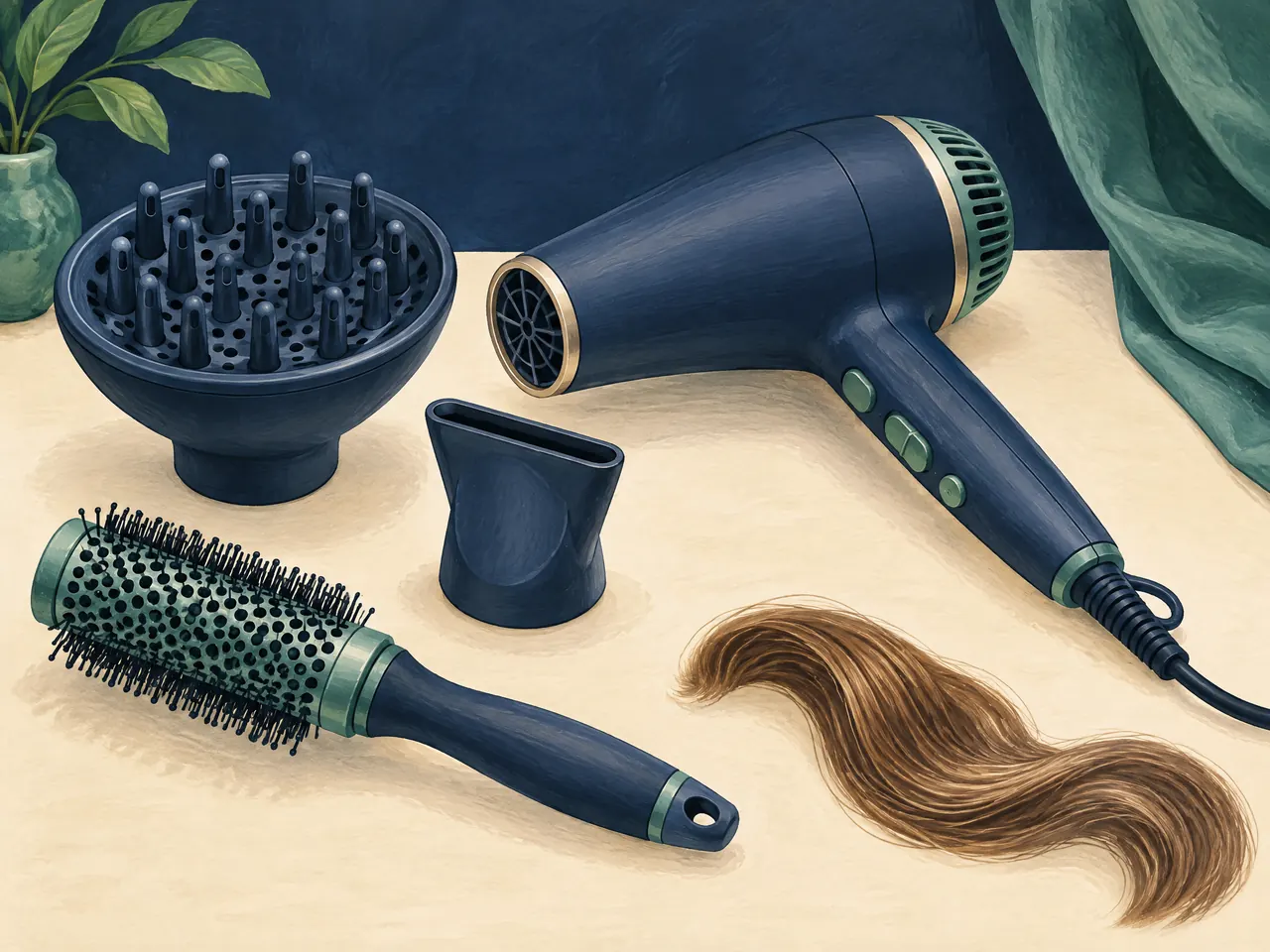
Ask about combing and drying as well. The same dermatology guidance advises letting straight hair dry a little before gently using a wide-tooth comb, while textured hair or tight curls should be combed while damp. It also recommends air drying when possible and the lowest heat setting when using heated tools. [6] Practice tresses and drying attachments illustrate the questions to discuss, not a guaranteed way to prevent fading or reverse chemical damage.
Supplemental references
- American Academy of Dermatology: 10 hair care habits that can damage your hair
Verified independent general hair-handling guidance for gentle scalp shampooing, conditioner after shampoo, differing combing guidance for straight versus textured or tightly curled hair, air drying where possible and the lowest heat setting for heated tools. Append as source [6] after the five unchanged original sources. Does not establish a colour-care formula, salon endorsement, guaranteed colour retention or reversal of chemical damage.