
Prince Edward & Kwun Tong clinics · Home-visit enquiries elsewhere

TCM Lab

TCM Lab · Outdoor learning & coastal life / Further training and pathways

Rescue Diver training: prepare for the learning, not a rescue script

Content updated

Rescue training asks for more than enthusiasm and a place in your calendar. Prepare your learning time, certification records and questions about feedback so the course can build on what you actually know.

Illustrative further-diving learning objects
AI-generated illustrative concept; not an actual DiveHarbour class, student or dive-site record.

The short answer

Start by asking which agency's Rescue Diver course you would take, whether your diver and first-aid qualifications meet its current requirements, and how theory, supervised practice and assessment fit together. Allow time to study and revisit feedback. A prepared learner brings honest records and useful questions, not a rescue routine learned from the internet.

DiveHarbour is a separate diving school under the same ownership as TCM Lab. Diving courses and activities are separate from Chinese medicine care; reading this collection or visiting TCM Lab does not replace medical fitness-to-dive assessment or clearance.

Choose a learning goal before choosing a date

If you usually organise dives around friends, work and the next boat outing, Rescue Diver training introduces a different commitment: making room to examine your own judgement. A useful goal might be understanding how your communication changes when you feel rushed, or becoming more attentive during a group briefing. Neither requires an ambition to work in diving. Write down what you want to understand better, rather than promising yourself that you will become the person who can handle every incident.

DiveHarbour's Rescue Diver course Hong Kong page describes supervised learning centred on observation, communication and assistance, with a review of prior qualifications and first-aid status. Use it to begin a course-fit conversation: which of those learning aims matches your current experience, and what preparation would the instructor recommend? Its outline is a starting point for questions, not confirmation that you are eligible or that a particular course format is available on your preferred dates. [1]

Prepare to be a student even if you are already comfortable on recreational dives. PADI describes its Rescue Diver course as knowledge development, training exercises and open-water scenarios. That means reading alone is not the whole course, while practical participation is not a substitute for understanding the material. The worthwhile commitment is to all the learning components, including time to ask questions and work on feedback. [3]

Check the actual pathway, not just the card title

A friend's route from entry-level certification through Advanced Open Water to Rescue Diver can be useful background, but it is not your enrolment decision. PADI's published explanation distinguishes eligibility for some earlier learning components from the prerequisites for open-water exercises and certification. It describes an Adventure Diver route that includes underwater navigation. This is a PADI-specific distinction, not a rule to apply to every agency. Ask the provider what you may begin now and what must be completed before later course components. [3]

When an instructor identifies a gap in your experience, the Advanced Open Water Diver course Hong Kong page is a relevant place to explore structured further learning. DiveHarbour describes advanced training as supervised experience beyond entry-level diving and asks learners to check the agency and current requirements. Consider it if the proposed course serves a real learning need; do not assume its title is a universal Rescue Diver prerequisite or that buying another course resolves every eligibility question. [2]

Send the exact certification names and issuing agencies, not simply 'I am advanced'. Include your last dive date and an honest account of recent diving. Mention a long break or a task you still find distracting. Those details give the instructor something concrete to review when discussing a refresher, further training or the rescue course itself. Ask for the reason behind the recommended sequence so you can tell the difference between an agency requirement and preparation suggested for your starting point. [1] [2]

Make first-aid paperwork an early conversation

First aid and CPR, meaning cardiopulmonary resuscitation, deserve their own document check. Rescue Diver training and Emergency First Response, often shortened to EFR, are not the same certificate. DiveHarbour explains that the learning can connect, while the selected agency determines which prerequisites and combinations are accepted. Ask whether your existing first-aid qualification is acceptable, whether it is recent enough, and when any additional training must be completed. Do this before building a travel plan around an assumed start date. [1]

If you completed first aid at work or through another organisation, prepare the certificate issuer, course name, completion date and information about the practical component. PADI's published professional guidance on equivalent training requires in-person skill practice and demonstration; it says online-only or self-study programmes do not qualify under that guidance. Because the guidance is older, ask the instructor to confirm acceptance against the current standard. A course label that sounds relevant is not enough to establish equivalence. [5]

A combined learning plan may be convenient, but clarify the order, separate certification arrangements and time you must reserve. Ask whether a first-aid component is included in the quotation or needs a separate booking. If documentation is missing, ask what evidence the instructor needs from the issuing organisation rather than filling the gap with a recollection of having attended. The aim is to resolve an administrative uncertainty while you still have options, not during a practical session.

Study to understand questions, not memorise a performance

Ask which learning materials belong to your selected course and whether any knowledge review must be completed before the first practical meeting. PADI describes self-paced eLearning for the knowledge portion, but the provider still needs to explain how that fits its own practical arrangements. Do not treat an online-material purchase as a complete local course booking. Reserve realistic study time in your week, especially if you tend to read only after a long working day. [3]

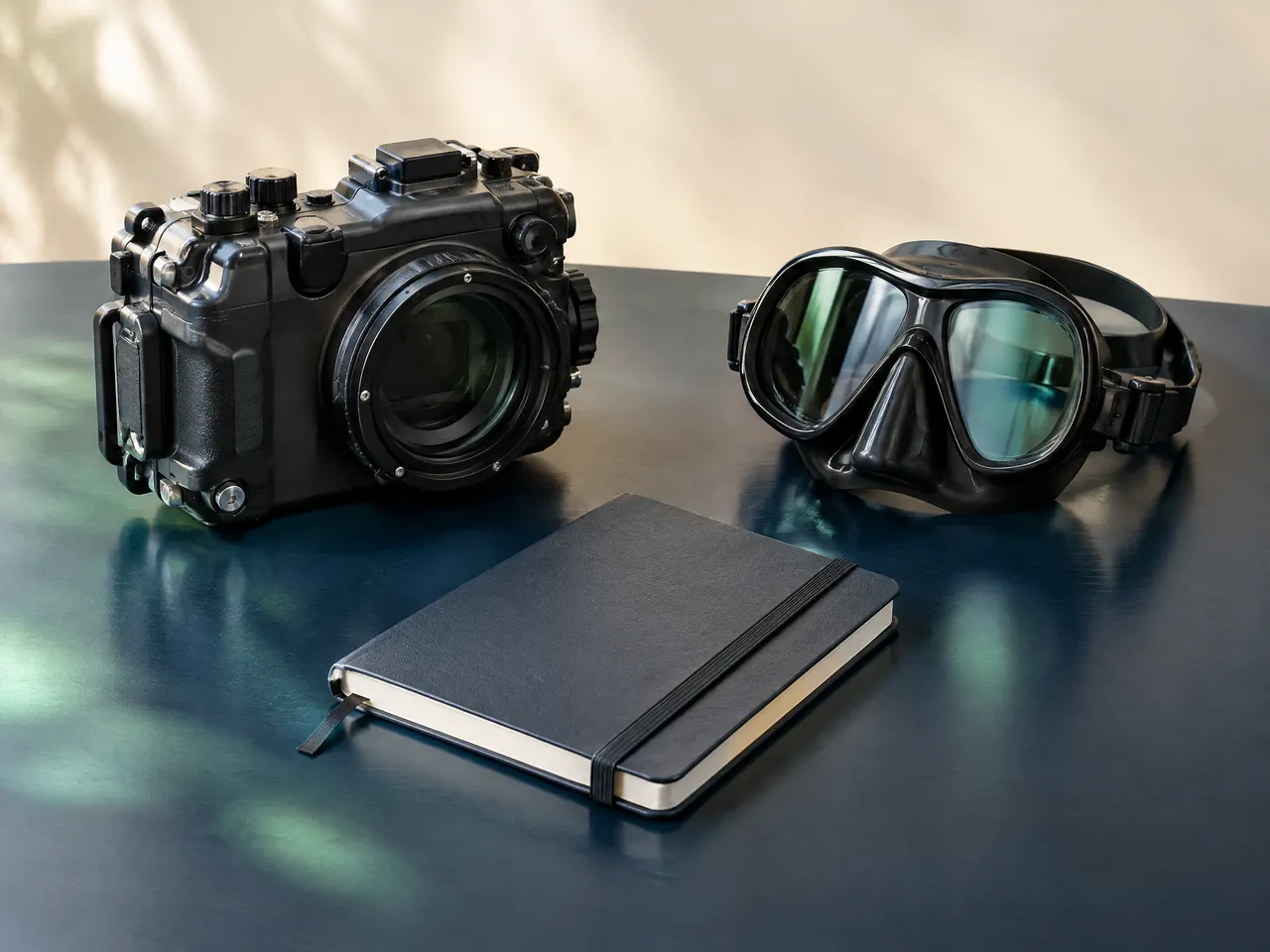
Keep a short question notebook as you study. Separate unfamiliar vocabulary from ideas you cannot yet explain in your own words. For example, you might understand a term on the page but be unsure how an instructor will assess your reasoning during supervised learning. Bring that uncertainty to the briefing. Asking about the purpose of an exercise is more useful preparation than watching unrelated videos until one person's demonstration feels like the only possible answer.

Avoid rehearsing rescue actions with friends from an internet description. Instead, prepare questions about the exercise boundaries, how the instructor will brief the group and how you can request clarification before participating. The practical teaching belongs with the instructor and the selected curriculum. Your independent preparation can still be active: read the assigned material, note what is unclear and arrive ready to connect explanations with supervised practice.

Ask what useful instructor feedback will look like

Before booking, ask how learning will be assessed and how feedback will be given. Will there be time to discuss questions after exercises? How are areas needing more practice identified? What happens if you have not met a requirement within the planned sessions? DiveHarbour's course page emphasises receiving feedback and repeating learning patiently. Clarifying how that works is more useful than asking whether the course is easy, since ease says little about what you will understand afterwards. [1]

During a debrief, try to turn a broad impression into a specific learning question. 'I felt rushed' can become 'Which part of the briefing did I misunderstand?' If feedback is unclear, ask the instructor to explain what they observed and what they want you to focus on next. Record that explanation rather than writing your own rescue instructions. This gives the next supervised session a clear learning purpose without turning a notebook into an operational manual.

You may be learning alongside a friend who studies faster or feels more relaxed. Agree beforehand that neither person has to keep pace for the other's convenience. In group discussions, describe your own experience rather than deciding what your buddy understood. Course completion is subject to requirements, not friendship or attendance alone. A request for another explanation can be a sensible part of learning; it should not become a competition over who asks the fewest questions.

Protect the practical learning time in your week

Ask for the actual meeting arrangements, preparation deadlines and expected travel logistics before deciding how the course fits your calendar. A practical session is easier to approach thoughtfully when you are not arriving straight from an exhausting shift or leaving immediately for another fixed commitment. Leave room to organise equipment, read updates and review your notes. This is a planning choice, not a claim that every learner needs the same timetable or that the school can guarantee your preferred sequence.

Confirm what equipment is supplied and what you are expected to bring. If you need rental sizing or have unfamiliar equipment, raise that before the session instead of assuming it can be sorted without affecting learning time. Ask where personal belongings and documents can be kept. Keep the administrative details together in one folder so you do not have to search several messages for the meeting point, certificate request or instructor's latest preparation note.

Health preparation should be straightforward and honest. DAN recommends answering the diving medical questionnaire accurately and consulting a physician when indicated; health changes matter even for a previously certified diver. Request the form the provider uses and address any required evaluation early. This TCM Lab lifestyle article and a TCM Lab consultation do not replace a fitness-to-dive assessment. Do not change prescribed medication or conceal symptoms to keep a course date. [4]

Leave the enquiry with a clear written learning plan

A useful enquiry can be short but specific: name your diver qualification, give your recent-dive history, describe your first-aid documentation and say what you hope to learn. Then ask for the agency, prerequisite decision, learning components, assessment arrangements and inclusions in writing. If something still requires review, have that recorded too. An unresolved first-aid equivalency or document check should not disappear behind a general message saying the course sounds suitable.

Discuss what happens if weather, illness, attendance or an unmet learning requirement affects the plan. Ask about any additional sessions and their costs without assuming they are included. DiveHarbour's published fee information says all fees are non-refundable and make-up sessions are subject to written terms. That is not a promise of a replacement date or free rescheduling. Read the terms before payment and before committing to transport or accommodation that depends on finishing as planned. [1]

The best preparation ends with a manageable set of confirmed tasks: documents to send, material to study and questions for the instructor. Keep that list separate from your personal learning notes. After training, use the instructor's feedback to discuss appropriate future practice within your qualification and experience. There is no need to arrive with a rescue script or leave believing that one certificate settles every judgement you will ever face.

Take it into everyday life

A practical checklist

  • Write one personal learning goal that is about understanding or judgement, not guaranteed emergency capability.
  • Send the exact names and agencies of your diver qualifications, along with your recent-dive history.
  • Ask which requirements apply before enrolment, practical participation and certification.
  • Prepare first-aid and CPR records, including issuer, date and training format, for acceptance review.
  • Confirm the assigned materials, study deadlines and how knowledge review connects to practical sessions.
  • Ask how feedback, assessment and any additional learning sessions are handled.
  • Confirm equipment, meeting arrangements and any required medical documentation before the practical date.
  • Read the written inclusions and non-refundable fee and conditional make-up terms before paying.

Questions & answers

Must I hold Advanced Open Water certification before every Rescue Diver course?

Do not assume that every agency uses the same progression. PADI's published explanation describes a prerequisite route that includes Adventure Diver and underwater navigation, while distinguishing earlier learning from open-water participation and certification. Send your exact qualifications to the provider and ask which current rules apply to the selected course. [3]

Can a first-aid certificate from my workplace count?

It may be relevant, but acceptance must be checked. Provide the issuing organisation, course date and details of practical training. PADI's equivalency guidance includes an in-person practice requirement; the instructor should confirm the current selected agency standard rather than accepting the certificate solely because its title says first aid. [5]

Is EFR automatically included when I book Rescue Diver training?

No inclusion should be assumed. DiveHarbour describes EFR and Rescue Diver as distinct certificates that can connect in a learning plan. Ask whether first-aid training is needed, whether it is included or separately booked, and how its completion fits the rescue course's requirements. [1]

Should I practise rescue techniques with my buddy before the course?

Do not create rescue drills from videos or written descriptions. Prepare by reading the assigned material, reviewing your documents and noting questions. Ask the instructor about any recommended supervised preparation. A friend joining the course can support your study without becoming an unofficial practical instructor.

What if I have not dived recently or need more practice?

Tell the instructor when you last dived and which parts of ordinary diving feel unfamiliar. Ask whether a refresher or other supervised preparation would make the course a better fit. Also clarify how additional learning is arranged if a requirement is not yet met; a place on the course does not guarantee completion on a particular date. [1] [2]

Will Rescue Diver certification qualify me to manage any emergency?

No. DiveHarbour describes rescue training as supervised education, not a substitute for professional emergency services or a guarantee that incidents can be prevented. Treat the course as a defined learning pathway with limits, and use instructor feedback to guide appropriate further learning rather than assuming unlimited capability. [1]

Sources & further context

Numbered references follow the source order below. Course websites describe their own programmes; health and coastal sources have separate purposes and do not endorse commercial course quality.

  1. [1] DiveHarbour — Rescue Diver Course in Hong Kong
  2. [2] DiveHarbour — Advanced Open Water Diver Course in Hong Kong
  3. [3] PADI — Questions About the Rescue Diver Course? Here’s Everything You Need to Know
  4. [4] Divers Alert Network — Health Status
  5. [5] PADI Pros — Meeting CPR and First Aid Requirements for PADI Courses

Give each course question a place in your notebook

Use a separate page for each learning component described by the provider. Under each, record what you need to prepare, what the instructor still needs to confirm and any question you want to revisit afterwards. Keep an agency requirement separate from an instructor's recommendation for your recent experience. For an unresolved point, note who will answer it and whether it affects when you can participate. This turns a broad course enquiry into a usable follow-up record without creating your own curriculum or rescue instructions.

The book, pool model and open-water model are conceptual reminders to ask how learning connects across settings. They do not establish that your selected course includes a pool session or follows that sequence. Match your notebook to the actual arrangements confirmed by the provider, not to the objects in an illustration.

Conceptual book, miniature empty pool and separate open-water cove model arranged on a desk
Conceptual learning settings for course-structure questions; not a Rescue Diver syllabus or an actual DiveHarbour lesson.Generated illustrative image

Separate equipment supply, familiarity and fit

Make your equipment enquiry item-specific rather than asking only whether everything is included. For the equipment the provider expects you to use, distinguish three questions: who supplies it, whether it is familiar to you and whether sizing needs attention. A supplied item can still be unfamiliar. If that applies, ask when you can discuss its use with the instructor before the practical session. Do not treat an equipment illustration as a complete packing list or use it to practise rescue procedures independently.

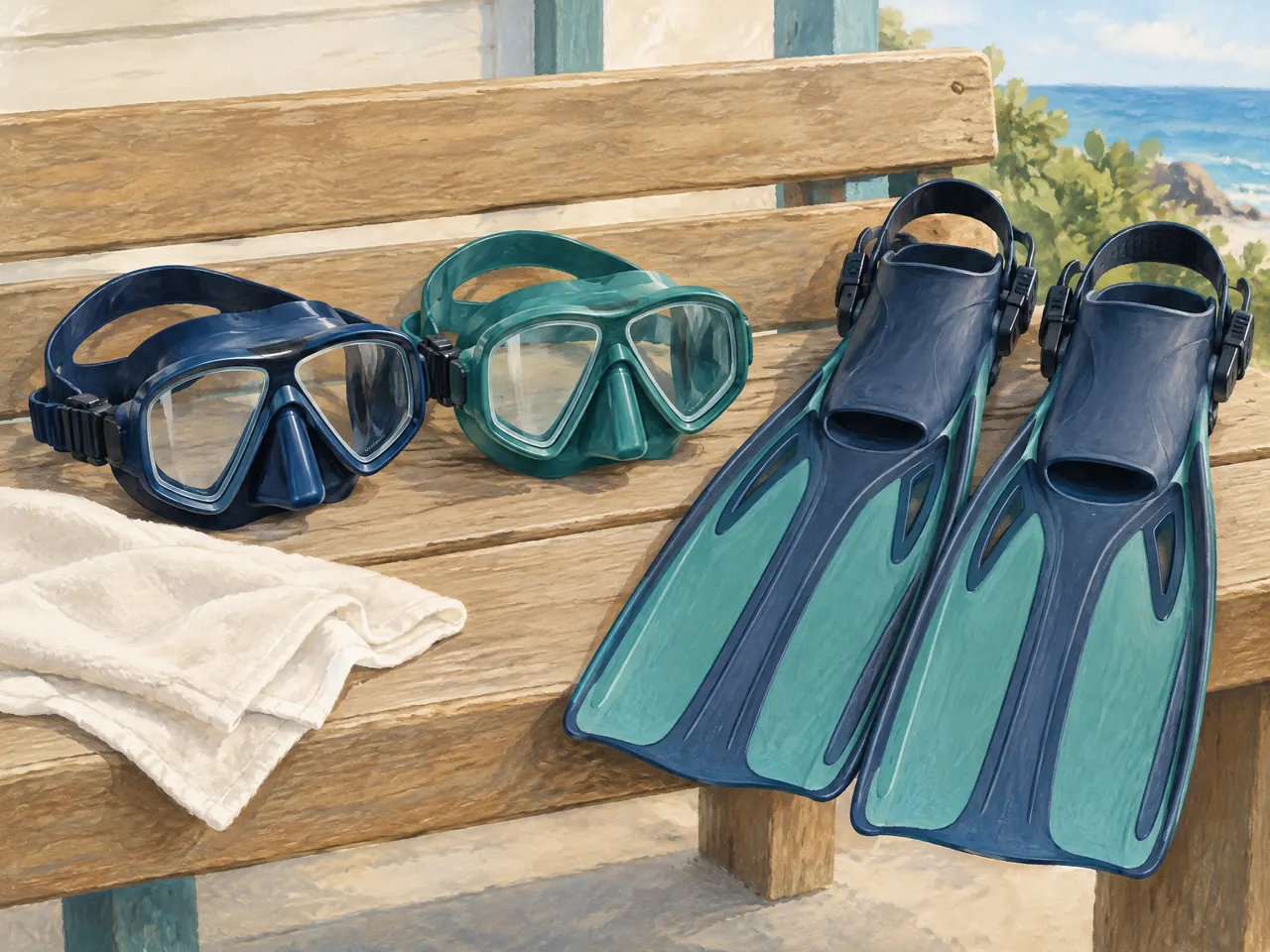
Keep fit questions separate from questions about the wider equipment set. If you have previously found a mask or fins uncomfortable, describe the item and the difficulty rather than guessing which model will solve it. Ask how rental sizing or a fitting discussion can be arranged, and confirm any responsibility for bringing your own items in writing. The two illustrations distinguish a broad equipment enquiry from a focused fit conversation; neither shows equipment guaranteed to be supplied.
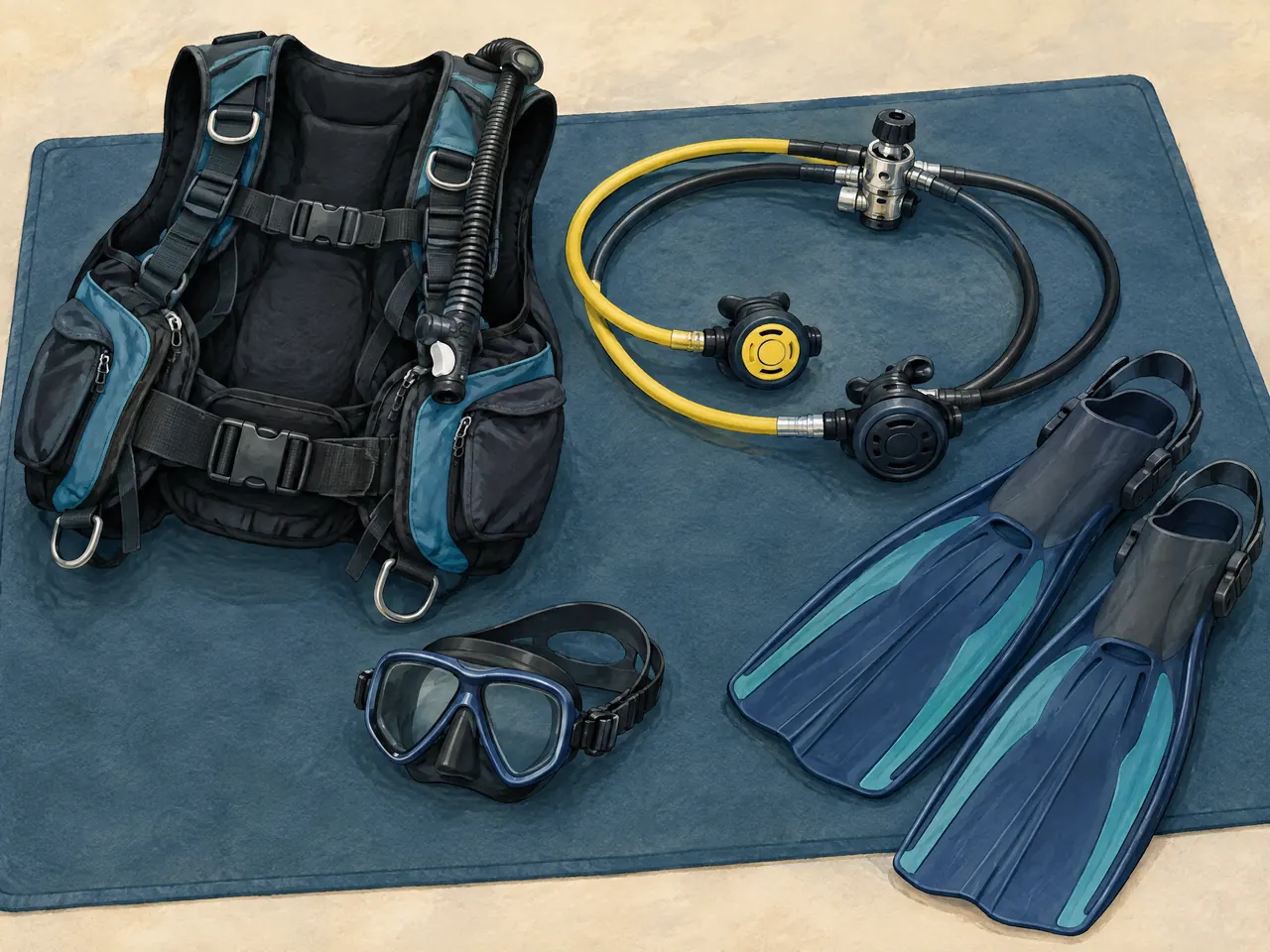
Unbranded buoyancy compensator, regulator assembly, mask and fins arranged separately on a dry preparation mat
Illustrative equipment for supply and familiarisation questions; not an actual course kit or a rescue-technique guide.Generated illustrative image
Two generic scuba masks and adjustable fins beside a clean cloth on a bench
Illustrative masks and fins for discussing fit; not a product recommendation or a record of equipment available from DiveHarbour.Generated illustrative image

Keep personal packing separate from changing arrangements

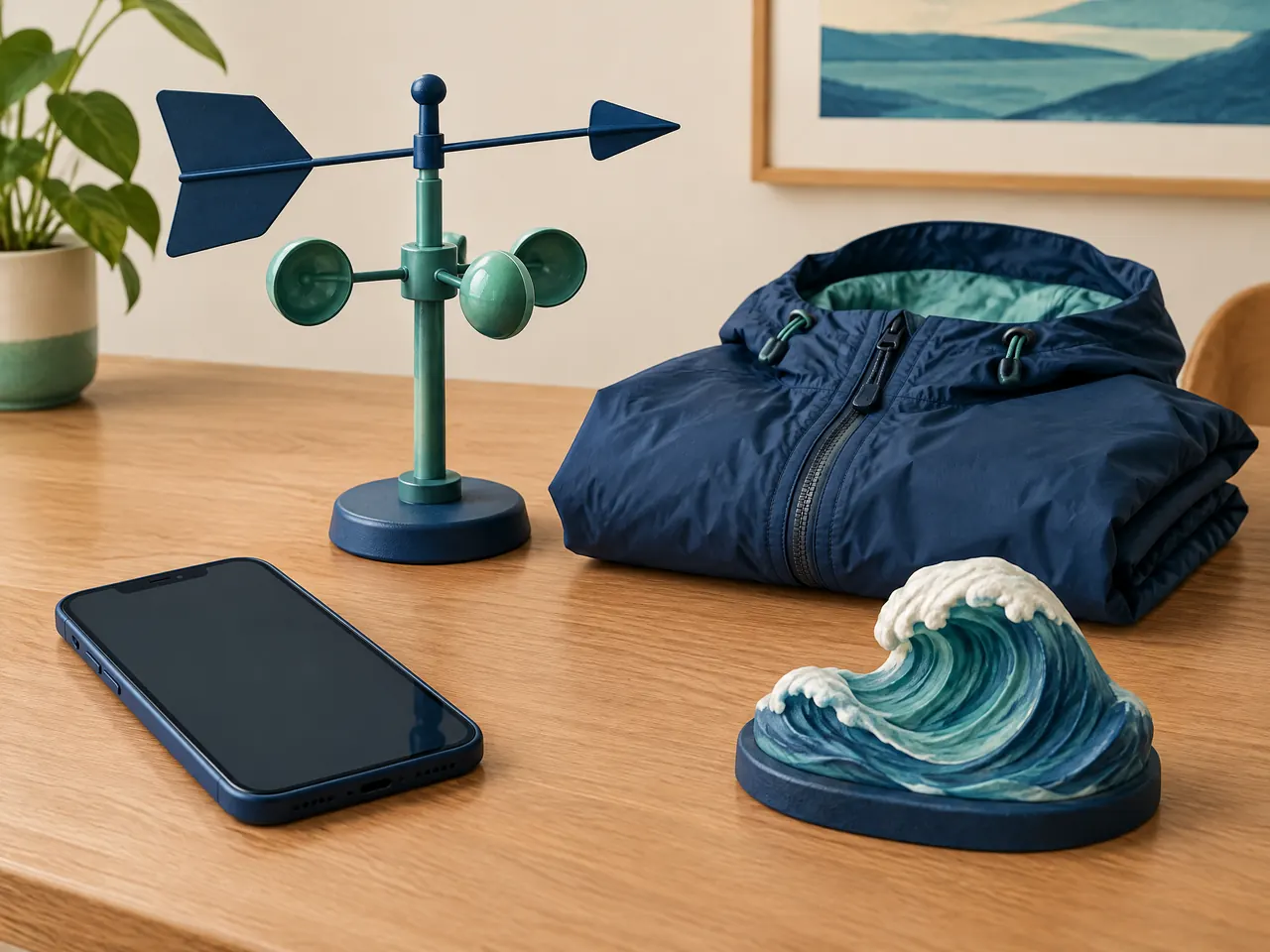
Use two separate notes for a practical day: the provider's confirmed equipment requirements and your personal belongings. Ask about storage and facilities before deciding what to pack. The dry-bag illustration suggests personal outing items, not mandatory Rescue Diver equipment. Check whether the planned session involves a boat outing at all, and adapt your packing to the meeting arrangements you actually receive. Keep the latest meeting details easy to find without having to unpack or search through several message threads.

Keep a dated copy of the provider's latest practical arrangements alongside the packing note. Ask how changes will be communicated, which message confirms the meeting plan and what to do if an update affects your travel. Weather-related decisions belong with the provider's arrangements, not with a learner interpreting an illustration or choosing an independent safe threshold. Before committing to travel, keep any written contingency and make-up terms with the booking information; an update does not itself promise a replacement session.
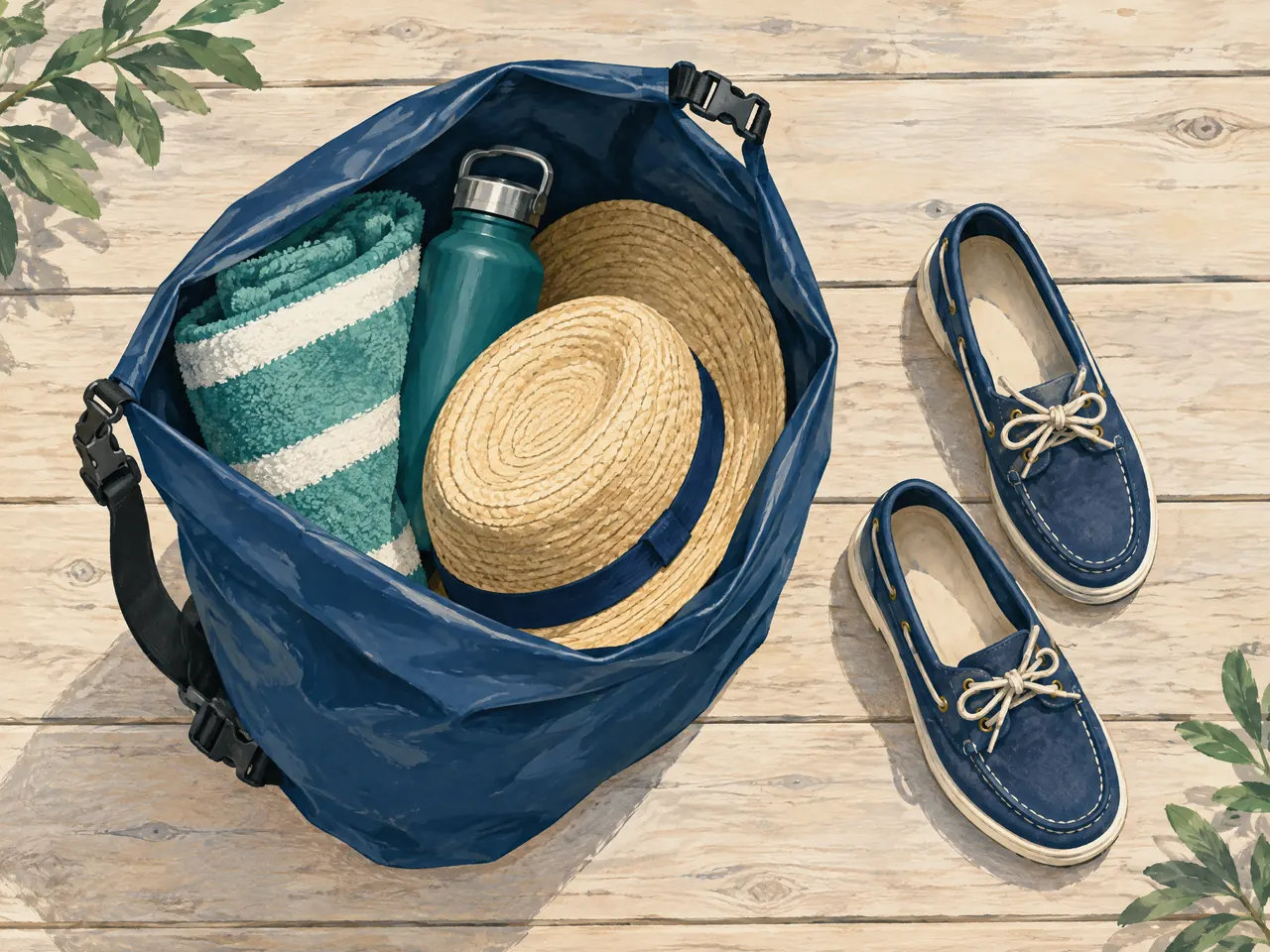
Open dry bag with a towel, water bottle and sun hat beside deck-shoe silhouettes on an abstract timber surface
Conceptual personal packing items; not a required course list, confirmed boat itinerary or actual student outing.Generated illustrative image
Blank-screen phone beside a wind-vane model, rain shell and miniature wave sculpture
Conceptual reminder to confirm practical arrangements and updates; not a forecast, safe-weather threshold or rescheduling promise.Generated illustrative image

Keep medical questions with the appropriate review

Keep medical paperwork separate from the certification and first-aid records used to discuss course eligibility. If the provider's form or the reviewing physician asks for medication information, prepare the current names from your records or packaging and note anything you need to clarify. Do not interpret an unbranded container in the illustration as advice about a particular medicine. Ask which process to use for medical information rather than putting it into a general course-group conversation.

A confirmed qualification or first-aid document does not settle a fitness-to-dive question. Complete the requested medical questionnaire honestly and follow any indicated physician review. Do not change prescribed medication to preserve a booking date. This preparation is about providing information for the appropriate review; neither this article nor a TCM Lab consultation provides diving medical clearance.

Closed unbranded medicine containers and a sealed plain pouch beside a blank note card and empty folder
Conceptual medication-record preparation for medical questions; not treatment advice, a patient record or evidence of fitness to dive.Generated illustrative image

Clinic enquiries

Contact and appointment arrangements

Clinics
Prince Edward and Kwun Tong
Opening hours
11:00–21:00
WhatsApp and telephone
+852 6940 5663

Appointments, practitioner availability and service arrangements are confirmed via WhatsApp.

Please mention any consultation language needs in your WhatsApp enquiry so that arrangements can be confirmed.

Enquire via WhatsApp
Food, gifts and floral lifeWhatsApp enquiry