

Prince Edward & Kwun Tong clinics · Home-visit enquiries elsewhere

TCM Lab

TCM Lab · Outdoor learning & coastal life / Further training and pathways

PADI and NAUI instructor routes: ask about the exact programme

Content updated

Choosing instructor training starts with a precise course name, not a promise that one professional card will open every door. Compare the PADI and NAUI routes through their actual training, assessment and teaching-status requirements, then build a plan around your own experience.

Illustrative further-diving learning objects
AI-generated illustrative concept; not an actual DiveHarbour class, student or dive-site record.

The short answer

Ask which agency and exact programme the proposal covers, what your present qualifications allow you to enter, and which assessment and status requirements remain afterwards. PADI describes its IDC as Assistant Instructor and Open Water Scuba Instructor components, followed by an Instructor Examination for the instructor certification route. NAUI describes ITC as training for Instructor member applicants and links independent teaching privileges to active instructor status. Neither a booking nor course attendance guarantees qualification, employment or permission to work. [1] [3] [5]

DiveHarbour is a separate diving school under the same ownership as TCM Lab. Diving courses and activities are separate from Chinese medicine care; reading this collection or visiting TCM Lab does not replace medical fitness-to-dive assessment or clearance.

Ask which parts of the PADI route are included

A proposal labelled ‘instructor training’ needs unpacking before you compare it with another offer. PADI's Instructor Development Course, or IDC, has two components: the Assistant Instructor course, known as AI, and the Open Water Scuba Instructor programme, known as OWSI. PADI describes the Instructor Examination, or IE, as the final step towards its instructor certification. Successfully completing the AI course alone results in the Assistant Instructor qualification, not the full instructor rating. These names identify different stages rather than interchangeable versions of the same course. [1]

Ask the trainer to mark your proposed starting point and endpoint on that sequence. Does the offer cover the whole IDC or only a component? Is examination attendance arranged separately? Which conditions must be met before you can attend? PADI also says an instructor from another training organisation may be eligible to enter OWSI directly. That is a conditional entry route, not a promise that an existing rating transfers automatically or removes the examination requirement. [1]

When using DiveHarbour's scuba instructor course Hong Kong page to start the conversation, name the component you are asking about and request the current written proposal. Its guidance encourages clarification of your existing certification, experience and teaching goals. Treat that page as an enquiry starting point, rather than evidence that a particular intake or examination place is available. [2]

Let NAUI explain its own ITC pathway

NAUI's Instructor Training Course, or ITC, should be considered through NAUI's own requirements. Its official description says the course trains and qualifies NAUI Instructor member applicants, with candidates learning effective ways to teach skin and scuba diving in compliance with NAUI course standards. The same page states that an active-status NAUI Instructor may independently teach NAUI-sanctioned courses and authorise certification for graduates. The reference to active status matters when discussing what you could actually do after training. [3]

Do not turn that description into a guessed PADI-style sequence. Ask the NAUI trainer to explain the current training and assessment arrangement, the application process and what establishes the status needed for your intended teaching role. Request the exact programme title and applicable standards. If an offer uses additional abbreviations or refers to a separate evaluation, have the trainer explain where it sits in your route rather than assuming it is equivalent to a PADI stage.

DiveHarbour's NAUI Instructor Training Course Hong Kong page explicitly leaves prerequisites, assessments, membership and recognition subject to NAUI requirements and confirmed course details. A useful enquiry asks how those details apply to your individual background. It should produce a clear account of the proposed training and remaining requirements, not simply reassurance that experienced divers can become instructors. [4]

Present your experience without declaring yourself eligible

Build a compact record that a trainer can review. Include the agencies and exact ratings on your certificates, when they were issued, your logged experience and when you last dived. Add the dates of relevant first-aid training and any genuine experience assisting with teaching. Distinguish observing a lesson from taking responsibility for learners. Clear records help the trainer identify a suitable entry point; an impressive collection of cards is not itself an eligibility decision.

PADI's public IDC description lists requirements concerning certification history, logged dives, recent first-aid training and a physician-signed medical statement. It also identifies an Emergency First Response Instructor requirement. These belong to the PADI route and must not be copied into a NAUI checklist. Ask each trainer which current documents apply, what must be complete before enrolment and what may form part of the proposed programme. Keep document review separate from permission to proceed to an assessment. [1]

Explain gaps candidly: perhaps your leadership rating is older, your recent diving has been limited, or you want more practice communicating in the teaching language. Ask what supervised preparation would address the gap. For required health documentation, follow the formal process with an appropriate doctor; this TCM Lab lifestyle article or a clinic visit cannot replace a fitness-to-dive assessment. Do not change prescribed medication to fit a course plan.

Compare how you will learn to teach

Once the entry route is clear, compare the learning experience rather than trying to decide which logo is universally better. A useful course conversation explains how candidates receive feedback and how progress is evaluated. Ask how teaching practice is supervised, how much preparation is expected between sessions and how a candidate gets help with an identified weakness. Request the trainer's name and current agency role, and ask how you can verify that role through the agency. Do not infer an individual trainer's credentials from a general website description.

Think about the people you hope to teach. Someone supporting English-speaking beginners may want practice turning technical vocabulary into plain explanations. Someone who is used to confident buddies may need help noticing when a quieter learner has not understood. Ask whether the proposed programme gives you opportunities to work on these communication habits and receive specific feedback. ‘You need to sound more confident’ is less useful than understanding which part of an explanation was unclear and how to improve it.

You can prepare on land without rehearsing underwater procedures. For example, explain to a friend how course documents and learning milestones fit together, then invite them to describe what they understood. Notice unexplained abbreviations and missing information. Keep actual diving demonstrations and candidate teaching activities within formal supervised training. The aim of advance preparation is to become easier to understand, not to start instructing before your role and authorisation are established.

Compare the written scope, costs and calendar

An instructor-course quote only becomes comparable when its scope is clear. Ask which training components it covers and whether materials, assessment charges and agency applications are included or payable separately. Clarify equipment responsibilities and any venue, boat or travel costs. Do not use an unrelated recreational-course price or an online learning price as the budget for a complete instructor pathway. DiveHarbour's IDC guidance recommends a written breakdown of training, assessment, materials and separate charges; obtain the proposal for your actual route. [2]

Map the proposed calendar onto your life before committing. Ask which sessions require attendance, what independent study must happen beforehand and how assessment dates relate to training. Confirm meeting places rather than assuming a classroom, pool or departure point. If you work irregular hours, explain the constraint before the plan is agreed. Also ask what happens when a venue becomes unavailable or conditions prevent a scheduled water session; a proposed completion date is not a guarantee of qualification.

Read payment and missed-session terms alongside the calendar. The provider pages state that all fees are non-refundable and make-up sessions are subject to written terms. Do not interpret a make-up provision as a free or guaranteed reschedule. Ask how the terms apply if you miss training or need further coaching, and which additional charges, if any, would require a separate agreement. Keep the written answers with your proposal rather than relying on a remembered conversation. [2] [4]

Separate qualification, teaching status and permission to work

Keep three questions separate: have you achieved the relevant qualification, do you hold the agency status and scope needed for the intended teaching, and are you legally permitted to perform that work? PADI's course page distinguishes IDC training from the IE certification step. NAUI expressly ties independent teaching and certification privileges to active instructor status. Those descriptions are not interchangeable, and neither tells you that every employer will accept you for every teaching assignment. [1] [3]

Ask the agency what has to remain current after qualification and how to verify your own status before accepting work. Then ask a prospective operator about the actual role, supervision arrangements and any additional requirements. A course enquiry should not be treated as an offer of employment. If someone mentions a possible opportunity, clarify whether it is a separate vacancy and what selection process applies; do not build your course budget around unconfirmed earnings.

For readers coming to Hong Kong from overseas, immigration permission needs its own check before training travel or work plans are finalised. Hong Kong Immigration's visitor guidance states that visitors must not take employment, whether paid or unpaid. A diving credential does not override a person's conditions of stay. Do not assume an unpaid assistant role avoids that restriction. Confirm permission for your particular intended activity with Immigration, and check the relevant rules separately if you hope to teach in another destination. [5]

Send an enquiry that can lead to a clear decision

A focused enquiry can be brief while still being useful: ‘I hold these exact ratings and have this recent diving experience. I am considering teaching this type of learner, in this language. Which PADI or NAUI programme would you propose, what must I complete before entry, and what training, assessment and status steps would remain afterwards?’ Include realistic availability. Ask for the programme outline and itemised proposal rather than requesting only the fastest date or lowest price.

Compare the replies in your own notes using the same questions, without forcing the routes into identical stages. Can you name what you would enrol in? Do you understand the evidence needed for entry, who would train you and how your work would be evaluated? Can you distinguish the course fee from later or separate charges? If a reply leaves one of those points unclear, ask for the missing detail before choosing.

It is reasonable to decide that instructor training is not yet your next step. You might first need verified documentation, supervised experience or more time to explore whether you enjoy teaching. That is a planning decision, not a failed ambition. Choose the route whose actual responsibilities and learning support fit you, and reserve a place only when the programme and terms are sufficiently clear to make an informed commitment.

Take it into everyday life

A practical checklist

  • Record your exact agency ratings, issue dates, recent experience and relevant first-aid documents.
  • Request the precise programme title and a written explanation of your proposed entry point and endpoint.
  • Ask which current prerequisites apply to that agency and who will formally confirm them.
  • Confirm the trainer's current agency role, supervision arrangements and feedback process.
  • Identify every included training component and any separately arranged assessment or application.
  • Obtain an itemised quote, attendance expectations, meeting arrangements and written payment and make-up terms.
  • Clarify the agency status needed to teach afterwards, without assuming work is included.
  • If travelling or intending to work, check permission for your particular activity separately from diving certification.

Questions & answers

Does completing a PADI IDC automatically make me a full PADI Instructor?

No. PADI describes the IDC as AI and OWSI components and the Instructor Examination as the final certification step. Successful completion of the AI course alone results in an Assistant Instructor qualification. Ask which components your proposal covers and which requirements must be met before examination entry. [1]

Is NAUI ITC just another name for PADI IDC?

No. They are agency-specific programmes. NAUI describes ITC as training and qualifying Instructor member applicants to teach in compliance with NAUI standards. Request NAUI's current training, assessment and membership explanation for your proposed route rather than transferring PADI's component names or prerequisites to it. [3]

Can an instructor rating from another agency shorten the PADI route?

PADI says professionals holding another training organisation's instructor rating may be eligible to enter OWSI directly. ‘May be eligible’ requires confirmation; it does not promise automatic conversion or waive all remaining requirements. Present the exact rating and supporting records to the trainer and have the proposed entry route confirmed. [1]

What should I ask if the advertised offer only says ‘instructor course’?

Ask for the agency, full programme title, included components and intended outcome. Then clarify prerequisites, trainer role, assessments, application or status steps and separate charges. A familiar course label is not enough to establish that two proposals include the same training or lead to the same endpoint.

Can I assume I will get teaching work after training?

No. Qualification, the required agency teaching status and an employer's selection are separate matters. Immigration permission is separate too: Hong Kong's visitor guidance prohibits employment whether paid or unpaid. Verify your own circumstances before accepting a role, including an unpaid one, rather than treating the course as work authorisation. [3] [5]

What if I need extra time or cannot attend a planned session?

Ask about this before payment. The DiveHarbour pages state that fees are non-refundable and make-up sessions depend on written terms. Request the conditions for missed sessions and any further coaching, including whether additional charges apply. Do not assume a guaranteed new date, free repeat training or completion by the original target date. [2] [4]

Sources & further context

Numbered references follow the source order below. Course websites describe their own programmes; health and coastal sources have separate purposes and do not endorse commercial course quality.

  1. [1] PADI — Open Water Scuba Instructor and Instructor Development Course
  2. [2] DiveHarbour — Scuba Instructor and PADI IDC in Hong Kong
  3. [3] NAUI — Instructor leadership course
  4. [4] DiveHarbour — NAUI Instructor Training Course Hong Kong
  5. [5] Hong Kong Immigration Department — Visit / Transit FAQ

Give each proposed session a clear purpose

Ask the trainer to explain the purpose of each proposed learning setting, not just its location. For a study task, ask what you should prepare and how questions will be discussed. For a supervised water session, ask what candidate teaching work is planned and how feedback will be given. Record those answers beside the exact programme and component names in your proposal.

A book, pool and open-water setting are useful prompts for that conversation, not a universal instructor syllabus. Do not use the illustration to assign PADI stages to NAUI, assume that every proposal contains all three settings, or count venues as assessment steps. If training and evaluation use different arrangements, ask the trainer to identify them separately so that the calendar explains what each appointment is for.

Conceptual desk model with a closed book, an empty miniature pool and a separate abstract open-water cove.
Illustrative learning settings for questions about session purpose; not a PADI or NAUI syllabus or an actual course record.Generated illustrative image

Separate equipment provision from teaching preparation

Turn the equipment question in your quote into a short responsibility list. For the buoyancy compensator, regulator, mask and fins, ask what you must bring, what the provider would supply and whether any separately agreed charges apply. Also ask whether the proposed candidate teaching activities require arrangements beyond your usual personal kit. A photograph of equipment cannot confirm that those items are included in the offer.

Then connect the list to your learning needs. If you are familiar with your own kit but uncertain about explaining equipment to a beginner, tell the trainer and ask how that communication will be developed during supervised training. Keep the commercial supply question separate from the question of how you learn to teach. This illustration is not an assembly, servicing or demonstration guide; obtain practical guidance within the formal programme.
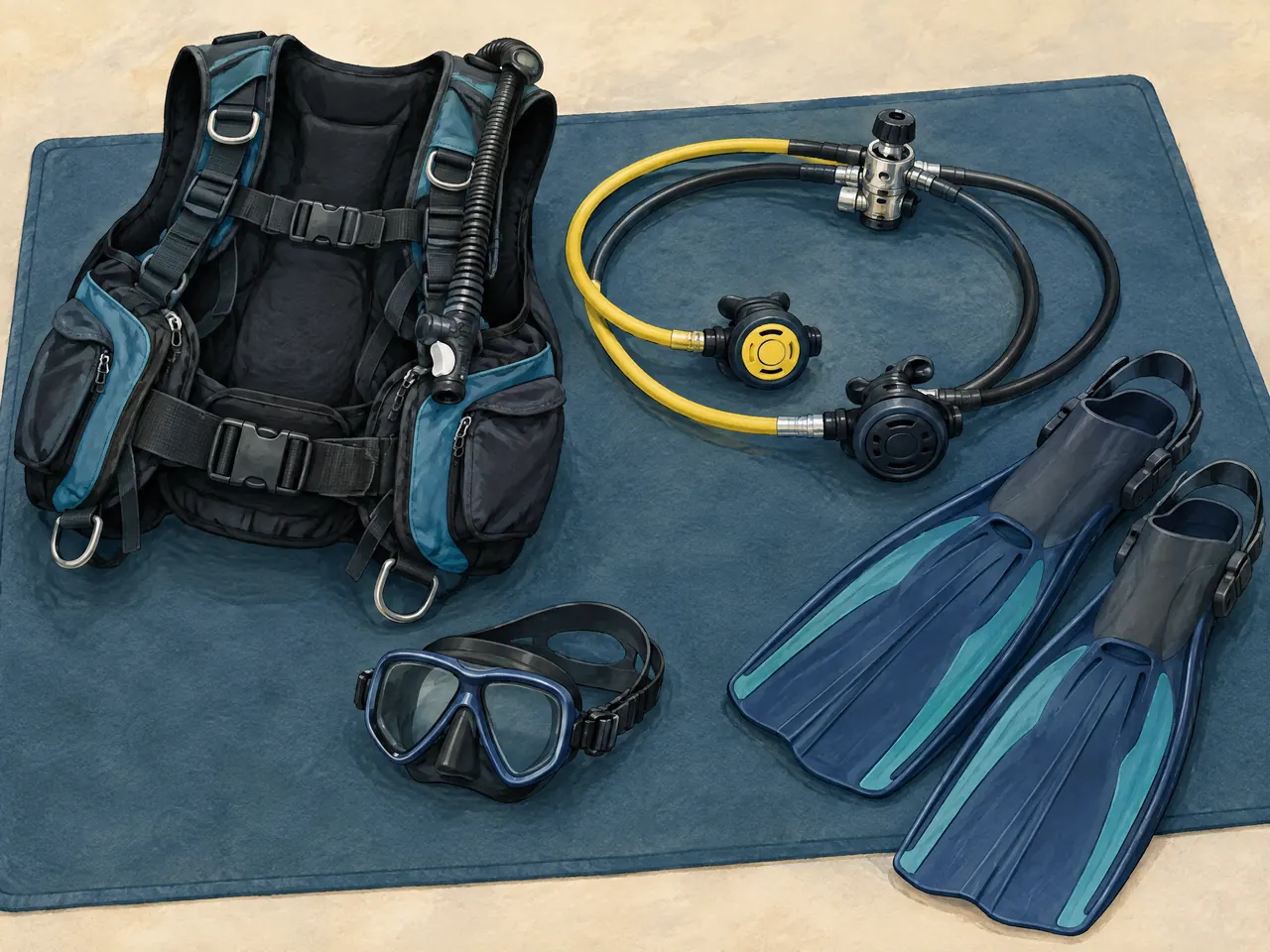
Unbranded buoyancy compensator, regulator assembly, mask and fins arranged separately on a dry preparation mat.
Illustrative equipment for checking supply responsibilities; not a provider kit inventory, servicing guide or teaching demonstration.Generated illustrative image

Ask what a changed water session would change

When discussing a weather or venue disruption, ask about its effect on the whole instructor-training plan. Who would tell you that arrangements have changed, and how would you receive the revised meeting details? Would a later session or assessment need a separate confirmation? Keep the trainer's answers with the attendance plan, especially if your work roster or travel arrangements limit the dates you can offer.

Do not assume that a cancelled water appointment can simply become a study appointment with the same outcome. Ask which preparation can still be useful and which supervised activities must wait for a confirmed arrangement. Check any revised dates against the written missed-session and payment terms already discussed. Weather information is a prompt to contact the provider, not permission to decide independently that a training session should proceed.

Unbranded phone with a blank screen beside a wind-vane model, rain shell and miniature wave sculpture.
Illustrative weather and communication prompts for contingency questions; not a forecast, safe-diving threshold or confirmed training schedule.Generated illustrative image

Clinic enquiries

Contact and appointment arrangements

Clinics
Prince Edward and Kwun Tong
Opening hours
11:00–21:00
WhatsApp and telephone
+852 6940 5663

Appointments, practitioner availability and service arrangements are confirmed via WhatsApp.

Please mention any consultation language needs in your WhatsApp enquiry so that arrangements can be confirmed.

Enquire via WhatsApp
Food, gifts and floral lifeWhatsApp enquiry