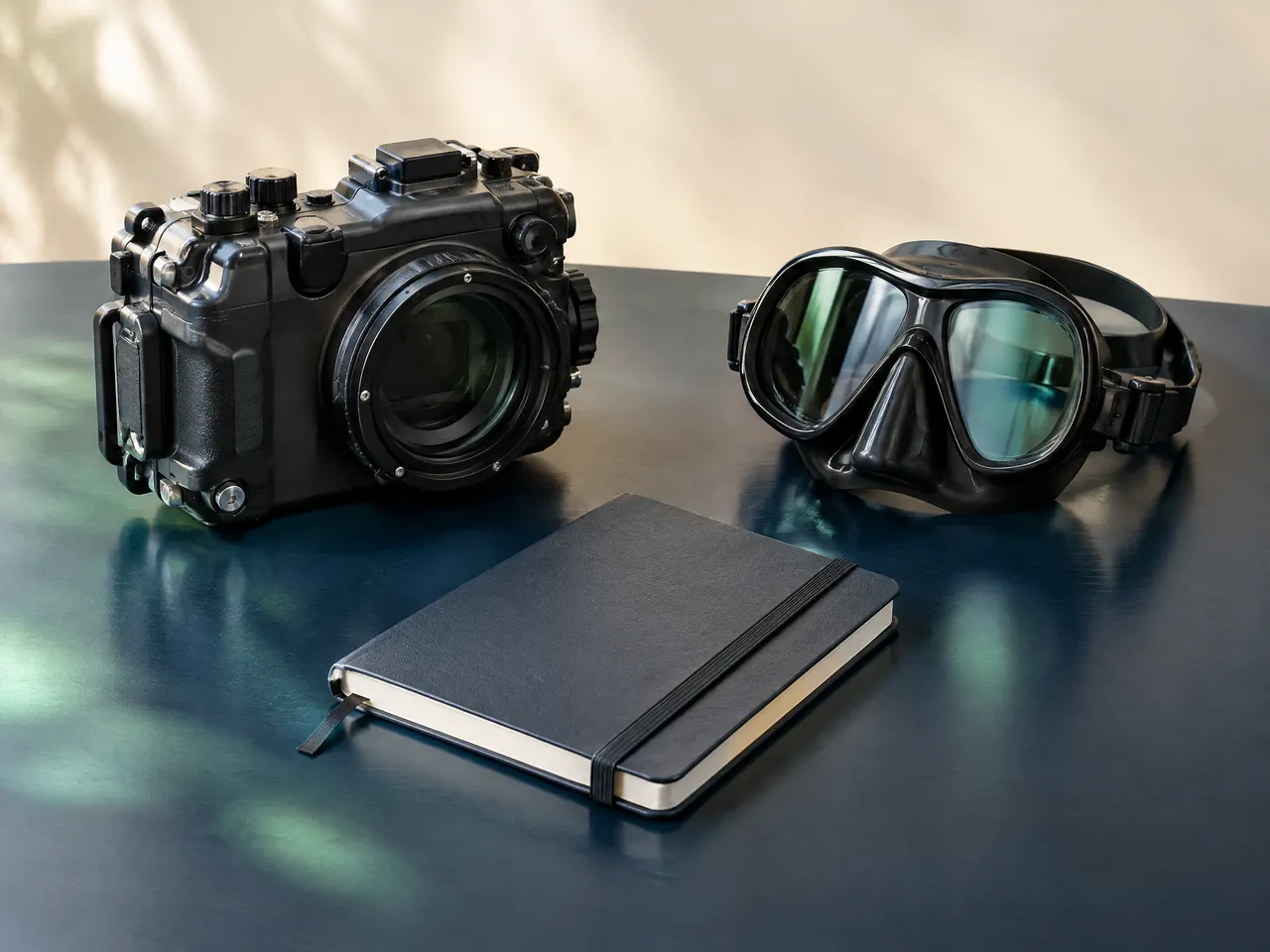
Make equipment responsibilities specific before the first session
PADI includes equipment in Divemaster knowledge development and equipment preparation in practical skills. [4] Turn the general question of what is supplied into a record of what you bring, what the operation provides and what remains unconfirmed. Name unfamiliar equipment rather than assuming experience with one setup transfers to another. If you will observe or assist with equipment allocation, ask who checks decisions and where your candidate role stops. This is a supervision question, not permission to inspect, repair or approve someone else's equipment independently.
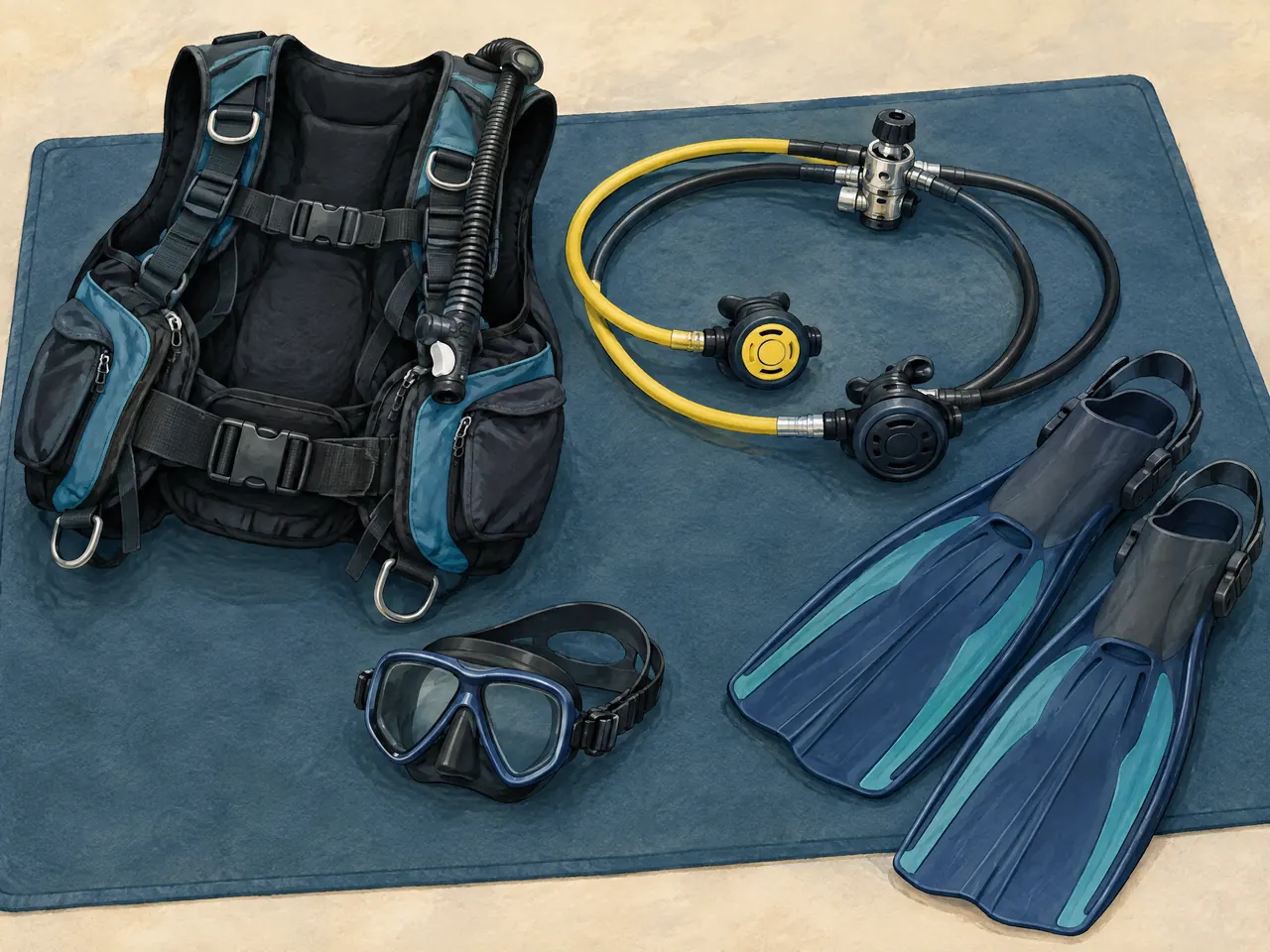
Raise fit questions without turning them into a lesson
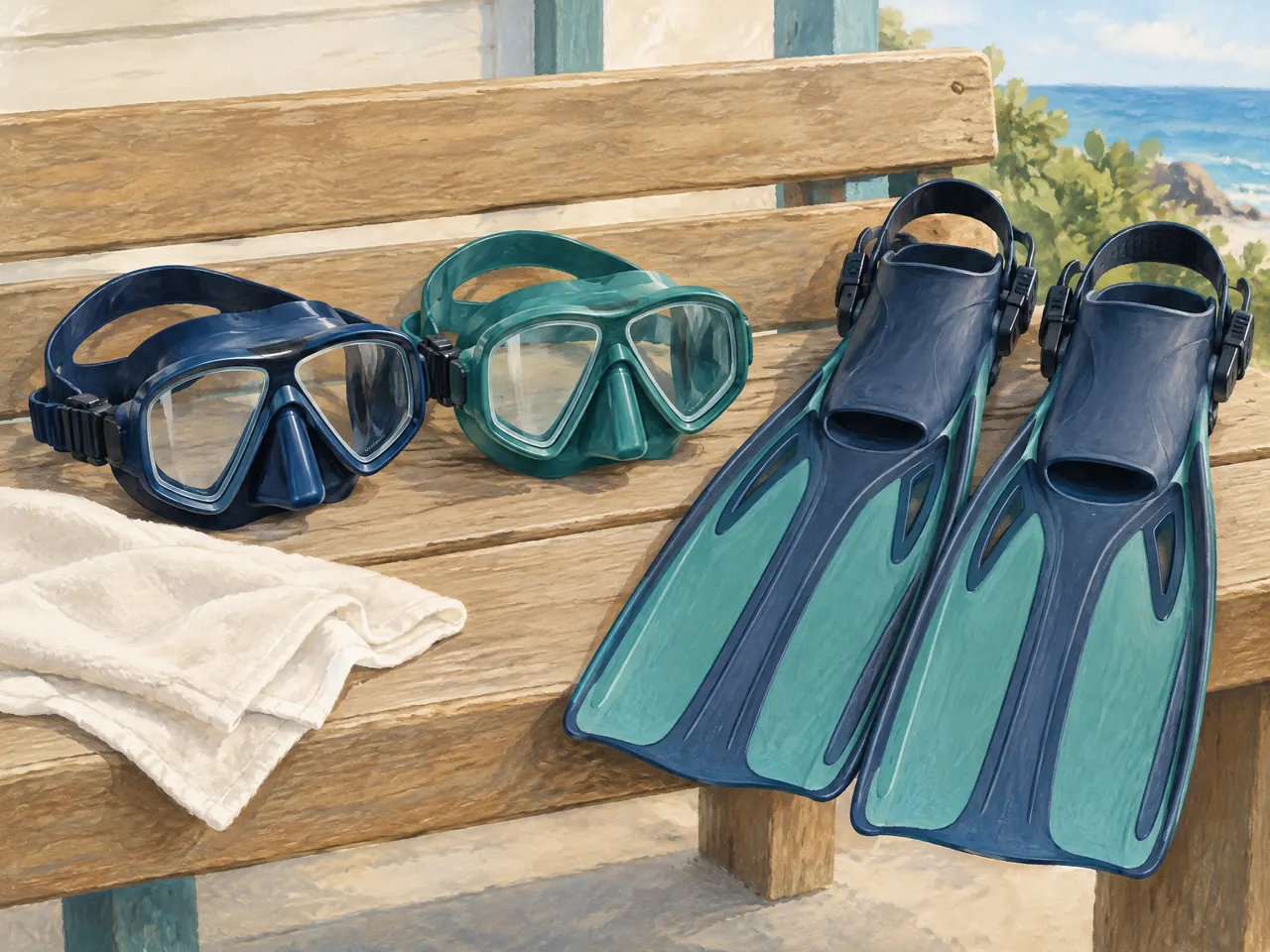
Equipment familiarity and equipment comfort deserve separate questions. Before a practical session, describe any uncertainty about your mask or fins and ask when the instructor can review it. Give the actual model or item rather than relying on a photograph of a similar product. If you expect to assist other divers later, ask how equipment concerns should be passed to the supervising professional. The illustration prompts that conversation; it does not demonstrate a fit test or establish which equipment suits an individual.
Connect each learning activity to its setting and feedback
Use the course outline to ask where each activity happens and how it connects to the next review. Which preparation can you complete on land, which practice needs a controlled setting and which tasks require supervised experience in the relevant diving environment? PADI describes knowledge development and practical application as distinct parts of its Divemaster course. [4] The book, empty pool model and abstract cove are discussion prompts, not a three-stage Divemaster syllabus. Confirm the actual locations, supervision and assessment arrangements rather than reading them into the picture.

Ask what happens to the learning objective when plans change
A weather-related change can affect more than your arrival time. Ask how the team will tell you whether a planned session is cancelled, moved or replaced by a different activity. If an alternative is offered, clarify what learning it addresses and whether the original assessed task remains outstanding. Keep that answer alongside the written booking terms. Do not assume a classroom discussion substitutes for a water assessment, and leave decisions about operating conditions to the responsible team rather than inferring them from a phone forecast.
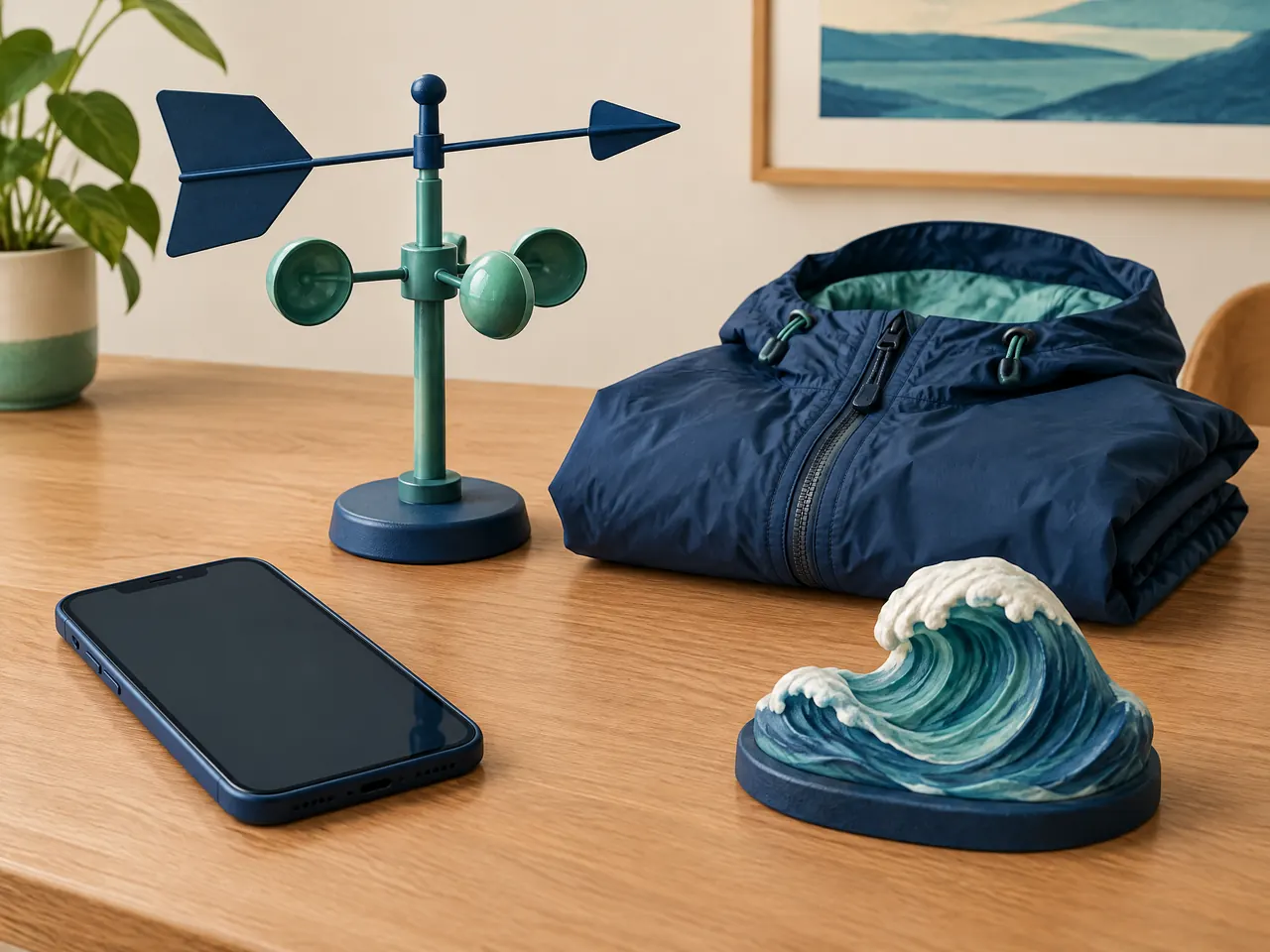
Separate your personal day bag from assigned operational tasks
Prepare your own outing needs without assuming the operation supplies them. Ask about drinking water, space for a towel and where personal belongings may be stored. A dry bag can serve as a planning prompt, but the illustrated contents are not a required course kit. Discuss assigned boat-day tasks separately: who allocates them, when you should be available and what must remain with the supervising team? Keeping those two lists separate helps you arrive organised without mistaking personal packing for professional assessment or operational authority.

Include marine surroundings in your leadership questions
PADI's Divemaster overview includes becoming a role model for marine conservation. [4] Bring that responsibility into the training conversation: ask how local environmental considerations are explained to groups and what a candidate should do when uncertain about an activity's impact. Discuss how your own behaviour will be reviewed, not just which marine-life names you can remember. The reef illustration is a prompt for those questions, not evidence of a Hong Kong site or a conservation placement included in the course.