Turn the future shape into a section-by-section brief
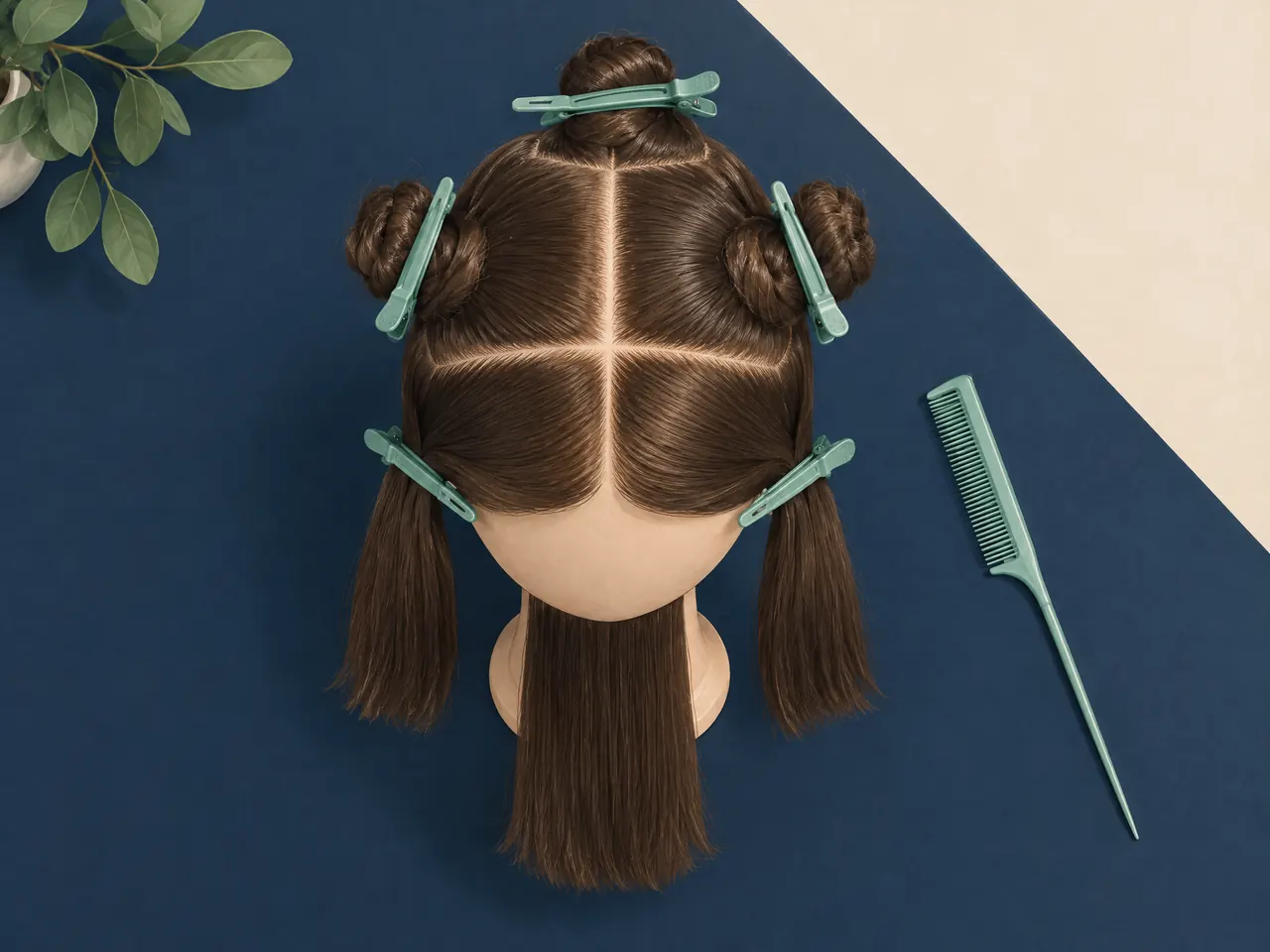
Before a maintenance cut, describe a present problem and a future goal together. For example: 'I want the sides eventually to join the top; today, I only want the hairs touching my ears cleared.' Ask the stylist to show which section would be shortened before cutting starts. A top divided into sections can help locate the overlap, but the sectioning itself does not establish how much hair must come off.
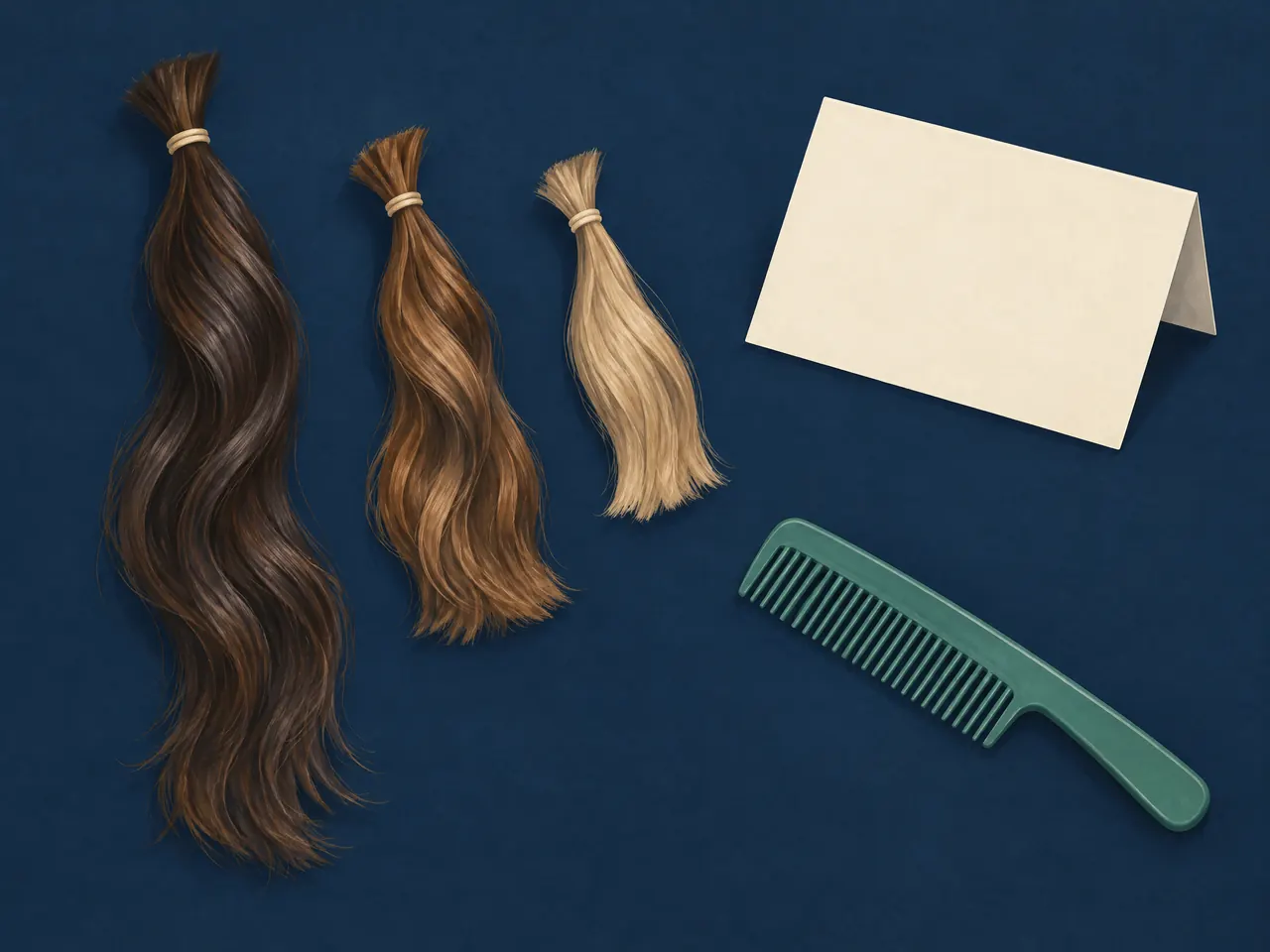
Name retained length separately from the finish you admire. 'Keep the fringe long enough for my usual side part' is more specific than 'keep the top long'. Bring one photograph of your current dry outline alongside the desired shape, and identify any feature you do not want copied. Practice tresses can illustrate length differences, but cannot predict how that length will rest on your own head.
Check what the fringe must still do
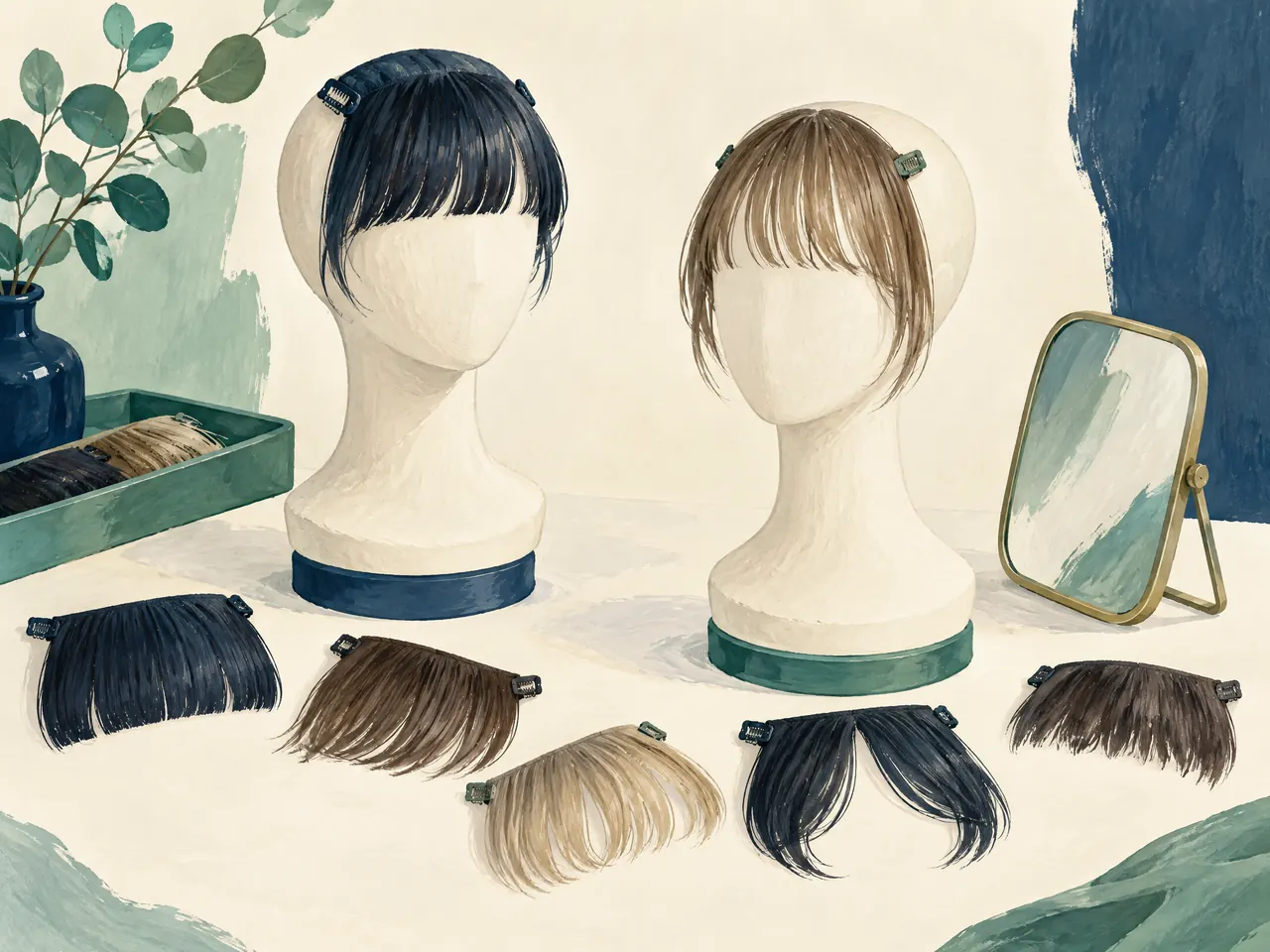
Test the front in the positions you actually use: resting forward, opened at your parting and moved away from your eyes. If one position works but another needs constant adjustment, tell the stylist which matters most. A fringe that looks tidy when lifted may still interfere when it falls naturally. Ask whether a proposed upper-edge change would also shorten the front; do not assume every part of the top needs the same reduction. Mannequin fringe pieces illustrate design choices, not an exact length prescription.
Ask for a drying demonstration you can repeat
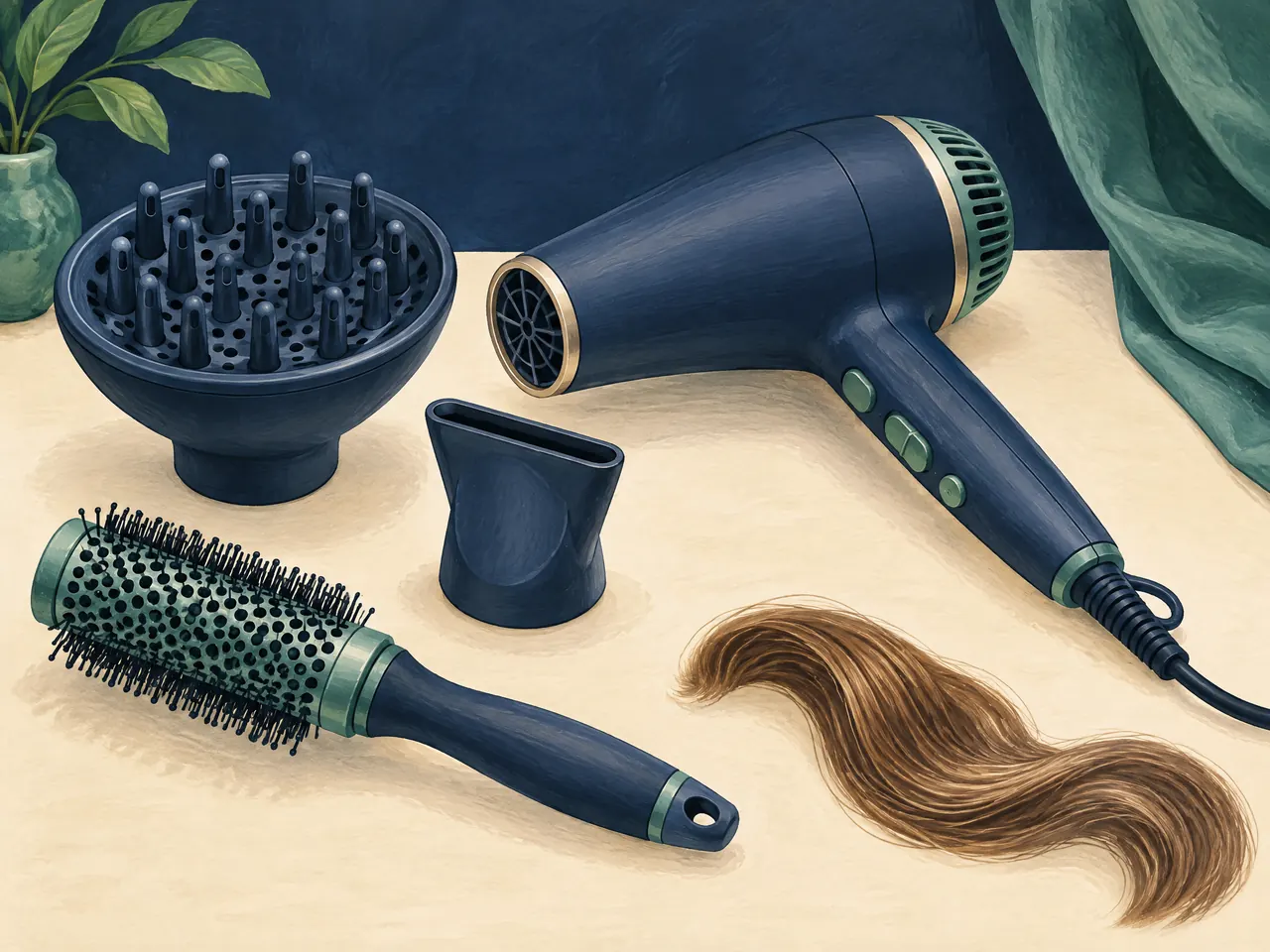
Tell the stylist which tools you own before asking how to recreate the finish. If you only use your fingers and a dryer, ask to see the parting and upper overlap arranged that way rather than relying on a round-brush finish. Ask which step changes the coverage above the ears and whether a simpler version is workable. An attachment shown in an illustration is not a requirement or confirmation of the tools used at an appointment. Keep heat modest instead of repeatedly reheating the sides to imitate a polished reference. [2]
Keep the home test gentle and suited to your texture
When recording how the cut sits after washing, note whether you changed conditioner, combing or drying as well. Otherwise, a changed routine and a changing haircut become difficult to separate. Keep the washing frequency suited to dirt and oil rather than washing extra just to check the outline. The AAD advises conditioner on the ends for fine or straight hair and through the length for dry or curly hair. [1]
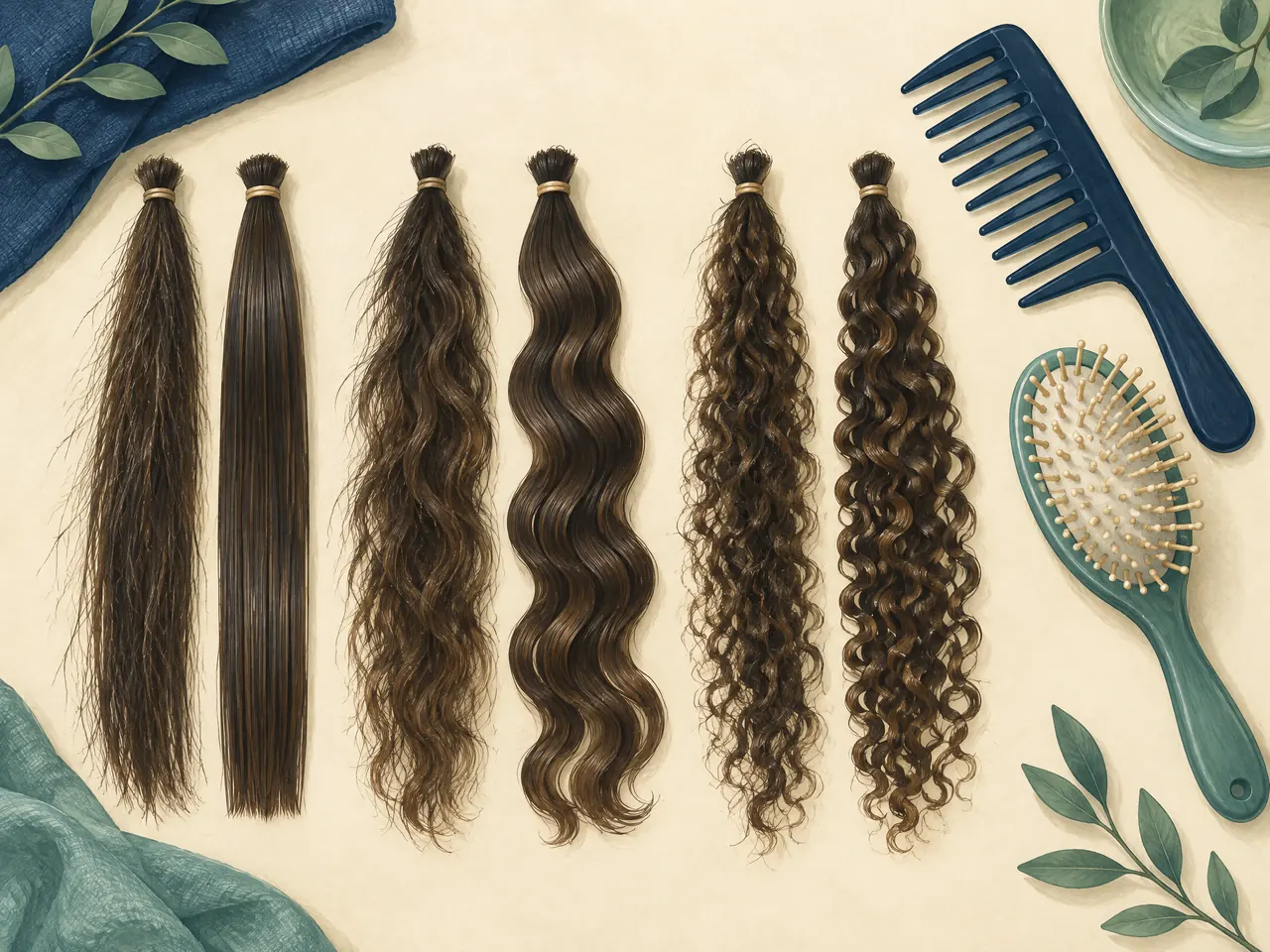
Treat a retained long top according to its texture, not simply the short length of the sides. The AAD advises letting straight hair dry a little before gently combing; thick curly hair can be combed before rinsing out conditioner. Use a wide-tooth comb and work gently from the ends. [1] This handling advice does not make straight, wavy and curly practice tresses interchangeable models of your grow-out. Show the stylist how your own top rests after your usual care.