
Prince Edward & Kwun Tong clinics · Home-visit enquiries elsewhere

TCM Lab

TCM Lab · Beauty & lifestyle / Commuter hair routines

Helmet hair and puffy sides: choose a manageable reset

Content updated

A flattened crown can make the sides look unexpectedly wide after a ride. Before choosing shorter sides or chemical direction control, work out what changed during the commute and what you can comfortably reset at your destination.

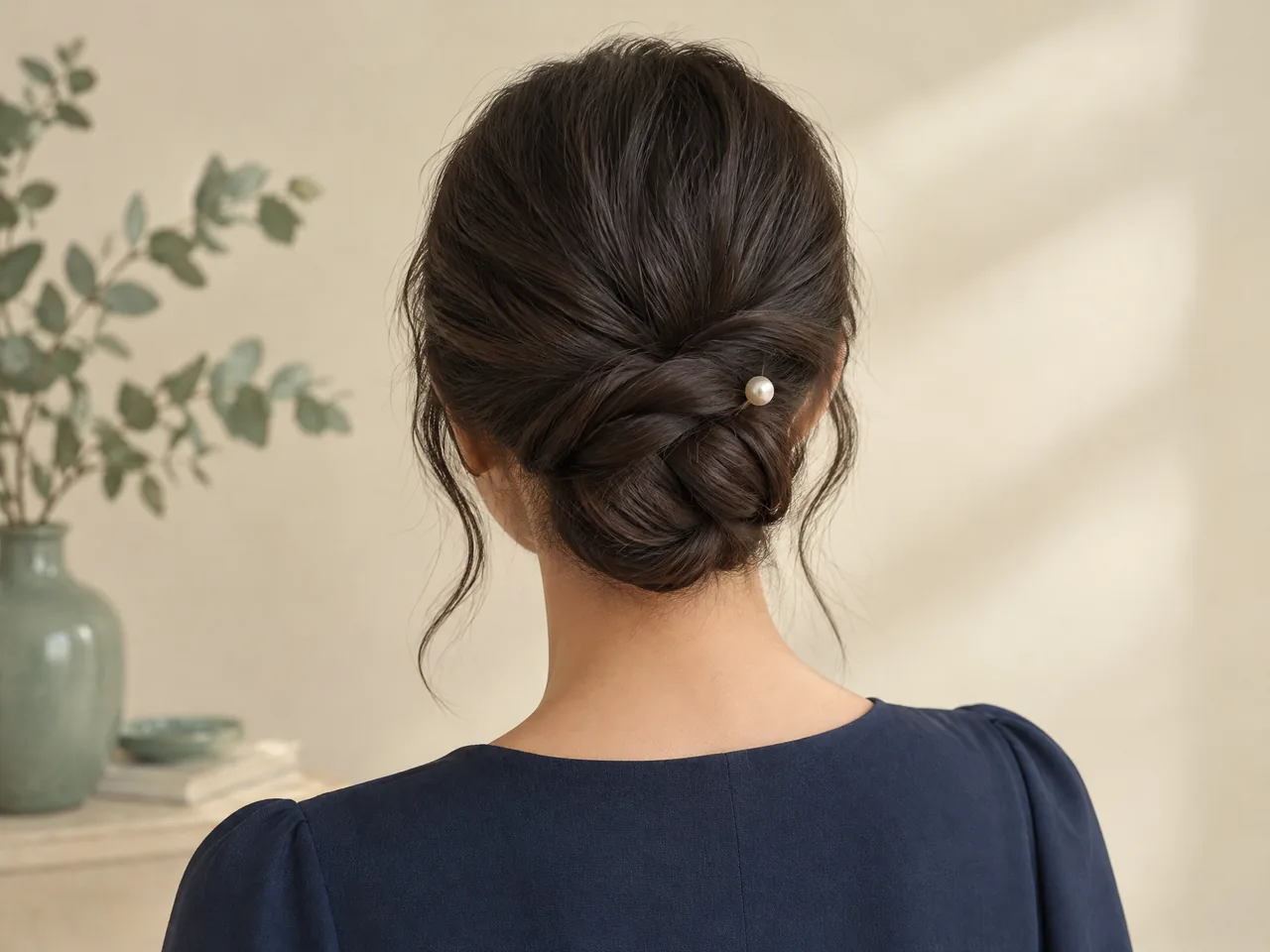
Illustrative low bun and occasion styling
Illustrative hair-lifestyle concept; not a client record or a Vit So portfolio photograph.

The short answer

For helmet hair side control, compare your dry pre-ride outline with the post-ride shape. Shortening the sides changes coverage; a down perm aims to change the direction of retained hair. Neither promises an unchanged finish under a helmet. Keep safety fit intact, absorb moisture gently, restore your usual parting and add minimal product only if needed.

Vit So is an external hair and beauty website under the same ownership as TCM Lab. Its beauty services are separate from Chinese medicine care. This section is for beauty and lifestyle education, not diagnosis or treatment.

Check the crown before blaming the sides

Once safely parked, remove your helmet and look at the whole outline before combing. Is the crown lower than it was at home? Is there a distinct pressed line, or are the ends above one ear sticking outward? Sides can look wider beside a compressed top even when their length and arrangement have barely changed. Taking more hair off the sides would not necessarily address that contrast.

Compare three views: dry hair before riding, hair immediately after removing the helmet, and hair after moisture has dried and you have gently arranged it. Use similar lighting and your normal glasses. Notice whether the same side projects on a non-riding day. This helps separate an everyday shape preference from a temporary post-commute inconvenience.

Cycling may leave you visibly sweaty; a motorbike journey can also involve a warm helmet and repeated stops. Do not assume one mode always produces worse hair. Record what happens on your actual route, including whether damp strands gather together or the crown stays pressed after drying. A dry side that still feels too wide presents a different choice from one that settles during a simple reset.

Short sides reduce length, not every helmet mark

If you are comfortable showing more of the ear area, shorter sides leave less length there to rearrange. The trade-off is coverage: a shape that looks cleaner may expose a temple area you previously liked covered. A fade graduates between lengths, but its name alone does not specify how high the short area reaches or whether skin should show. Decide those details separately.

For commuting, consider the connection to the top as well. Closely cut sides beside a tall styled crown can look very different once that height is pressed down. You might prefer a top that looks acceptable worn lower, rather than investing every morning in lift that needs rebuilding at work. This is a design preference, not a promise that short hair resists helmet pressure.

The down perm vs fade resource is useful for comparing the intended change: removing side length versus controlling retained side direction [4]. Apply that distinction to your post-ride photographs. If losing coverage would bother you more than spending a little time arranging it, the closest cut is not automatically the most manageable option.

Retained coverage brings a different maintenance choice

A down perm is discussed for a closer side outline while retaining hair, not as a way to restore a compressed crown. Before considering chemical work, test whether your usual covered cut becomes acceptable after gentle drying and finger styling. If it does, a treatment-independent routine may already meet your goal. Equally, you can accept some width rather than remove coverage you value.

If the sides project even on ordinary dry, non-riding days, the down perm sheung wan page explains the service's intended side-control scope [6]. That is not evidence that treated hair will stay arranged through sweat or helmet contact. Ask what routine would still be needed afterwards, and whether your existing cut offers the coverage you want to keep.

Chemical commitment is a separate trade-off from styling time. The Canadian Dermatology Association cautions that colouring, perming and relaxing products weaken hair and increase susceptibility to breakage, and advises against applying them to already damaged hair [1]. Share earlier processing rather than assuming short sides are untreated. Do not pursue chemical styling over irritated skin simply to save time after a ride.

Make styling fit the helmet, never the reverse

Do not loosen straps, tilt the helmet backwards or alter protective material to preserve a hairstyle. NHTSA's bicycle fitting guide specifies a level helmet and adjusted straps around the ears and beneath the chin [2]. Its motorcycle guidance describes an evenly snug fit without uncomfortable pressure points and warns that interior alterations can compromise integrity [3]. These are separate teaching resources, not interchangeable fitting instructions.

Use your own helmet manufacturer's fitting instructions and the requirements applicable where you ride; these US resources do not establish Hong Kong certification rules. If a helmet hurts or moves unexpectedly, have its fit checked rather than trying to solve it with a haircut. Ask the manufacturer about any proposed liner or accessory. For commuting hair, choose a finish you can restore after arrival instead of trying to create space inside the helmet for extra height.

Build a reset that works without a salon blow-dry

Start with clean hands and a small clean towel. Gently absorb visible moisture instead of scrubbing the sides or crown. The Canadian Dermatology Association advises against vigorous towel-drying and harsh handling of wet hair, and recommends cool or low heat if blow-drying [1]. Those instructions support gentle handling, not a guarantee that every pressed line will disappear.

Let damp hair dry before deciding how much correction it needs. With fingers, find your usual parting and separate strands that have gathered together. Guide the side ends into your preferred direction without pulling hard. If a dryer is available, use cool or low air to finish drying rather than repeatedly applying hotter air to a stubborn section. Without one, aim for a tidy lower-volume finish you can arrange by hand.

Only then decide whether to add product. Begin with a small amount, following its label, and put it where the shape actually needs support. Repeatedly layering product onto damp, compressed hair makes it harder to judge what is causing the finish you dislike. A dry comb and towel may be a more useful commuting kit than several styling jars.

For a heavily sweaty journey, allow for washing when facilities and your hair's needs call for it; there is no universal shampoo schedule for every rider [1]. If you ride again at lunchtime, save the elaborate styling for after the final journey. The useful benchmark is presentable hair after a manageable reset, not an exact recreation of the shape you left home with.

Check the local scope against your commuting routine

When comparing a men's haircut sheung wan option, the published service describes washing, cutting and blow-drying; extra chemical work should not be assumed included [5]. Explain that you arrive wearing a cycling or motorbike helmet and say whether your destination has a dryer. Ask for a finish demonstrated with the tools you will actually have, not only a polished salon result.

Check the proposed work, applicable charge and available appointment directly before travelling; a service page does not establish walk-in availability. If considering a down perm, ask about the specific aftercare and when helmet use and washing can resume rather than borrowing a rule from another treatment. Vit So is an external hair-styling website under the same owner as TCM Lab; its cosmetic services are separate from Chinese medicine care.

Take it into everyday life

A practical checklist

  • Compare pre-ride, post-ride and gently reset hair before changing the cut.
  • Identify whether the main issue is crown compression, side projection or both.
  • Decide how much ear and temple coverage you want to keep.
  • Pack a clean towel and comb; add one familiar product only if useful.
  • Keep helmet fit unchanged and follow its manufacturer's instructions.
  • Confirm service scope, appointment availability and any treatment-specific aftercare directly.

Questions & answers

Will a fade stop my crown looking flat after a ride?

No such result should be assumed. Shortening the sides does not restore top height. Try a lower-volume top finish after riding before deciding that the side length is the problem.

Can a down perm replace my post-commute reset?

Do not count on that. Its intended goal concerns retained side direction, not immunity to pressure or sweat. Judge whether you can manage the outline with gentle drying first, and ask what styling would remain necessary.

Should I put more wax on before wearing the helmet?

More is not automatically better. Compare a lighter application with your normal routine, keeping helmet fit unchanged. After arrival, let the hair dry and assess it before adding another layer; follow the product's instructions.

What if there is no dryer in the office?

Absorb moisture gently, allow drying time and restore your ordinary parting with fingers or a comb. Choose a haircut and finish that you find acceptable at lower volume rather than relying on rebuilding a tall crown.

Can I ride home straight after a chemical side service?

Ask before booking about helmet contact and the actual service's aftercare. Do not invent a universal waiting period. If the advice conflicts with your return journey, arrange another way home or postpone the service.

Sources & further context

Numbered references follow the order in which the sources are listed below. Service websites provide beauty-service context, not medical evidence.

  1. [1] Canadian Dermatology Association — Hair Care
  2. [2] NHTSA — Fitting a Bicycle Helmet
  3. [3] NHTSA — Choose the Right Motorcycle Helmet
  4. [4] Vit So — Down Perm vs Fade: What Do You Want to Keep at the Sides?
  5. [5] Vit So — Men's Haircut: Men's Wash Cut and Blow Dry in Sheung Wan
  6. [6] Vit So — Haircut and Down Perm: A Closer Side Outline

Turn a wider outline into a precise haircut brief

Use your comparison photographs to mark what should stay, not only what looks untidy after riding. Point to the lowest temple coverage you want to retain and the highest point where you would accept shorter hair. Check those boundaries with the top resting in its lower post-commute position. A reference showing different lengths helps you describe the choice, but does not show how your own hair will sit against your glasses or ears.

Before agreeing to a cut, ask to see the proposed outline with the fringe in your ordinary position rather than swept back for the discussion. Describe the trade-off directly: you may accept a little width if it preserves covered temples, or prefer clearer ears while retaining a movable front. The men's haircut resource separates side coverage from front and back length decisions [5]. If you also discuss chemical side control, identify the retained sections separately; its intended scope is not a replacement for choosing the cut [6].
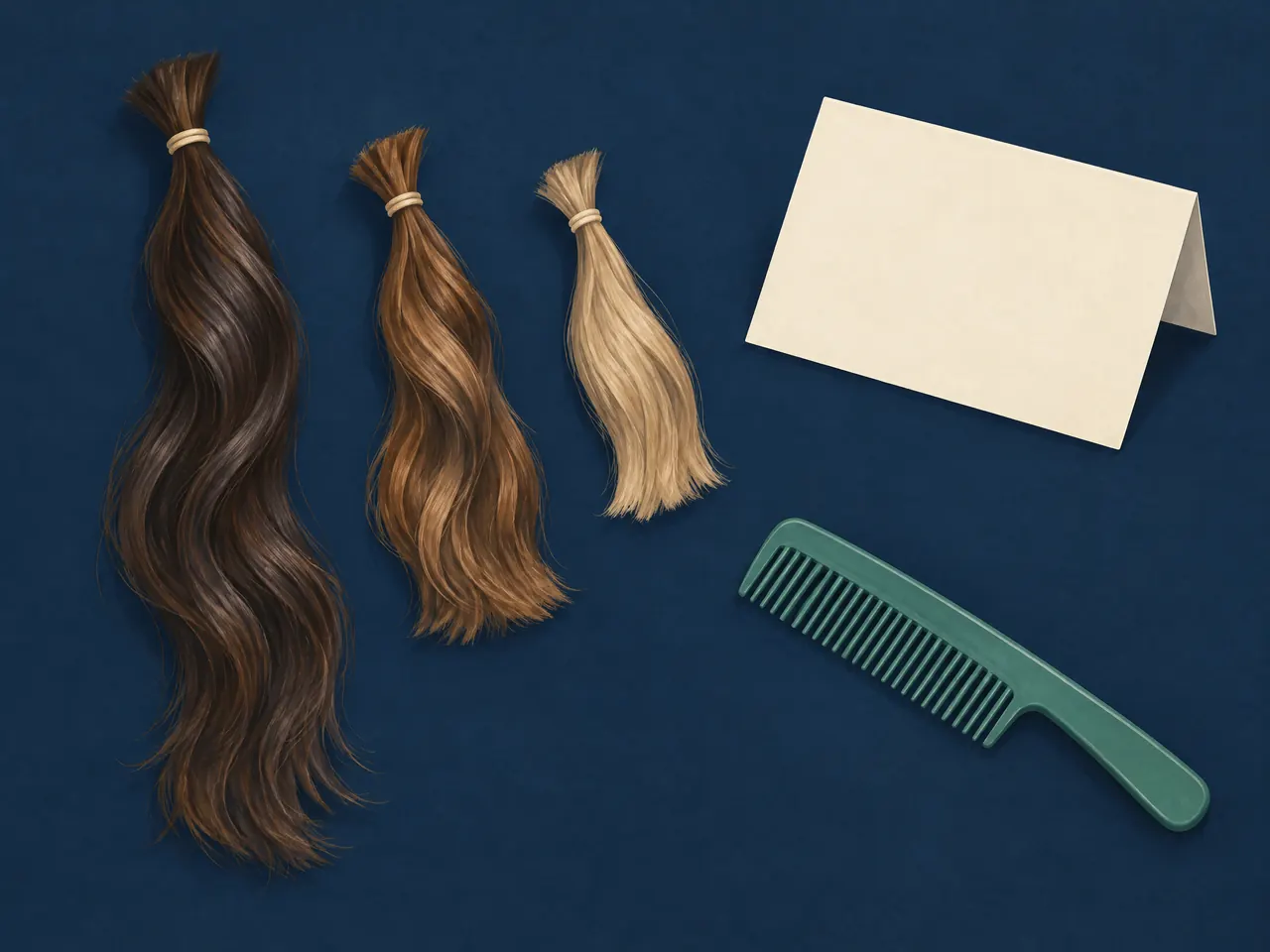
Three separate practice hair tresses at different lengths beside a blank folded card and a comb.
Practice tresses illustrate length choices to discuss; they do not predict your post-commute outline or show a client haircut.Generated illustrative image

Time the reset you can repeat at your destination

Try the reset at the place where you actually finish your journey. Note when you arrive, when the hair is dry enough to judge and when you stop arranging it. Separate waiting time from hands-on work: a routine can require little effort yet still be inconvenient before an immediate meeting. Keep a second acceptable finish for late arrivals, such as your normal parting with less crown height, rather than making a complete restyle the only successful outcome.

Inventory the equipment available there before buying more. A dryer, a round brush and different attachments represent different actions, not a single compulsory kit. Ask which tools are genuinely needed for the finish you are discussing, and say if you cannot comfortably coordinate a brush and dryer. Test the simpler version on an ordinary commute before adding equipment. If drying is necessary, retain the cool or low heat approach recommended by the Canadian Dermatology Association [1]; needing hotter air to force the shape is a reason to reconsider the finish, not to keep escalating heat.
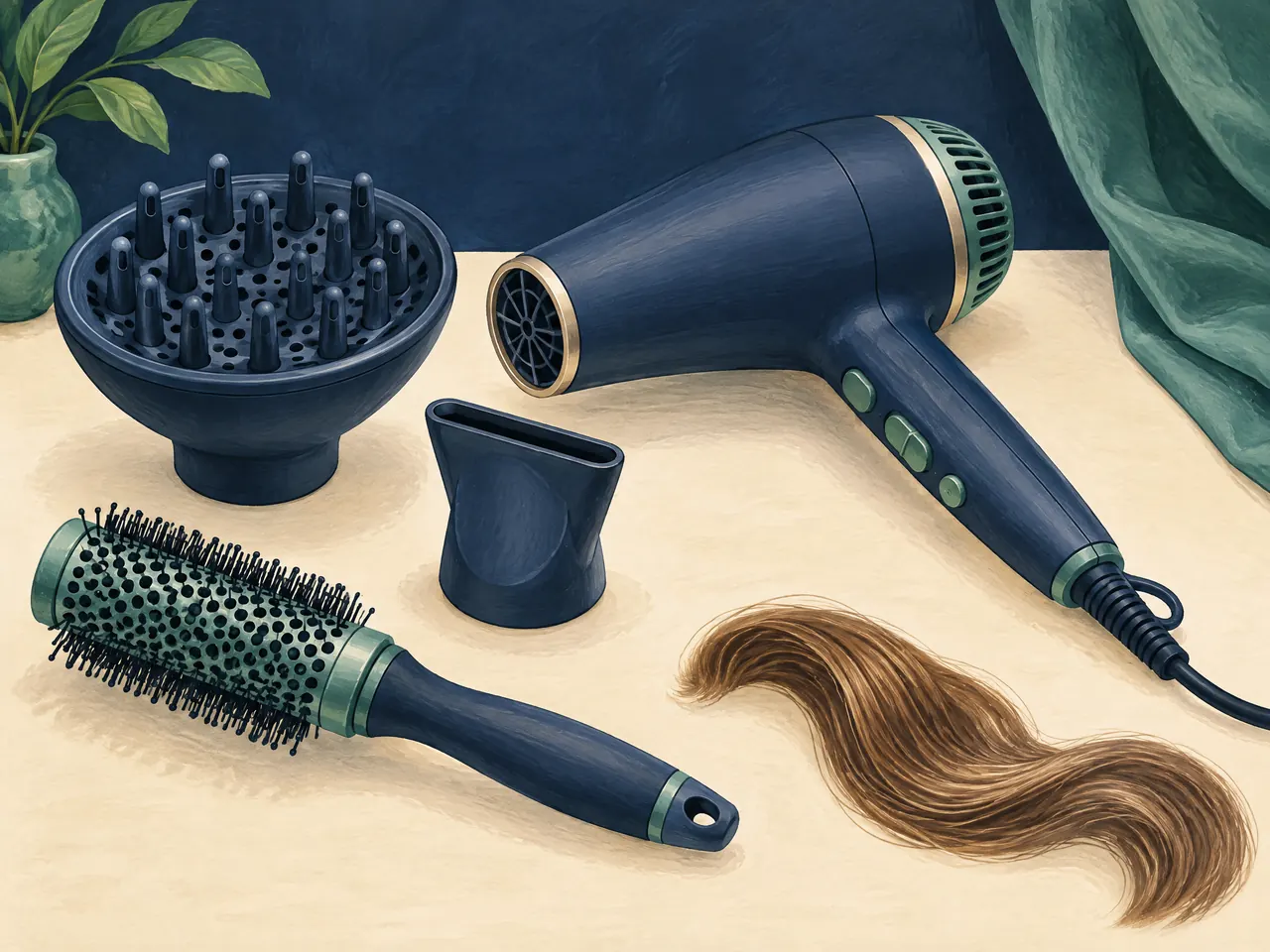
An unplugged unbranded dryer with a diffuser and nozzle beside a round brush and a loose practice hair tress.
These illustrative tools support a discussion of the equipment you can actually use after arrival; no attachment is prescribed for every rider.Generated illustrative image

Plan the wash and the kit for another ride

If the journey calls for washing rather than just rearranging, check that your destination offers enough time and facilities to complete it. The Canadian Dermatology Association recommends gentle shampooing focused on the scalp rather than aggressive scrubbing of the ends [1]. For hair that tangles, its guidance supports conditioner to ease wet combing and a wide-toothed comb worked from the ends upwards. Apply that care to the lengths you have retained instead of treating a stubborn side section as a reason to scrub harder. These are handling recommendations, not evidence that washing will remove every helmet mark.

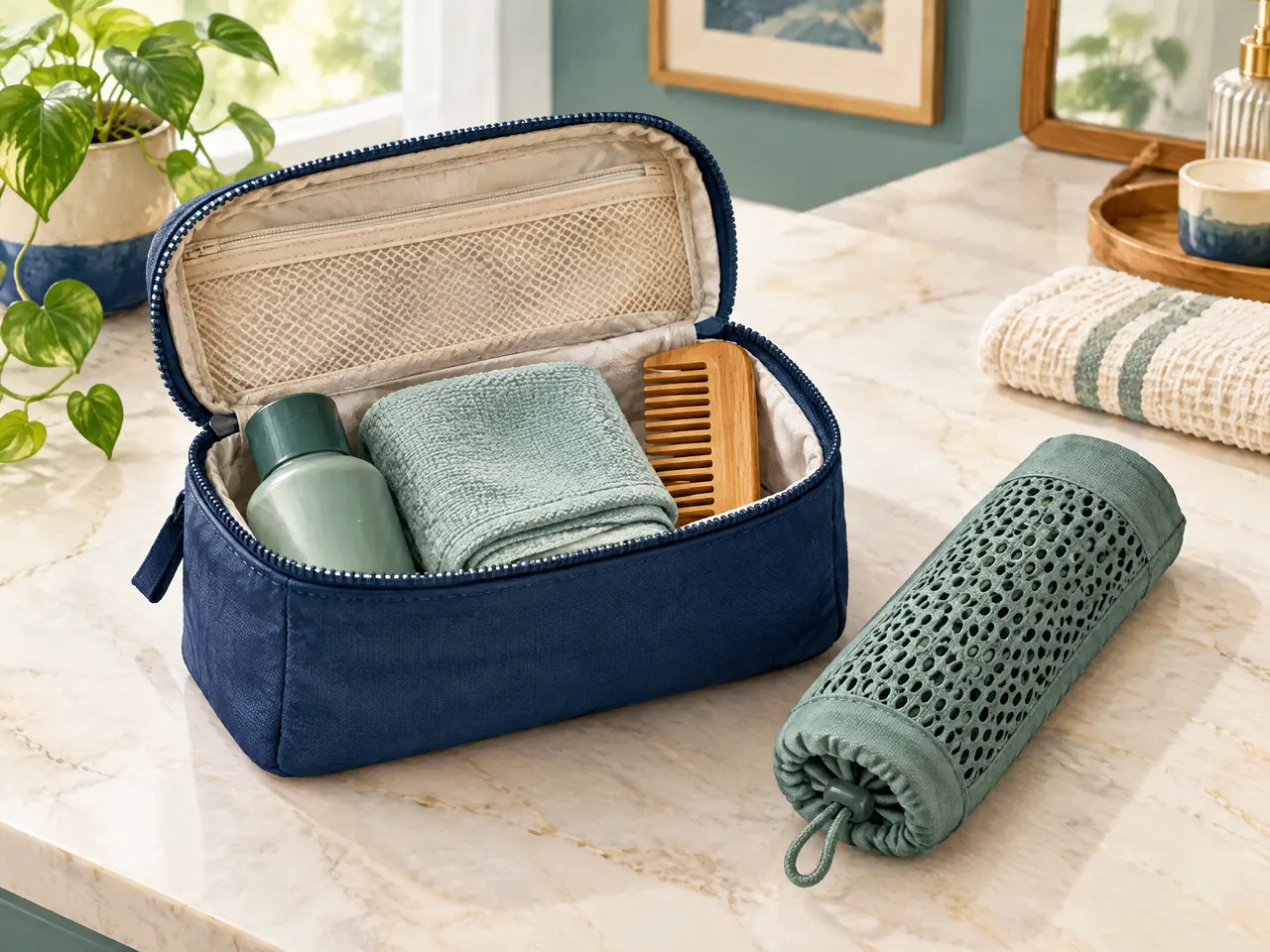
Pack the items that proved useful during your trial, leaving space to separate a used damp cloth from the clean one needed for a later journey. A small pouch can hold a comb and one familiar capped product without turning the office into a styling station. Arrange somewhere to dry the cloth after use rather than relying on the same damp towel all day. For a second ride, plan the next reset around your onward commitments; extra products and a larger kit do not by themselves make the routine easier to repeat. The illustrated storage sleeve is a packing object, not a helmet liner or a recommended protective accessory.

A plain wash basin, unbranded pump bottle, folded soft towel and wide-toothed comb on a cream shelf.
Routine-care objects illustrate planning for a wash when needed; they do not identify products or guarantee a styling result.Generated illustrative image
An open travel pouch with a capped bottle, folded cloth and comb beside a separate ventilated storage sleeve.
A compact packing concept for repeat journeys; the separate sleeve is not a helmet accessory or a safety recommendation.Generated illustrative image

Clinic enquiries

Contact and appointment arrangements

Clinics
Prince Edward and Kwun Tong
Opening hours
11:00–21:00
WhatsApp and telephone
+852 6940 5663

Appointments, practitioner availability and service arrangements are confirmed via WhatsApp.

Please mention any consultation language needs in your WhatsApp enquiry so that arrangements can be confirmed.

Enquire via WhatsApp
Food, gifts and floral lifeWhatsApp enquiry