
Prince Edward & Kwun Tong clinics · Home-visit enquiries elsewhere

TCM Lab

TCM Lab · Beauty & lifestyle / Hair care and texture

A smoother feel does not have to mean losing your waves

Content updated

When you enjoy your waves but dread combing the ends, start with how you care for the lengths—not a plan to erase their bends. A smaller, better-placed routine can make your next decision clearer.

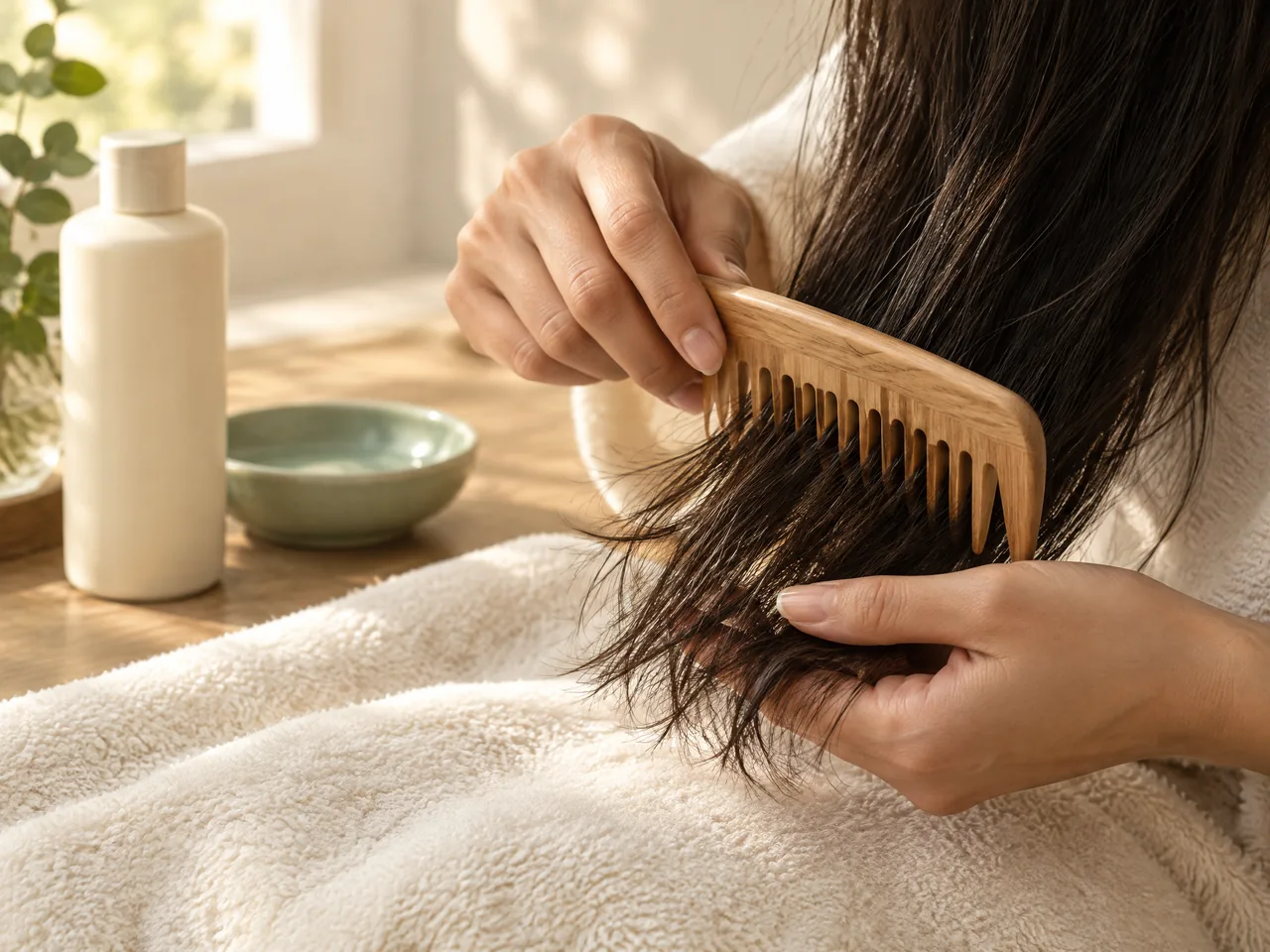
Illustrative wide-tooth comb and everyday hair care
Illustrative hair-lifestyle concept; not a client record or a Vit So portfolio photograph.

The short answer

For smoother hair with natural waves, first try appropriate rinse-out conditioning, gentle detangling and less towel friction. Add a leave-in only if needed and as directed. Judge easier handling separately from a straighter outline: a service labelled smoothing may change shape, so its name alone cannot promise wave retention.

Vit So is an external hair and beauty website under the same ownership as TCM Lab. Its beauty services are separate from Chinese medicine care. This section is for beauty and lifestyle education, not diagnosis or treatment.

Name the difficult moment, not just the texture

Think about the moment that makes your routine frustrating. Perhaps a comb stops near the last few centimetres, the sides spread after brushing, or the ends feel rough while the roots feel coated. These observations describe different problems. A wave is a bend in the outline; it is not, by itself, evidence that hair needs correcting. You can enjoy that outline while wanting less resistance when handling it.

For one ordinary wash, make three brief notes: where tangles occur, how the dry lengths feel and which movement you want to keep. Avoid testing strength by stretching or repeatedly pulling strands. Record what happens during normal handling instead. Include whether the difficult area is an old lightened section or simply where you tend to rub with a towel.

This gives a broad term such as hair treatment a useful context: care for catching ends, rather than an unspecified transformation. The linked page is a cosmetic service resource, not evidence that any product will restore damaged hair. Your immediate goal can be modest and measurable—detangling without repeated tugging.

Softness and straightness lead to different choices

Conditioner is intended to help moisturise, detangle and improve manageability; the American Academy of Dermatology recommends using it after washing. Those benefits concern how hair handles, not a requirement to remove its curves. A softer wave can still be a wave. Equally, a straight-looking finish tells you little about how easily its ends will comb. [1]

A brushed blow-dry or flat-iron finish belongs to temporary styling. Permanent chemical straightening is a different category, changing treated hair through chemical processes. A dermatology review distinguishes these routes and documents potential damage from heat and chemical straighteners. Neither category should be chosen simply because the ends feel unpleasant today. [3]

When comparing hair smoothing vs hair straightening, use one deciding question: do you want different handling, different bends, or both? Smoothing is not a precise product specification. Before considering a service, establish its actual steps and expected washed-hair shape. If keeping your waves is non-negotiable, do not assume a glossy photograph demonstrates that outcome.

Read the directions before adding intensity

Start with the conditioner you already have, provided it is suitable for your hair and comfortable to use. Check the application area, whether hair should be wet or damp, the contact time and the rinse instructions. AAD guidance places conditioner on the ends for fine or straight hair and through the lengths for dry or curly hair. For fine waves, this makes the location of roughness and unwanted heaviness useful observations, rather than a reason to coat every area equally. [1]

A conditioning treatment may sound more intensive than a daily conditioner, but the label cannot tell you its formula or whether heat is involved. The practical home lesson is not to improvise intensity: leaving a product on longer, using more or adding heat is not automatically better. Follow the particular instructions instead of borrowing a mask routine from social media.

Rinse-out and leave-in conditioners are not interchangeable. AAD advises against leaving a rinse-out formula in place or diluting it into a homemade leave-in spray. For a leave-in, use a small amount on the areas that need it, keeping it off the scalp; the smallest effective amount helps avoid a greasy appearance. Check the packaging before assuming it also provides heat protection. [2]

Try a small routine you can actually compare

Rather than buying a mask, oil and cream together, compare your next few normal washes with fewer variables. Keep the cleanser, drying method and usual styling reasonably consistent. Use your rinse-out conditioner correctly first. If that leaves the lengths manageable, there is no need to add another product merely because a routine online has more steps.

If the ends still need help, trial one suitable leave-in according to its directions. Note the amount and placement, so you can repeat what worked. AAD suggests applying leave-in to slightly damp hair and distributing it through the areas that need conditioning. This supports controlled application, not repeated layers whenever a flyaway appears. [2]

Compare the result once hair is dry, not only while conditioner makes it slippery in the shower. If the ends feel comfortable but the overall style looks flatter than you prefer, that is a trade-off worth recording. Consider the amount, placement and product choice before abandoning conditioning entirely. This is a practical comparison, not a prescribed timetable or a promise of improvement within a certain number of washes.

Do less pulling between washing and drying

Apply shampoo mainly to the scalp rather than vigorously scrubbing the lengths together. Let rinsing carry it through. Afterwards, absorb water with a towel or T-shirt instead of rubbing the hair backwards and forwards. These are small changes that AAD recommends to reduce avoidable damage; buying a richer conditioner does not replace them. [1] [4]

Work through tangles from the ends upwards with a wide-tooth comb, without forcing it past resistance. Combing timing is texture-dependent: AAD advises detangling thick curly hair with conditioner before rinsing, while straight hair can dry a little first. Loose waves sit between these descriptions, so do not turn either into a universal wet-or-dry rule. Prioritise gentle handling and stop when a section resists. [1]

After detangling, avoid repeatedly brushing simply to make every strand lie identically. That may create an outline you do not actually want to maintain. If you use a dryer, limit heat and use a low or medium setting with appropriate heat protection. Keep occasional straight styling separate from your care trial, so it does not disguise the natural shape you are trying to evaluate. [1]

Keep useful improvements without calling them repair

Look for practical changes: fewer interruptions while combing, ends that are easier to arrange and a finish that still feels comfortable later in the day. Also record compromises, such as coated roots or movement you miss. Shine alone is a poor scorecard. A smoother feel does not prove permanent fibre restoration or establish that previously processed lengths can safely undergo more chemical work. [3]

If you later explore a dry hair treatment, take those observations with you rather than assuming stronger care is the next necessary step. Separate cosmetic softness from a lasting shape change, and identify earlier colour, bleach, perms or straightening. Keep this routine comparison independent of whether you eventually choose a salon service.

Repeated breakage despite gentler care, new thinning or ongoing scalp discomfort should not be answered by adding masks. Seek appropriate healthcare advice; AAD recommends dermatology assessment when routine changes do not help, particularly with thinning or hair loss. [4] Vit So is an external hair-styling website under the same ownership as TCM Lab; its beauty services are not Chinese medicine medical care.

Take it into everyday life

A practical checklist

  • Write down the difficult area and the wave or fullness you want to retain.
  • Read application, contact-time and rinsing directions for your existing conditioner.
  • Start with suitable rinse-out care; add only one leave-in if you need it.
  • Keep leave-in off the scalp and record an amount you can repeat.
  • Detangle without forcing knots and absorb towel moisture without rubbing.
  • Compare dry-hair handling and heaviness separately from shape and shine.

Questions & answers

Will ordinary conditioner permanently flatten my waves?

Conditioning aims at manageability, not permanent chemical straightening. A heavy application can leave a flatter-looking finish, so check amount and placement before concluding your pattern has changed. No product choice guarantees an identical styled outline.

My roots feel oily but my ends tangle. Should I skip conditioner?

Not necessarily. Clean the scalp appropriately and apply conditioner to the intended lengths or ends. AAD recommends targeted application according to hair type. Avoid putting leave-in on the scalp, and check whether your amount is making the root area feel coated. [1] [2]

Can I leave my rinse-out mask in overnight for a smoother result?

Only use it for the time and purpose specified by its instructions. A rinse-out product is not a substitute for leave-in care. AAD warns against repurposing rinse-out conditioner as a leave-in, including diluted homemade sprays. [2]

Why does my hair feel soft but still look wavy or fluffy?

Feel and outline are separate observations. Improved handling does not require a straighter silhouette. Note whether brushing or your drying method changes the appearance, and decide how much movement you actually want to keep before adding stronger styling.

Does easier combing mean my bleached ends are ready for straightening?

No. Easier handling is useful, but it does not establish chemical compatibility or restored strength. Disclose the processing history before considering a shape-changing service. Repeated snapping during ordinary care warrants attention rather than another smoothing experiment.

Sources & further context

Numbered references follow the order in which the sources are listed below. Service websites provide beauty-service context, not medical evidence.

  1. [1] American Academy of Dermatology — Tips for healthy hair
  2. [2] American Academy of Dermatology — Dermatologists' top tips for using leave-in conditioner
  3. [3] Barreto and colleagues — Straight to the Point: What Do We Know So Far on Hair Straightening?
  4. [4] American Academy of Dermatology — How to stop damaging your hair
  5. [5] Vit So — Hair smoothing vs hair straightening
  6. [6] Vit So — Hair treatment and conditioning treatment

Use the result to choose one next adjustment

Turn your wash-day notes into a specific next question. If the ends comb more easily but the roots feel coated, distinguish those locations instead of scoring the entire routine as a failure. Check where each product went and whether you followed its rinsing directions before replacing everything. Conditioner placement can differ with hair type. [1]

For example, record that the ends felt comfortable after drying but the upper lengths looked flatter. On the next comparable wash, review one variable, such as leave-in placement, rather than changing the shampoo, conditioner and drying method together. Keep the product's instructions in charge; the comparison is a way to organise observations, not a diagnostic test.
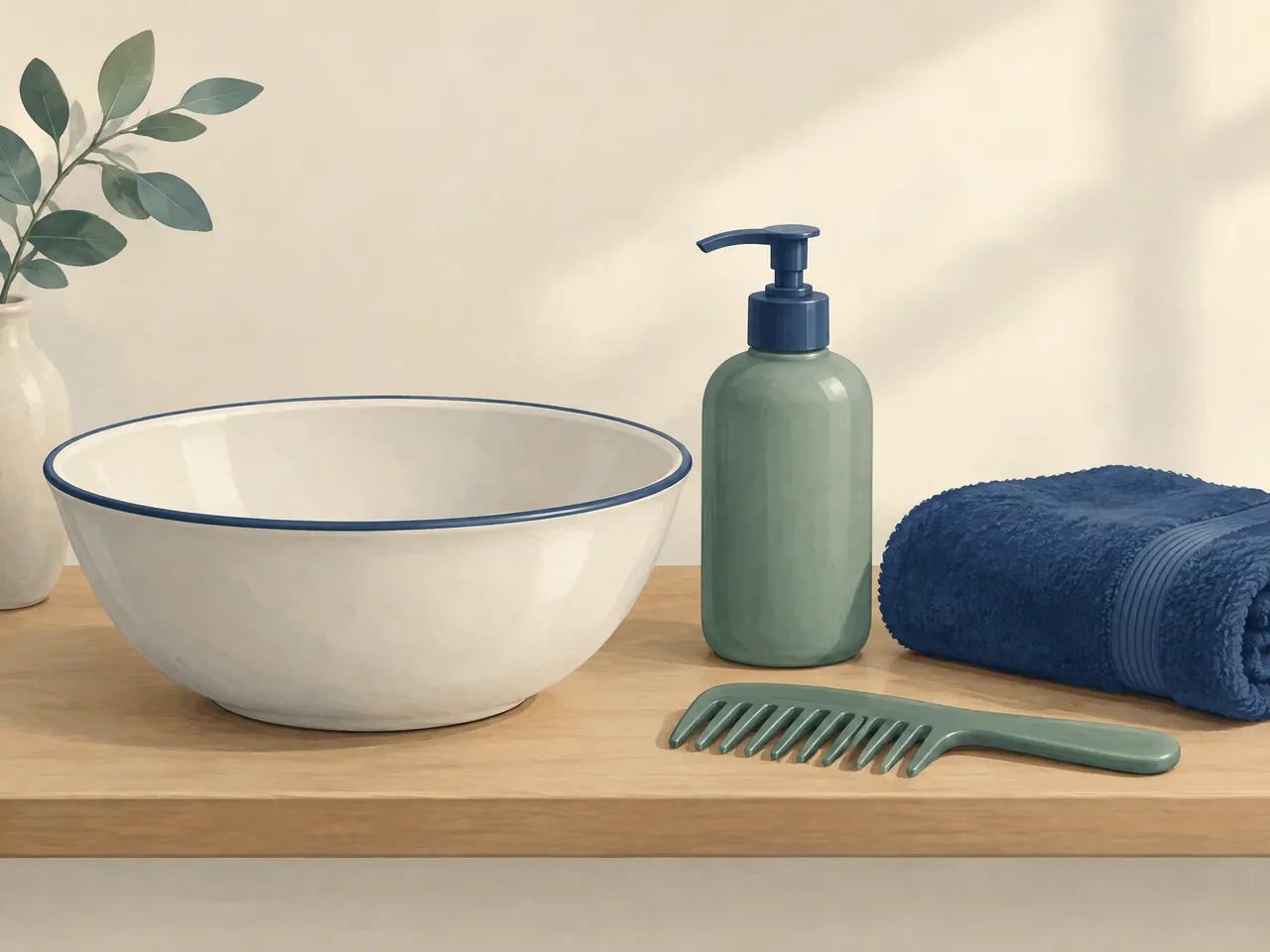
Illustrated wash basin, plain pump bottle, folded towel and wide-tooth comb on a shelf
Routine-care objects for reviewing product placement, rinsing and drying; not evidence of a product's results.Generated illustrative image

Describe a snag separately from the finished outline

A useful handling note names a place: the last few centimetres, a section behind an ear or the nape. It also names when resistance appeared. This is more informative than 'my waves are difficult'. AAD's combing guidance differs for thick curly and straight hair; an illustration of several textures is not a universal instruction to comb every wave wet or dry. [1]

Record the detangling result before judging the hairstyle. If a section became easier to comb but you disliked the outline after brushing it dry, you have two observations, not proof that conditioning failed. Discuss the snag and the finishing method separately. Do not repeatedly pull through that section to produce a better comparison.
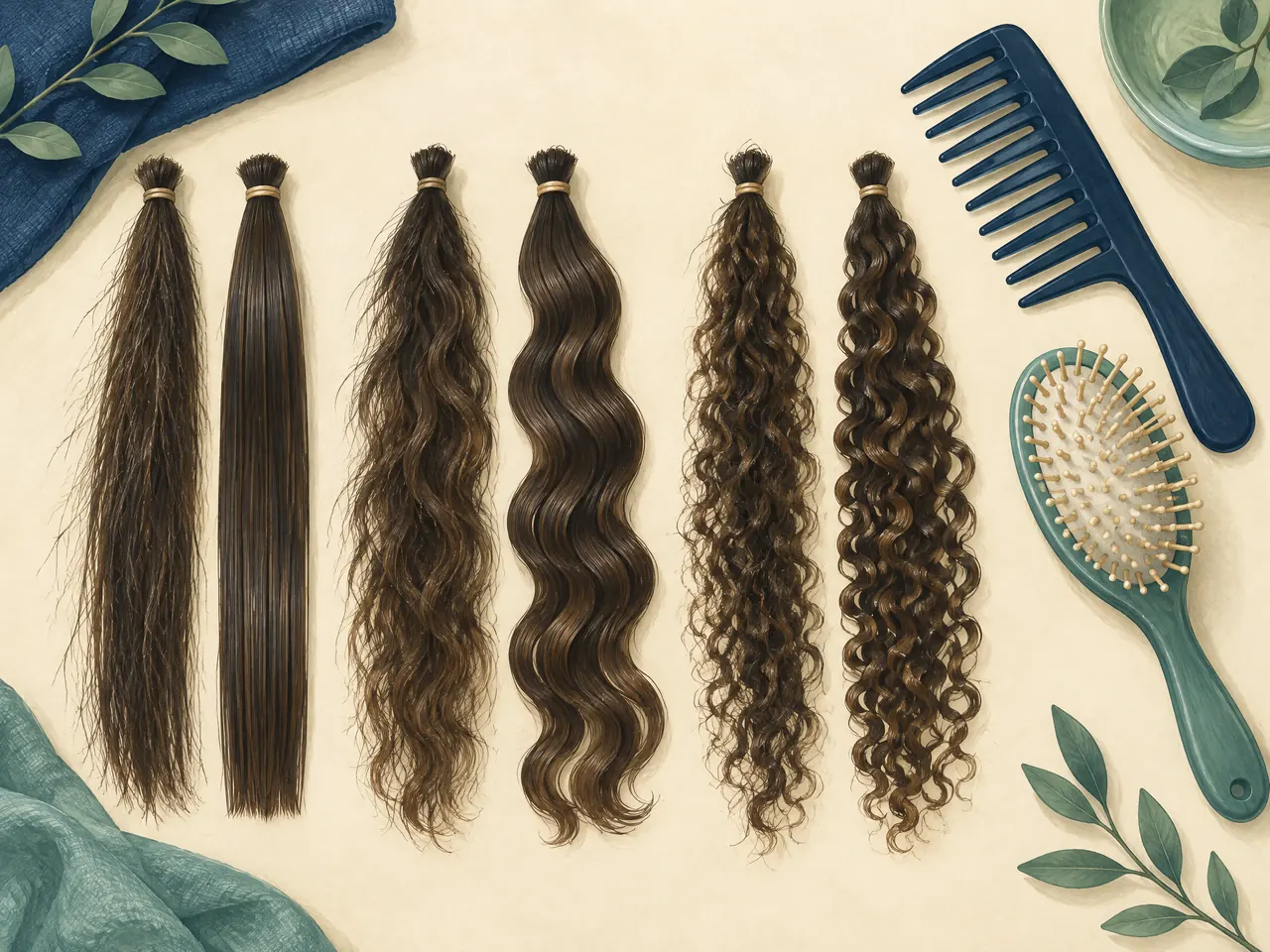
Separate straight, wavy and curly practice hair tresses beside a wide-tooth comb and soft brush
Separate practice textures illustrate why handling advice needs context; they do not demonstrate a before-and-after result.Generated illustrative image

Include the drying method in your comparison

Write down whether your comparison used air-drying, a dryer attachment or brushing under tension. 'Blow-dried' alone leaves out how you arranged the hair. The pictured diffuser, nozzle and brush are different tools, not evidence that one guarantees wave retention. Compare the ordinary finish you want to wear, rather than a straightened reference that answers a different question.

If you change the attachment and the product on the same wash, note that you cannot readily separate their contributions. AAD advises limiting heat and using low or medium settings with heat protection. Check the packaging: a leave-in conditioner is not necessarily a heat protectant. A pleasant finish does not justify increasing heat to chase additional shine. [1] [2]
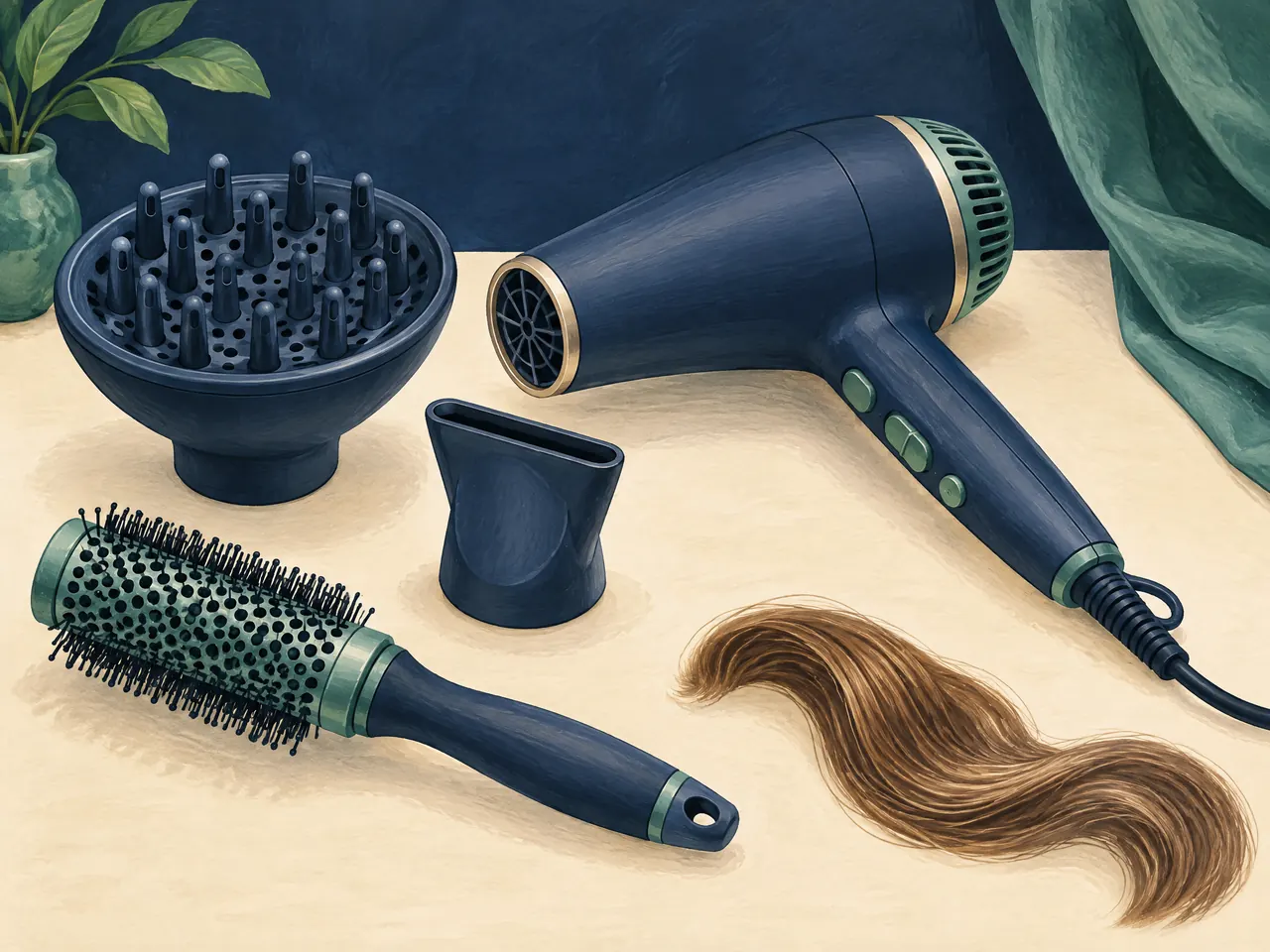
Unplugged plain hair dryer, diffuser and nozzle beside a round brush and loose practice hair tress
Drying tools to identify in a routine comparison; no attachment is presented as guaranteeing preserved waves.Generated illustrative image

Make a wave-retention request specific

If you discuss a salon option, bring two separate requests: the handling problem you want to reduce and the appearance you want to retain. For example, you may want less catching at the ends while keeping their length and the bends beside your face. Different-length practice tresses help explain retained length; they cannot show how your own waves would respond.

Ask whether a reference photograph shows a brushed finish and what the proposed service is expected to look like after washing with ordinary home drying. Also ask whether cutting is part of the proposal. Keeping length, keeping bends and gaining easier handling are separate preferences; a service name or polished photograph does not establish all three.
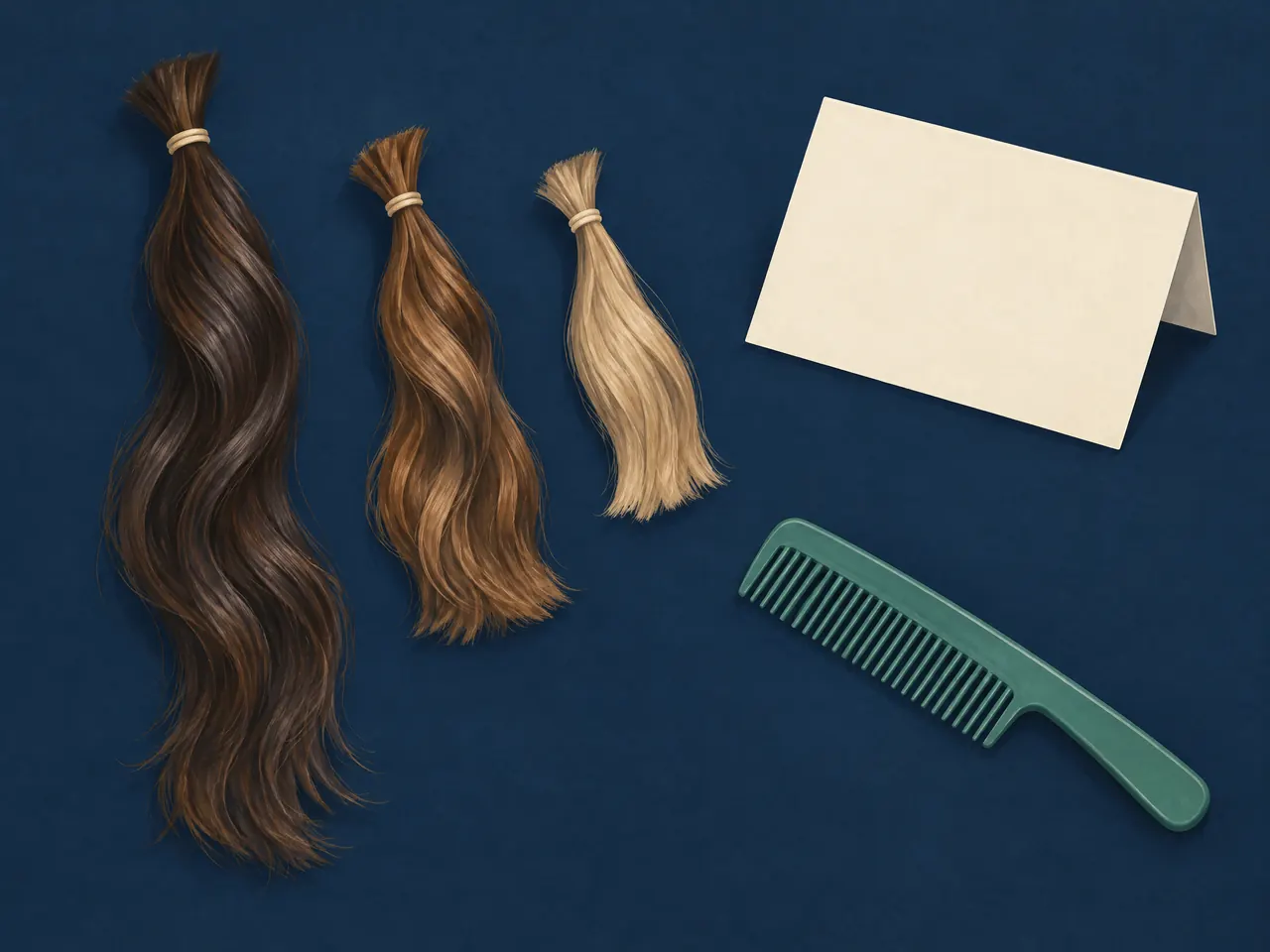
Three separate practice hair tresses of different lengths beside a blank consultation card and comb
Practice lengths for explaining what should remain unchanged; not a prediction of a customer's service result.Generated illustrative image

Clinic enquiries

Contact and appointment arrangements

Clinics
Prince Edward and Kwun Tong
Opening hours
11:00–21:00
WhatsApp and telephone
+852 6940 5663

Appointments, practitioner availability and service arrangements are confirmed via WhatsApp.

Please mention any consultation language needs in your WhatsApp enquiry so that arrangements can be confirmed.

Enquire via WhatsApp
Food, gifts and floral lifeWhatsApp enquiry