Pack for the wash you can actually complete
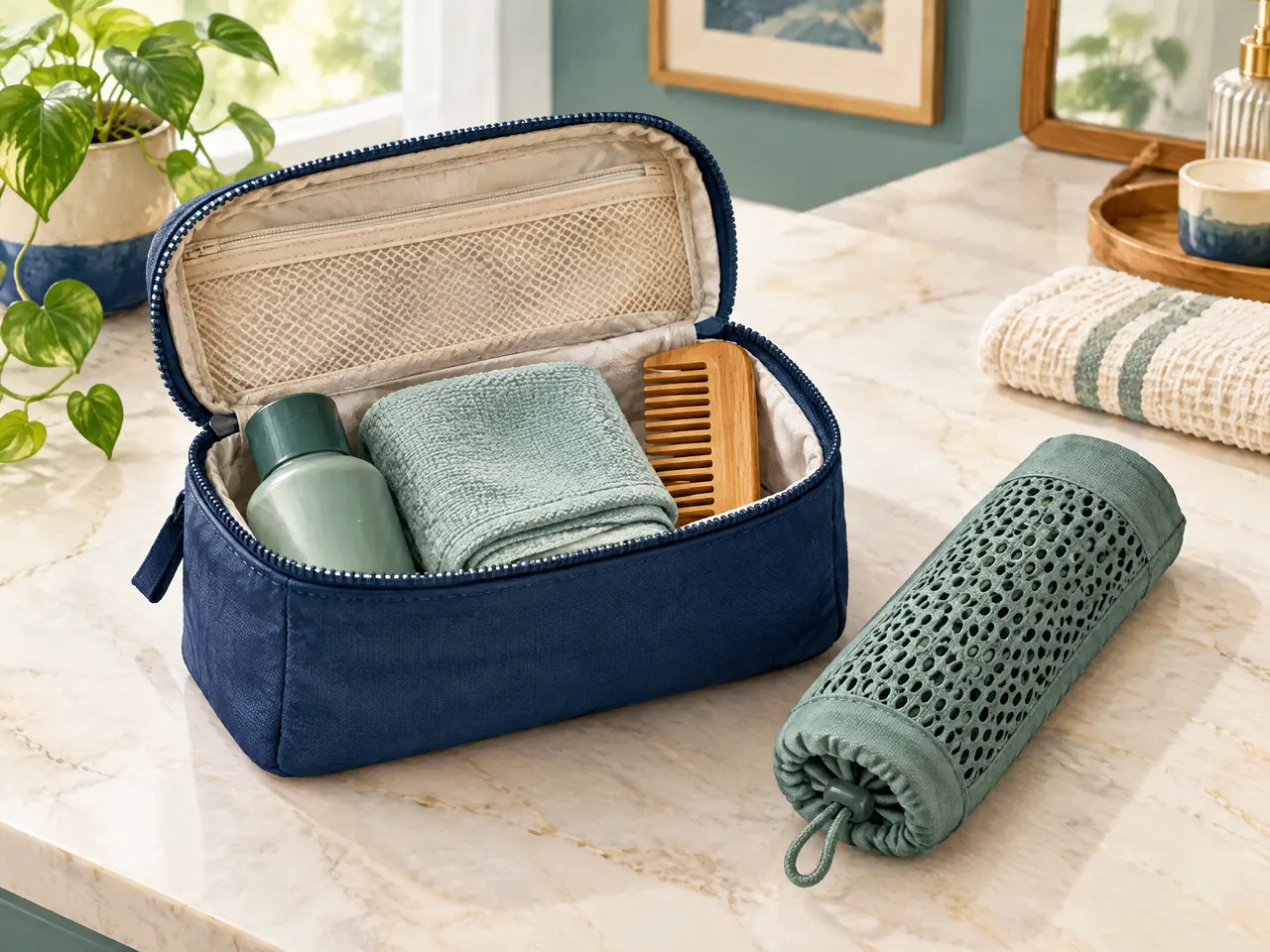
If you sometimes wash at the gym, check what the changing area provides before relying on it. A usable kit might contain your usual shampoo in a securely capped container, the conditioner you need, a clean towel and a comb. Keep the product directions available, especially if you transfer a product into a smaller bottle. A familiar bottle is more useful than an unfamiliar intensive cleanser chosen simply because you exercised.
Plan the return journey too. Keep damp cloths separate from dry items, then unpack them for washing and drying at home according to their care instructions. If there is no suitable washing space, decide where the next shampoo-and-water wash will happen. Dry shampoo may change the appearance of oily roots, but it does not make a packed wash kit unnecessary. [2]
Give the lengths their own detangling step
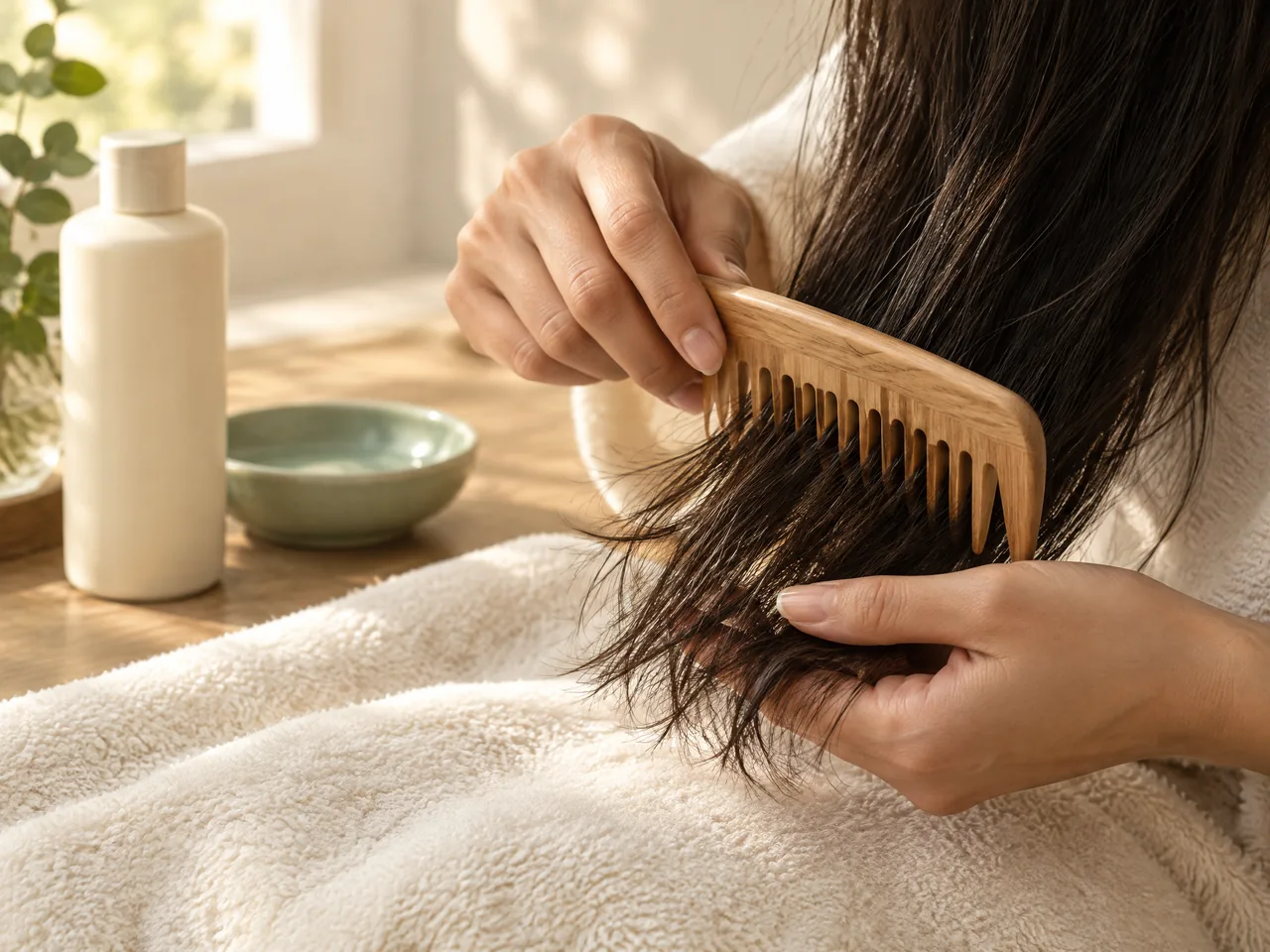
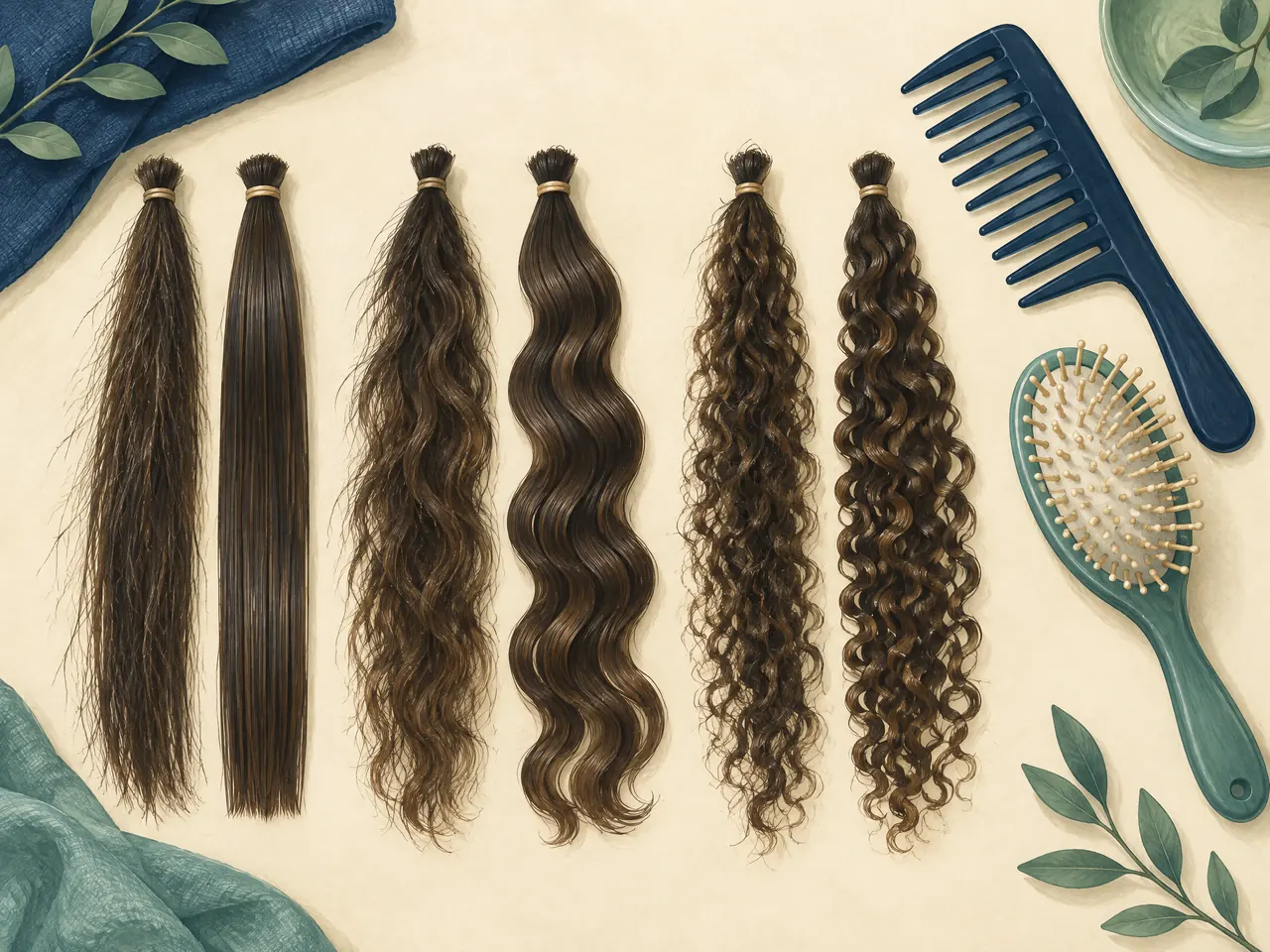
Cleaning oily roots need not mean hurrying a brush through tangled ends. The AAD recommends a wide-tooth comb for detangling wet hair and working from the ends upwards. For thick, curly hair, its guidance places combing in the shower before rinsing out conditioner; for straight hair, it advises letting the hair dry a little first. [1] These are handling choices, separate from deciding when the scalp needs shampoo.
Build that step into your exercise-day allowance. If the ends catch, work through a small section gently rather than pulling the whole length from the roots. Do not judge successful scalp cleansing by whether your natural waves have become straight. The practical aim is to finish the wash with manageable lengths, without adding an unnecessary second shampoo to solve a tangling problem.
Allow time for drying, not just shampooing
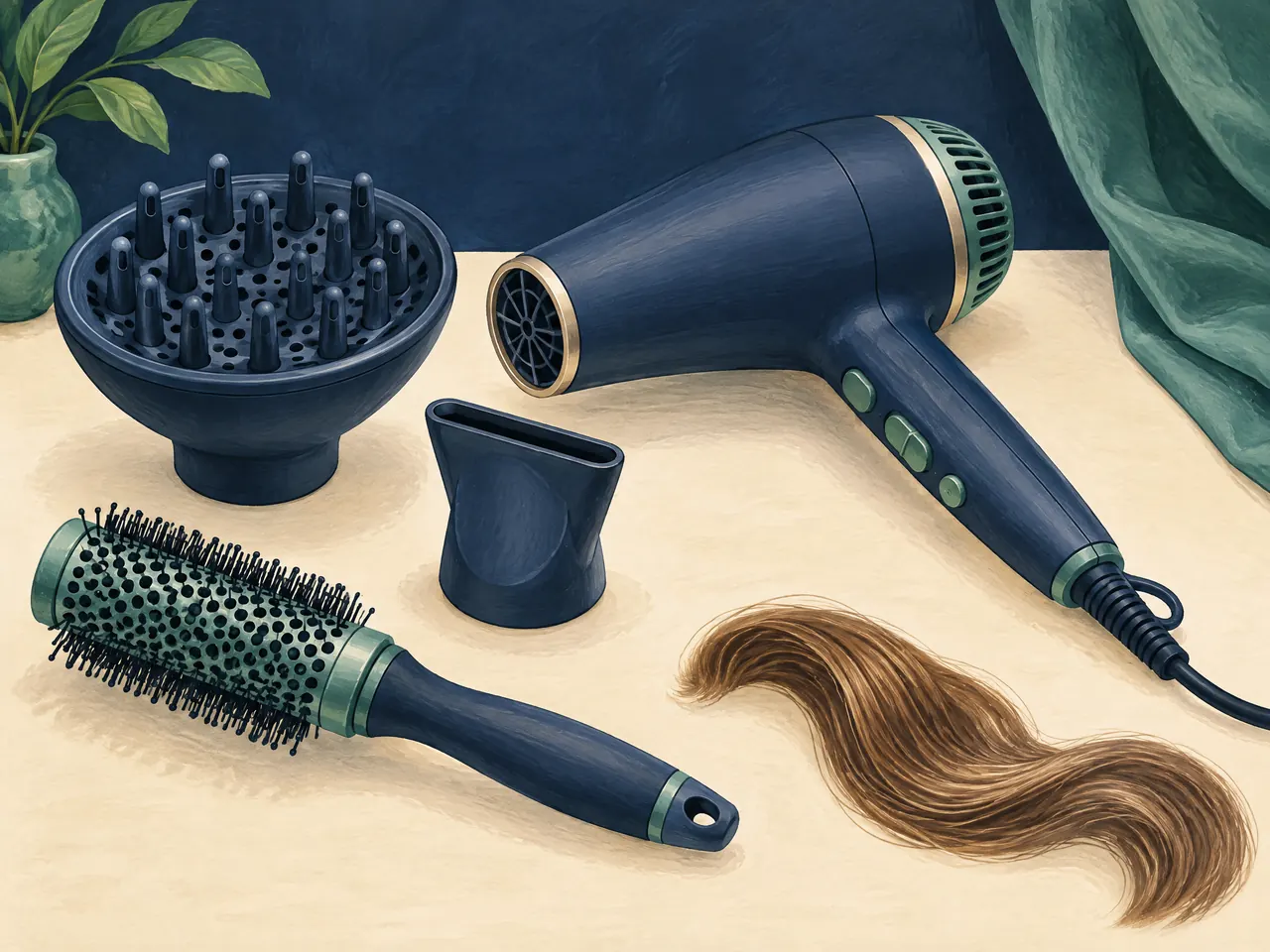
Before an early meeting, include rinsing, detangling and drying in the available time rather than reserving the entire gap for washing. The AAD advises gently absorbing moisture with a towel or T-shirt and using low or medium heat when heat is needed. [1] If your usual finish takes longer than the gap allows, consider a simpler finish rather than compensating with rough rubbing or maximum heat.
A dryer, nozzle and diffuser are styling tools, not evidence of a cleaner scalp. At an optional salon appointment, ask about the finishing arrangement and describe the hair texture you normally retain. Do not assume every scalp service includes the same drying approach. [3]
Record discomfort without turning it into a test
If discomfort appears, distinguish the time you first noticed it from the time you last washed. A useful note might say that one area began burning after a new dry shampoo, while the rest of the roots felt unchanged. Record the product name and the affected area rather than labelling the problem as excess oil or dirt. Do not deliberately use the product again to reproduce the reaction: the AAD advises stopping dry shampoo when it causes itching, burning or other irritation. [2]
Keep any observations for a healthcare discussion, not as a reason to try a stronger cleanse. A very itchy, red or swollen scalp, or symptoms that persist or become painful, warrants medical advice. [4] A short factual record can describe what happened; it cannot decide the cause or prove that exercise was responsible.