
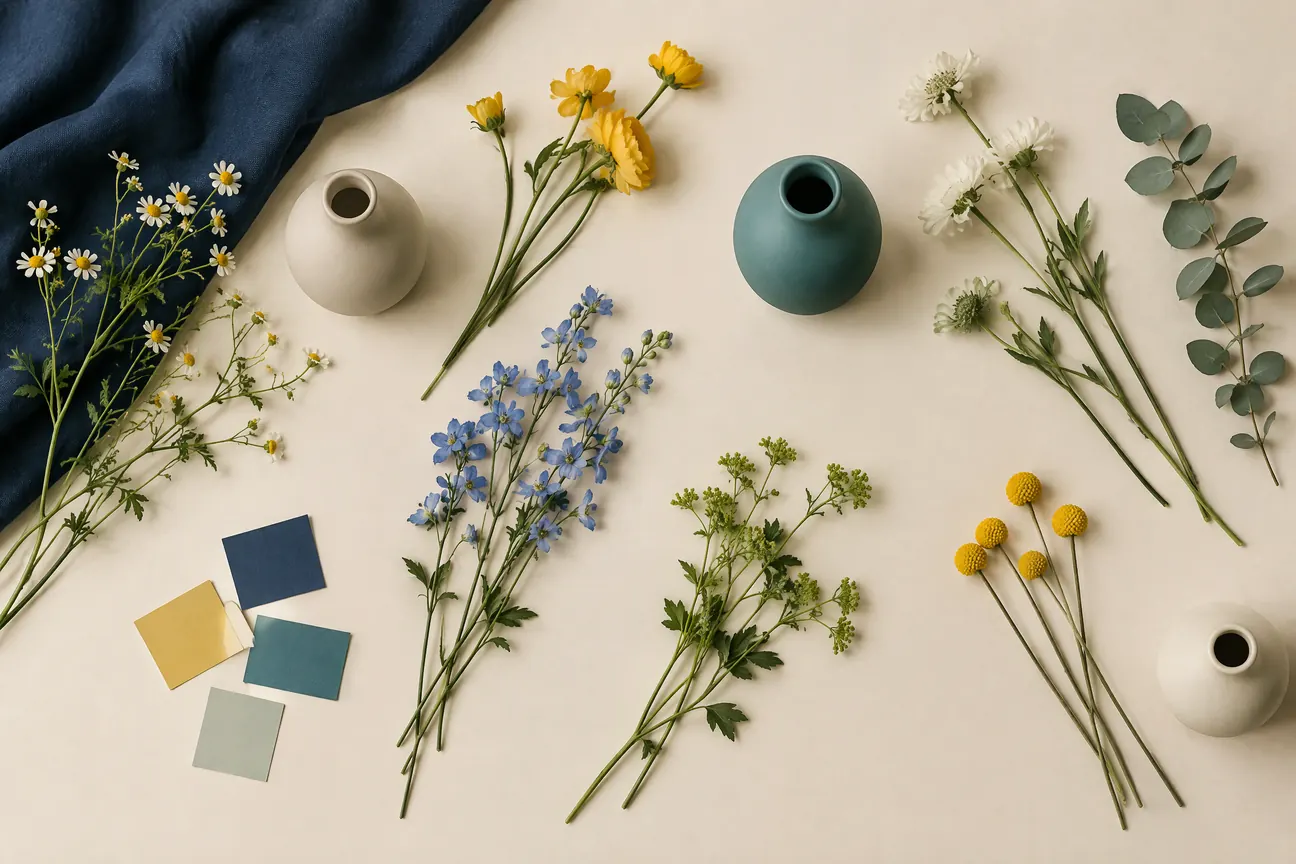
What should your first bouquet class help you repeat?
Before looking at flower colours, decide what you want to do without help after the lesson. Perhaps you want to arrange a modest bunch for your flat, make a hand-tied birthday gift, or find out whether you enjoy the detailed work enough to study further. These are different starting points. A beautiful finished piece can accompany any of them, but it does not tell you which parts you will have practised yourself. Choose one main goal so you can judge the session by something more useful than its display photograph.
For a home-arranging goal, look for time to prepare stems and adjust their placement. For a gift-making goal, ask whether you will assemble, secure and wrap the piece rather than decorate something already built. If you are considering longer study, prioritise a tutor's explanation of your choices and an opportunity to revise them. These are suggested learning priorities, not a universal course syllabus. A session designed around a social outing may be enjoyable without offering the repetition you want for independent practice.
Make your goal small enough to test. Instead of expecting to master floral design, aim to explain why you chose the main flowers, identify the preparation steps you used, and repeat one construction method with guidance. You can then decide whether to practise at home or take another lesson. Agree on that goal before paying, particularly when booking with a friend whose priority is an attractive take-home gift. Neither participant needs to choose a career-oriented course simply because they are new to flowers.
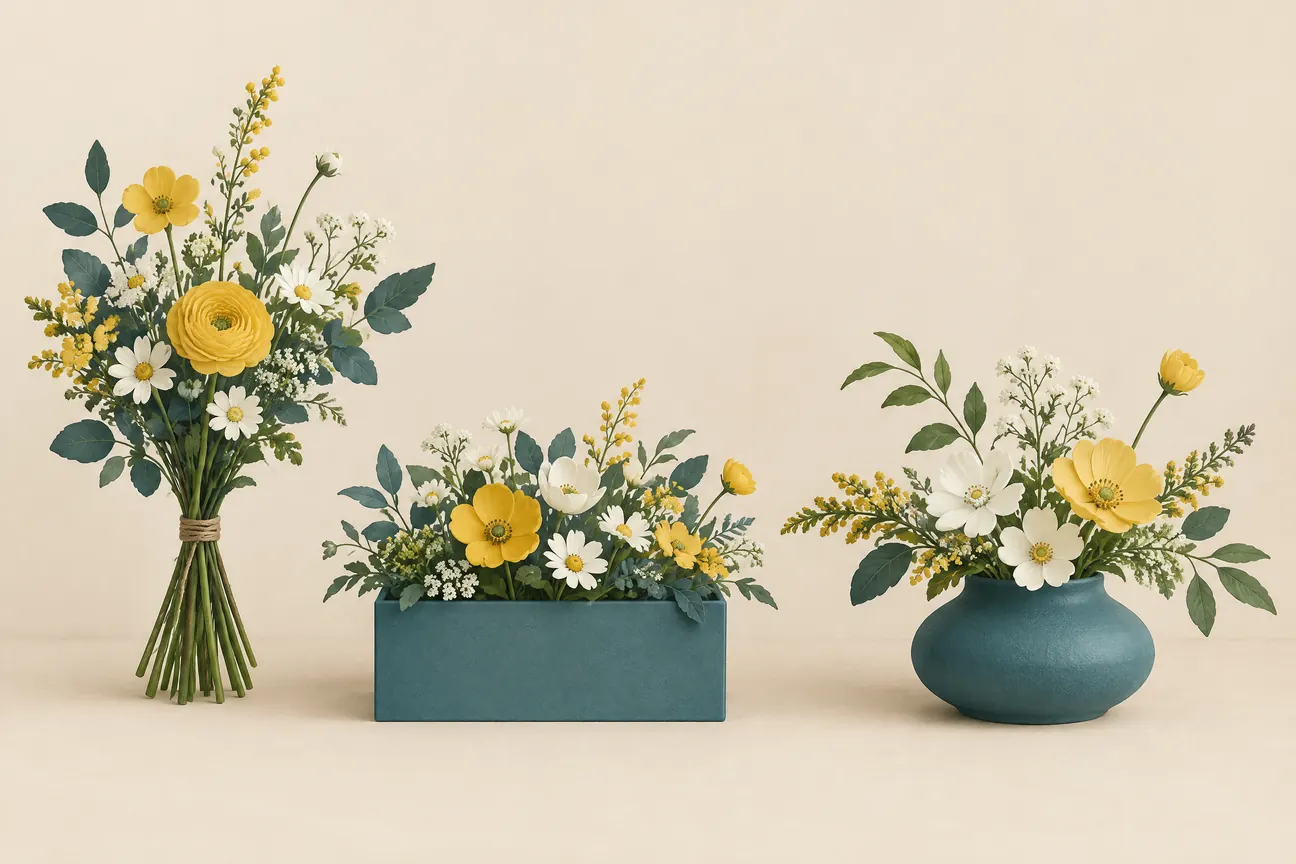
A vase arrangement teaches placement before holding
A container-based first project gives you a way to explore the relationship between stems and the space they occupy. You can consider where the piece will be seen, how its height relates to the vase, and whether a flower is concealed by another. This is a useful option if your real aim is to arrange flowers on a narrow shelf or dining table. It is not automatically an easier lesson: the container opening and any supporting materials still affect how freely you can change the design.
When considering a beginner floral arrangement class, ask which finished form the particular session uses and which stages belong to the learner. The linked merchant page discusses both bouquet and vase possibilities, so the title alone cannot settle that choice. Request an outline that distinguishes tutor demonstration from your own stem preparation, placement and revision. If your priority is a vase piece, say so explicitly rather than arriving with an expectation that every introductory session teaches both forms. [5]
Preparation deserves a place in the lesson even when the arrangement is small. The RHS describes conditioning as preparing cut flowers for display, including removing foliage below the waterline, recutting stems without crushing them and placing prepared material in clean water. It also notes that some stems have special requirements. [1] Ask the tutor to explain the routine for the actual flowers supplied, and record their names. Learning that routine is more transferable than memorising the appearance of a single finished arrangement.
A hand-tied project tests a different set of movements
With a hand-tied project, the developing bunch is held together before it reaches its display vase. That gives the lesson a different emphasis from placing individual stems in a container. Ask how the tutor will help you manage the bunch as material is added, inspect its outline and secure it. If the session teaches a particular stem-placement method, request a slow demonstration followed by time to try it yourself. Watching the tutor finish your bouquet may solve the immediate project without showing you how to rebuild it later.
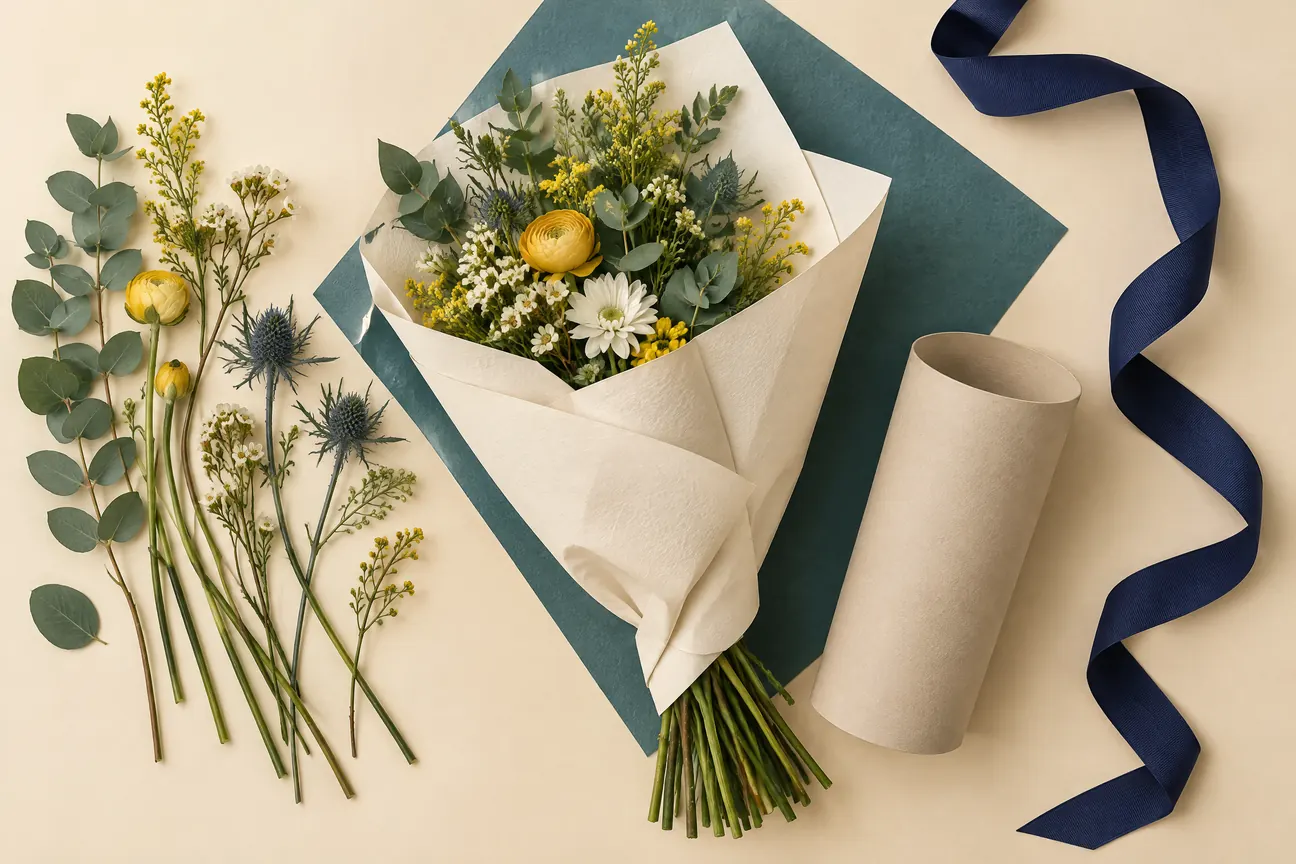
A bouquet making workshop is a relevant enquiry route when your goal is a gift you can assemble and finish. The linked page identifies shaping and wrapping as enquiry topics; ask for a current written project outline showing whether those stages are included in the session you choose. [4] Find out whether the flowers arrive fully prepared and whether you can adjust the piece before tying. A ready-to-wrap bunch would serve a different learning goal from constructing the bouquet yourself.
Keep the first attempt manageable rather than asking for the largest possible bunch. If holding the developing piece becomes uncomfortable, tell the tutor early and discuss a smaller project, pauses or a supported alternative. This is a participation request, not a test of whether you are creative enough. Before adding decorative paper, inspect the flowers from the viewpoints relevant to your intended gift. Ask what the tutor would change in the arrangement itself, so the lesson does not end with packaging concealing a choice you wanted to understand.
Choose a wider floristry route for variety and critique
A wider learning route makes sense when you want to compare methods rather than repeat one gift project. You might want to explore hand-tied work alongside container arrangements, choose materials for different briefs, or understand why a design works at one scale but not another. Look for a sequence in which later tasks revisit earlier skills and include individual feedback. More project titles do not necessarily mean more learning; a crowded schedule can leave little opportunity to correct your own work or discuss material choices.
When exploring floristry classes, ask the provider to map the proposed sessions to your goal. Its general enquiry page describes different learning formats, but the useful comparison is the actual progression offered to you. [3] For example, request details of how an initial preparation exercise leads to construction practice and then to a new design brief. Compare that progression with taking separate recreational sessions. Either can suit a hobbyist, provided the teaching time, materials and expectations match the commitment you want to make.
Do not treat general study and an assessed qualification as interchangeable. As a concrete UK example, City & Guilds lists design preparation, customer service, product care, design principles, health and safety, and work experience among its Level 2 floristry topics. [2] That breadth shows why career-oriented training involves more than making one bouquet. It does not establish that a Hong Kong workshop offers that qualification. If credentials matter, verify the exact award, awarding organisation and approved provider directly; attendance, an attractive project and a course name are not qualification or employment guarantees.
Keep materials and practice costs manageable
Compare the whole learning cost rather than the flower quantity alone. Separate tuition from stems, the container or support materials, wrapping and any tools you keep. Ask whether each learner receives material for an individual project or whether some stages use a shared demonstration piece. For repeated study, find out which items must be purchased again for each lesson. Do not assign a fixed budget based on a general web description; request a current quote for the chosen format, then decide how much home practice you can reasonably sustain.
Avoid buying a large tool kit before the first lesson. Ask which tools are supplied for use and which, if any, are needed afterwards for the method taught. Your initial practice setup can be planned around that answer and the display vessel you already have. Keep flower preparation separate from your notebook and phone, and request instruction before using unfamiliar cutting or construction tools. If a class requires prolonged standing or work at a shared bench, discuss seating and access before committing rather than assuming every teaching space has the same layout.
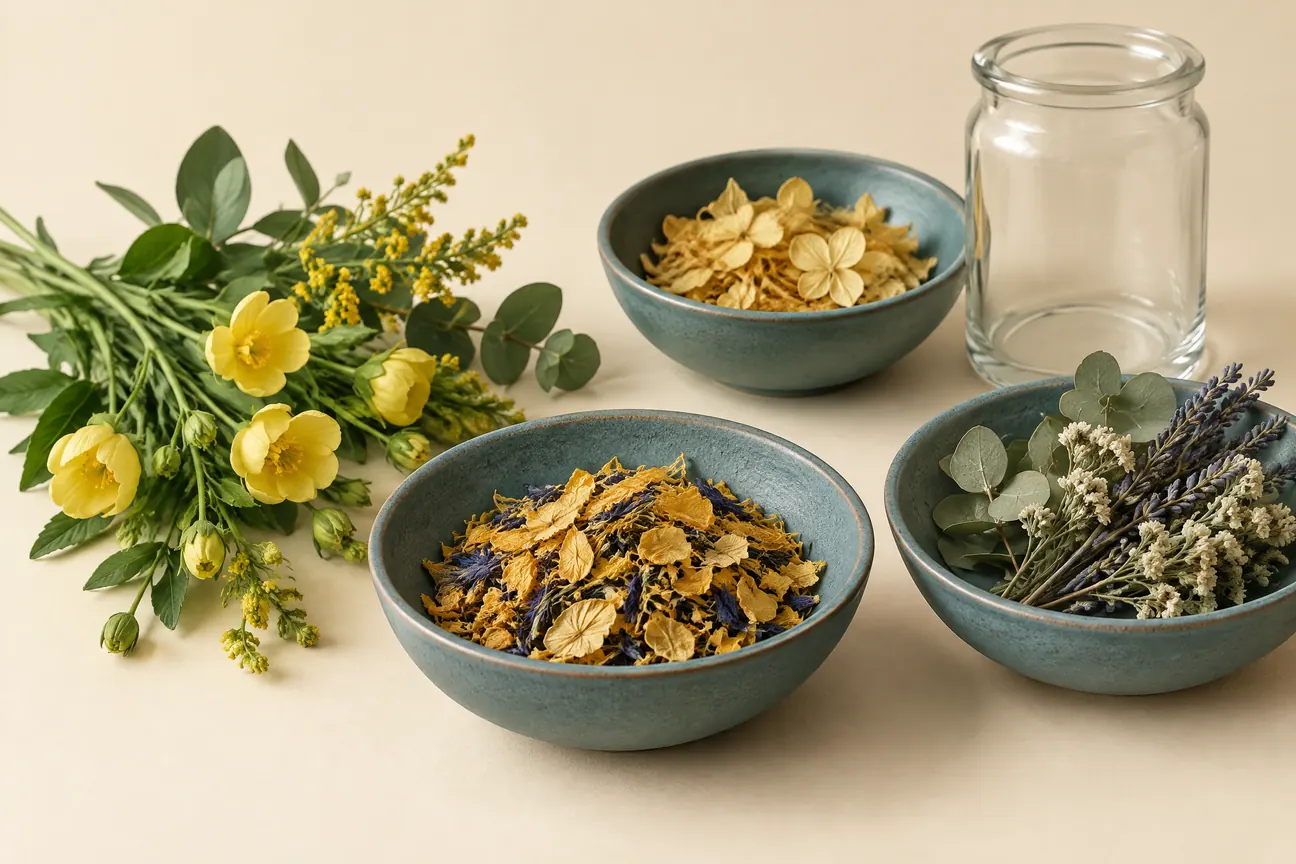
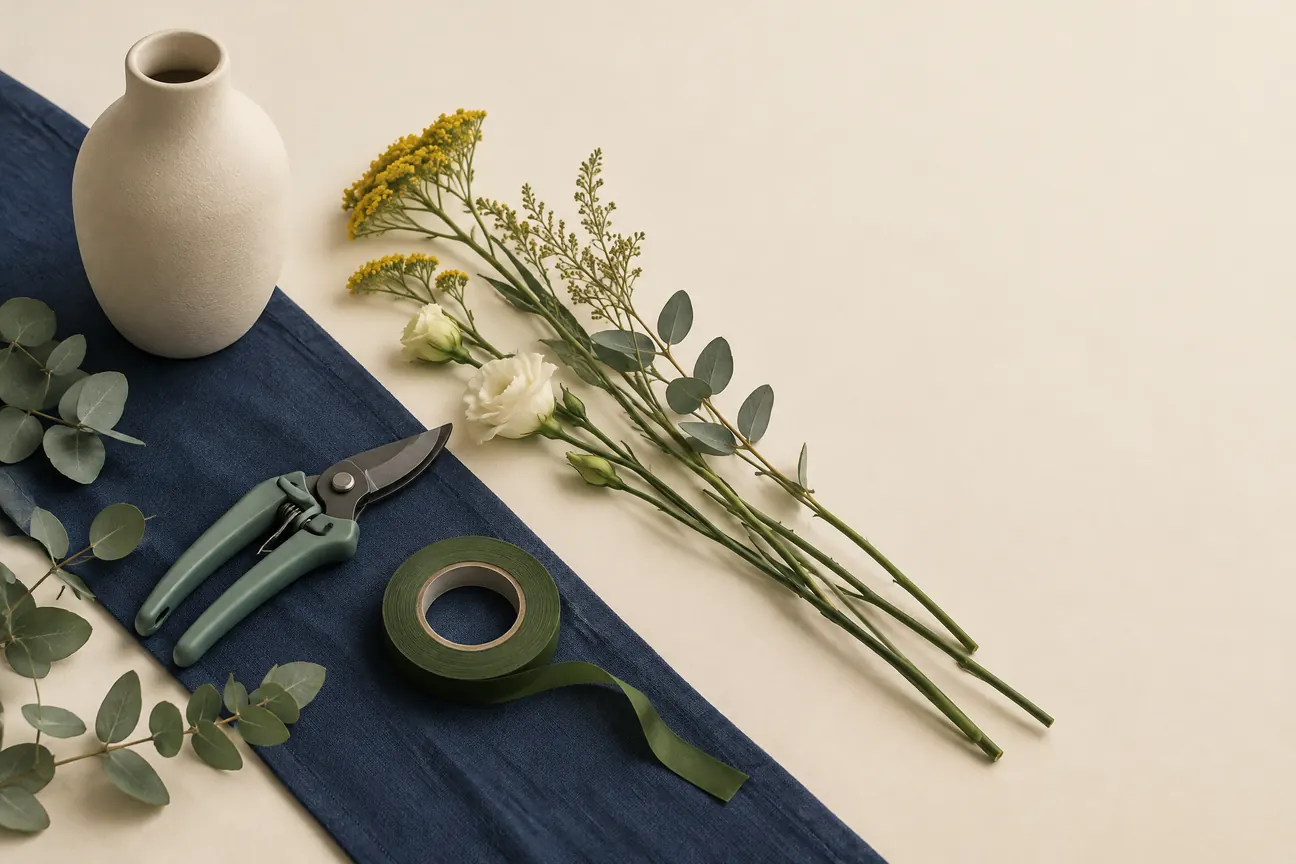
A repeatable materials choice is often more useful than copying an elaborate reference image. Ask why each supplied flower or foliage type was chosen and what characteristics a substitute would need. For your next attempt, keep the project size and construction method similar while changing one element, such as the palette. Fresh, dried and preserved materials should not be treated as interchangeable exercises. If you want to learn fresh-flower preparation, confirm that fresh material is part of the actual project instead of assuming it from the promotional image.
Leave time for wrapping and the journey home
If you want to make gifts, finishing is part of the learning brief, not simply the last decorative flourish. Ask whether you will practise the securing and wrapping stages and whether the tutor can explain how the recipient should unpack the piece. Decide whether your goal is to learn a presentation technique or just receive a packaged arrangement. Both are legitimate, but they use the final part of the session differently. Leave room in your questions for the transition from the teaching table to the intended vase.
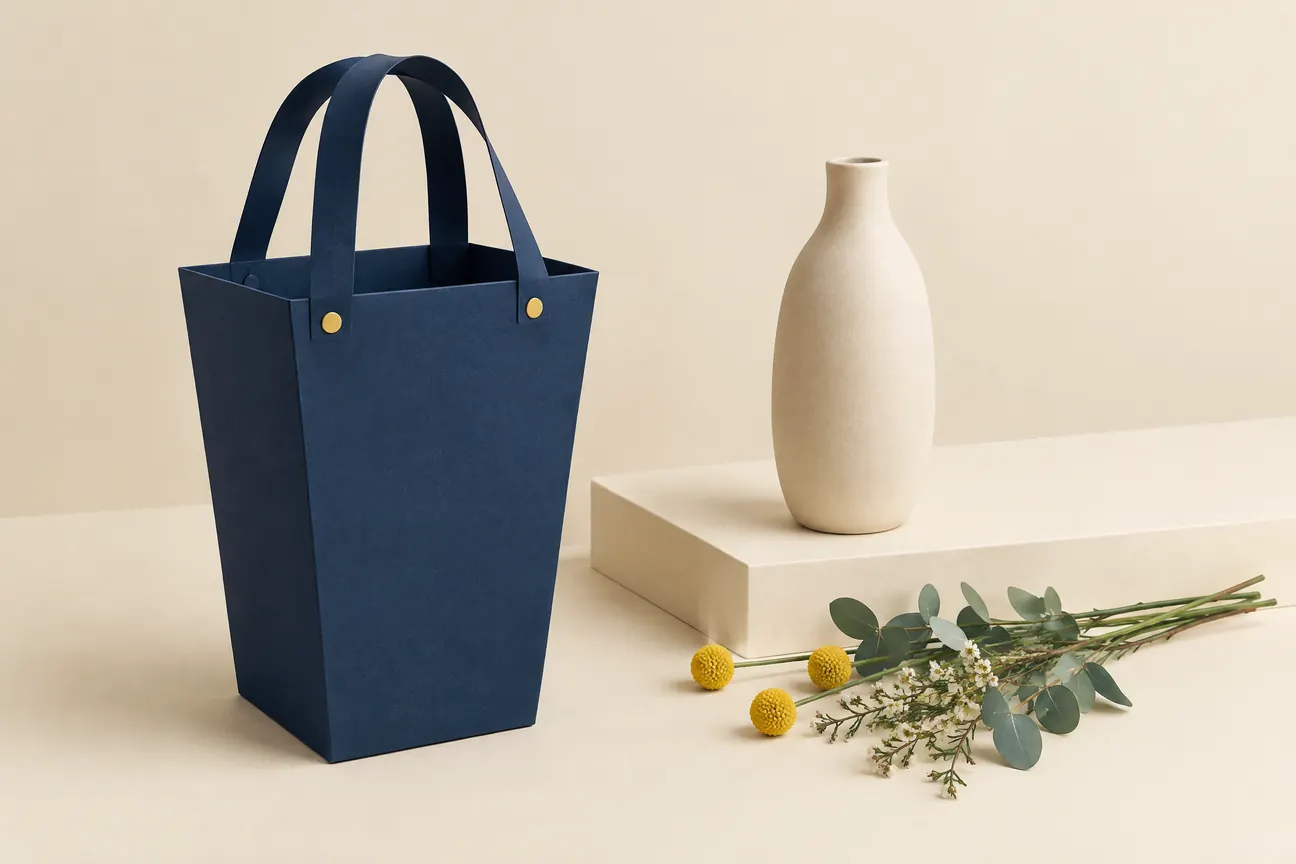
Plan your Hong Kong journey around the confirmed finished form. A vase piece and a wrapped bouquet have different carrying needs, so ask about approximate dimensions, weight, whether a carrier is supplied and how the particular project should travel. Do this before bringing your own bag or box. If the lesson sits between work and a crowded evening activity, consider going home first rather than carrying the piece through several stops. A transport illustration or attractive class photograph cannot establish that the arrangement will fit your bag or arrive undamaged.
Have a clean vase and a suitable display space ready at home. The RHS advises keeping cut flowers in a cooler spot away from heat, checking water levels, and changing water and recutting stems regularly. [1] Ask how those steps apply to the flowers and fastening used in your project, especially if you are unsure what should be removed before display. Do not mistake a temporary transport arrangement for a long-term care routine. The aim is to retain useful handling knowledge, not to expect a fixed number of days from every bunch.
Use your first result to choose the next lesson
Review the piece in the setting it was intended for. On a dining table, consider whether it interrupts the view across the table; on a shelf, consider the side most often seen and the available clearance. Take a photograph for your own notes and write down one choice that worked and one you would alter. This gives you a concrete topic for later feedback. Do not judge the whole lesson by whether your arrangement resembles the demonstration exactly: the more useful question is whether you understand the choices you made.
For home practice, repeat the method before adding another demanding technique. Work at a similar scale with flowers you can obtain, following the preparation and handling instructions appropriate to them. Note where you needed help during the class and whether the same difficulty returns. If you can assemble the piece but struggle with proportion, seek design feedback. If you cannot recall the construction sequence, a focused repeat lesson may be more useful than moving immediately to a complex seasonal project with unfamiliar materials.
Choose the next step from that evidence. You may be satisfied with occasional home arranging, want another bouquet session to revise your technique, or prefer broader study with varied briefs. A first lesson can also reveal that you enjoy selecting flowers more than building elaborate pieces; that is a useful outcome, not a reason to purchase a longer programme. If your interest turns towards commercial work, investigate assessed training separately. Your first arrangement is a starting point for deciding what to learn next, not proof of professional readiness.

| Decision point | Introductory vase project | Focused hand-tied project | Broader floristry study |
|---|---|---|---|
| Best starting goal | Explore placement for a home display. | Assemble and finish a bunch for gifting. | Compare methods and develop judgement across briefs. |
| Practice to request | Prepare stems, place them and revise the arrangement. | Build the bunch, inspect its shape, secure and wrap it. | Repeat earlier skills in different projects with critique. |
| Useful tutor feedback | How the flowers relate to the container and viewing position. | How to manage construction and revise before finishing. | Why material and method choices suit different design briefs. |
| Material questions | Which vase and supporting materials are included? | Are stems pre-prepared, and is wrapping taught? | What must be bought again, and which tools are retained? |
| Good follow-up | Repeat a similar display in your own vase. | Repeat the method at a manageable size. | Choose the next brief based on the feedback received. |
| Credential boundary | An introductory project is not proof of a qualification. | A finished gift is not proof of professional readiness. | Verify any claimed assessed award and provider approval separately. |
On a small screen, scroll the table sideways to compare.
Take it into everyday life
A practical checklist
- Write one repeatable learning goal: home vase placement, hand-tied gift construction or testing an interest in broader study.
- Get the actual project outline and identify the stages you will perform rather than only watch.
- Ask whether there is time for individual feedback and revision before the piece is finished.
- Confirm the material type, project size and whether each learner has an individual set of stems.
- Separate tuition, consumable materials, take-home items and any extra tool purchases in the current quote.
- Check the teaching language, seating or access needs and requirements for unfamiliar tools.
- Agree on wrapping, carrier provision and care instructions for the journey home and final display.
- If a qualification is advertised, verify the exact award and provider approval with the awarding organisation.
Questions & answers
Should I choose a bouquet or a vase arrangement for my first lesson?
Choose the form you want to repeat afterwards. A vase project lets you explore placement for a home display with a container supporting the stems. A hand-tied project is more directly aligned with constructing a bunch for gifting. Ask which form the actual session teaches; an introductory title may cover either possibility.
How can I tell whether a short session includes enough practice?
Ask the provider to distinguish demonstration time from your own work. Find out whether you prepare stems, build the piece, receive an individual correction and revise before finishing. A long list of topics is less informative than knowing which steps you will actually perform.
Do I need an artistic background to try bouquet making?
Do not use the absence of art training as your only deciding factor. Ask whether the session assumes prior flower-handling experience and whether the tutor explains the construction method step by step. Choose a manageable project and one learning goal rather than expecting to reproduce an elaborate reference design immediately.
What if holding a growing bouquet is uncomfortable?
Discuss the holding task before booking if it may be difficult for you. Ask about a smaller bunch, pauses, seated work or a supported container alternative, and confirm what the provider can accommodate. During the lesson, tell the tutor before struggling through the remaining steps. Do not assume a standard format suits every participant.
Should I buy floristry tools before attending?
Wait for the session's equipment list. Check what is provided for use, what you take home and which tools the taught method would require for later practice. Buying a large kit before you know the construction method can add cost without helping your first learning goal. Request instruction for unfamiliar tools.
Can my take-home bouquet count as a gift on the same day?
It can be your intended use, but confirm that the project, wrapping and travel arrangements suit it. Allow for the actual finish time, carrying dimensions and the recipient's ability to place the flowers in water as instructed. Avoid relying on a time-sensitive handover that leaves no room for an unfinished project or changed journey.
Does a floristry course certificate qualify me to work as a florist?
Check what the certificate represents. An attendance record is different from an assessed award. Verify the awarding organisation, exact qualification and provider approval, and consider the practical experience required. City & Guilds' UK Level 2 example includes several industry topics and work experience, not just a bouquet project; it does not establish recognition for a Hong Kong class. [2]
What should I practise after the first class?
Repeat the same construction method at a similar scale before changing several things at once. Follow the care routine for the actual flowers, note where you still need help and choose the next lesson around that gap. For fresh flowers, the RHS supports clean vessels, appropriate stem preparation and ongoing water care rather than a universal vase-life promise. [1]
Sources & further context
Numbered references follow the source order below. Merchant pages provide context for their own products or services; independent sources support relevant general reading, not merchant quality or medical suitability.