
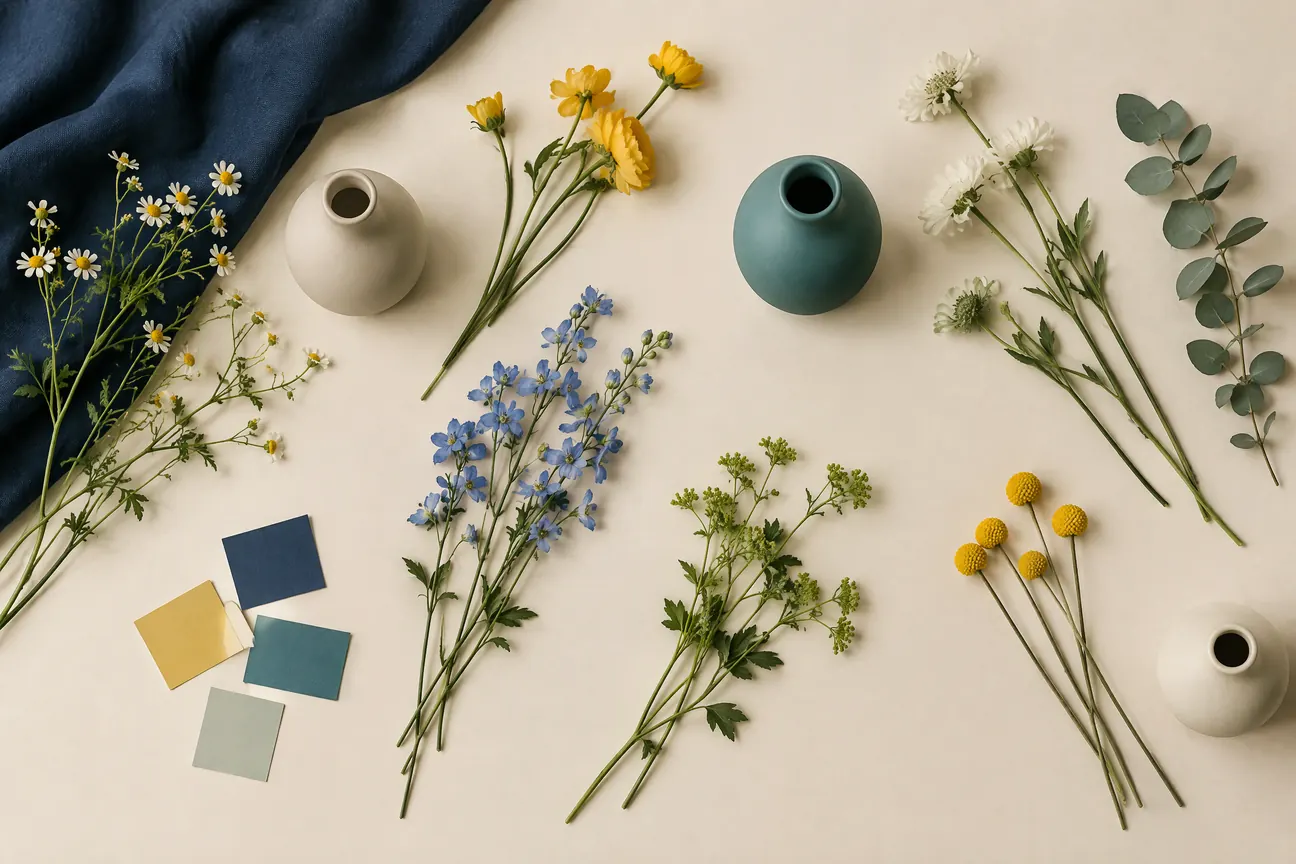
Turn bouquet preferences into a clear starting point
A request such as ‘pink flowers, not too big’ leaves several different bouquets possible. Before narrowing the flower list, think about what the recipient actually likes looking at. Do they favour a single-colour bundle, a loose mixture or a clear focal flower? A colour they repeatedly choose for clothes or home accessories may be a better clue than a list of traditional flower meanings. If a flower has a personal association, explain that briefly; otherwise, use the message card to make the occasion clear rather than expecting a particular colour to do all the communicating.
Separate appearance from logistics. A bouquet handed over after work may need to travel home before it reaches a vase. One sent to a flat can be designed around a known shelf or table. Tell the florist which situation applies and whether the recipient already has a suitable vessel. This changes what ‘small’ should mean: a modest-looking bundle can still have long stems or a wide paper collar. Describe the space it must fit, not just how impressive it should look in the hand.
Then choose one leading preference and one practical limit. For example, ‘soft pink is most important; the flowers should fit beside a desk monitor’ is easier to interpret than an equally weighted list of colours, stems, ribbons and fillers. Keep flower condition distinct from style: university-extension guidance recommends newly opening blooms, firm undamaged stems and foliage without drooping or discolouration. Those are useful receiving checks, but they do not tell you which design the recipient will prefer.[1]
For roses, explain what you like about the look
If roses are the favourite, say whether the attraction is their rounded petal texture, a particular shade or the look of an all-rose arrangement. Those are different priorities. Someone who likes a closely gathered pink design may not want the same flowers spread through a large mixed bouquet. Someone who remembers a particular rose from a family garden may care more about that flower than the wrapping. You do not need a cultivar name to be helpful: describe the visible feature and ask which available roses could express it.
When considering a rose bouquet, make the enquiry specific enough to compare proposals. You might request blush rather than bright pink, a rounded floral outline and only restrained greenery, while leaving the exact rose selection open. Ask whether the proposed flowers will be the dominant feature or one part of a mixture. The linked page is a commercial enquiry starting point; the flowers and order details still need confirmation for your request.[3]
A fixed stem count is useful only if the number itself matters to you. Otherwise, a floral width or intended vase gives a more practical reference for scale. If you want flowers open enough to show their petal detail at the handover, discuss that timing separately. NC State recommends flowers just beginning to open when selecting cut stems; a photograph of fully expanded blooms is therefore not a reliable model for how every bouquet should look on arrival.[1]
For sunflowers, decide how prominent the flower heads should be
For a sunflower-led design, decide whether you want the individual flower faces to stand out or the whole bouquet to read as a blended arrangement. Look at your reference image without the wrapping: is it the broad yellow area, the darker centres or the contrast with other flowers that appeals? This small exercise prevents you from ordering by name alone. If yellow is the important part and sunflowers are only a preference, say so. If recognisable sunflower faces are essential, that belongs among the details that cannot change without asking you.
Use a sunflower bouquet enquiry to discuss the size of the available flower heads as well as the finished bouquet. Ask whether the proposed arrangement puts those heads together or spaces them among smaller flowers, and how much supporting foliage is intended. A request for prominent yellow flowers with neutral wrapping gives a different direction from a mixed, high-contrast design. Check the actual options for the date rather than assuming that every reference size or accompanying flower can be supplied.[4]
Judge the carrying and display proposal alongside the visual one. A design that looks balanced from the front may occupy more space than you expect when viewed from the side. Ask for the floral width, the packed width and the intended resting position. For a recipient who will carry a laptop bag and flowers home, reducing the paper spread may matter more than adding another bloom. For a home display, use the available vase and surface as the limit, not a desire to maximise the bouquet in every direction.
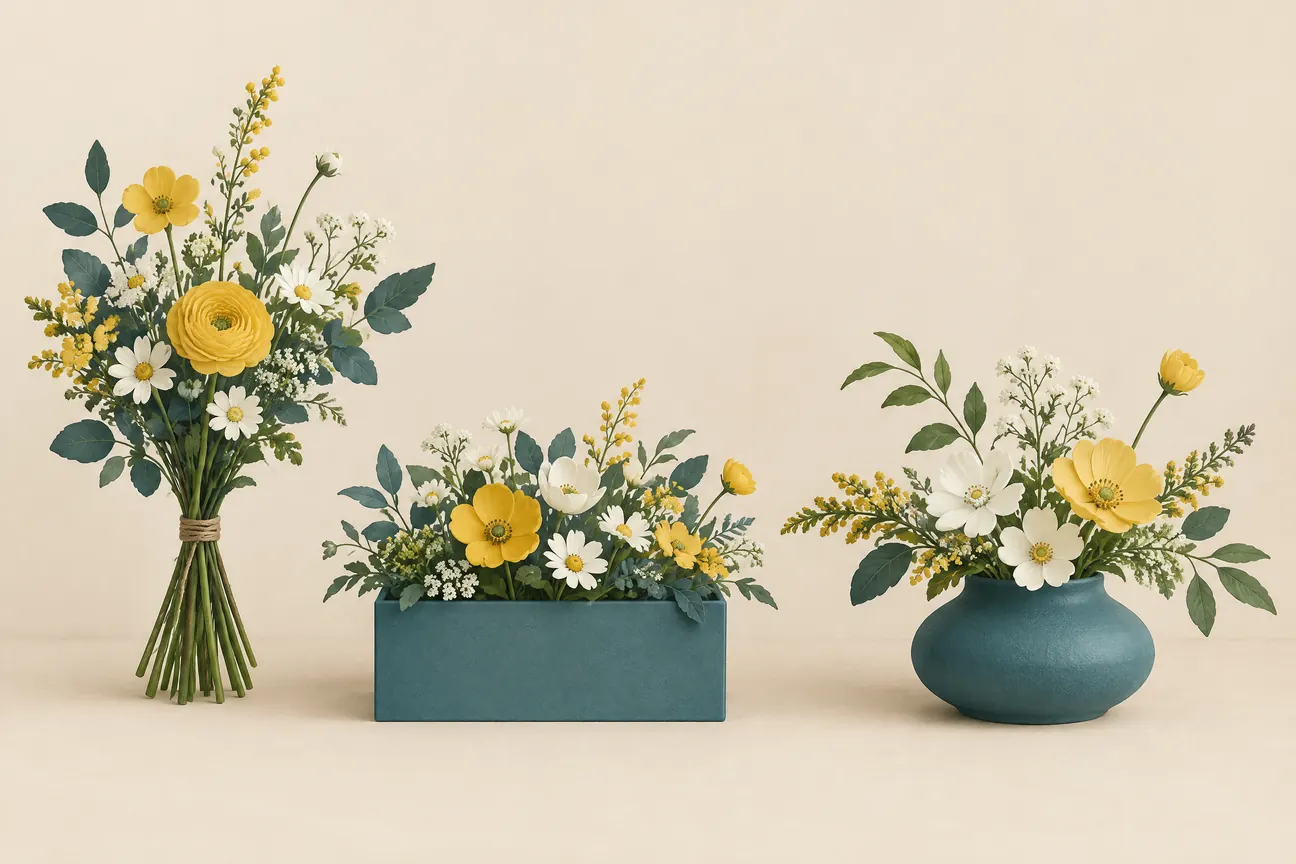
For tulips, describe the outline rather than a perfect photograph
A tulip reference may appeal because it looks uncluttered, not simply because it contains tulips. Notice whether you like smooth cup-like flowers, a more textured petal appearance or an open outline with visible stems. Point to the feature you mean instead of relying on labels such as ‘elegant’ or ‘premium’. Two people can use those words and imagine completely different designs. If you are unsure of the flower type in a picture, ask the florist to identify it before treating the picture as your order description.
When exploring a tulip bouquet, explain whether you want a restrained single-colour effect or a visibly mixed palette. For instance, ‘pale peach and cream, tulips visually dominant, little filler’ communicates more than ‘exactly like this photo’. Ask which flower forms and shades are available and what the proposed outline will be. The page provides a place to discuss preferences, not proof that a particular pictured tulip or combination is available for your order.[5]
Keep the reference useful by annotating what may differ. You might like its narrow paper sleeve but dislike the ribbon, or want its colour balance without copying its size. If tulips themselves are the reason for the gift, a smaller available tulip design may suit you better than a larger bouquet of another flower. If the real aim is a simple peach-and-cream arrangement, a proposed alternative can be considered on that basis. Make that distinction before the florist begins choosing stems.
Give the bouquet a size that works beyond the wrapping
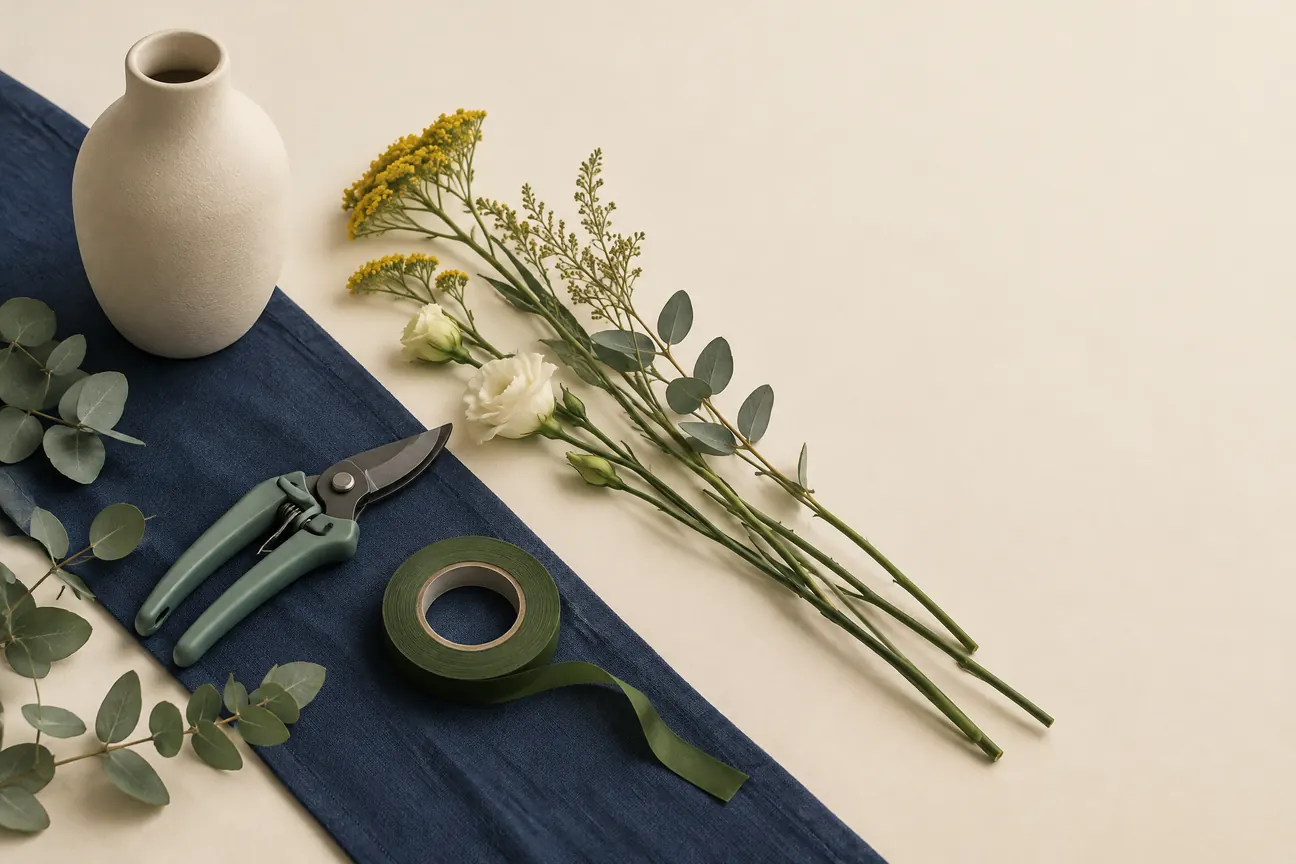
Ask for dimensions in plain terms: the width of the flowers, the widest point of the wrapping and the total height. These answer different questions. Floral width helps you picture the design; wrapped width affects carrying; height matters when storing the bouquet upright or placing it in a vase. If there is a firm space limit, give the measurement and ask whether the proposed arrangement fits it. Do not turn ‘medium’ into an assumed standard, because that label alone does not establish a size.
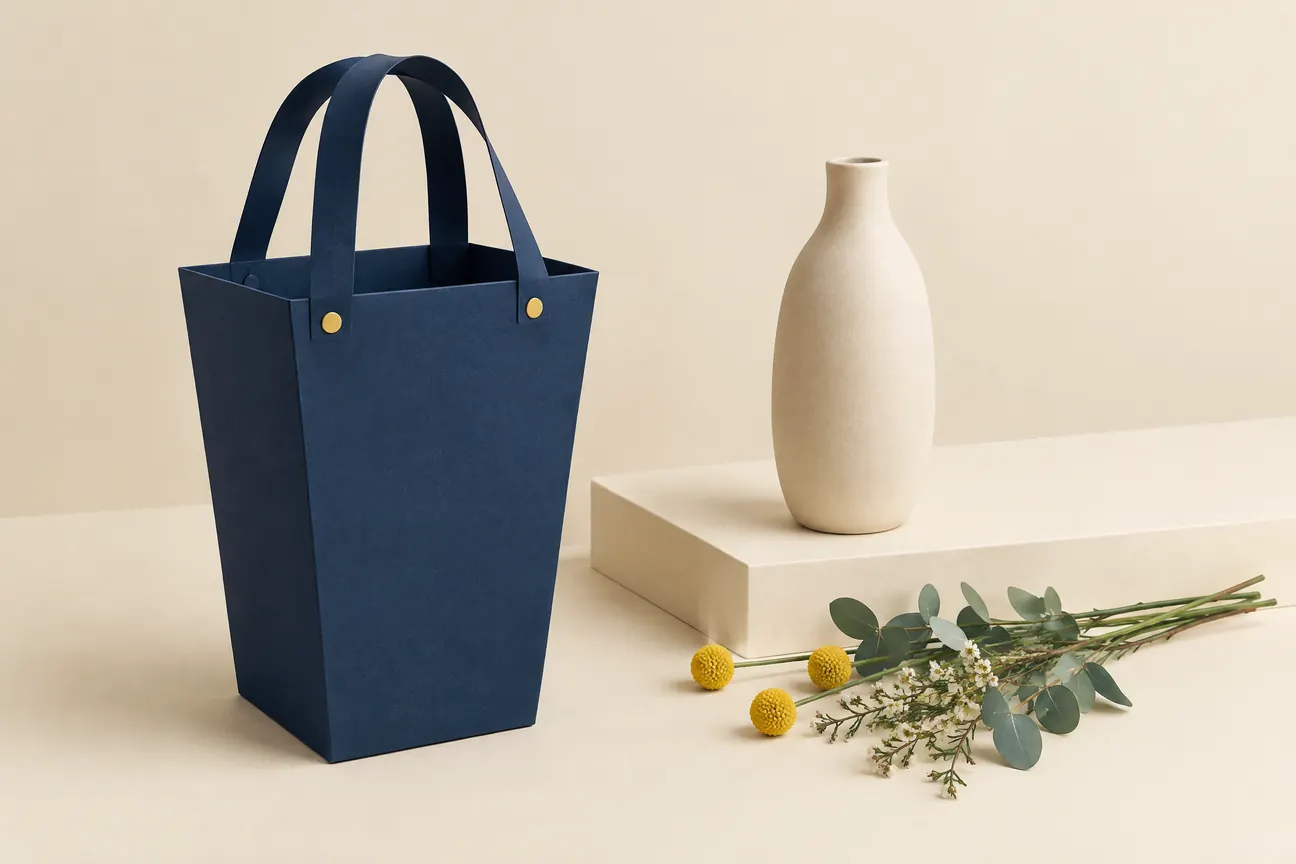
Consider what happens when the paper comes off. The recipient may have a narrow vase but no broad one, or a low shelf rather than a full dining table. Share the vase opening and height if known, and ask how the bouquet is intended to be displayed. Confirm whether a vessel is included rather than inferring it from a styled image. If the bouquet will stay wrapped briefly during a celebration, ask about its water provision and the care instructions for that exact packaging; do not assume a sleeve or carrier supplies water.
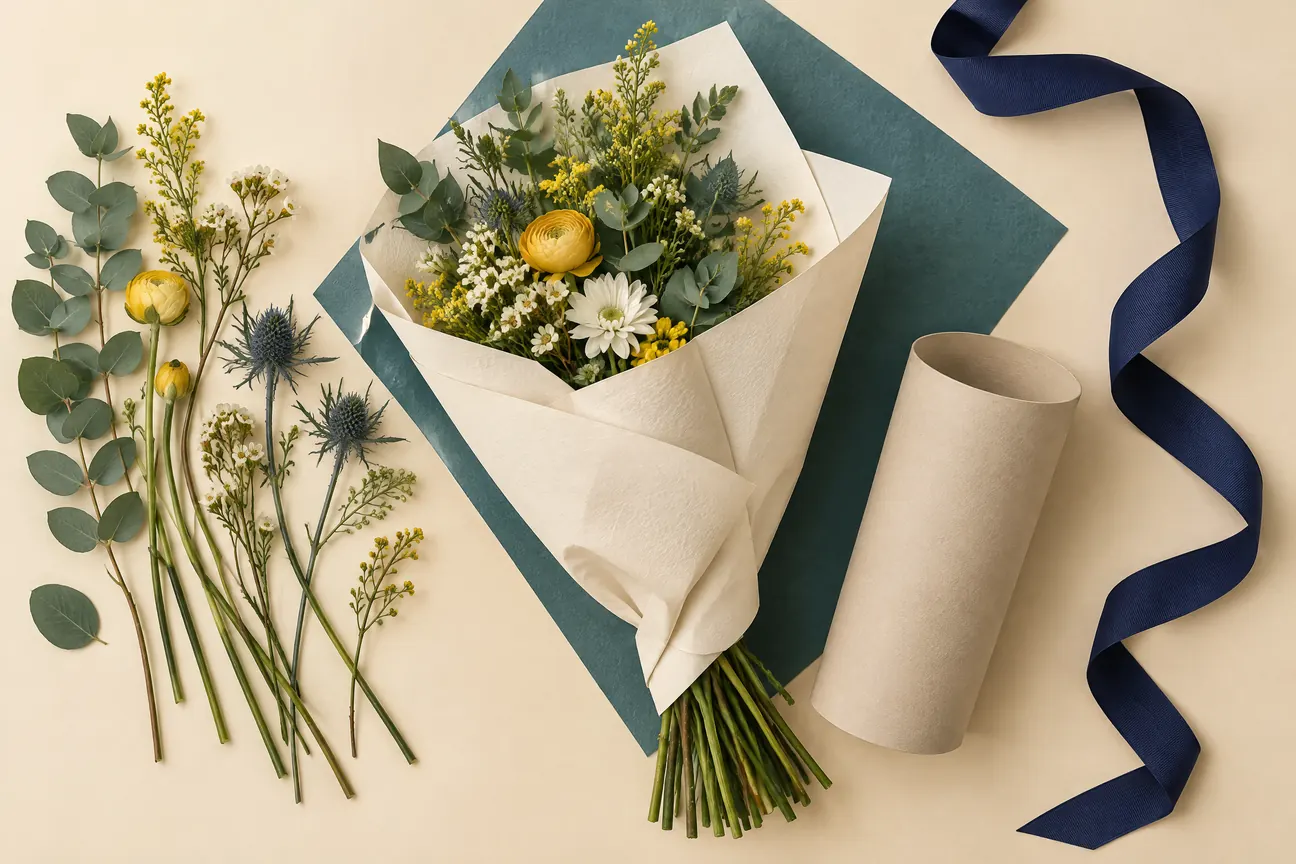
Let the wrap support the preferred flowers rather than determine the whole purchase. A quiet neutral paper can keep attention on the blooms, while a contrasting wrap becomes another visible colour in the gift. Tell the florist whether you prefer the paper close to the flowers or extending well beyond them. Choose the practical arrangement before adding decorative bulk: the recipient should be able to carry it, put it down and move it into its intended display without having to find extra space at the last moment.
Make substitutions a choice, not a blank permission
Write your preferences in three levels: essential, preferred and flexible. Essential details could be the main flower, an excluded colour or a maximum packed width. Preferred details might include a soft palette or limited greenery. Flexible details could include the supporting stems or ribbon shade. This hierarchy gives the florist room to design without making every adjustment acceptable. Avoid describing everything as essential unless you genuinely would decline the order if any part changed.
Agree on the route for a change before accepting the proposal. You could allow replacement of secondary flowers within the agreed palette but require approval if the main variety changes. Ask for a short description or reference of a proposed alternative and any effect on the quoted total. ‘Similar value’ alone does not resolve whether you like the new flower, colour or silhouette. If a yellow focal flower is replaced by several small yellow accents, the broad colour may remain while the feature you loved disappears.
An unavailable favourite does not force an automatic substitute. You can ask whether a smaller version, another available shade or a different date would preserve the detail that matters. You can also decide not to proceed. For a gift tied to a personal memory, keeping the flower may be more important than keeping the original size. For a colour-led thank-you gift, the reverse may be true. Settle that trade-off yourself, then ask the florist what is feasible within the date and spending limit.
Send a brief that can become a confirmed order
Bring the decisions together in a short message rather than sending several competing pictures. A useful example is: ‘For a birthday at home, the recipient likes pale peach and cream with a simple outline. Tulips are preferred, but colour is more important. Please propose flowers suitable for the vase dimensions supplied, with little filler and restrained wrapping. Confirm the total including the agreed handover arrangement. Please ask before changing the main flower or introducing a strong contrasting colour.’ Add your actual date, spending limit and receiving details; the example is a structure for an enquiry, not a description of an available product.
Read the reply against your priorities. It should be clear which flowers and colours are proposed, the approximate size, what accompanies the bouquet and how substitutions will be handled. Keep the receiving address, recipient or authorised contact and agreed timing together with that proposal. If the flowers are for a dinner followed by a journey home, mention both stages so carrying and water needs can be discussed. An attractive reference is still not a confirmed order until the florist has accepted the requested details and you have accepted the proposed arrangement.
Prepare for the recipient's first step at home too. Iowa State Extension advises a clean vase, removing foliage below the waterline and making a fresh stem cut before promptly placing flowers in water. Follow any supplied floral-preservative packet directions, check the water daily and replace it if cloudy or odorous. Choose a cool, bright position away from heat and drafts.[2] Ask for instructions suited to the actual stems and packaging. This simple handover information makes a favourite-flower gift easier to enjoy without attaching a promised lifespan to it.
| Your leading priority | Useful wording | Flexibility to offer | Check before accepting |
|---|---|---|---|
| Roses as the main feature | Rounded rose-led outline in a preferred shade | Supporting greenery or wrapping finish | Proposed rose shade, floral width and whether other flowers are included |
| Recognisable sunflower faces | Prominent sunflower heads rather than scattered yellow accents | Secondary flowers within the agreed palette | Available head scale, front-to-back depth and packed width |
| A simple tulip-led look | Tulips visually dominant, with little filler | An available shade you have explicitly approved | Proposed flower form, outline and actual availability |
| Colour matters more than variety | Pale peach and cream, without strong contrasting colours | Main and secondary flowers after reviewing the proposal | Whether the substitute keeps the intended colour balance |
| A compact gift for the journey home | Fit the supplied packed-width and vase limits | Fewer stems or a closer wrap | Total height, carrying format, water provision and quoted inclusions |
On a small screen, scroll the table sideways to compare.
Take it into everyday life
A practical checklist
- Name the recipient's leading preference: the flower itself, the colour effect or the overall outline.
- Mark the main flower and any excluded colours as essential, preferred or flexible.
- Choose one useful reference and explain which features you want to keep or change.
- Give a floral or packed width limit where space or carrying is constrained.
- Share the intended vase opening and height if known; check whether a vessel is included.
- Set your total spending limit and ask what the quote includes for the agreed handover.
- State which substitutions need approval and how you can be reached before a change.
- Keep the date, receiving contact, accepted design and stem-specific care instructions with the order.
Questions & answers
Must I know the exact rose or tulip variety before enquiring?
No. Describe the visible feature you like, such as smooth petals, a rounded outline or a particular shade. A clear reference can help, provided you explain what matters in it. Ask the florist to identify the flower and confirm the actual selection before accepting the order.
Should I specify a stem count or a bouquet size?
Specify a count if the number has personal significance. If your concern is how the bouquet looks or fits, use floral width, total height and packed width instead. A count alone cannot establish the space occupied by the flowers, foliage and wrapping. You can request both where both matter.
What if my favourite flower is unavailable?
Ask about a smaller design, an available shade or a different date before replacing the main flower. If colour matters more than variety, consider an alternative proposal within the agreed palette. You do not have to accept a substitution; state which changes require your approval.
Can I request an exact copy of a reference photograph?
Use the photograph to show the features you want, then ask what can actually be supplied. Point out its colour balance, outline and amount of foliage separately from its paper and ribbon. Do not assume the flowers, size or styled vase in the picture are part of the accepted order.
Are roses always a romantic choice?
You need not choose by a fixed symbolism rule. The recipient's preferences and your relationship can guide the gift, while a clear message card explains whether it is a thank-you, birthday wish or personal gesture. If the recipient has a strong association with a flower or colour, respect that rather than relying on a generic meaning.
How do I stop a bright sunflower design from feeling too busy?
Ask for the sunflower faces to be the main feature, with restrained accompanying flowers and wrapping. Explain whether you want a close grouping or more open space around the heads. Review the proposed palette as a whole, because a contrasting wrap can add visual complexity even when the flowers are simple.
What should I ask if the recipient has only a small vase?
Provide the vase opening and height, plus the available display space, and ask whether the proposed stems and bouquet can work with it. Confirm any included vessel explicitly. If the florist proposes a different format, compare its carrying and care needs instead of assuming it is automatically easier.
Which care information should accompany the gift?
Ask for instructions for the selected stems and any water-retaining packaging, including when it should be removed. General guidance is to use a clean vase, keep leaves out of the water, make a fresh stem cut and check water daily. Follow supplied floral-preservative directions rather than improvising household mixtures.[2]
Sources & further context
Numbered references follow the source order below. Merchant pages provide context for their own products or services; independent sources support relevant general reading, not merchant quality or medical suitability.