
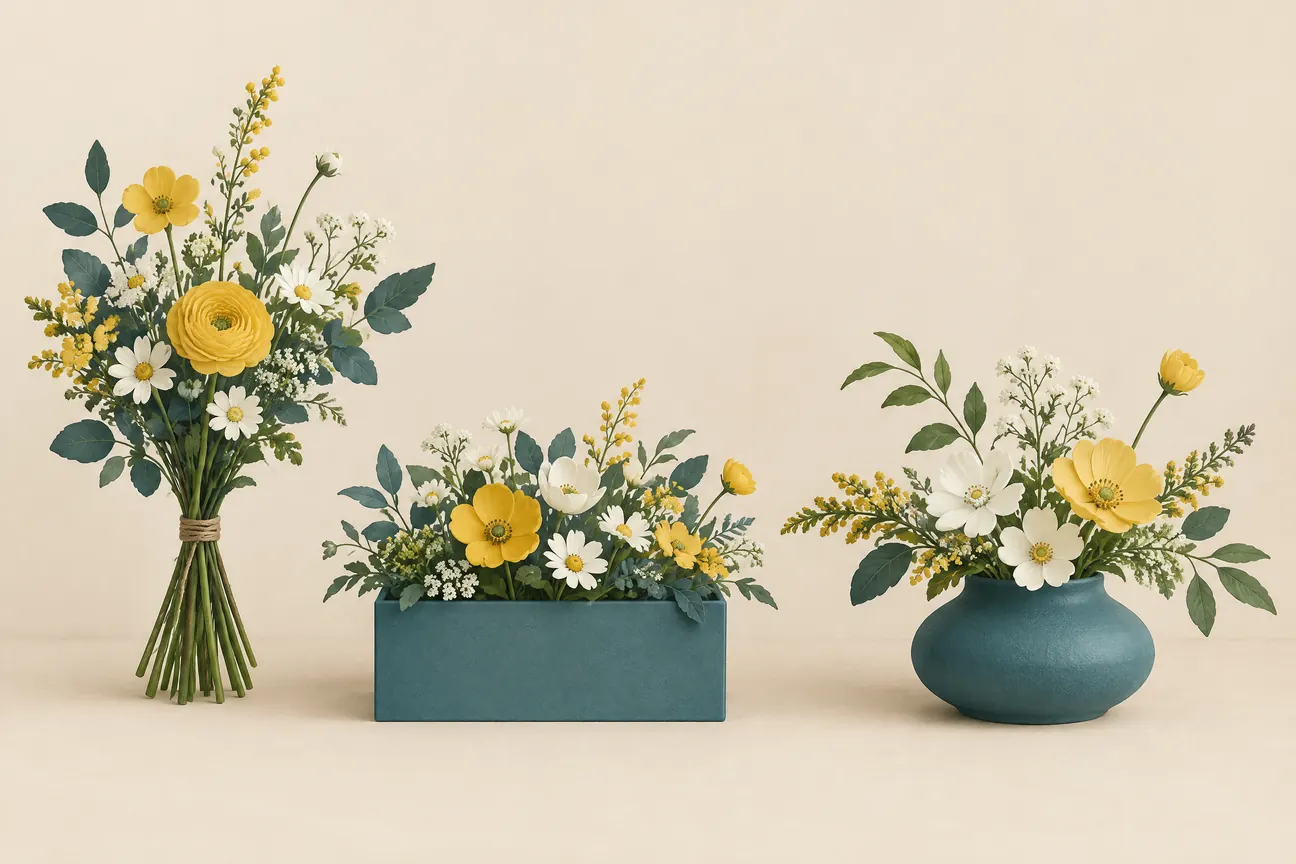
Compare flower arrangement formats against the usable surface
Start with the place the flowers will occupy after the greeting card has been read. On a Hong Kong office desk, that means the space left after the monitor, keyboard and telephone are in use, not the dimensions of the whole desk. At home, allow a coffee table to keep doing its job: a remote control, drinks and reaching hands still need somewhere to go. Measure the clear width and depth, then identify anything above it, such as a shelf. Treat these as practical limits rather than a target to fill completely.
Compare flower arrangements by the outermost flowers and foliage as well as the container. A narrow base can support a wide spray, while a low design can spread across much of a table. Iowa State distinguishes scale relative to the surroundings from proportion within the arrangement. [1] For ordering, request both the base dimensions and the finished width, depth and height. A reference photograph without a scale cue cannot tell you whether a piece will fit beside the recipient's everyday belongings.
Viewing direction matters as much as size. Flowers against a wall can be composed for a main front view; a piece in the centre of a shared table needs attention from every occupied side. Iowa State notes that a one-sided design can have foliage at the back rather than the same treatment all around. [1] For a dining table, describe the seated sightline and leave room for serving dishes. Do not choose a tall silhouette simply because it looks impressive in a tightly cropped photograph.
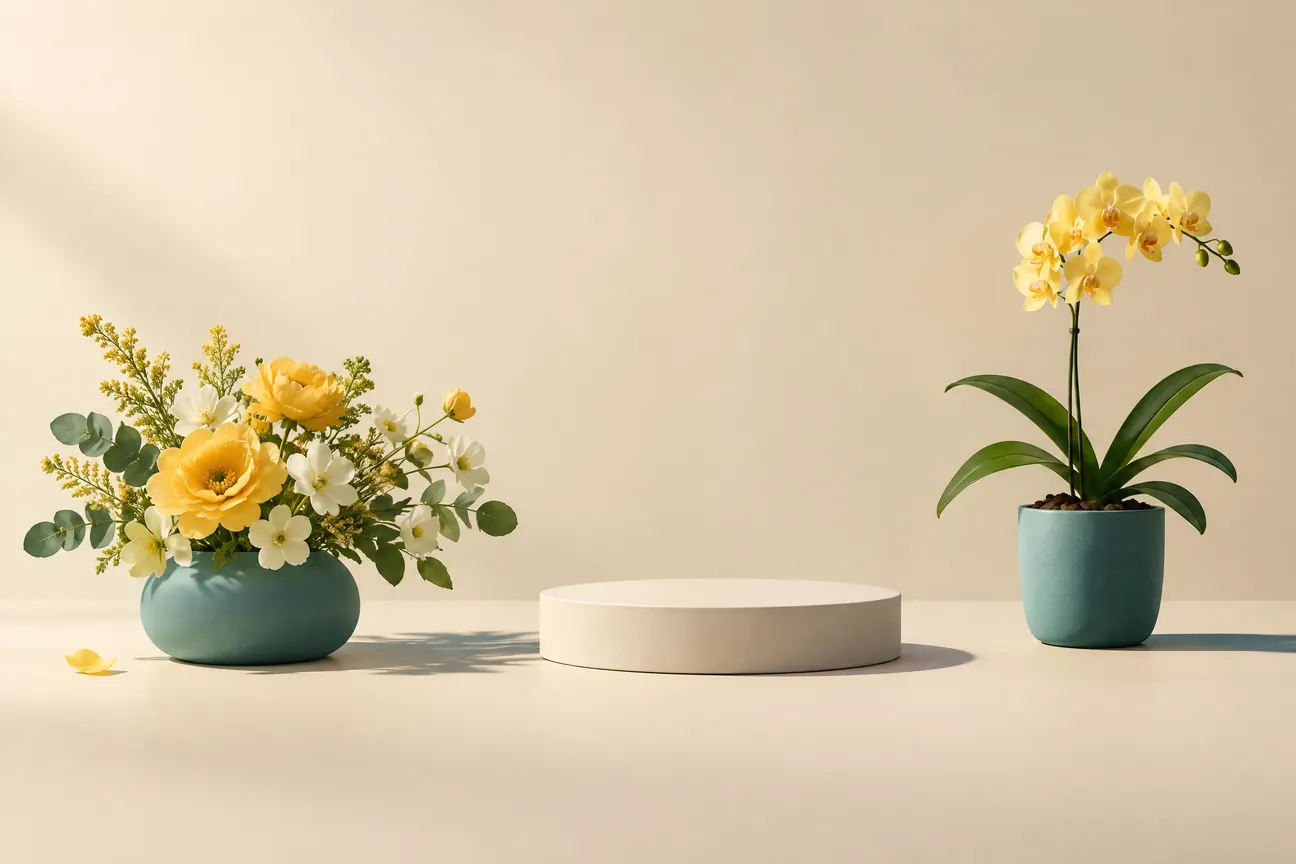
A basket needs a base measurement, not just a generous outline
A basket is a good direction when its visible weave or handle is part of the recipient's preferred look. It is not a size category: a shallow tabletop piece and a large decorative basket can have very different demands on a room. When comparing flower baskets, ask whether the pictured height includes a handle and whether flowers project beyond the basket rim. For a narrow sideboard, a broad rounded arrangement may be less workable than a slimmer design, even if their bases are similar.
The outside basket does not explain how the stems receive water. Ask what water-holding vessel or liner is inside, whether it stays in place during care, and where water can be added. Iowa State's basic container requirement is that it holds water, regardless of its decorative material. [1] If the gift is going onto wood or another water-sensitive finish, agree on suitable surface protection with the recipient. Do not rely on a decorative weave to establish watertightness, and do not pour into an opening merely because it is easy to reach.
Check what the basket actually contains. This comparison concerns cut flowers; rooted plants bring a different care task and should be identified separately. A handle may also be decorative rather than a lifting point, so request handling instructions instead of planning to carry the whole gift by it. For someone who will relocate the display between a reception counter and a desk, the filled weight and accessible support points are more useful information than a description such as 'small' or 'easy to carry'.
A box separates presentation from the water-holding vessel
A box can appeal when you want the container to give the gift a clearly defined shape. Yet square does not automatically mean space-saving, and round does not automatically mean bulky: compare the actual dimensions and floral overhang. Browse flower boxes with the recipient's shelf or desk in mind, then request the finished measurements rather than choosing from the container outline alone. Ask how the arrangement will arrive. A lid shown beside a display may not close over its flowers and should not be treated as a protective carrying cover.
The decorative shell, interior water vessel and transport packaging are separate things. Before choosing a paper-covered or rigid gift box, ask which part holds the water and how that part can be reached without wetting the exterior. Clemson describes several stem supports and individual water tubes, demonstrating why the outside format does not identify the internal system. [2] A neatly enclosed design still needs a care explanation. If the recipient cannot see the water source, request a clear description or diagram showing where to check and refill it.
There is also an unpacking footprint. A lid, carrier and outer wrapping need somewhere to sit while the recipient reads the instructions. For an office gift, a small landing tray or cleared counter may be more practical than opening everything over a keyboard. Ask which packaging comes off before display and which supports must remain. Keep a decorative box away from accidental splashes during care; if the flowers need a water top-up, move the complete piece to an appropriate protected surface rather than improvising over paperwork.
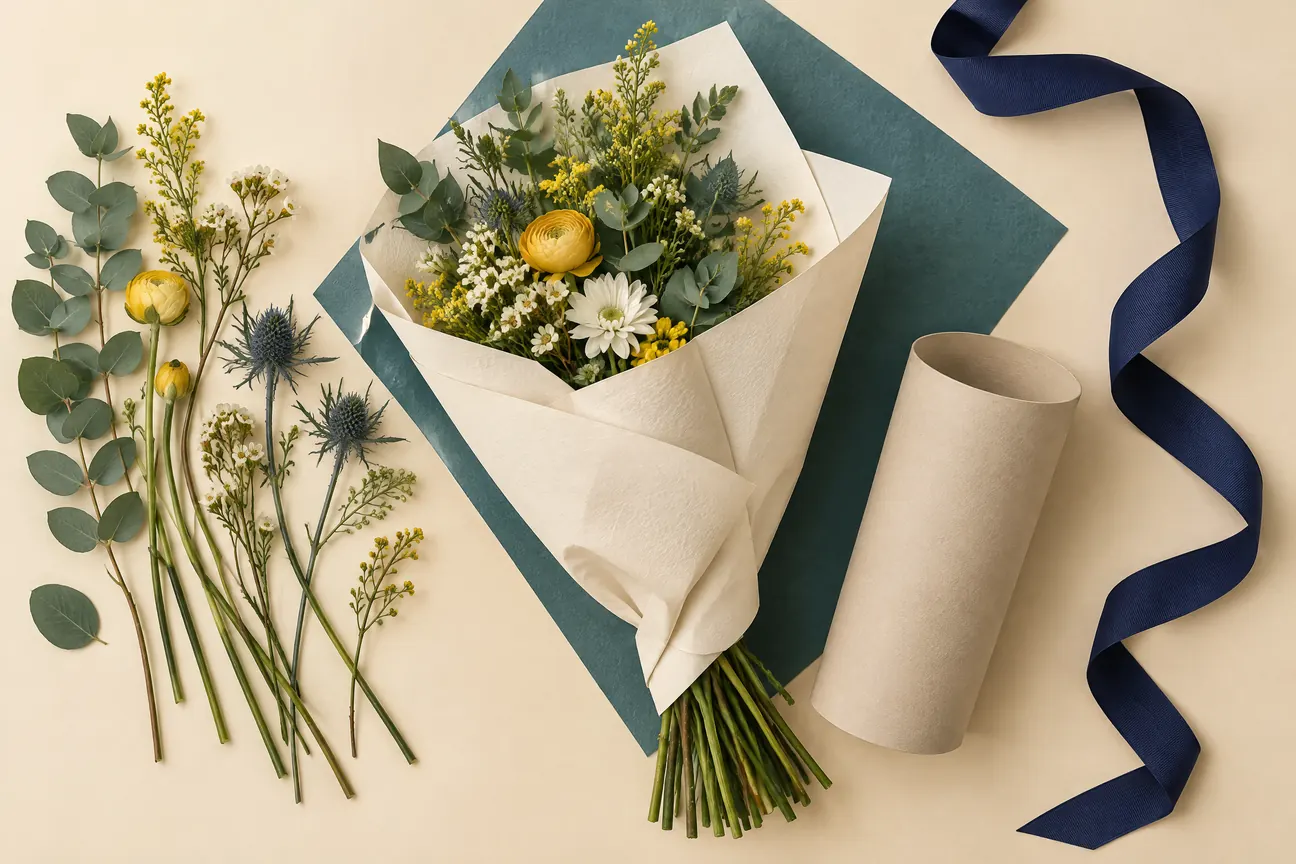
A vase should suit both the flowers and the person caring for them
A vase arrangement is worth considering when the recipient wants a visible vessel that may be used again. Make the order wording explicit: does the actual vase come with the flowers, and is it kept, hired or returned? A styling photograph is not an inclusion list. If you plan to use the recipient's own vase, send its opening, height and base measurements first. Iowa State explains that straight-sided vessels support stems differently from flared rims, which let stems spread outward more readily. [1]
Think about lifting and maintenance before choosing an elaborate vessel. A tall display in a narrow-necked vase may look suitable on a console but be awkward to move when filled. Ask for the approximate filled weight, the recommended lifting points and whether the arrangement remains intact during water changes. A low vessel with an accessible opening may fit a shared table better, but its flowers can still occupy a wide area. Neither low height nor a substantial-looking base is a substitute for checking the finished dimensions and placement.
Clear glass makes the water visible; opaque material conceals it. That difference changes what the recipient can see, not whether care is needed. The RHS advises clean vases, regular water attention and cleaning when water becomes murky or smelly. [3] Choose a vessel the recipient can maintain, and find out whether hidden supports prevent straightforward removal of the stems. If cleaning or refilling would require dismantling a design, ask for another construction rather than assuming a decorative finish removes the maintenance task.
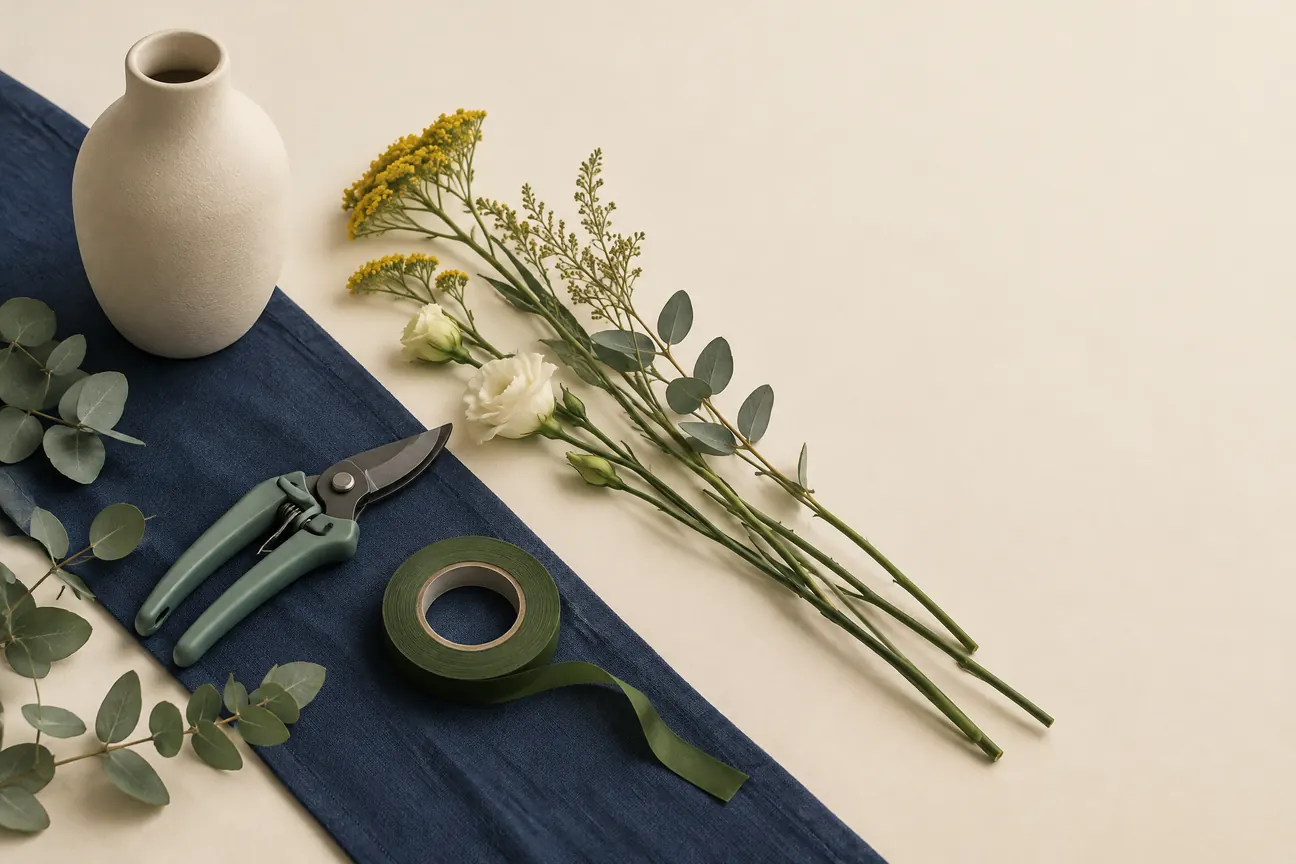
Choose the water-access method, not a promised number of days
Basket, box and vase are descriptions of presentation, not reliable predictors of display life. Water uptake, flower condition and subsequent care matter, and species in the same arrangement may fade at different times. The RHS discusses the effect of bloom stage and conditioning, while Iowa State notes that individual species can fade sooner than their neighbours. [3] [1] If the flowers are intended for an evening gathering, tell the florist when they need to be displayed. Ask about an appropriate design and care plan rather than requesting an unsupported universal lifespan.
Identify whether the stems stand in open water, floral foam or individual tubes. Ask how to check the water and where to add it without disturbing the arrangement. Iowa State recommends daily water checks and cautions against removing designs secured by foam, grids or frogs; a frog is a stem-holding support inside the vessel. [1] The recipient should not pull out stems just to inspect hidden mechanics. Request instructions suited to the supplied construction, including what to do when water needs replacing but the display cannot be lifted out as one bundle.
Agree on a care spot as well as a display spot. Independent guidance recommends keeping fresh cut flowers away from heat and drafts, including direct air-conditioning airflow. [1] [2] A sheltered counter may be preferable to a sunny windowsill or the path of a ceiling vent. Where flower food is supplied, follow its packet directions rather than guessing a dose. [2] Also confirm whether all the decorative material is fresh: do not apply a fresh-stem watering routine to dried or preserved-looking components without specific instructions.
Plan the first landing spot and the journey after delivery
The receiving surface may not be the final display surface. A colleague might accept flowers at reception, keep them briefly at a desk and then take them home. Plan those three locations before selecting the format. Check that the first landing spot is level, clear and permitted, with somewhere to put the outer carrier. Give the sender and receiver a workable handover plan rather than assuming a building concierge will store a wet floral display or move it to the intended table.
For collection or a second journey, the packed dimensions can matter more than the display base. Ask about the upright carrier, any projecting stems and the support needed during travel. A box is not automatically crush-resistant, a basket handle is not automatically load-bearing, and a heavy vase is not automatically secure in a vehicle. Explain whether the recipient will be walking, using public transport or travelling by car. Obtain instructions for that journey; the format name alone cannot establish that the arrangement will be manageable.
Unpack on the planned landing surface and check the container before moving the display into place. If water is escaping or the vessel appears damaged, protect the surface and contact the supplier for instructions rather than dismantling hidden supports. Keep the card and care note available for whoever will maintain the flowers later. At an event, identify who takes the vessel and packaging away afterwards. These responsibilities remain necessary even when a gift arrives in a presentation that appears ready to display.
Ask for a finished specification that preserves your priorities
Send a Hong Kong florist a short brief with a photograph of the cleared surface, its usable dimensions and the intended viewing direction. State your priority in plain language: for example, 'the recipient must still be able to use the desk' or 'guests need to see each other across dinner'. Add the preferred palette after those constraints. This gives the enquiry a useful order of importance, so a change in flowers or container does not quietly turn a suitable design into an oversized one.
Ask for a written description of the included vessel, the finished floral envelope and the water-access method. Distinguish a preference from a limit: a cream container may be negotiable, while a shelf's available height is not. If substitutions are needed, request approval when they change width, height, weight or care requirements. Compare quotations using the same practical specification, with delivery, packaging, setup and any vessel return listed separately where relevant. Confirm the actual order total and accepted arrangements directly instead of relying on a headline figure or display photograph.
Finally, make the recipient's first action straightforward. They should know where to place the flowers, what to remove and how to begin routine care. If the brief cannot resolve container inclusion, fit or water access, pause the choice rather than selecting the most attractive picture. The useful outcome is not that every sender chooses the same format. It is that the selected basket, box or vase works on the recipient's real surface and remains practical after the handover moment has passed.
| Decision | Basket | Box | Vase |
|---|---|---|---|
| Space to measure | Base, handle height and projecting flowers | Box outline and floral overhang; separate unpacking space | Base, opening and full stem spread above the vessel |
| Water access | Identify the inner vessel or liner and refill point | Identify the reservoir or tubes behind the decorative shell | Confirm open water or hidden supports and how water is changed |
| Shared-table use | Request a low, all-round design within the available width | Check that the complete floral height preserves seated sightlines | Choose a suitable height and account for sideways stem spread |
| Moving it later | Confirm support points; do not assume the handle carries the load | Request upright packing; do not assume the lid closes over blooms | Check filled weight and transport support for the vessel |
| What to keep or return | Confirm which basket and inner parts belong to the recipient | Separate decorative box from removable packaging and supports | Confirm the actual vase is included and its ownership or return terms |
| Display life | Depends on the supplied flowers, water access and care | Depends on the supplied flowers, water access and care | Depends on the supplied flowers, water access and care |
On a small screen, scroll the table sideways to compare.
Take it into everyday life
A practical checklist
- Measure the usable surface after leaving room for its normal activities.
- Request the base dimensions and the complete flower-and-container width, depth and height.
- Specify whether the arrangement is viewed from one side, above or all around.
- Confirm the actual included vessel and whether it is kept, hired or returned.
- Identify the water source and obtain construction-specific checking and refill instructions.
- Check the packed dimensions, filled weight and handling instructions for any second journey.
- Prepare a permitted landing surface and appropriate protection for water-sensitive finishes.
- Approve substitutions that affect fit, weight or care, and confirm the complete order total.
Questions & answers
Which format takes up the least desk space?
There is no automatic winner. Compare the finished floral width and depth, not just the base. A narrow vase with spreading stems can occupy more useful space than a contained box. Provide the clear desk area and ask for the complete dimensions before choosing.
Does ordering a vase display mean the pictured vase is included?
Do not infer inclusion from a photograph. Ask whether the actual vessel is supplied, whether it matches the reference and whether you keep it or must return it. If you want to use an existing vase, provide its measurements and have the florist agree to that construction first.
Can the lid protect a flower box on the trip home?
Only if the supplier confirms it is designed to close over the finished flowers. Some lids are part of presentation rather than a usable travel cover. Request suitable upright packing and check its full dimensions against the planned journey; do not push projecting blooms under a lid.
What should I ask if the water source is hidden?
Ask where the reservoir, foam or individual tubes are, how to check them and where water should be added. Obtain instructions that do not require pulling out stems to investigate. Iowa State advises leaving secured foam, grid or frog designs in their container rather than removing them for routine water changes. [1]
Do fresh flowers last longer in a vase than in a box or basket?
The format alone cannot establish that. Flower species, bloom condition, preparation, water access and the display environment all matter. Choose a design that the recipient can care for and ask about expectations for the supplied flowers, rather than treating the container as a guarantee of a certain number of days. [1] [3]
Is an opaque vase easier to care for than clear glass?
It hides the water, but that does not remove the need to check or replace it. Cleanliness and accessible care matter with either material. The RHS advises regular water attention and cleaning when water becomes murky or smelly. Choose based on the recipient's ability to reach and maintain the vessel. [3]
What if the flowers arrive before the final table is ready?
Arrange a permitted temporary landing surface and someone who can receive the gift. Keep the carrier and care note available, and follow the supplied unpacking instructions. Do not assume reception staff will store it or that an empty corridor is an acceptable temporary display area.
How can I request substitutions without losing the right fit?
Tell the florist which details are flexible and which are firm. You might accept a similar colour but require the agreed width, height and water-access method. Ask for approval of changes that affect the finished footprint, filled weight, vessel inclusion or care task.
Sources & further context
Numbered references follow the source order below. Merchant pages provide context for their own products or services; independent sources support relevant general reading, not merchant quality or medical suitability.