
Prince Edward & Kwun Tong clinics · Home-visit enquiries elsewhere

TCM Lab

TCM Lab · Hair choices & preparation / Wigs and appearance

Hair toppers and women’s wigs: choose coverage around existing hair

Content updated

A topper leaves some of your own hair visible, so its base and attachment deserve as much attention as its colour. Compare partial and full coverage without treating more clips, more hair or a higher price as proof of a better fit.

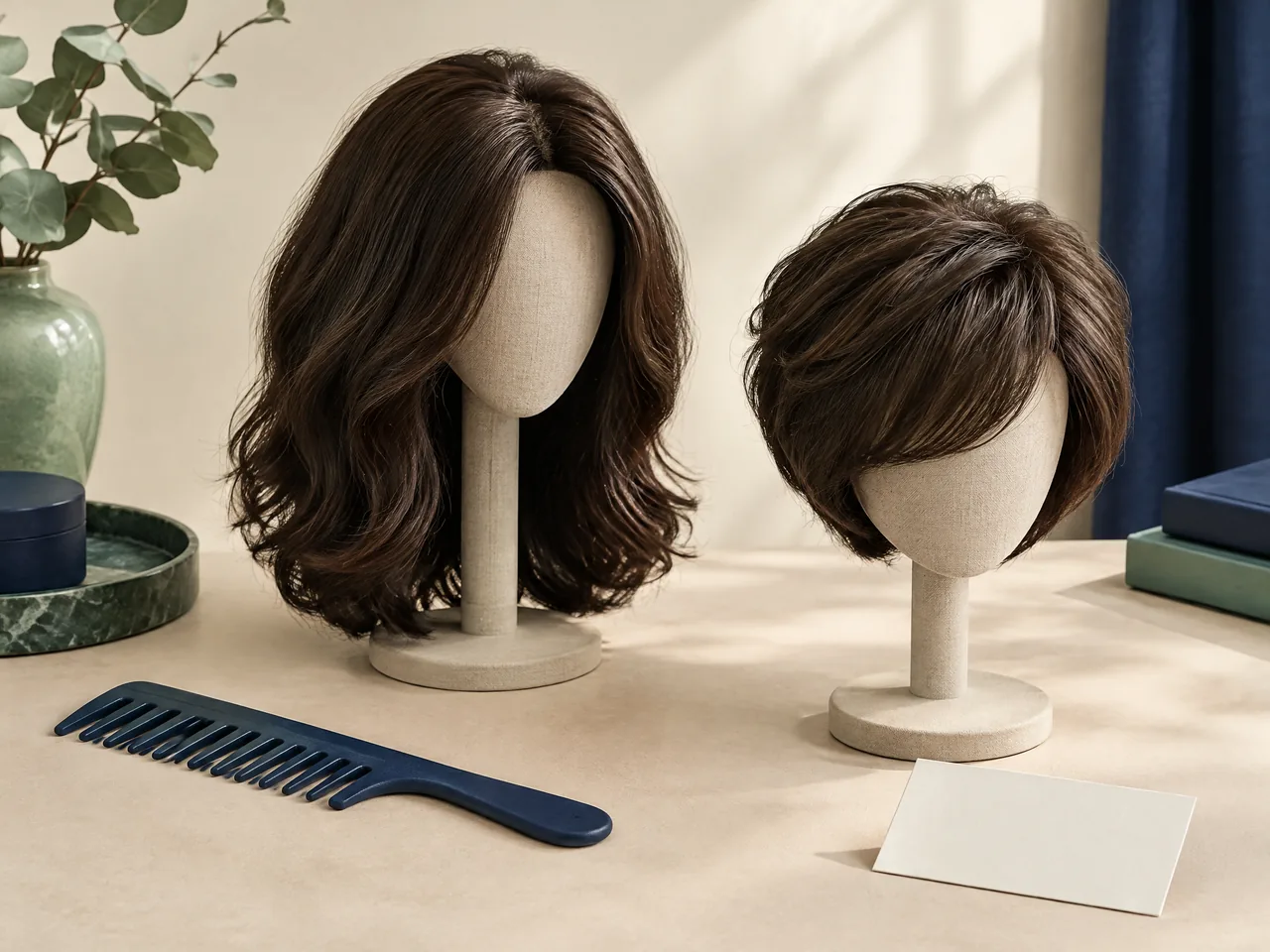
Illustrative wig and hairpiece selection objects
AI-generated illustrative concept; not a DT Hub location, product photograph or case record.

The short answer

Start with the area you want covered, then check where the piece would attach. A topper can add coverage at the top while blending with existing hair; a full wig covers the whole head. Neither is automatically more comfortable. Try the actual base or cap, check for pulling, and practise removal before deciding. Both are appearance products, not hair-growth treatments. [1]

DT Hub is an external website under the same ownership as TCM Lab, with salon and Academy, hair assessment and Chinese medicine hair-growth information, and wig sections. Salon services and scalp spas concern styling and beauty care; Academy concerns skills learning. Chinese medicine and medical options require individual assessment and do not guarantee hair growth; wigs are appearance products, not treatment. Business sources support service information, not evidence of medical effectiveness.

Map the coverage you want before choosing a style

Look at your hair in its usual parting, rather than arranging it to hide every sparse area. Take photographs of the front, crown and sides in consistent light. Mark which areas you want covered and which hair you would like to keep visible. The American Cancer Society describes toppers as adding coverage and volume to thinning hair on top, whereas full wigs cover the whole head. That difference is more useful than starting with a favourite catalogue photograph. [1]

Separate two questions: where should the new hair appear, and where can the piece be held comfortably? Someone may want only a narrow parting covered but find that the surrounding hair does not comfortably support a particular clip arrangement. Another person may have enough hair for attachment but prefer full coverage to avoid daily blending. Bring both preferences to a fitting. A visible thinning area is not, by itself, enough information to select a base or diagnose the reason for hair loss.

Check the base edge and every clip, not just the added hair

The base is the backing that carries the topper's hair; its footprint and clip positions matter separately from hair length. When reviewing DT Hub's hair topper hong kong information, use the partial-coverage description to prepare practical fitting questions. Ask the fitter to show where the base would end and where each clip would close on your own hair. The page discusses different bases and attachment approaches, but the product you try must be assessed individually rather than chosen from a general description. [3]

Ask to compare two base shapes with similar colour and length so that the attachment difference is easier to judge. Do not assume the smallest base is always preferable, or that extra clips necessarily improve comfort. Notice whether you are being asked to tug hair into position to make the piece work. Ask what happens if a planned attachment point feels uncomfortable, and whether the design can be adjusted. There is no universal clip count or minimum hair length that this article can prescribe for everyone.

Treat pulling as a fitting problem, not reassurance

A piece feeling difficult to move is not enough to establish a good fit. The American Academy of Dermatology warns that repeated pulling from tight hairstyles can cause traction alopecia, a form of hair loss that can be permanent. Its advice concerns weaves and extensions, not a clinical comparison of toppers, but the warning about tension is relevant when discussing attachment. Pain or a headache should not be dismissed as the price of keeping a hairpiece secure. [2]

During the fitting, turn your head normally, look down and put on your glasses. Report any concentrated pulling, scratching or pressure instead of waiting to see whether you get used to it. Ask the fitter to explain a different placement or attachment option, without assuming adhesive is automatically gentler than clips. If the scalp is sore or hair loss is concerning you, seek medical advice separately; a retail fitting cannot establish the cause. For treatment-related sensitivity, discuss wearing needs with your care team. [1] [2]

Try full coverage when blending becomes the difficult part

A full wig is worth comparing when you want coverage beyond the crown, a different overall hairstyle, or less dependence on matching exposed hair. DT Hub's women's wig hong kong page discusses full wigs alongside partial pieces, so ask which specific construction you are viewing. A women's product category does not tell you whether it uses clips, adjustable tabs or another method. Request a side-by-side try-on with the topper rather than treating either option as the default for women. [4]

Existing hair still affects a full-wig fitting because it sits beneath the cap. Ask how to arrange it without a tight bun or bulky area, and have the cap fit checked in that arrangement. If your hair amount may change, ask about adjustment and when another fitting would be sensible. The American Cancer Society recommends adjustable wigs and checking the manufacturer's sizing information. A fuller-coverage choice does not automatically mean a more comfortable cap, and it need not mean cutting off your own hair. [1]

Match the hair that will actually remain visible

For a topper, compare the sample with the hair it will sit beside, not only with your roots. Check the lengths around your face and the ends at the sides, including any grey or previous colouring. Look near a window as well as under the fitting-room lights; natural-light comparison is recommended by the American Cancer Society. Photographs of your usual hairstyle are useful references, but a screen image alone is not a reliable final colour decision. [1]

Ask to see the join after a normal head turn, with hair tucked behind an ear, and in the parting you actually wear. Consider density as well as colour: decide how much added fullness you want rather than automatically choosing the thickest sample. Discuss any blending cut before scissors are used, including whether it affects the piece, your own hair or both. If colouring is proposed, get the material-specific limitations first. Human hair and synthetic fibres have different care and styling demands; neither label guarantees a convincing match. [1]

Rehearse removal and care before committing

Ask for a demonstration, then practise putting on and removing the trial piece yourself under guidance. With clips, have the fitter show how to release the mechanism before moving the base, so you are not simply pulling the hairpiece away. If tape or adhesive is proposed, ask about removal products, skin suitability and maintenance appointments rather than improvising. Explain whether you want occasional wear or an everyday routine, and whether you can manage the fastenings comfortably with your hands and eyesight.

Obtain care instructions for the exact piece, including cleaning, drying, storage and any heat restrictions. The American Cancer Society advises against heat tools unless the wig is heat resistant; its general guidance also notes that synthetic wigs typically need less maintenance than human-hair wigs. Do not apply a universal washing interval or lifespan to every model. For a removable piece, clarify how to care for your own hair separately. Ask whether clip replacement, repairs, fitting changes and trimming are included or charged separately. [1]

Plan a fitting that leaves room to reconsider

When comparing wig hong kong options, DT Hub's wig site can provide a starting point for a consultation and fitting enquiry. Its listed studio is Room 03, 21/F, Lee Bo Times Centre, 50 Hoi Yuen Road, Kwun Tong, Kowloon. Plan for that actual location rather than assuming there is a branch near your home. Confirm appointment availability, which coverage options can be tried, any consultation charge and the current quotation directly before travelling. [5]

Before ordering, record the proposed coverage, attachment, colour, adjustments and aftercare costs. Check the return or exchange policy before purchase, especially if cutting or custom work is planned. [1] Keep the service purpose clear: a wig or topper changes appearance; salon cutting and colouring shape hair; academy courses teach skills; scalp spa is cosmetic care, not diagnosis. Hair-loss assessment and treatment are separate clinical decisions. You can choose appearance coverage while seeking medical advice, without treating the fitting or merchant's claims as evidence of hair regrowth.

Take it into everyday life

A practical checklist

  • Bring front, crown and side photographs showing your usual parting, plus a reference for the hairstyle you want.
  • Identify the areas to cover and the existing hair you want left visible; ask the fitter to show the proposed base edge.
  • Check every fastening location and report pulling, pressure or scratching during normal movement.
  • Compare a topper and full wig when attachment or blending is uncertain, keeping colour and length similar where possible.
  • Check the sample beside exposed hair in natural light, with your glasses on and your usual parting.
  • Practise attachment and removal, and obtain model-specific washing, storage and heat instructions.
  • Confirm the written quote, adjustment and repair charges, return conditions and current Kwun Tong appointment details.

Questions & answers

Can I wear a topper if my hair is very fine?

Fine hair alone does not answer the question. The fitter needs to check the intended coverage and the specific places where the attachment would sit. If clips require uncomfortable pulling or cannot be positioned satisfactorily, compare another construction or a full wig rather than forcing that topper to work. There is no universal minimum hair length or density given here.

Will more clips stop a topper slipping?

Clip count is not proof of a suitable fit. Base shape, placement, the hair available at each fastening and your movement all need checking. Ask for a demonstration with the actual piece and raise any discomfort. Repeated pulling can damage hair; the dermatology guidance on tight hairstyles should not be mistaken for a guarantee that any clip arrangement is safe. [2]

Do I need to cut my own hair to wear a full wig?

Do not assume a haircut is required. Ask how your existing hair can be arranged beneath the specific cap and have the fit checked that way. If either your own hair or the wig is to be trimmed, clarify the purpose and agree to the scope first. Check return conditions before alterations. [1]

Is adhesive a better option for a sensitive scalp?

Not automatically. Ask about the actual product, contact area, removal method and whether it is appropriate for your skin. Do not apply it to an irritated scalp without advice. If sensitivity is related to medical treatment, discuss suitable wearing arrangements with your care team. A merchant's description of an adhesive or cap is not medical clearance for your scalp.

Can I use my straightener on a topper?

Only follow the instructions for that exact piece. Do not assume every synthetic fibre tolerates heat, or that a human-hair label removes all styling restrictions. The American Cancer Society advises against using heat tools unless the wig is heat resistant. Ask for any permitted temperature and technique in writing before styling. [1]

What if my hair changes after I buy the piece?

Ask about this before purchase. Changes in the amount, length or colour of exposed hair may affect blending or fit, so find out which adjustments are possible and what they cost. If shedding or scalp symptoms concern you, arrange a separate medical assessment. A topper or wig provides appearance coverage; it does not diagnose hair loss or make hair grow. [1] [2]

Sources & further context

Numbered references follow the source order below. Business websites provide relevant service or product information, not evidence of medical effectiveness.

  1. [1] American Cancer Society — Wigs for Hair Loss
  2. [2] American Academy of Dermatology — How to prevent hair damage from a weave or extensions
  3. [3] DT Hub — Hair Toppers & Pieces
  4. [4] DT Hub — Women's Wigs & Toppers
  5. [5] DT Hub — Wig Studio

Make a coverage record that separates the base from the hairstyle

On a simple head outline, mark the area you want covered, then ask the fitter to sketch the proposed base boundary separately. Add the positions of the fastenings and note which of your own hair would remain visible. Keep the sample's model reference beside the drawing. If another piece is suggested later, compare its boundary and attachment positions with that record; a similar hairstyle photograph does not establish that the underside is the same. The distinction between a topper and a full wig concerns coverage, not just the amount of added hair. [1] [3]

For the full-wig comparison, ask which measurements the manufacturer's sizing guide requires and have the results recorded with their units and model reference. The American Cancer Society describes circumference, front-to-back and side-to-side measurements, while warning that sizing varies between brands. Do not transfer one cap's size label to another without checking. Record how your existing hair was arranged for the trial so a later fitting can reproduce that starting point. [1]
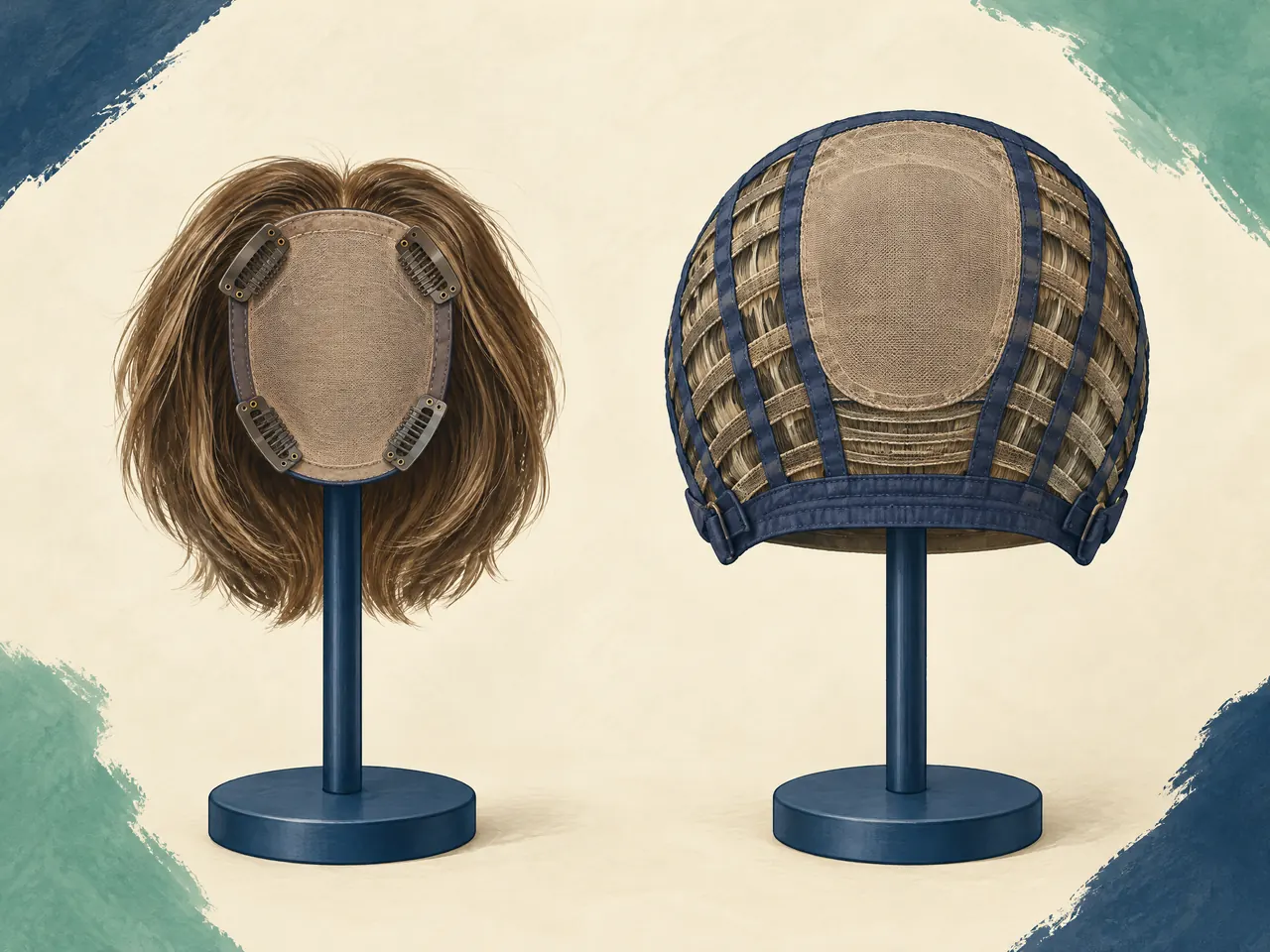

Generic removable topper and empty full-wig cap on separate stands, with their undersides visible
Compare the footprint of a partial piece with a full cap; this illustration does not specify a product or a suitable attachment for you.Generated illustrative image
Fabric measuring tape loosely surrounding a blank mannequin dome beside a fit-note card and mirror
Keep measurements with the exact model's sizing information; the mannequin illustration is not a fitting result.Generated illustrative image

Compare the inside construction while keeping the hairstyle constant

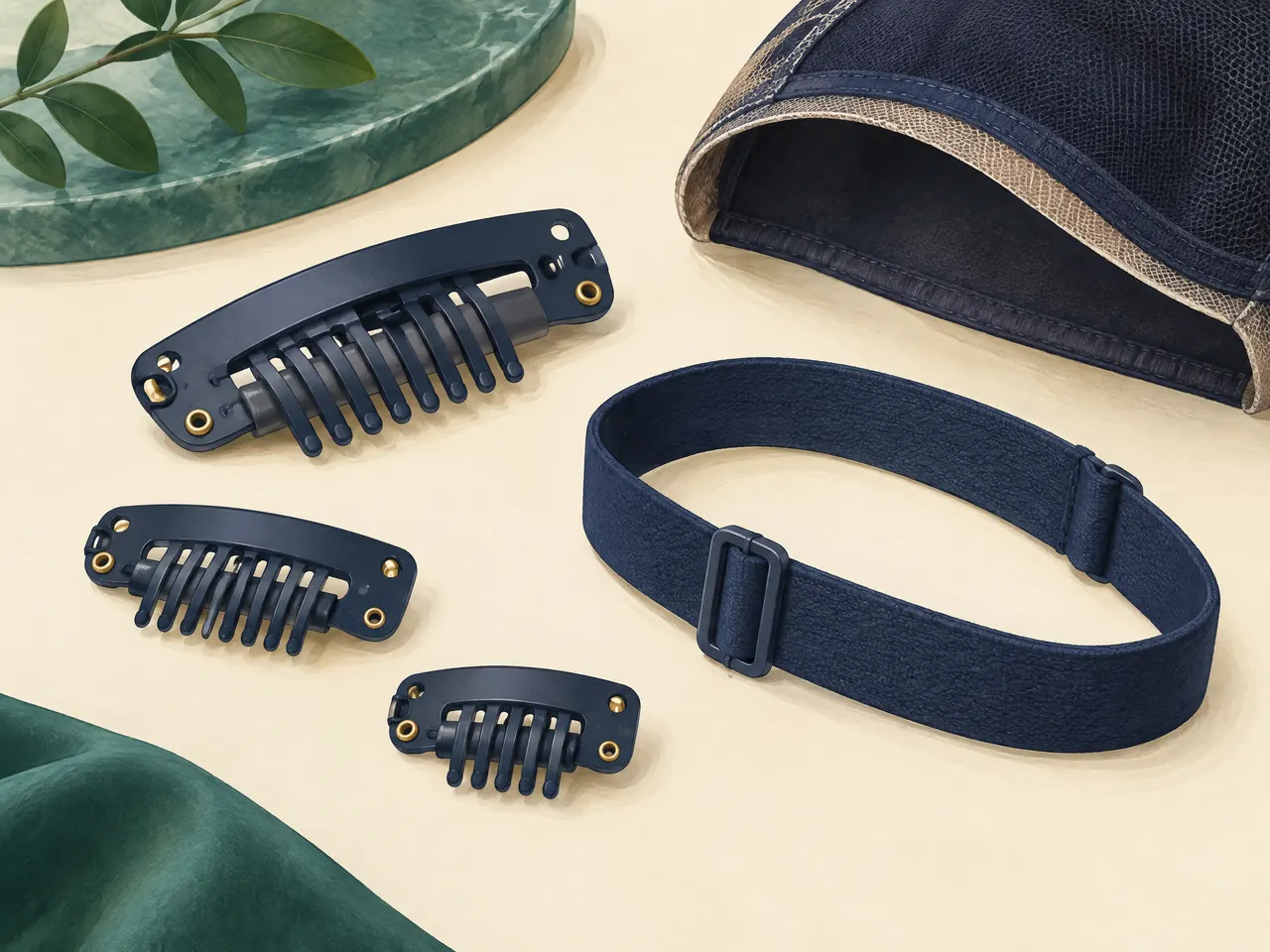
Ask to view the underside of each trial piece before it is fitted. Identify the backing panels, perimeter and fastening components as separate features. A clip, an adjustable band and the edge of a cap do different jobs; the presence of one does not describe the entire construction. DT Hub's product pages discuss several bases and attachment approaches, so use those descriptions to request an explanation of the actual sample rather than assume every piece in a category has the same interior. [3] [4]

Make a short trial note for each option: the model tried, where its edge sat, which fastening was adjusted and the exact location of any discomfort. If the fitter changes a fastening position, repeat the same ordinary movements used in the first trial and record what changed. This makes it easier to distinguish an attachment adjustment from a change in hair length or fullness. Do not describe a piece as comfortable merely because its hairstyle is your favourite.
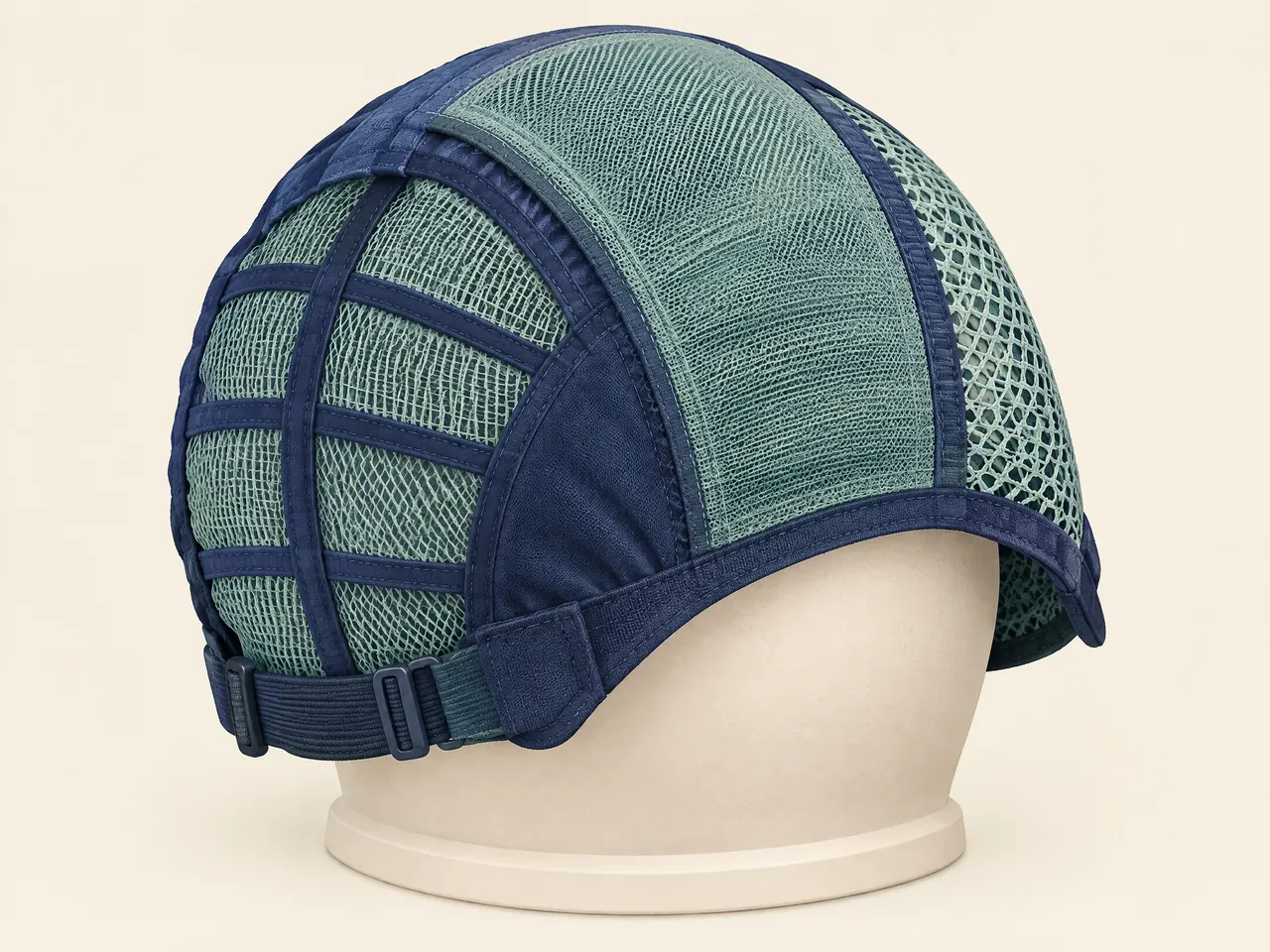
Inside-out empty wig cap on a plain dome stand, showing illustrative mesh panels and an adjustable band
Inspect the cap interior separately from the hairstyle; these generic panels are not a specification or comfort guarantee.Generated illustrative image
Generic hairpiece clips, a soft adjustable band and a sample cap edge arranged separately on a tabletop
Ask what each fastening does and how it is released; the illustration does not recommend one attachment method.Generated illustrative image

Decide which colour mismatch would need an alteration

Compare two shortlisted colour samples beside the same exposed section of your hair, first near a window and then under the fitting-room light. Keep the parting and hair arrangement unchanged between comparisons. Note whether the difference is at the roots, around the face or at the ends, rather than recording only 'too dark' or 'not natural'. Natural-light matching is recommended by the American Cancer Society; the extra notes give the fitter a more precise question to answer. [1]

Before approving a blending cut or colour service, distinguish changes to your own hair from changes to the removable piece. Ask which visible mismatch the proposed alteration is intended to address and whether the sample can be positioned differently first. Keep the selected colour reference and the agreed scope with your order record. Check return conditions before authorising alterations, rather than treating an unaltered trial and a finished customised piece as interchangeable purchases. [1]
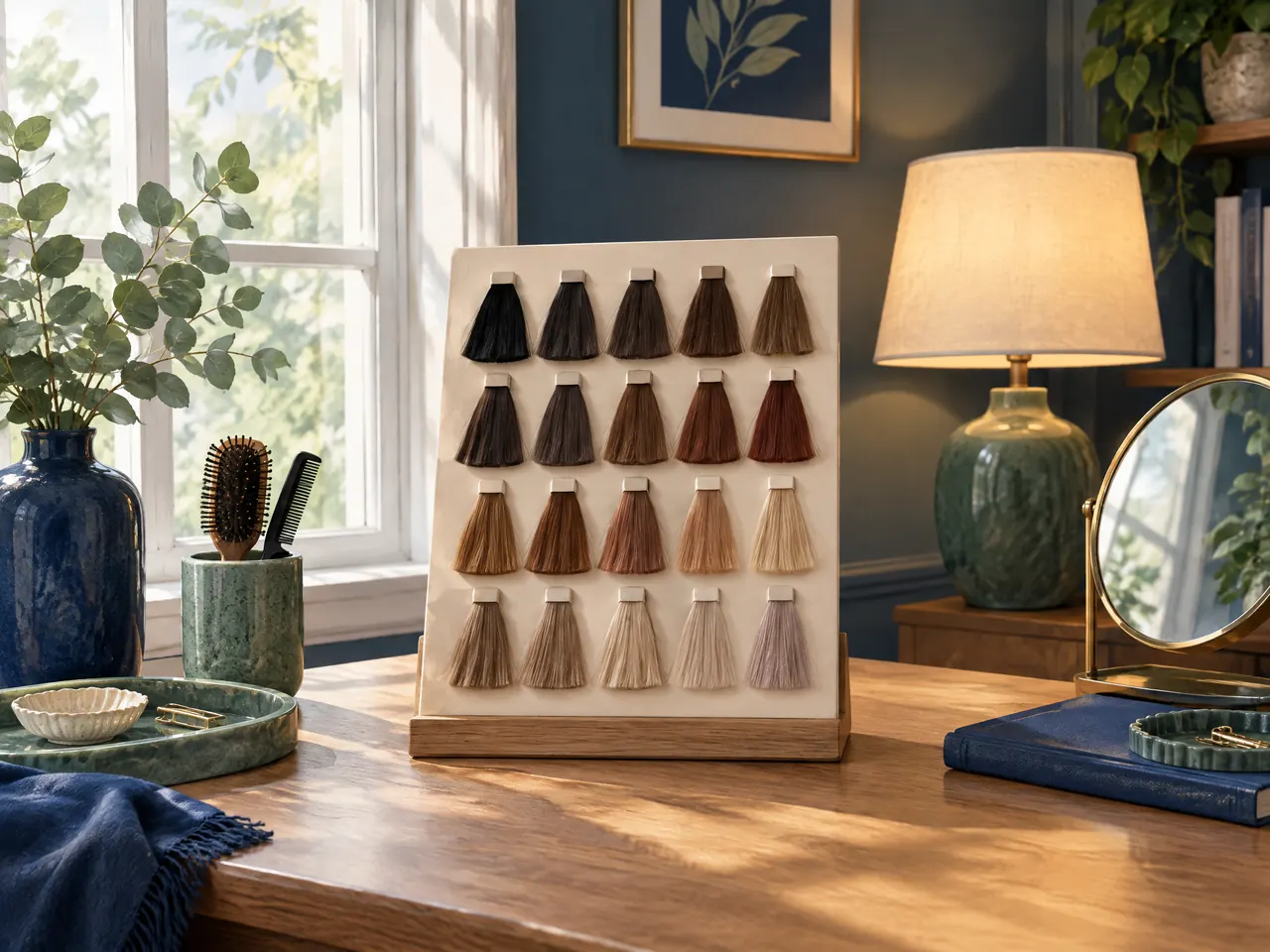
Neutral hair sample board between soft window daylight and a shaded interior lamp, with a mirror nearby
Check the same sample in different lighting beside the hair that will stay visible; this is not a promised colour match.Generated illustrative image

Set up care for a piece you remove at home

Ask the supplier to demonstrate the drying support and storage arrangement for the exact piece, not simply name a stand or bag. Check where a small topper's base should rest and whether a support intended for a full wig is appropriate for it. Before buying accessories, consider the space available at home and ask how the support should hold the piece without changing its shape. The pictured full-wig stand illustrates equipment to discuss, not a universal instruction for every topper.

Keep the care sheet with the model reference and mark which instructions apply to the fibres, base and fastenings. The American Cancer Society describes room-temperature drying and short-term storage on a wig stand, and cautions against a hairdryer unless the wig is heat resistant. Use that as a starting point for confirming the manufacturer's instructions, not a reason to apply one washing recipe to every construction. If you plan to travel, ask how the completely dry removable piece should be packed and supported separately from your toiletries. [1]
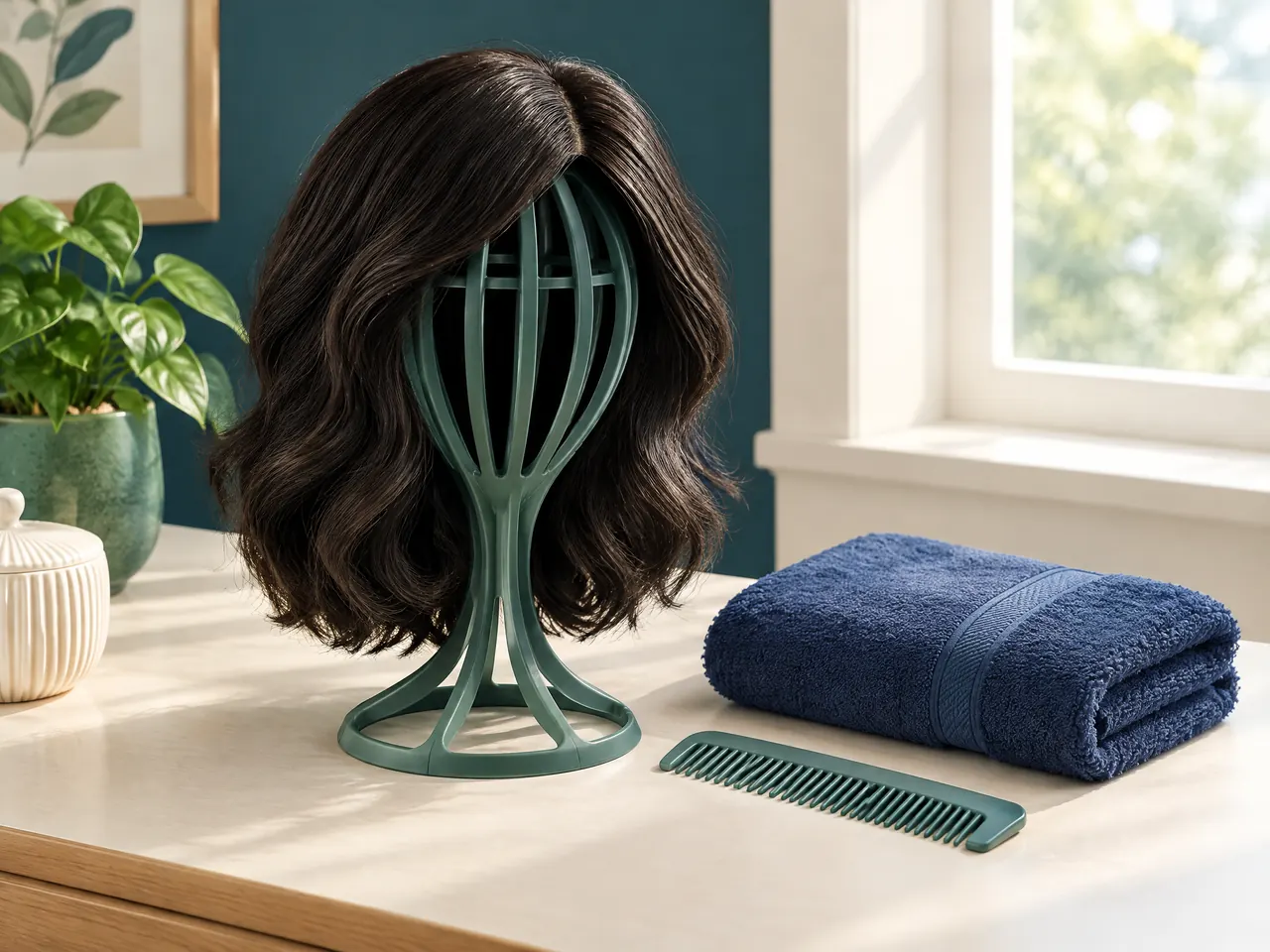
Anonymous wig on an open ventilated stand beside a folded towel and unbranded comb in indirect daylight
Confirm the drying support for your own model; a full-wig stand is not automatically suitable for a small topper.Generated illustrative image

Clinic enquiries

Contact and appointment arrangements

Clinics
Prince Edward and Kwun Tong
Opening hours
11:00–21:00
WhatsApp and telephone
+852 6940 5663

Appointments, practitioner availability and service arrangements are confirmed via WhatsApp.

Please mention any consultation language needs in your WhatsApp enquiry so that arrangements can be confirmed.

Enquire via WhatsApp
Food, gifts and floral lifeWhatsApp enquiry