

Prince Edward & Kwun Tong clinics · Home-visit enquiries elsewhere

TCM Lab

TCM Lab · Hair choices & preparation / Hair assessment

Postpartum and menopausal hair changes: organise questions by timing

Content updated

Record when your hair changed, what else happened around that time and what you notice now. A clear history is more useful than a promised recovery date.

Illustrative hair care and observation objects
AI-generated illustrative concept; not a DT Hub location, product photograph or case record.

The short answer

Postpartum shedding often settles naturally, while thinning around menopause may have a different or additional cause. Use timing as a clue, not a diagnosis: take a dated history and consistent photographs to a doctor or dermatologist, disclose breastfeeding and medicines, and agree on review points before choosing treatment or a service package.

DT Hub is an external website under the same ownership as TCM Lab, with salon and Academy, hair assessment and Chinese medicine hair-growth information, and wig sections. Salon services and scalp spas concern styling and beauty care; Academy concerns skills learning. Chinese medicine and medical options require individual assessment and do not guarantee hair growth; wigs are appearance products, not treatment. Business sources support service information, not evidence of medical effectiveness.

Start with three dates, not a hair count

Write down three points before your appointment: when your hair last seemed usual, when you first noticed a change and when something significant happened to your health. A birth date is straightforward; changes around menopause may be harder to place. An approximate month is useful, and older photographs can help. The distinction matters because a sudden increase in shedding is a different observation from a part that has gradually widened. Dermatologists ask how quickly loss began and how long it has continued when investigating its cause. [3]

Add what changed rather than trying to collect every shed strand. Is there more hair during washing, less fullness in a ponytail or a newly visible area of scalp? Note illness, weight loss and changes in medicines, and mention previous episodes. Illness, stress, weight loss and iron deficiency are among the possible contributors listed by the NHS, but a matching date does not establish the cause. Treat the timeline as information for the clinician, not proof that you need a supplement or that hormones explain everything. [4]

After childbirth, ask about the pattern as well as the calendar

Noticeable shedding can begin a few months after birth. The American Academy of Dermatology describes this temporary excess shedding as telogen effluvium and links it to falling estrogen levels. Its guidance says shedding usually peaks around four months and most women regain their usual fullness by their child's first birthday. Those reference points offer context, not a countdown for your own hair. If fullness has not returned after a year, AAD advises considering a dermatologist visit. You can also seek advice earlier whenever the change worries you. [1] [4]

For an enquiry through DT Hub's postpartum hair loss treatment page, prepare questions rather than assume you need to start a course. Explain your delivery date, whether you are breastfeeding and whether another pregnancy is planned. Ask who will assess the shedding, what supports any proposed intervention and whether observation is appropriate first. The service site lists Chinese herbal medicine, acupuncture and scalp care; that listing does not establish breastfeeding safety or faster recovery for you. Have the exact proposed products reviewed individually rather than relying on a general reassurance. [5]

Around menopause, distinguish recent shedding from gradual thinning

A widening part or a smaller ponytail in midlife should not automatically be filed under a temporary hormonal change. Female pattern hair loss often begins in the forties, fifties or sixties, although it can start earlier. AAD describes it as hereditary and progressive, and notes that it is more common after menopause, so hormones may play a role. Other causes can look similar. Bring family history and photographs from before the recent change, because a long-running change may need a different discussion from a new episode of shedding. [2]

If you consult DT Hub's page on menopausal hair loss, separate your questions into hair changes and other health concerns. State when menstrual patterns changed and when the hair change began; list any hormone medicines with their start dates. Ask how the assessment will distinguish possible causes and what would prompt referral. Do not read a menopause-focused service title as confirmation of a hormone problem or a reason to change existing medication. The chronology helps the assessor understand your concern without making every symptom part of one assumed diagnosis.

Find out what the assessment can establish

A clinician may need to investigate more than one explanation. AAD gives the example of a woman with postpartum shedding who also has early hereditary thinning. Its diagnostic guidance describes taking a history, examining the scalp and hair, and using blood tests or a scalp biopsy when the suspected cause warrants them. Ask what the examination suggests, what remains uncertain and what a proposed test would change. A photograph or magnified scalp image can contribute information, but it is not a substitute for the rest of the assessment. [3]

Before booking through DT Hub's female hair loss treatment page, establish whether the appointment is a medical consultation, a hair-care assessment or a combination. Ask who is responsible for the clinical decision and whether you should bring an existing doctor's assessment. The NHS recommends getting an idea of the cause from a GP before considering a commercial hair clinic. Use your Hong Kong doctor or dermatologist for that discussion; a commercial package name should not determine the diagnosis or make a referral unnecessary. [4]

Put safety and purpose before a treatment schedule

The first treatment question is whether treatment is needed for the identified cause. Temporary postpartum shedding and confirmed female pattern loss do not necessarily call for the same approach. For any medicine, ask about expected benefit, side effects, how long assessment of response takes and whether continued use would be necessary. AAD advises avoiding minoxidil during pregnancy, when planning pregnancy and while breastfeeding. Do not borrow someone else's regimen or assume that a product sold without a prescription fits your current circumstances. A clinician or pharmacist can review the specific proposal with you. [1] [2]

Bring the names and ingredient lists of supplements, herbal products and scalp preparations you already use. Ask whether there is evidence of a deficiency before adding a nutrient: AAD cautions that taking supplements when levels are normal can be harmful. If considering Chinese medicine, request a clear explanation of the individual proposal and coordination with your other care. DT Hub's hair-growth service hub advertises acupuncture and Chinese herbal medicine alongside hair-care services, but the listing alone cannot answer questions about your safety, interactions or likely response. [3] [5]

Make daily care manageable without calling it regrowth

You can choose an easier hairstyle while the cause is being assessed. For postpartum shedding, AAD suggests that some haircuts and lightweight volumizing products can make hair look fuller; these are appearance choices rather than ways to shorten the shedding episode. Ask a stylist for a cut that works with your available time, not an elaborate routine you cannot maintain. If you take progress photographs, use a consistent part, lighting and angle so that a different styling technique is not mistaken for a change in density. [1]

Keep service roles separate when arranging support. Salon cutting and colour address appearance; a scalp spa is cosmetic care, not evidence that an underlying cause has been treated. A medical or Chinese medicine consultation addresses health questions through individual assessment. A wig or topper can change coverage while you pursue those questions, but it does not grow hair or slow loss. AAD makes that distinction for wigs and concealers. You do not need to purchase all these services together simply because they are offered within a wider hair business. [3]

Agree on review triggers and plan the actual visit

Leave the consultation with a review plan rather than a guaranteed finish date. Ask what improvement would mean for your situation: less shedding, stable coverage or a change visible on examination. Clarify when to review the plan if the change continues and which new symptoms should lead you to contact the clinician sooner. New patches, a painful scalp or a sudden worsening should not be dismissed merely because you recently gave birth or are approaching menopause. Hair-loss assessment includes examining the scalp and considering causes that need different care. [3]

If you decide to visit DT Hub, its stated location is in Kwun Tong: 九龍觀塘開源道50號利寶時中心21樓03室. Confirm the current appointment arrangements, service availability and charges directly before travelling; do not assume a fixed duration or that every enquiry includes the same consultation. [5] Bring your history and put your two most important questions first. Mention if worrying about your hair is affecting daily life, too. The NHS explicitly encourages discussing the effect on wellbeing, which deserves attention alongside the physical assessment. [4]

Take it into everyday life

A practical checklist

  • Record your last usual hair appearance, first noticed change and relevant health-event dates; approximate months are acceptable.
  • Describe the change in plain terms: increased shedding, widening part, reduced ponytail fullness, patches or scalp symptoms.
  • Bring a few dated photographs with similar lighting, angle and part placement, plus any previous assessment or test results.
  • List medicines, hormone products, supplements and herbal preparations, with ingredient details and start dates where available.
  • Disclose pregnancy plans and breastfeeding before discussing any medicine, herbal preparation or procedure.
  • Ask who is assessing the cause, whether observation or referral is appropriate, and what each proposed test would clarify.
  • Agree on review timing and reasons to contact the clinician sooner; confirm current service arrangements and charges separately.

Questions & answers

Does shedding four months after birth prove that it is temporary postpartum shedding?

No. That timing fits a common pattern described by AAD, but timing alone is not a diagnosis. A dermatologist may find an additional cause, including hereditary thinning. Explain the pattern and any scalp symptoms rather than deciding from the birth date alone. [1] [3]

Must I wait until my baby's first birthday before asking for help?

No. AAD uses the first birthday as a typical recovery reference and suggests review if usual fullness has not returned by then. It is not a rule that prevents an earlier consultation. If you are concerned, have new symptoms or feel distressed, seek medical advice rather than waiting for a calendar milestone. [1] [4]

Is a widening part around menopause always caused by hormone changes?

No. Female pattern loss is more common after menopause, but it is hereditary and other causes can resemble it. A history and examination help distinguish those possibilities. Record how gradually the part changed and mention family history rather than assuming a hormone treatment is the answer. [2]

Can I start minoxidil or a herbal hair product while breastfeeding?

Do not start on the basis of a general hair-loss recommendation. AAD advises avoiding minoxidil while breastfeeding. For a herbal product, show the full ingredients to the clinician or pharmacist responsible for your care and ask for a specific safety review. A merchant's general assurance is not an individual assessment. [2]

Should everyone with hair shedding request iron and hormone blood tests?

No standard test bundle is appropriate for every presentation. AAD describes blood tests and other investigations when the history and examination suggest a relevant condition, deficiency or other cause. Ask what the proposed test is looking for and how its result would affect your plan. Do not start iron simply because shedding is visible. [3]

Can a haircut, scalp spa or wig replace assessment?

These choices have different purposes. A haircut may make hair appear fuller, and a wig can change coverage without treating loss. Cosmetic scalp care does not establish the medical cause. You can address appearance while arranging assessment, but improvement in how hair looks should not be taken as proof that the underlying problem has resolved. [1] [3]

Sources & further context

Numbered references follow the source order below. Business websites provide relevant service or product information, not evidence of medical effectiveness.

  1. [1] American Academy of Dermatology: Hair loss in new moms: Dermatologist tips
  2. [2] American Academy of Dermatology: Thinning hair and hair loss: Could it be female pattern hair loss?
  3. [3] American Academy of Dermatology: Hair loss: Diagnosis and treatment
  4. [4] NHS: Hair loss
  5. [5] DT Hub / DT Hair Growth: Service information and Kwun Tong location

Show which dates are certain and which are estimates

Make your timeline readable even when memory is incomplete. Put the delivery date or a medicine start date beside its source, such as a calendar entry, and label an estimated month as approximate. For midlife changes, keep the date of a menstrual change separate from the date you first noticed a wider part. An older photograph may help you recall an earlier appearance, but do not assign a precise onset date from an image taken under different conditions. The aim is to show the clinician what you know and what still needs clarification, not to prove a hormonal cause. [3]

A blank notebook beside an unmarked clock, a water glass and a wooden body-outline token.
Use a dated record to distinguish confirmed events from approximate recollections; the illustration is not a diagnostic record.Generated illustrative image

Make each product entry specific enough to review

A note saying 'hair supplement' or 'herbal scalp product' leaves important details unanswered. Photograph the label and keep the ingredient panel with the product name. Record whether you swallow it or apply it, when you began using it and whether you have already stopped. Keep prescribed medicines identifiable rather than grouping them with cosmetic products. If a proposed regimen includes several items, ask for each item's intended purpose in writing. This makes it easier to discuss the actual proposal with your clinician or pharmacist, particularly when breastfeeding or planning pregnancy, without treating every item as one interchangeable hair treatment.

Closed unbranded medicine containers and a sealed plain pouch beside a blank card and an empty consultation folder.
Record individual product names and ingredients; these illustrative containers do not identify or recommend a medicine or herbal formula.Generated illustrative image

Check what your conditioner changes about appearance

If postpartum shedding leaves your hair looking flatter, review the conditioner as well as the shampoo. AAD suggests a lighter conditioner formulated for fine hair, used mainly on the ends, and advises avoiding heavy conditioning shampoos and intensive conditioners that weigh hair down. It also notes that finding a suitable product involves trial and error; there is no single ingredient that makes one volumising option better than all others. [1] When you compare how your hair looks, note any product change beside the photograph. A less weighted-down finish may look fuller without showing that the shedding has ended or that a treatment has produced regrowth.
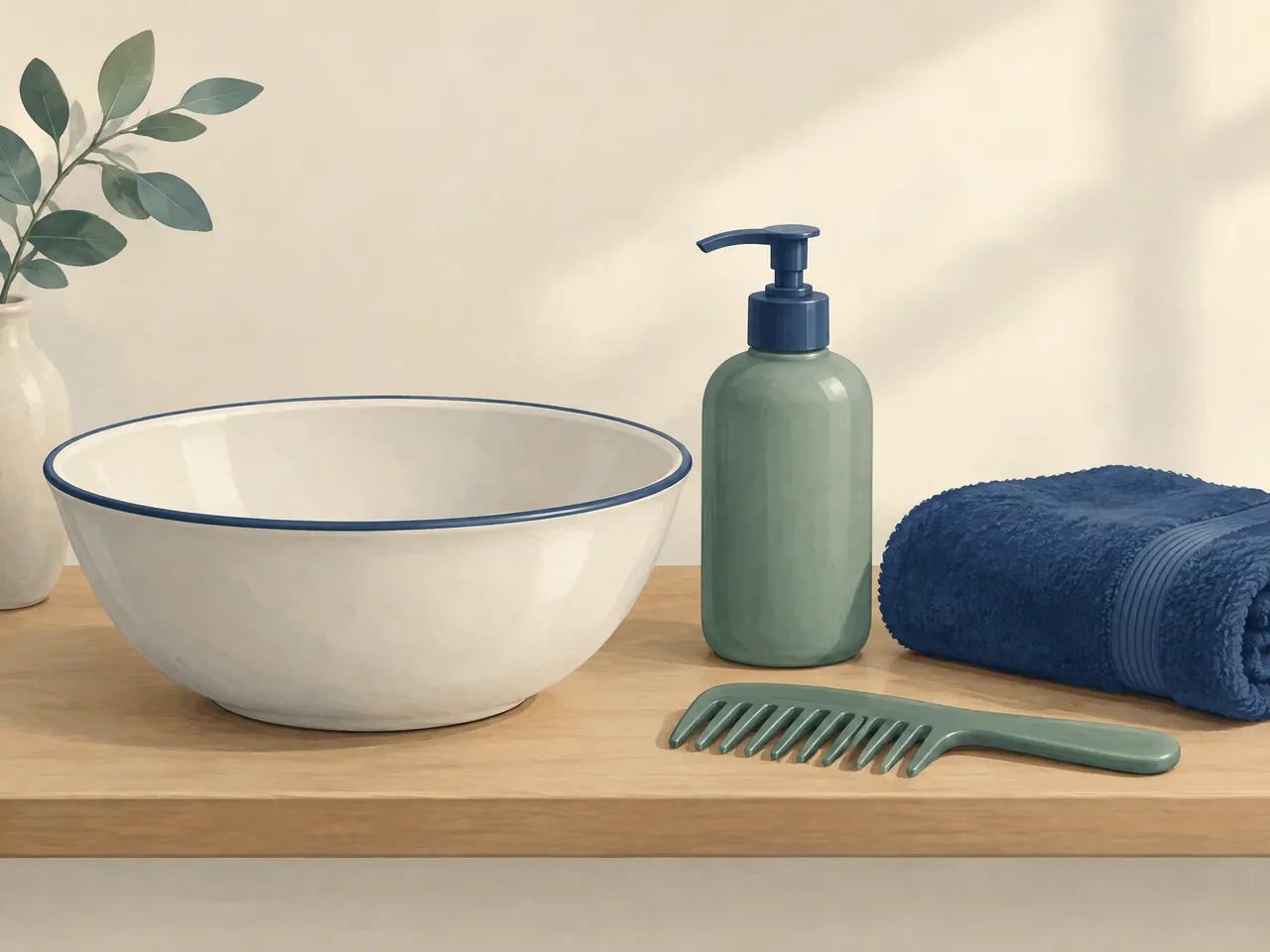
A plain wash basin, an unbranded pump bottle, a folded towel and a wide-tooth comb on a cream shelf.
Routine-care objects illustrate a product discussion, not a tested hair-growth product or a treatment result.Generated illustrative image

Discuss the haircut and the daily finish separately

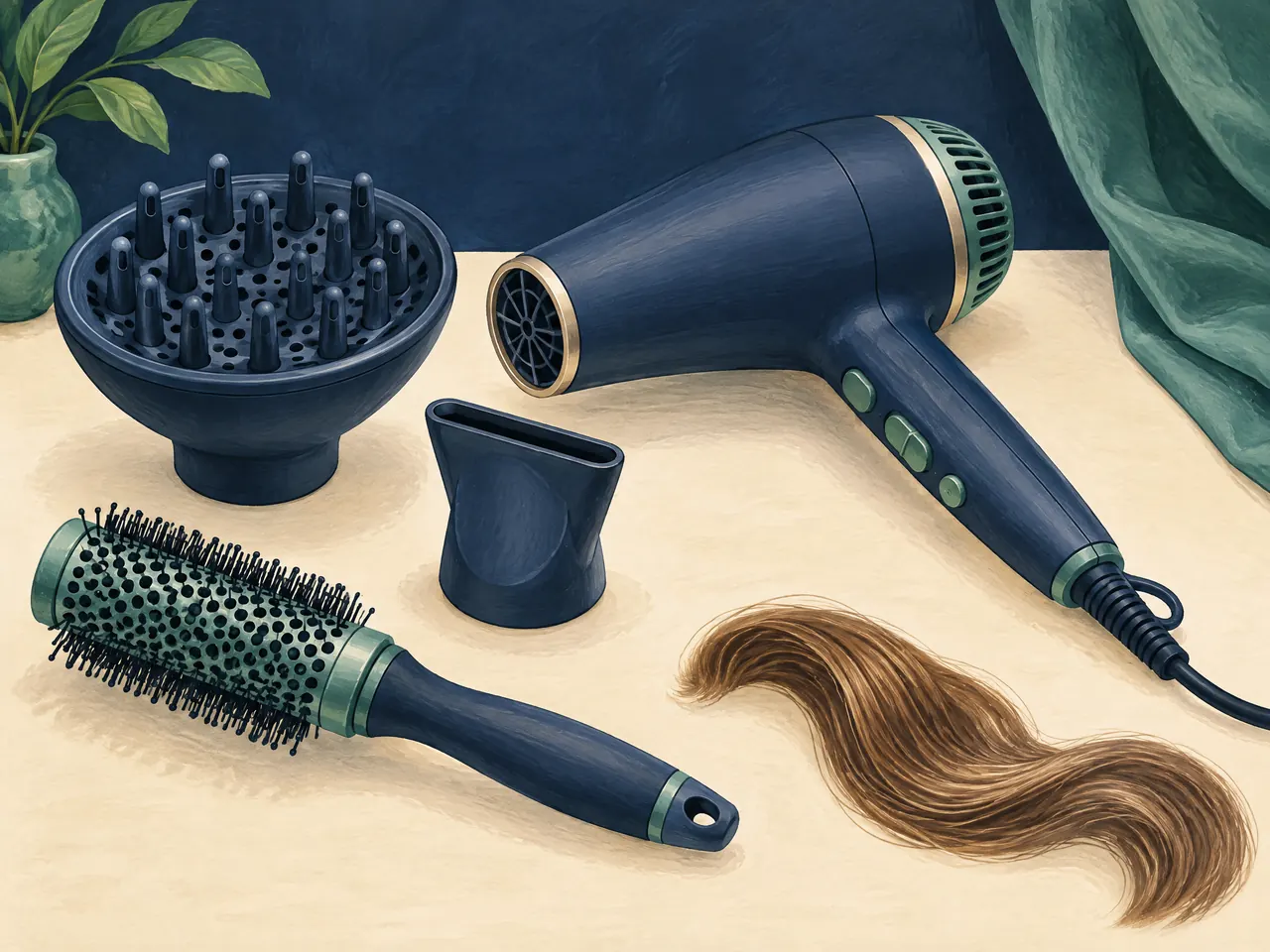
Before a salon visit, describe both the length you want to keep and the work you can manage after washing. A reference photograph may show a finished style rather than the haircut on its own. Ask the stylist which parts of that appearance depend on a dryer, brush or attachment, and what the cut might look like without that finish. If caring for a baby limits your time, say so before agreeing to a routine. Around menopause, the same discussion can help separate an appearance preference from concern about a changing part. A styling plan can sit alongside medical assessment without becoming evidence of recovery. [1]
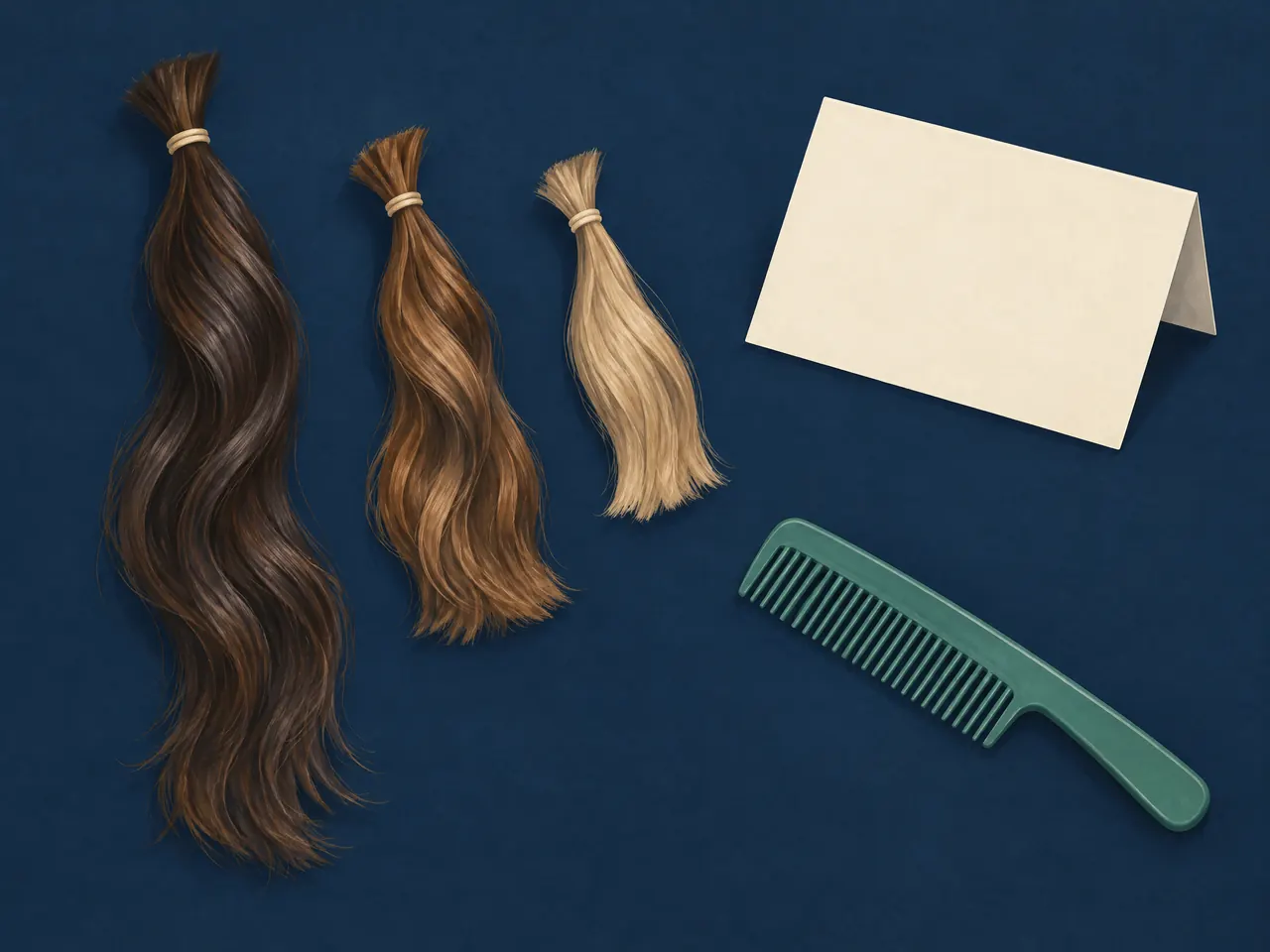
Three separate practice hair tresses of different lengths beside a blank folded card and a comb.
Practice tresses illustrate how to describe length preferences; they are not a customer haircut or a density comparison.Generated illustrative image
An unplugged unbranded hair dryer with separate diffuser and nozzle attachments, a round brush and a loose practice tress.
Ask which tools a reference style requires; these illustrative tools do not show a styling service or medical result.Generated illustrative image

Keep optional coverage separate from the assessment plan

If you want removable coverage while investigating the change, begin by describing the area you would like covered and the hair you want left visible. A topper and a full wig are different objects, so ask to compare their coverage rather than assuming more hair is the better choice. At a fitting, ask how the proposed piece attaches, how you remove it and what care it requires. You can postpone that purchase while continuing the medical discussion. AAD explains that wigs and concealers cannot slow hair loss or regrow hair; their appearance role should remain separate from how your clinician reviews the underlying change. [3]
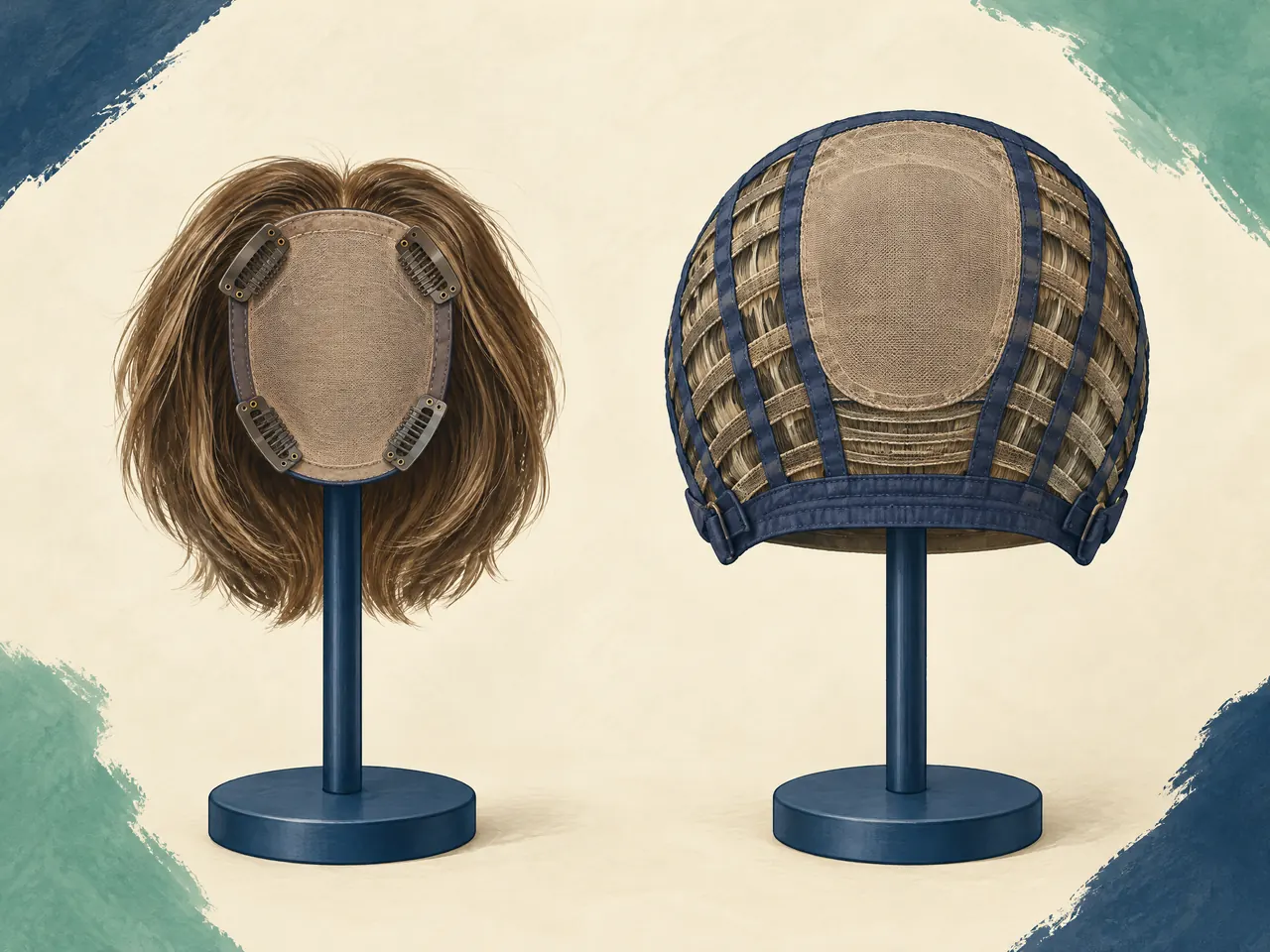
A generic removable topper and a full empty wig cap on separate plain stands with their underside construction visible.
Compare partial and full removable coverage without treating either as regrowth; these are illustrative objects, not available product specifications.Generated illustrative image

Clinic enquiries

Contact and appointment arrangements

Clinics
Prince Edward and Kwun Tong
Opening hours
11:00–21:00
WhatsApp and telephone
+852 6940 5663

Appointments, practitioner availability and service arrangements are confirmed via WhatsApp.

Please mention any consultation language needs in your WhatsApp enquiry so that arrangements can be confirmed.

Enquire via WhatsApp
Food, gifts and floral lifeWhatsApp enquiry