
Show where grey coverage matters in your everyday hairstyle
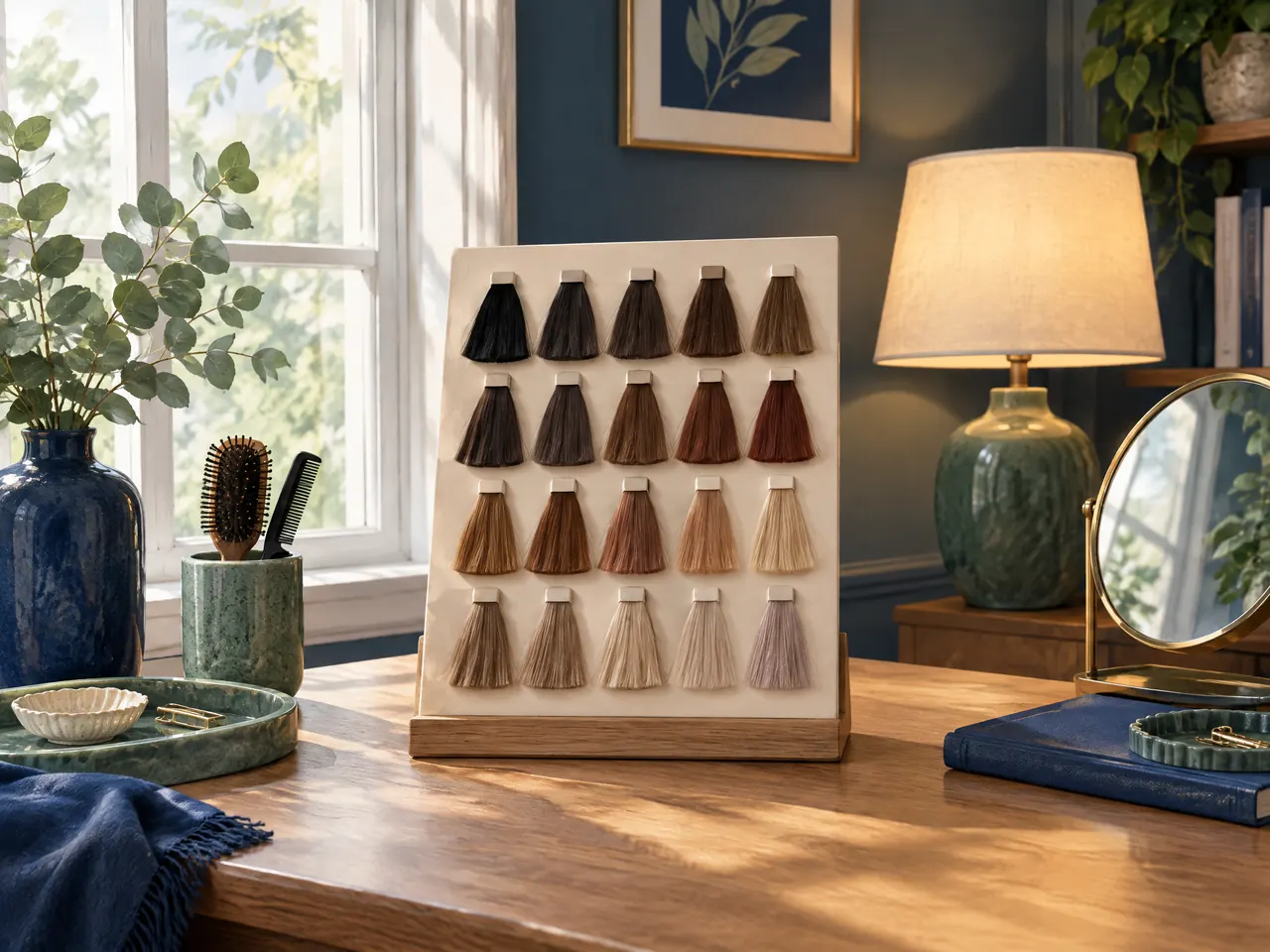
Prepare one photograph with your usual parting and another with your hair tied back if that is how you normally wear it. Mark the visible grey you want addressed in each view. For example, coverage beside the temples may matter more to you than a uniform-looking length. Ask the colourist to discuss those areas separately. If a sample is shown, record which product it represents; an illustrative swatch is not a promised result on your own hair.
Mark which lengths carry earlier colour
Draw a simple outline of your hair and mark the roots, middle and ends. Put each known colour application beside the areas it reached, rather than giving only a date. If a home powder was used on the ends but its name is lost, mark that area as an unknown product. Bring this map with the available packaging photographs. It helps frame a precise question: which areas would the proposed application cover, and which previous products still need clarification?

Resolve aftercare directions for the product actually used
Ask for the aftercare instructions in a form you can keep with the product record. Clarify whether there are product-specific directions about the first wash, your usual shampoo or any additional product being recommended. If advice from different products conflicts, ask which directions apply to the preparation actually used rather than choosing a timetable from social media. Do not extend dye processing time to improve coverage; follow the package directions. [3]

Keep testing and colouring as separate dated events
Keep any pre-use check and the main colour appointment as separate dated entries. If symptoms occur, record which event came first, the product involved, where symptoms appeared and whether they changed afterwards. A photograph can accompany the description, but it cannot establish the cause. Take the record to a clinician if you need assessment, rather than using it to select another dye yourself. NHS guidance notes that symptoms may be delayed and that a doctor may arrange ingredient-allergy investigation. [4]