Make a separate learning map for each specialty
When a proposal includes both specialties, draw two columns rather than one combined timetable. In each column, record independent study, instructor-led learning, any training dives and the requirements still to be assessed. Ask the provider to explain what each practical session involves: a workshop and an in-water session are not interchangeable descriptions. This makes it easier to notice an unanswered question before agreeing to the combined arrangement.
Keep an empty box for anything not yet confirmed. If the proposal mentions a pool, ask which learning objective it serves and which specialty it belongs to; the conceptual pool and cove in the illustration do not establish a required sequence. Request a separate explanation of how completion is assessed for each subject, so that finishing one part of the booking is not mistaken for completing both qualifications.

Attach equipment questions to the learning task
Alongside the two learning maps, note which equipment questions belong to each subject. For nitrox, ask what equipment is provided for the analysis and computer-learning topics described in the course outline. For deep training, ask what you will use during supervised in-water learning and whether unfamiliar equipment needs discussion beforehand. Naming the task helps the instructor answer more precisely than a single question about whether all equipment is included.
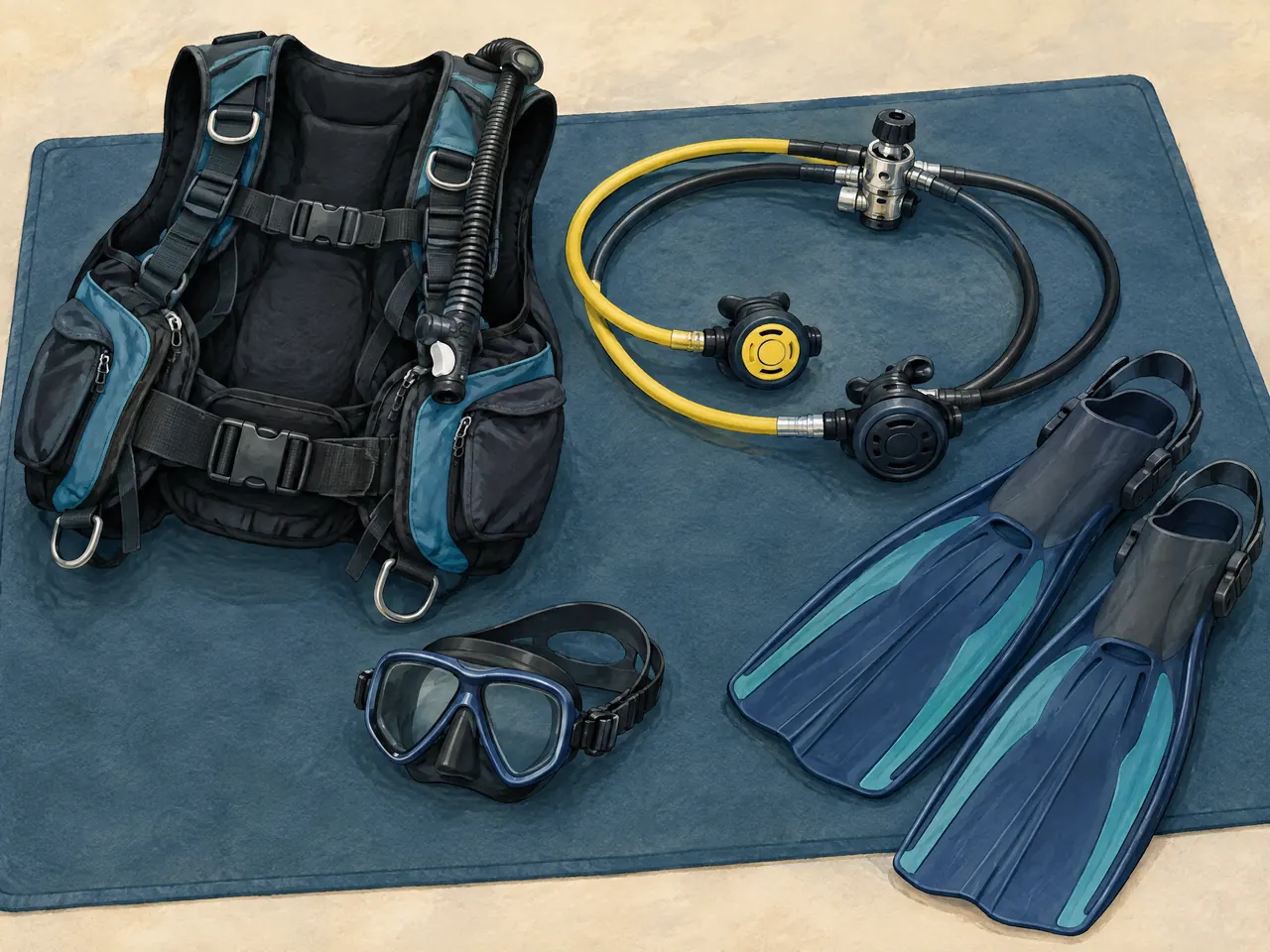
Use the illustrated buoyancy compensator, regulator, mask and fins as prompts for an equipment conversation, not as a complete packing list. Identify anything you plan to bring yourself and ask the provider to confirm what it supplies, what is separate and how equipment familiarity will be addressed. If your equipment has changed since your last dives, describe that change before the practical session rather than assuming the course booking includes time to resolve it.