
Prince Edward & Kwun Tong clinics · Home-visit enquiries elsewhere

TCM Lab

TCM Lab · Outdoor learning & coastal life / Further training and pathways

Night and wreck courses: clarify boundaries before equipment choices

Content updated

Before choosing a brighter torch or adding wreck accessories to your kit, decide what you want to learn and what the proposed course actually covers. Night and wreck training address different environments. A clear course description helps you compare prerequisites, equipment responsibilities and the next step that suits your experience.

Illustrative further-diving learning objects
AI-generated illustrative concept; not an actual DiveHarbour class, student or dive-site record.

The short answer

Ask for the exact course title, issuing agency, prerequisites and training boundaries first. For night training, confirm that water sessions take place after dark, not merely that classes run in the evening. For wreck training, clarify external-survey scope without assuming entry is included. Choose equipment only after the instructor confirms requirements and inclusions.

DiveHarbour is a separate diving school under the same ownership as TCM Lab. Diving courses and activities are separate from Chinese medicine care; reading this collection or visiting TCM Lab does not replace medical fitness-to-dive assessment or clearance.

Choose a learning question, not a shopping list

A torch advertisement and a wreck photograph can make two specialties look like one equipment decision. They are better approached as separate learning questions. Are you interested in how a familiar dive site feels after sunset? Or do you want to understand a wreck's shape, history and surroundings from outside? Writing down the attraction helps you avoid booking a course simply because its name sounds adventurous.

Try making your goal specific without turning it into a promised result. You might want to discuss how reduced light affects communication, or learn what an external wreck survey is intended to cover. These are useful topics for an instructor conversation. 'I want to use my new equipment' says much less about the learning you need. A purchase can wait while you find out whether the proposed course answers your question.

Keep the first enquiry focused on one environment. Interest in both does not mean your training should combine darkness and a wreck in the same outing. Ask whether separate learning experiences would make more sense for your current background. You can enjoy both interests over time without making one booking responsible for every future diving ambition.

Confirm what “night” means in the course plan

An evening classroom appointment is not a night dive. PADI's public Night Diver description concerns the underwater environment after sunset, viewed under a dive light; it also describes changes in the animals active at that time. That explains the appeal, but it is not a promise of particular wildlife or conditions on your course. Ask which parts of the proposed programme are theory and which are after-dark water training. [3]

The Night Diver specialty course Hong Kong page is a useful starting point for discussing certification, recent experience and comfort in low light. DiveHarbour asks learners to clarify the agency pathway and training scope rather than apply one agency's prerequisites to everyone. Bring a question that matters to you, such as how the course prepares learners for communication and awareness when daylight references are reduced. [1]

Ask how preparation is organised before the first night session and how the instructor considers your familiarity with the water setting. You do not need to demonstrate bravery in a booking message. Saying that darkness makes you uncertain gives the instructor something practical to discuss. Also ask what happens if the proposed conditions do not suit the planned session. A scheduled evening should not be mistaken for guaranteed night-diving access. [1]

Make the outside-only wreck boundary explicit

Wreck training does not have one universal meaning. NAUI defines its named Wreck Diver, External Survey course as diving around a sunken vessel, aircraft or debris field. The word 'around' matters: an external-survey description is not an invitation to enter the structure. You can be interested in a wreck's features and marine habitat without seeking an interior exploration. Keep that distinction in your enquiry rather than relying on a dramatic course image. [4]

When reviewing the Wreck Diver specialty course Hong Kong page, ask DiveHarbour to state the proposed scope in writing. Its guide distinguishes external survey from penetration and says the agency, experience requirements and available arrangements need confirmation. For an outside-only learning goal, say so directly. Ask how that boundary appears in the course outline and whether every planned activity remains within it. [2]

If a reply mentions entry, stop treating the programme as the external-only option you requested. Ask for clarification before booking; you do not have to accept a broader course because it sounds like more value. A wreck course label, equipment purchase or night qualification does not by itself establish suitability for an overhead environment. This article offers no wreck-entry instruction: the practical choice here is to agree an external-only scope, or reconsider the proposed course. [2]

Check prerequisites against your actual diving record

Send the name of your certification agency and level, your last dive date and a brief account of recent diving. Include the settings you know and those you have not experienced. A certification card is useful evidence, but it does not describe how familiar your skills feel today. Both DiveHarbour pages frame recent experience and comfort as part of the conversation, so an honest record is more useful than presenting yourself as ready for anything. [1] [2]

Agency details can materially change the answer. NAUI's external-survey page specifies Advanced Open Water Scuba Diver certification or equivalent, and requires the instructor to establish adequate knowledge and capability before open-water training. That is evidence about that named NAUI course, not a requirement to copy across every night or wreck programme. Ask the provider to confirm the agency actually proposed, accepted equivalents, current age provisions and any assessment or refresher expected for you. [4]

Health preparation is a separate matter. DAN advises honest medical-questionnaire answers and physician consultation where indicated, especially when considering health changes before returning to diving. Complete the current form yourself and raise unresolved questions with an appropriate doctor; do not alter medication to fit a booking. TCM Lab's lifestyle reading and consultations do not replace a fitness-to-dive assessment. This is diving-learning guidance, not medical clearance or treatment. [5]

Choose equipment after the instructor confirms scope

Once the learning scope is clear, request the actual equipment requirements rather than building a kit from social-media photographs. For night training, ask what lighting equipment is required, whether suitable items are supplied or available to rent, and whether your existing equipment can be reviewed before the course. For external wreck training, ask which additional items, if any, belong to the proposed syllabus. Neither course name is a universal shopping specification. [1] [2]

Separate equipment responsibility from course inclusion. An item may be necessary without being supplied, while an available rental may not be included in the quoted fee. Ask for a written distinction between what the provider supplies, what you must bring and what carries a separate charge. Include fitting or review arrangements in the question. NAUI's named external-survey standard places equipment care responsibilities on students, but that does not establish a local rental package or another agency's arrangement. [4]

Avoid making the brightest light or largest collection of accessories your measure of readiness. Your instructor should explain what suits the course before you commit to a purchase. Ask whether there is an opportunity to become familiar with required equipment before the water sessions. Keep your enquiry about suitability, maintenance and responsibility; detailed underwater configuration and use belong in the relevant training, not in a shopping checklist. [1] [2]

Turn the course outline into a workable booking

A useful course outline should explain the knowledge work, supervised water sessions and completion requirements. Ask what is assessed rather than assuming attendance produces certification. If you are comparing a guided experience with specialty training, have the provider identify which one is being offered and what learning or certification outcome applies. Write unresolved points beside the outline so a friendly conversation does not leave essential details ambiguous. [1] [2]

Then discuss the practical day: the confirmed meeting arrangement, shore or boat access, equipment handover and the expected finish. For an after-dark session, plan how you will get home once the actual timing is confirmed. Do not base travel on a photograph or an assumed boat schedule. Ask how you will receive updates if weather, visibility or access changes the plan; DiveHarbour's guides make clear that the original site and timing are not guaranteed. [1] [2]

Keep operational contingencies and financial terms distinct. Knowing that a water session may change does not tell you whether a replacement is available. DiveHarbour's published fees blocks state that all fees are non-refundable and make-up sessions are subject to written terms. Read those terms before paying and ask how they apply to the course you are considering. Do not assume a weather change creates a refund or a guaranteed free reschedule. [1] [2]

Choose one next step you can explain clearly

After the provider replies, compare the proposal with your original learning question. A night course may fit an interest in after-dark observation. An external wreck programme may fit an interest in understanding structures from outside. If the response leaves the issuing agency or scope unclear, ask again before comparing equipment or fees. You should be able to describe what you are enrolling in without relying only on the course title.

A refresher or a familiar daytime experience may be the more useful first discussion when your recent diving feels uncertain; DiveHarbour identifies that possibility rather than making immediate specialty booking the only route. Choosing preparation first is not abandoning the interest. It gives you a chance to discuss the foundations that currently need attention before introducing a different environment. Friends can make different choices without needing matching course dates or outcomes. [1] [2]

Keep the agreed outline, equipment responsibilities and booking terms together with your enquiry. When you revisit the decision later, that record is more useful than remembering that the course sounded exciting. The order is straightforward: identify the learning goal, confirm your eligibility and the boundaries, then resolve equipment and logistics. You may still choose the torch you admired, but you will know whether it belongs in the course you actually intend to take.

Take it into everyday life

A practical checklist

  • Write one learning goal: after-dark experience or an external-only understanding of wrecks.
  • Prepare your certification agency and level, last dive date and a brief recent-diving record.
  • Ask for the exact course title, issuing agency, current prerequisites and completion requirements.
  • For night training, distinguish evening theory from after-dark water sessions.
  • For wreck training, obtain a clear written answer about the external-only boundary before booking.
  • Separate equipment supplied, equipment you must bring and any rental or other additional charges.
  • Complete the medical questionnaire honestly and arrange physician review where indicated.
  • Confirm travel arrangements, condition updates and non-refundable-fee and conditional make-up terms before paying.

Questions & answers

Does a class held in the evening count as night-diver training?

No. An evening theory class describes when teaching takes place, not the underwater environment. PADI describes its Night Diver course in terms of diving after sunset under a dive light. Ask the provider to distinguish theory appointments from the proposed after-dark water sessions and explain the full course outline. [3]

Does every wreck specialty include going inside a wreck?

No. NAUI's named external-survey course is defined as diving around a wreck or debris field. DiveHarbour also advises clarifying external survey versus penetration. For an outside-only goal, request that scope explicitly and do not treat an opening in a wreck or a general course label as permission to enter. [2] [4]

Can I assume my current certification qualifies me for both courses?

No. Give the provider your agency, level and recent-diving record, then request the requirements for each named course. NAUI's external-survey course has its own prerequisite and instructor-evaluation requirements; those are not universal rules for night or wreck training. Accepted equivalents and current age provisions need confirmation for the proposed pathway. [1] [4]

Should I buy a dive light before enquiring?

Start with the enquiry. Ask what the particular course requires, what can be supplied or rented, and whether equipment you already own is suitable. A product description cannot establish the instructor's requirements or the local package inclusions. Waiting for that answer can help you avoid buying something that does not fit the proposed training. [1]

Can night and wreck training be combined into one booking?

Do not assume so. Ask the provider whether any combined proposal fits your prerequisites, recent experience and the learning objectives of each course. Interest in both environments is not evidence that they should be introduced together. You can request separate options and retain an external-only wreck boundary while considering night training independently. [1] [2]

What should I ask if weather changes the water session?

Ask how the operator communicates changes and what the written terms allow for the specific booking. DiveHarbour's published fees blocks state that all fees are non-refundable; make-up sessions are subject to written terms. A changed site or postponed water session does not establish a refund or guaranteed replacement date. Clarify this before payment. [1] [2]

Can a TCM Lab consultation or this article clear me to dive?

No. Diving education and medical assessment are separate. Answer the current medical questionnaire yourself and consult an appropriate physician when it indicates review or when health questions remain unresolved. DAN supports that preparation process; reading this article or attending a TCM Lab consultation does not provide a fitness-to-dive clearance. [5]

Sources & further context

Numbered references follow the source order below. Course websites describe their own programmes; health and coastal sources have separate purposes and do not endorse commercial course quality.

  1. [1] DiveHarbour — Night Diver training in Hong Kong
  2. [2] DiveHarbour — Wreck Diver Specialty Course in Hong Kong
  3. [3] PADI — Scuba Diving at Night: Night Diver Course
  4. [4] NAUI — Wreck Diver, External Survey
  5. [5] Divers Alert Network — Health Status

Give the provider a clear equipment inventory

Make the equipment enquiry easier to answer by separating items you already own from items you need supplied. For each, ask whether it belongs in the proposed course and who reviews its suitability before training. The illustrated buoyancy compensator, regulator, mask and fins are prompts for that conversation, not a complete night or wreck equipment list. Keep the lighting and any external-survey requirements on separate lines so a general rental answer does not leave specialty items unresolved. [1] [2]
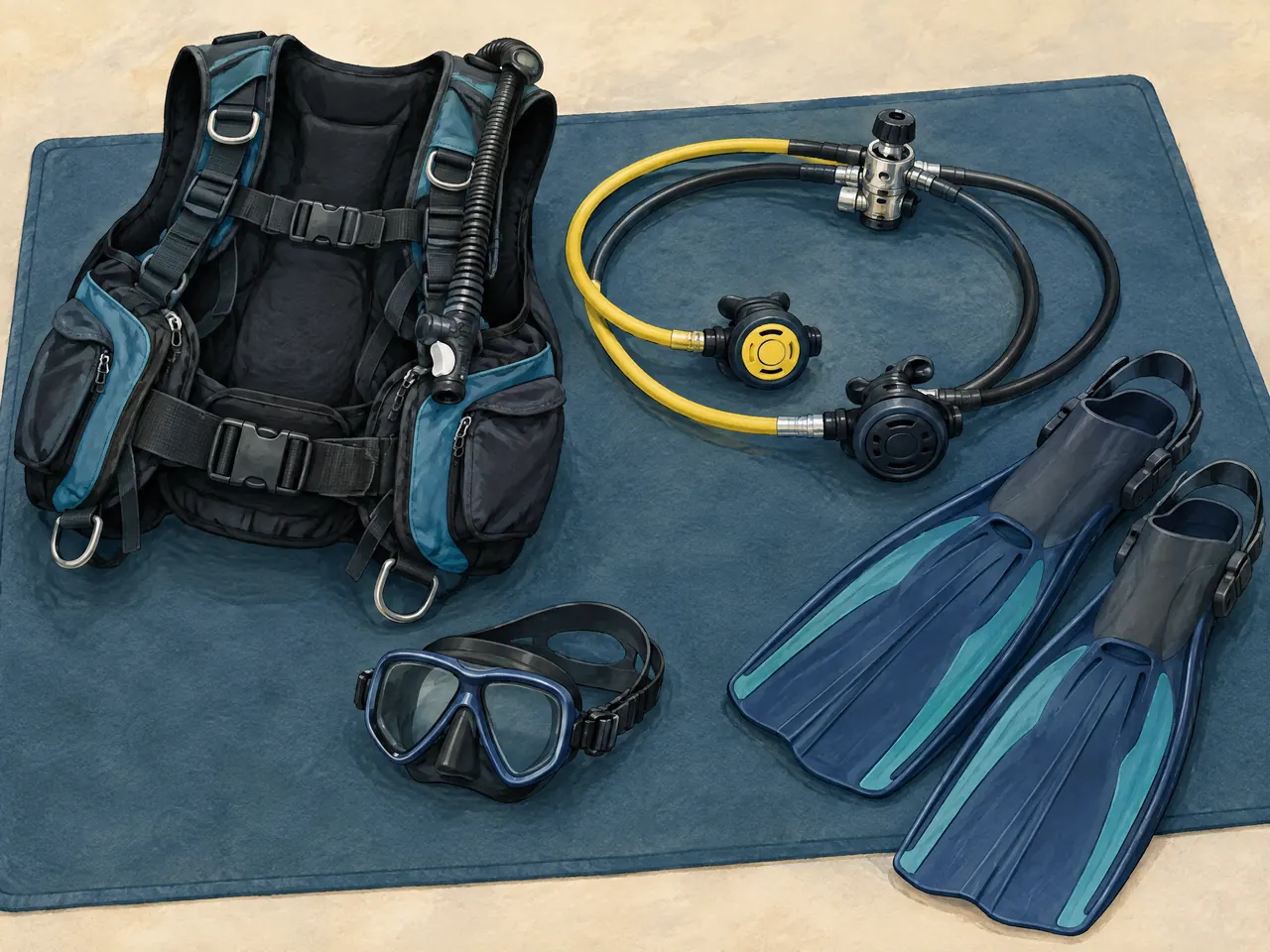
Illustration of an unbranded buoyancy compensator, regulator assembly, mask and fins arranged separately on a dry preparation mat
Basic equipment objects for discussing ownership, supply and review; not a complete specialty kit or an actual DiveHarbour training record.Generated illustrative image

Resolve fit questions before the water session

If you expect to borrow a mask or fins, ask when you can discuss fit and comfort rather than leaving the question until the after-dark meeting. Tell the instructor about discomfort with equipment you have used before and ask what review is available. Keep this separate from deciding which light to buy or what a wreck course requires. The illustrated alternatives do not establish which item fits you, and a fitting conversation is not underwater-use instruction. [1] [2]
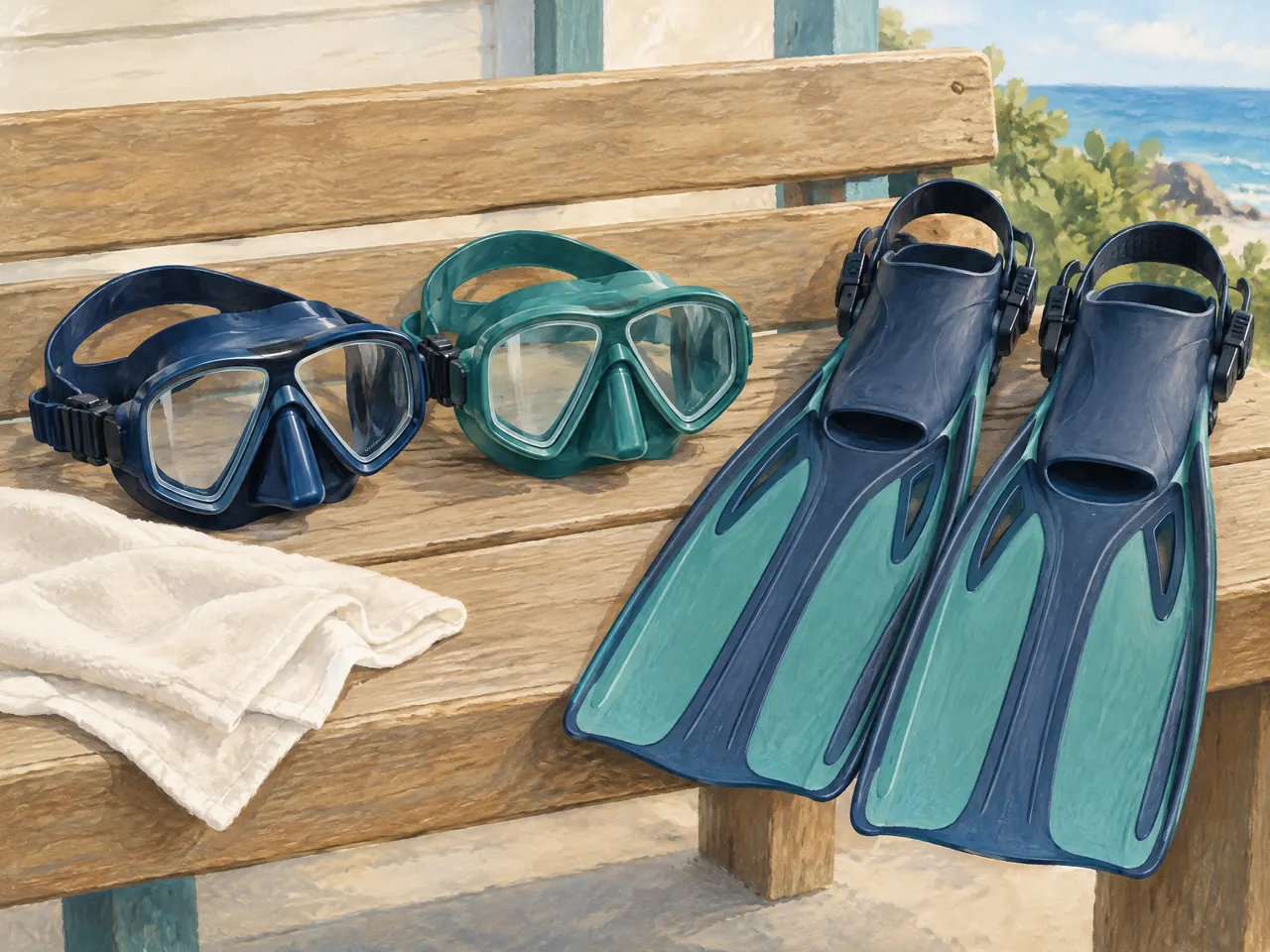
Illustration of two generic scuba masks and separate adjustable fins on a bench beside a clean cloth
Mask and fin alternatives prompt individual fit questions; no product recommendation or actual learner fitting is shown.Generated illustrative image

Annotate the outline by learning setting

Beside each part of the proposed outline, write where it takes place and what the instructor needs you to prepare. Mark evening theory separately from after-dark water training. For an external wreck proposal, ask where its outside-only boundary is stated. The book, pool and open-water model illustrates different learning settings, not a required sequence: it does not establish that either specialty includes a pool session. Ask about any unclear stage rather than borrowing the structure of your entry-level course. [1] [2]

Conceptual illustration of a closed book, a miniature empty pool and a separate abstract open-water cove with space between them
Different learning settings help organise outline questions; this is not a night or wreck syllabus, session count or actual venue.Generated illustrative image

Agree how you will receive an evening update

For a night session, ask when to check for the provider's update before travelling and how a revised meeting or finish time will be communicated. For an external wreck session, ask how changes to access or the proposed setting affect the agreed scope. A weather screen or wave illustration cannot establish suitable diving conditions. Keep the provider's operational update separate from the written make-up terms, and do not treat a changed plan as permission to arrange a substitute dive yourself. [1] [2]
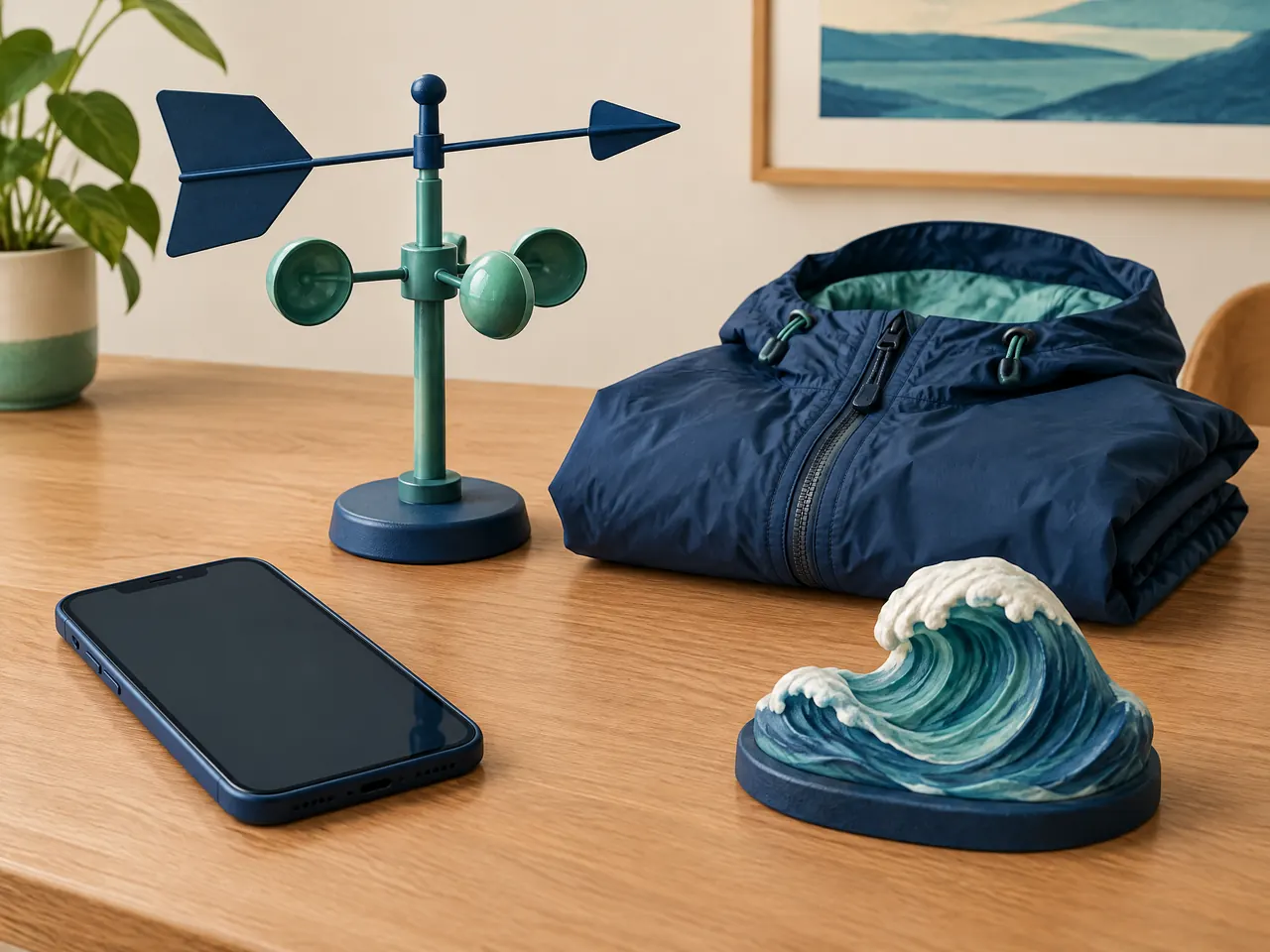
Illustration of an unbranded phone with a completely blank screen beside a wind vane model, rain shell and miniature wave sculpture
Objects prompt questions about provider updates and travel changes; no forecast, safe threshold or actual trip conditions are depicted.Generated illustrative image

Separate personal belongings from the specialty kit

A towel, drink and bag belong to a different part of the enquiry from a dive light or course-specific equipment. Once shore or boat access is confirmed, ask where personal belongings can be kept, what changing arrangements are available and how wet items can be carried home after the session. The illustration represents general outing preparation, not a required night-diving packing list. Confirm your actual journey and facilities rather than assuming that an equipment rental also covers personal storage or transport.

Illustration of an open dry bag with a towel, water bottle and sun hat beside deck-shoe silhouettes on an abstract empty timber surface
General personal outing items are separate from specialist equipment; the scene does not show a night-course kit, actual boat or supplied facilities.Generated illustrative image

Clinic enquiries

Contact and appointment arrangements

Clinics
Prince Edward and Kwun Tong
Opening hours
11:00–21:00
WhatsApp and telephone
+852 6940 5663

Appointments, practitioner availability and service arrangements are confirmed via WhatsApp.

Please mention any consultation language needs in your WhatsApp enquiry so that arrangements can be confirmed.

Enquire via WhatsApp
Food, gifts and floral lifeWhatsApp enquiry