Turn each learning stage into a question sheet
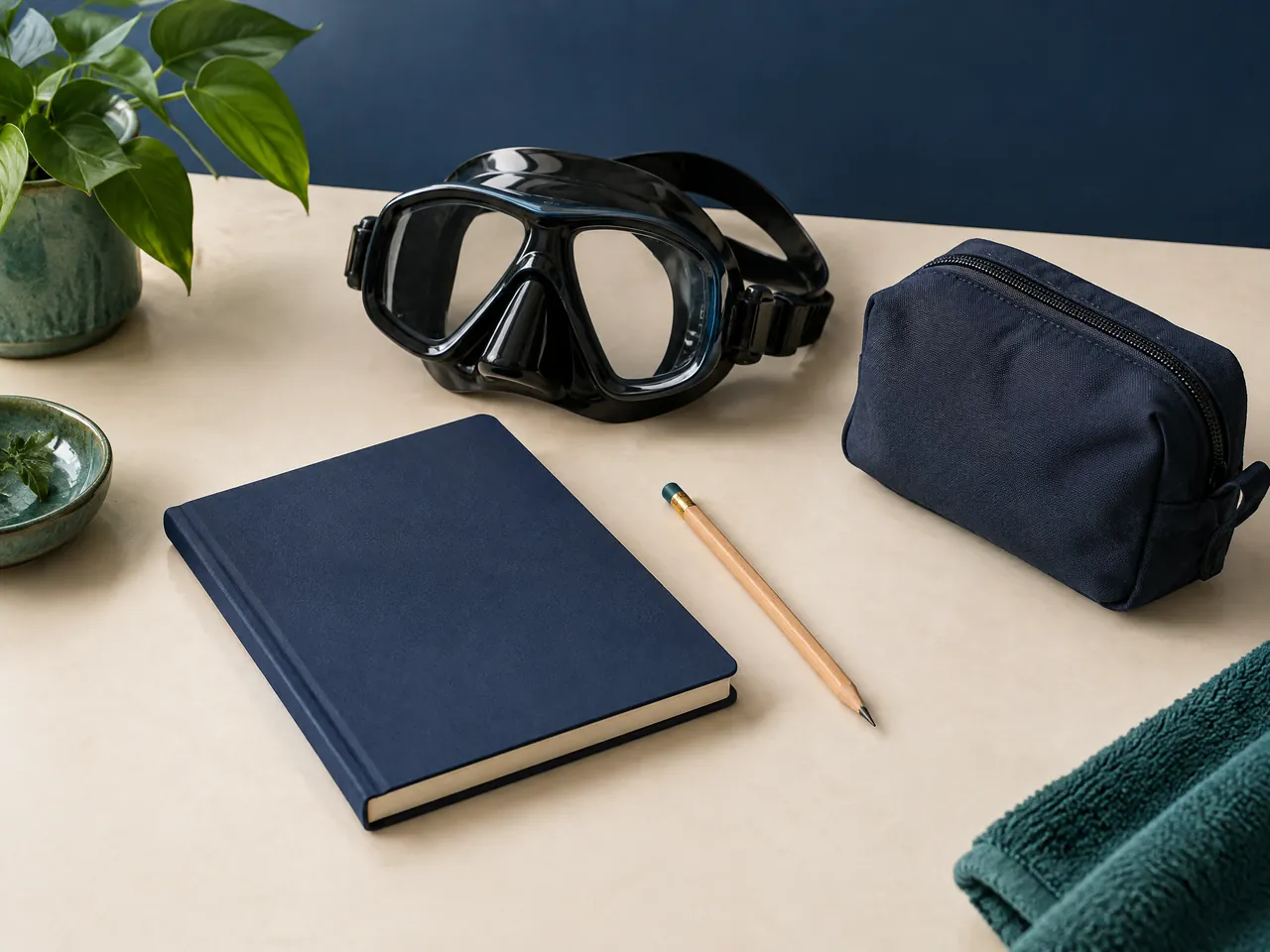
Create a separate space in your notes for knowledge preparation, supervised practice in confined water and open-water training. For each, ask what you need to do beforehand, where the teaching takes place, how questions are answered and how progress is checked. Use the separated book, pool and cove in the illustration as prompts for that conversation, not as a universal syllabus or a timetable. The agency-specific descriptions above remain the starting point for the programme you choose. [1] [2] [3]
When the provider replies, distinguish what is confirmed from what still needs an answer. For example, access to study materials answers a different question from when an instructor reviews your understanding. Keep those details separate so that a convenient online component does not hide an unclear practical plan.

Ask about both the equipment list and personal fit
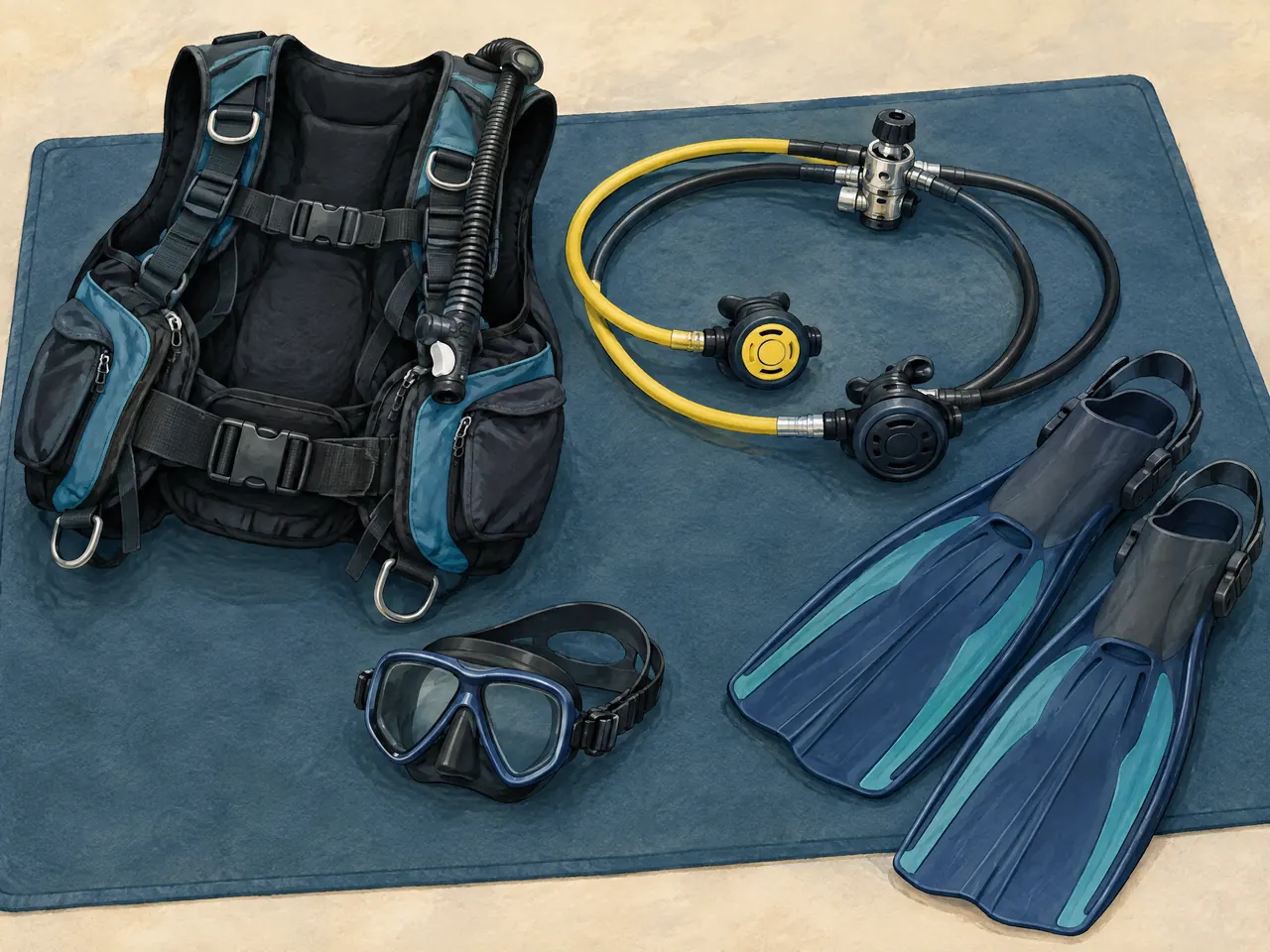
Use the equipment arrangement to make an inclusion enquiry specific. Ask the provider which items are supplied for the proposed training and whether anything must be brought, hired separately or purchased. A buoyancy compensator, regulator assembly, mask and fins in an illustration are conversation prompts, not proof that those items belong to your package. Record the provider’s actual list alongside any unresolved costs. [4]
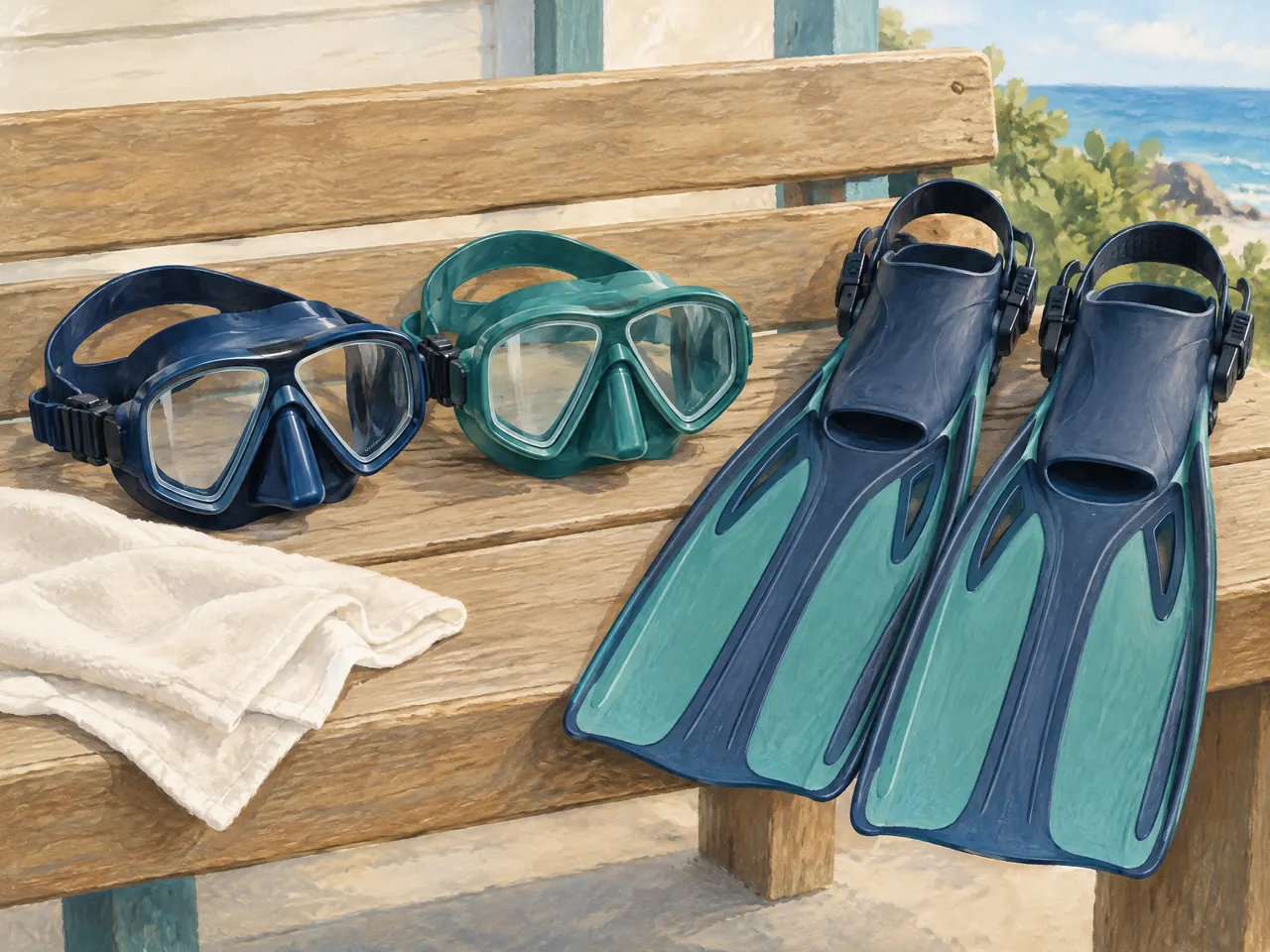
Then ask how personal fit is handled. The separate masks and adjustable fins prompt different questions: when can you discuss comfort, how should you report an unsuitable item, and what happens if the proposed equipment is not workable for you? Raise concerns with the instructor rather than treating this illustration as a fitting procedure or buying equipment solely because it resembles the pictured objects.
Keep water-day preparation separate from course completion
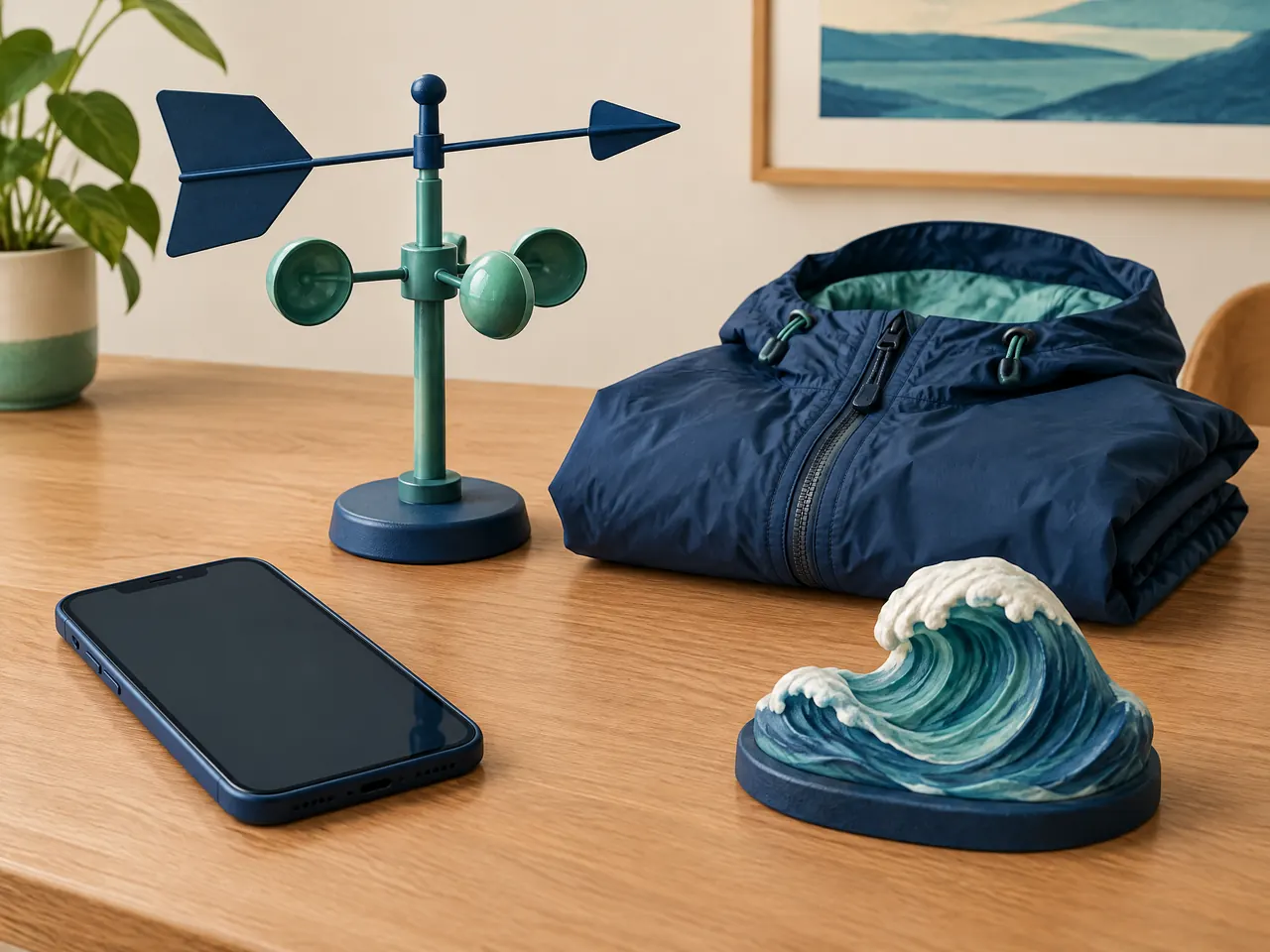
For each proposed water-training day, ask how you will receive confirmation of the meeting point, venue or boat arrangements and any change to the plan. Also ask whom to contact if conditions affect attendance and what written terms apply. The weather objects illustrate questions to raise with the provider, not conditions in which diving is safe. Do not read a forecast yourself as confirmation that training will proceed, and do not assume a changed outing carries a free replacement date. [4]
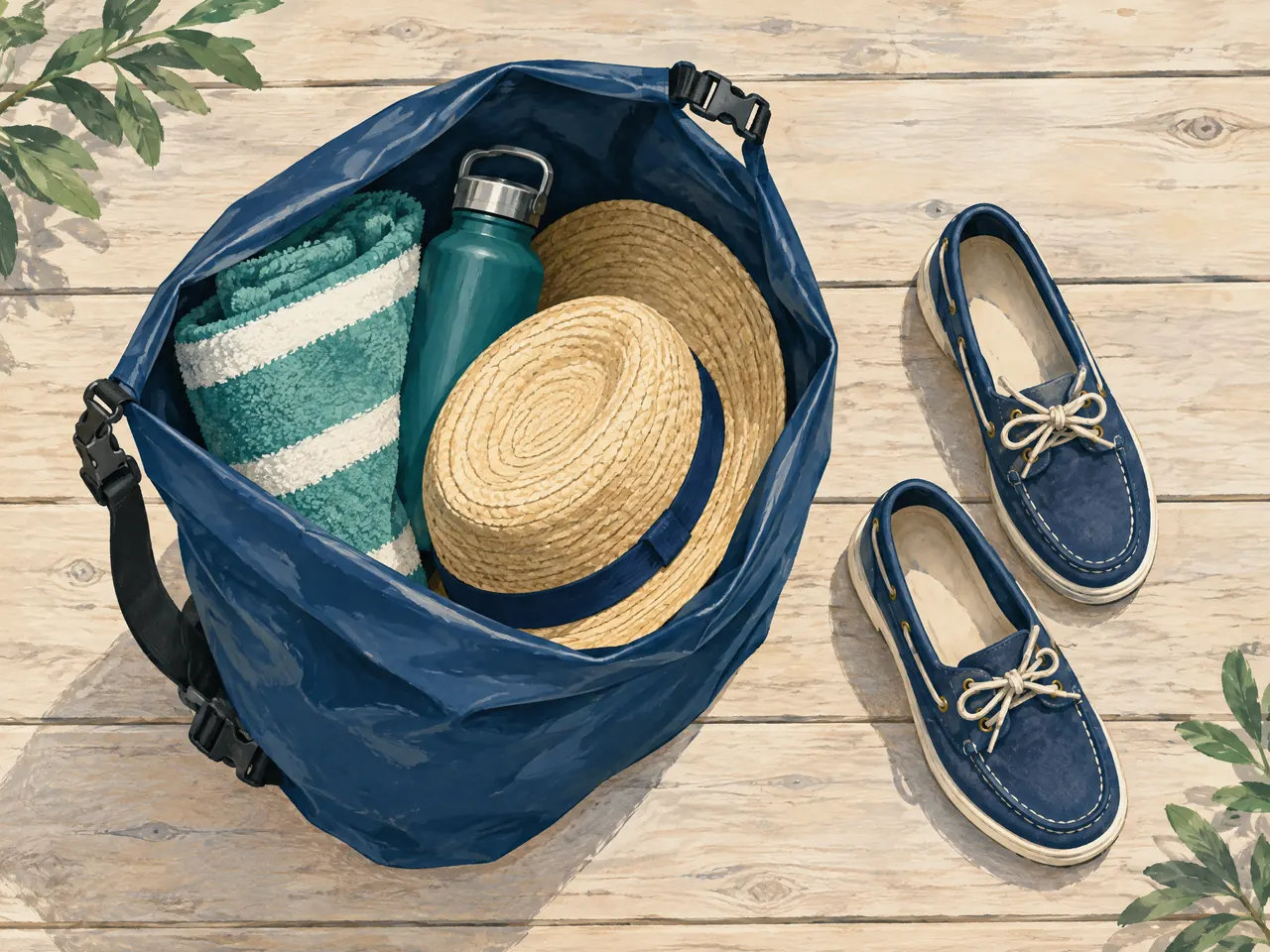
Prepare a separate personal-packing enquiry. The dry bag, towel, water bottle and sun hat represent ordinary outing items, not specialist diving equipment or a provider-approved packing list. Ask what personal belongings to bring, where they can be kept and which facilities are available at the confirmed setting. Keep that answer apart from the supplied-equipment list: being organised for an outing and meeting the course assessments are different matters.
Prepare medical questions privately, not as a booking shortcut
If a required health form raises a question about symptoms or medication, prepare a clear account for an appropriately qualified physician. A current medication and supplement list can help you organise that conversation; the blank card and closed containers in the illustration do not represent a prescription or a recommended treatment. Complete forms yourself, keep personal health details private and do not change prescribed medication to fit course dates. This preparation is not fitness-to-dive clearance, and neither this article nor a TCM consultation replaces an individual assessment. [5]