
Prince Edward & Kwun Tong clinics · Home-visit enquiries elsewhere

TCM Lab

TCM Lab · Outdoor learning & coastal life / Courses and booking

Comparing Hong Kong diving course prices: build a complete quote

Content updated

Two diving courses can look equally affordable until you ask what the fee actually covers. Build a written comparison that separates teaching from materials, rental equipment and water-day logistics, then decide which arrangement fits your learning and your budget.

Illustrative scuba learning preparation objects
AI-generated illustrative concept; not an actual DiveHarbour class, student or dive-site record.

The short answer

Compare the same course outcome and teaching format, then request a current per-person quote identifying included items, compulsory extras, optional purchases and unresolved costs. Confirm learning materials, equipment, venue and boat arrangements, certification administration and payment terms before paying. An online theory fee alone is not a complete course quote.

DiveHarbour is a separate diving school under the same ownership as TCM Lab. Diving courses and activities are separate from Chinese medicine care; reading this collection or visiting TCM Lab does not replace medical fitness-to-dive assessment or clearance.

1. Ask for a complete total, not just a starting price

A useful diving budget begins with a specific question: what must I pay to attend and complete the agreed training, assuming the stated arrangements do not change? A headline amount cannot answer that on its own. It may cover a package, a particular teaching component or a group arrangement. When using the scuba diving course price Hong Kong guide, note that DiveHarbour publishes fees per person in Hong Kong dollars and says course inclusions are confirmed in writing before booking. Carry that same currency and per-person basis into every comparison. [1]

Give each quoted item a clear status: included, mandatory but separate, optional, or not yet confirmed. A blank beside equipment or boat costs is not evidence that it is free. Ask for the amount or the basis on which it will be determined. Until compulsory items are resolved, label the quote incomplete rather than treating it as the cheapest option. Keep personal spending, such as travel to the meeting point, alongside the course total but separately identified. This lets you see both the provider's charge and what the training days could mean for your own budget.

2. Compare the same learning outcome and format

Before collecting numbers, describe what you want to buy. A supervised first experience, an entry-level certification course and a recreational outing for an existing diver serve different purposes. DiveHarbour's scuba diving course Hong Kong overview distinguishes these starting conversations and says dates, meeting points and availability are individually confirmed. If your goal is certification, an introductory experience is not a lower-priced equivalent. Ask for the precise course name and certification agency rather than comparing every listing that contains the word 'diving'. [2]

Next, make the learner details consistent. Give each provider the same experience history, preferred learning language, approximate availability and rental needs. Ask whether the response assumes group teaching, a private arrangement or a minimum number of participants. For a booking with friends, confirm whether the fee depends on everyone attending and what happens if the group changes. Do not assume a discount exists. Also request the planned teaching components and how instructor feedback is provided. Differences in format can matter to your ability to attend and learn, even when the intended certification outcome sounds similar.

3. Separate theory, materials and certification administration

For an entry-level enquiry, use the Open Water diving course Hong Kong cost page to frame a course-specific inclusion request. Its NAUI group-course reference says materials, certification, pool and open-water training, boat and equipment arrangements are confirmed before registration. Ask which of these sit inside your quoted total and which need separate confirmation. Do not infer that another agency's online product or course rules describe this particular package. The useful evidence is the written scope for the route you are actually choosing. [3]

PADI provides a clear example of why theory and a complete course must be distinguished: its education page separates knowledge development or eLearning from in-water training and directs learners to the chosen dive shop for practical-training pricing. A stand-alone online theory amount is therefore not a complete Hong Kong training quote. If you have already bought PADI eLearning, tell the provider before paying; PADI specifically advises learners to do so. Ask whether that purchase is compatible with the proposed course and how it affects the quotation, without assuming a credit or discount. [4]

For any route, check the learning-material format, available language and when access is supplied. Clarify whether instructor-led theory support and required assessments are part of tuition. Ask separately about certification processing and the form of card included, if any. A souvenir or replacement card should not be confused with required administration. Paying for a package is not a promise of certification: clarify the selected agency's completion requirements and what happens if more learning is needed.

4. Turn 'equipment included' into a usable rental list

The phrase 'equipment included' needs a boundary. Ask the provider to identify the rental items supplied for each training stage, including exposure protection, mask and fins, scuba equipment, cylinders and weights as applicable. Then ask what you must bring or purchase yourself. A quote for water-day rental may not describe personal accessories, equipment used at a separate venue or an item selected for a particular fit. These are questions to resolve, not assumptions that any named provider charges for them.

Mention sizing needs early, including any prescription-mask question, and ask whether a suitable arrangement is available and what it would cost. If you already own equipment, name the items and ask whether they can be used and whether the package price changes; owning a mask does not automatically create a rental refund. Confirm collection and return arrangements, any deposit and the written terms for loss or damage. Ask whether the same rental scope applies to a permitted make-up session. You do not need to buy a full kit to make the quote complete; you need to know which items are essential for this booking and which are optional choices.

5. Distinguish boat inclusion from the whole training-day journey

Separate teaching from the costs of reaching and using the training environment. Ask whether confined-water venue access and open-water logistics are included in the tuition total or charged separately. If a boat is part of the proposed course, identify which training sessions its charge covers. 'Boat included' does not by itself answer whether transport to the meeting point, meals or another transfer is provided. Request the meeting arrangements and expected session plan rather than assuming a location name on a website is your departure point.

Keep these distinctions in your own budget as well. A course that fits your available days may be more manageable than a lower quote that requires difficult journeys or time away from work. Ask which dates and venues are confirmed and which remain provisional. If the practical plan changes, find out whether that changes the cost and how the provider will notify you. For a weather-related interruption, read the applicable written policy rather than assuming a replacement boat day is included. Compare the arrangements you have been offered, not an imagined schedule in which every journey and session goes exactly as planned.

6. Price in the terms for extra practice and disrupted plans

A complete quotation should explain what happens when learning takes longer than the proposed schedule. PADI describes its certification courses as performance-based, with schedules depending on learner progress; that statement applies to PADI, not automatically to every other route. Ask your selected provider how it handles unfinished learning, additional supervised practice and the validity of any remaining course components. Get the charging basis and booking process for extra sessions in writing. A fee for teaching should not be interpreted as a guaranteed completion date or a guaranteed certification result. [4]

Payment conditions are part of the financial comparison. DiveHarbour's price page states that all fees are non-refundable and that make-up sessions are subject to written terms. Do not read this as a flexible refund policy or a promise of free rescheduling. Ask how the terms apply to absence, illness, weather disruption and a need for more practice, including any notice requirements, charges and permitted arrangements. Save the policy with the quote before paying. If your own availability is uncertain, settle those questions first rather than relying on a future exception that has not been offered in writing. [1]

7. Send one focused enquiry and choose on confirmed scope

A useful enquiry can be short: 'I am a beginner seeking entry-level certification. My preferred learning language is English, my availability is flexible within the stated period, and I need rental equipment. Please confirm the agency and teaching format, current per-person total, included training and materials, certification administration, rental list, venue and boat arrangements, compulsory extras and payment terms.' Adapt it honestly to your circumstances. Add participant ages and prior certification where relevant, then ask which prerequisites and documents apply rather than guessing eligibility from a price listing.

Ask about any required health paperwork early and answer it yourself truthfully; a personal medical question may need review by an appropriate physician. TCM Lab care and this lifestyle article do not replace a fitness-to-dive assessment. There is no need to let a price offer rush that decision. When replies arrive, first resolve missing compulsory costs, then compare the total with the learning format and practical attendance requirements. Keep optional purchases separate. Save the dated quotation, its scope, applicable terms and receipt together. The strongest budget is not necessarily the lowest headline number: it is a complete arrangement you understand, can afford and can realistically attend without relying on unconfirmed promises.

Take it into everyday life

A practical checklist

  • Confirm the exact course, intended outcome, certification agency and teaching format.
  • Use the same learner details for each enquiry and check the per-person currency basis.
  • Mark every cost included, compulsory and separate, optional, or not yet confirmed.
  • Identify theory access, learning materials, assessment support and certification administration.
  • Get the rental list, sizing arrangements and any deposit or damage terms in writing.
  • Separate venue and boat charges from travel, transfers, meals and other personal spending.
  • Read payment, absence, weather and conditional make-up terms before paying.
  • Save the final dated quote and terms; resolve remaining compulsory costs before choosing.

Questions & answers

Can I compare an introductory dive price with an Open Water course fee?

Not as equivalent purchases. A supervised introduction lets you experience scuba but is not the same as completing entry-level certification. First identify the outcome you want, then compare quotations for that outcome and the relevant teaching format. [2]

Does buying eLearning mean I have paid for the whole diving course?

No. PADI separates knowledge development or eLearning from in-water training and asks learners to contact their chosen dive shop for practical-training costs. Tell the provider about an existing eLearning purchase before booking, and ask how it fits the proposed route and quote. Do not assume an automatic credit. [4]

What if equipment or boat costs are missing from the quote?

Treat those items as unresolved, not free. Ask whether they are required for your arrangement, whether they are included, and what the separate amount or charging basis is. Keep the quotation marked incomplete until compulsory costs have been confirmed.

Should bringing my own equipment make the course cheaper?

Not automatically. Describe your equipment and ask whether the provider permits its use and changes the package charge. Check which items are still supplied, whether suitability needs confirmation and whether rental costs are bundled rather than priced individually.

Does a published course fee guarantee the same total for every learner?

Do not assume so. The applicable format and inclusions need confirmation. DiveHarbour says prerequisites, materials, certification, equipment, venue and boat arrangements are confirmed in writing before booking. Request the current total for your specific enquiry, not just a copy of a headline listing. [1]

Can I get a refund or automatically move a DiveHarbour session?

DiveHarbour's price page states that all fees are non-refundable and make-up sessions are subject to written terms. A replacement session, date or free change is not automatic. Read the applicable terms and ask how your circumstances would be handled before payment. [1]

How do I choose between a clear higher quote and an incomplete lower quote?

Resolve the lower quote's compulsory extras first. Then compare confirmed totals alongside teaching format, equipment scope, attendance practicality and payment terms. An optional purchase should not inflate one comparison while a mandatory cost disappears from the other.

Sources & further context

Numbered references follow the source order below. Course websites describe their own programmes; health and coastal sources have separate purposes and do not endorse commercial course quality.

  1. [1] DiveHarbour — Scuba diving course prices in Hong Kong
  2. [2] DiveHarbour — Scuba diving in Hong Kong
  3. [3] DiveHarbour — Open Water diving course Hong Kong cost
  4. [4] PADI — Scuba Diving Training & Education Courses

Map each teaching stage to the quotation

Give your comparison sheet a separate line for knowledge preparation, confined-water practice and open-water training where those components apply to the proposed course. Beside each, record the provider's description, whether its charge is included, and what still needs an answer. The book, pool and cove illustration is a way to organise those questions, not a promised syllabus. If one reply covers only theory and another covers several training components, do not rank their totals yet: ask for the missing scope so that you can compare equivalent arrangements.

Conceptual model of a closed book, an empty miniature pool and a separate open-water cove
Illustrative learning contexts for organising a quotation; not an actual course syllabus, venue or DiveHarbour training record.Generated illustrative image

Give each rental item a place in the comparison

Instead of copying 'equipment included' into a single box, record the supplied items individually. The illustrated buoyancy compensator, regulator, mask and fins are prompts for an enquiry, not a complete rental inventory. For each item the provider identifies, note which sessions it covers, who supplies it and whether any charge remains unresolved. Keep a returnable deposit distinct from the course fee, and retain the actual written conditions rather than assuming it will be returned automatically. This record makes it easier to spot two quotations that use the same package label but describe different equipment arrangements.
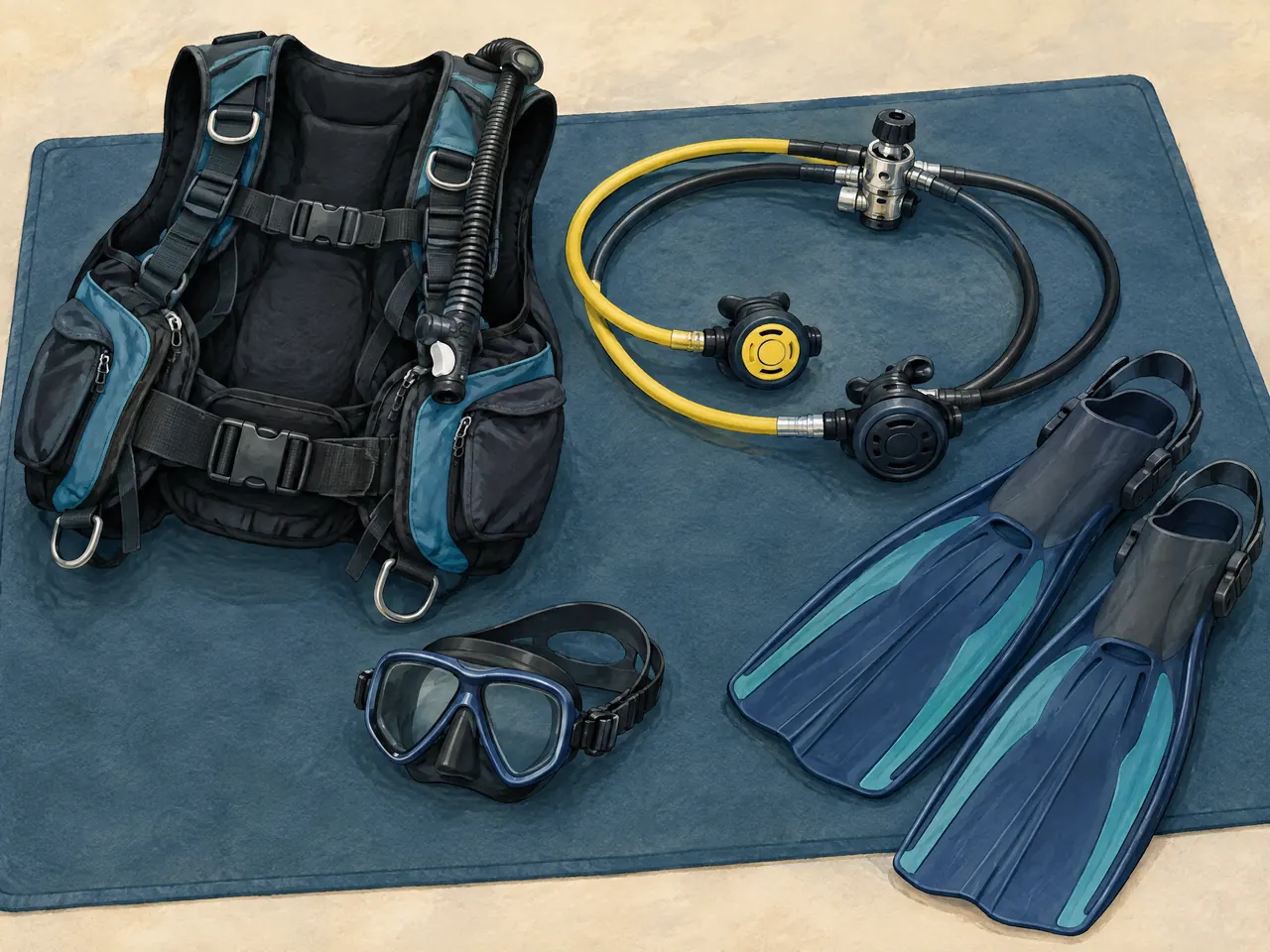
Unbranded buoyancy compensator, regulator assembly, mask and fins arranged separately on a dry mat
Illustrative equipment enquiry prompts; not a complete kit, a rental guarantee or actual DiveHarbour equipment.Generated illustrative image

Turn a fit question into a specific follow-up

An equipment-fit question should produce an answer about the proposed booking, not an assumed shopping requirement. If you need to discuss mask or fin sizing, write that need beside the relevant rental item and ask when suitability can be checked. Record whether the answer concerns supplied equipment, an optional purchase or an arrangement still awaiting confirmation. If you intend to bring your own item, ask separately whether it can be used and whether that changes the quotation. The paired masks and fins illustrate items to discuss; they do not show which model fits you or establish that a purchase is necessary.
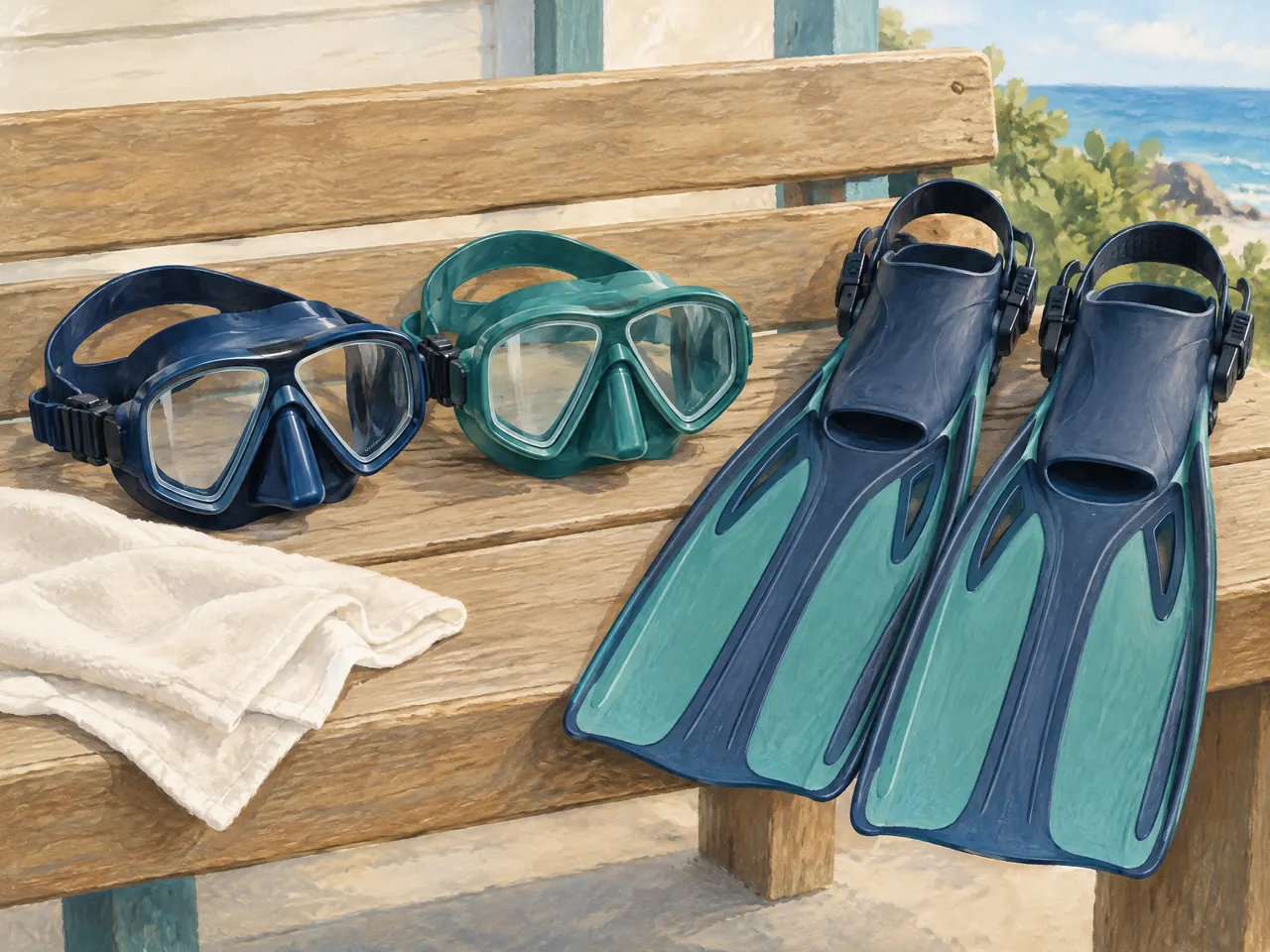
Two generic scuba masks and separate adjustable fins on a bench beside a clean cloth
Illustrative mask and fin choices for a fit enquiry; not a personal fitting assessment or a product recommendation.Generated illustrative image

Record the cost consequence of a changed session

Make a small contingency record alongside the quoted total. For a weather interruption, learner absence or unfinished practice, note the applicable written rule, who confirms the next arrangement and which costs still need clarification. Distinguish a possible make-up booking from a confirmed replacement date, and do not enter a replacement as free unless the terms explicitly establish that. If a reply only says 'subject to conditions', ask which conditions apply to your booking. The weather objects are a reminder to review logistics with the provider, not a forecast or a set of safe diving thresholds.
Phone with a blank screen beside a wind vane model, rain shell and miniature wave sculpture
Illustrative reminder to clarify weather-related arrangements and costs; not a forecast, safety clearance or rescheduling promise.Generated illustrative image

Keep the attendance budget separate from tuition

Use a second part of your comparison for spending outside the provider's confirmed charge. Record your journey to the agreed meeting point and any personal food, drink or outing items you expect to pay for. Mark what you already own so that an optional new bag or accessory does not distort the course comparison. Ask about facilities and what to bring before adding purchases to your budget. The dry bag, towel, bottle and hat illustrate personal preparation rather than included course equipment; their presence does not mean every item is required or supplied.
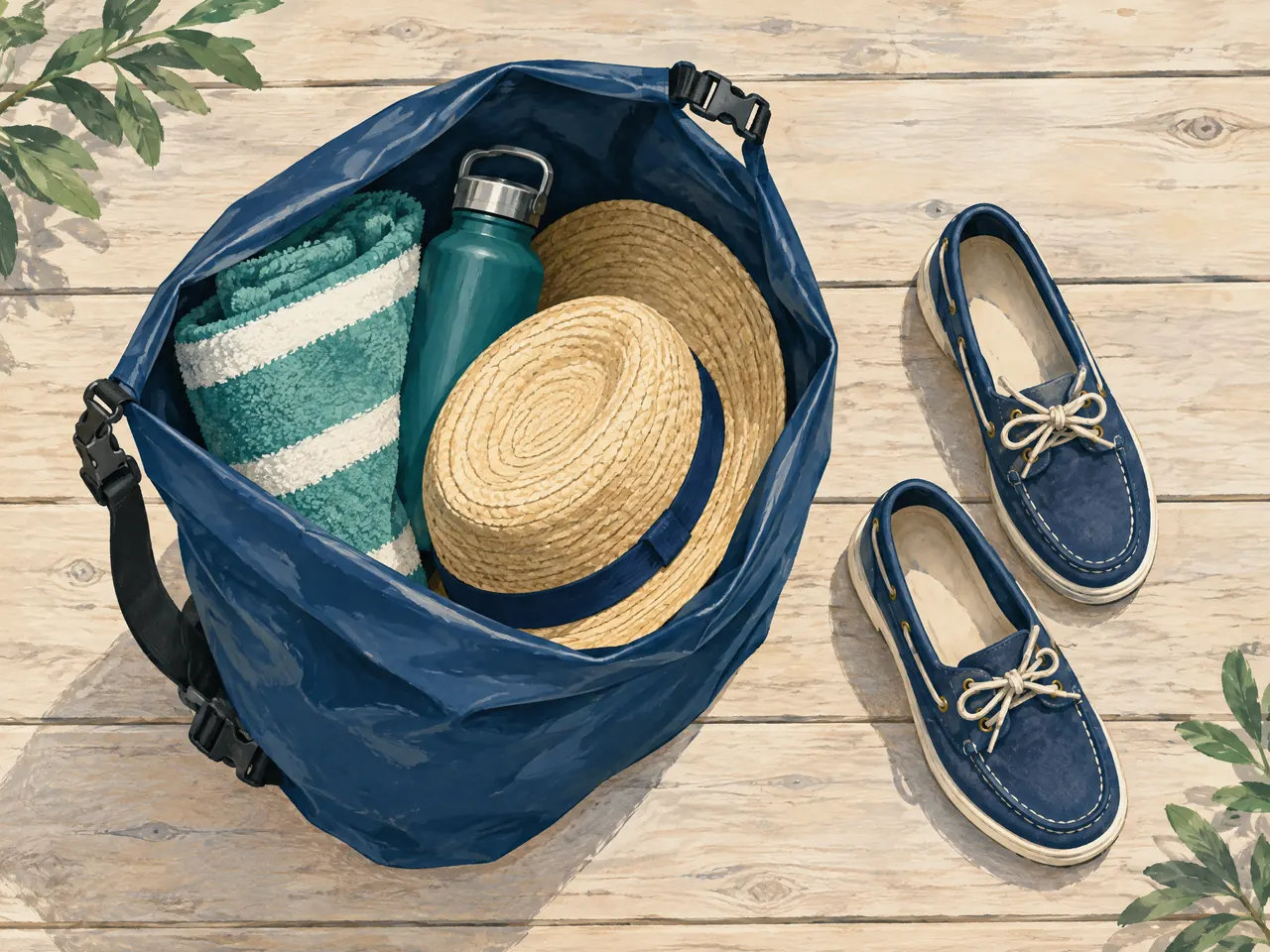
Open dry bag with a towel, water bottle and sun hat beside deck-shoe silhouettes on an empty timber surface
Illustrative personal outing items for a separate attendance budget; not a required packing list or a statement of course inclusions.Generated illustrative image

Clinic enquiries

Contact and appointment arrangements

Clinics
Prince Edward and Kwun Tong
Opening hours
11:00–21:00
WhatsApp and telephone
+852 6940 5663

Appointments, practitioner availability and service arrangements are confirmed via WhatsApp.

Please mention any consultation language needs in your WhatsApp enquiry so that arrangements can be confirmed.

Enquire via WhatsApp
Food, gifts and floral lifeWhatsApp enquiry