
Prince Edward & Kwun Tong clinics · Home-visit enquiries elsewhere

TCM Lab

TCM Lab · Outdoor learning & coastal life / Coasts and boat outings

Certified tourists in Hong Kong: organise evidence before a fun dive

Content updated

A clear certification record, a useful account of recent dives and an honest travel calendar make a visitor enquiry easier to answer. Prepare those details before choosing a recreational outing, and leave time for any refresher or medical questions to be resolved.

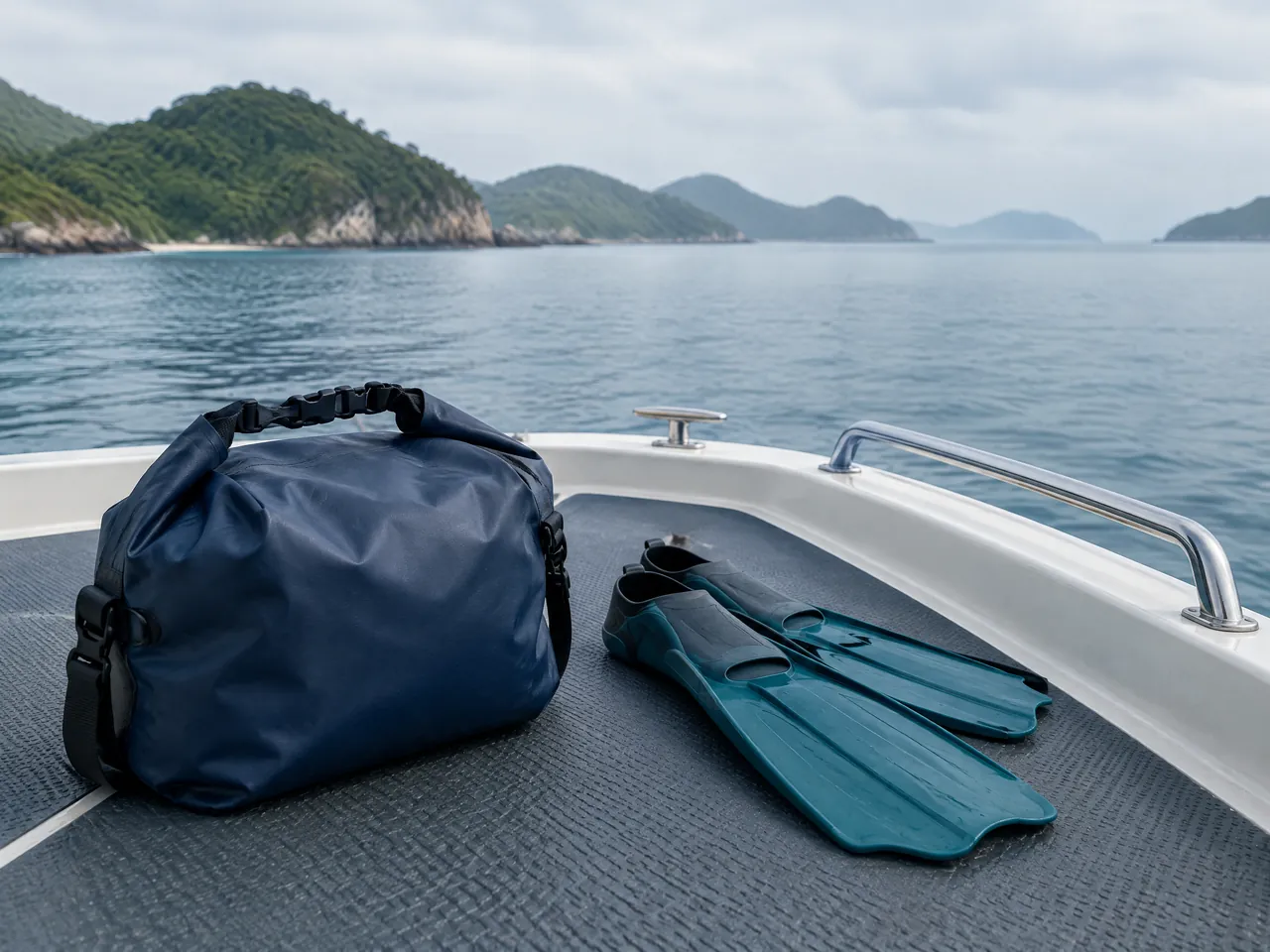
Illustrative coastal outing preparation objects
AI-generated illustrative concept; not an actual DiveHarbour class, student or dive-site record.

The short answer

Send your certification agency and level, accessible certification evidence, last-dive date, recent experience, preferred dates, language and rental needs. Include your onward flight details before agreeing the final dive day. Ask the operator to confirm accepted documentation, any refresher requirement, supervision and booking terms in writing; a card alone does not establish readiness for every outing.

DiveHarbour is a separate diving school under the same ownership as TCM Lab. Diving courses and activities are separate from Chinese medicine care; reading this collection or visiting TCM Lab does not replace medical fitness-to-dive assessment or clearance.

Make one useful visitor record before choosing a date

Start with a short record you can send before paying, not a collection of holiday photographs that someone must interpret. Put your certification agency and exact level first. Follow with your last-dive date, a short description of recent diving and the dates you can genuinely keep free. The certified-diver fun dive Hong Kong visitor page asks for this kind of background so the operator can discuss a recreational plan, equipment and language needs. It also makes clear that a fun dive is for appropriately certified divers rather than a first qualification. [1]

Separate what is already documented from what still needs agreement. Your certification may be documented; the proposed shore or boat arrangement, guide support and meeting point may not be. Write your preference as a request rather than an assumed booking. For example, explain that you would like a relaxed outing with an English briefing and need rental equipment, then ask what is suitable for your experience and dates.

If you are travelling with friends, prepare a small record for each diver. One person's recent practice cannot stand in for another person's long break. Include anyone's uncertainty early, rather than letting the most confident traveller select the whole group's plan. That gives everyone room to choose a different format without turning the holiday into a test of keeping up.

Make your certification easy to identify and retrieve

Check that the record you intend to share clearly shows your name, agency and certification level. Include its identifier where available, and ask which evidence the operator accepts. Do not assume that a photograph, an app display or an online lookup will automatically satisfy every operator's requirements. If you cannot find the record, contact your issuing agency about retrieval before arranging the outing; explain the problem openly rather than presenting an old course booking as proof of qualification.

Save a readable offline copy if your agency permits it, and keep access to the original record. A phone that needs an internet connection, a forgotten password or a flat battery can make an otherwise straightforward check awkward on a travel day. Test whether the text is legible rather than relying on a tiny screenshot. If the name on the certification differs from your booking name, ask beforehand how to explain that difference and which supporting document, if any, is necessary.

Share only the information requested through an agreed channel. There is no reason to put a passport, medical form and every qualification into a public group chat merely to make an initial enquiry. Keep specialist qualifications distinct from your basic certification record, and ask whether any are relevant to the proposed activity. Holding a particular card is not a reason to assume that unfamiliar conditions suit your current experience.

Use recent logs to explain experience, not impress a guide

Choose a few recent entries that show what you have actually been doing. Dates and locations help, but a short account of the setting is often more useful than a lifetime total alone. Describe whether those outings were shore-based or boat-based, whether you used familiar or rented equipment, and how comfortable you felt. Mention any difficulty that could affect the next outing. DiveHarbour's visitor guidance treats recent experience and comfort as part of matching an appropriate plan. [1]

Distinguish a logged date from a remembered one. If your last dive was during a holiday several years ago and the precise day is missing, give the month or year as an estimate and say it is approximate. Do not create entries to fill gaps. Where records are spread across a paper book and a device, prepare a short summary that identifies the gaps instead of sending dozens of disconnected images.

Include the context behind a recent refresher too. Record when it happened, which professional or centre provided it and what completion documentation you received. Keep those details factual rather than declaring yourself ready for every site. NAUI specifically notes that documentation from its Refresher Scuba course can help guides and operators evaluate a diver's training and readiness for particular activities. The documentation assists that conversation; it does not remove the need to discuss the next outing. [3]

Discuss refresher needs before committing to the outing

If you feel rusty, put that sentence near the top of the enquiry. The Hong Kong fun dive guide distinguishes a recreational outing from supervised refresher work and asks readers to consider inactivity, equipment familiarity and the intended conditions. Ask whether your records suggest a normal guided outing, a supervised review or a separate refresher first. Confirm what the proposed service actually includes; do not assume a guide booking automatically provides a personal skills review. [2]

Ask which agency route and assessment apply if a refresher is recommended. NAUI describes its Refresher Scuba as supervised, non-certification continuing education for divers re-establishing proficiency after inactivity. That is a defined course context, not a universal standard for every certification system. The operator should explain the relevant requirements for your background rather than treating every diver's lapse in practice as identical. [3]

Leave enough flexibility to act on the answer. A traveller who reserves only one narrow window may have no room for the preparation recommended after the records are reviewed. Explain the dates you can use and which are constrained by flights or other commitments. If the suitable plan cannot fit, choosing another date or skipping the dive is more practical than expecting a refresher to be compressed into an unconfirmed boat departure.

Keep health questions and travel cover separate from certification

Request the operator's current medical questionnaire early and answer it yourself. DAN advises honest completion and physician evaluation when indicated; changes since your last diving trip can matter even if your card has not changed. If a form or health concern needs review, consult an appropriate physician familiar with diving medicine. This article, a dive booking and a TCM Lab consultation are not substitutes for an individual fitness-to-dive assessment. Do not change medication to make a booking possible. [4]

Store any required medical documentation separately from your general dive summary and ask how it should be provided. An initial enquiry needs enough information to identify an unresolved question, not an unnecessary medical history distributed among travel companions. A past approval should not be assumed to answer a new health concern; ask about the documentation required for this outing.

Review travel or diving cover as another separate task. Ask your insurer whether the planned recreational activity is covered, which exclusions matter and what evidence it requires. Save the policy details and relevant assistance information where you can retrieve them. Neither a certification card nor an operator's willingness to discuss a trip proves that your insurance will cover it.

Plan flights around the final dive, using verified guidance

Give the operator your onward flight's date and departure time, including the local time zone, before agreeing a final diving date. Say whether you have also been diving earlier in the holiday. The relevant interval is between leaving the water after the final dive and flying, not between returning to your hotel and checking in at the airport. Transport time is another constraint, but it is not a replacement for a preflight surface interval.

DAN's published guidance recommends a minimum preflight surface interval of 12 hours after a single no-decompression dive, and 18 hours after multiple dives in one day or multiple days of diving. These recommendations apply to air dives followed by flights with cabin altitudes of 2,000–8,000 feet, for divers without symptoms of decompression sickness. DAN says the recommendations reduce risk but do not guarantee avoidance; longer intervals further reduce risk. They are not personalised permission to board a flight at the earliest possible minute. [5]

Use those verified categories to raise the right question, not to design a tight itinerary around a minimum. Ask the dive professional to review the actual planned diving and relevant guidance, and leave a non-diving period with room for delays. If the diving falls outside the stated scope, obtain appropriate specialist advice rather than adapting these numbers yourself. If you develop signs or symptoms that may indicate decompression sickness, DAN advises seeking medical advice and avoiding flying. A scheduled departure should not take priority over that advice. [5]

Save the confirmed day plan alongside your evidence

Once your background has been discussed, request a written summary of the agreed activity. It should identify the date, meeting point, briefing language, expected departure and return arrangements, rental needs and agreed supervision. Ask which site or route details remain provisional and when conditions will be reviewed. DiveHarbour's visitor page says site, guide and scheduling details require confirmation; a coastal photograph or suggested area is not your final itinerary. [1]

Check the total quotation and inclusions without assuming that equipment, guide support or transport are bundled together. Read the payment terms before committing. The assigned DiveHarbour pages state that all fees are non-refundable and make-up sessions are subject to written terms. Ask how those terms apply to your date and to an unsuitable-weather decision; do not treat a make-up session or replacement date as guaranteed. [1] [2]

Keep the latest confirmation, certification evidence and recent-dive summary accessible together, with sensitive documents stored separately. Share the agreed logistics with your buddy so you are not following different versions of the plan. After the outing, update the log with what actually happened and the final dive's end time. That leaves a useful record for your next enquiry and for checking your remaining travel plans.

Take it into everyday life

A practical checklist

  • Confirm which certification evidence is accepted and keep a readable, accessible copy.
  • Write the exact agency and level, last-dive date and useful recent experience; mark uncertain dates as estimates.
  • Prepare each traveller's background separately and disclose any long break or reduced confidence.
  • Ask whether a guided outing, supervised review or separate refresher is appropriate, and what is included.
  • Request the current medical questionnaire and resolve any required physician review before committing.
  • Check the planned activity against your insurance policy and retain the relevant assistance details.
  • Share onward flight dates and local departure times, then protect a non-diving period based on the applicable guidance.
  • Save the written meeting, equipment, supervision, conditions and payment arrangements; check which details remain provisional.
  • After diving, record the actual final dive end time and update your log before reviewing onward travel.

Questions & answers

Is a photograph of my certification card enough?

Ask the operator which evidence it accepts before booking. A clear photograph may help an initial enquiry, but do not assume it settles verification. Keep access to the original or agency record, and resolve missing records or name differences in advance.

What should I send if I have lost my logbook?

Send your certification evidence and an honest summary of your last diving, marking remembered dates as approximate. Explain that the logbook is missing rather than inventing entries. Ask what further information or supervised review the operator needs to consider a suitable outing.

Does completing a refresher give me a new certification?

Not necessarily. NAUI's Refresher Scuba is explicitly a non-certification course, and its documentation can assist an operator's readiness evaluation. Ask which refresher route is proposed, what documentation it produces and how it relates to your existing qualification. [3]

Can my experienced buddy provide the records for both of us?

Your buddy can help organise the shared logistics, but each diver needs an individual account of certification, recent practice and comfort. Complete your own medical answers. A group's plan should not assume that everyone has the experience or readiness of its strongest member.

Can I use the 12-hour flight interval after a day with two dives?

No: DAN's 12-hour minimum category is for a single no-decompression dive. Its minimum recommendation for multiple dives in one day or multiple days of diving is 18 hours, within the guidance's stated scope. These minima do not guarantee avoiding decompression sickness; discuss your actual itinerary and leave additional room rather than planning to the threshold. [5]

Will TCM Lab or a completed questionnaire clear me to dive?

No. This lifestyle article and a TCM Lab consultation do not provide diving medical clearance. A questionnaire identifies whether further evaluation is needed; if indicated, consult an appropriate physician familiar with diving medicine. Answer honestly rather than treating a form as a way to secure a place. [4]

What should I clarify if weather changes my booked day?

Ask about the decision process and how the written terms apply before paying. The assigned DiveHarbour pages state that fees are non-refundable and make-up sessions depend on written terms. Neither an alternative site nor a make-up date should be assumed to be guaranteed. [1] [2]

Sources & further context

Numbered references follow the source order below. Course websites describe their own programmes; health and coastal sources have separate purposes and do not endorse commercial course quality.

  1. [1] DiveHarbour: Certified-diver Fun Dives in Hong Kong
  2. [2] DiveHarbour: Hong Kong Fun Dives and Refresher Dives
  3. [3] NAUI: Refresher Scuba
  4. [4] Divers Alert Network: Health Status
  5. [5] Divers Alert Network: Flying After Diving

Give each equipment request a confirmation status

Add a small equipment note to your visitor record with two separate groups: items you intend to bring and items you are requesting to rent. Name the items rather than writing only 'full kit needed'. Alongside each rental request, leave room for the operator's reply about availability and what the agreed quotation includes. Until that reply arrives, keep the item marked as requested, not confirmed. This prevents a preference in the first enquiry from becoming an assumed inclusion in the final day plan.

Include unfamiliar equipment in the same note even if you own it. For example, say that your recent diving used a different buoyancy compensator or regulator arrangement, and ask what familiarisation can be discussed before the outing. An equipment illustration can help identify the objects being discussed; it cannot establish their condition, compatibility or your readiness to use them. Keep those unresolved questions visible when the operator reviews your records.
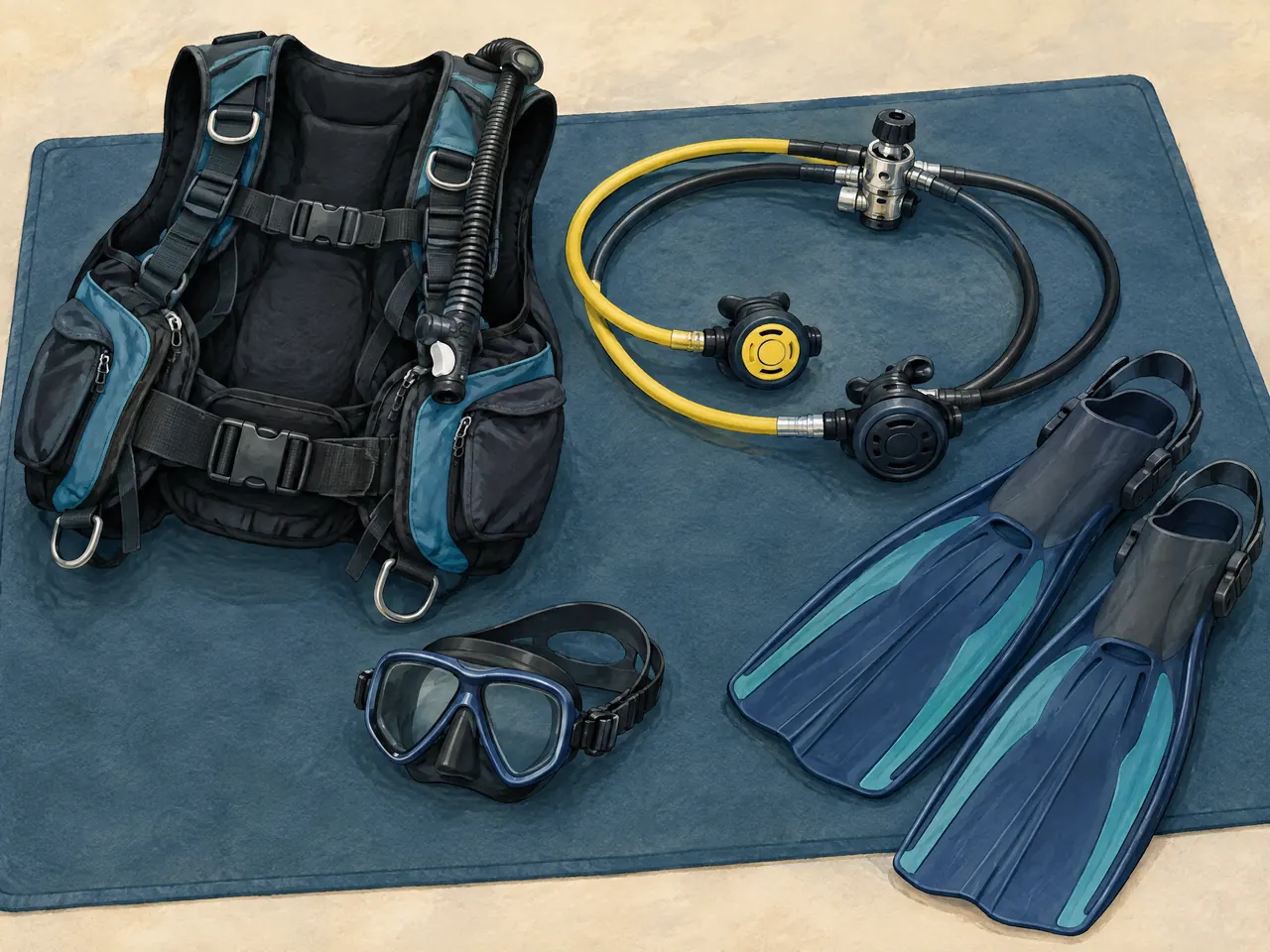
Illustration of an unbranded buoyancy compensator, regulator assembly, mask and fins arranged separately on a dry preparation mat
Use the separate equipment objects to name what you will bring and what you need to request. This illustration does not show supplied rental stock or confirm equipment suitability.Generated illustrative image

Describe fit difficulties without guessing a replacement

If a mask or fins caused discomfort on a previous outing, add a short factual note to the rental enquiry: which item it was, whether it was your own or borrowed, and what you remember about the fit. Distinguish that memory from a size or model you can actually identify. A statement such as 'I borrowed fins last time and do not know their size' is more useful than supplying an invented measurement or choosing a replacement from its appearance.

Ask when the proposed rental items can be tried and whom to tell if something does not fit comfortably. Save the answer with the equipment confirmation so the concern is not lost between booking and arrival. The two masks and separate fins in the illustration are discussion prompts, not a recommendation for a particular design. Any change to the agreed rental arrangement still needs confirmation from the operator.
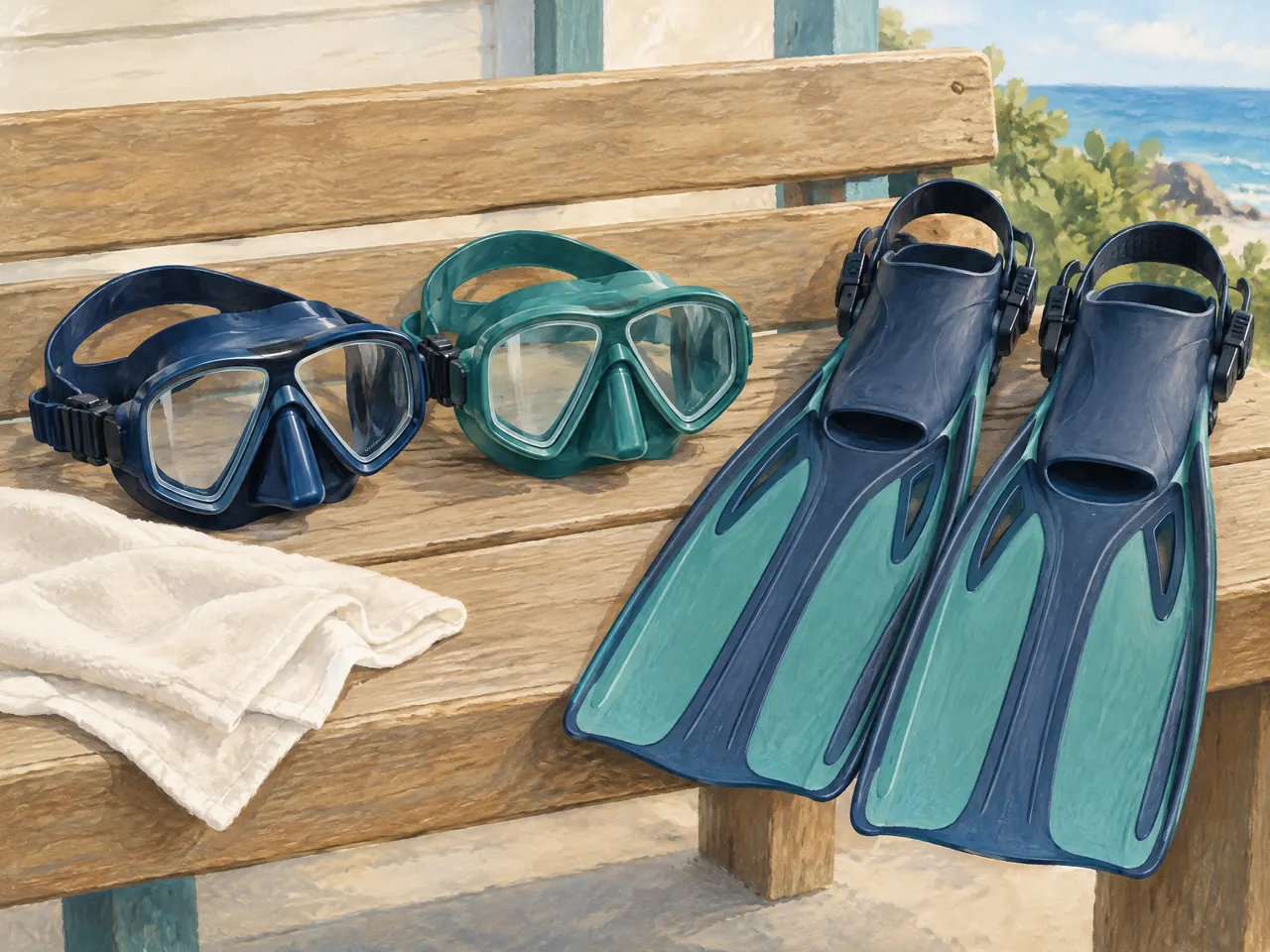
Illustration of two generic scuba masks and separate adjustable fins on a bench beside a clean cloth
Record previous fit concerns and ask about trying the proposed rental items. The illustrated masks and fins do not establish individual fit or availability.Generated illustrative image

Keep the travel copy separate from the packing list

Prepare a travel copy of the essential record: accepted certification evidence, your recent-dive summary and the latest meeting confirmation. Check that you can retrieve it without searching through a long message thread. Keep sensitive medical or identity documents separate and use the agreed sharing channel if they are requested. A dry bag or a packed phone is not a substitute for testing whether the information is readable and accessible.

Make personal packing a separate question. Ask which facilities are available and whether you need to bring items such as a towel, drinking water, sun protection or suitable footwear for the agreed journey. Mark the answer as part of the confirmed logistics rather than treating the illustration as an operator's packing list. That distinction leaves your visitor record focused on evidence and agreements while your personal checklist handles the things you will carry.
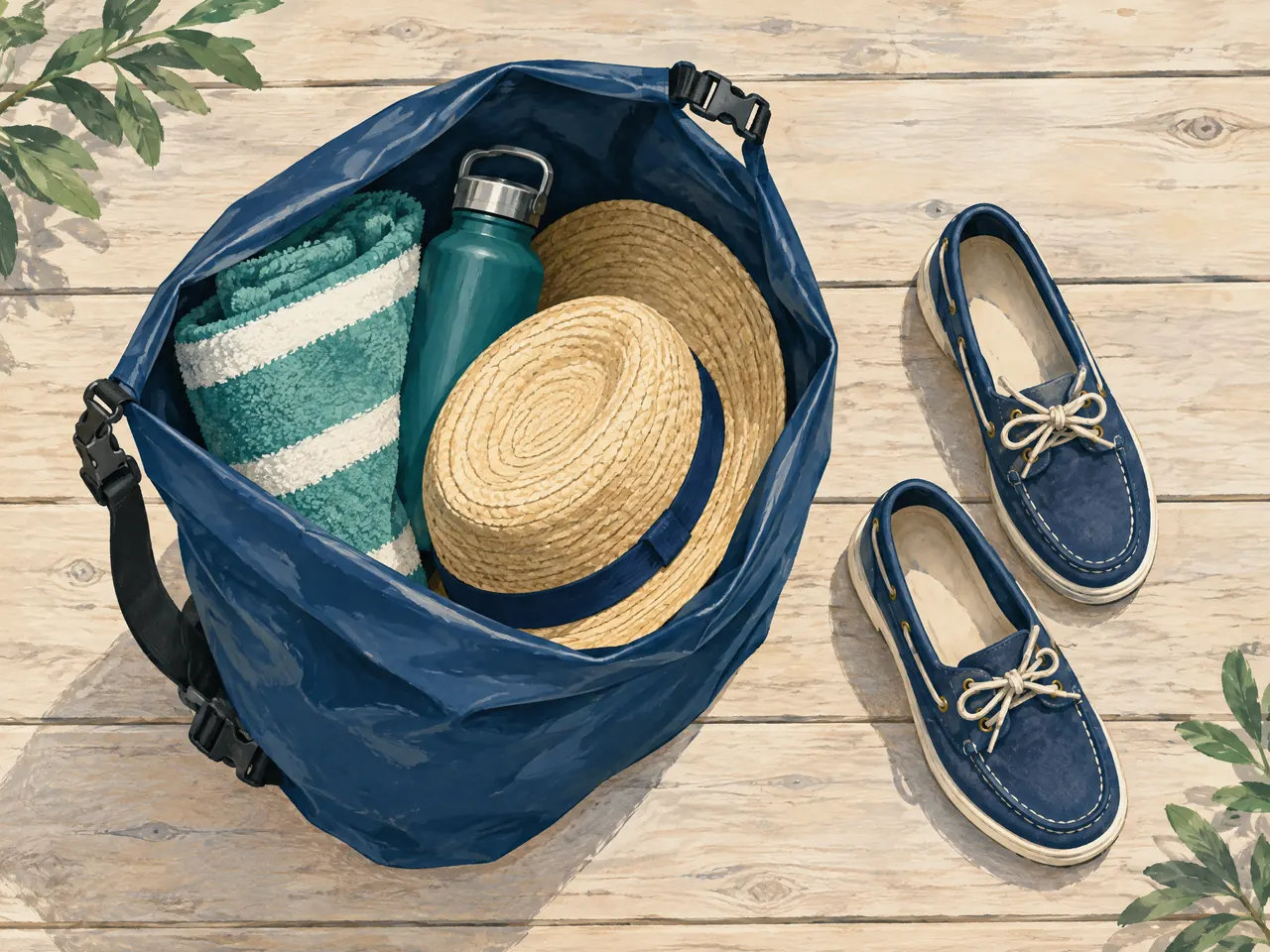
Illustration of an open dry bag with a towel, water bottle and sun hat beside deck-shoe silhouettes on an empty abstract timber surface
Keep personal packing questions separate from certification evidence and written logistics. These illustrative objects are not a confirmed facilities or equipment list.Generated illustrative image

Keep one current version when the proposed day changes

Add a dated update line to the saved day plan whenever the operator changes a meeting arrangement or proposed activity. Record what changed, which details are still provisional and whether you have acknowledged the new instructions. If a change arrives by telephone, ask for the relevant details in writing. Share that current version with your buddy rather than forwarding an earlier confirmation without the update.

When a replacement date is discussed, repeat your actual travel constraints, including the onward flight's local departure time and any diving earlier in the trip. Ask for the revised activity and written terms to be considered together; do not assume that an offered alternative automatically fits your existing itinerary. The blank phone, wind vane and wave model illustrate the need for an update conversation. They do not represent a forecast, a safe-weather threshold or a confirmed departure.
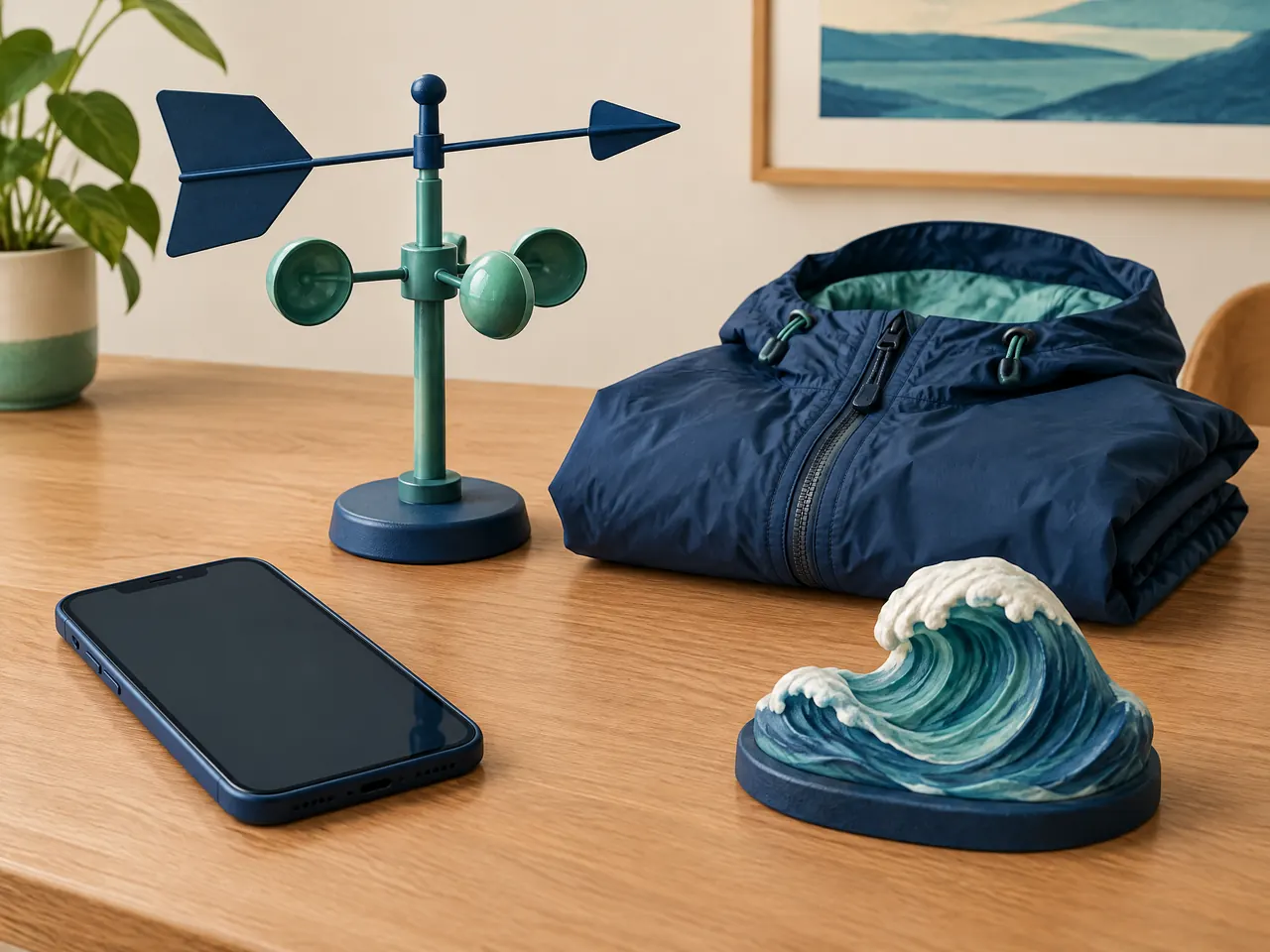
Illustration of an unbranded phone with a blank screen beside a wind vane model, rain shell and miniature wave sculpture
Save dated changes and recheck your travel constraints with the operator. The conceptual weather objects do not show a forecast or confirm that an outing can proceed.Generated illustrative image

Clinic enquiries

Contact and appointment arrangements

Clinics
Prince Edward and Kwun Tong
Opening hours
11:00–21:00
WhatsApp and telephone
+852 6940 5663

Appointments, practitioner availability and service arrangements are confirmed via WhatsApp.

Please mention any consultation language needs in your WhatsApp enquiry so that arrangements can be confirmed.

Enquire via WhatsApp
Food, gifts and floral lifeWhatsApp enquiry